
.jpg)
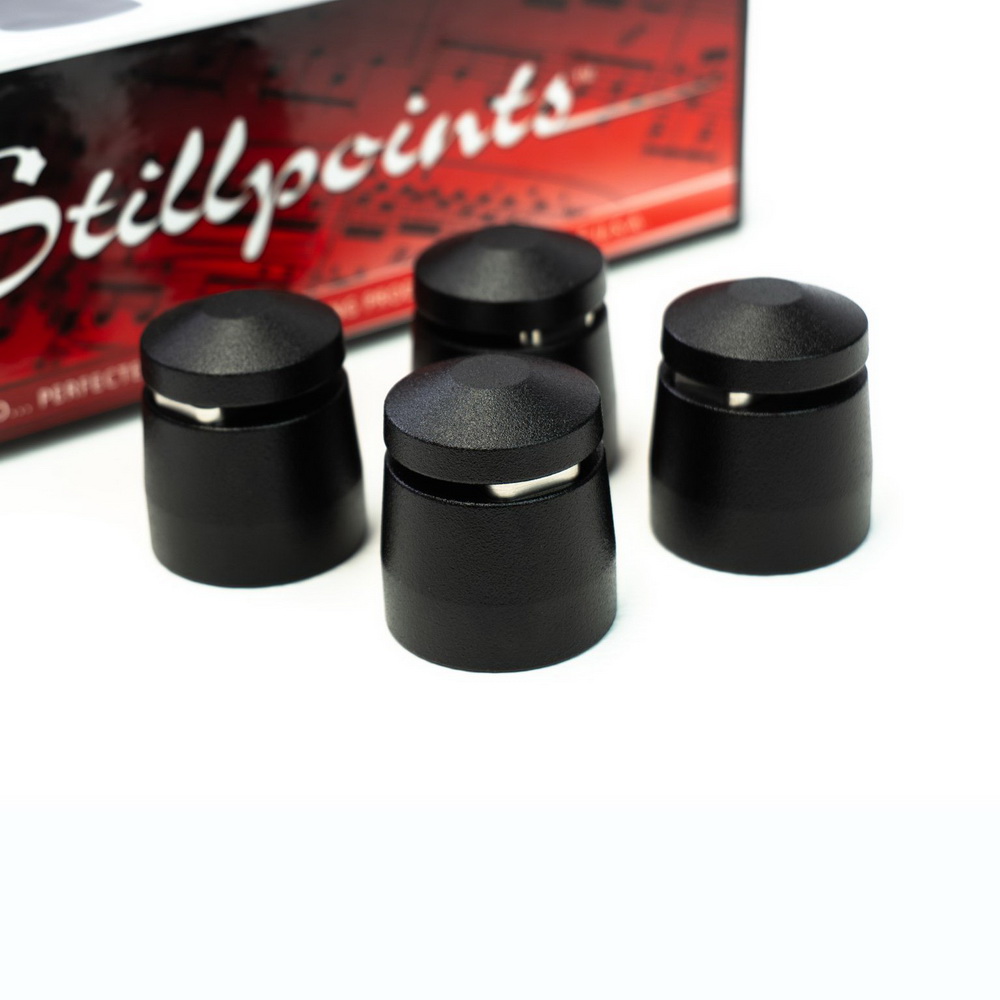
Stillpoints Ultra 1E and Ultra 1S
What you can't hear still sounds bad
There’s a moment every long-term listener reaches — though nobody ever tells you when it’s coming. It’s the moment when the chase for bigger, better, shinier components suddenly quiets down, and you start paying attention to the space around the notes instead of the notes themselves, when you stop wondering what the next component will reveal and start wondering what’s hiding in the shadows of the system you already love.
Spend enough time immersed in this hobby, and you'll discover a hidden truth: as your gear improves, it becomes increasingly affected by things you can’t hear — tiny mechanical vibrations. Micro-resonance traveling through shelves, floors, racks, transformers, capacitors, and even the air inside a chassis — noise not in the signal chain, but in the physical environment around it. Nobody puts that in a brochure.
You only learn it the way musicians learn tone: by living with it.
Sooner or later, someone leans in like a bartender sliding a bottle your way and whispers,” Have you ever tried Stillpoints?” Folks don’t talk about Stillpoints loudly or boast about them as they do about the newest amplifiers or six-figure speakers. Not because they’re a secret, but because they typically don’t know how to explain what they do without drifting into poetry. Sure, they’ll tell you it’s physics — ceramic bearings, technology pockets, resonance pathways — and that’s true. But the part they don’t know how to put into words… that’s the part that makes you lean in. It’s the part you feel more than you say. Writing about Stillpoints is like trying to describe the air in Saint Louis Cathedral at midnight. You don't point to it—you sense it.
Let me take you there.
Why Vibration Matters More Than We Think
Every piece of audio equipment vibrates. That’s not an opinion — it’s physics. Transformers hum, capacitors resonate, motors spin, circuit boards vibrate, speaker cabinets shake the room, and all of this microscopic motion feeds back into components that are trying to reproduce sound with surgical precision.
In the early days, I used to shrug this off as audiophile superstition. I thought vibration was something turntables and tube amps worried about — not DACs, preamps, or modern digital gear built like they came off an oil rig. But the more revealing my system got, the more it showed me the truth. I began to hear the fingerprints on my system that vibration leaves behind.
Vibration blurs.
It blurs transients. It smears detail. It thickens the midband. It turns bass into a rounded thump instead of a textured instrument. It adds a subtle “haze” that robs music of its inner life.
It’s never dramatic---- never ugly. It just feels like the music’s almost here--- but not quite stepping fully out of the shadows.
Isolation isn’t about tuning. It’s about releasing.
Stillpoints built their entire philosophy around that idea.
Inside the Technology
A Balancing Act of Physics and Craft
If you crack open a Stillpoint — and please don’t—you'd find precision-stacked ceramic bearings arranged inside a carefully milled chamber. This is called a ball stack, and it is the core of the Stillpoints “filter” they refer to as their Technology Pocket. These bearings both isolate, redirect, and dissipate mechanical energy, channeling vibration away from the component. Much like storm waves are broken up by the Louisiana marshes, which don’t stop the water, but reduce it to something more manageable and less impactful.
The effect is two-fold:
1) Reduce external vibration derived from floors, shelves, and airborne chatter that feeds into the component.
2) Energy evacuation from internal vibrations from motors, transformers, capacitors, and even microphonic components. Their self-generated energy has a place to go.
That's the key most people miss. Stillpoints aren't just a buffer; they're a pathway. Stillpoints break energy down into smaller, less harmful pieces and move them out of the system. Nothing gets choked, nothing gets tuned, everything gets calmer.
Many isolation devices can shift the tonal balance. Stillpoints don't want to change your sound; they just want to take away the junk that doesn't belong.
What’s New in the Ultra 1E and Ultra 1S
A Better Product Born from Lowering Costs
I have been a long-time user of the Stillpoints Ultra SS series since I first experienced them in 2010, and I was excited to hear that a new version of the Ultra series was being introduced. I was anxious to determine what improvements Stillpoints had made to elevate an already good product.
· Cost/performance ratio improved
I spoke in detail with Paul Wakeen, the owner and designer of Stillpoints, about his newest Ultra Series models: the Ultra 1E (for electronics) and Ultra 1S (for speakers). He explained the evolution of these products:
“I aimed to reduce the cost of the Ultra SS V2 to lower the retail price. To achieve this, I eliminated the Hard Hat, the 1/4-20 set screw, and the 1/4-20 threaded hole, opting to use an Ultra 6 pad instead. Instead of brushing the stainless steel, I chose to powder-coat it for additional cost savings.”
Funny thing is:
By simplifying parts, swapping finishes, and removing unnecessary machining steps, he arrived at a design that revealed greater musicality. Cost went down. Performance went up.
That's a twist you don't see often in this hobby.
Not only do the Ultra 1E and 1S use Stillpoints' new 4th-generation ball stack, a meaningful refinement, but they're also the first models purpose-built either for electronics or for speakers.
I've lived with the older Ultra SS for years. Long enough to know their personality.
These new ones?
At $240 and $260 each, they handily outperform the Ultra2 V2 and come tantalizingly close to the $1079 Ultra6 V2. Yes, “bang for the buck” has officially entered the chat.
· Improved Tonality
The new Ultra 1 version is more linear and neutral compared to its predecessors.
I've always felt the older ones had a touch of coolness, like a 5000K light. The new versions seem more like a 3500K light — warm enough to feel human yet clear enough to remain honest.
I did request more specific details about the ball stack configuration and other design elements that influence the sound, but Paul was understandably reluctant to share specific information due to concerns about counterfeiting from China.
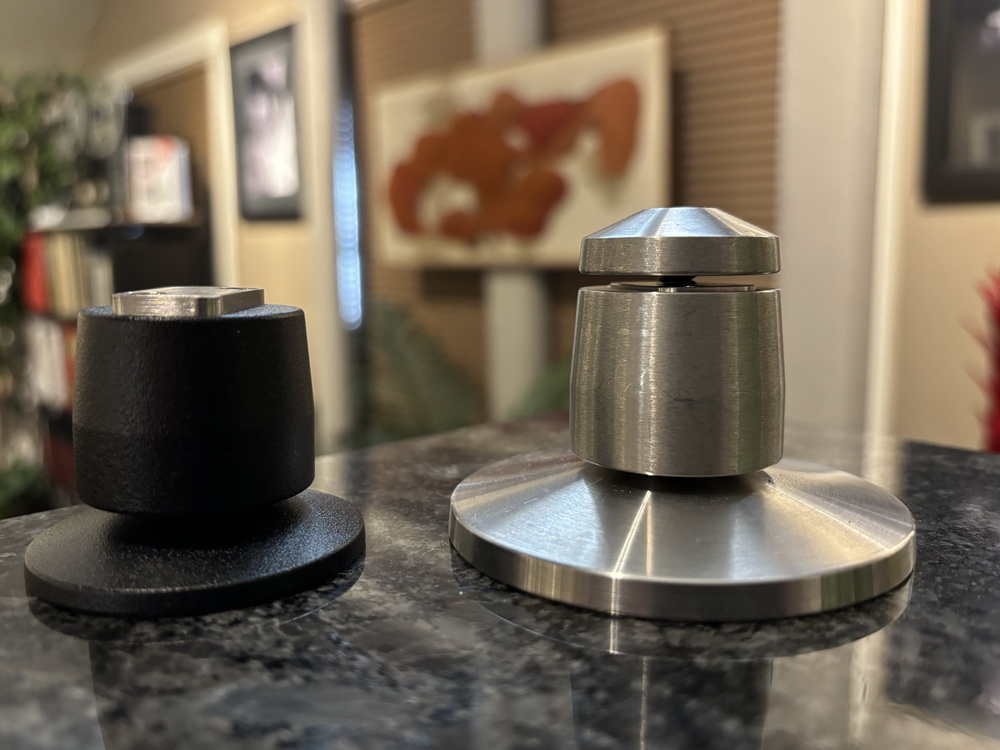 · Compact Size
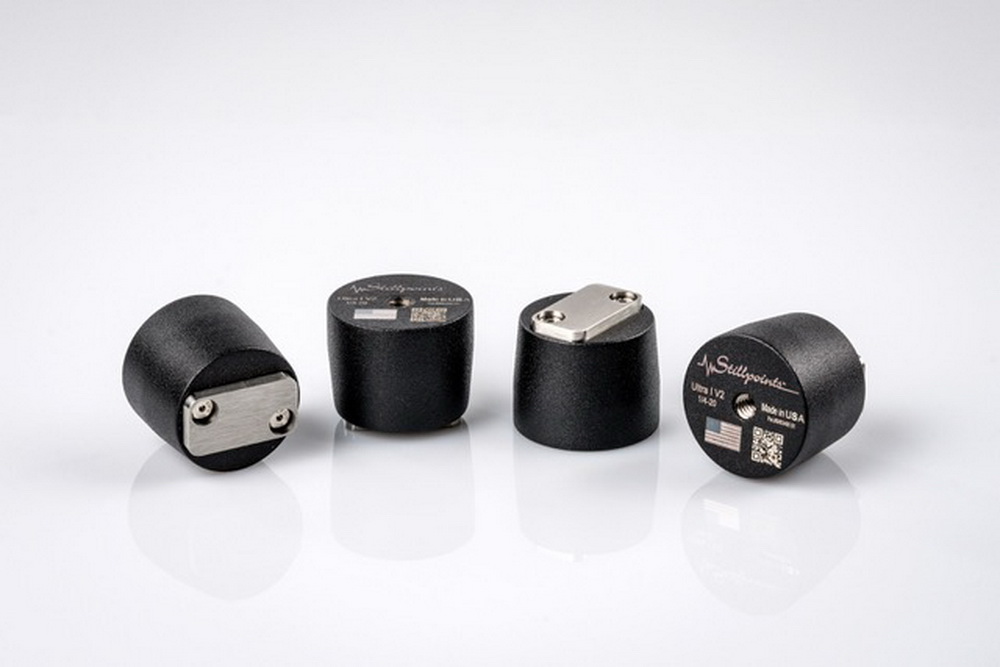
You can see the half-inch reduction in height in the new Black Ultra 1E vs the earlier Silver Ultra SS.
That half inch can make a big difference in using them under components residing on a fixed shelf system. It allowed me to place my DAC on my Solid Steel rack with a VPI Brick atop it. It would not fit using the older Ultra SS V2. Sometimes it’s the little things.
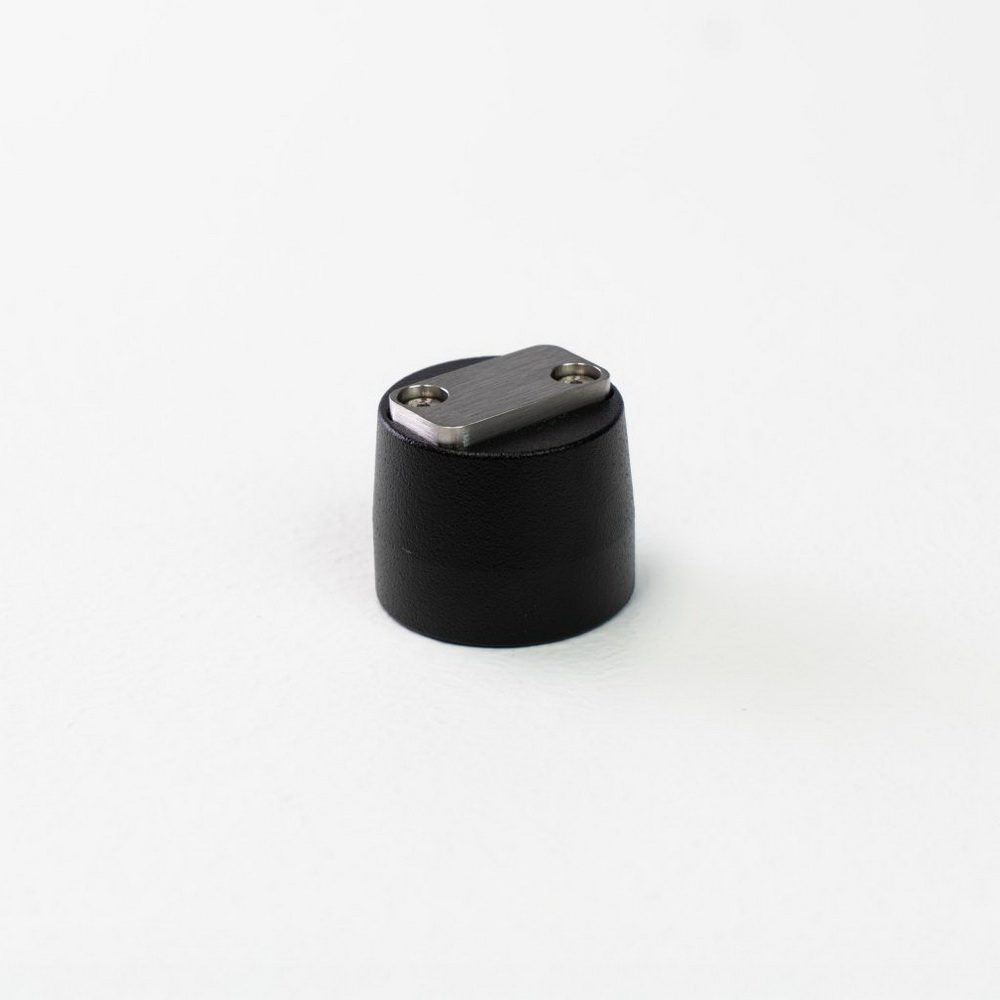 Ultra 1E @ $240ea (for components)
From DACs to preamps, phono stages, power distributors, and even smaller amplifiers, the Ultra 1E reveals a level of performance you may not have realized was missing, offering clarity that is instantly noticeable.
Voices gain a sense of dimensionality. Piano notes become more resonant. Strings acquire a delicate texture that feels a bit more alive rather than recorded.
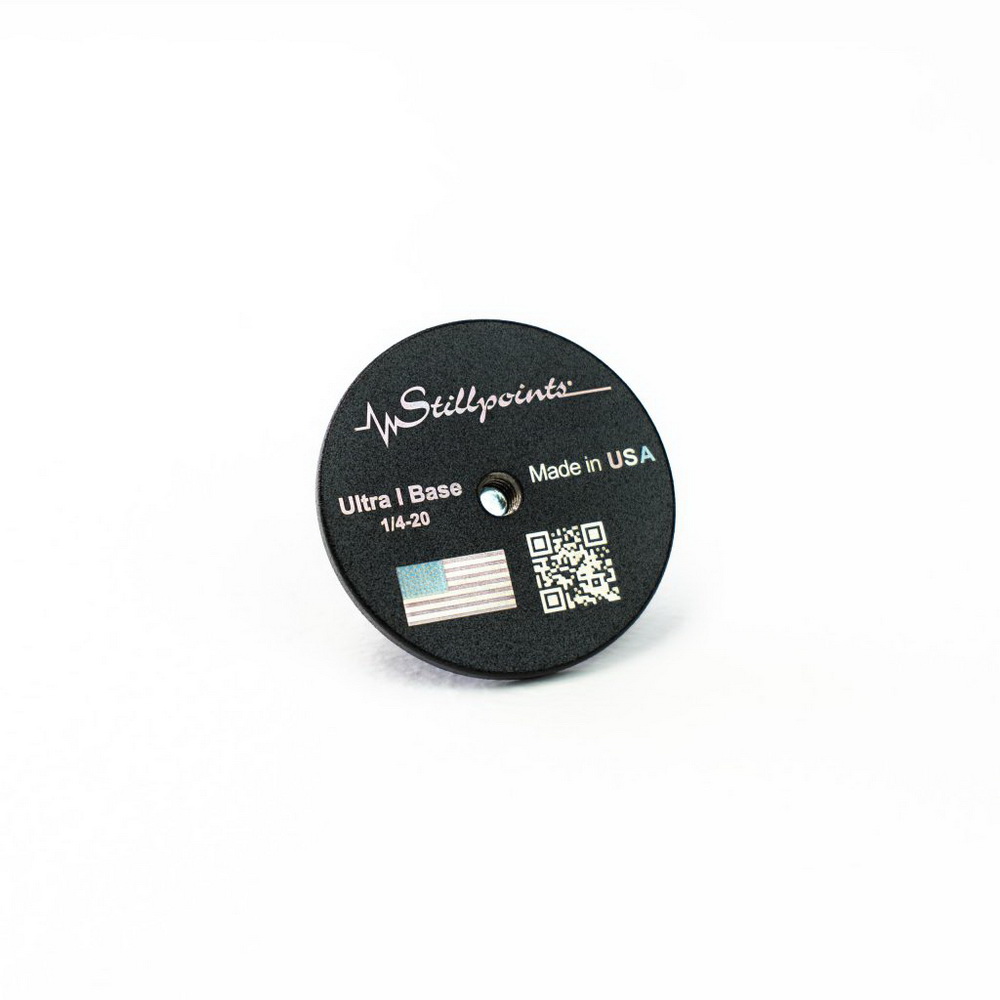
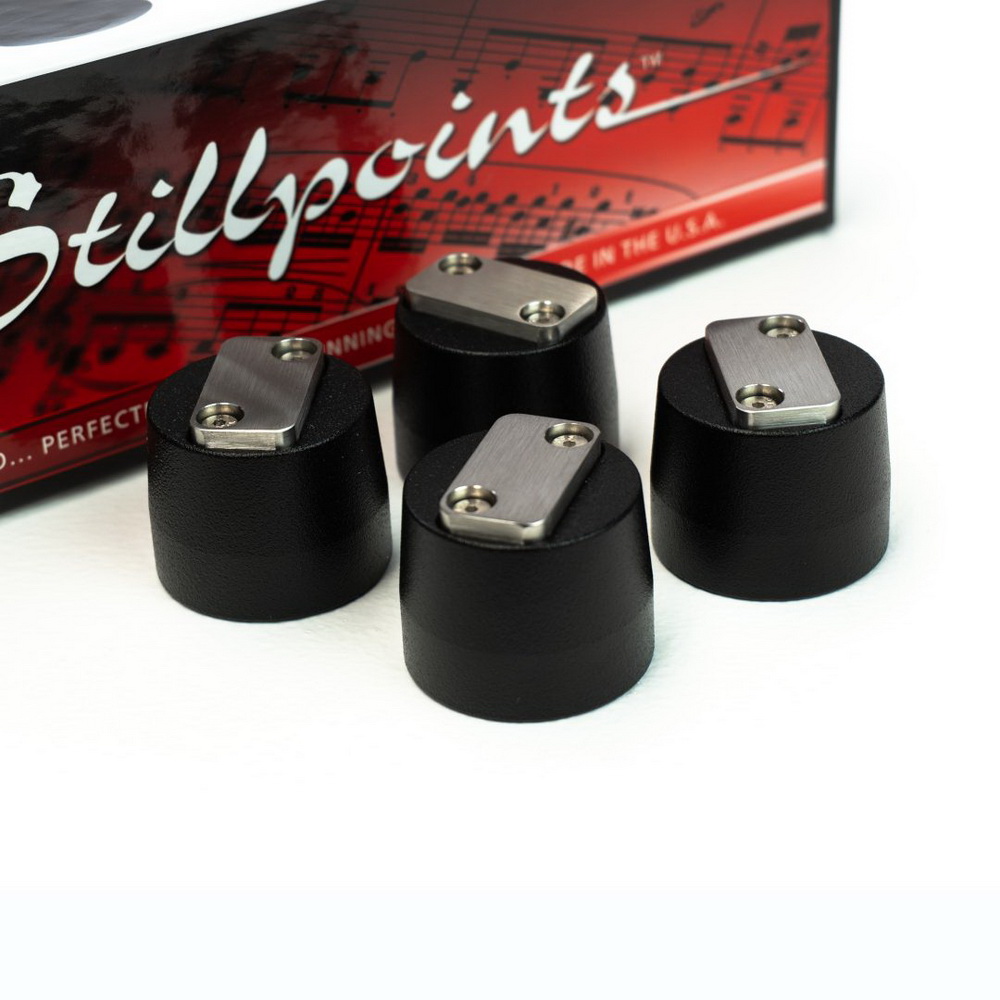
The new two-inch round Ultra 1 Base @ $73 each simplifies leveling and improves contact—a welcome improvement over the older “top hat” design. A quick turn confirms that the technology pad on top is in complete contact with the component, which is crucial for maximizing the benefits of Stillpoints technology.
Note: You can buy the Ultra 1E w/base at $299.00 each, which offers a nice savings over the individual price of the two pieces.
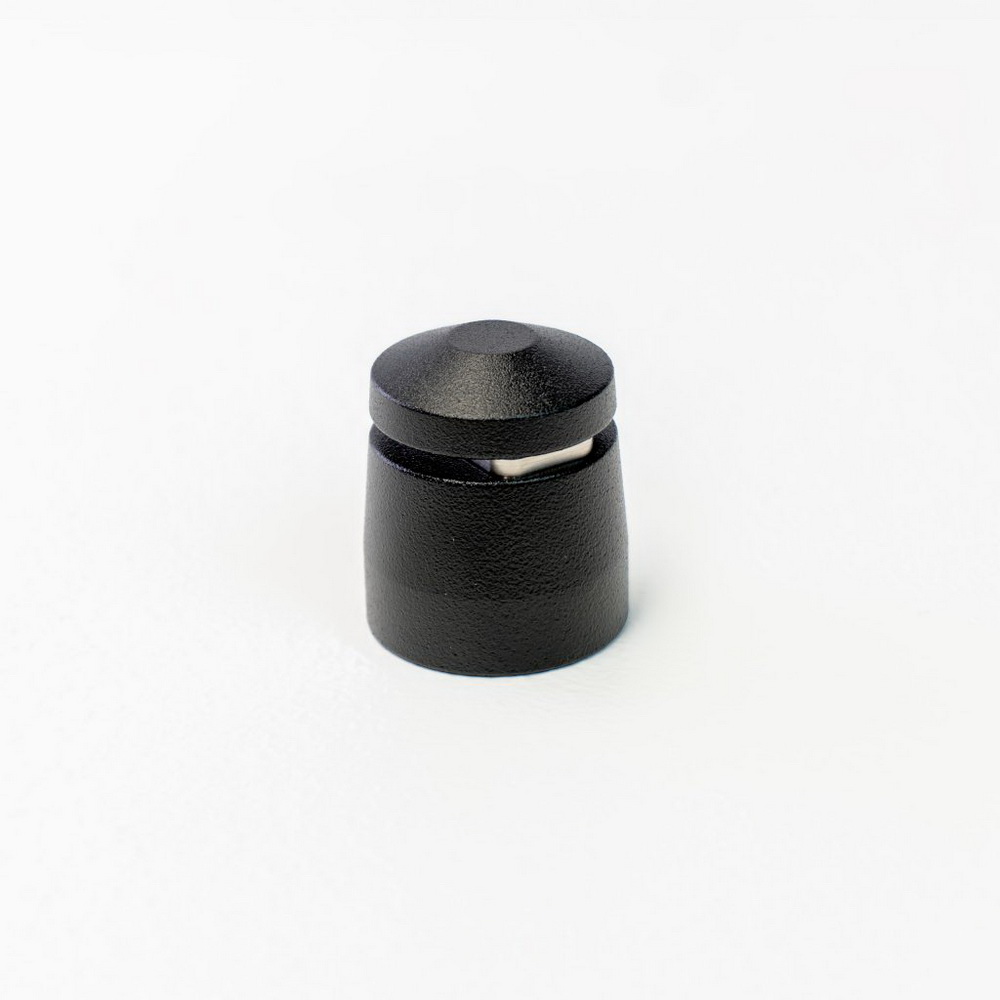
Ultra 1S @ $260ea (for use under speakers)
The Ultra 1S was specifically designed with loudspeakers in mind, particularly floor-standing models that can deliver powerful sound throughout an entire room. I had planned to try them under my Acora VRC speakers, but at 460lbs each, my chiropractor politely declined to endorse the idea.
Instead, I tested them with floor-standing Trenner & Friedl RA speakers and with the impressive compact Audience Clairaudient 1+1 V5 speakers I reviewed here last year, which were placed atop Sound Anchor stands that were five times heavier than the speakers themselves. The impact observed with both speaker setups was significant and impressive, although the deep bass impact was understandably less pronounced with the smaller Audience speakers.
With the Ultra 1S in place:
Bass was tighter. Imaging was better focused, and more low-level detail emerged. The whole system felt calmer. The treble smoothed out but extended farther. Both speakers breathed differently — as if freed from a silent burden.
Why the Biggest Gains Happen Under Speakers
Ask any seasoned Stillpoints user where the biggest transformation lies, and they’ll point you directly to the speakers. It’s not because speakers are the “weak link.” It’s because speakers unleash more vibrational chaos into a room than any other component. They excite the floor, the rack, the walls, the component shelves — everything.
When you isolate the speakers:
The floor stops feeding vibration back into the electronics. The bass loses its “bloom” and becomes more articulated. The soundstage gains depth and precision, and midrange clarity improves. High frequencies extend without harshness.
But most importantly, the entire system relaxes. It had a “whole-body” effect on my system.
What a Stillpoints Demo Feels Like
Here’s the pattern I’ve seen dozens of times with listeners in my room, and experienced myself:
You install Stillpoints under a component.
You sit down. You listen.
First, you’re unsure.
You think, “Maybe….?”
Maybe the background is quieter? Maybe the imaging is cleaner? Maybe the bass tightened a bit?
You shrug. Maybe it’s expectation bias.
Then you take them out.
“Ohhh…damn!”
The haze returns. The focus softens. The soundstage collapses a bit.
Not dramatic .... But unmistakable.
The Psychology of Subtraction
You don't realize how much micro-vibration disguises itself as “warmth” or “body” until you hear music without that blur. The brain adapts quickly to improvement — it’s only when the improvement disappears that the truth hits you.
Improvements sneak up on you...... Losses slap you in the face.
That’s a hard thing to sell in the world of hi-fi, where most companies sell you “more”. More bold, more punch, more detail. Stillpoints sell you “less.” Less smear, less confusion, less noise.
Music Examples
Notes taken during my audition:
Micro-detail & Low-level Articulation: Track: “Nardis” – Bill Evans Trio (Village Vanguard 1961)
The decay of Paul Motian's cymbals is rounder and longer. The room's air at the Vanguard fills in more naturally—ambient cues I hadn't heard before became clearer. Evans' piano pedal noise and internal mechanics come forward subtly.
Vocal Presence & Realism: Track: “A Case of You” – Joni Mitchell, Blue
Joni’s vocal breath intake became more defined. The guitar’s upper harmonics became clearer and lost the metallic haze. Her vocal image is more stable, less wandering. Added stability and dimensionality—like the voice “locks into” place.
Soundstage Expansion & Depth: Track: “Keith Don’t Go” – Nils Lofgren (Acoustic Live)
The guitar’s body resonance opens up. Audience cues move farther back into a deeper, more layered hall. Nils’ string attacks come out startlingly fast and pinpointed.
Complex Orchestral Separation: Track: “No Time for Caution” – Hans Zimmer, Interstellar OST
Organ notes are less blurred and more vertically stratified. The strings and brass maintain their individual identities during crescendos. Low-frequency rumble tightens dramatically.
Extreme Low-Frequency Cleanliness: Track: “Royals” – Lorde
Sub-bass pulses are deeper and cleaner. The vocal layer floats above the bass without smearing.Percussive elements are more sharply outlined.
Live-in-the-room Instrumental Presence: Track: “Take Five” – Dave Brubeck Quartet
The alto sax feels more corporeal. The ride cymbal becomes more metallic and less white-noisy. Piano notes start and stop with greater clarity.
Are They Worth the Investment?
Let’s be practical.
If you’re assembling your first serious system, vibration control isn’t where I’d ask you to spend your money: speakers, room treatment, amplification, power conditioning — those come first. But once you’ve reached a level where your system is resolving, refined, and emotionally engaging, Stillpoints become one of the upgrades you should consider, as they elevate the entire system.
Once you hear their impact, you can be the sole judge of their value.
Final Thoughts
I've tried just about every vibration trick in the book, commercial, boutique, DIY, and ill-advised experiments involving hardware store parts and blind optimism.
Stillpoints weren't a “wow! ” moment. They were a “well, look at that…” moment.
The music didn't get louder or brighter; it just stepped into the room. The space grew quieter, the voices grew weightier, decay became liquid, and everything just felt more real. Nothing felt boosted----only revealed.
It reminded me of something an old horn player told me after a late-night set at Preservation Hall. I complimented him on his tone---the warmth, the phrasing, the way he left space between notes like he was letting the night play along. He smiled and said:
“Anybody can play notes. But the real music lies in the space between ‘em. Clear the room, and folks will hear the truth.“
That, in one breath, is the impact Stillpoints have on my system. They’re not about adding. They’re about clearing the room. They give your system the silence and calmness it needs to speak with authority, nuance, and conviction. They let the music stand in its own light — not brighter, not louder, but truer.
The music transforms into a more authentic version of itself.
That is one of the highest compliments I can give any audio product.
And once you’ve heard that kind of clarity, it’s hard to go back to anything less.
Highly recommended
Specifications
Stillpoints pricing:
Ultra 1E $240.00 each
Ultra 1S $260.00 each
Ultra 1 Base $73.00 each
Ultra 1E with Ultra 1 base $299.00 each
Manufacturer Information
573 County Road A, #103
Hudson, WI 54016, USA
Paul Wakeen Sales
Paul@stillpoints.us
651-324-0899