
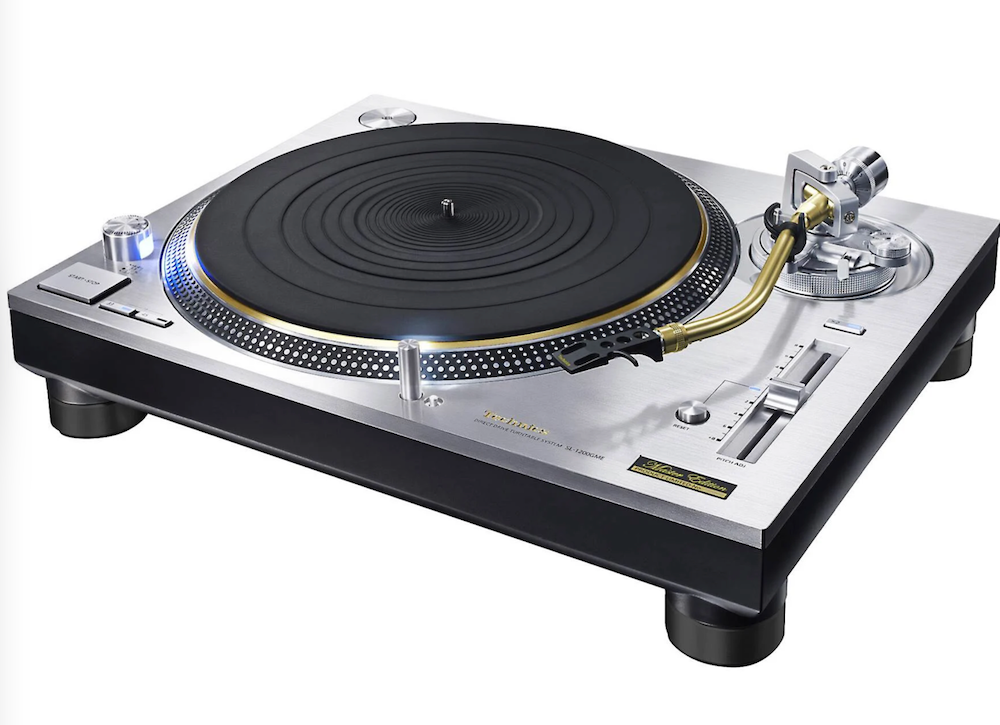
Technics Takes the SL-1200 Franchise to the Top Tier With the Master Edition 1200GME—the SL-1200's "Last Hurrah"
definitely not your grandfather's SL-1200 MK1!
Is this limited edition SL-1200GME the grand statement end-of-the-line for the venerable 1200 series Technics first introduced in 1972? Yes, based on what you'll find on the Technics website, which doesn't mean the company will discontinue manufacturing other SL models. This one, appropriately limited to 1200 units in silver (and 1210 in black) is the final expression for the 1200 series, which is ending due to the "discontinuation of externally sourced components".
Online whiners are correct when they say "They don't build them like they used to" because Technics doesn't. It builds them better. But those who claim "my original SL-1200 is better" are just plain wrong. No one's original SL-1200 is better or even nearly as good as most of the new and recent Technics turntable lineup and none are better than this SL-1200, nor at $6599.99 as costly.
But look at (and listen to) what you get for your $6600 and compare it to what others offer at this price point, why don't you?
First, while the GME looks like yesterday's "disco turntable" and has all of its features, including the pitch slider some like and some do not, it performs like a modern, high-performance audiophile rig because it is one.
Upgrades and Updates
Start with the direct drive motor: it's the now familiar coreless twin-rotor construct used in lesser G editions that Technics claims eliminates cogging, but here it's further upgraded with the coil mounting base making use of the same enhanced rigidity reinforcement pattern found in the $24,699.99 Reference Class SL-1000R/SP-10R.
The original SL-1200G was introduced a decade ago before Technics developed its ΔΣ-Drive PWM motor drive system. For the GME it adds an improved and upgraded version, expanding the system's carrier frequency from approximately 2kHz to over 20kHz, which Technics claims further reduces audible noise while further suppressing micro-vibrations—both of those are what great turntabling is all about especially with direct drive where there's no belt to filter motor cogging and where servo-controls were supposed to solve speed related issues.
That turned out to be one of the sonic issues that plagued early direct drive turntables. The actual speed appeared "perfect" over time but to quote my former Stereophile editor John Atkinson when asked about this years ago:
"If you are thinking that a servo-controlled direct-drive design would be the way to eliminate these spuriae, think on this: in a direct-drive turntable, the motor acts directly on the platter spindle. There is therefore no mechanical filter to reduce the effect of any variations from perfect rotational behavior on the part of the motor. In addition, all servo systems will have a natural frequency around which they will 'hunt,' albeit in a damped manner in a well-designed system. In the direct-drive turntables that were popular in the 1970s, this natural servo frequency was around 3kHz—right in the middle of the region where the ear is most sensitive."
That explains two things: one, why those claiming their early 1200s are better than what's being designed and manufactured today are wrong and two, why, thanks to "digital in service of analog", Technics has been able to eliminate or come very close to eliminating the small, probably unmeasurable at the time minute speed variations that direct drive detractors found so objectionable, though they didn't really know why! An analogy in the early days of digital recording and CDs would be gross A/D filter time domain errors that so bothered many listeners though there was flat frequency response amplitude perfection.
Regarding minute speed changes: when OMA's Jonathan Weiss and partner Richard Krebs designed the K3 turntable they found that, "much to their astonishment," the most minute speed changes were audible—"down to arc seconds of rotation." There are 1,296,000 arc seconds in one rotation. We are very sensitive to time domain fluctuations that we sense more than hear.
Previous Technics turntable reviews here have outlined instrumentation techniques unavailable not that many years ago that Technics engineers used to discover and optimally damp sources of transmitted vibrational energy in its plinth construction. The hyperlinked review also runs through most of the current Technics lineup, which might help put this final SL-1200 into proper perspective because I'm not going to repeat that here. That link also outlines in greater detail the workings of the ΔΣ-Drive that I see no need to repeat here. Read it there!
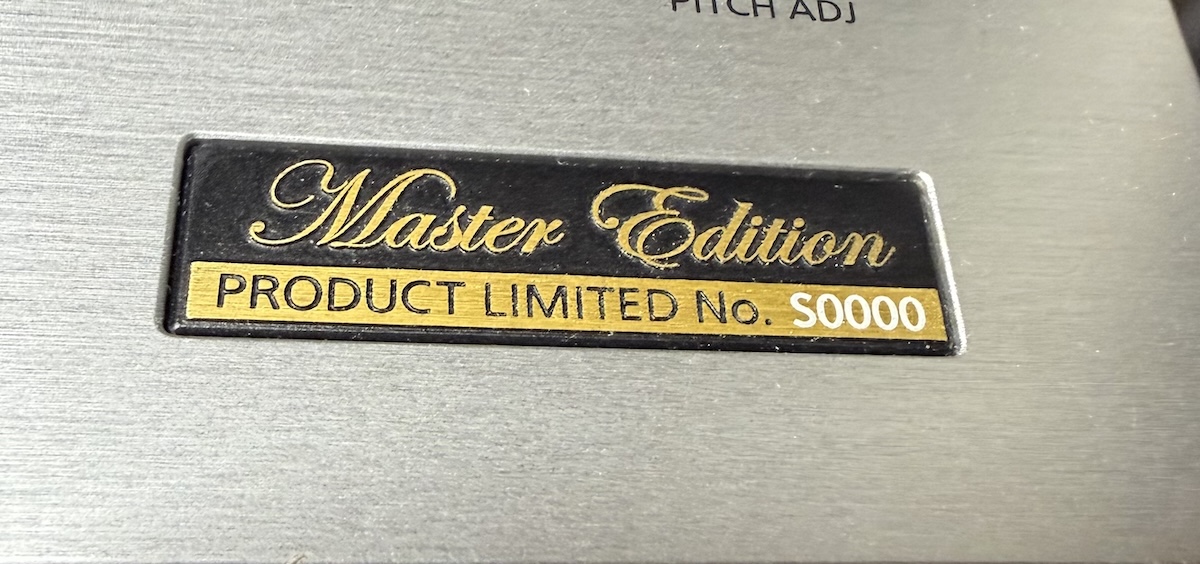
As with the original SL-1200G the GME's plinth features a 10mm thick "hairline processed" aluminum top plate, below which is a die-cast aluminum chassis damped with BMC (Bulk Moulding Compound, which is a composite polymer resin combined with other materials) and heavyweight rubber used for the lower chassis "skin". The result is high rigidity combined with a visually attractive finish. The GME includes this indication of its uniqueness and hoped for collectibility (obviously the review sample has no serial number):
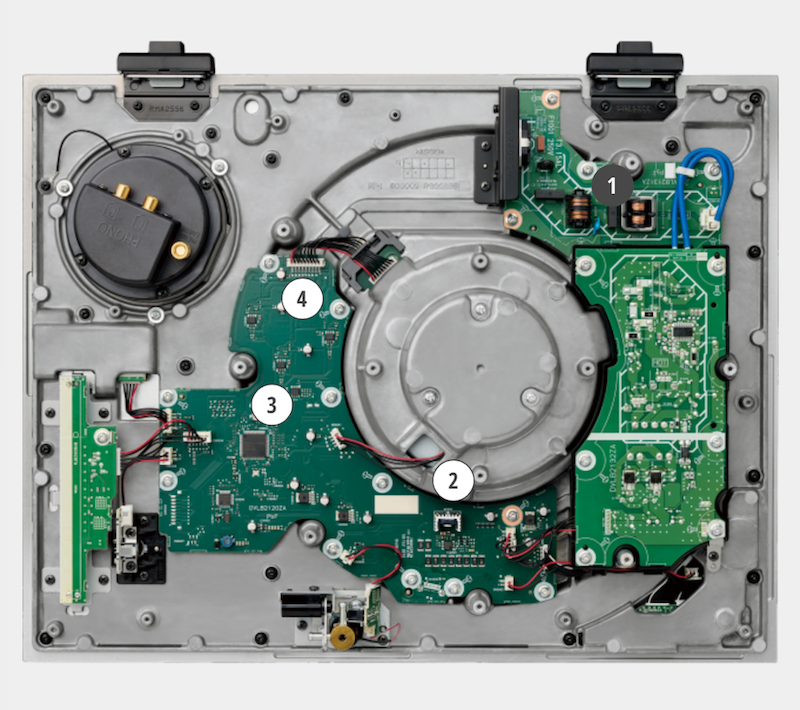 A look underneath
The GME's triple layer platter —same as the original 1200G—combines aluminum die cast and brass with the entirety of the underside covered with a "deadening rubber". The result is a highly rigid, effectively damped platter that Technics claims produces inertial mass surpassing that of the near legendary radio station "industry standard" SP-10MK2 direct drive turntable and twice the inertial mass of the SL-1200MK5. The platter is balanced following construction. As with the original SL-1200G the platter weighs approximately 7.9 pounds including the rubber mat.
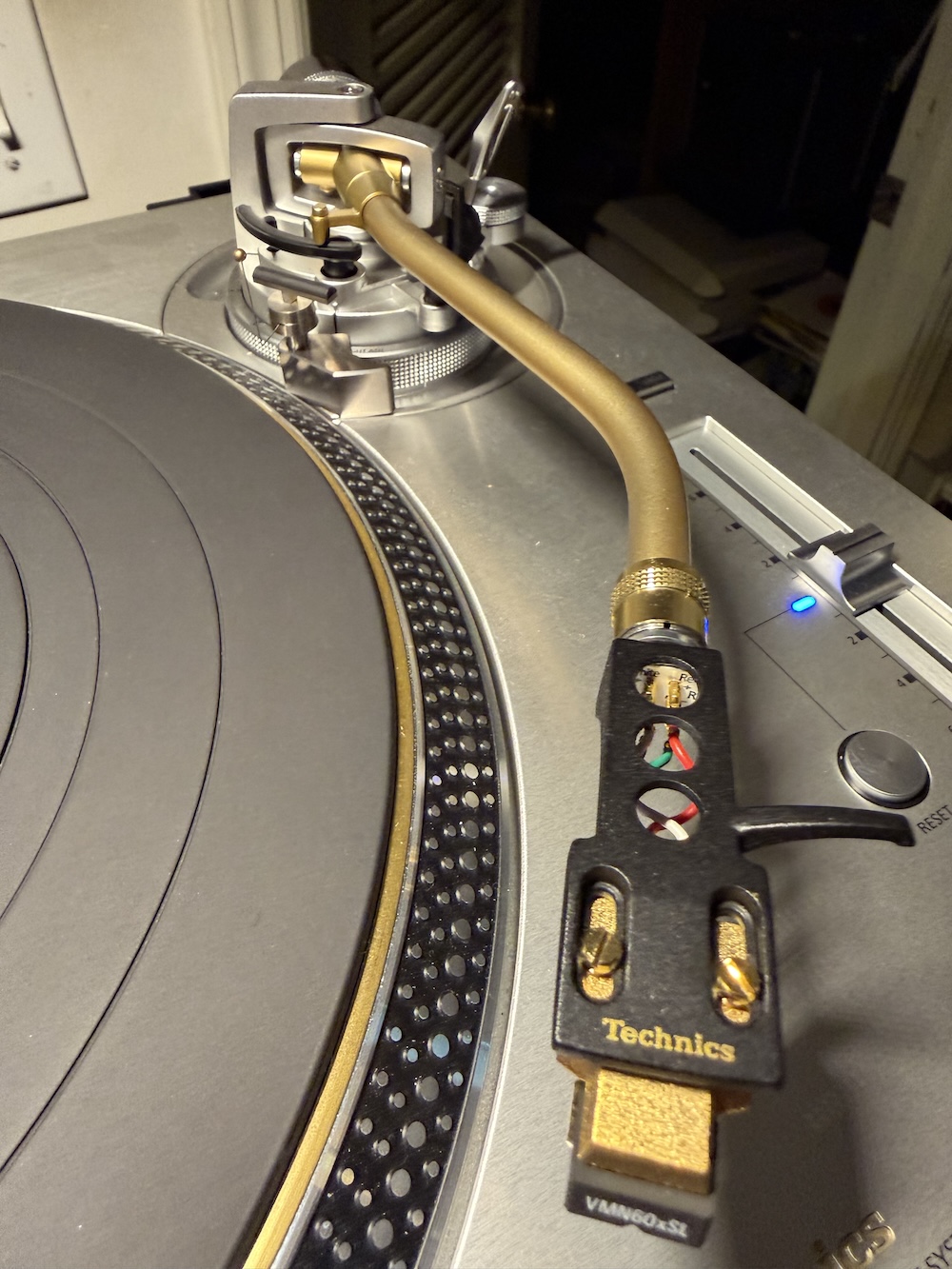
As with the original SL-1200G, the GME's arm tube is fabricated from magnesium, a metal with self-damping properties that should contribute to a smoother, more elegant sound, and for this "end of the line" model, is finished in gold "paint". The descriptive literature uses the word "paint" so I'm using it here but might it be anodized and not "painted"? It doesn't appear "painted"!
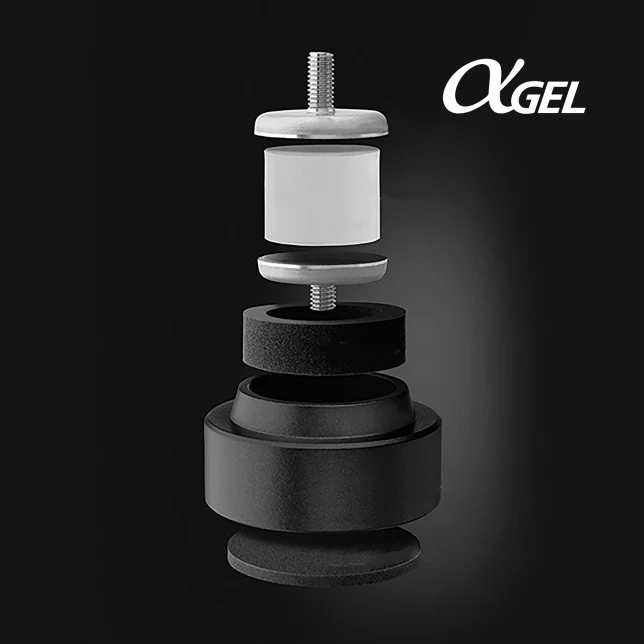
To bottom it all off, Technics adds the more recently developed "zinc insulator (footers) using αGEL™ gelatinous material with excellent shock absorption, providing high vibration damping and minimizing feedback".
Simply put: though the GME weighs in at 39.7 pounds, same as the G, the grande finale 1200 combines the best of the original 2016 1200G with all of what Technics has developed over the past decade, even improving upon the drive system as noted above. It's the final statement and the end of a remarkable and remarkably long-lived line.
Superbly Fit and Superbly Finished
Everything about the GME's look and feel is "top shelf". If you pay attention to the tight space between the platter and the top plate, the gap between the two does not visibly vary. The VTA adjustment mechanism has a superior feel and movement compared to some of the lower cost Technics turntables I've examined and reviewed. It all just feels precise and works exceptionally smoothly. The arm's feel and movement also exudes quality and construction precision.
The "tap test" with the stylus resting on the record platter not spinning produced almost no impulse sound through the speakers when tapping the platform on which the turntable sat and what little did pass was not at a low frequency. Tapping on the plinth produced a bit more sound but still very little compared to many a lively plinth on which I've tapped.
While that kind of test isn't necessarily dispositive of outside vibrational isolation at musical frequencies, it does tell you something about the 'table's overall isolating abilities and how the chassis is damped and "tuned".
Set Up and Use
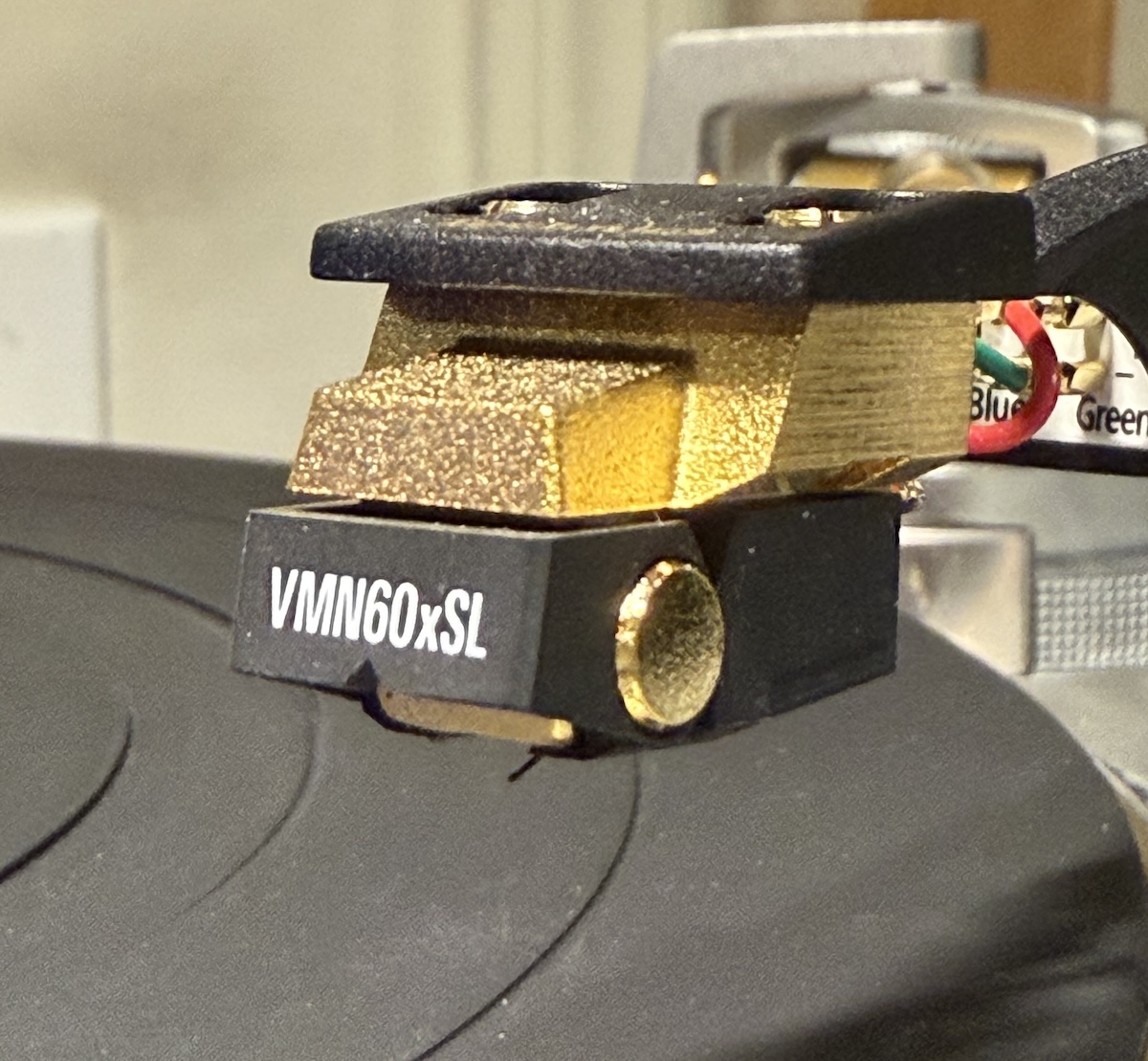
I've documented this excercise many times so again I'm not going to repeat it here. It doesn't take long for the SL-1200GME or any 1200 to be set up and running. There's no cartridge included and no built in phono preamp. I auditioned using a variety of medium to high compliance cartridges that are better suited for the relatively low mass 230mm effective length arm including the Jico Clipper, which features a low resolution but sweet sounding spherical stylus but mostly I used the $599 Audio Technica AT-VM760xSL MM cartridge, which came with the VMN60xSL replacement stylus, I assume because someone lunched the original stylus as this is a review sample. It's got a 1.5x0.28 nude line contact stylus fitted to a boron cantilever.
Quick aside: I recently did some playback events, one at Gramophone in Timonium, MD and two at sister store World Wide Stereo in Montgomeryville, PA. Gramophone's setup featured a high output MC cartridge, WWS's was an Ortofon 2M LVB Black. In this "shoot out" of sorts the MM cartridge performed way better than the HO MC. It sounded "faster", more detailed and delivered greater transient clarity.
I'll just say that this MM cartridge with a boron cantilever and line contact stylus exuded MC-like speed, detail and musical excitement. An excellent tracker too.
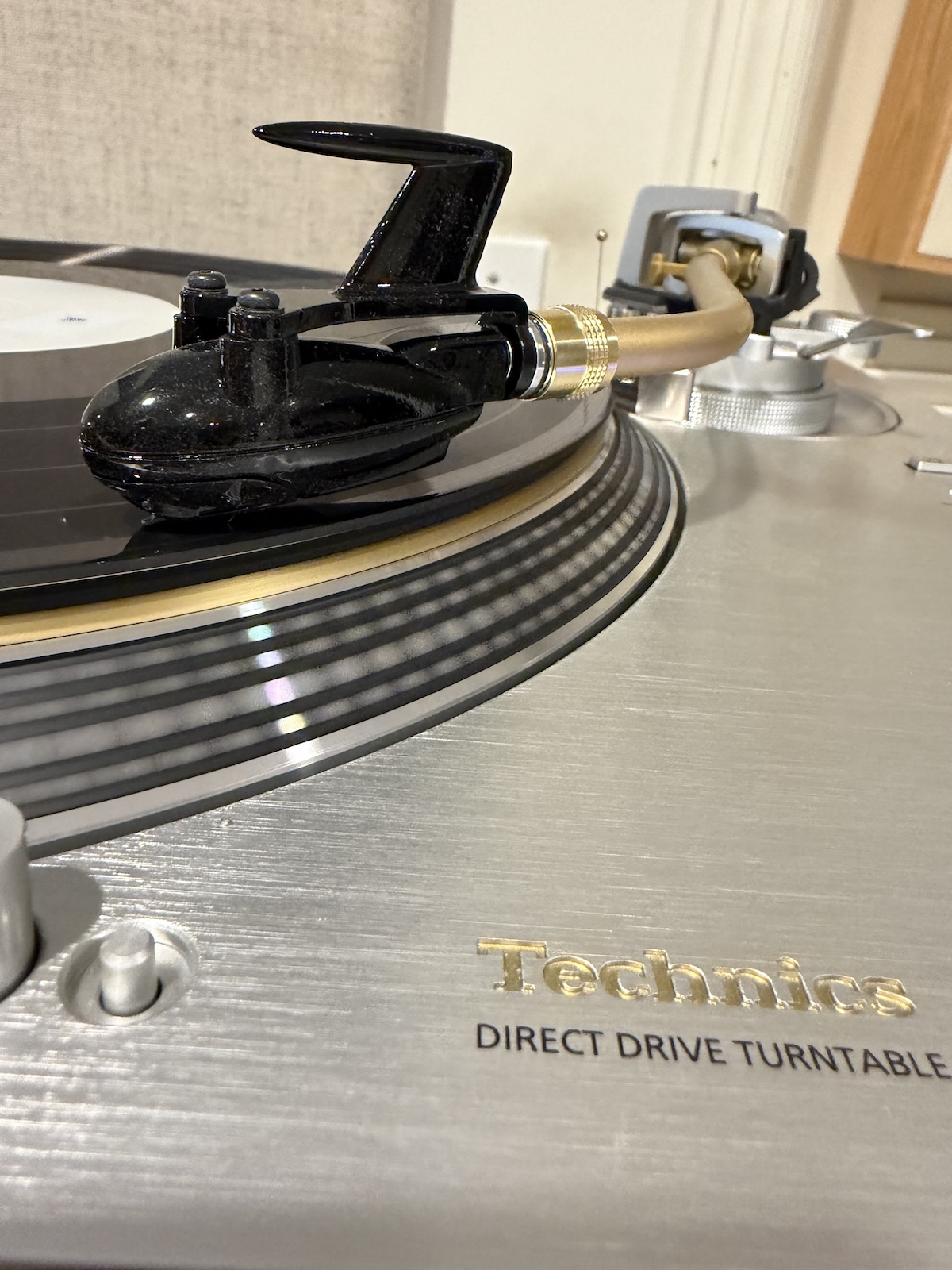 JICO Clipper
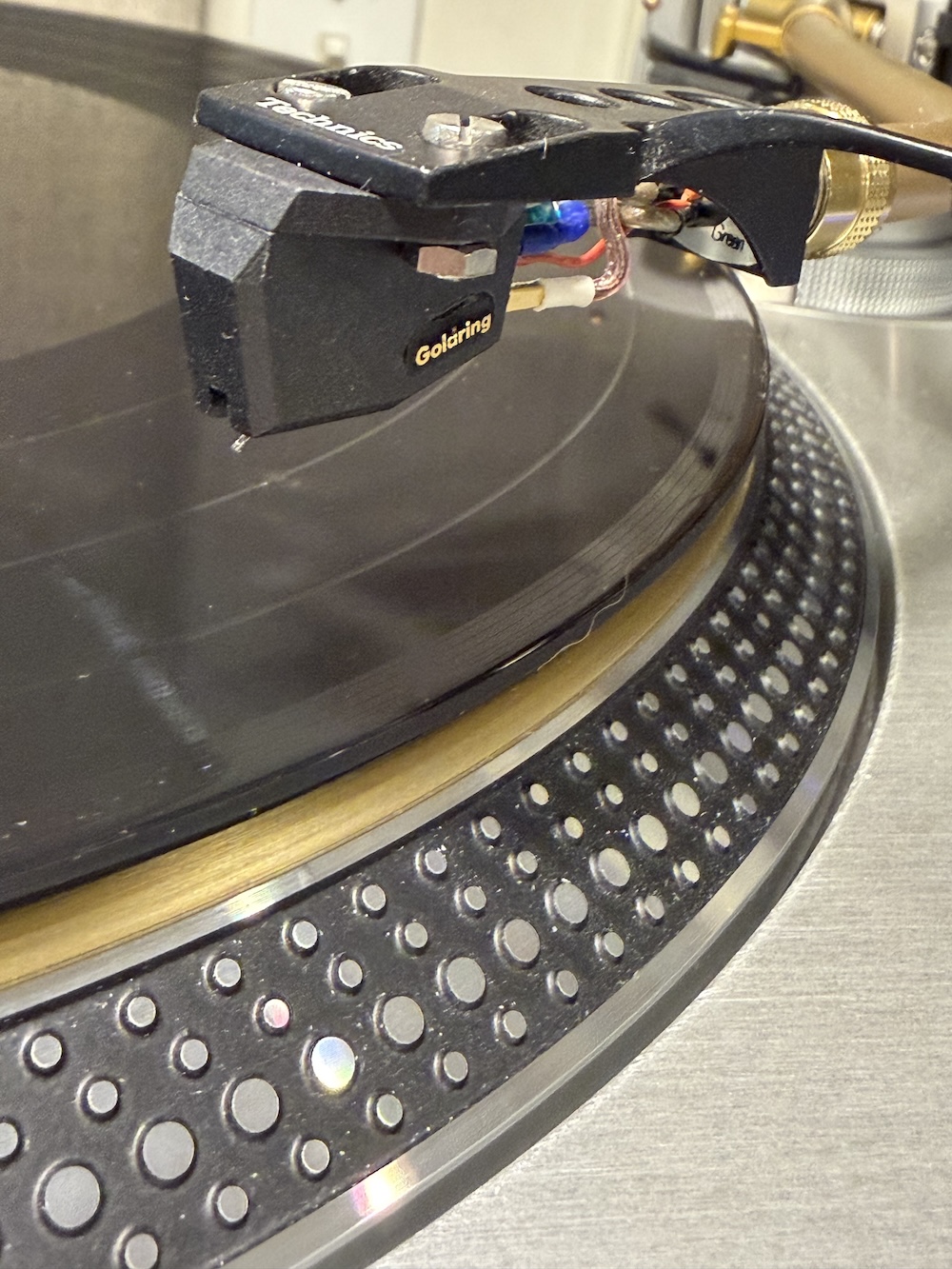
And finally I tried an $1199 Goldring Elite, which is fitted with a Geiger stylus.
Here's what the Shaknspin measured:
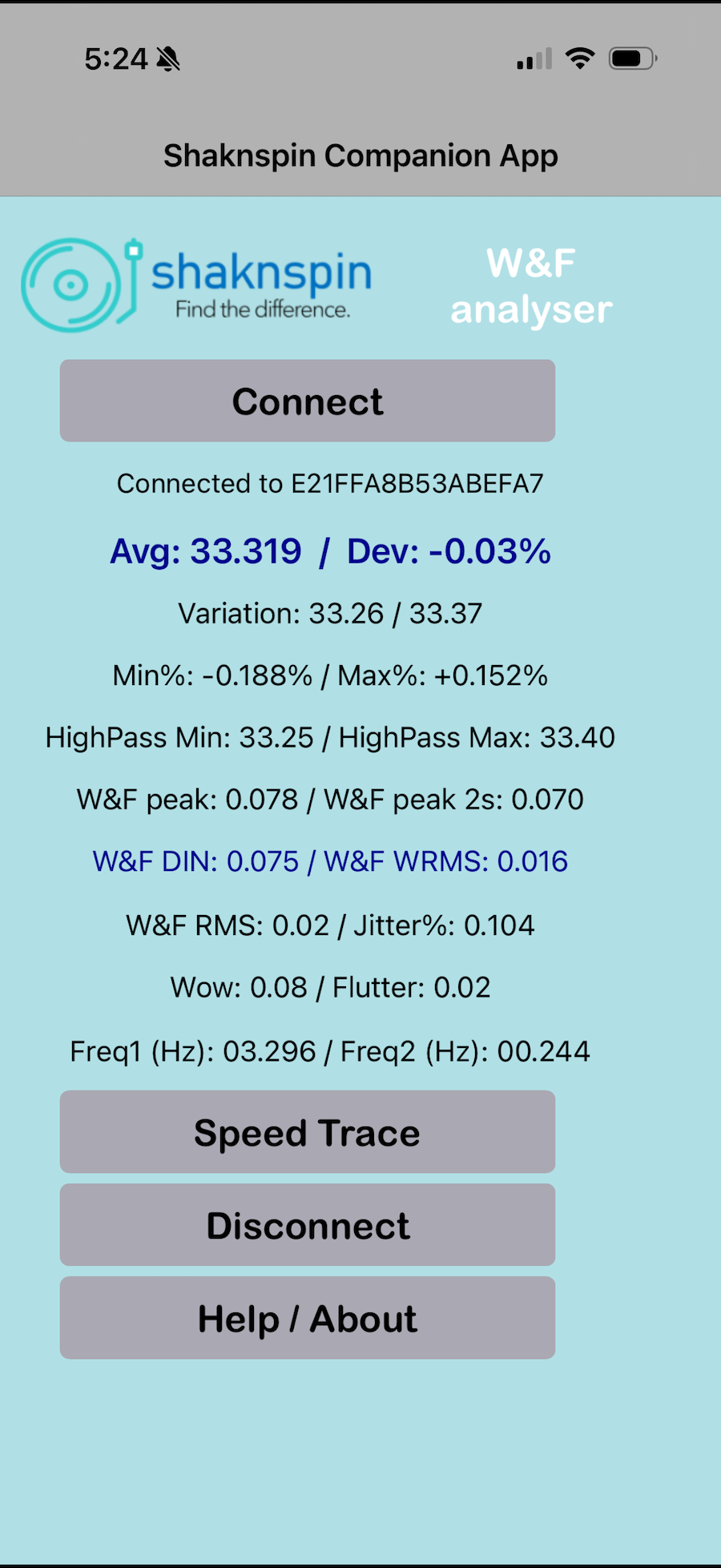 Even if you consider the Shakinspin to be not quite "lab grade", these are very good numbers with speed variation between 33.26 and 33.37 and low W&F. That's impressive! Here's the visual of that:
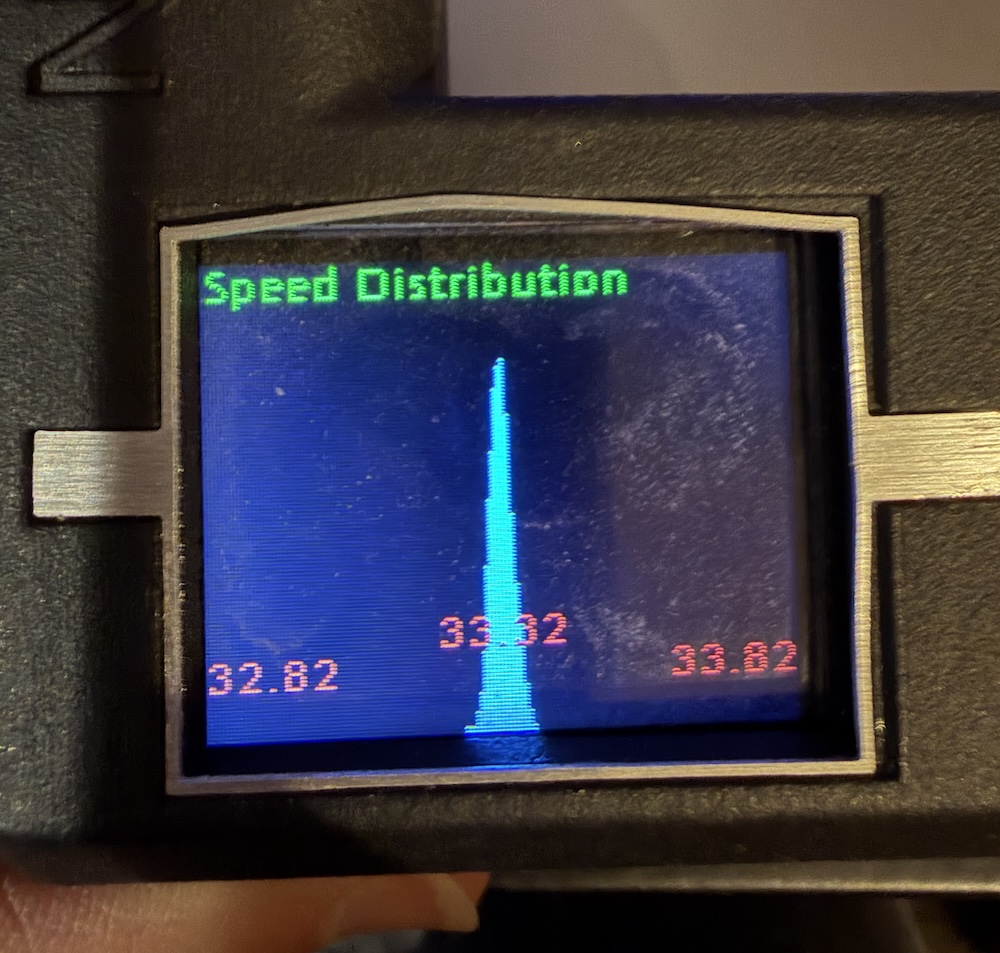 That is impressive.....
Solid Sound
The real test is to play records you don't know and react accordingly. One recent new one was another Kevin Gray cut for Speakers Corner like the recently reviewed Zawinul reissue, this one being Roland Kirk's The Inflated Tear—his first for Atlantic after leaving EmArcy/Limelight. You might as well consider this an RCA "Living Stereo" release because it was engineered by Paul Goodman and recorded at Webster Hall. Grammy Award winner Goodman recorded both classical (Horowitz) and jazz (he engineered the outstanding Sonny Rollins live recording Our Man In Jazz) and many others well known to RCA Living Stereo fans. I also see now that it's been released by Rhino Reserve, also probably cut by Kevin Gray but pressed at Fidelity in Camarillo. I don't know how that works but I suppose if you're in Europe you'll want the Speakers Corner pressed at Pallas and if you're in America you'll want the Rhino Reserve. Or if you are a pressing plant student and wish to further your knowledge, you'll want both.

The album opens with a dirge like tune "The Black and Crazy Blues" with Jimmy Hopps hitting his tom in the right channel, Rahn Burton on piano left channel and Kirk center playing a manzello— a type of soprano saxophone with a unique timbral and textural signature. Black backgrounds, startling three-dimensional images, and transient clarity that everyone reading this would appreciate and probably marvel at given the costs involved. Yes, I ran the turntable into the CH Precision P10 to get this level of sonic excellence but this record also sounded legit through the SOTA Pyxi, though backgrounds were not as quiet and dynamics were somewhat limited but timbral performance was too close for financial comfort. Especially impressive were the tom hits: deep, precise and well-textured.
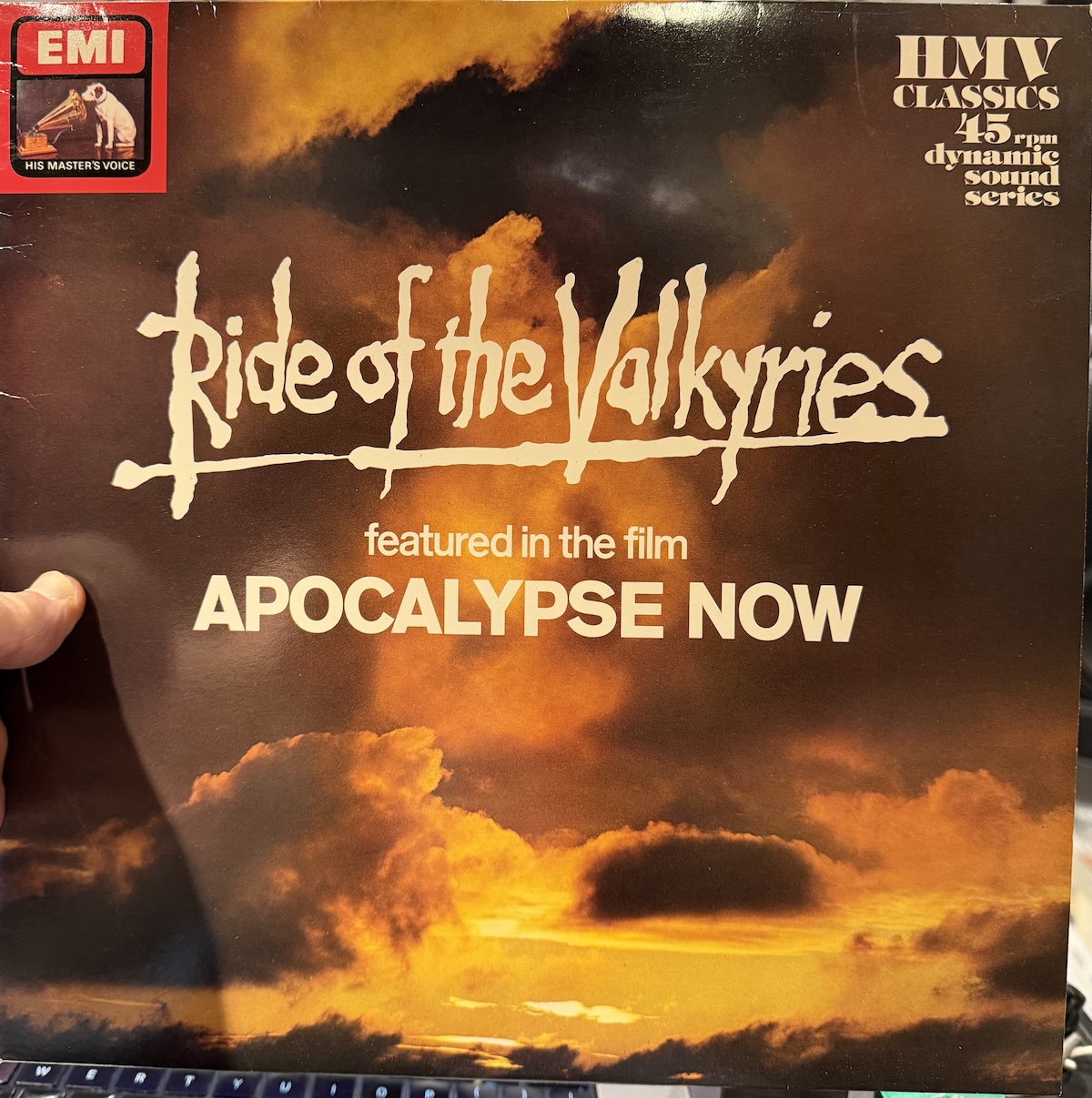
Always a sucker for audiophile releases like this 45rpm 1980 compilation from EMI that I recently learned about. There are eight in the series of classical music "potboilers". Yes the "1812 Overture" and "Ravel's Bolero" are among them. This one features Sir Adrian Boult conducting the London Philharmonic and the New Philharmonia Orchestra in excerpts from various Wagner faves. Following "Ride of the Valkyries", which produced an grand scale orchestral picture especially in terms of stage depth (though hearing it at the "Apocalypse Now" world premier at the Cinerama Dome in Hollywood was much more impressive!) is "Grand March" from Tannhäuser and there are some serious drum thwacks that the 1200GME handled quite effectively. The orchestral spread was stable and solid and dynamic contrasts would make most listeners think they were listening to a far more costly set up. Jacob Heilbrunn visited and just shook his head when he heard the 1200GME's dead quiet backgrounds and stable speed.

I hadn't played YuWen Huang's remarkable ....Women Only in quite sometime so I gave it a spin. The GME revealed the "intense 3 dimensionality" i wrote about in the review, aided here by speed stability and background quiet. Also, the Audio Technica is an outstanding tracker given a great ride by the tonearm. Instrumental attack, sustain and decay should impress even the most skeptical direct drive holdout and the sense of musical flow and ease helped produce the sense of relaxed excitement fine vinyl playback produces.
If there was any consistent sonic signature to this set up, it was slightly forward and/or bright but just slightly so— tonality that I ascribed more to the cartridge than the turntable.
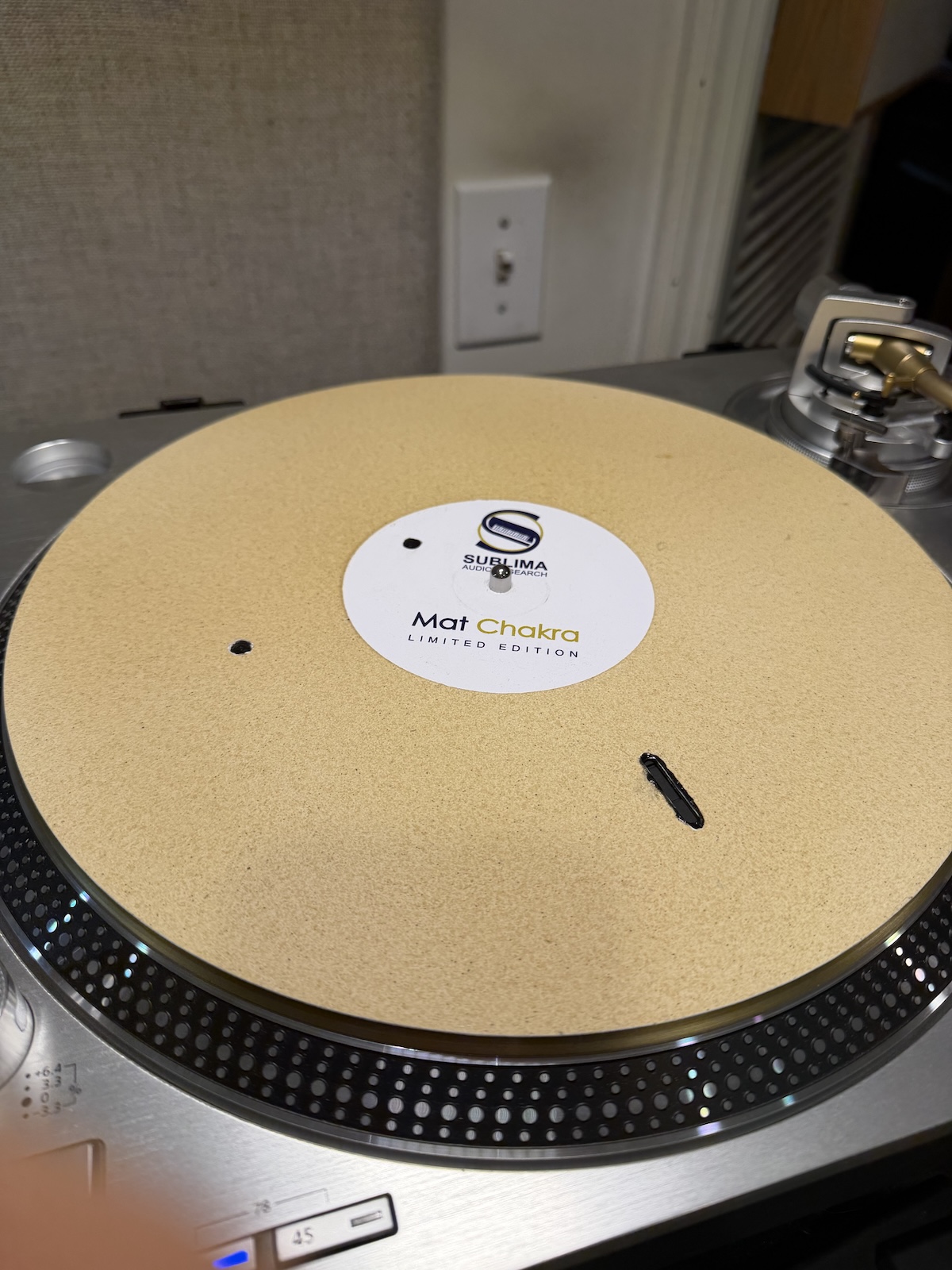
But how about a mat change? First I tried a thin, hard carbon fiber mat in place of the rubber one Technics supplies. That was immediately audible, producing sound as hard as the mat. Clearly it reflected energy back into the record. Then I tried the Sublima Research Mat Chakra on top of the rubber mat and for whatever reason or reasons (not related to VTA/SRA because it's a paper thin mat) that was the ticket to timbral sonic perfection with the Audio Technica cartridge.
The sound was fuller and richer but still with good attack, slightly softer, more natural sustain and not over damped decay. Huang's piano now sounded top to bottom ideal and the separation of the piano from the reverberant backdrop was as you'd expect to get from far more costly turntables fitted with more equally expensive cartridges.
Conclusion
The SL-1200GME is a fitting "end of the line" tribute to one of the greatest turntables ever conceived of and executed for more than 50 years. It's gone from a "best played in a disco" status among serious music lovers to what you've just read. If its looks are a lock on the door, so be it but if this is in your budget you really ought to give it a listen. When I look at what else is available for around $6000, there are only a few turntables that can be considered competitive—unless your direct drive prejudice runs deep or you can't clear your mind of looking at an SL-1200 of any vintage and think poppers and Donna Summers. Though Technics is selling this as a "collectible" I'm not sure how that will play out, but buying hi-fi as a financial instrument rarely works out well.
Maybe falling for the great sonic performance here has cleared up my SL-1200 prejudice or maybe it's the superb fit'n'finish of this final edition, which seems a few cuts above most others, but listening to this turntable over an extended time period had me saying what I said when I reviewed the Wilson WATT Puppy 50th anniversary edition loudspeaker, "If I had to downsize because I couldn't afford my reference loudspeaker, I could I've with these". I'm not in any way suggesting the GME is the equivalent of the Wilson-Benesch Prime Meridian turntable because it's not, but if I had to downsize I could live with the SL-1200 GME. It's that good. I hope you get a chance to listen to one before they are all sold out.
I can only wonder what Technics will come up with next but as the song from "Oklahoma" goes, "Everything's up to date in Kansas City, they've gone about as far as they can go". The SL-1200GME is about as far as Technics can take this turntable. It's come a long way, baby.
Specifications
Turntable Section
Drive Method: Direct Drive
Motor: Brushless DC motor
Turntable Speeds: 33-1/3, 45 and 78* rpm (*The turntable speed will be 78.26 rpm when set to 78 rpm.)
Starting Torque: 0.32 N・m (3.3kgf・cm)
Build-up Characteristics:0.7s from standstill to 33- 1/3 rpm
Braking system: Electronic brake
Wow and Flutter: 0.025% W.R.M.S.
Turntable Platter: Brass and aluminium die-cast combined; Diameter:332mm; Weight:Approx. 3.6kg (Including a rubber sheet)
Tonearm Section
Type: Static Balance
Effective Length: 230mm
Overhang: 15mm
Tracking Error Angle: Within 2° 32' (at the outer groove of 30cm(12") record); Within 0° 32' (at the inner groove of 30cm(12") record)
Offset Angle: 22°
Arm Height Adjustment Range: 0 - 6mm
Stylus Pressure Adjustment Range: 0 - 4g (Direct Reading)
Headshell weight: Approx. 7.6g
Applicable Cartridge Weight Range
(without auxiliary weight): 5.6 - 12.0g; 14.3 - 20.7g (including head shell)
(with small auxiliary weight): 10.0 - 16.4g; 18.7 - 25.1g (including head shell)
(with big auxiliary weight): 14.3 - 19.8g; 23.0 - 28.5g (including head shell)
Cartridge Mounting Dimension: 12.7 mm (1/2") interval
Head Shell Terminal Lug: 1.2mmφ 4-pin terminal lug
Terminals
Audio Output: PHONO (Pin Jack) x 1; EARTH TERMINAL x 1
General
Power Supply: AC220-240 V, 50/60 Hz
Power Consumption: 11W (ON); 0.3 W (OFF)
Dimensions (W x H x D): 453 x 173 x 372 mm
Weight: Approx. 18.0kg
Operating temperature range: 0℃ to +40℃
Operating humidity range: 35% to 80% RH (no condensation)
Accessories: Turntable, Turntable sheet, Dust cover, EP record adaptor, Balance weight, Auxiliary weight, Head shell, Overhang gauge, Screw set for cartridge, Cartridge spacer, PHONO cable, PHONO earth lead, AC power supply cord, Screw set for turntable, Owner's Manual.
Manufacturer Information
Panasonic Corporation of North America
Two Riverfront Plaza
Newark, NJ 07102-5490
https://shop.panasonic.com