
The BorderPatrol Audio Electronics ZOLA DAC
Letting the Music Breathe
There’s a certain kind of progress that doesn’t look like progress at all. It doesn’t arrive with a spec sheet that doubles everything. It doesn’t announce itself with a new acronym or a breakthrough processing engine. It doesn’t even try to convince you it’s better—at least not right away. It just shows up, quietly, carrying the weight of everything that came before it.
That’s how it unfolded for me with the BorderPatrol ZOLA DAC.
The BorderPatrol ZOLA DAC is a non-oversampling (NOS), R-2R ladder digital-to-analog converter designed around a minimalist signal path and an unusually sophisticated linear power supply. Its architecture prioritizes time-domain accuracy, low noise, and analog integrity rather than digital processing or high-feedback correction.
Conversion Architecture
At the core of the ZOLA DAC is the Analog Devices AD1865 R-2R ladder DAC chip, implemented in a true non-oversampling (NOS) configuration.
· No digital filter
· No upsampling or interpolation
· No noise shaping
Incoming PCM data is converted directly without algorithmic manipulation. This preserves the original sample timing and avoids pre-and post-ringing artifacts associated with digital filtering. The tradeoff is higher measured noise and limited ultrasonic suppression, but with improved phase coherence and waveform continuity.
Analog Output Stage
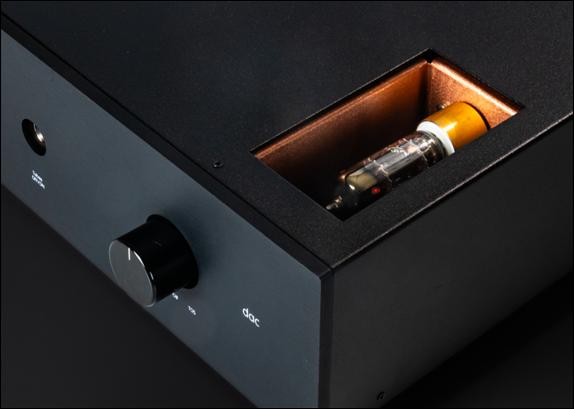
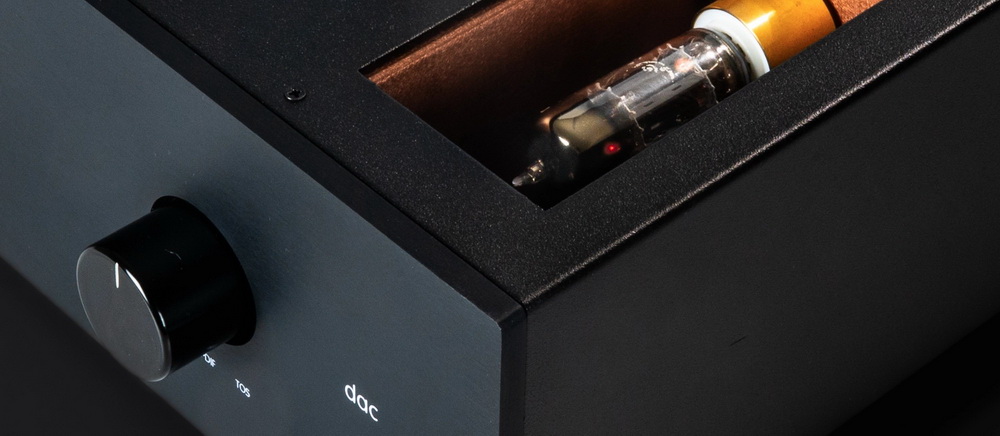
The ZOLA employs a capacitor-coupled tube-based output stage built around a 5687 dual triode.
· Zero negative feedback
· Fed directly from the DAC output
· Minimal active gain stages
This stage is designed to maintain signal purity while introducing the electrical characteristics of triode operation—low-order harmonic structure and smooth overload behavior—without heavy coloration.
Power Supply Design
A defining feature of the ZOLA DAC is its dual, tube-rectified linear power supply, which is far more elaborate than typical DAC implementations.
· Separate supplies for digital and analog sections
· Vacuum tube rectification in both domains
· Choke-input filtering in the high-voltage supply
Digital Interface
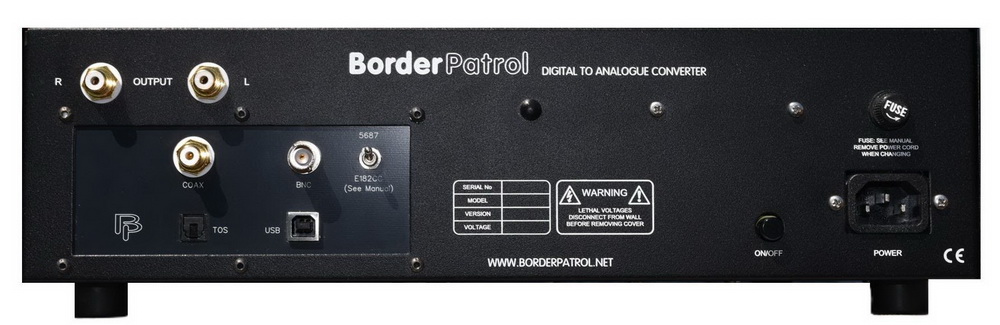
The ZOLA DAC provides a straightforward set of inputs switchable from the front panel:
· USB input
· Coaxial S/PDIF (RCA)
· BNC S/PDIF
· TOSLINK optical
You can use either the BNC or the Coaxial S/PDIF, but not both at the same time. The DAC will convert files up to 24/192kHz via USB, 24/96kHz via COAX SPDIF/BNC, and 24/96 via TOSLINK
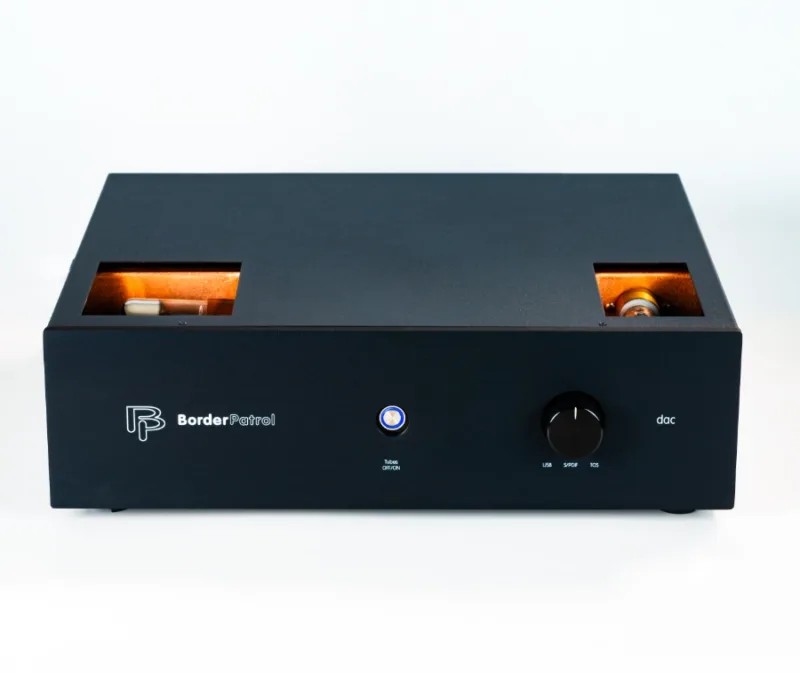
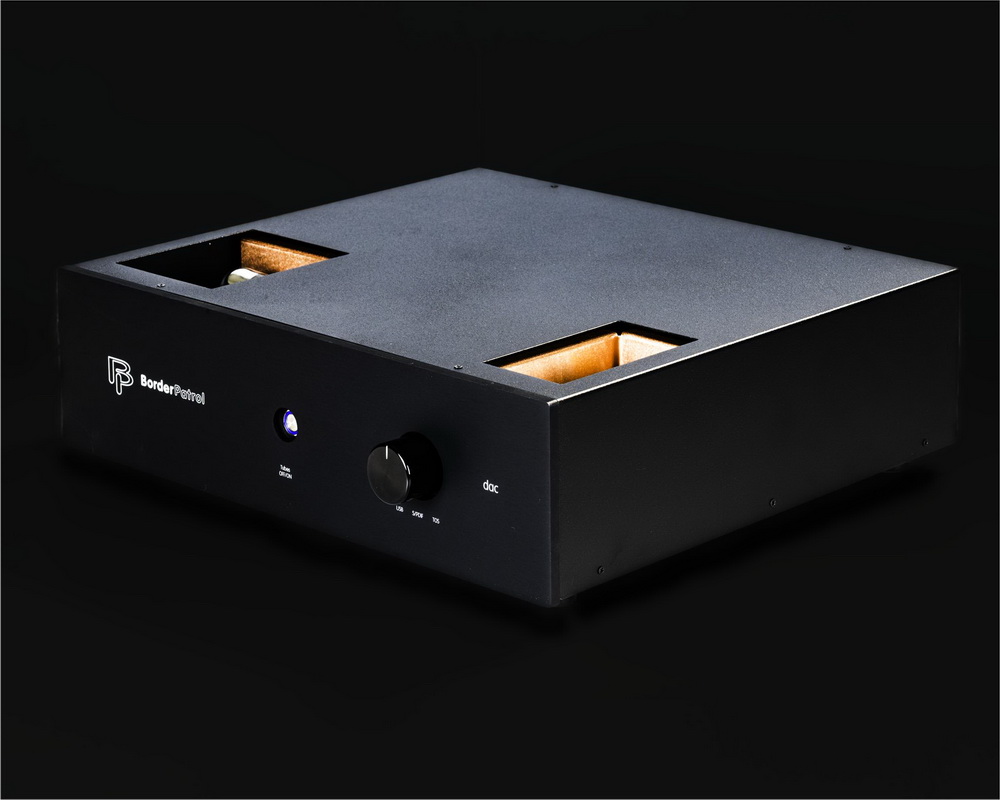
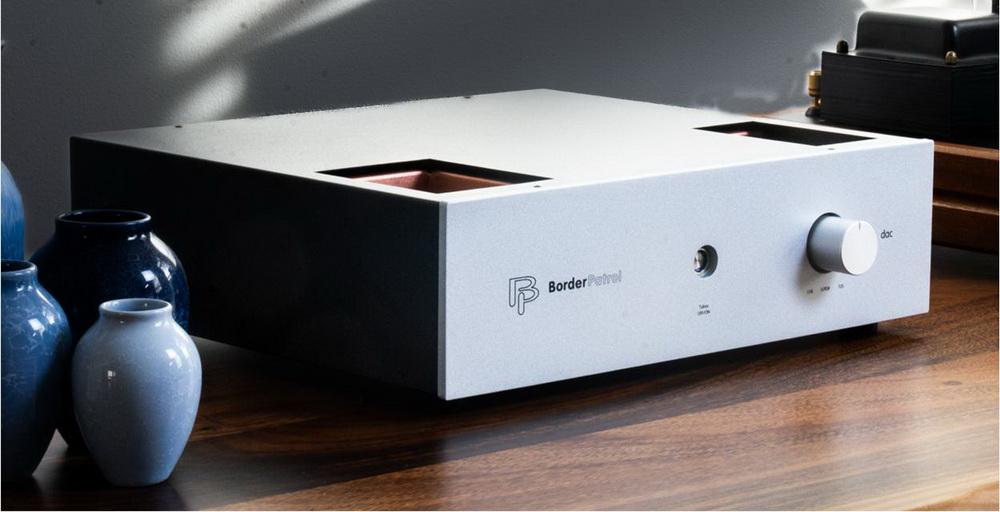
It features a rear-mounted switch that lets you roll multiple tubes in the output stage. It is compatible with several tube types, including 5687/E182CC, 7044, and 7119, as well as 12BH7 and 6463/6350 types when using adapters. After extensive experimentation, I found that the stock cryogenically treated Philips 5687 tube supplied with the unit performs best overall. Additionally, there is a master power button on the rear panel, along with an illuminated front button that turns the tubes on or off while keeping the digital circuitry powered.
Designed by Gary Dews of BorderPatrol Audio, this DAC isn’t chasing the modern digital ideal of hyper-resolution and technical dominance. Instead, it’s rooted in a philosophy that feels almost rebellious today: a life-like, organic sound that preserves the flow of music, even if that means stepping away from conventional “accuracy.”
Gary Dews: The Reluctant Iconoclast Behind BorderPatrol
The sound of this DAC is no coincidence; it stems from a deliberate way of thinking. What you experience with this DAC is not merely the outcome of engineering choices. It reflects decades of questioning assumptions—often quietly, frequently stubbornly, and usually in defiance of conventional wisdom.
Dews is not a marketing personality. He’s not a circuit-showman chasing headlines or spec-sheet supremacy. In fact, he belongs to a lineage of designers who seem almost uncomfortable with attention—builders who would rather let the work speak and speak slowly. But make no mistake: his ideas run deep, and they’ve been forged over a long arc of experience.
From Engineering Curiosity to Sonic Philosophy
Like many designers of his generation, Dews came up during a period when solid-state technology was rapidly displacing tubes. Efficiency, measured performance, and cost-effectiveness were the dominant values. But while the industry leaned forward into modernity, Dews found himself listening more critically—and questioning more deeply. Why did certain older technology tube designs, despite their measurable imperfections, sound more lifelike and feel more musically convincing? Why did newer, technically superior circuits usually sound hard, constrained, brittle, or emotionally distant?
These weren’t casual observations. They became the foundation of his design philosophy. During one of my many conversations with Gary, I asked him to describe his thoughts on component design. He offered….
“As far as my sonic philosophy is concerned, I'm all about natural timbre. The sonic signatures of acoustic instruments are very complex. The higher harmonics and resonances - the small stuff- define the sounds of instruments and are also the hardest things for a hifi system to reproduce. Lots of hifi systems can play loud, but its the micro-dynamic capability, or downward dynamic range that determines whether they will sound natural or life-like. If a system has the dynamic range to get the small stuff right, the rest; natural timbre, leading edge definition, decay, musicality, and a relaxed, stress-free presentation just falls into place.
Too many DACs lose the small stuff by using oversampling and a digital reconstruction filter (electronic guess work) and Op-Amps (hundreds of transistors with rakes and rakes of negative feedback). They then compound the problem by using a switch mode PSU which have an unnatural sound and ruin the noise floor. The end result of all those hard working electronic processes is a tense, hard, unnatural sound which lacks ease, real definition and decay and which ultimately wears you out.”
The BorderPatrol Origin Story
BorderPatrol Audio Electronics didn’t begin as a typical commercial venture. It started, like many meaningful things in audio, as a personal exploration. (The company name was chosen in the mid-90s, almost on a lark, when Gary needed a name for amps that he was building. It has taken on a different connotation recently.)
After playing around (his words, not mine) with a few 300B SET amplifiers, Dews initially gained recognition for his work on after-market power supplies for tube amps. This was in the mid nineties, a time when designers were moving toward fast, tightly regulated solid-state supplies, but he began revisiting older topologies that had largely been abandoned. Dews found that by using tube rectifiers in a choke input filter configuration, you could not only enjoy the cleanness and relaxed sound of the tube rectifier, but also improve the bass performance, something tube rectifiers are not usually known for. His efforts began to circulate quietly among enthusiasts. And something interesting happened. People heard it.
That reputation grew, and BorderPatrol was born.
The Road That Didn’t Rush
Most DACs evolve the way technology usually does—faster, more powerful, more complex. Each generation stacking new layers on top of the last, like a city growing upward. Dews went the other direction. He stripped things back.
Years ago, when the original BorderPatrol DAC began making the rounds in small, knowing circles, it didn’t win people over with fireworks. It didn’t have that showroom sparkle. What it had was something harder to explain—and harder to forget. It relaxed the room. Cue something like “Waltz for Debby” from Bill Evans, and instead of focusing on the leading edge of each piano note, you’d find yourself drawn into the harmonic bloom—the way the chords hang in the air at the Village Vanguard, the quiet conversation between piano, bass, and room.
That DAC, based on the classic Philips TDA1543, wasn’t flawless, nor did it claim to be. However, it hinted at something deeper, something related to timing, tone, and a sense of ease. The Zola DAC represents a commitment to that idea, continuing to explore and develop it further.
A Different Kind of Upgrade
When Dews moved from the TDA1543 to the AD1865 for the ZOLA DAC, he wasn’t chasing resolution in the modern sense. He wasn’t trying to “compete” with contemporary DACs. He was trying to remove a limit—without breaking the spell. And that’s a dangerous thing. Because the moment you start adding clarity, extending bandwidth, and sharpening edges, you risk reintroducing the very problems you were trying to avoid. That subtle digital insistence. That sense that the music is being constructed rather than released. Zola walks that line carefully.
If the original BorderPatrol DAC felt like sitting in the first row of a dimly lit jazz club, the ZOLA pulls the lights up just enough to show you more of what is happening on stage. It gives you more—more extension, more openness, more insight—but it never tightens its grip on the music. Most importantly, it never turns analytical.
The Circuit
The architecture appears simple: an AD1865 ladder DAC, no oversampling, no digital filtering, a zero-feedback tube output stage, and an old-school power supply design (with Gary’s refinements). However, this simplicity is intentional. Without oversampling, transients arrive cleanly, free from the artificial edge often found in processed digital audio. The tube output circuit, lacking negative feedback, allows harmonic textures and microdynamic shifts to remain intact.
The real essence lies in the power supply, which I consider fundamental to all BorderPatrol designs. The choke-input filtering and tube rectification in the ZOLA define its behavior, resulting in a relaxed sound without strain, even during dense music passages. A sense of "breathing" permeates the listening experience. I found myself coming back to that word; breathing.
Tubes, But Not as Decoration
The 5687 tube used in ZOLA’s output stage isn’t there to “add warmth” or soften the edges. That’s the cliché version of tubes. Here, it’s doing something more subtle. It’s shaping the way the signal breathes (there's that word again) as it leaves the DAC, not by coloring it, but by allowing a kind of elasticity—a natural expansion and contraction that mirrors real instruments.
Tube rolling, if you go down that path, doesn’t feel like tweaking tone controls. It feels like adjusting the system's emotional temperature. The ZOLA also easily reveals upstream choices. Transports, cables, and power all leave a clear imprint.
Copper and Silence
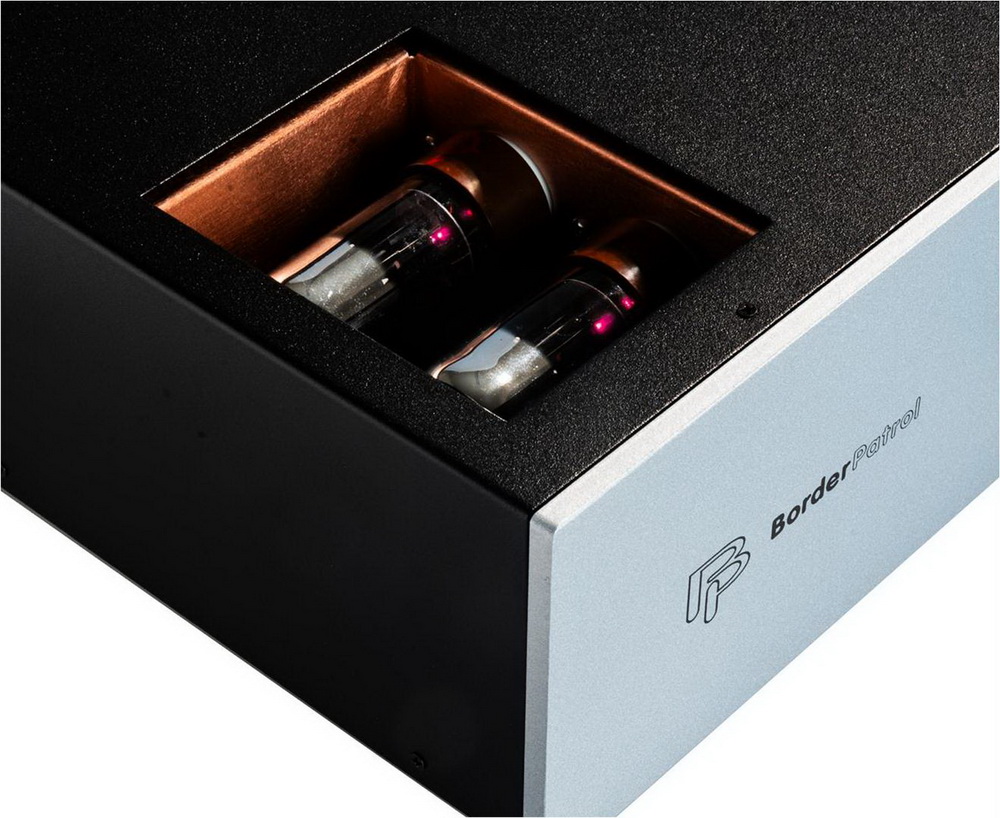
Then there’s the chassis. All copper, except for the aluminum face plate. Not for show, though it does catch the light in a way that feels almost old-world. It’s there because copper behaves differently—electrically, mechanically, even sonically. It damps. It shields. It grounds. And what you get from that isn’t something you can point to directly. It’s quiet. Not silence in the absolute sense—but a kind of stillness that makes everything else feel more present, more anchored.
The First Hour: Nothing Happens—Until It Does
The first time I sat down with the ZOLA, I did what I always do. I reached for reference material. I leaned into familiar listening cues. I waited for the system to tell me what it could do. It didn’t. No exaggerated details. No spotlight on transients. No etched imaging snapping into focus. If anything, it felt… restrained. And then, almost without realizing it, I stopped leaning in.
I leaned back.
So, I went to ground zero. “Waltz for Debby” by Bill Evans. That opening piano—fragile, spatially complex, harmonically rich—is where many DACs reveal themselves. You listen to the attack, the decay, the way the instrument sits in space. The chords didn’t just sound accurate; they sounded complete. The decay didn’t just fade—it lingered with purpose. The room wasn’t suggested—it was implied.
Then I moved to something completely different—"A Case of You” from Joni Mitchell’s Blue. Her voice can easily tip into thinness or edge on lesser digital. Through the ZOLA, it carried weight without heaviness, intimacy without spotlighting. You could hear the fragility in her phrasing, the slight shifts in breath and tone, but nothing felt isolated or dissected. It simply felt more human.
Something like “Giorgio by Moroder” from Daft Punk revealed another side. This track builds in layers, moving from spoken word into dense electronic orchestration.The ZOLA didn’t separate those layers as distinctly as some DACs I’ve heard—it connected them. The transitions felt more like evolution than assembly. The music unfolded as a continuous narrative rather than a collection of parts. And that distinction, subtle as it is, changed how I experienced the track.
I tested ZOLA’s performance in the bass region with a few bass tracks, including Massive Attack’s “Teardrop.” The ZOLA does not deliver bass in the modern “tight and punchy” style. Instead of focusing on impact, it emphasizes weight and flow. The bass line in "Teardrop" has a rounded, continuous quality that envelops you rather than just hitting you. When I switched to a more conventional DAC, the bass became more defined and percussive but also more segmented.
Nina Simone’s "Wild Is the Wind" showcases her voice, which embodies both fragility and strength, often within the same phrase. The ZOLA captures this duality without exaggeration. It provides body, texture, and breath, but, more importantly, it creates space around her voice. It doesn't feel confined; instead, it floats, expands, and recedes. This sense of dimensionality felt less like mere imaging and more like an authentic presence.
Aretha Franklin – "I Never Loved a Man (The Way I Love You)"
Aretha's voice presents a challenging test. If pushed too far toward clarity, it hardens; if too much warmth is added, it loses its urgency. The ZOLA system navigates this balance beautifully. Her voice comes through with richness and texture, while also exhibiting a kind of emotional flexibility. I could easily hear the breath behind her phrasing and the way she leans into certain lines—not exaggerated or overly emphasized, but present and genuine.
Taking a Detour: Hearing It in Context
At this point, I did what most of us eventually do—I reached for comparison. Not as a shootout, but as a way of understanding where Zola sits in the broader landscape. I swapped in a modern delta-sigma design—The Teac UN701N, known for its precision and detail retrieval. Immediately, the presentation shifted. Edges sharpened. The leading transients of notes stepped forward. Micro-details—reverb tails, low-level information—became more explicit.
Impressive, no question. But after a few tracks, I noticed something else. The music felt slightly organized. Not in a bad way, just in a way that reminded me I was listening to a system interpreting a recording. Going back to Zola, that sense of interpretation softened. The same track unfolded with less emphasis on edges, but more continuity between layers. It didn’t spotlight detail—it allowed it to emerge without emphasis.
That listening session led me to recall other DAC’s that have passed through my hands. With Audio Note DACs, there’s a shared DNA. Both prioritize flow and tone over conventional resolution. But the Audio Note leans into density—there’s a richness, a saturation that feels almost tactile. The ZOLA is more open, a bit more transparent, less about weight and more about ease.
LampizatOr brings a different flavor—bigger, more dramatic, more overtly expressive. There’s a sense of scale and harmonic boldness that can be initially captivating. The ZOLA is quieter in its presentation, a bit less boisterous. But over time, that restraint starts to feel like honesty. It doesn’t embellish—it reveals.
The difference between the BorderPatrol ZOLA DAC and the Linear Tube Audio Aero DAC came into focus for me the way these things always seem to—late at night, lights low, when you stop thinking about gear and just let a familiar track unfold. I went back to “Don’t Know Why” by Norah Jones, a piece I’ve heard more times than I can count. What struck me wasn’t that one was right and the other wrong, but how differently they told the same story.
The Aero DAC does a nice job. However, the piano notes are more pronounced and clinical than the ZOLA DAC. Norah’s voice comes across as more distant in the acoustic, while the piano’s articulation on the attack can sound a bit forward. It presents a clear view, but at the cost of some emotional depth, focusing more on detail than on timbral richness.
Through the ZOLA, the presentation settles in with that unmistakable sense of ease. Her voice isn’t just placed between the speakers—it has shape, breath, and a kind of quiet gravity. The piano carries a natural weight, not just tone but body, and the music moves with an unforced continuity that feels less like playback and more like recollection. The music washed over me.
Takeaway
With the Zola DAC in my system, I listened longer. I stopped skipping tracks. I found myself revisiting digital files I had been avoiding—not to analyze them, but to reconnect with them. And that’s the difference that matters most. There’s gear that impresses you. And then there’s gear that changes your relationship with music. The ZOLA did the latter for me.
The ZOLA DAC is not trying to be the most detailed or the most precise. It’s trying to get out of the way. To remove just enough of that subtle, underlying digital tension so the music can come through in its natural shape, unforced, unconstructed, unhurried.
It doesn’t push.
It doesn’t insist.
It simply allows. It creates a space where the music can breathe.
And if, like me, vinyl is your baseline, this is one of the few digital sources I’ve heard that speaks a similar language, and it now sits in my main system.
BorderPatrol Zola DAC in black or silver $3950
Review system:
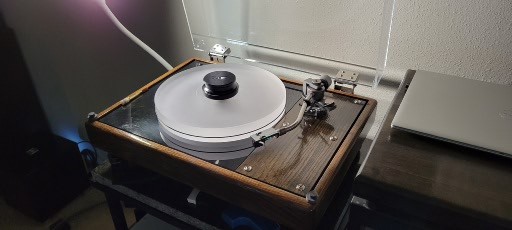
Turntable: The Wand 14-4 Master w/ Dark Light tonearm
Cartridges: Goldenberg Maestro, Grado Statement 3
Phono Stage: Tom Evans Groove + SRX MK2.5, Genesis Simplicity
CD Transport: Jays Audio CDT-3 MK3, McCormack Ultra SST-1
Preamp: SMc Audio VRE-1C, Audio Research Reference 6SE
Amplifier: SMc Audio Ultra GT25 DNA 0.5 Monoblocks, Audio Research 160M MKII
Digital: Innuos Zenith Mk III, Phoenix USB, Network Acoustics Muon Pro Filter,
Tempus Switch, BorderPatrol ZOLA DAC, SMc Audio Ultra DAC.
Speakers: Acora Acoustics VRC
Tape: Crown CX 822, SX 824
Cables: Cardas Clear Beyond, Audience Front Row Reserve, SilverSmith Fidelium, Genesis Absolute Fidelity
Accessories: Stillpoints Apertures and Ultra 1E, Kirmuss KA-RC-1, Wally Tools Cartridge tools, DS Audio ION 001, Shunyata Altaira Grounding System
Power: Shunyata Delta-X and Typhon T30 with Sigma-X V2 power cords
Room Dimensions: Dedicated 20’ x 24’ with 15’ cathedral ceiling, double brick walls, and a concrete slab. Assorted Treatment.
Specifications
Specifications
Dimensions: 14.25” x 13” x 4.5”
Output tube: 5687
Rectifier Tubes: 6X5GT x 2
Inputs: USB, Coax, BNC, Toslink
Outputs: RCA
Manufacturer Information
BorderPatrol Audio Electronics
9657 Granary Place
Bristow, VA 20136
Phone: (301) 705 7460
Gary Dews owner/designer
Email: borderpatrolaudio@gmail.com