
A Chemical Engineer Talks Record Cleaning—Fluids and Cavitation
A surfactant is just soap
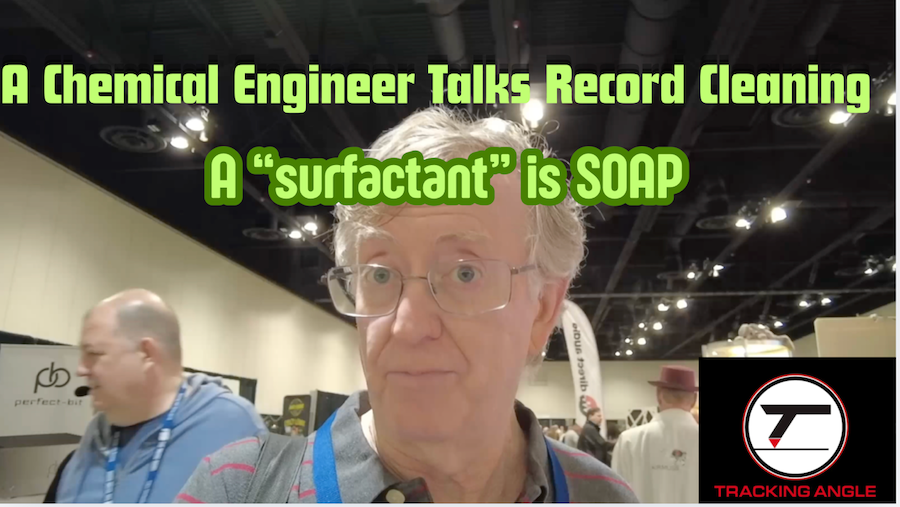
At 2023's AXPONA I spoke with this gentleman about record cleaning: cavitation, surfactants, the molecular charges of water and vinyl and all kinds of interesting facts related to record cleaning. Along with being a chemical engineer, he's an audiophile and a record collector. This was published on YouTube in an AXPONA video but Charles Kirmuss asked me to find and send it to him and I think now is a good time to run it separately.
Why? Because I read all of these "recipes" for home made record cleaning fluids that contain too much alcohol and too much SOAP. Soap? As he explains "surfactant" is another word for SOAP. The surfactant is designed to reduce water's surface tension and make the cleaning fluid flow more easily into the grooves, but does it really do that? Watch what he says.
If you're using a vacuum machine type record cleaner and you cover the record with surfactant and high alcohol content fluid and then vacuum it off, you are leaving a molecular coating of soap and probably alcohol on your record. The vacuum does pull most of the fluid off the record but the rest dries up on it.
As he explains, if you use cavitation, the cavitation action (if the machine is properly designed) softens oils and fingerprints that you should be able to wipe away, no surfactant needed. I use the Kirmuss machine but also the KLAUDIO, which works with pure cavitation, no surfactant or other fluid added and it's the most effective record cleaning device I've ever used (also costly). I use the Kirmuss machine to restore records and it works removing layers of baked on fluids accumulated on older records (Kirmuss also demonstrates how new records have mold release compounds heat separates from the vinyl pellets and brings to the surface that can be removed to produce better sound).
I've read reviews where people claim adding a surfactant to the KLAUDIO water is beneficial. It is not! That only adds soap that the fan dries on the record, which denigrates the KLAUDIO cavitation process.
The other critical issue discussed here is the molecular charges of water and vinyl. They are the same. Therefore water and vinyl repel each other like magnets! And guess what? Surfactants do not change that fact. He explains that Kirumuss uses an ionizing agent to change the charge of the record so it's the opposite of water, which is critical to get the water to be attracted to the record and not repelled by it! It seems no one else is doing that.
This gentleman also explains (without explicitly saying it) why putting 8 or 6 closely spaced records on a spit and putting it in a cavitation vat is not likely to cavitate the record at all, and if it does at all, it's possible damage could occur.
So watch what he says.
My conclusion is, rather than saving a few dollars and concocting your own fluid based on what some online non-authority suggests, you are much better off buying fluid from a known company that specializes in record cleaning fluids and formulates them for specific purposes like vacuum machines or cavitation machines. The same fluid isn't necessarily useful in both circumstances. I'd also be wary of buying fluids from companies that manufacture record cleaning machines. That doesn't make them chemists! Record cleaning fluid companies I trust include Audio Intelligent, and Disc Doctor.