
Because The Book
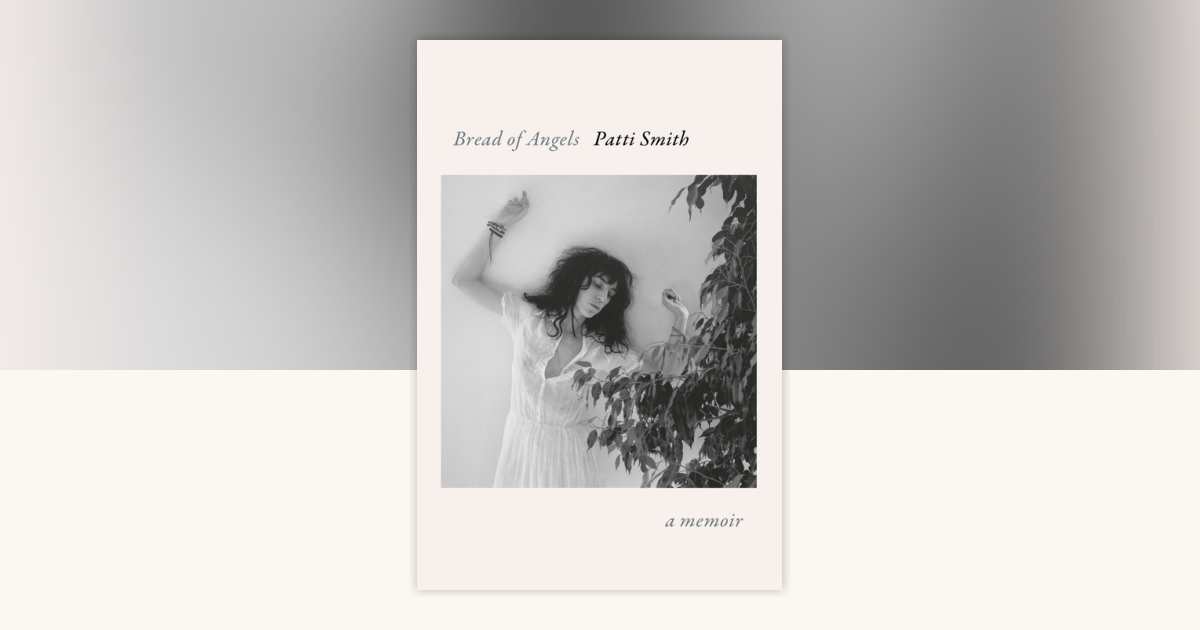
Review of Patti Smith's "Bread of Angels"
Poetess-rocker Patti Smith returns with memoir number four. At some point in her 2010 acceptance speech at the National Book Awards, a tearful Smith told those assembled that she hoped:
“Please, no matter how far we advance technologically, please don’t abandon the book. There is nothing in our material world more beautiful than the book.”
And while there was no one in the audience to stand up and say, “What about the 7” single?”, apparently the applause was thunderous.
Sure, she was playing to the gallery, but her bibliography bears that sentiment out. Her “Just Kids” memoir may have taken the top prize for non-fiction that year, but long before that and long since her commitment to the written word is clearly a steadfast thing. Smith has published volumes of poetry, lyrics, and no less than four personal memoirs – the latest of which was released just shy of her 79th birthday.
“Bead of Angels” is 288 pages of Smith “telescoping back” towards her origin story and landing 8’661 feet above sea level at the Columbian national theater where she is hobbled momentarily by a bout of altitude sickness. In between we get the insights into her relationship with husband/guitarist Fred “Sonic” Smith, her musings on Saints, and a barrage of personal moments that will offset any expectations you might have of this being a rock memoir.
Smith grew up in grim circumstances. By the age of four her family had moved eleven times. Sickly, Catholic and tomboy-ish, she remembers walking the mile and a half to kindergarten on her own. But through the force of sheer will, she met every rat-infested challenge that came her way. At one point she remembers being on the receiving end of an unsettling hiss while walking by a local fortune teller. A family friend explained it away and soothed her by explaining: “…You’re special. Don’t ever doubt that.”
Books often helped. A devotee of “Alice’s Adventures In Wonderland,” Nancy Drew mysteries and “Little Women,” her reflex was to treat many of these encounters with print as small but intense revelations. An early fascination with the news out of the 1959 crisis in Tibet was her first taste of the connection she’d develop for Buddhism and the work of His Holiness the Dalai Lama. As a teenager, boys got there before Rimbaud and before Dylan, but she recalls those bright moments as if they’d been laid in with impact driver:
“This is what the writer craves, in a café in the earliest hours, in an empty drawing room of a hotel, or scrawling in a notebook in the pew of a silent cathedral…Johnny Stahl tying my bootlace. Butchy Magic’s fingers extracting the stinger. The unsullied memory of unpremeditated gestures of kindness. These are the bread of angels.”
People like the Jack Black character in High Fidelity expect you to have had Funhouse and the first Velvets album playing alongside your bassinet in order for your music bonafides to be legitimate. But having sidestepped those records by accidentally being born too late, there was also zero awareness of Smith’s Horses. But after a chance assignment in 1998 put us in the orchestra seats in front of her and her band, I found myself at one point standing on my seat; semi-converted but completely reborn in Rock.
But in these pages the 79 year-old author continually crosses the streams between the grandiose and the historic (like befriending a young Jimmy Iovine who would eventually connect her to Springsteen…), Smith’s style can feel achingly precious as time. But the reason for that is mostly because all of this is clearly precious to her:
“Everyone is dead, all is forgotten, echoes a voice. I inventory those still with me. I go no further than the face of my sister, innocent yet all knowing. So long as she is here our memories are ensured. But what of the future when we are both gone? Write for that future, says the pen.”
And that seems reason enough.