
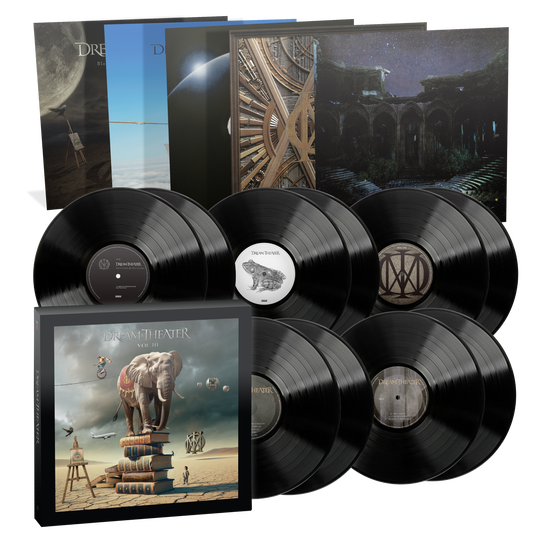
Dream Theater Forges a New Chapter on Ten LP “Vol. III”
The trilogy of box sets from progressive metal’s poster boys is complete
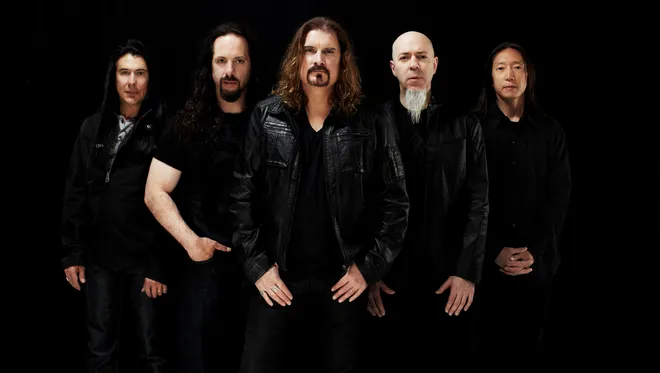
Dream Theater was in an interesting position within the progressive metal landscape at the turn of the 2010s. They were deemed legends, having won artistic liberation instead of caving into commercial demands by the record label, and they still had the spark for exploring fresh musical ground. Their 25th anniversary in 2010 honed in on how far the group had come from playing in rehearsal halls at Berklee College of Music to their hometown arena, New York’s Madison Square Garden; the ultimate watershed moment. All was riding high until the unthinkable happened in September 2010: drummer Mike Portnoy resigned from the band. It was the first time Dream Theater faced the loss of not only a long-standing member but also a co-founder who served as co-producer and a primary songwriter. Out of seven highly reputable drummers that auditioned, it was announced in mid-2011 that Mike Mangini would fill the vacant drum stool, enabling Dream Theater to forge a new chapter in their creative journey.
For over a year, Dream Theater’s catalog has undergone a much-needed reissue campaign with the release of the Vol. I and Vol. II box sets by Rhino Records. These collections brought back in print albums that fetched three-figure values in the aftermarket, albeit original pressings or other reissues. Limited to a one-time run of 2,000 copies on average, the sets usually sell out on Rhino’s D2C webstore, and the individual albums are reissued on clear vinyl as part of their Rocktober campaign. Vol. III focuses on both the remaining albums Dream Theater recorded for Roadrunner and the early phase of the transitional Portnoy-Mangini era.
Packaging
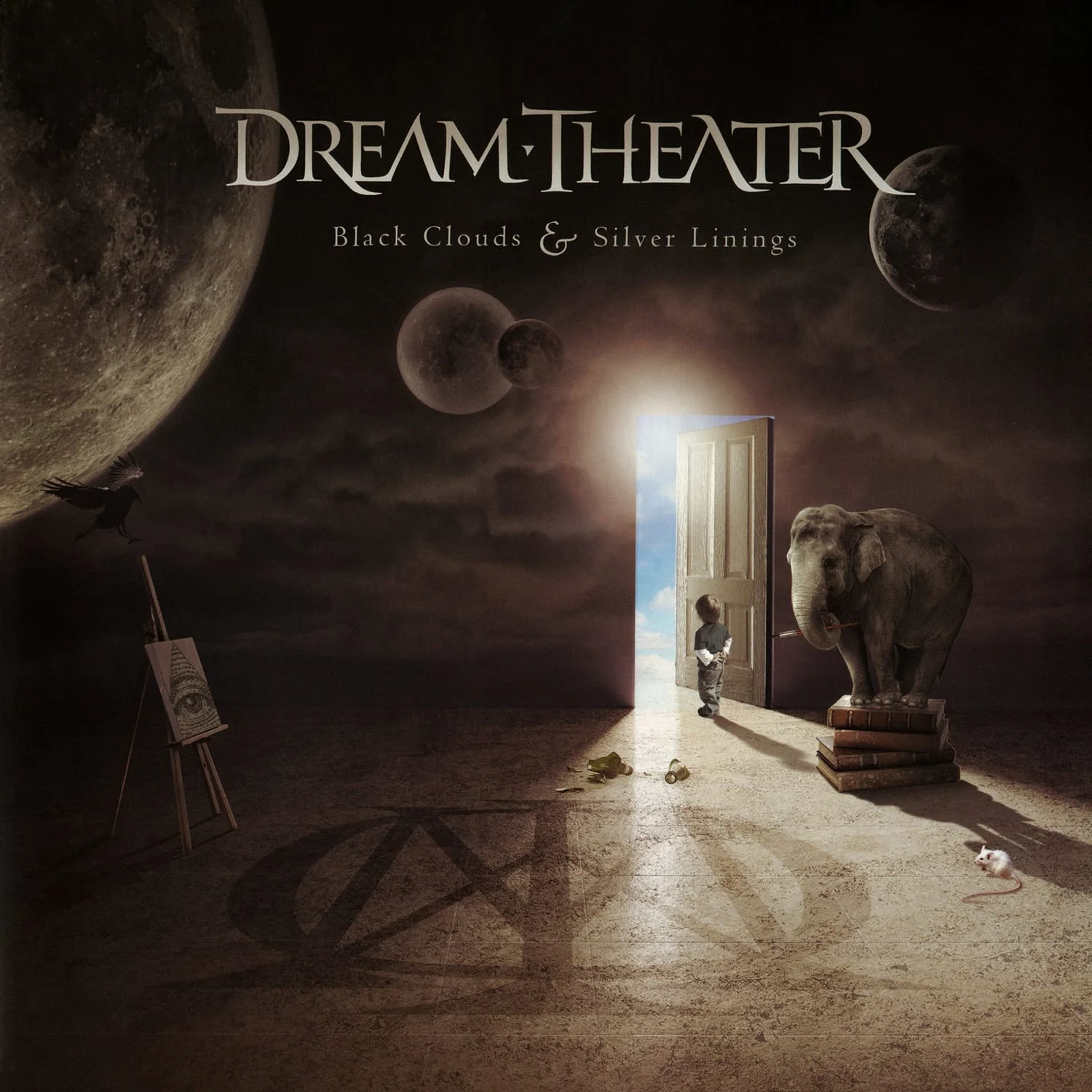
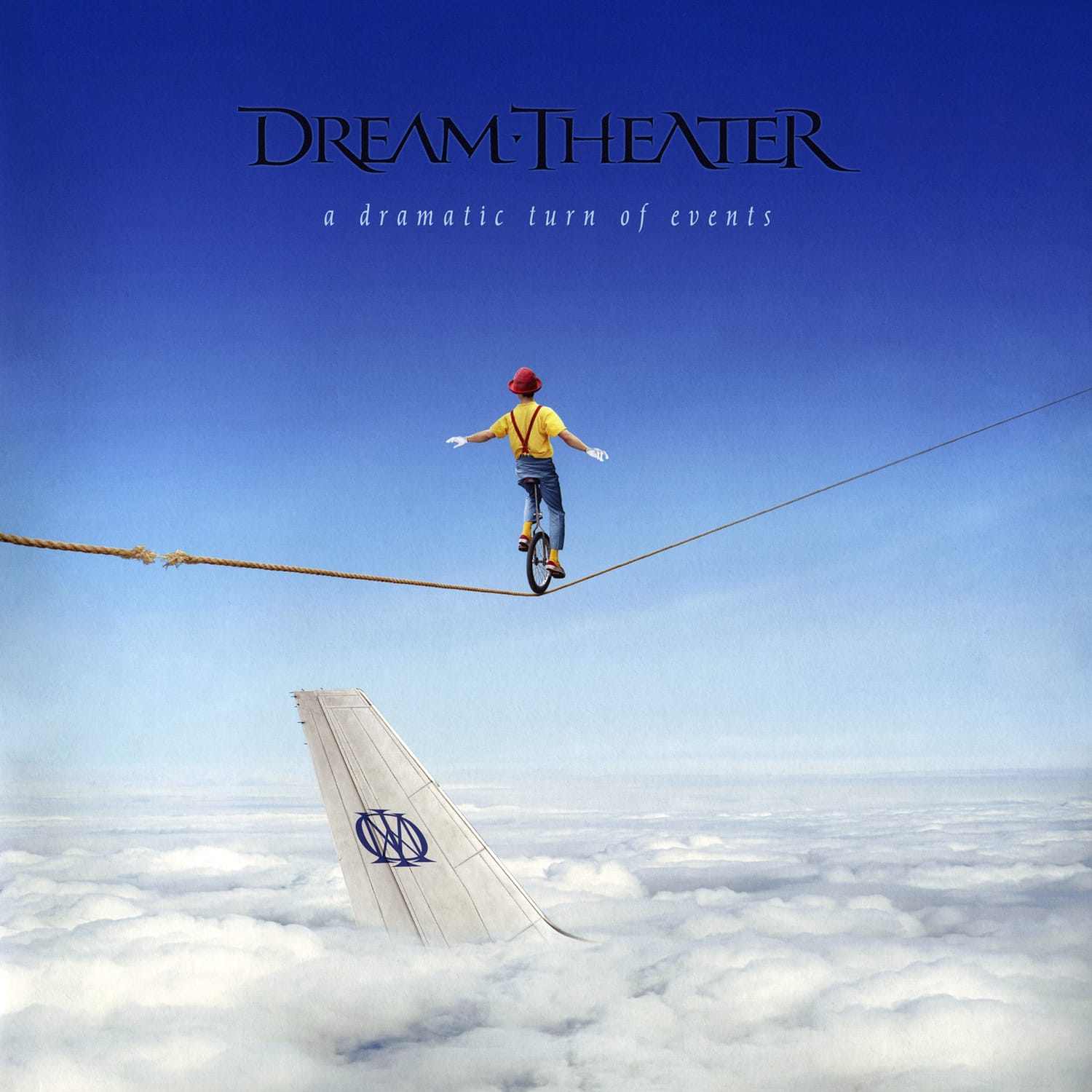
Sustaining the approach and aesthetics of the previous two volumes, Vol. III features a newly designed cover by Hugh Syme that bears a spot-varnished matte hardbound slipcase. References to each album within the set feature an elephant on top of a stack of books (Black Clouds & Silver Linings), a unicyclist riding a tightrope (A Dramatic Turn of Events), the group’s Majesty symbol (Dream Theater), and the computer-esque NOMACS (The Astonishing). The way each album is presented leaves much to be desired. Whereas original pressings were rich in visual detail, these reissues have a grainy quality rather than hypothetically utilizing the original files Roadrunner has in their vaults. The Astonishing had each act originally packaged in specially designed gatefold jackets and housed inside a slipcase that bears the album’s actual cover; this box set only retains the gatefolds. Some unique artwork elements, such as the metallic silver center labels on A Dramatic Turn of Events and the embossed glossy finish on the self-titled album, are also missing. However, reformatting the printed inner sleeves as inserts and housing the records appropriately in poly-lined inners improves upon the originals. Pressed at Optimal, each standard weight record was flat and extremely well pressed.
The Music & Sound
Rather than recycling the metal parts from original pressings, each album was recut by one of Optimal’s anonymous cutting engineers.
Black Clouds & Silver Linings
Produced by Mike Portnoy and John Petrucci
Engineered by Paul Northfield
Mixed by Paul Northfield
Mastered by Leon Zervos (Sterling Sound)
Music

Sound

Whereas Train of Thought was Dream Theater’s heaviest album musically, 2009’s Black Clouds & Silver Linings is lyrically heavy, drawing inspiration from disturbing experiences and difficult moments in life. John Petrucci recounted a childhood car accident and an uncanny encounter during an Italian vineyard tour on “A Nightmare to Remember” and “The Count of Tuscany” respectively. Mike Portnoy’s “The Shattered Fortress” is the last entry of his ‘twelve-step saga,’ a series of songs about his journey through Alcoholics Anonymous, spanning multiple albums dating back to Six Degrees of Inner Turbulence. His most touching contribution is “The Best of Times,” a tribute written for his father, who had succumbed to cancer during the album’s sessions. Other songs on the album pertain to Freemasonry (“A Rite of Passage”) and overcoming writer's block (“Wither”). As of writing, Black Clouds & Silver Linings is the highest charting Dream Theater album, just one spot shy of reaching the Top 5 in the Billboard 200, and was Mike Portnoy’s last album before his return to the group in 2023.
Out of the albums featured in this set, Black Clouds & Silver Linings shines the most. Between John Myung’s droney bass, John Petrucci’s crunchy guitars taking residence within the midrange, and Jordan Rudess’ shiny sitar-esque keyboards, a track like “A Rite of Passage” doesn’t single out any facet of the EQ spectrum. Instances where the opening instrumentation is sparse, whether it's the unaccompanied piano/strings on “The Best of Times” and the clean guitars on “The Count of Tuscany,” build the soundstage full of elegance and wonder. James LaBrie’s vocals throughout the album have incredible character, sounding direct and centered on “The Shattered Fortress” during the call-and-response section, or smoother on the mellower “Wither.” “A Nightmare to Remember” is such a strong album opener, but it fails to convey its power. It's huge, horrific chords could’ve sounded bolder. Though Mike Portnoy’s kick drum has a tight attack, his super-fast footwork sounds messier than tight and precise. Technically, “Wither” and “The Shattered Fortress” switched positions only on the vinyl edition of Black Clouds & Silver Linings due to time constraints, which explains why a few seconds of “The Shattered Fortress” precede “The Best of Times”; how did this slip through quality control?!
A Dramatic Turn of Events
Produced by John Petrucci
Engineered by Paul Northfield
Mixed by Andy Wallace
Mastered by Ted Jensen (Sterling Sound)
Music
Sound
A Dramatic Turn of Events is the most aptly fitting title for Dream Theater’s first album with drummer Mike Mangini, released in 2011. Not intentionally referencing the obvious, the theme of the album ties into its lyrics on the aftermath of historical changes, notably the contemporary Arab Spring uprisings. Having a new member on board made it more of an incentive for Dream Theater to undergo a musical reconstruction, placing emphasis on the material’s purpose instead of pursuing the same work ethic they’d had in place for the last ten years or so; the result was an album that retained the spirit of older works like Images and Words. Notable highlights include “Bridges in the Sky” and “Breaking All Illusions,” two of the finest lengthier compositions in the Dream Theater canon, and “On The Backs of Angels,” earning the group its first Grammy nomination for Best Hard Rock/Metal Performance. A Dramatic Turn of Events is straightforward and focused in its approach, and is arguably the finest album of the Mangini era.
A Dramatic Turn of Events takes a dramatic turn when it comes to dynamics. The overall mix is balanced and not overbearing, but suffers from sounding anemic due to the excessive space in the top end. The choruses of “Build Me Up, Break Me Down” and “Bridges in the Sky” could’ve sounded more impressive if the bottom end was boosted (it’s nothing that a tone knob on a receiver can’t fix). However, the chord hits during the introduction of “Lost Not Forgotten” provide a subtle punch. “This is the Life” benefits from having a rich instrumental arrangement, but James LaBrie’s vocals sound overly filtered. Newcomer Mike Mangini brought a lot of technical flair to Dream Theater’s musical palette, and some of his percussive prowess comes into play on the dynamic “Outcry.” Like most subtle Dream Theater tracks, “Far from Heaven” has Jordan Rudess’ full-bodied piano and intimate vocals. Another mastering faux pas is how “Build Me Up, Break Me Down” abruptly ends Side 1 instead of fading out; sheer laziness!
Dream Theater
Produced by John Petrucci
Engineered by Richard Chycki
Mixed by Richard Chycki
Mastered by Ted Jensen (Sterling Sound)
Music
Sound

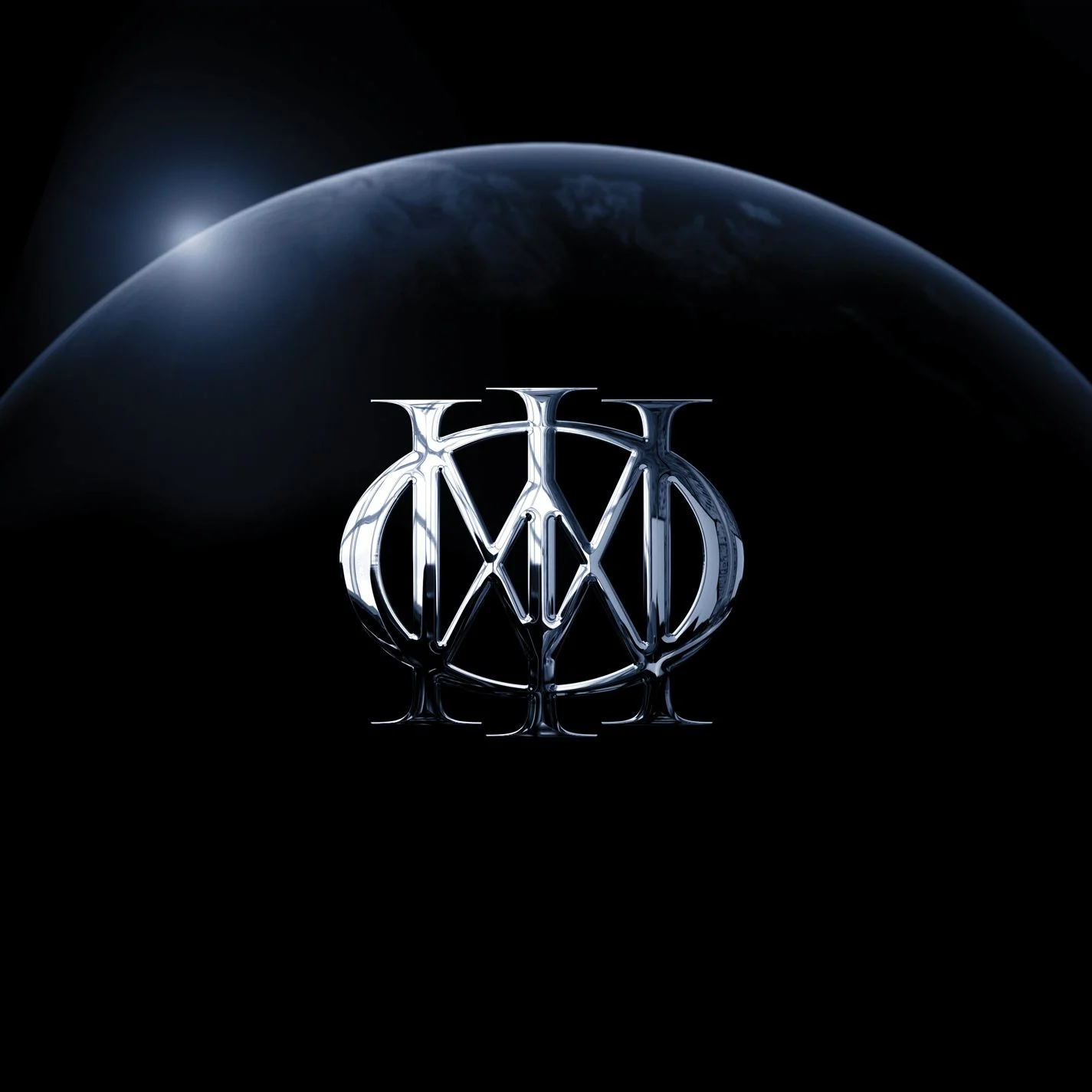
Eponymous albums often resemble the launching pad for a new artist, a means of reinvention, or a definitive artistic statement. Dream Theater’s decision to release a self-titled effort as the follow-up to A Dramatic Turn of Events in 2013 was a means of pursuing their newly structured musical identity and exemplifying what their music was all about. Instead of crafting a typical album of lengthy epics, the group challenged itself by writing shorter (as in six minutes on average) material, boiling down the essence of its sound. Tracks like “The Enemy Inside,” Dream Theater’s second consecutive Grammy nomination, and “The Looking Glass,” a Rush pastiche, have simple verse-chorus structures and shortened instrumental passages, but leave the group’s virtuosity intact. As if the shorter arrangements were a radical approach, “Illumination Theory” and its 22-minute length wrap the album in traditional DT fashion, making diehards feel at home. Dream Theater’s self-titled album is an artistically brave album for a group that was aware of what they did best and consistently gave fans albums they’d come to expect.
This album is the poorest-sounding of the four. Excessive compression flattens out any life in the recording, making the vocals also sound congested and lost. There are moments where it has potential, such as the bold guitars at the introduction of “The Looking Glass,” but the track suffers when the rest of the band comes in. What a shame that the album where Mike Mangini was given full creative reign in his arrangements is plagued by sampled triggers, resulting in cut-off snares and thin kick drums that lack depth. In a more positive light, his monstrous kit is mixed superbly and dances around the speakers playfully on the instrumental “Enigma Machine.” Some of this pressing’s redeeming qualities are how the piano and vocals during the first verse of “The Bigger Picture” breathe efficiently. Things improve further on “Behind The Veil,” where James LaBrie’s vocals sound improved, and John Myung’s bass tone is well pronounced while retaining some grit. “Illumination Theory” is the moment where the album really comes together sonically. The organic strings during the atmospheric middle section give the suite its effective pacing before Mangini and Myung snap into a venomous flurry of syncopated madness. It’s a hair-raising moment when the strings soar back in for a beautifully melodic climax, and John Petrucci’s guitar solo is the ultimate sendoff.
The Astonishing
Produced by John Petrucci
Engineered by Richard Chycki
Mixed by Richard Chycki
Mastered by Ted Jensen (Sterling Sound)
Music
Sound
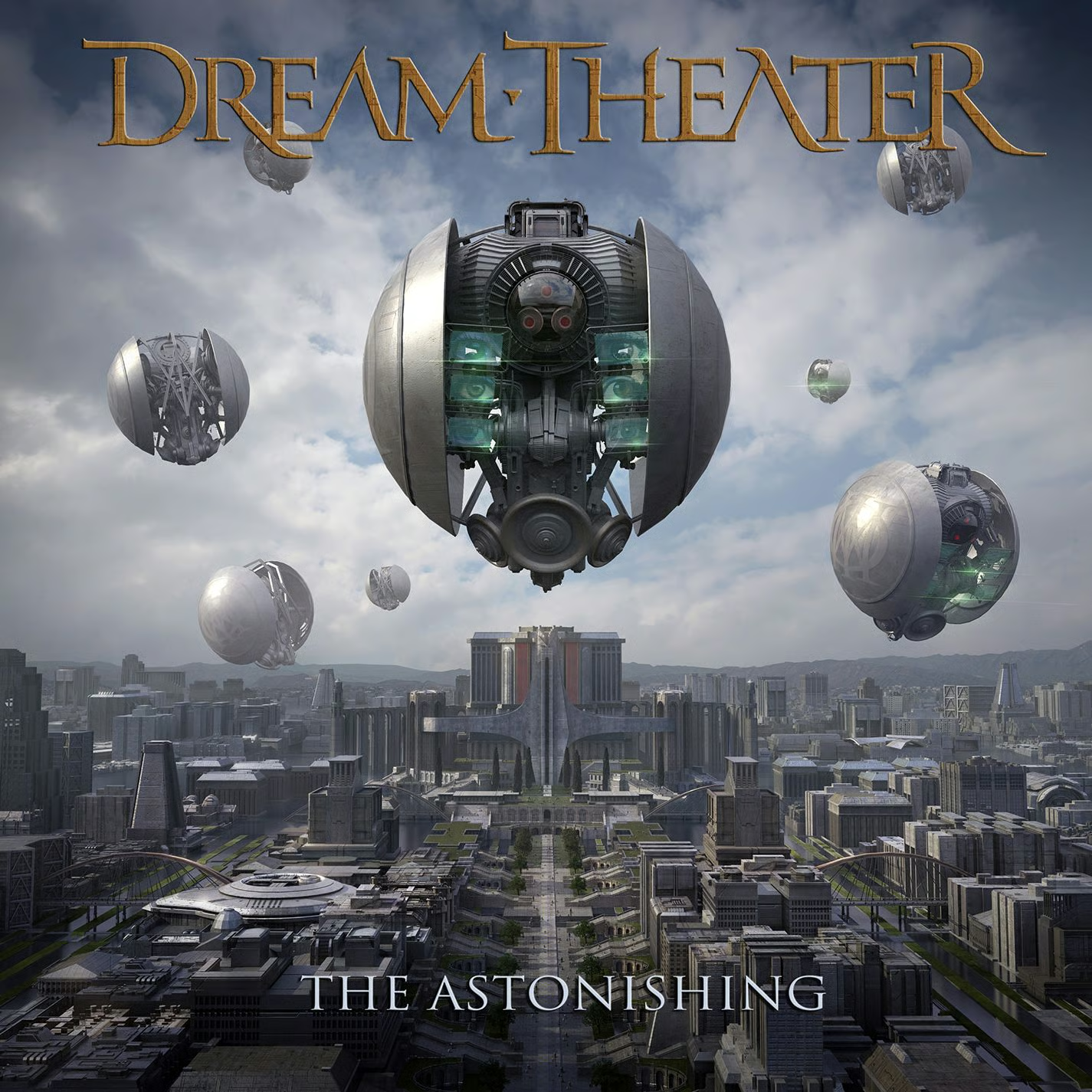
Driven by complex storytelling and stretching the limits of musicianship, concept albums lend themselves to all sub-genres of progressive music. Dream Theater released their second and most ambitious concept album, The Astonishing, in 2016. Guitarist/primary lyricist John Petrucci, inspired by Star Wars and The Lord of the Rings, crafted a story about a hero with the ability to play music in a future dystopian world where the artform is long forgotten. Split into two acts and featuring several characters and settings, the album has the pacing of a Broadway-style musical and plays out like an aural movie (original pressings even came with a map of the fictionalized world the story takes place in). It’s also one of those concept albums that relies almost too heavily on the storyline, whereas tracks like “The Gift of Music,” “Moment of Betrayal,” and “Our New World” stand strong out of context. The Astonishing is admirable for its scale and ambition, but it is far from being the starting point for any Dream Theater novice. Some fans love its broadening scope, others felt it was too much of a departure, relying more on melody than heaviness. For those brave enough to encounter it, don’t make any plans for the 2 hours it takes to experience it from top to bottom.
The Astonishing suffers from some of the flaws the self-titled album had. As suspected, Mike Mangini’s triggered drums, though panned nicely, sound like there's a veil over them. It doesn’t help either that there’s a cut-off around the highs that hardly gives the mix space to breathe; it makes the original CD sound superior. In an odd twist, the electronic interludes (meant to resemble the NOMACS in the storyline) have this fittingly bright, digital sheen that sounds realistic. Some of the more heavy-handed moments of drama and impact are improved, mostly at the expense of having orchestrations sprinkled throughout the album. The use of choirs, particularly on “The Gift of Music,” really lifts the arrangement to another dimension. John Petrucci makes extensive use of the acoustic guitar throughout most of the album, and it sounds the most chiming during “Heaven’s Cove.” His and Jordan Rudess’ natural piano mesh together at numerous points, creating a rich textural tone. James LaBrie’s vocal performances sound incredibly versatile. Having to emulate his voice to fit specific characters, it's astonishing (no pun intended) how he can go from sounding sinister and maniacal on “Lord Nafaryus” and “Three Days” to soft and angelic on “Act of Faythe” and “Begin Again.”
Conclusion
Vol. III is an immersive and explorative finale of a journey that took over a year to bring Dream Theater’s catalog back into the hands of the vinyl-buying public. Even though the group’s affairs have been more celebratory recently due to their 40th anniversary and Mike Portnoy’s return, the period this box set covers is Dream Theater at their bravest, facing adversity and coming out triumphantly.