
.jpg)
Happy March 7th Birthday Arthur Lee
Love front man died Aug. 3, 2006 would have been 81
(Lead photo of The Whisky A Go Go, marquis showing Love headlining by Henry Diltz courtesy of Gary Strobl at the Diltz Archive).
Harvey Kubernik In 1960 Arthur and you were going to Susan Miller Dorsey High School in Los Angeles. You lived in the Crenshaw Adams District. In 1957 as a tyke in Crenshaw Village, I learned how to swim in the newly built and fully integrated Dorsey swimming pool. We swam together.
Johnny Echols: There were no racial problems. Things were different there. We did not have that kind of chaos or animosity, or racial shit, pre summer of 1965 Watts riots, or after it. It’s so strange that it started later on.
“When I think what happened was that there was an enclave there and people were interested in bettering themselves and the community where Arthur and I lived there were Japanese and white people living there, Hispanic, black, all in the same area. We’re in the same Boy scout troupes and we spent the night at each other’s homes, ate at each other’s houses. We never noticed any of that crap.
“In the ‘60s the cops didn’t mess with us and we never got pulled over and hassled in our cars. We were cool because Los Angeles was pretty cool and the cops were pretty cool even then. They didn’t do stuff or out to just profile, unless you lived way over near Watts or way South Central, they were probably hassling those people. But where we lived it was such a cosmopolitan area that we rarely ever recall seeing a cop car drive down 27th street. They just didn’t bother us.
“I was born in Memphis, Tennessee. Arthur and I were born at John Gasten Hospital but we actually lived right across from each other. I knew musician Charles Lloyd from Memphis. He’s still a good friend of my family. I knew Charles and later I met guitarist Gabor Szabo and Frank Strozier, an alto saxophonist. These were people who I met who were friends of my family.
HK: Arthur used to check out your shows in 1963 before Love started.
JE: Well, the thing was, Arthur started coming to my gigs before he started playing. Because he was a conga player and I would take him around to gigs I played with Henry Vestine and Larry Taylor, before they had Canned Heat.
“We had a group that played frat parties when we were like age 15. Arthur would hang out and come around. So, he kind of trusted that I knew what I was doing. And one of the things that I learned from Adolph Jacobs [a guitarist with the Coasters] was that you’re always supposed to make the singer shine.
“So, what you do is leave room for the singer to express himself and always, always play to the music and not to yourself. If I wanted to, I could cut loose on songs and do, you know, a lot of flourishes and stuff that were superfluous really to the music. I chose to try and make the song the king, and the songwriter. The vocalist should shine rather than the other way around.
HK: You met and encountered Jimi James aka James Marshall Hendrix [Jimi Hendrix] in 1965. Jimi would later record with Arthur on the second and final Love album for Blue Thumb Records. Jimi appears on the lead track, “The Everlasting First,” done at a 1970 session in London at Olympic Studios.
JE: I first met Jimi in late 1964 or maybe 1965, before he was with Little Richard at Ciro’s nightclub in Hollywood at The California Club in downtown Los Angeles.
“He was playing with the Isley Brothers. He had come down to the California Club because the O’Jays were looking for a new guitar player. And he came down to kind of audition for the job. I don’t think he got the job but that was when I first met him. When I came into the club Jimi had my guitar. That’s a no-no. A stranger especially does not pick up a guy’s guitar and start fiddling with it. This was like a 1961 Esquire guitar. At the time he did not impress me as a guitar player. He was basically like a pedestrian workmanlike guitar player. He was playing what most guitar players did at the time. And he was using no effects.
“Because when you don’t have that kind of over driven distortion the notes don’t sustain as long. That’s how he played. He also wore his hair in a process. And a cardigan type of suit sports coat jacket. And real tight pants that we all wore at the time. The first thing I remember about him, which is weird, was that he used a lot of Right Guard deodorant. Because at that time Jimi didn’t have a lot of money, hell, none of us did, and he just reeked of Right Guard. What he would do, instead of having his clothes at the cleaners, he’d just kind of hose them down with Right Guard. And everything started to smell like that. So that was my first impression of Jimi.
“In Seattle he caught Dick Dale and the Ventures. That was a thing. And I think had he not been black I don’t think he would have resonated as much. But the showmanship, and the technique, and all of the pedals and things, all of this came together in one package. And it was different. Because, you know, the white kids from Hollywood had not gone to the 5-4 Ballroom and had not seen Johnny “Guitar” Watson and those guys play with their teeth or behind their back. All of the things Jimi did. They thought this was new. When we all knew from the 5-4 Ballroom and the California Club that this was a staple of guitar players going way back playing like that. But people just weren’t aware.
“White audiences weren’t aware and so Jimi brought that to a whole new audience. And he just opened it up. It’s always your first: Your first like. Your first sexual experience, your first joint. You are always looking for that. So, your first experience with that type of music resonates and you look back fondly on it. That is another reason why Jimi is so popular. Jimi also helped popularized the Fender Stratocaster. And another thing: Jimi was out there by himself. He was the guy. In Love, we had three guys: Arthur, Bryan MacLean and myself. We were vying for attention up on the stage and where Jimi didn’t have to do that. He was the man. People looked at him and they came to see him and so that in itself was different than it was with other groups.
“Billy Rivas of Revis Records was working with Arthur and this lady named Rosa Lee Brooks and he wanted Arthur to write a song for her. So that was ‘My Diary,’ which was about his girlfriend and their breakup and all of that. And Rosa Lee was the vocalist on that. Jim was on the session. In 1965 when Arthur and I had the Grass Roots, our name before we became Love, we recorded a whole album at Gold Star.
“I then saw him a couple of times but the next time I saw him play was at the Whisky a Go Go right after Monterey June 67. We were in San Francisco playing and a friend of ours said, ‘you should see this guy Jimi Hendrix play.’ Now I didn’t realize that Jimi Hendrix back then was Jimmy James that we had knew from before.
“So, when we get to the Whisky, we see him and he’s totally different than before. He is dressed differently. His hair is different. His attitude and everything are totally different. He really has swagger with this confidence. ‘Cause the guy I knew was rather laid back and not all that confident. But this guy… It was weird to see the marked change in him. And then he started to play, And I thought ‘Fuck! This isn’t the same guy. But it was. And we talked about him playing on Arthur’s song. It was him. But he played entirely different. And the weird thing was, and it was funny, I asked ‘Man, did you take a visit to the crossroads? The difference was so pronounced. ‘I’ve been in the woodshed.’ I had seen him with Little Richard when Little Richard went to England with Billy Preston. ‘Cause I went over to play with them but then my grandmother passed and I had to come back. “I would see him quite often. I’d see him or we would be in a place. We were not good friends but acquaintances. Arthur and Jimi were close.
HK: How did the concept of Forever Changes begin?
JE: We started with kind of an idea after hearing the Beatles’ Sgt. Peppers. And we decided that we wanted to do something that had horns and strings and we knew from the very start how this album was going to be. And what we were going to do and that we were going to try to make this what we would consider our magnum opus. This was gonna be the thing that defined us. And it was either we were gonna take off and just go all the way or something was gonna have to happen. We were going to really leave the three-minute pop song format. We were getting bored of the three- minute rock tune and wanted to push it. We knew with Sgt Pepper’s there was a whole new sonic thing going on. Absolutely.
“The material and concepts of an outline of it were written before we went into the studio. Arthur was not very much of a guitar player. He could play a few chords and basically would sing the songs to me and basically play the outline of them and then I would get together with Kenny mostly and we would work out some structure for the song. Bryan had a way, kind of a counter point that he would do with his finger picking that would work against what we were playing. We would always have the rehearsals with Kenny and me first and then Michael Stuart. We would rehearse with acoustical instruments, or sometimes at a friend of ours who had a house, Joe Clark. He lived in the Valley and we’d go to his place. Sometimes we would rehearse in the daytime at the Whisky. But mostly at one of our houses.
“My role with Arthur and Bryan was basically an ombudsman to kind of keep these two personalities happening.
“So, I knew that from the very start to keep. Because they would have been at loggerheads all the time. Because they liked the same chicks, if you listen to some of the songs. That is rock ‘n’ roll. That’s tight, of course, but there was always that strong tension between the two of them and I was always stuck there in the middle kind of keeping the peace but also drawing the best out of them that I could. Because otherwise, you know, Bryan was very much a show tune kind of guy and I knew we could not release show tunes so we had to do a lot of work on his songs to meld then into something that was acceptable to an audience that we were developing.”
HK: Lyrically, Arthur Lee was breaking new ground.
JE: Lyrically Arthur was writing some absolutely phenomenal lyrics. I was knocked on my ass. Hell, yes it did! Because I am expecting the pedestrian the same old stuff that I’d heard before. Then I started reading these lyrics and looking at them. And this isn’t Arthur I know. A dude that I’d fought with and wrestled around the ground with. This was a poet. And I am listening to this poetry and it was absolutely shocking. Because it just came out of no fuckin’ where and still to this day, and it was only for this brief period of time that it was just profound. After that it was, you know, good and but it was not extraordinary.
“The writing for that brief moment of time was just extraordinary. And I don’t understand it. I’ve asked him over and over and he did not understand. Because he did not realize for ‘Everyone who thinks that life is just a game. Do you like the part you’re playing?’ He did not realize how fuckin’ profound that was. He didn’t know.
HK: It’s an L.A. album with regional influences that reach globally.
JE: Forever Changes could only happen in the city of L.A. And could only happen at that particular point in time. And only in L.A. Because you did have that cosmopolitan freedom, you know, that you didn’t have people necessarily put into little categories and boxes. You were able to go anywhere.
“In the L.A. area you could be able to hear blues one night and go hear rock and go hear experimental or avant garde jazz, or whatever. So, you were right in the same area you are exposed to all these different cultures. And also, on the radio. If you listened to the radio then the DJ’s were playing Herb Alpert & the Tijuana Brass, they were playing Dick Dale and Frank Sinatra. All on the same radio station. So, you were exposed to whole different genres.
“A few session players were on the sessions. What was happening was that that there was a mutiny going on. Bryan wanted more of his songs on the album.
“See, initially Forever Changes was meant to be a two-album set. Then towards the time we were able to get to the studio finally Jac Holzman said ‘No they can’t afford it.’ And they were gonna do another album right behind it. But everybody was upset and we had worked on all of this music and now we’re not using. So, Bryan was upset and wanted more of his stuff. So, he thought that if he kind of held back on Arthur’s stuff and didn’t add the Bryan flourishes that Elektra wouldn’t want to use that song. That’s what started. Elektra booked the studio and said, ‘We’ll bring in the Wrecking Crew and they’ll play the music.’
“So that’s what they did. They played for maybe less than ten minutes and we knew that it just could not work. So those dudes were asked to go and the only ones that stayed were Carole Kaye, Don Randi and Hal Blaine played the drums on one song. And Carole played on one song and Don Randi played with us on a couple of songs. ‘Bummer In the Summer’ and I think ‘Old Man,’ and that was it.
“See, this was the weird thing. We didn’t know for certain that Elektra was gonna come through because they didn’t come through because they didn’t come through with the double album thing. We basically are playing in the dark and kept leaving room for imaginary strings and imaginary horns that we don’t really know. And so, we’re doing this all in our head and no charts or anything. We’re leaving room and I’m playing, ‘how will this sound if there isn’t a horn?’ So basically, I am playing to how it is going to sound if they don’t come through. So, a lot of what you are hearing is kind of ‘Alice In Wonderland’ stuff. I am wondering if it gonna happen but it might not happen. So, I don’t really know. I don’t think anybody has recorded a record like that.
“And John Fleck and Michael Stewart were different players. Absolutely. Michael is one of the finest drummers on this planet. And he just knew exactly what to play. He’s a percussionist but a deft percussionist. He’s not one playing all over the solo. (Don) Conka was one of the finest drummers I’ve ever known but he could not have played Forever Changes because he did not have the light touch Michael Stewart had. And John Fleckenstein, too. And Kenny Forssi a phenomenal bassist.
HK: Why does Forever Changes continue to be lauded and reissued?
JE: My theory on why this Forever Changes album is so popular and in the top ten of all time. The magic of the record is that it is unexpected. It just came all of a sudden there is the atom bomb. You are dealing with regular TNT explosions and all of a sudden, you’ve got an atomic bomb. It just pushed the envelope so far outside of the mainstream that it took a while. Now if it had been released in the last few years it would have done a whole, whole lot better commercially ‘cause people are ready for that. But back then people were just kind of stunned. All of a sudden you go from here to there and then stunning Arthur lyrics. Everything was just different. The way the horns were done. The way the jazz was blended in with folk music, was blended in with kind of show tunes and rock ‘n’ roll.
“It was all put together. But also, because the times we were living in. We had civil rights movement, we had Vietnam war, all of this turmoil and out if the turmoil there’s a rose landed in all of this shit. There are assassinations. Martin Luther King, Jr. in Memphis. Robert F. Kennedy in Los Angeles on Wilshire Boulevard. So, there we got a rose coming out of all this shit and it is blooming. And it is kind of permeating the air with sweetness.
“If you listen to ‘A House Is Not a Motel.’ I knew what those words were having been with there when Arthur was with a Vietnam veteran who came back and he was at the Wherehouse in San Francisco, when we were playing with Janis Joplin and he sat down with us and started telling us about ‘how when blood mixes with mud it turns gray.’ And how these kids were dying in the fields and nobody can get to them. And they’re calling out their mother’s name or calling out God’s name or someone’s name. So, you hear ‘I hear you calling out my name.’ These kids are calling out to somebody. Anyway, he tells us all of this and Arthur listening to it and when we go back and put the song together, we want the music to reflect what somebody felt when they were out in that field by themselves. You know, listening to bombs explode around them and all of the stuff that is happening."
END
© Harvey Kubernik 2026
(Harvey Kubernik is the author of 20 books, including 2009’s Canyon Of Dreams: The Magic And The Music Of Laurel Canyon, 2014’s Turn Up The Radio! Rock, Pop and Roll In Los Angeles 1956-1972, 2015's Every Body Knows: Leonard Cohen, 2016's Heart of Gold Neil Young and 2017's 1967: A Complete Rock Music History of the Summer of Love.
Sterling/Barnes and Noble in 2018 published Harvey and Kenneth Kubernik’s The Story Of The Band: From Big Pink To The Last Waltz. In 2021 they wrote Jimi Hendrix: Voodoo Child for Sterling/Barnes and Noble.
Otherworld Cottage Industries in 2020 published Harvey’s Docs That Rock, Music That Matters. His Screen Gems: (Pop Music Documentaries and Rock ‘n’ Roll TV Scenes) was published on February 6, 2026 by BearManor Media).
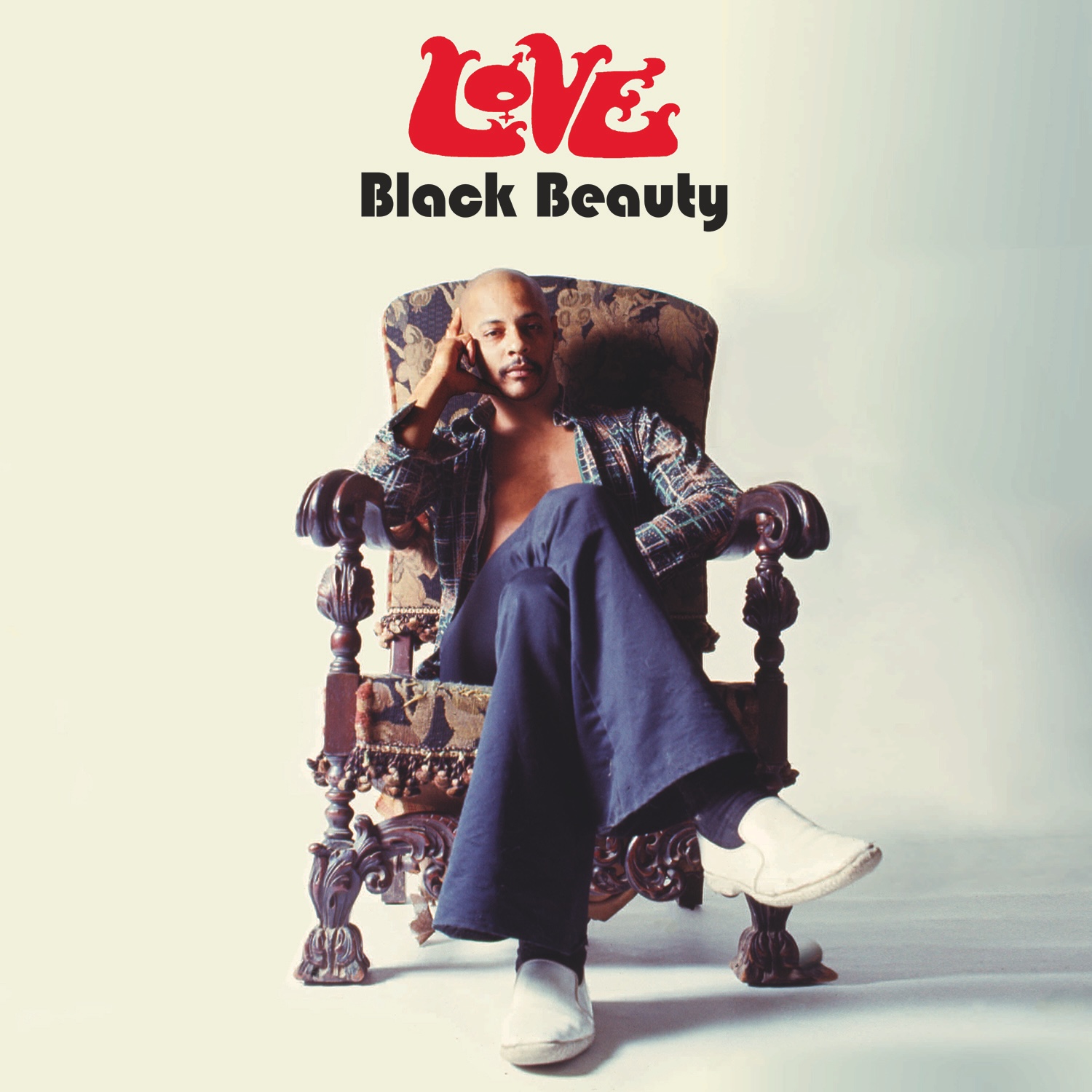
High Moon Records previously released this Lee album, Black Beauty, as well as Reel-to-Real and this year will issue a compilation of unreleased material supplied by Lee's estate culled from a trove of tapes recorded during the last fifteen years of his life. Most of these songs will be heard by fans for the first time ever. Following months of hospitalization Lee realized he was losing his fight with Leukemia and asked his wife Diane to oversee the posthumous release of a final record. Although many of the tracks were in various stages of completion, Lee left some specific musical notes to execute his vision. (There's no cover art available now).
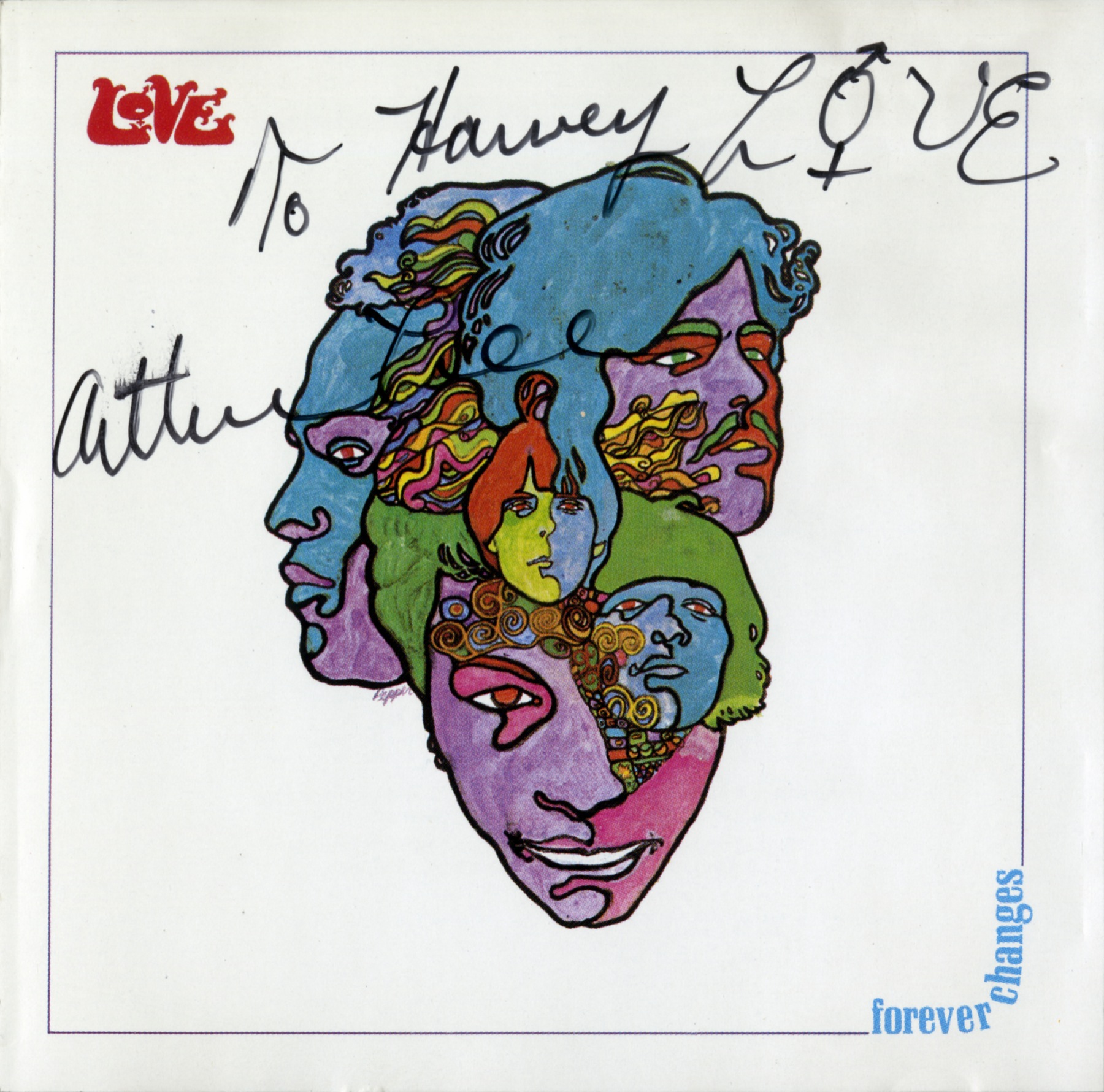 Harvey Kubernik's autographed Forever Changes
 The RSD 2025 box set containing the four Elektra Love albums cut AAA and an additional compilation is available on Discogs for around $130.00.



































.png)