
Next Verve Vault Audiophile Vinyl Reissues Announced by Verve Label Group and UMe
all Ryan K Smith remastered from original analog tapes
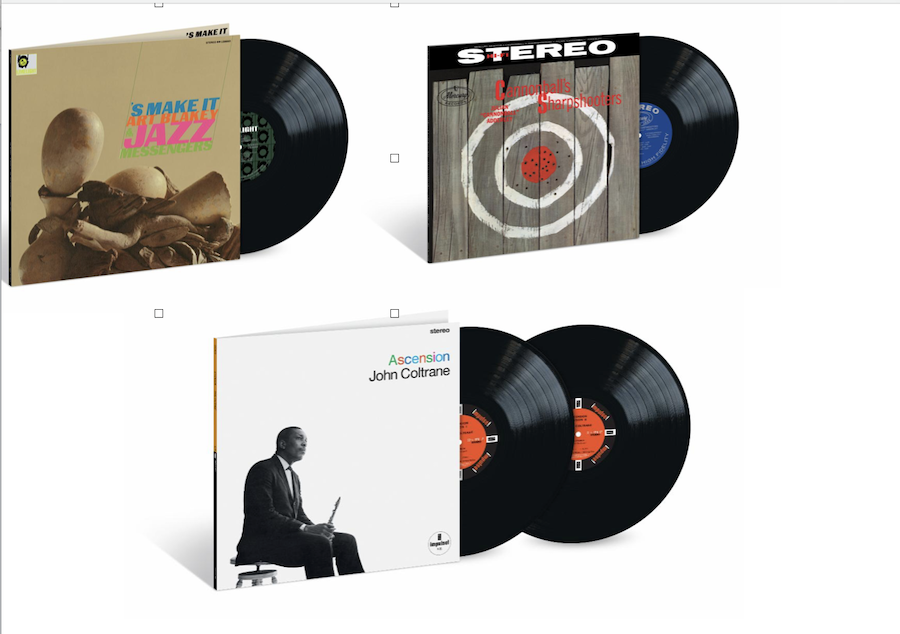
(press release) Los Angeles – April 17, 2026 – Launched last year to widespread acclaim, Verve Label Group and UMe are thrilled to continue their Verve Vault series in 2026 with an extensive slate of releases, highlighting landmark jazz albums and rare treasures from the deep catalogs of Verve, Impulse!, Mercury, Decca and related imprints. The audiophile vinyl reissue series offers definitive, all-analog 180-gram vinyl pressings newly mastered from the original analog tapes by Ryan K. Smith at Sterling Sound and pressed at Optimal in Germany. Each release combines exceptional audio fidelity with meticulous attention to detail — from mastering to jacket reproduction — with packaging modeled after the original LPs. Just one of the many ways that Verve is celebrating its 70th anniversary, the series will release titles throughout the year that have been instrumental in Verve’s success and longevity. The first few months of 2026 have already brought best-in-class pressings of Dinah Washington’s 1959 sophisticated and sumptuous What a Diff’rence a Day Makes, Gábor Szabó’s 1966 hypnotic Spellbinder, Pharoah Sanders’ 1974 live spiritual jazz exploration Elevation, and a trio of 1958’s best: Blossom Dearie’s playfully romantic Give Him The Ooh-La La, Sonny Rollins’ adventurous two-sided statement Brass/Trio, and Stan Getz and the Oscar Peterson Trio’s swinging self-titled session. The next releases in the Verve Vault series include Art Blakey & The Jazz Messengers’ 1965 hard-swinging, soulful ’S Make It and Cannonball Adderley’s 1958 bluesy, buoyant Cannonball’s Sharpshooters, arriving April 17, followed by Marcos Valle’s breezy 1968 Brazilian pop gem Samba ’68 on May 15. Pre-order Verve Vault titles here: https://Verve.lnk.to/VerveVaultPR The series will continue with releases spanning the Verve family of labels, including albums by Ahmad Jamal, Bill Evans, Billy Mitchell, Bud Powell, Cal Tjader, Carmen McRae, Chico Hamilton, George Benson, Gil Evans, Mel Tormé, Roy Ayers Ubiquity, and Sister Rosetta Tharpe. As part of its 70th anniversary, Verve will mark the LPs with a celebratory sticker, underscoring the label’s enduring legacy. Two John Coltrane releases—1966’s avant-garde exploration Ascension and the spiritual jazz suite Meditations—will be reissued in honor of Coltrane’s centennial. Ascension will be released as a 2LP, presenting both takes– the second take originally issued as Edition I and the first take later issued as Edition 2 – together in one LP package for the first time. |
VERVE VAULT 2026 SCHEDULE April 17, 2026 • Art Blakey & The Jazz Messengers – ’S Make It (Limelight) • Cannonball Adderley – Cannonball’s Sharpshooters (EmArcy) May 15, 2026 • Marcos Valle – Samba ’68 (Verve) June 12, 2026 • Cal Tjader – The Prophet (Verve) • John Coltrane – Ascension (Edition I & II) (Impulse!) 2LP July 10, 2026 • Art Farmer – Listen to Art Farmer and the Orchestra (Mercury) • Gil Evans – The Individualism of Gil Evans (Verve) • Roy Ayers Ubiquity – He’s Coming (Polydor) August 14, 2026 • George Benson – Giblet Gravy (Verve) • John Coltrane – Meditations (Impulse!) September 11, 2026 • Mel Tormé – Swings Schubert Alley (Verve) • Sister Rosetta Tharpe – Gospel Train (Verve) October 9, 2026 • Ahmad Jamal – Ahmad Jamal ’73 (20th Century) • Bill Evans – California Here I Come (Verve) 2LP November 13, 2026 • Billy Mitchell – This Is Billy Mitchell (Smash) Carmen McRae – Birds of a Feather (Decca) December 11, 2026 • Bud Powell – Bud Powell’s Moods (Mercury/EmArcy) • Chico Hamilton – El Chico (Impulse!) |
April 17 – Art Blakey – ’S Make It (1965) ’S Make It, recorded in 1964 and released the following year on Limelight, captures drummer Art Blakey leading a transitional edition of his Jazz Messengers. At the time, Blakey was navigating the departure of several key members and searching for a new configuration, resulting in a distinctive short-lived lineup within the band’s long history. The sextet featured Lee Morgan on trumpet, Curtis Fuller on trombone, John Gilmore on tenor saxophone, John Hicks on piano, and Victor Sproles on bass. Together, they delivered a hard-driving program that reflects both Blakey’s established hard-bop intensity and the shifting personnel landscape of the mid-1960s Messengers. Blakey’s drumming anchors the session throughout with the galvanic rhythmic command that defined his leadership across decades. |
April 17 – Cannonball Adderley – Cannonball’s Sharpshooters (1958) Cannonball’s Sharpshooters, originally released in 1958, documents alto saxophonist Julian “Cannonball” Adderley leading a quintet featuring cornetist Nat Adderley, pianist Junior Mance, bassist Sam Jones, and drummer Jimmy Cobb. Recorded on March 4 and 6, 1958, at Bell Sound in New York City, the session captures the group just days before Adderley’s recording session for Somethin’ Else with Miles Davis, placing the album at a pivotal moment in his late-1950s trajectory. The ensemble presents a compact hard-bop program reflecting Adderley’s blues-inflected phrasing alongside the harmonic language of modern bebop. In 1959, Cannonball and Cobb would join Davis for Kind of Blue, while the Adderley brothers continued recording their own work, helping define the hard bop quintet sound of the time. The repertoire balances standards, bop vehicles, and originals, including Tadd Dameron’s “Our Delight,” the ballad “What’s New?,” Gil Fuller’s “Fuller Bop Man,” and Thelonious Monk’s “Straight, No Chaser.” Adderley’s trademark exuberance while leading an all-star lineup of 1950s jazz defines the character of this session. |
May 15 – Marcos Valle – Samba ’68 (1968) Samba ’68, released on Verve in 1968, introduced Brazilian singer, songwriter, and multi-instrumentalist Marcos Valle to a wider international audience. Already established in Brazil through songs such as “Samba de Verão” (“Summer Samba”), Valle worked with producers Bob Morgan and Ray Gilbert on a recording that pairs Brazilian rhythmic forms with contemporary American studio orchestration. The sessions include vocals by AnamariaValle and arrangements by Eumir Deodato, whose writing places Valle’s guitar and voice within settings for strings, brass, and rhythm section typical of Verve’s late-1960s productions. The repertoire features English-language versions of compositions co-written by Valle — including “So Nice (Summer Samba),” “Chup Chup, I Got Away,” and “Safely In Your Arms“ alongside additional material that reflects his economical writing and feather-light rhythmic approach. The album documents a meeting point between Brazilian popular music and international pop-jazz studio practice at the end of the 1960s. |
June 12 – Cal Tjader – The Prophet (1968) Cal Tjader’s The Prophet, recorded in 1968 in New York and Los Angeles and released the same year on Verve, captures the vibraphonist at a moment of artistic expansion, blending his signature Latin jazz foundation with a more orchestrated, textural approach. Arranged and conducted by Don Sebeskyand produced by Esmond Edwards, the album features a refined ensemble including João Donato on organ, Red Mitchell on bass, Ed Thigpen on drums, and Hubert Laws on flute, whose contributions help shape its polished, atmospheric sound. Drawing on a broad palette of jazz, Latin, and blues influences, The Prophet reflects Tjader’s growing interest in composition and arrangement, balancing melodic elegance with rhythmic sophistication. Several of the album’s compositions were written by Brazilian pianist João Donato, including “Warm Song,” “Aquarius,” and “Tema Teimoso,” adding a distinctive harmonic warmth and subtle bossa nova influence to the overall character. From the breezy bossa nova feel of “Tema Teimoso” to the introspective tone of “The Loner” and the blues-inflected close of “Cal’s Bluedoo,” the album presents a cohesive, forward-looking statement that highlights Tjader’s versatility while maintaining the warmth and accessibility that defined his work. |
June 12 – John Coltrane – Ascension (Edition I & II) (1966) 2LP Ascension, released in 1966 on Impulse! Records, stands as one of John Coltrane’s most radical and influential works. Subtitled “Edition I & II” to reflect the two complete takes recorded at the session—and presented together on LP for the first time—the piece is a nearly 40-minute large-ensemble performance marking Coltrane’s decisive embrace of the avant-garde. Recorded on June 28, 1965, at Rudy Van Gelder’s Englewood Cliffs studio and produced by Bob Thiele, the session assembled an expanded ensemble of eleven musicians. Alongside Coltrane’s tenor saxophone are trumpeters Freddie Hubbard and Dewey Johnson; saxophonists Pharoah Sanders, Marion Brown, John Tchicai, and Archie Shepp; pianist McCoy Tyner; bassists Art Davis and Jimmy Garrison; and drummer Elvin Jones. The music alternates between densely textured collective improvisation and extended solo statements, conjuring a hurricane of violent, searching sound. Initially controversial for its intensity and freedom, Ascension has since come to be recognized as a landmark of modern jazz and a defining statement of the emerging free-jazz movement. Presenting both takes together highlights the organic, ever-changing character of the performance and affirms its enduring place in Coltrane’s artistic legacy. |
July 10 – Art Farmer – Listen to Art Farmer and the Orchestra (1963) Listen to Art Farmer and the Orchestra, recorded in 1962 and released the following year on Mercury, stands as one of trumpeter/flugelhornist Art Farmer’s most ambitious statements as a leader. The album places Farmer at the forefront of a large ensemble arranged and conducted by Oliver Nelson, whose writing gives the project a striking blend of sophistication and swing. The personnel bridges New York’s hard-bop scene with leading studio and jazz musicians, with Farmer featured as the principal solo voice against Nelson’s full complement of brass, reeds, and rhythm. Guitarists Jim Hall and Barry Galbraith, bassist George Duvivier, drummer Charlie Persip, and pianist Tommy Flanagan are among the players supporting Farmer. They appear alongside an expanded orchestral roster of trumpets, trombones, French horns, reeds, and percussion. Nelson’s orchestrations give him space to showcase his lyricism and poised tone, balancing tightly-arranged ensemble passages with luminous solo statements. This program draws on beloved standards — including “Street of Dreams,” and “Naima” — and the orchestral setting underscores why Farmer was regarded as one of the era’s most elegant and expressive horn players. |
July 10 – Gil Evans – The Individualism of Gil Evans (1964) Released in 1964 on Verve, The Individualism of Gil Evans stands as one of arranger-composer Gil Evans’ most compelling and richly detailed works, showcasing some of the finest music of his career. The album blends Evans’ originals—including “Las Vegas Tango” and “El Toreador,” as well as the Miles Davis collaborations “Time of the Barracudas” and “Flute Song/Hotel Me”— with inspired interpretations such as Kurt Weill’s “The Barbara Song,” all rendered through his distinctive big band lens. A core group of musicians, including Johnny Coles, Steve Lacy, Jimmy Cleveland, Tony Studd, BillBarber, Elvin Jones, and Paul Chambers, appears across sessions, lending a remarkable consistency of texture, mood, and overall sound. Additional standout contributors—among them Eric Dolphy, Wayne Shorter, Phil Woods, and Kenny Burrell—bring fresh color to select tracks. Evans himself plays piano throughout, his touch especially poignant on “The Barbara Song,” where a sense of deep pathos is underscored by Shorter’s expressive tenor. From the brooding atmosphere of “Time of the Barracudas” to the one-chord intensity of “El Toreador,” the album highlights Evans’ mastery of tone, space, and orchestral nuance. |
July 10 – Roy Ayers Ubiquity – He’s Coming (1972) Released on Polydor in 1972, He’s Coming captures vibraphonist Roy Ayers at a creative apex, as Ubiquity’s sound settled into the blend of jazz improvisation, funk rhythm, soul harmony, and spiritual import that would define his work throughout the decade. Emerging at the start of the 1970s, the album reflects Ayers’s deepening move toward a groove-centered musical language rooted in soul-jazz and early jazz-funk. The vibraphonist, keyboardist, composer, and bandleader is supported by a core ensemble that includes Harry Whitaker on electric piano, organ, and vocals; John Williams on bass, with Ron Carter featured on “We Live in Brooklyn, Baby”; David Lee Jr. and Billy Cobham on drums and percussion; guitarists Sam Brown and Bob Fusco; saxophonist Sonny Fortune; and percussionist Juma Santos. Tracks like “He’s a Superstar”, “Sweet Butterfly of Love,” and “Fire Weaver” embody the record’s mix of urban narrative, spiritual reflection, and deep rhythmic momentum—qualities that would later make Ayers’s catalog a source of inspiration for soul, funk, hip-hop, and neo-soul artists. |
August 14 – George Benson – Giblet Gravy (1968) Giblet Gravy, released in 1968 on Verve Records, documents guitarist George Benson during his early period with the label. Produced by Esmond Edwards and featuring arrangements by Tom McIntosh, the album places Benson within a studio framework that alternates between small-group interplay and expanded ensemble writing. The sessions draw on a range of jazz and studio musicians, including pianist Herbie Hancock, bassists Ron Carter and Bob Cranshaw, drummer Billy Cobham, percussionist Johnny Pacheco, and baritone saxophonist Pepper Adams, alongside a brass and rhythm section assembled for selected tracks. Across these varied settings, Benson’s fluid articulation, blues-inflected phrasing, and rhythmic dexterity remain the music’s central focus. The repertoire blends contemporary popular material, standards, and original compositions — the title track and “Low Down and Dirty” — illustrating the stylistic breadth that would inform Benson’s later crossover success while remaining grounded in the late-1960s jazz ensemble format. |
August 14 – John Coltrane – Meditations (1966) Meditations, released in 1966 on Impulse! Records, captures John Coltrane’s late-period quartet in transition — expanding into new sonic territory while retaining the core intensity of his classic lineup. Recorded on November 23, 1965, at Rudy Van Gelder’s Englewood Cliffs studio with producer Bob Thiele, the session includes both Coltrane’s long-standing quartet and new collaborators who would shape his music’s final phase. The personnel unites pianist McCoy Tyner, bassist Jimmy Garrison, and drummer Elvin Jones with additional voices: tenor saxophonist Pharoah Sanders and drummer Rashied Ali. This expanded ensemble offers a denser, more turbulent soundscape, foreshadowing Coltrane’s move toward freer and more spiritual explorations. Across the suite-like program — including “The Father and the Son and the Holy Ghost,” “Compassion,” and “Love” — the music flows as a continuous meditation on transcendence and collective expression. Meditations pushes Coltrane’s spiritual jazz into heightened realms of energy and abstraction. It marks one of the final appearances of his “classic quartet” members Tyner and Jones before they departed, leaving Coltrane to pursue new directions with Sanders and Ali. The album remains a powerful document of transformation, intensity, and devotion in Coltrane’s recorded legacy. |
September 11 – Mel Tormé – Swings Shubert Alley (1960) Swings Shubert Alley, released in 1960 on Verve Records, showcases vocalist Mel Tormé at the height of his powers, interpreting Broadway standards with impeccable phrasing and swing, backed The Marty Paich Orchestra. Known as “The Velvet Fog,” Tormé here demonstrates both his jazz sensibility and his mastery of the Great American Songbook, in a program drawn entirely from shows that were then lighting up New York’s Shubert Alley theater district. Produced by Russell Garcia, who also arranged and conducted, the album features a brassy ensemble, including Art Pepper on alto sax, Bill Perkins on tenor sax, and Frank Rosolino on trombone, with a rhythm section anchored by pianist and arranger Marty Paich, bassist Joe Mondragon, and drummer Mel Lewis. The repertoire includes “A Sleepin’ Bee,” “All I Need is a Girl,” and “The Surrey with the Fringe On Top,” among other highlights — all delivered with Tormé’s effortless diction and deep charisma. Swings Shubert Alley situates Tormé in a high echelon of jazz singers while demonstrating his individuality as a reader of standards. Today, it remains one of his most celebrated studio efforts, bridging the worlds of Broadway and jazz with style and conviction. |
September 11 – Sister Rosetta Tharpe – Gospel Train (1956) Gospel Train, released in 1956 on Mercury Records, stands among the defining albums by pioneering guitarist and vocalist Sister Rosetta Tharpe. Long celebrated for blending gospel intensity with blues phrasing and rhythmic drive, Tharpe helped lay the musical foundations that would shape early rock and roll and later popular music. Recorded in a studio setting that pairs her electric guitar and commanding voice with professional jazz-oriented accompaniment, the album presents Tharpe’s church-rooted repertoire in a polished mid-1950s recording context. A mix of self-composed spirituals and gospel standards — including “Jericho,” “When They Ring the Golden Bell,” “Up Above my Head There’s Music in the Air,”and “Can’t No Grave Hold My Body Down” — is delivered with the fervor and rhythmic vitality that defined her performances and broadened the reach of gospel music beyond strictly sacred audiences. By the time of its release, Tharpe’s influence already extended across gospel, rhythm and blues, and emerging rock-and-roll styles. Gospel Train remains a vivid document of that cultural convergence, illustrating why she is widely regarded as a central figure in both gospel history and the development of rock music. |
October 9 – Ahmad Jamal – Ahmad Jamal ’73 (1973) Ahmad Jamal ’73, released in 1973 on the 20th Century label, finds pianist Ahmad Jamal working solely on a Fender Rhodes electric piano, backed in an expanded orchestral setting arranged and conducted by Richard Evans, who co-produced alongside Jamal. The program ranges from reworkings of earlier Jamal favorites to interpretations of the R&B and funk of the day, including versions of War’s “The World Is a Ghetto” and Stevie Wonder’s “Superstition,” to the soulful piece of spiritual jazz, “Sustah, Sustah” and the album’s funky centerpiece, “Peace at Last.” While firmly rooted in Jamal’s lyrical sensibility, Ahmad Jamal ’73 represents his openness to explore new directions and his ability to merge the acoustic jazz tradition with the electric sounds of the era. Within massive string, vocal, and horn arrangements, Jamal both nods to a younger generation of listeners and augments his sound in daring, enveloping fashion. |
October 9 – Bill Evans – California Here I Come (1967) 2LP California, Here I Come, recorded in 1967 and released in 1982 on Verve Records, documents pianist Bill Evans in a live setting at the Village Vanguard, joined by bassist Eddie Gómez and drummer Philly Joe Jones. This 2LP reissue captures the complete performances recorded over two nights, offering a vivid portrait of Evans’s trio at a moment of rhythmic fire and harmonic depth. Produced by Helen Keane, the album pairs Evans’s refined touch and harmonic sophistication with the powerful swing of Jones, whose drumming brings a combustible edge to the group. Gómez, early in his long association with Evans, contributes fleet, resonant lines that drive the trio’s high-energy interplay. The program features jazz standards and selections from the Great American Songbook, including “Polka Dots and Moonbeams,” “Stella by Starlight,” and “‘Round Midnight,” alongside Evans originals “Turn Out the Stars,” “G Waltz,” and “Very Early.” Capturing Evans in especially spirited and swinging form, the album highlights a relatively short-lived trio lineup and remains a distinctive entry in his Verve discography. |
November 13 – Billy Mitchell – This is Billy Mitchell (1962) This Is Billy Mitchell, released in 1962 on Smash Records, highlights tenor saxophonist Billy Mitchell at a career high point, balancing his work as a respected section leader with a growing reputation as a soloist of authority and grace. Known for his roles in the Count Basie Orchestra and the Dizzy Gillespie big band, Mitchell here leads a sextet date that reflects both his Detroit roots and his hard bop credentials. The session features vibraphonist Bobby Hutcherson—then at the beginning of his career—organist Clarence “Sleepy” Anderson, bassist Herman Wright, drummer Otis Finch, trumpeter Dave Burns and pianist Billy Wallace. Together they deliver a program that combines modern jazz sophistication with soulful drive, ranging from the burning opener “J&B” to the lush balladry of “Sophisticated Lady.” Though often overshadowed by flashier contemporaries, Mitchell brought consistency, warmth, and unerring swing to every ensemble he joined. This Is Billy Mitchellremains his signature album as a leader, embodying the creative qualities that made him a key figure in the Detroit-to-New York pipeline of postwar jazz. |
November 13 – Carmen McRae – Birds of a Feather (1958) Released in 1958 on Decca, Birds of a Feather finds vocalist Carmen McRaeexploring a cleverly unified concept, with every song in the program referencing birds in some way. Arranged and conducted by Ralph Burns, the album pairs McRae’s poised, expressive delivery with lush, sophisticated orchestration that balances swing and mood. A standout feature is the presence of tenor saxophonist Ben Webster, whose warm, expressive tone adds depth and contrast, alongside additional players including Al Cohn on tenor sax, Marky Markowitz on trumpet, and Don Abney on piano. Recorded over several August sessions in New York City, the album moves through standards like “Skylark,” “Bye Bye Blackbird,” and “A Nightingale Sang in Berkeley Square,” unified by the thematic conceit without feeling restrictive. Birds of a Feather stands out in McRae’s Decca catalog for its imaginative programming and the interplay between voice and ensemble, highlighting her ability to bring nuance and cohesion to even the most unusual repertoire. |
December 11 – Chico Hamilton – El Chico (1966) Released in 1966 on Impulse! and produced by Bob Thiele, El Chico captures drummer and bandleader Chico Hamilton at a moment of stylistic expansion, blending jazz with Latin rhythms, bossa nova, and avant-garde touches. Recorded in New York City in August 1965, the album features a distinctive sextet with Jimmy Cheatham on trombone, Sadao Watanabe on alto saxophone, Gábor Szabó on guitar, Albert Stinson on bass, and Willie Bobo and Victor Pantoja on percussion, alongside Hamilton on drums. This lineup gives the album its vivid character, combining melodic openness with richly layered rhythm and texture. The program mixes Hamilton originals with outside material, including “People,” “Marcheta,” and “This Dream,” while pieces like “Conquistadores” underscore the group’s adventurous, cross-cultural approach. El Chico stands as a key entry in Hamilton’s Impulse! period, reflecting his embrace of global influences and a more exploratory, rhythm-driven sound. |
December 11 – Bud Powell – Bud’s Powell’s Moods (1956) Bud Powell’s Moods, issued in 1956 on producer Norman Granz’s Norgran label, compiles trio recordings made in New York on June 2 and June 4, 1954, and January 12, 1955. The sessions fall at the beginning of Powell’s mid-1950s recording period for Granz’s labels and present the pianist in a trio setting throughout. Three rhythm sections appear across the album. The June 2, 1954 session features Powell with bassist George Duvivier and drummer Art Taylor. Recordings from June 4, 1954 substitute bassist Percy Heathwhile retaining Taylor on drums. The January 12, 1955 session pairs Powell with bassist Lloyd Trotman and drummer Art Blakey. The program is largely composed of ballads and standards, alongside Powell originals including the uptempo “Buttercup” and “Fantasy in Blue.” Together, the recordings document Powell’s trio work during the early phase of his association with Granz and reflect his towering, vastly influential pianism within the bebop tradition. # # # |