
Philip Glass’s "Akhnaten" at LA Opera: A Stunning Re-Invention of Opera
Yes, it is possible for opera to be “relevant”, Mr. Chalamet… Includes a brief discography of recommended Philip Glass recordings.
I just had one of the most thrilling, unique and compelling experiences in a lifetime of going to the theater and opera: Philip Glass’s Akhnaten, at the Los Angeles Opera.
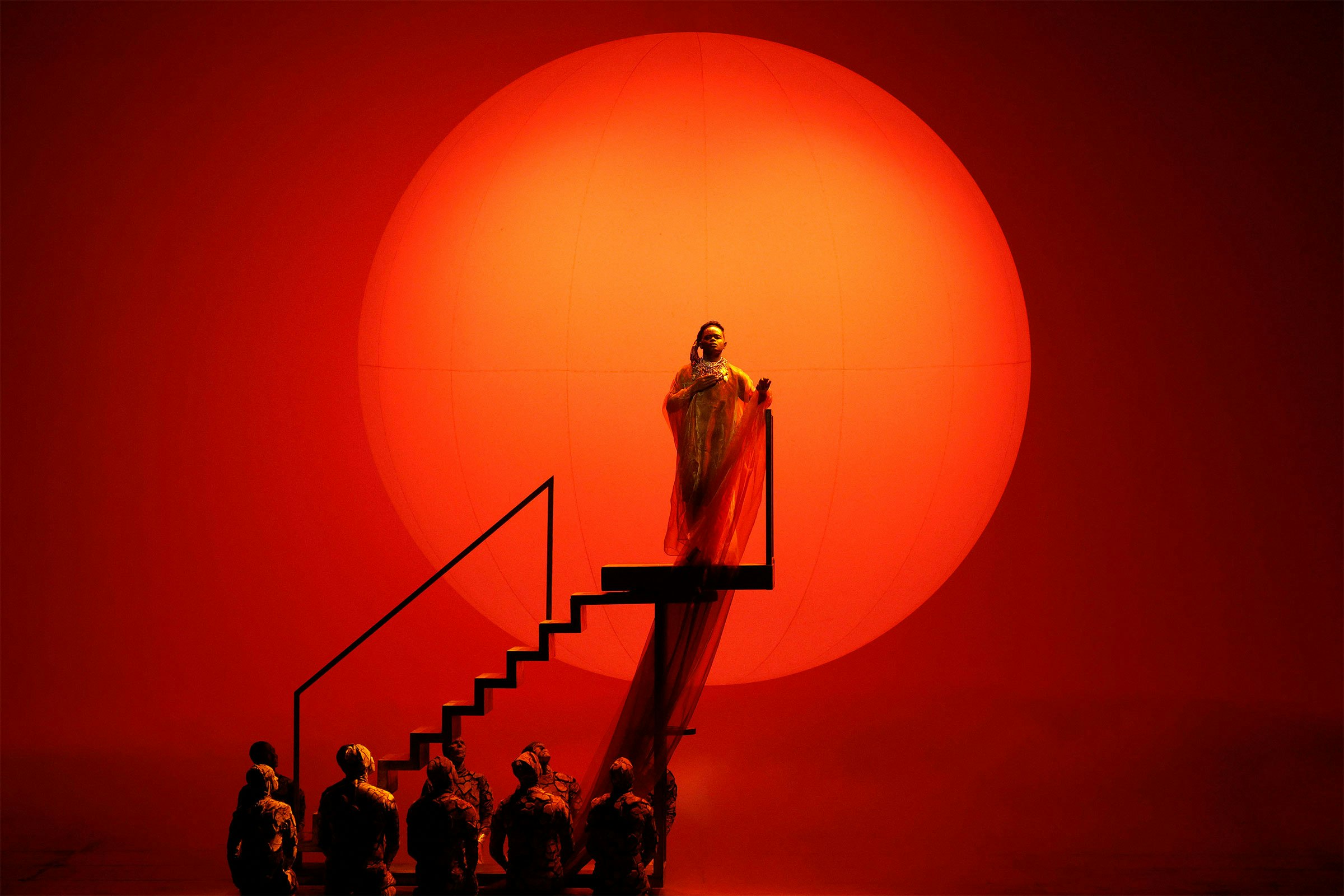
 John Holiday as Akhnaten (LA Opera; photo by Cory Weaver)
Actually it was mind-blowing. Visually arresting, theatrically innovative, musically gorgeous and exhilarating. A completely new kind of performance experience which reinvented opera, music, theater - indeed the intersections of all the arts - in the same way that Wagner’s Der Ring des Nibelungen did 150 years ago. It also posed and answered the fundamental question that composers have been grappling with since the “disintegration” of tonality just over a century ago: how to move forward without being derivative, yet also without alienating your audience.
How to create art in the 21st century that is truly original but also accessible. And fun!
And yes, it had jugglers!!! Ten of them, onstage throughout! That’s its own particular pleasure…
My reviews on this site over the last months have been much preoccupied with many of these same concerns - whither classical music after the upheavals of the late 19th and early 20th centuries - as I was reviewing Karajan’s Second Viennese School box, and the Liszt Via Crucis. (Going back further I wrote extensively about these issues in my review of Solti’s recording of Wagner’s Ring cycle in its new digital and vinyl incarnations).
Since I am about to review the Original Source reissue of Das Rheingold from Karajan’s recorded Ring cycle, as well as several reissues from DG’s important series of mid-20th century Avant Garde releases, plus the Decca Pure Analogue reissue of Zubin Mehta’s seminal record of Edgar Varèse, all of this contemplation of what classical music was, where it was going in the 20th century, and will be as the 21st century unfolds, is front and center in my brain. The result?
Akhnaten went off like the proverbial firecracker.
And I simply had to write about it.
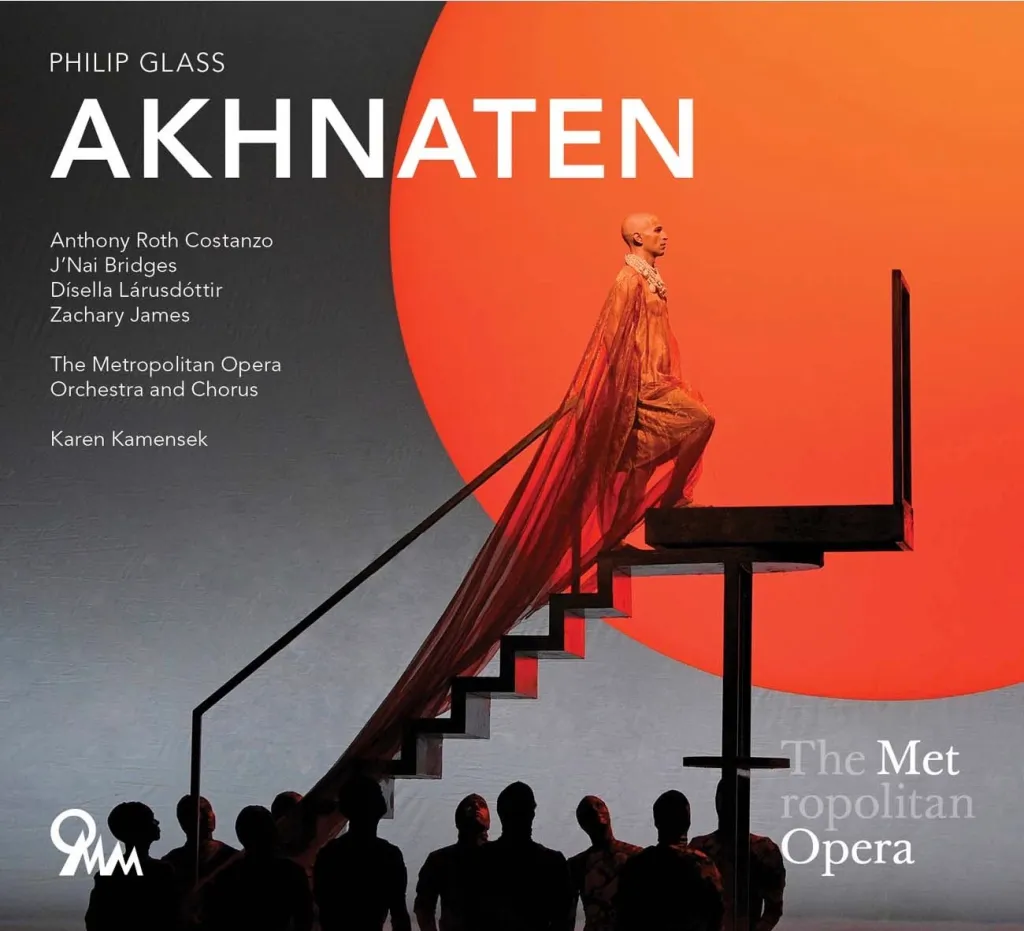
Since this exact same production (with different singers) is available on DVD and CD, you can get some sense of what I am going to be talking about by getting hold of one or both of those. At the end of this article I will also post the currently available YouTube videos of the live Met broadcast.
I will also be providing you with a short selection of my favorite Philip Glass recordings at the end.
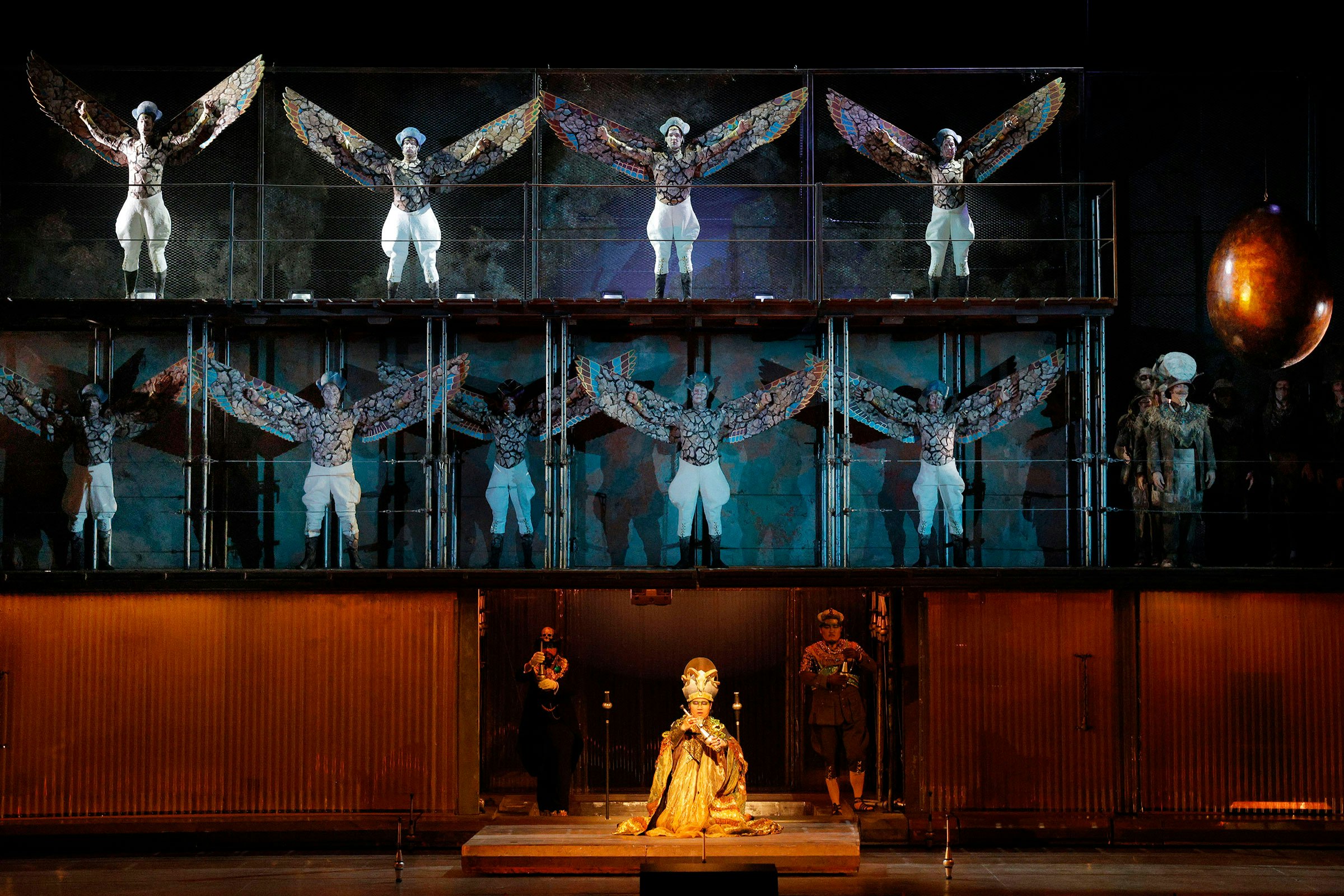 Akhnaten Act 2 (LA Opera; photo by Cory Weaver)
WHAT IS AKHNATEN?
Not what you expect from a 3-hour opera, that’s for sure.
It’s the third of Philip Glass’s trilogy of biographical operas in which he used the lives of three seminal figures to explore ideas surrounding science (Einstein on the Beach 1976), politics (Mahatma Gandhi in Satyagraha 1980), and religion (Akhnaten 1984).
Akhnaten focuses on the elusive Pharaoh Amenhotep IV, later renamed as Akhenaten (ruling from c. 1351 - 1334 B.C.), who rejected his country’s centuries-old worship of many gods to impose one of the earliest examples of monotheism on his culture, in this case the worship of the Sun. He built an entire city to glorify this new religion, Akhetaten (aka Amarna).
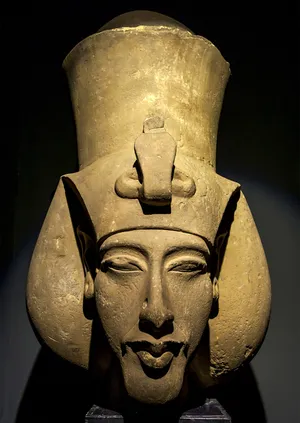 Sculpture of Ahkenaten in the Alexandria National Museum
After his death, the old powers and religion reasserted themselves, and effectively scrubbed Akhenaten from the history books.
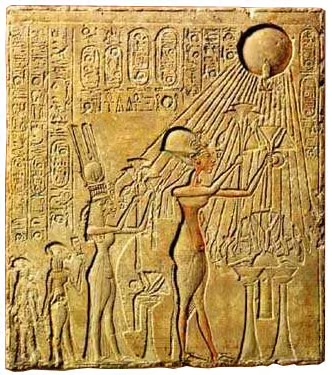 Akhenaten and Nefertiti worshipping the Sun God, Aten
For Glass, this conflict between the old and the new within the religious sphere was the perfect sequel to his similar explorations of the same themes in science and politics in his earlier operas.
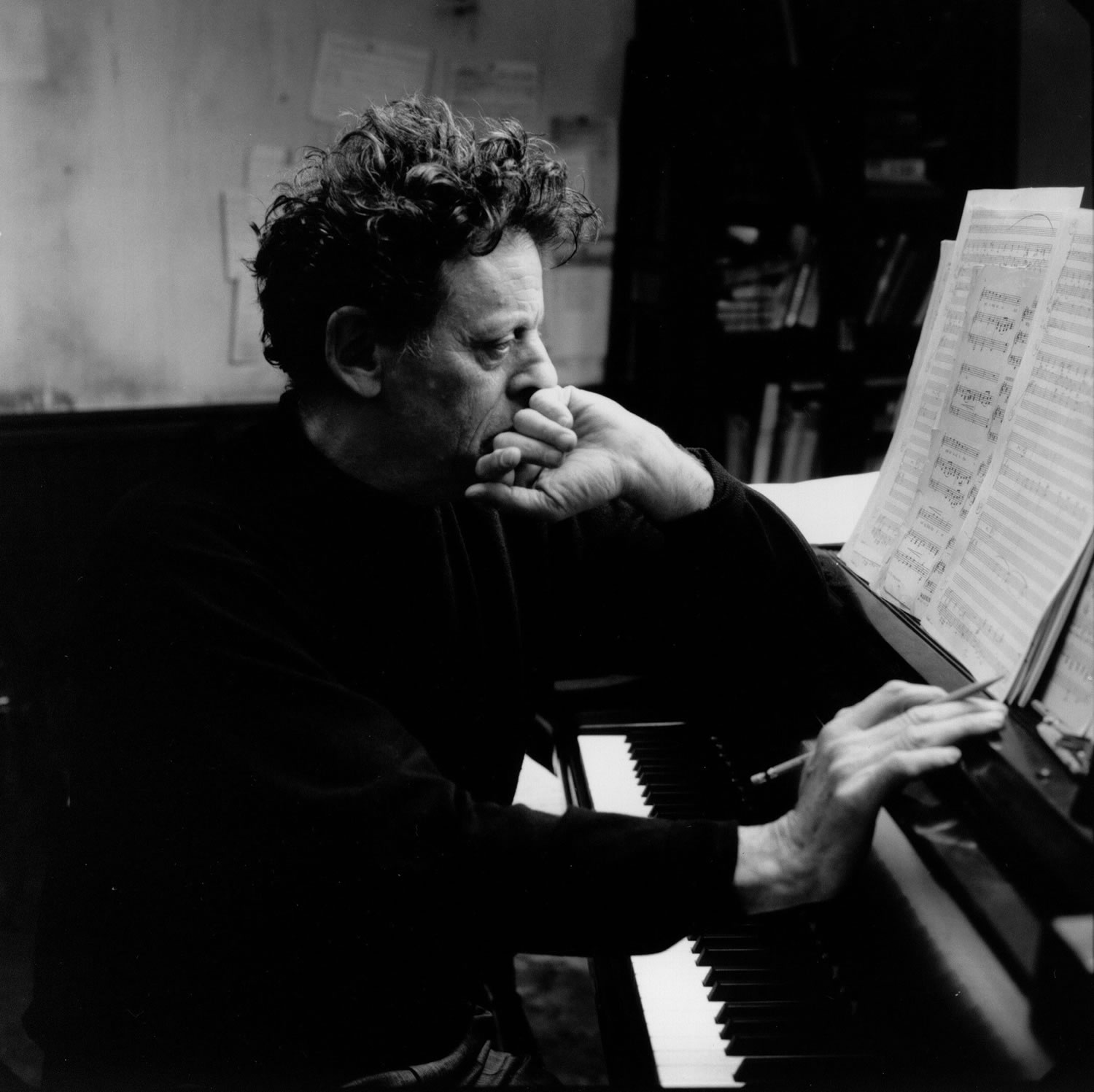 Philip Glass
Philip Glass was one of group of composers including Terry Riley and Steve Reich who went in the opposite direction of their modernist contemporaries like Karlheinz Stockhausen and Pierre Boulez in Europe, Milton Babbitt and Elliot Carter in America, rejecting the complexities of atonality and serialism to re-embrace the core principles that had driven Western Music for centuries: a return to the diatonic harmonic system (but also using the modal model) and the primacy of rhythm. Integrated into this model was a strong influence from other musical cultures, like the Indian raga and African drumming.
So when you listen to Philip Glass’s music you will primarily hear diatonic chords outlined in arpeggios in differing time signatures, with opposing dissonances and chords gaining weight and power because of their non-conformity to the dominant patterns. The effect is to focus the ear like a laser beam on every slight shift in the musical design, every deviation from the primary chords, and to induce an almost trance-like state.
“What you hear depends on how you focus your ear. We’re not talking about inventing a new language, but rather inventing new perceptions of existing languages.”
– Philip Glass
And that includes the “language” of opera.
Considering that opera was long seen as the epitome of the “old” ways of classical music, remaining viable (but still set in 19th century form and tradition) into the 20th century in the works of Benjamin Britten, Leonard Bernstein, Shostakovich and others, it was inevitable that when Glass turned to the form he had to come up with a different approach to the dramatic mise en scéne that would be a better match for his more stylized musical language - the complete opposite of the Wagnerian music-drama model.
What he came up with is epitomized by Akhnaten in its structure, its music, its use of voices, its scenario, its reinvention of traditional dramatic scenes. All of these qualities are further enhanced by this particular production directed by Phelim McDermott, originally an LAOpera co-production with English National Opera, the Metropolitan Opera, and Gran Teatre del Liceu.
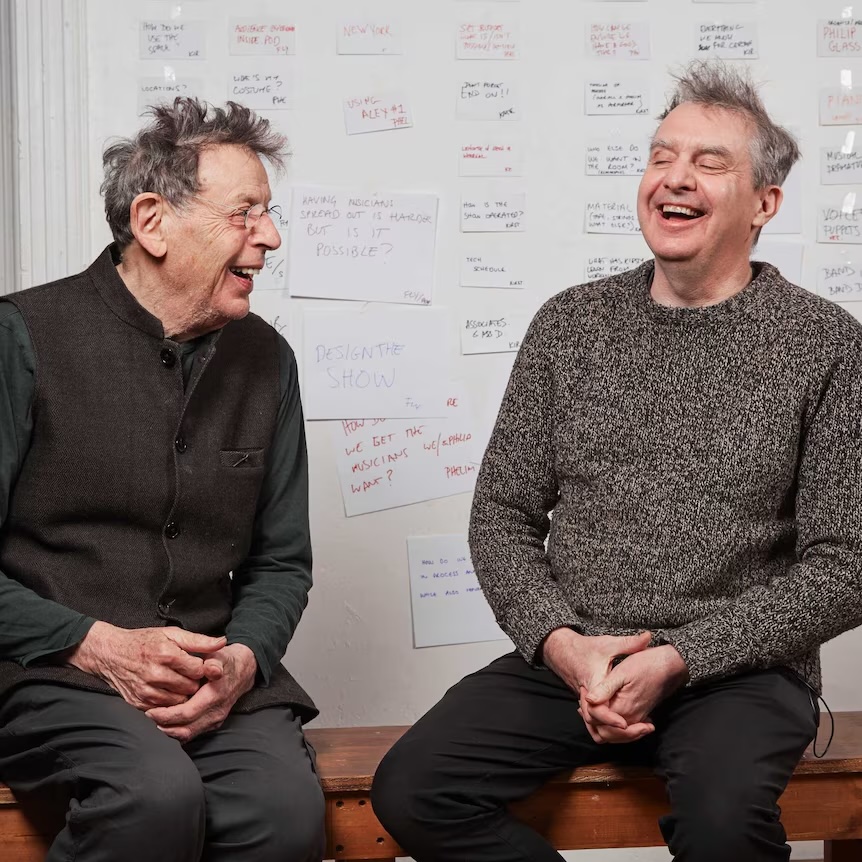 Philip Glass and Phelim McDermott
An important note on the unusual sound of the score itself. A particular sonic distinction of Akhnaten is the absence of violins - the orchestra is led instead by the viola section. For the premiere in Stuttgart there wasn’t enough room for a full string section in the orchestra pit of the smaller Kleines Haus then in use while the main auditorium was under renovation. Therefore Glass decided to dispense with the violins altogether. The resulting darker hue to the score is perfect for the evocation of Ancient Egypt.
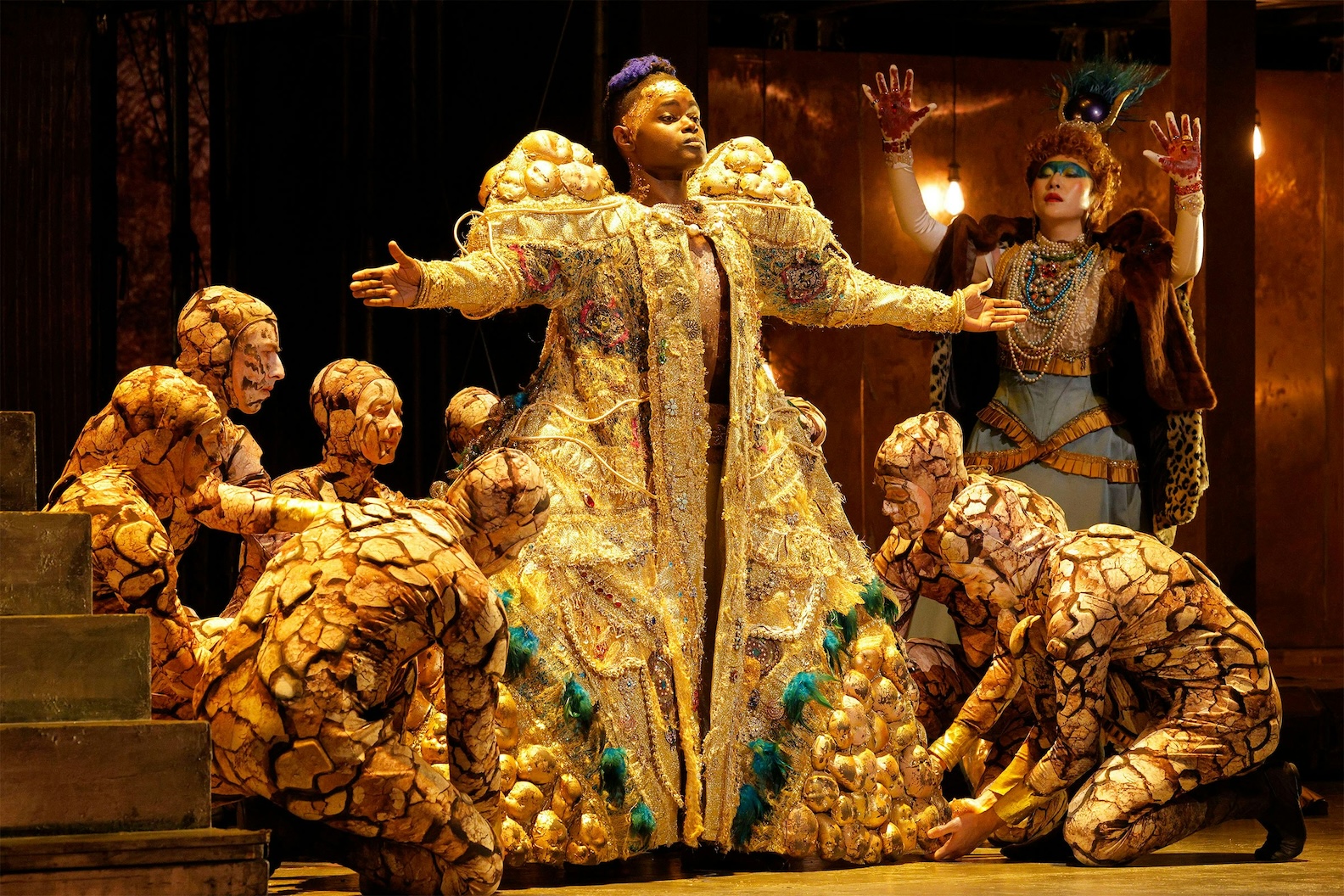 Akhnaten Act 1: The Robing of the New Pharaoh (LA Opera; photo by Cory Weaver).
OPERA AS CEREMONY AND RITUAL
Forget about the kind of conventional plotting, character development and action you are used to seeing in the theater or on the opera stage.
And forget about conventional musical forms like arias, ensembles and choruses. Everything is repurposed to the new design.
Glass’s music in the eight minute-or-so prelude sets the scene for what is to follow. Arpeggiated diatonic figures in the violas then migrating to other instruments combine with chanting chords, simple solo lines that often introduce deeply felt dissonances - all of these elements communicate something familiar yet also foreign, and a sense of entering another world settles upon the audience.
Interestingly this is very similar to how Wagner opens his similarly revolutionary Ring cycle (from 150 years ago) at the beginning of Das Rheingold. Again the purpose is to draw the audience into hearing and feeling differently, to draw them into a new type of theatrical experience. In the prelude of Das Rheingold, low unison bass notes slowly expand to encompass the basic diatonic scale, as if we are witnessing the birth of the world (we are) - as the deep waters of the Rhine reveal themselves on stage. The musical language is strikingly similar to Philip Glass’s, although Wagner’s music drama will soon expand into a full-blown late-Romantic idiom, replete with chromaticism and the kind of harmonic fluidity which is the opposite of Glass’s more ostensibly conservative harmonic approach. With Glass you know exactly where you are harmonically, because you are hearing that same key outlined in a chord over and over again. Until everything shifts under your feet, like vast tectonic plates moving across centuries.
Instead of presenting a traditional dramatic scenario, each Act of the opera is a series of tableaus designed to present key moments, both historical and thematic, from Akhnaten’s life.
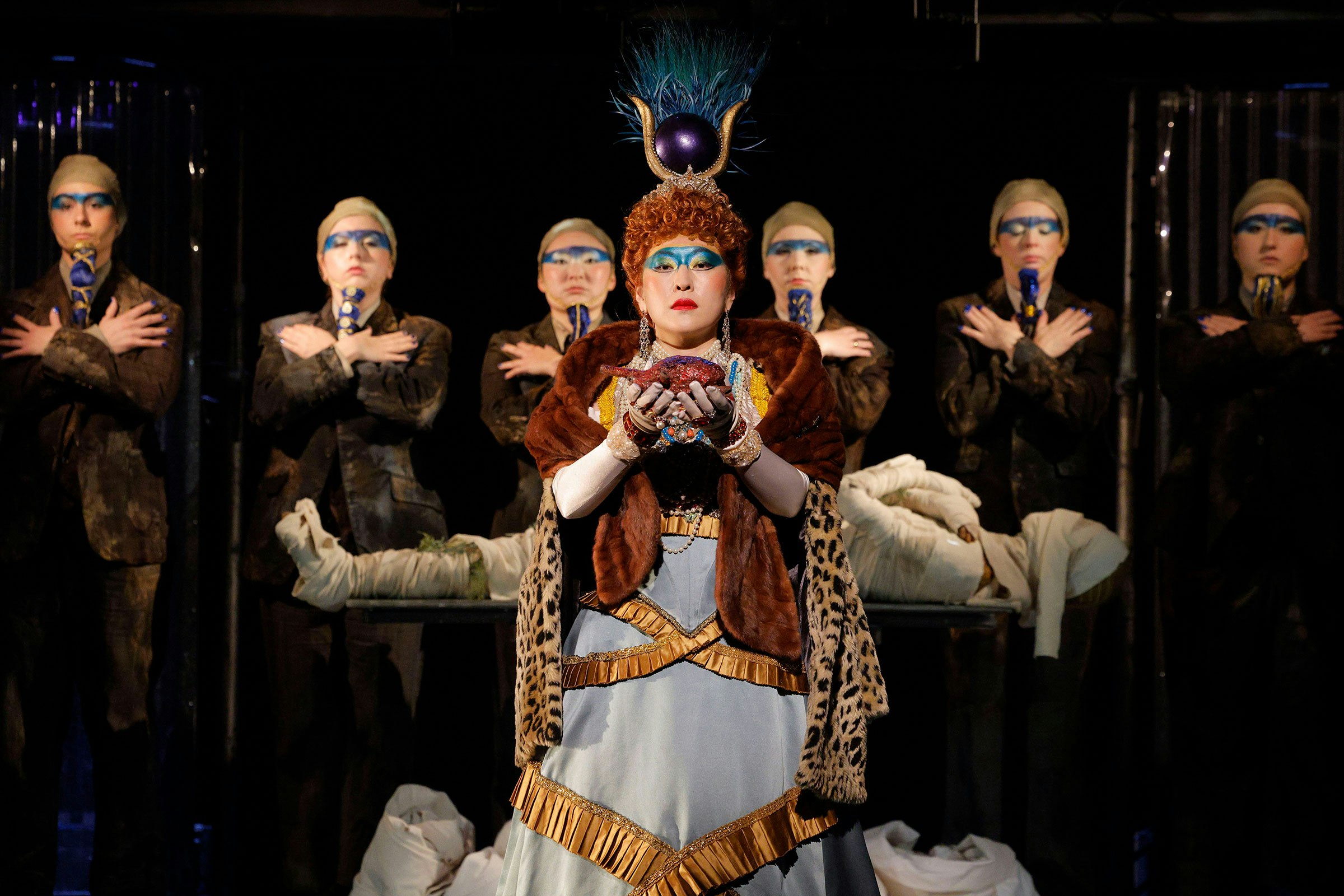 The Extraction of the dead Pharoaoh Amenhotep's Heart, ready to be weighed against a feather to determine whether he will enter the After-Life (LA Opera; photo by Cory Weaver).
Act One encompasses the death of his father Amenhoetep III, the ritual of his passage to the afterlife, the presentation and crowning of Akhnaten, and the new Pharoah’s pronouncement that from now on all will worship one god only, the sun god Aten.
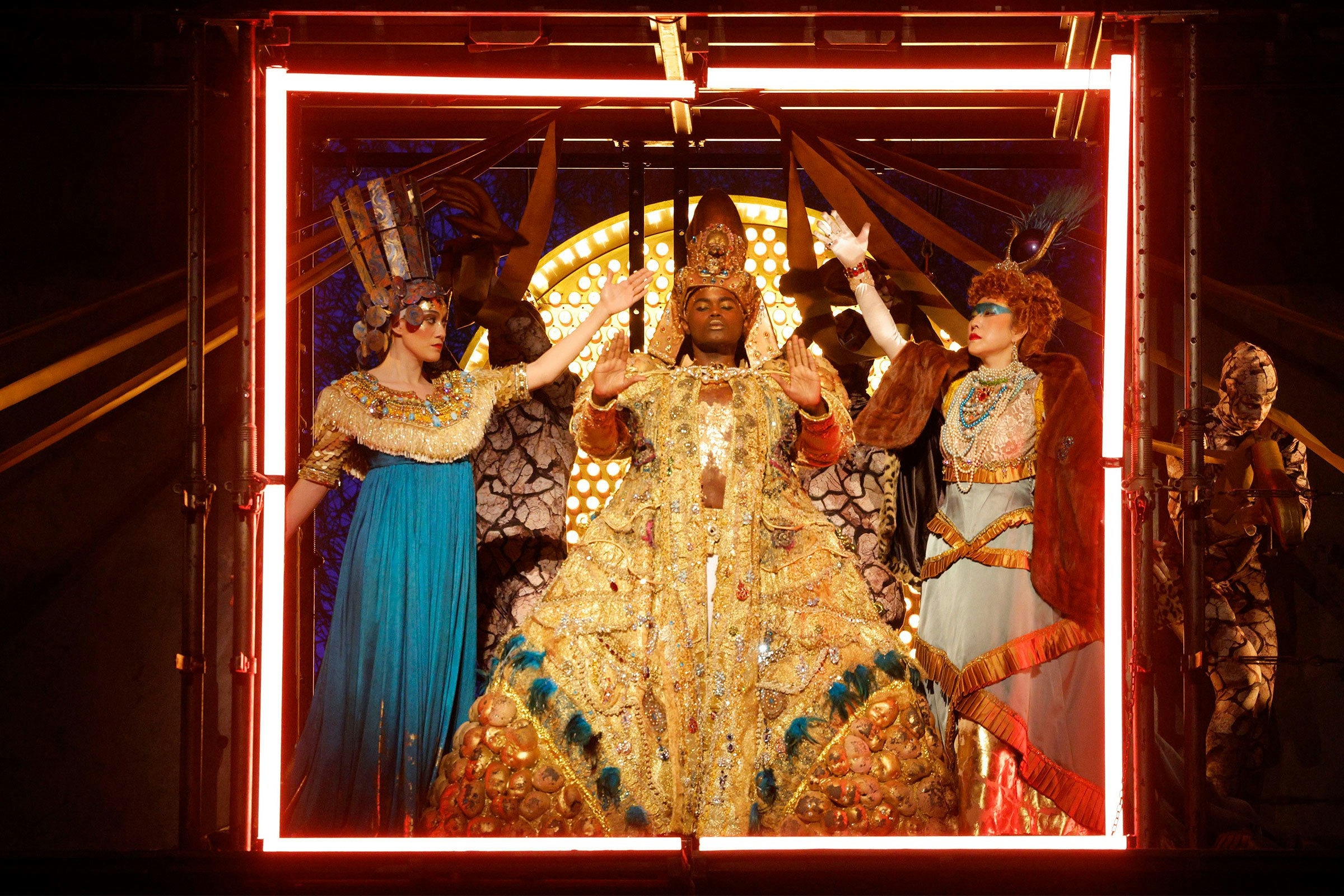 Akhnaten (John Holiday) pronouncing Aten as the new One God (LA Opera; photo by Cory Weaver)
Act Two depicts the ten years of Akhnaten’s reign in which he builds his city and confirms the new monotheistic religion. It includes a ravishing reinvention of the operatic love duet in a spellbinding scene between the Pharoah and his Queen, Nefertiti. It ends with Akhnaten’s Hymn to the Sun, the core of the opera, from which everything else radiates outwards.
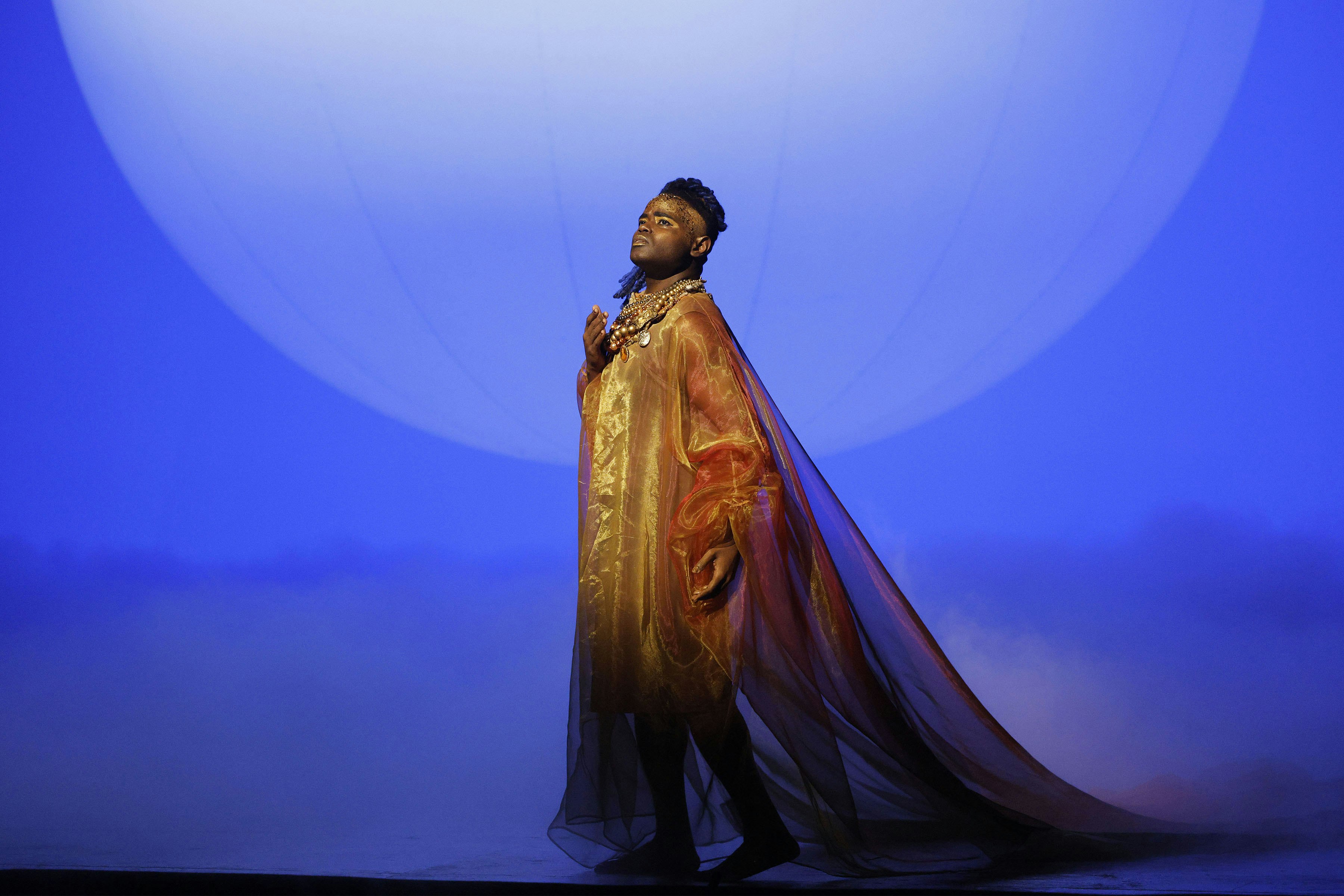 John Holiday as Akhnaten in Act 2 (LA Opera; photo by Cory Weaver)
Act Three depicts the downfall of Akhnaten and the re-establishment of the old ways, and the coronation of the child Pharaoh Tutankhamun. It concludes in the present day, with tourists visiting the ancient sites, unable to grasp the full import of what went before. But in a brilliant coup de théâtre, the ghosts of Akhnaten, Nefertiti and Akhnaten's mother Queen Tye reappear, and one is left with a sense of the Ancient World still being present, seeping into our modern world from across the centuries.
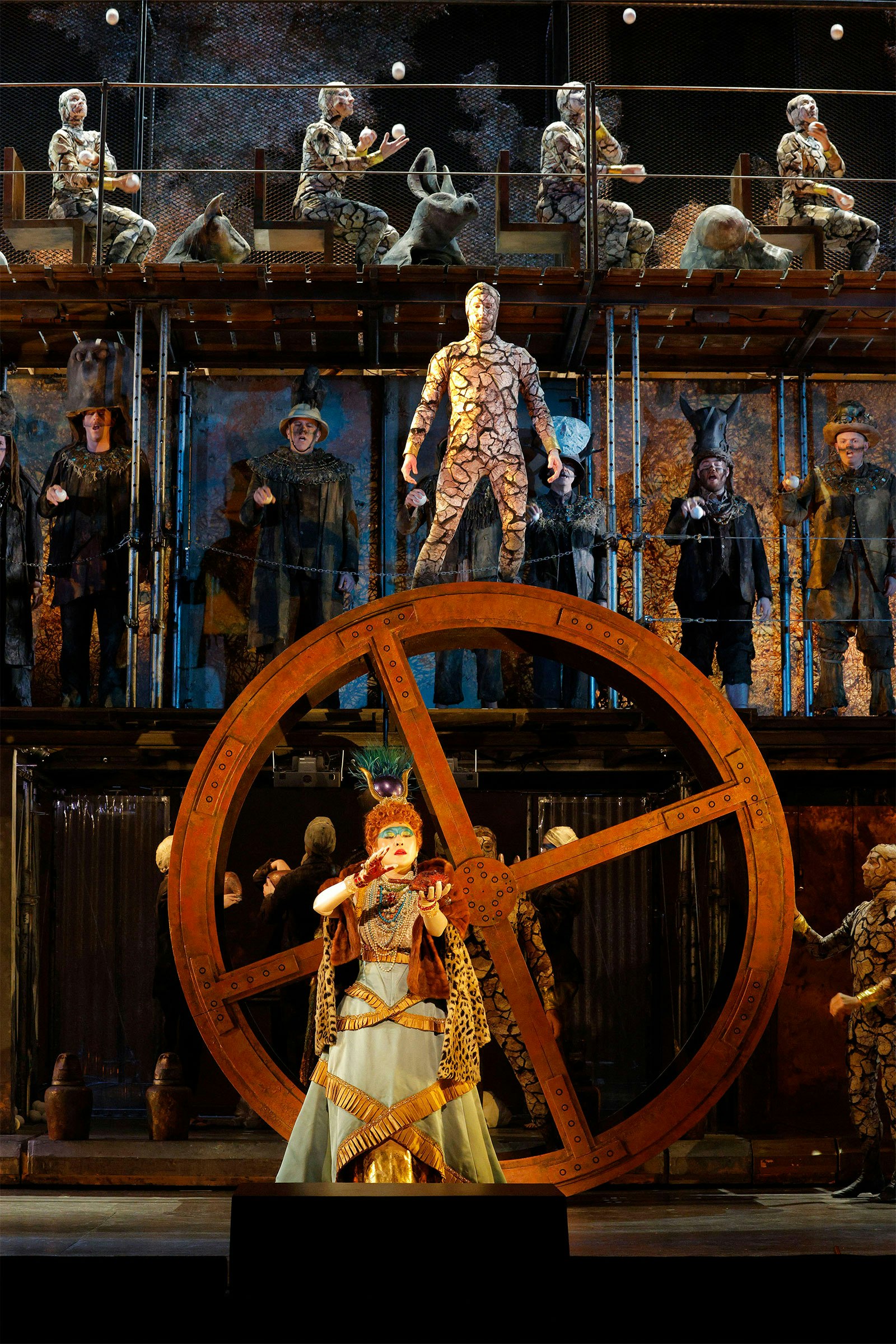 Act 1 of Akhnaten, with So Young Park as Queen Tye (LA Opera; photo by Cory Weaver)
The stage set - brilliantly conceived by Tom Pye - is presented on three levels, two dimensional, designed to look like hieroglyphics.
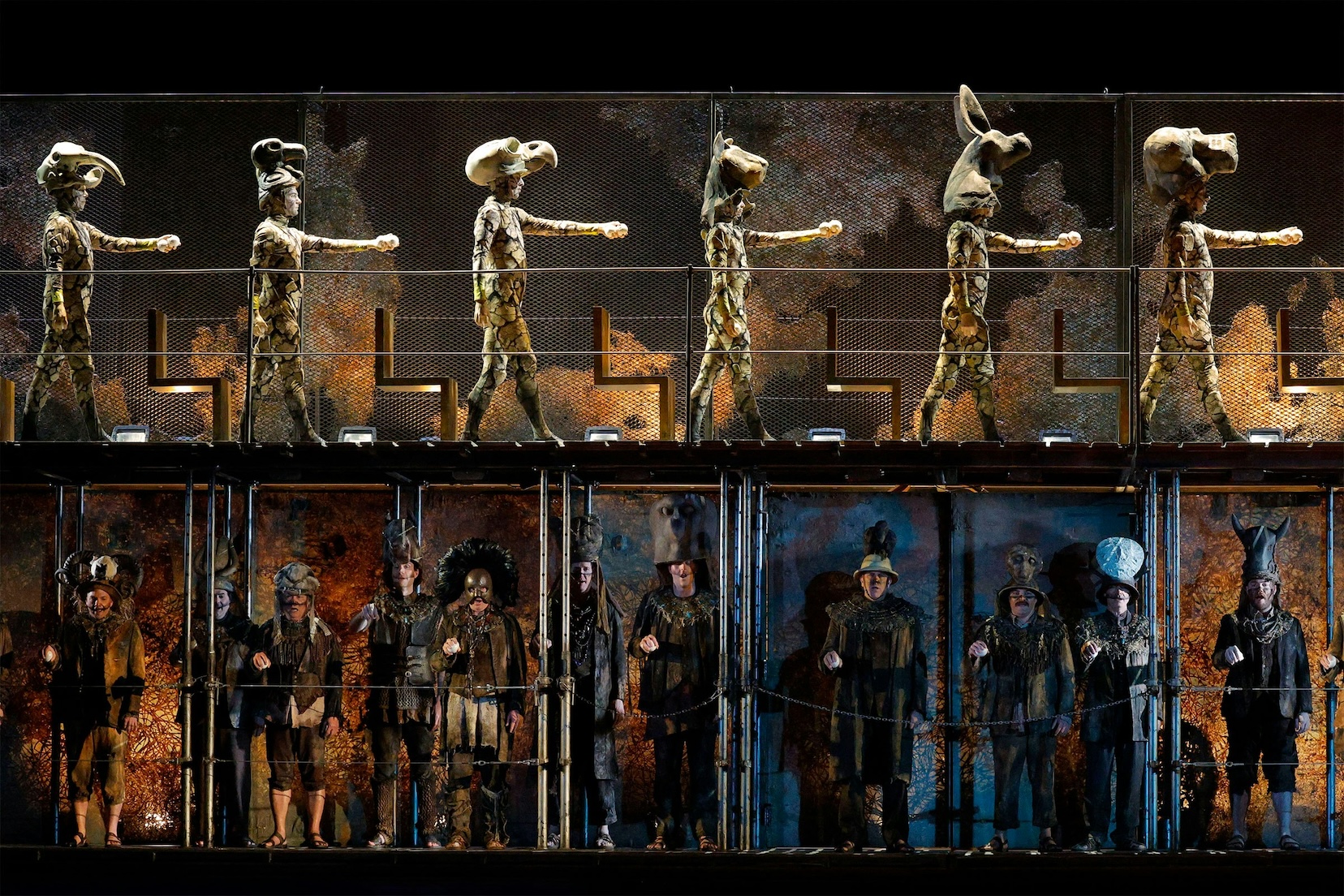 Act 1 (LA Opera; photo by Cory Weaver)
Echoing the sense of conventional notions of time being suspended in Glass’s music, in this production all physical movement is slowed down, with actors moving very slowly across the stage. The effect is to form an endlessly changing series of “stage pictures”, constantly evolving in slow motion. Since the action is spread across three levels and across different areas of the stage itself, every time you move your eyes to one area, then move to another, then move back again, everything is evolving. It is an exact visual manifestation of how the music is working.
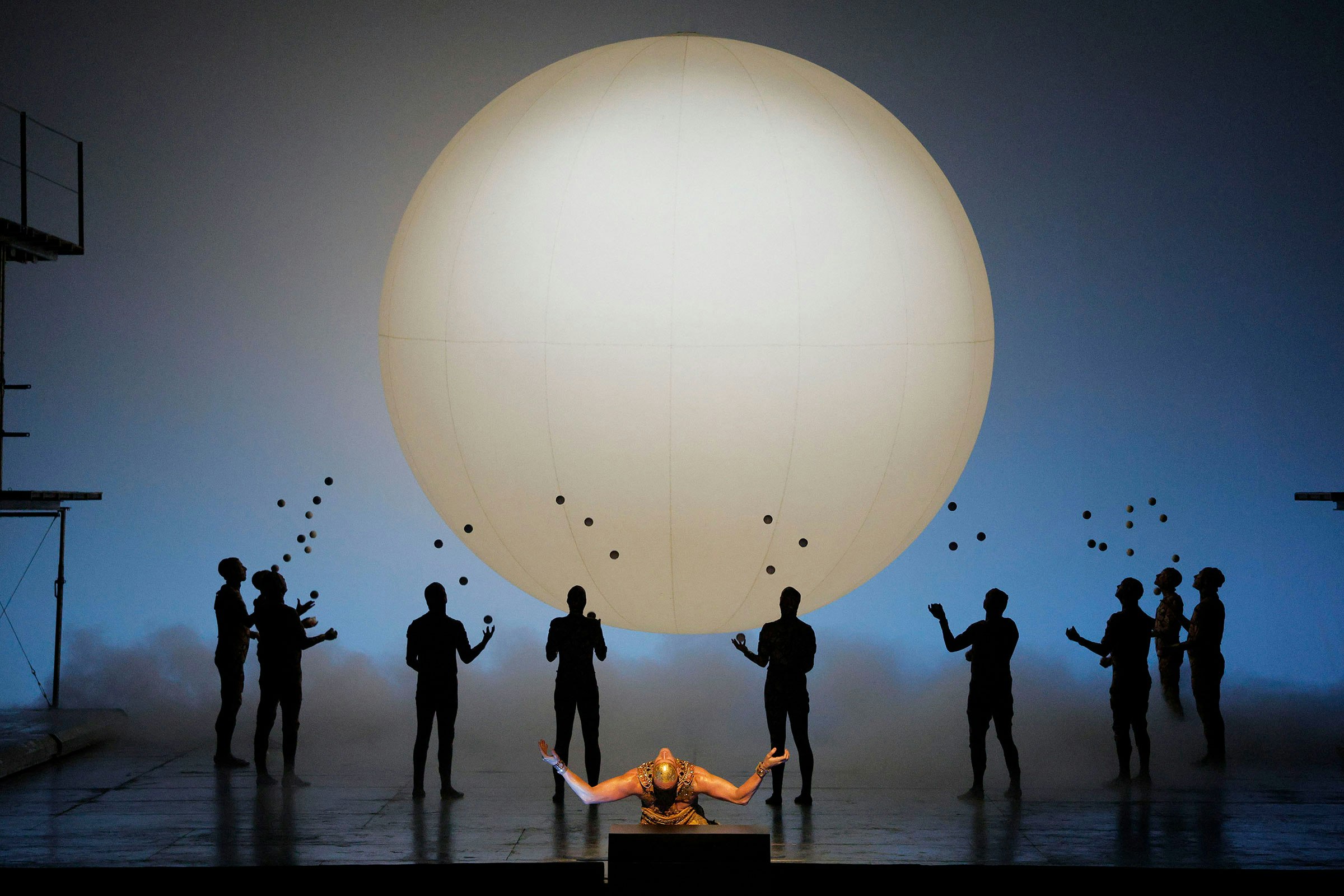 Akhnaten Act 2: The Narrator (Amenhotep III, played by Zachary James) with jugglers (LA Opera; photo by Cory Weaver)
In the Second Act this set is gradually split asunder, opening up to a wide open stage over which is suspended the vast orb of the sun. In front of this Akhnaten sings his Hymn to Aten, to words we know were written by the Pharaoh himself. The Act concludes with a stunning stage picture of the Pharaoh ascending steps to almost embrace the Sun as it beams down upon him and his kingdom - implacable, unknowable, awe-inspiring - as any god should be.
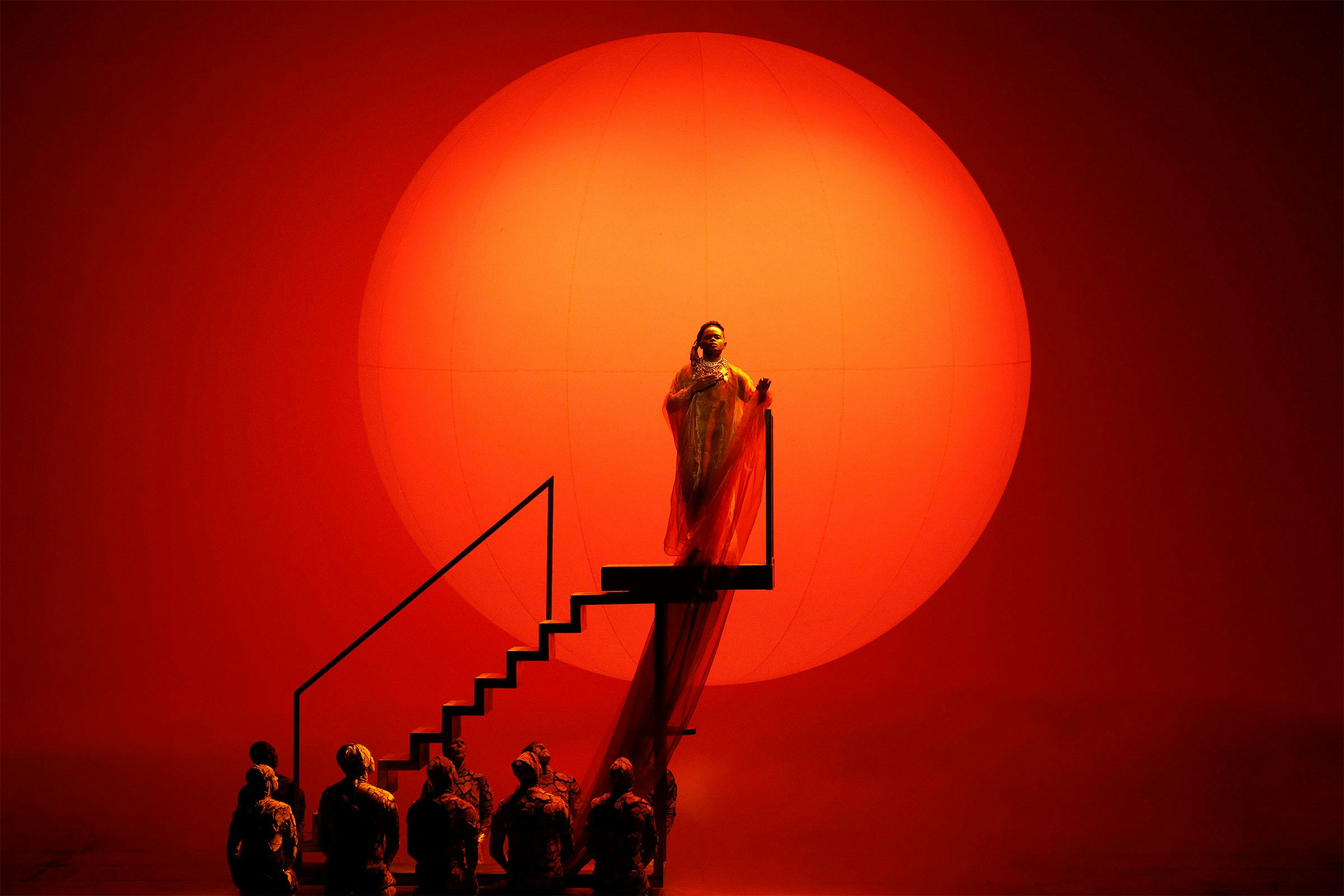 Akhnaten (John Holiday) with the Sun (LA Opera; photo by Cory Weaver)
In the Third Act the set returns once more to its original “hieroglyphic” setting, the multiple levels playing host to different areas of the action.
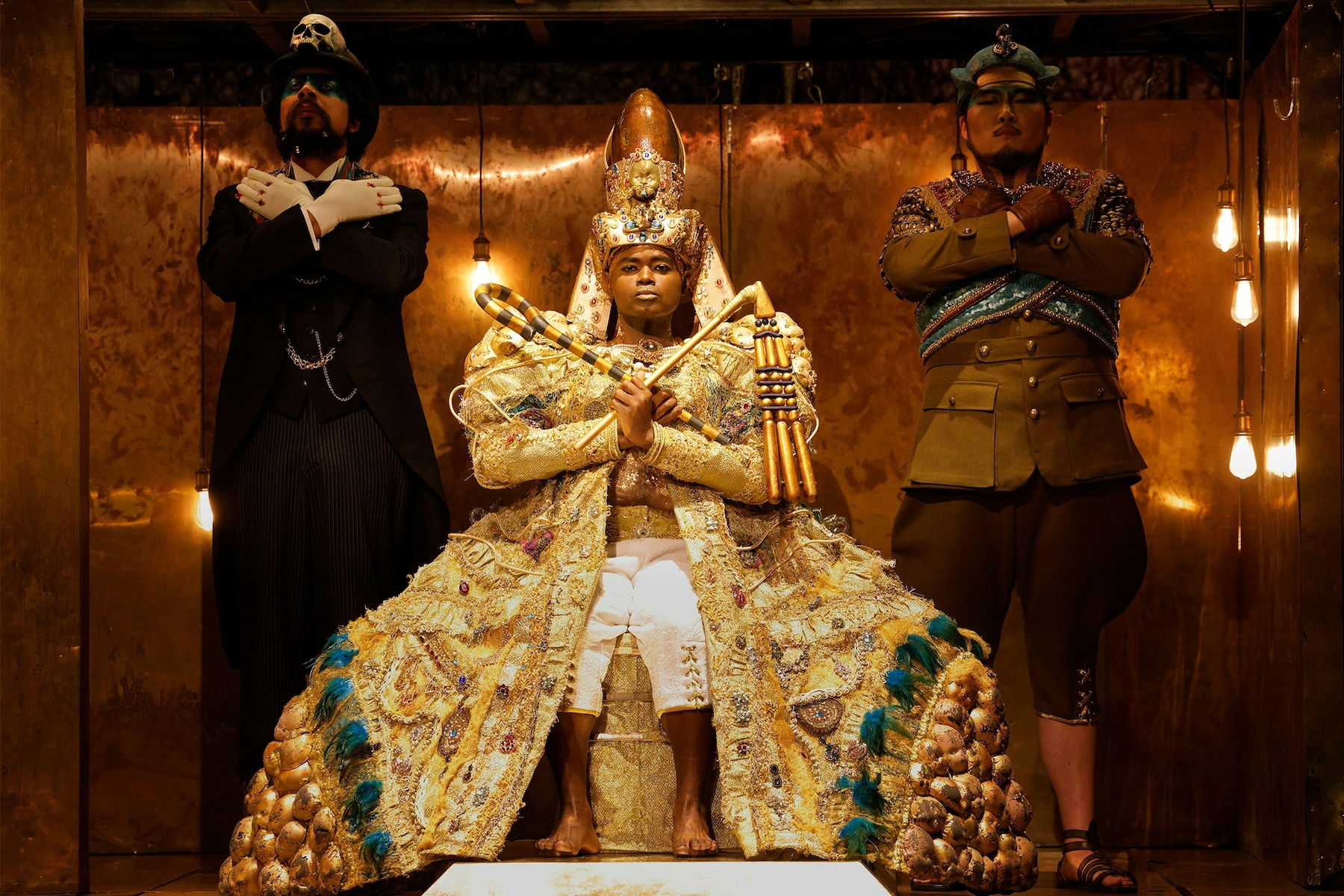
Enhancing the sense of deep connection to both the environment and culture of Ancient Egypt are the extraordinary costumes of Kevin Pollard, which combine what you’d expect from the world of the Pharaohs with elements of Elizabethan and Victorian, even punk, stylings. Fans of the great Jean Paul Gaultier (no stranger himself to film costume design) will recognize echoes of that designer's distinctive "look" - though this is in no way meant to detract from Pollard's singular accomplishments here.
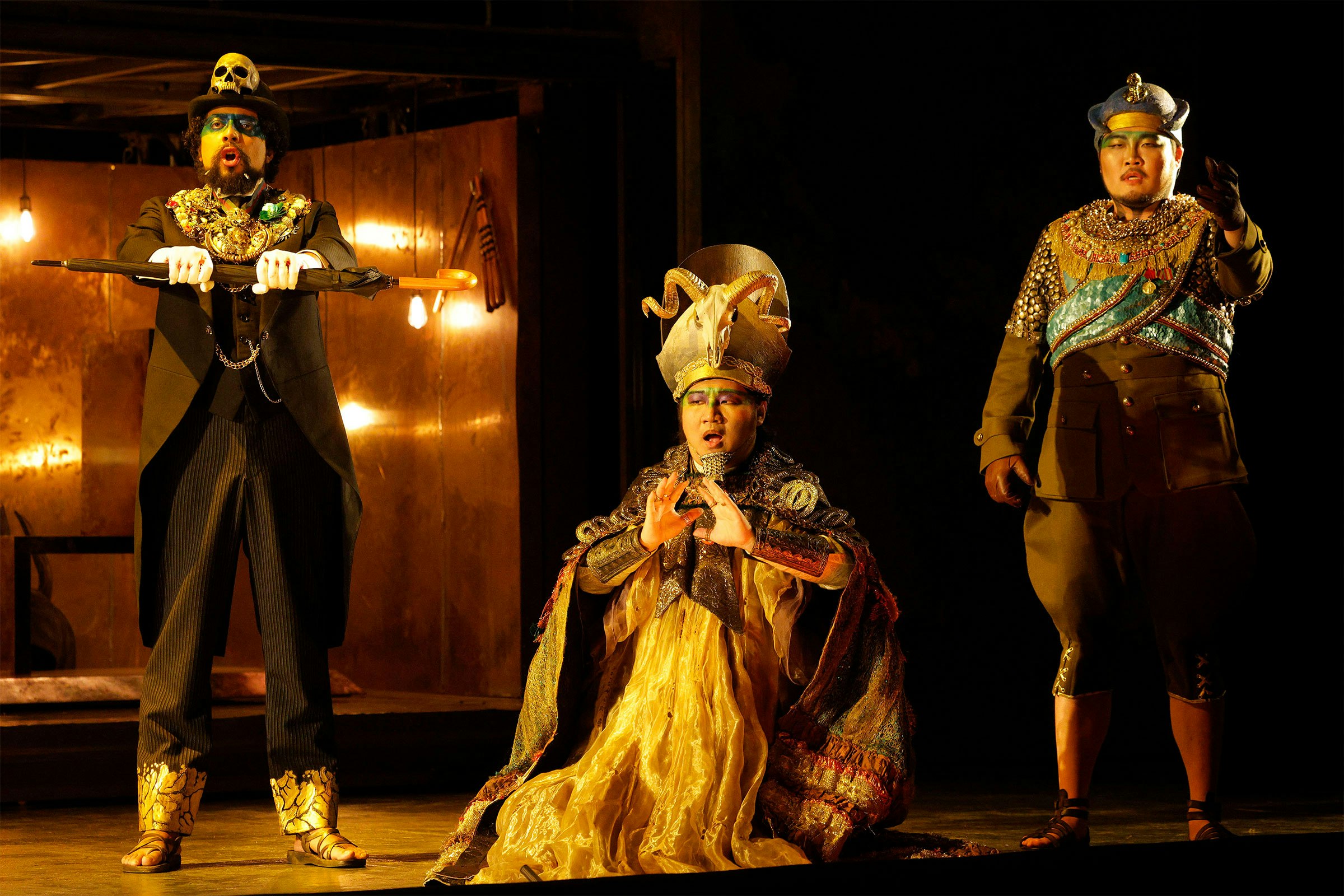 (from l. to r.) Aye (Vinicius Costa), High Priest of Amon (Yuntong Han) and General Horemhab (Hyungjin Son) (LA Opera; photo by Cory Weaver)
The only physical movement onstage that is not “slowed-down” is necessarily the arm movements of the jugglers, and the balls they are juggling - since these are subject to the regular laws of physics. Even here, though, the balls move in different tempi according to how they are juggled and manipulated.
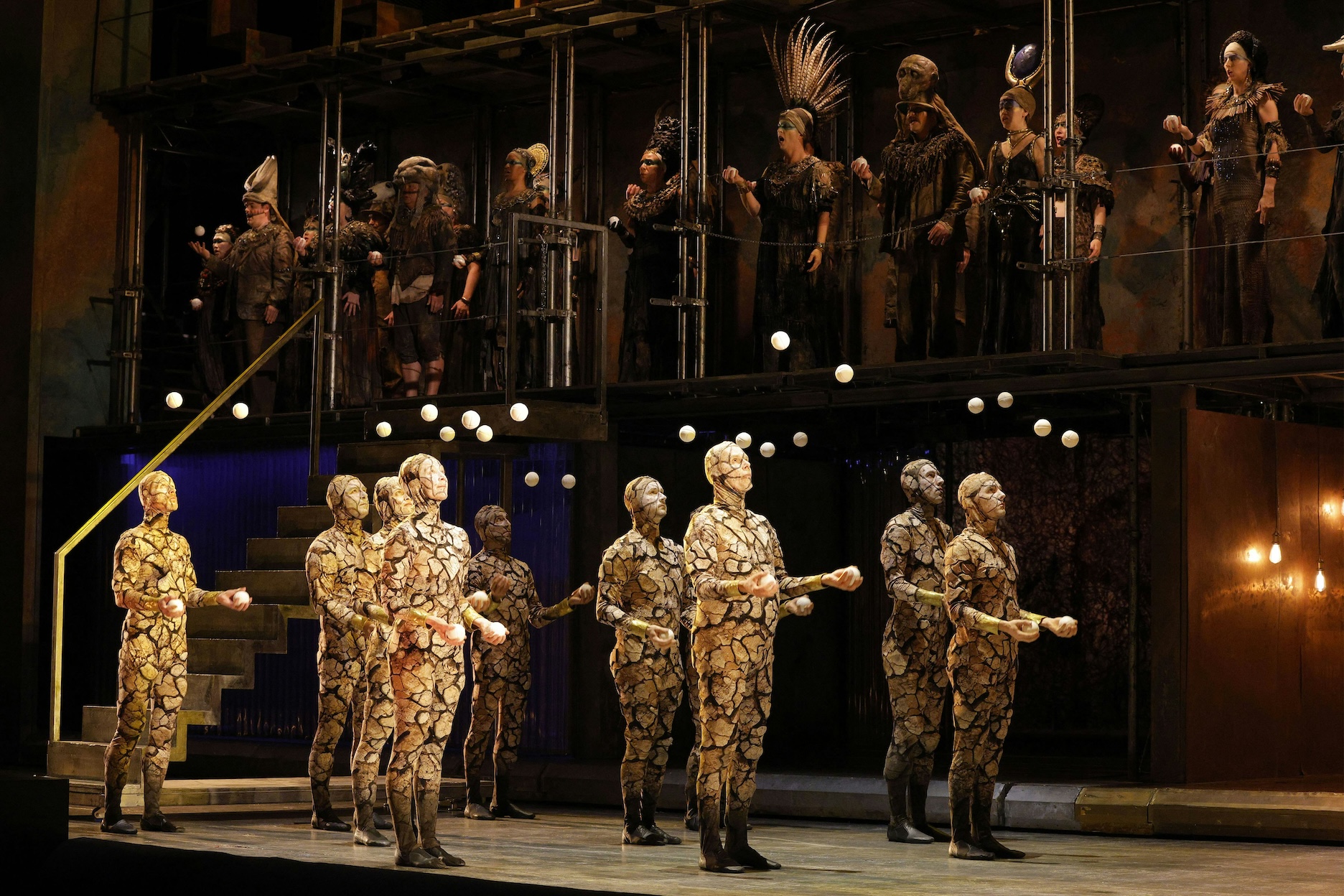 The Gandini Juggling Troupe in Akhnaten (LA Opera; photo by Cory Weaver)
Throughout the production the jugglers, members of the ground-breaking Gandini Juggling group, are used to provide a visual correlative to the music’s ebbs and flows, and to also express the physical intent of the dramatic conflicts being otherwise ritualized onstage.
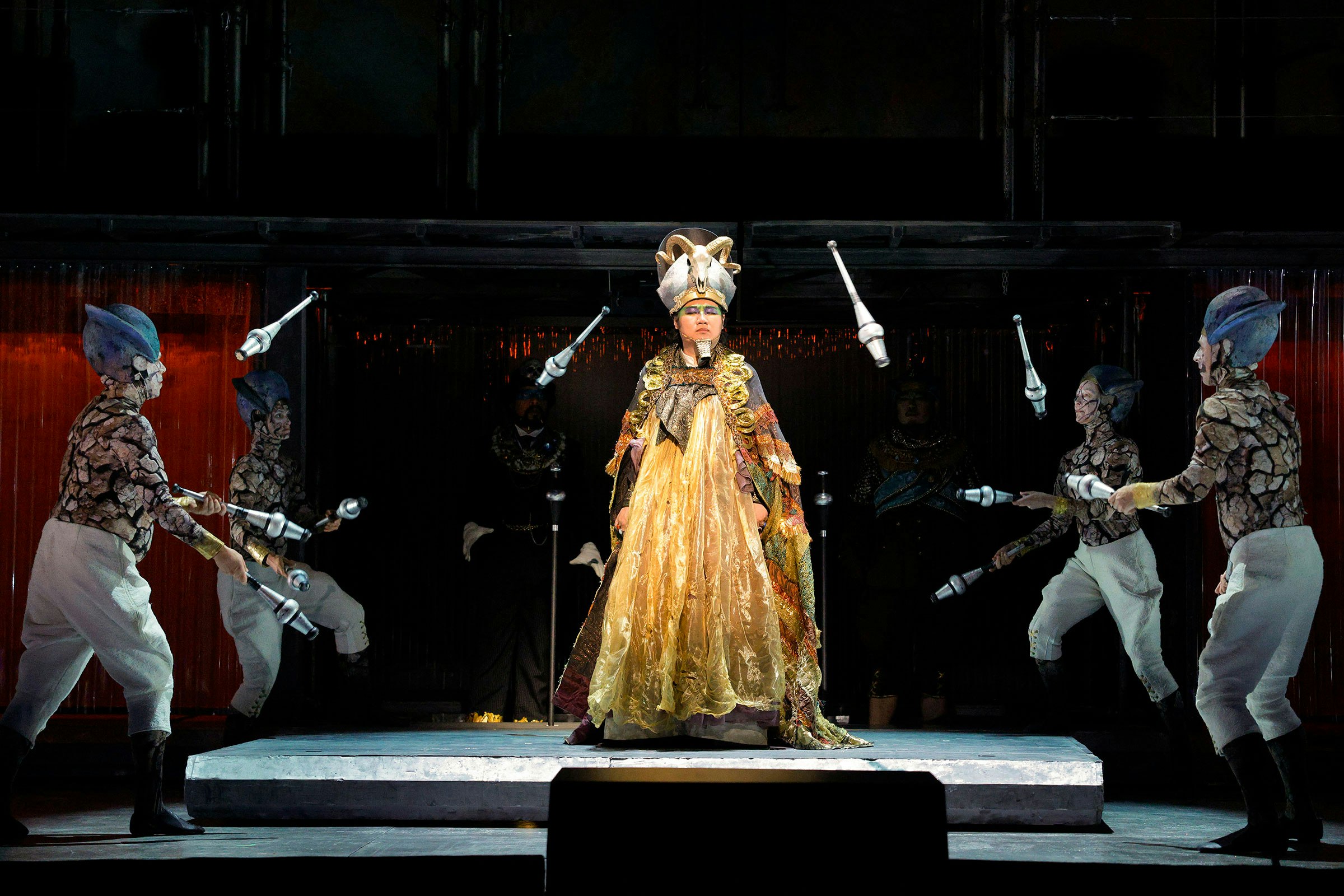 The High Priest of Amon (Yontong Han) in Act 2 of Akhnaten. In this scene the jugglers represent the forces unleashed by Akhnaten to tear down the old pantheistic religious order, and their juggling suggests both physical and ideological threat. Note how the white balls have been replaced by the more aggressive juggling clubs, which are thrown and brandished like weapons throughout this scene. (LA Opera; photo by Cory Weaver)
For example, in the Act 3 attack on the Pharoah and family, the jugglers - lying prone on the stage - move like slow-motion tidal waves of an oncoming storm, enveloping Ahknaten (along with the malevolent chorus) with their juggling. As the Pharaoh gasps his last breath, falling into the arms of his father Amenhotep, the balls fall to the ground motionless, strewn across the stage, and the jugglers disappear completely.
It is only in the final minutes of the opera, as the ghosts of Ahknaten and his Queen, along with Queen Tye, sing once again, that balls slowly begin to roll - at first almost imperceptibly - across the stage. They are followed by the return of the jugglers, likewise moving slowly across the stage between the three standing principals - on all-fours. A ripple through time? Using the simplest of means, a sense of continuity is re-established. The past speaks to the present. It’s yet another spellbinding coup de théâtre in an evening full of them.
The idea to use jugglers came to director Phelim McDermott while he was doing a session in an isolation tank. Contacting the legendary Sean Gandini (whom I used to see performing in Covent Garden when I lived in London in the 1980s, and whose troupe perform in this production), he was delighted to discover that the earliest representation of juggling is to be found in Ancient Egyptian art. It seemed like creative destiny. Throughout the opera the jugglers present a visual correlative to the ebb and flow of the music. Their use is a stunning creative coup.
Let’s take a moment here to talk about how Glass uses his singers. There are few conventional “scenes” between characters, beyond the big love duet between Akhnaten and his bride. This is a scene of uncommon intensity, where the two lovers approach slowly from opposite ends of the stage, wrapped in bright red “togas” with long trains stretching back to the wings.
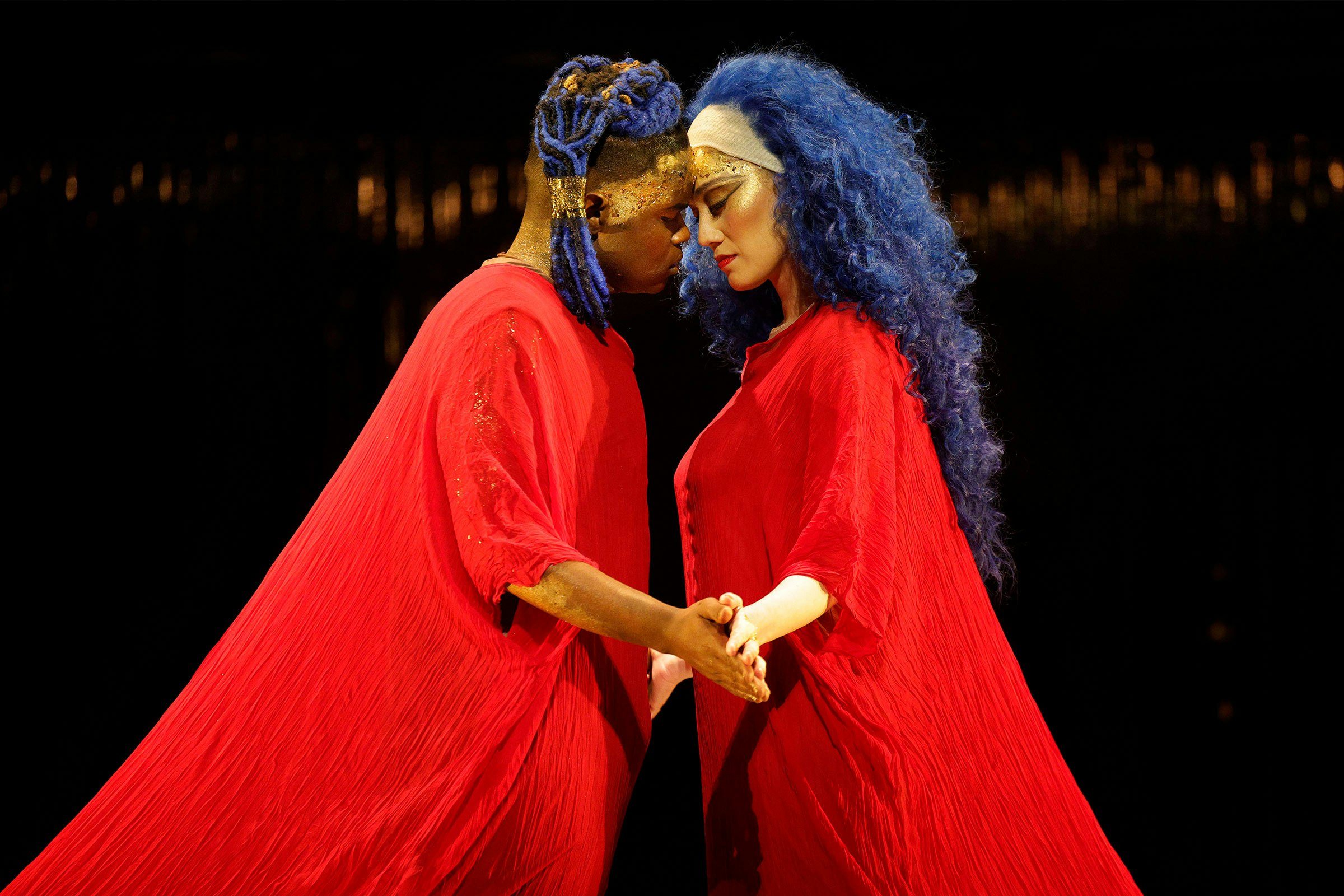 Akhnaten (John Holiday) and Nefertiti (Sun-Ly Pierce) (LA Opera; photo by Cory Weaver)
As the duet climaxes they wrap around each other, as do these trains, and then part. Rarely have separate and intertwining pieces of cloth moving slowly across the stage held such import.
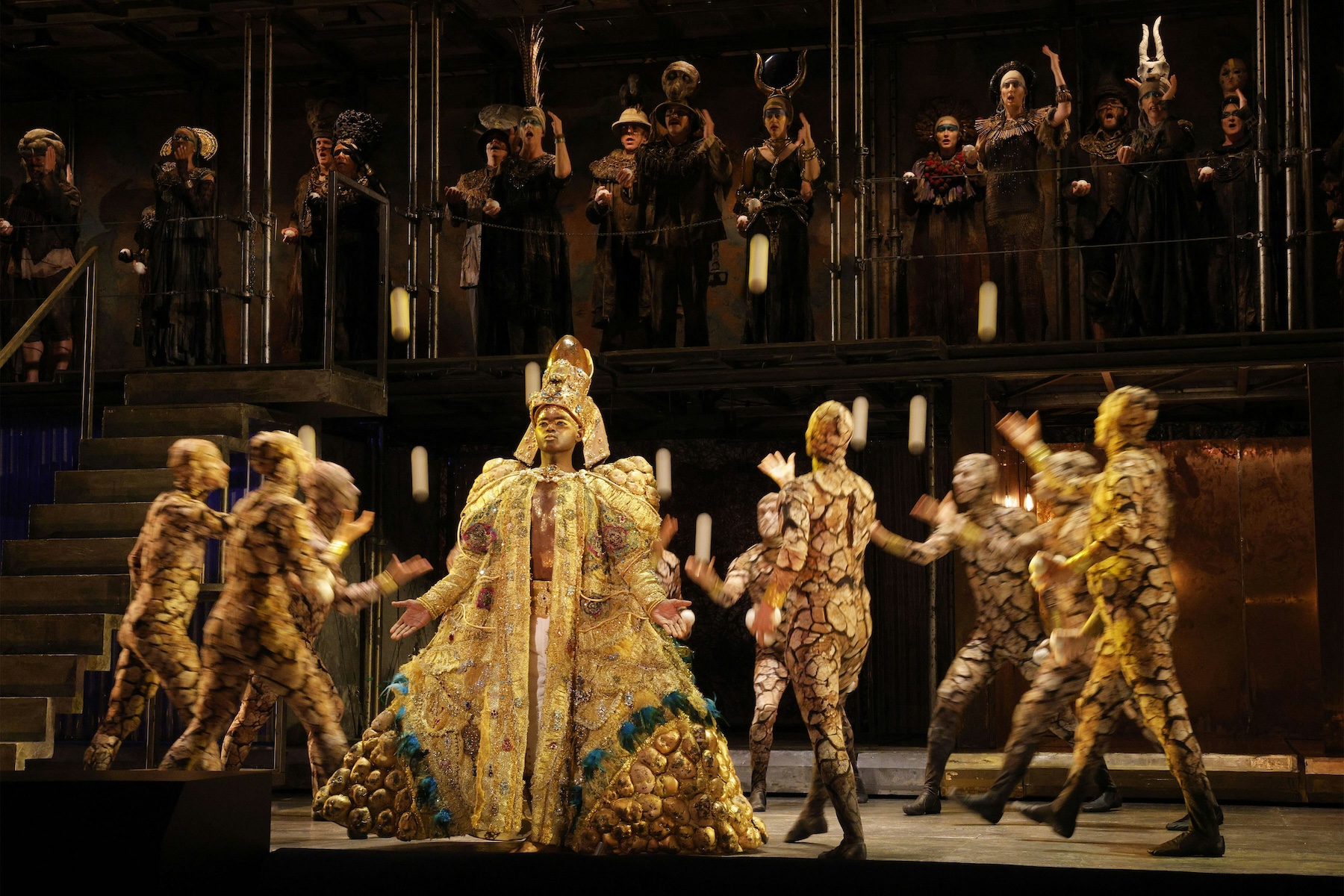 Akhnaten (John Holiday) (LA Opera; photo by Cory Weaver)
Scenes are tableaux, depictions of characters’ position or ideology rather than conventional dramatic, psychological interactions. All the texts are in their original “dead” languages. Some scenes are sung merely to wordless “aahs”. It is the intent - sometimes loving, sometimes fearful, sometimes violent - behind the vocalizations which Glass expresses in his settings of them, and the music accompanying them.
The big exception here is the role of the dead Amenhotep III, father of Akhnaten, who steps forward to become the opera’s narrator during the opening scene, present onstage most of the time, speaking directly to the audience in English.
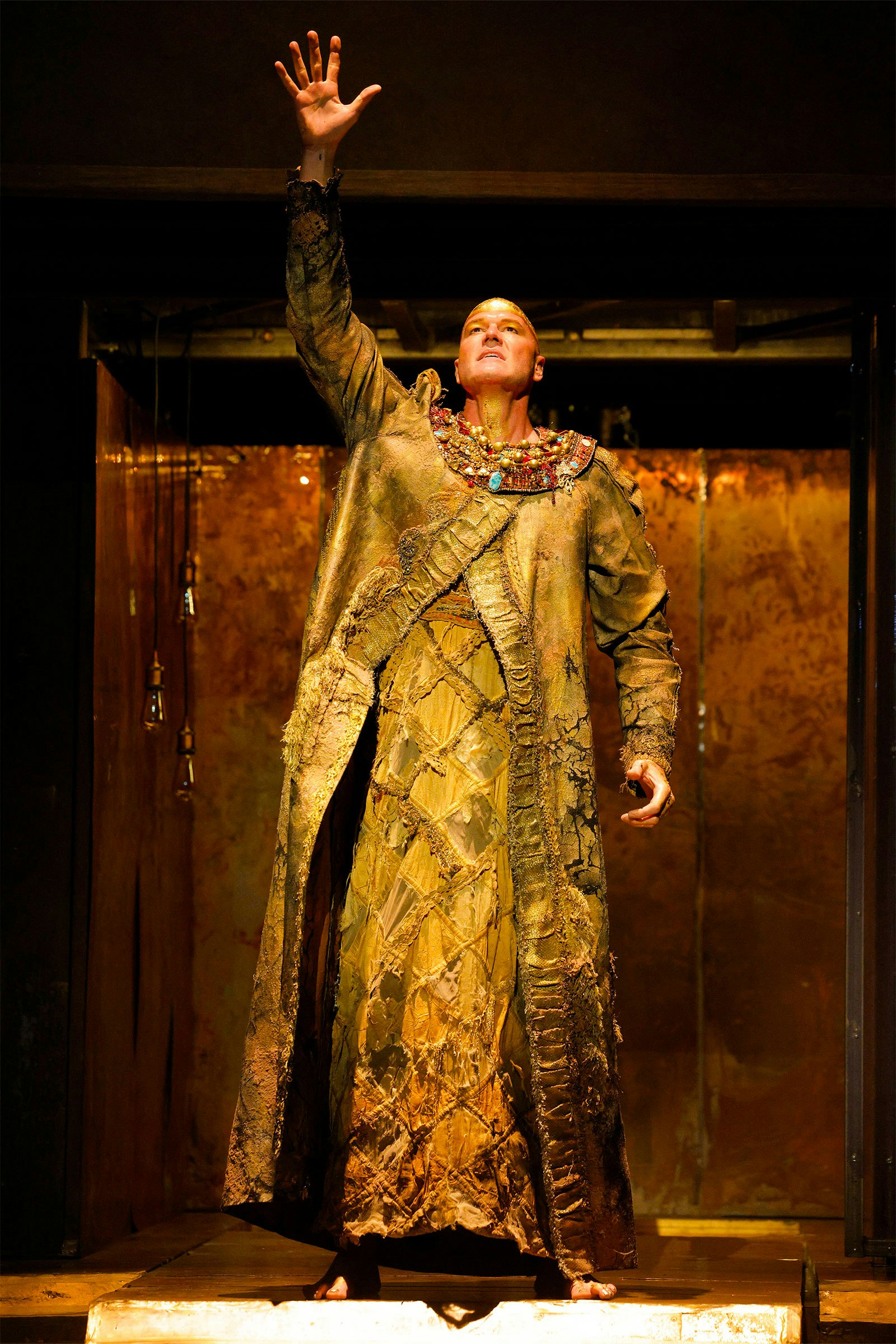 Amenhotep III (Zachary James) (LA Opera; photo by Cory Weaver)
This is a device that has been used often before, rarely successfully; here it provides a compelling bridge between the audience and what is unfolding onstage: a very human character expressing all the emotional reaction to what is happening in the strange, unfolding drama we are all witnessing.
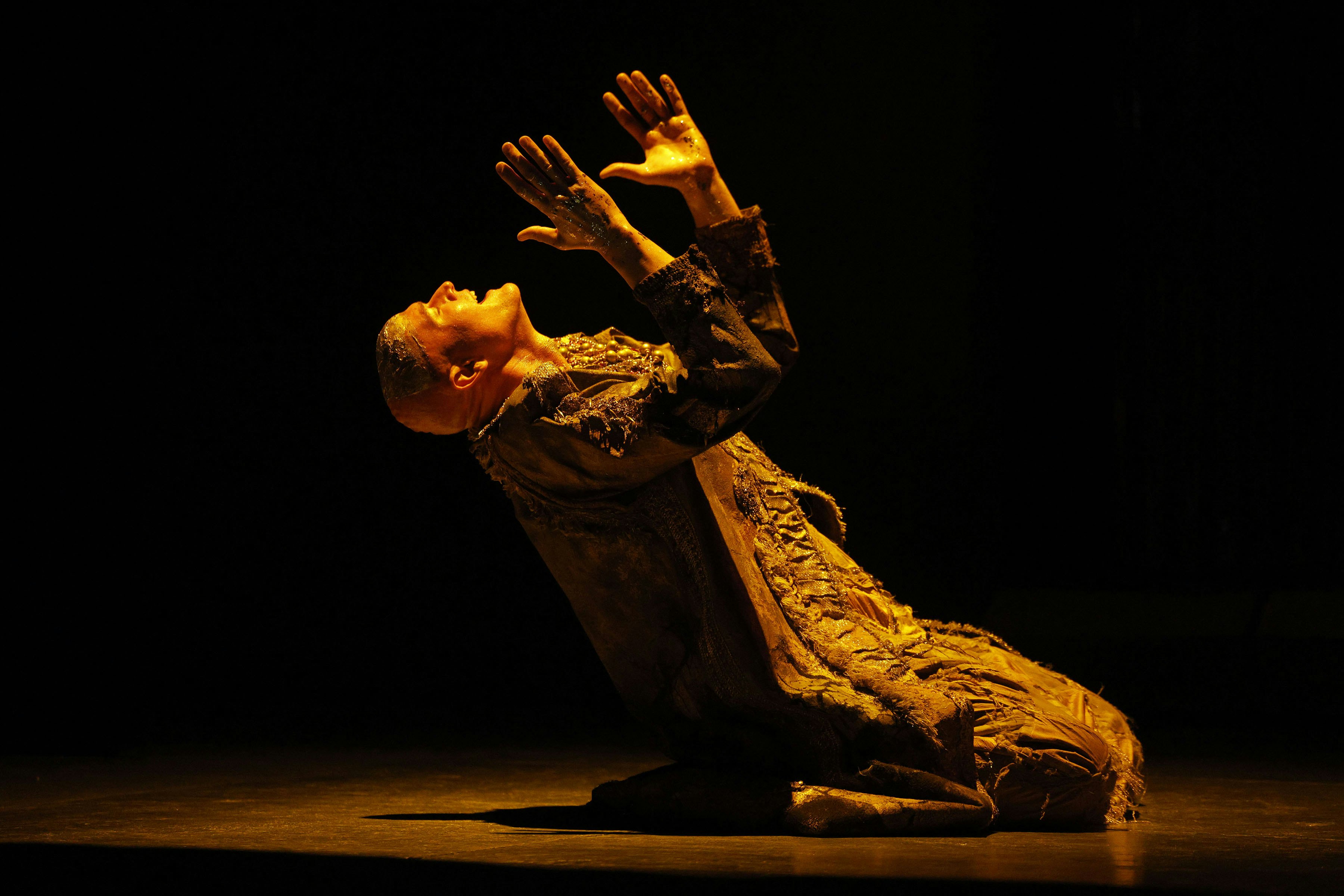 Amenhotep III (Zachary James) (LA Opera; photo by Cory Weaver)
Finally one must mention Glass’s decision to write the role of Akhnaten for a counter-tenor. It is a full 40 minutes into the opera before we hear the Pharaoh sing, even though his presence has already been mightily felt as he is literally “born” onstage (an entirely justifiable - and striking - use of full nudity that is necessarily diluted in the broadcast version linked to below). When those slightly other-worldly tones of the counter-tenor voice emerge the sense of this distant civilization’s simultaneously alien quality and also strange familiarity is immediately underlined.
When the opera premiered back in 1984, the role was taken by one of the leading (and pioneering) counter-tenors back then, Paul Esswood (brother of my ‘cello teacher). The slight hootiness of the voice was typical of the time, and frankly I find it hard to listen to now (on the original cast recording, available on vinyl and CD on CBS/Sony), especially when the current generation of vocal and opera stars contains a multitude of brilliant counter-tenors who are anything but hard to listen to. Much better - for this reason alone - to go with the Met Opera recording on CD and DVD.
Only one section of the opera is sung in the vernacular of the audience, in this case English, and that is Akhnaten’s Hymn to the Sun, expressed in his own verified historical words.
Thou dost appear beautiful
On the horizon of heaven
Oh, living Aten
He who was the first to live
When thou hast risen on the Eastern Horizon
Thou art fair, great, dazzling,
High above every land
Thy rays encompass the land
To the very end of all thou hast made.
All the beasts are satisfied with their pasture
Trees and plants are verdant
Birds fly from their nests, wings spread
Flocks skip with their feet
All that fly and alight
Live when thou hast arisen.
How manifold is that which thou hast made
Thou sole God
There is no other like thee
Thou didst create the earth
According to thy will
Being alone, everything on earth
Which walks and flies on high.
Thy rays nourish the fields
When thou dost rise
They live and thrive for thee
Thou makest the seasons to nourish
All thou hast made
The winter to cool
The heat that they may taste thee.
There is no other that knows thee
Save thy son, Akhnaten
For thou hast made him skilled
In thy plans and thy might
Thou dost raise him up for thy son
Who comes forth from thyself.
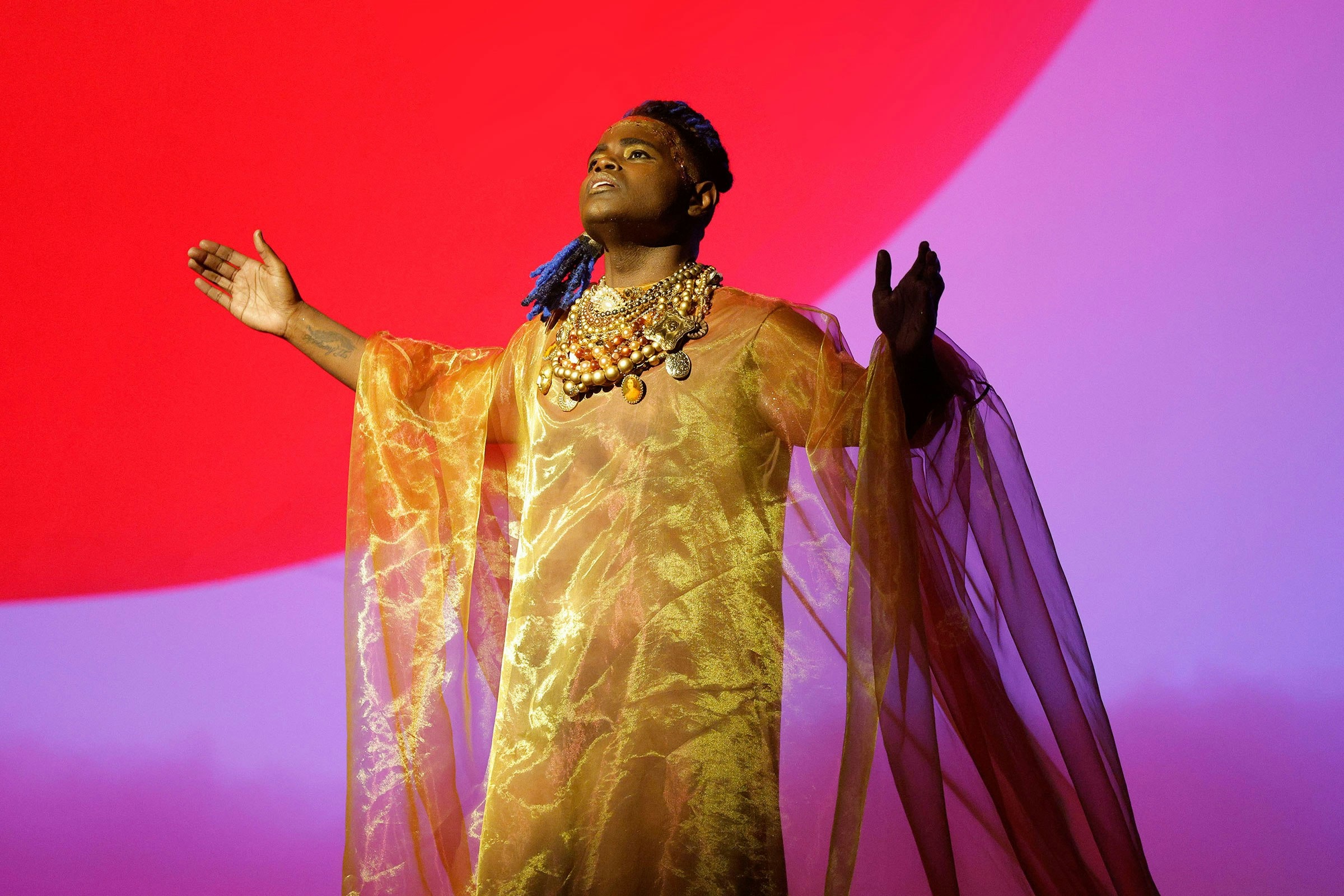 Hymn to the Sun (John Holiday) (LA Opera; photo by Cory Weaver)
BRINGING THE MYSTERY OF ANCIENT EGYPT TO LIFE
“I feel like in the first Act we release the ancient Egyptian gods, the spirits from their tombs, and they have a chance through this extraordinary medium to communicate some of what that culture is like, which I don’t think you can get from just getting the facts, as of course there’s beautiful music that’s communicating that as well.”
— Phelim McDermott, director of Akhnaten
Forget every other depiction of Ancient Egypt you’ve ever seen or read about. This music and this production bring the Land of the Pharoahs to tangible life in a manner I’ve never experienced before. Forget all those megabucks historical epics stretching back to Cecil B. DeMille spectacles like The Ten Commandments (1923 and 1956) which spent millions on recreating every last historical and imagined detail of the period. Forget Ridley Scott’s typically immersive art-directed film about the conflict between Moses and Ramses, Exodus: Gods and Kings (2014), to date the most authentic representation of life under the Pharaohs. Forget the Tutankhamun exhibition which I attended in London as a wide-eyed 12-year-old.
Tutankhamun actually makes an appearance in Act 3 of Akhnaten, crowned onstage and in real life at the age of 9, since he was the successor to the deposed and murdered Akhnaten (though not necessarily his biological son).
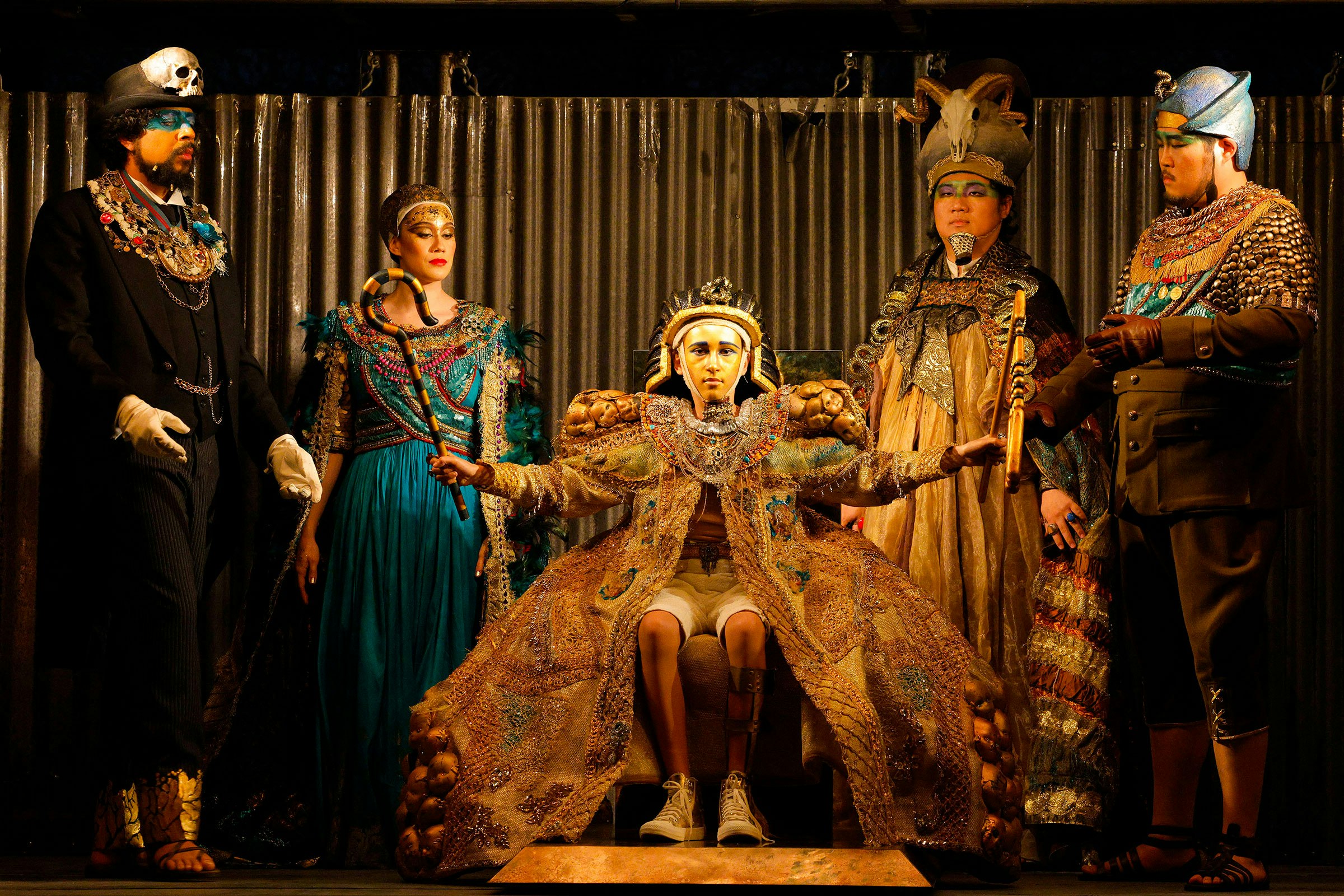 The Crowning of Tutankhamun (Schroeder Shelby-Szyszko) (LA Opera; photo by Cory Weaver)
No, Akhnaten brings the mystery, glory and excess of Ancient Egypt to life like nothing else I’ve ever experienced. Also, especially in this stellar production, it captures unerringly the allure of religious fervour, and the faint odour of corruption one associates with dynasties and that same religious zeal as it becomes institutionalized and ossified. During one of the intervals I chatted to a middle-aged couple who were attending with a group of friends. They had all gone on a recent excursion to Egypt that had encompassed as many of the tombs, sights and museums as most of us could bear - in short the whole historical tourist experience with a vengeance. Their eyes lit up when I asked them if they were enjoying the show. “Oh yes, it’s incredible - just like being there - in the ancient times,” they replied, “and we don’t like opera - we only ever went once before, years ago, and it was not our thing at all. This is different.”
Yes, this show might be the perfect introduction to “opera” for a newbie, precisely because it is so unlike what most people think opera is - or how they have experienced it.
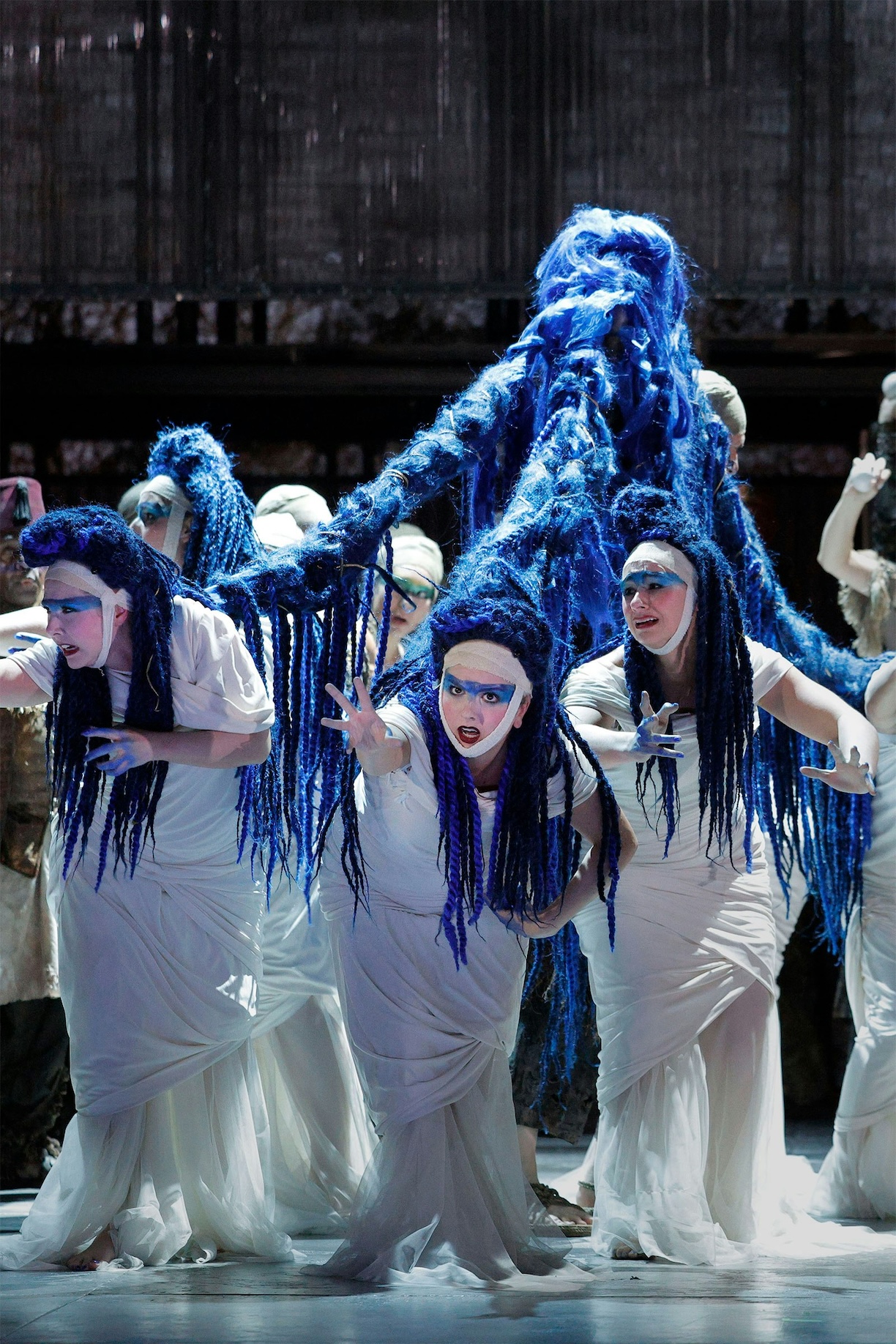 The Daughters of Akhnaten under attack (LA Opera; photo by Cory Weaver)
MAKING OPERA RELEVANT AGAIN?
Hell yeah!
In case you’ve been hiding under a rock recently, the “relevance” of opera and ballet has been much in the news owing to an offhand series of remarks Timothée Chalemet made during a town hall with Matthew McConaughey to promote his Oscar chances.
All the old arguments about the “elitism” of opera and ballet, and the funding of same, have reared their hoary heads.
I’m always entertained when a celebrity allows their ego to get the better of their ignorance - so that they let fly with a pronouncement that puts both fully on display. But poor Timothée - you really do not want to get on the wrong side of Whoopi and the Ladies of “The View”…
I cannot think of a better riposte to Chalemet’s dismissal of opera than this production of Akhnaten. Rarely have I experienced an artistic “happening” (for that is most surely what it was) that was so completely immersive, so completely original and different to anything else you might experience in a theater; that spoke in such a compelling way to my core being. And that resonated (and continues to resonate - or should I say pulsate) within my consciousness.
I was not alone. The audience was totally into it, and the reviews across the board - from critics (the ones that are left) and audience members online - have been ecstatic.
Not bad for a so-called “dead”, “irrelevant” art form.
Make no mistake - this is opera like you’ve never seen or imagined it, and, I’ll wager, unlikely to see again - until the next Phelim McDermott production of a Philip Glass opera.
No, from the dramatic scenario, to the score, to the production in every aspect - sets, costumes, lighting, movement - this was a complete re-invention of the theatrical experience. This was not like any other music drama I’ve ever seen - and I’ve seen some pretty way out there stuff!
Actually Akhnaten is exactly what “opera” is (or should be, at its best): a blending of music, words, singing drama and theater to create a mode of artistic expression more intense than anything its constituent parts could create on their own. It’s just that we’ve gotten so used to the operatic mainstays of the past that they are locked within the aesthetic context of the times in which they were created.
Akhnaten breaks all the shackles of the past and present. This isn’t necessarily a given for a “new” opera. The self-professed avant-garde is often as dull and reactionary as the orthodoxy it professes to replace. I regret to say I actually attended Stockhausen’s Donnerstag aus Licht at Covent Garden, part of that composer’s seven (count them - seven) opera cycle intended as his one-upping of Wagner’s merely four part Ring cycle. A bigger pile of pretentious, inauthentic doo-dah I cannot recall: an assemblage of every masturbatory “modernist” pseudo-intellectual gesture and cliché known to man. And also, by the way, horrible to listen to - an opera composed and performed by inmates of an asylum would at least have the benefit of unpredictability.
And yet here we are with Philip Glass’s Akhnaten, something truly avant-garde, yet built resolutely upon the mighty edifice of traditional tonality, all chords and arpeggios we know from our earliest days of hammering out “3 Blind Mice” at the piano. Notes that are not part of the chords begin to appear, and build their own chord and figures. Different instruments and sections of the orchestra either take up the main musical material, or offer their own version of it. Because the textures are so transparent, because often we are dealing with opposing outlines of chords, rather than all the notes in-between that we are used to hearing in conventional classical music, there can be thrilling juxtapositions of the simplest material.
From an audiophile point of view, Glass’s use of deep unison bass notes against filigree writing in the mid-range and upper staves creates incredible moments of bass “presence” that really make you understand the prioritizing of bass performance in a stereo system.
The music is foundational, standing before you like some mighty rock face - El Capitan maybe - but then as you look closely you see the cracks and contours of the granite, shifting patterns in the stone as the sun catches it in changing light through the day; and then when it rains, the rivulets of moisture flowing down in altering channels are the ripples in the musical textures that Glass builds, turns on their axes, and which re-emerge both the same and altered.
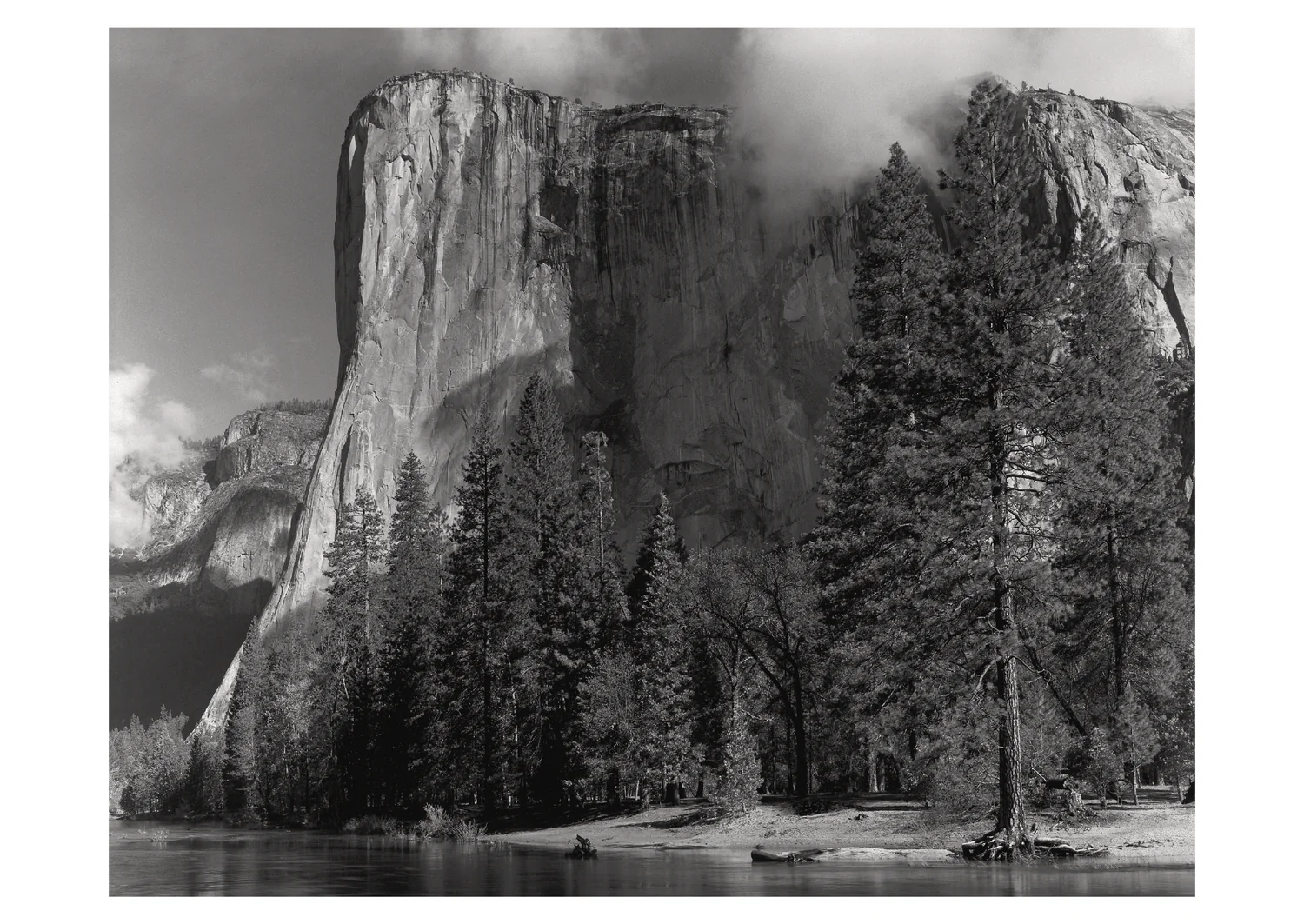 El Capitan photographed by Ansel Adams
If you could stand and look closely at the face of El Capitan over the course of a day, see how it alters yet stays the same - that’s how Glass’s unique way with the Western musical vernacular impedes on your ear, your brain, your mind and finally your deeper consciousness. I am still “feeling” this music in my body and mind days on from the performance. This is quite different to how regular music works. And to be honest I have often resisted it. I have often shied away from Glass’s music, instead favoring that of Steve Reich and John Adams in particular.
But here, in this opera, there is somehow a perfect match of music and subject, and I was powerless before it - and happy to be so. If the mighty pyramids and tombs and Pharaohs of Ancient Egypt could speak - this would be their language.
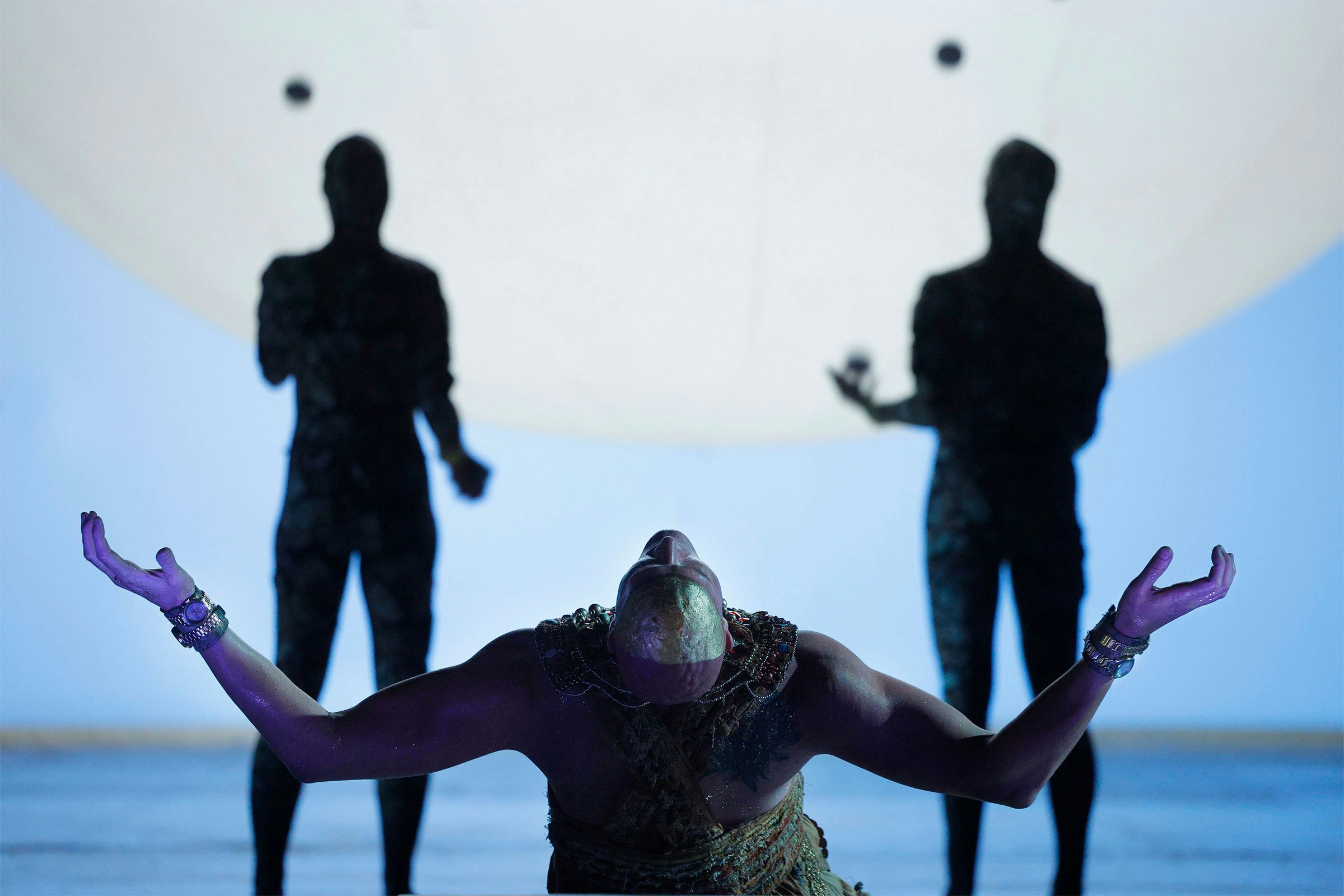 Akhnaten Act 2 (LA Opera; photo by Cory Weaver)
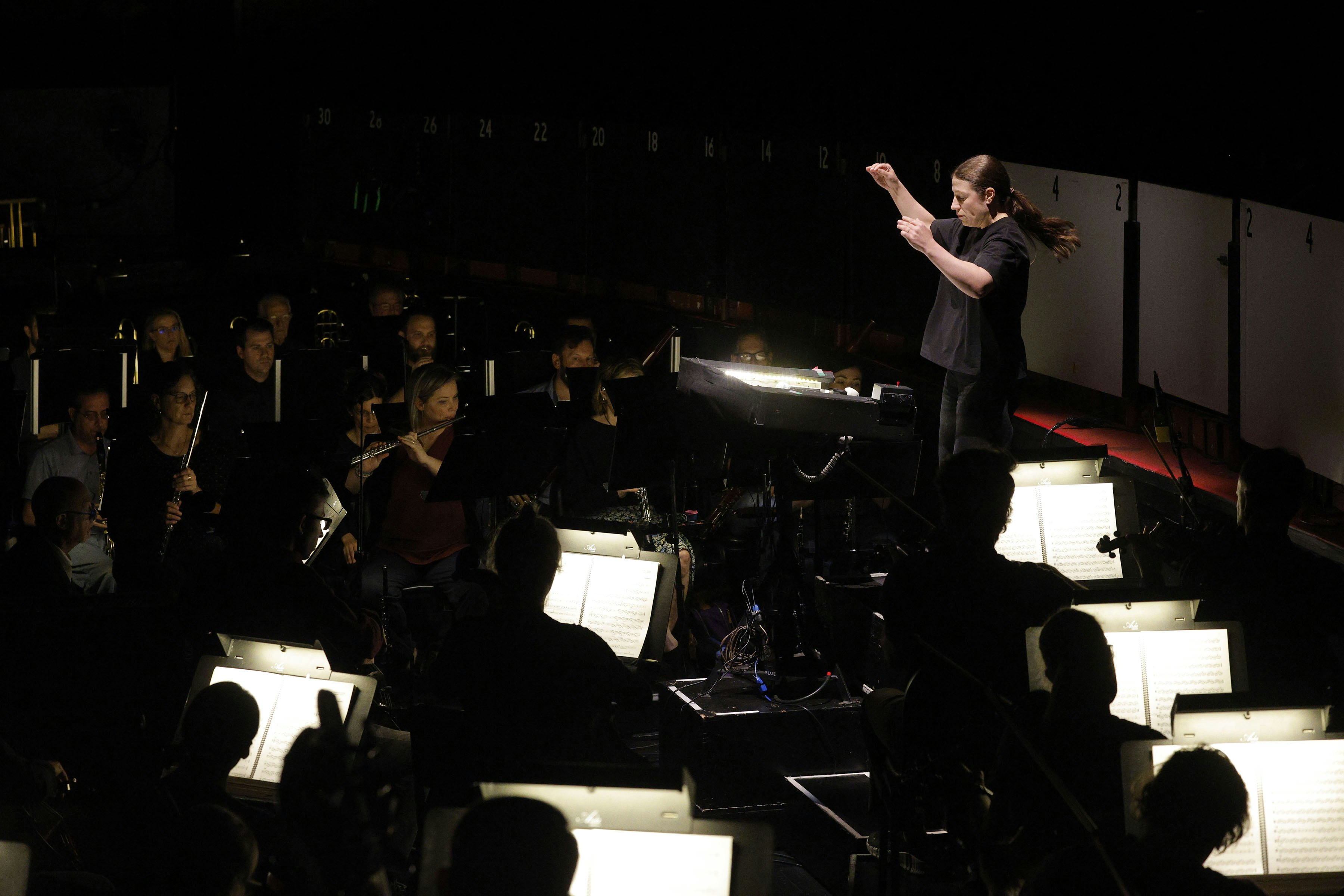 Dalia Stasevska conducting the LA Opera Orchestra (superbly) (LA Opera; photo by Cory Weaver)
AKHNATEN ON VIDEO and CD
Videos of Akhnaten, like all filmed-in-the-theatre opera and plays, tend to be an unsatisfactory substitute for the real thing. But it’s better than nothing. If you ever have a chance to see this production in the flesh, grab it. (It is playing in LA until the 22nd March). Otherwise, below is the live transmission of a performance from the Met - same production, different singers. (In the performance I saw at LAOpera, the young counter-tenor John Holiday was even more otherworldly and spellbinding than Anthony Roth Costanzo in the Akhnaten role, which is saying something. A singer to seriously watch out for).
Goodness only knows how long these links will stay active on YouTube. The great opera star Joyce DiDonato is a most ingratiating host, and there are some really nice behind-the-scenes interviews and peeks at the company getting ready to perform.
I will also mention a nice close-up look at one of Tom Pye’s most striking costumes.
If you want a more permanent version of Akhnaten then seek out either the CD or DVD versions from the Met on Philip Glass’s own label - same production, different singers from those currently performing at LAOpera. This is not available on streaming services.
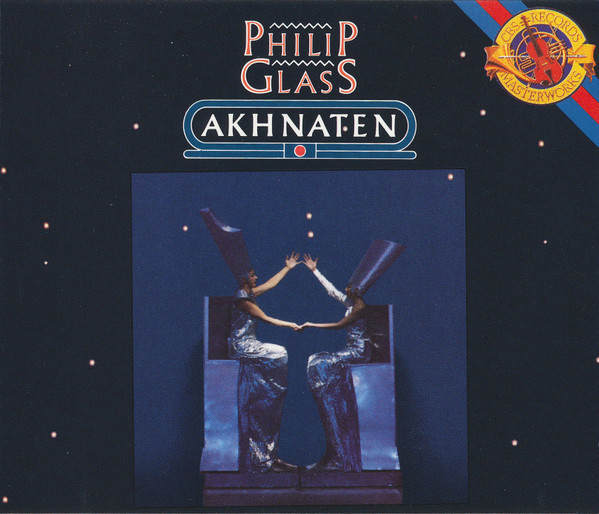
There is also the original recording on CBS/Sony vinyl and CD, conducted by Dennis Russell Davies. There is also a more recent Music on Vinyl pressing of this. I haven’t found this on streaming services either, although it is on YouTube. I would go for the Met Opera version, but Glass fans will want to have both.
FURTHER LISTENING - PHILIP GLASS RECOMMENDATIONS
As to other recommended Philip Glass recordings, I will begin with two personal essentials.
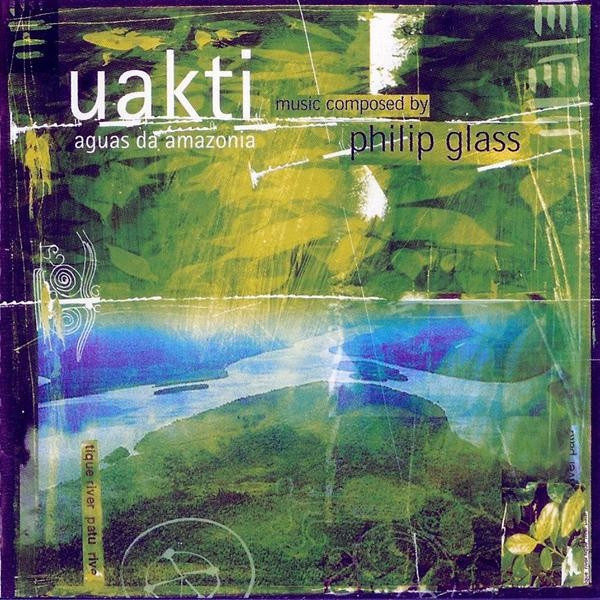
“Águas da Amazônia, Sete ou oito peças para um balé” (Portuguese for 'Waters of the Amazon, seven or eight pieces for a ballet’). This is the one Philip Glass work I keep in active rotation (in its CD incarnation - you can also stream it). A musical depiction of the rivers of the Amazon, it was a collaboration with the ensemble Uakti, and is notable for its intricate use of percussion and unusual wind textures. I adore this piece, and while there are several newer recordings of this you might want to explore, start with the original. Beautiful sound too.
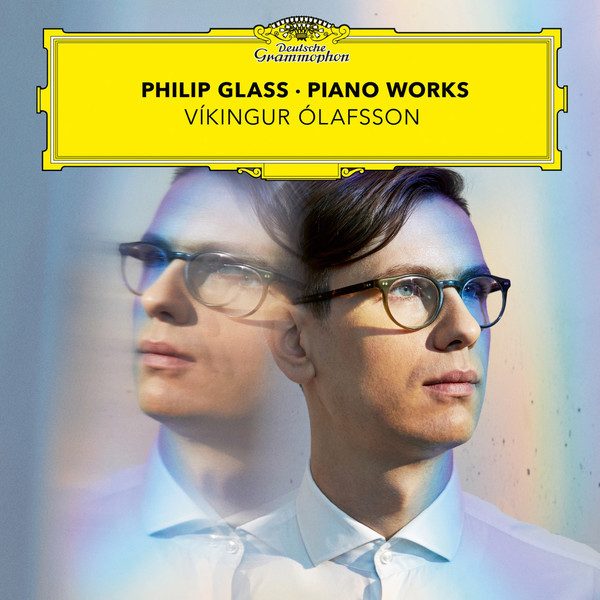
This recording of a selection of Philip Glass’s astonishing piano works was the calling card of the young Icelandic pianist, Víkingur Ólafsson. It, and his follow-up Bach recital, turned him into a superstar. No other recording of these works comes close, and getting this set (available on vinyl and CD) prompted me on my recent journey to re-appraise Glass’s music.
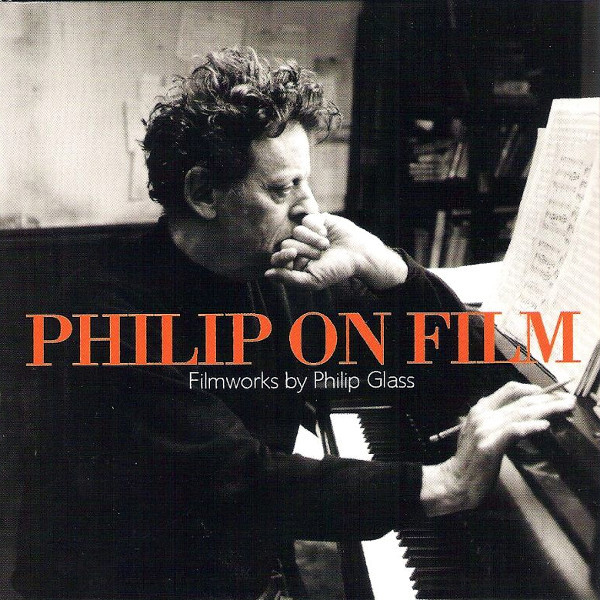
Film music has long been at the core of Philip Glass’s musical identity and passion - and this excellent box set (which you will have to find on the used market) is a superb overview of his earlier work in this area. Of course you have excerpts from the groundbreaking Koyaanisqatsi (1982) and Powaqqatsi (1988), his collaborations with director Godfrey Reggio, and the place where most of my generation first became aware of Glass’s music, but you also have some nice chunks from his scores to Dracula and La Belle et la Bête, plus further extracts from Mishima, The Thin Blue Line and Kundun, amongst others. From there you can go on to explore the complete soundtracks to these films.
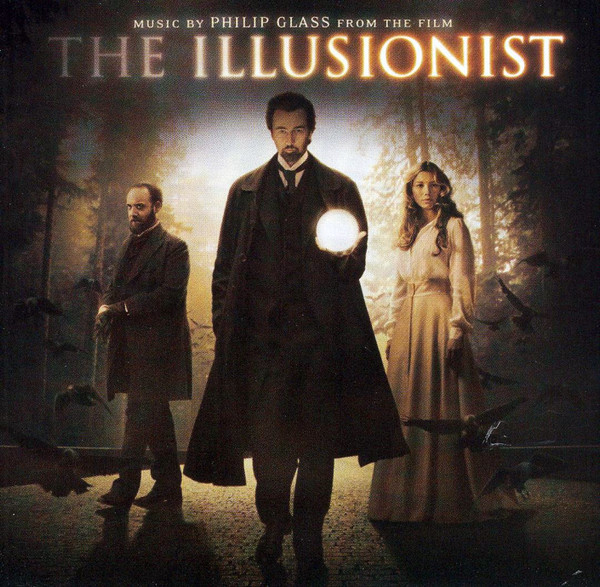
This is one of Glass’s finest soundtracks in my opinion, and what an unusual choice made by director Neil Burger for this highly evocative period drama that is sometimes unfairly overlooked in favor of the almost exactly contemporaneous The Prestige (2006), directed by Christopher Nolan. Glass’s score is mesmerizing and romantic, the perfect musical corollary to the strange tale of love and magic the film tells. This is also available as a Music on Vinyl release.











.png)