
Review Explosion: The Latest From UMe's Vinylphyle Series
an eclectic mix
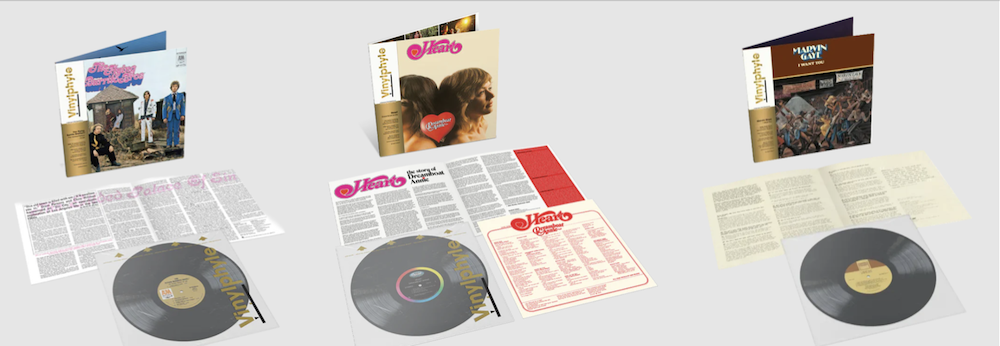
UMe's Vinylphyle series presses on with a series of releases, one surprising, the others in the "audiophile pocket". All follow the gatefold, paper on cardboard jacket, tape box picture, annotated booklet, OBI strip, cut from tape by a single mastering engineer format and sold direct on the company store website, pioneered by Rhino—and no reason to criticize that. It's a winning formula, with the talented Joe Nino-Hernes doing the cutting at Sterling Sound, Nashville.
Marvin Gaye - I Want You
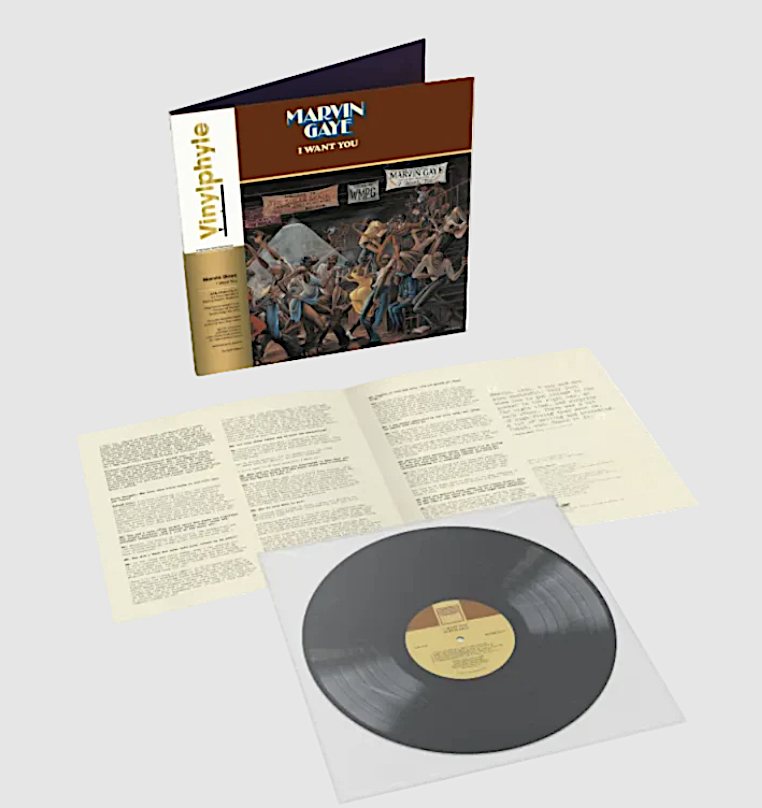 Vinylphyle/Tamla 602488235273
Produced by: Leon Ware
Engineered by: Art Stewart and Fred Ross
Mixed by: Art Stewart
Mastered by: Joe Nino-Hernes
Lacquers cut by: Joe Nino-Hernes
Music

Sound

Kudos to Vinylphyle producers for stepping outside the audiophile echo chamber and reissuing Marvin Gaye's I Want You his follow up to Let's Get It On released 3 years later in 1976. Let's Get It On was Gaye's break away from "The Motown Sound" and mixed soul, funk and sex into a highly suggestive steaming set. Concerns for the ecology gave way to "You Sure Love to Ball"! The album was a huge hit.
I Want You, Gaye's 13th record featured great cover art, Ernie Barnes' iconic 1971 painting "The Sugar Shack" and had Gaye again stepping back from solo production, this time handing it off to singer/songwriter and longtime Mottown collaborator Leon Ware. Though Ware gets sole producing credits, it's clear from the results that it was a collaboration.
They produced the luxury ride in Gaye's new home studio, avoiding altogether the then prevalent disco rhythms and sounds as Gaye was more interested in the bedroom than the dance floor. You have to listen behind the heavy rhythms to get to the deftly placed elements sprinkled throughout the busy, synthesizer heavy arrangements.
I Want You wasn't a critical rave and though it topped the R&B charts it didn't crossover as did What's Going On? And Let's Get It On. Maybe part of the reason was that Gaye's voice was mixed well back almost as if it was just another instrument in the well-organized clutter. Over time the album has gained more luster. I remember passing on it in 1976, more interested in other music. Listening to it now I appreciate it more, though Marvin is still kind of buried in the mix (has to be) and I love his voice.
The production is very good, avoiding the era's excesses for a more straighforward recording and mix. Not quite "audiophile" but honest, punchy and very listenable. Since I don't have an original I can't say how good the reissue is but J N-H has an excellent track record.
The Flying Burrito Brothers - The Gilded Palace Of Sin
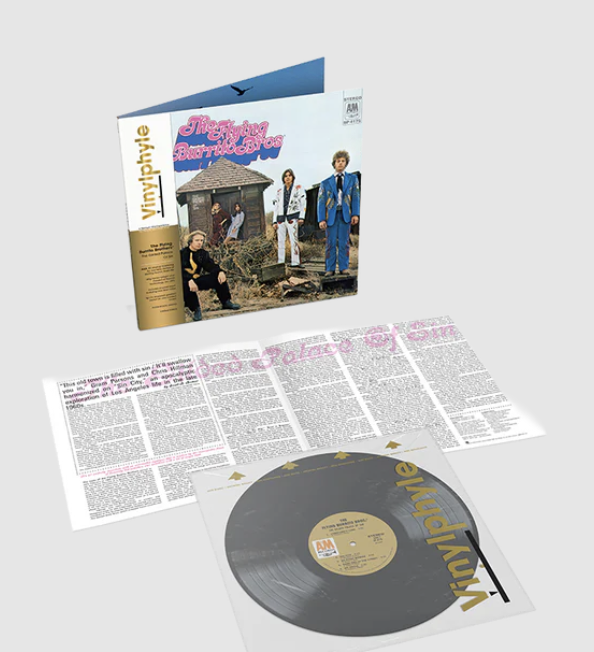 Vinylphyle/A&M SP-4175 199957091 190
Produced by: The Burritos, Larry Marks and Henry Lewy
Engineered by: Henry Lewy
Mixed by: ?
Mastered by: Joe Nino-Hernes
Lacquers cut by: Joe Nino-Hernes
Music

Sound
An essential rock collection record IMO even though it's more country than rock but when it was released in 1969 Byrds fans among others had "crossed over" with Sweetheart of the Rodeo and older fans brought up on The Everly Brothers immediately got the connection. It was an all-star lineup known to Byrds fans and the cover was a sensation. The back story is too.
The Parsons-Hillman pairing was always fascinating: one serious and businesslike, the other wild and rambunctious but as soulful inside as his eyes were outside. The songs they wrote for the album stand the test of time as does the entire record, though it peters out toward the end with "Do You Know How It Feels", which Hillman in the excellent Vinylphyle notes says he never liked and didn't belong on the album and "Hippie Boy", which sinks into parody of a particularly maudlin country music style. At least those were placed on the end. The group handles the two covers, Oldham-Penn's "Dark End of The Street" and Moman-Penn's "Do Right Woman" brilliantly.
The original A&M release is, for some reason, so bright it will rip a layer of skin off your face. It's a record you want to turn up but you can't. Intervention fixed that with its now out of print edition, by attenuating somewhat the top and boosting a bit of bottom. But just a bit (that's what I heard but Intervention's Shane Buettner assured me they didn't play with EQ).
Putting it back in print using the same 30 IPS safety copy Intervention used was a good choice for the series. My review of that on my previous endeavor is here. The addition of annotation adds value and even those who bought it back in 1969 might learn a few new things—especially about the somewhat unusual and uneven mix. Great shots in the gatefold too. Intervention's glossy non-gatefold cover is a superior more vivid and probably more accurate rendering of the cover art.
The sound is of course the 64 dollar question and honestly, as good as the IR version was and how much it bettered the O.G. this J N-H cut is somewhat smoother and though it's closer on top to the original's brightness, it doesn't cause skin shed and can be turned up as loud as you please. The bottom end was either untouched from what's on the tape or lifted ever so slightly and overall I I prefer it to the OOP Intervention.
Heart-Dreamboat Annie
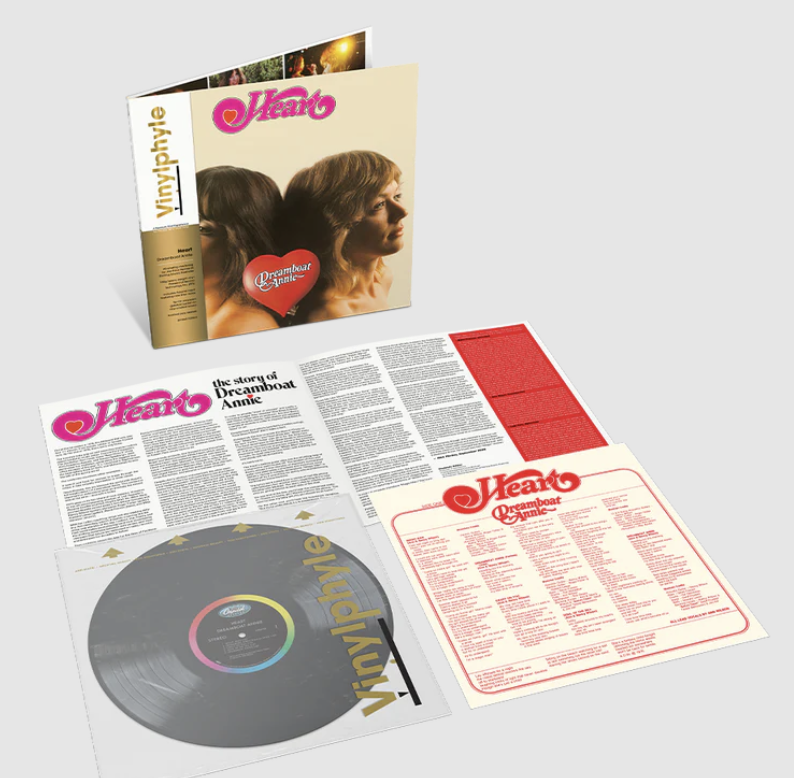 Vinylphyle/Capitol 602488027533
Produced by: Mike Flicker
Engineered by: Mike Flicker and Roll Hennemann
Mixed by: ?
Mastered by: Joe Nino-Hernes
Lacquers cut by: Joe Nino-Hernes
Music

Sound
The original Mushroom Records edition mastered at Kendun by Patrick Collins created an audiophile sensation when it was first released in 1976. Nautilus followed three years later with a 1/2 speed mastered edition that created a further audiophile sensation, though as I recall it, people said the Mushroom original had better bass.
I have nothing to compare this new reissue to because this record never did a thing for me. Also why I don't have the Mo-Fi double 45 cut from a DSD 256 file.
The songs sound unfinished. Hard rock riffs attached to verses that don't connect to choruses and its overall corniness makes me think of half-baked "This Is Spinal Tap" metal. Ann Wilson has quite a set of chops but.... just when you think it couldn't get more eye-rolling ponderous on "Sing Child" comes Jethro Tull! The album's denouement a reprise of the title tune, which ends side one is a charmer. Fans of the record are by now offended. Sorry.
The sound though is remarkable—open, spacious, transparent, dynamic, three-dimensional and relatively unprocessed. It's everything a '70s era audiophile dreamed a rock record should sound like. As did another album released the same year, Boston's eponymous debut. Two sonic blockbusters in the same year.
Why the remarkable sound is more interesting than the music IMO. Can-Base Studios located in Vancouver B.C. was built in 1966 originally as an orchestral studio for the CBC (Canadian Broadcasting Corporation).
The studio was sold in 1971 to a new owner who bought and installed there Bill Putnam's vacuum tube mixing console previously located in United Studio A on Sunset Blvd. which had been in use since installed there in 1957 and used by Bing, Frank, Ray and Nat. Excellent purchase!
Compared to the double 45 Mo-fi and the Nautilus 1/2 speed, this new one is a bargain. It's audio show demo quality, though a bit bracingly bright. I await reader feedback and rocks.

















.png)