
-header.png)
Review Explosion: Erykah Badu, George Michael, Geese, & More
TRACKING ANGLE'S ROUNDUP OF RECENT RELEASES and reissues
Review Explosion, our guide to notable recent(-ish) releases and reissues, is finally back, with a burst of shorter reviews of a few records. In this edition: a UMe Vinylphyle reissue of Erykah Badu’s Mama’s Gun, a half-speed reissue of George Michael’s Faith, Geese’s universally lauded Getting Killed, a reissue of Arthur Russell’s sole 12” as Dinosaur, and an injection-molded Coldplay pressing. More new Review Explosions to follow after this one, stay tuned and keep reading.
Erykah Badu - Mama’s Gun
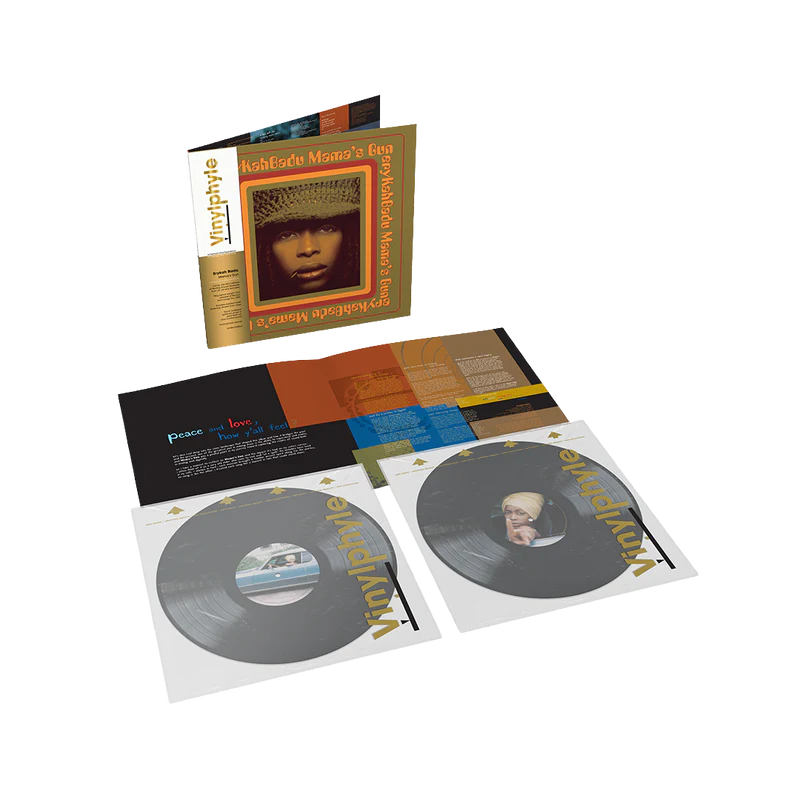
Motown/UMe 602478946547 Vinylphyle 180g 2LP
Produced by: Erykah Badu, James Poyser, J Dilla, et al
Engineered by: Russell Elevado, Leslie Brathwaite, Chris Bell, et al
Mixed by: Russell Elevado and Leslie Brathwaite
Mastered by: Justin Perkins at Mystery Room Mastering
Lacquers cut by: Joe Nino-Hernes at Sterling Sound
Music

Sound

“Analog girl in a digital world” is how Erykah Badu describes herself on “…& On,” the fourth track from her second album, 2000’s Mama’s Gun. Made right as computer-based recording and music production (and consumption) were just beginning to take off, Mama’s Gun was made the way records “used to” be made—great songs played by world class musicians in a high-end studio (primarily Electric Lady in New York), recorded to 2” analog tape, and mixed down to 30ips 1/2” 2-track tape. Carefully crafted by Badu and others and the Soulquarians collective (leading artists, producers, and session musicians who shaped neo-soul through regular studio collaboration), Mama’s Gun was written during her breakup with André 3000, the lyrics therefore a very direct portrait of her life at the time. The album features her most popular song, the J Dilla-produced sleeper hit “Didn’t Cha Know,” but is best encapsulated by its conclusion “Green Eyes,” a jazzy 10-minute, three-part opus documenting the stages of separation. At 72 minutes, Mama’s Gun suffers a bit from CD-era bloat, but it’s all so skillfully written, performed, and produced that no one can complain much about having a little too much of it—there’s a reason why it’s one of the core neo-soul classics.
Although Mama’s Gun was recorded and mixed fully analog, cutting masters were never assembled; each song exists on its own mixdown reel. These reels were digitally assembled and mastered at 44.1kHz/16bit by Tom Coyne and Chris Gehringer at Sterling Sound for the original CD release, and all vinyl releases up until now were also cut from the prepared CD master. Now, a Badu-supervised UMe Vinylphyle reissue commemorating the album’s 25th anniversary goes back to the original mixdown reels, transferring them at 96kHz/24bit for the first true remaster of Mama’s Gun (only on vinyl, for now at least). Justin Perkins at Mystery Room Mastering digitally re-assembled and mastered the album from these new transfers, and Joe Nino-Hernes at Sterling cut lacquers. All Vinylphyle reissues are pressed on 180g black vinyl at RTI and packaged in tip-on gatefold jackets.
I compared the Vinylphyle Mama’s Gun with the original translucent red vinyl pressing, cut by Ray Janos at Sterling and minimally packaged in a stickered black disco sleeve, as well as the 2020 VMP Essentials edition, also endorsed by Badu and cut by Barry Grint at Alchemy Mastering. The original cut from the CD master is a bit weak with a grainy yet appealingly emphasized midrange, while the VMP cut boosts the bass and lower midrange, perhaps to smooth over the CD resolution graininess. The new Vinylphyle is better than both, with natural instrument textures, controlled low end heft, bigger soundstage, and better transients. However, it sounds as if Perkins still compressed the midrange a bit too much around Badu’s voice, as its presence is often spatially and dynamically flattened, though the overall picture is more dynamic. (I’m suspecting that the midrange sound is a product of multiband, maybe mid/side, compression used to shape this master.) The 180g vinyl on our promo copy is also dead quiet, though the gatefold jacket arrived with seam splits.
In addition to the tip-on gatefold jacket with lyrics and images on the inside (even if 25 years later, the lyrics for “Penitentiary Philosophy” still haven’t been added), UMe also provides a new four-page insert featuring tape photos (of all the individual mixdown reels) and notes from Erykah Badu about how the new remaster has “carefully blended analog warmth and digital precision.” UMe’s only failure here is the artwork: compared to the VMP jacket, all the grain on the cover photo is now scrubbed and Badu looks like a wax sculpture. I also prefer the foil-stamped (albeit direct-to-board) VMP gatefold over the Vinylphyle tip-on, but most would be fine with either. (Additional grievance: the Vinylphyle obi is tacky, because the entire branding for it looks like it was done in five minutes.)
Overall, this is a very good reissue of a modern classic—not quite perfect, but sounding better than it has before. Yes, the 25th anniversary Vinylphyle reissue is a bit redundant after the 20th anniversary VMP reissue (and only one new Erykah Badu song between these two Mama’s Gun anniversary reissues), but this new one has finally been done properly. The cleaner new transfer makes this a worthwhile upgrade over previous editions, though this album has always been such a good recording that I’d understand if someone was already satisfied with an older copy. There are also a couple alternate cover, colored vinyl editions for the 25th anniversary, but those are in-house GZ cuts. I don’t see the point of buying either of them, the alternate artwork isn’t even very good.
George Michael - Faith
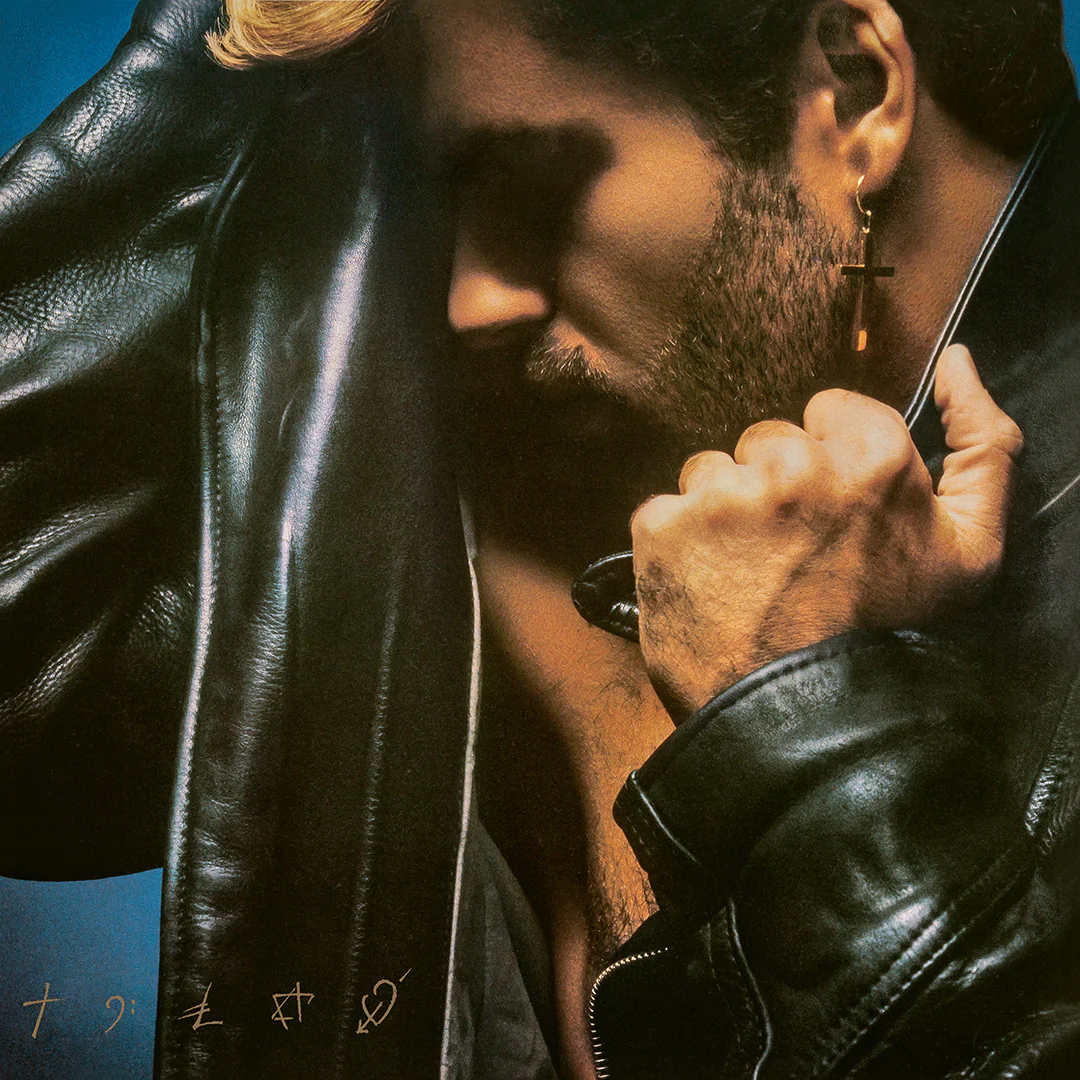
Columbia 19802972871 half-speed mastered 180g LP
Produced by: George Michael
Engineered by: Chris Porter
Mixed by: Chris Porter
Mastered by: John Webber at AIR Mastering
Music
Sound

George Michael’s Faith is one of the best selling albums of all time, with over 25 million units sold worldwide. Therefore, it’s weird that until now, its only standalone vinyl reissue in the 21st century was a European pressing farted out in 2008, which seemed to go out of print quickly. It didn’t even get reissued after his untimely death on Christmas 2016, as the focus then was a reissue of 1990’s Listen Without Prejudice that was planned before his death but got endlessly delayed for almost a year.
Now, with vinyl the dominant physical format again, Sony has reissued Faith on half-speed mastered single and double LP formats, remastered CD, and Blu-ray Audio with new Atmos and 5.1 mixes by original engineer Chris Porter. All stereo formats were remastered by John Webber at AIR Mastering, also known for botching the late-period David Bowie remasters. Still, Webber was involved with Ray Staff on the 2017 Listen Without Prejudice remaster, which sounded fine enough, and his 2022 remaster of Older wasn’t terrible. So surely his new remaster of Faith can’t be that bad… right? Right?
I bought the half-speed mastered single LP reissue of Faith and it’s one of the worst remasters I’ve ever heard in my life. Everything John Webber did here is completely wrong. I don’t have any other vinyl pressings to compare, but I compared this new half-speed with a rip of the original Japanese CD as well as the 2010 remaster. Both of them absolutely obliterate Webber’s new vinyl and CD remasters.
Faith was recorded on a Mitsubishi digital system and mixed on an SSL board, which was the recipe for a lot of mediocre sounding late 80s records. However, the original CD master of Faith sounds great: dynamic, textured, three-dimensional, and quite natural for a pop record of this era (it helps that it’s a drier mix than a lot of digitally recorded/mixed late 80s records). The 2010 remaster is a little more compressed and smiley-faced, but it’s still listenable.
John Webber’s remaster completely sucks the life out of this record and renders it rhythmically dead and boring. None of his mastering choices make it sound more exciting, nor bring out more detail. Bass is boosted but stuck without movement, George’s voice loses all body and realistic texture, horns are flattened into grainy harshness, and the high frequencies are boosted yet extremely compressed. It’s a congealed, fatiguing mess. I’m not here to pile on Webber personally, but a lot of his mastering work has been consistently bad, to the point where I wonder if there’s something wrong with his monitoring system or if he really just prefers this universally terrible mastering signature. This Faith reissue is dreadful. It’s so bad that I’ve already gotten rid of it, and while I compared it extensively to those earlier digital masters, I knew the half-speed sounded horrible right from the first guitar strums on the opening title track. As for the new CD remastered by Webber, it has tighter bass than the vinyl but is even more fatiguing and plasticky in the high frequencies. Avoid this at all costs.
The only thing Sony got right here was in manufacturing. The vinyl reissues were pressed at Optimal on Biovinyl, with the packaging printed on sustainably sourced board, and a resealable sleeve to protect it all. The single LP edition comes in a standard foldover jacket with a lyrics and photo insert replicating the original and a new inner sleeve design that notes the environmentally conscious manufacturing process. However, it’d be more environmentally conscious if the mastering was actually decent; as is, these Faith half-speed pressings are a disgraceful waste of plastic.
Geese - Getting Killed

Partisan Records PTPS60LP clear vinyl LP
Produced by: Geese and Kenneth Blume
Engineered by: Daniel McNeill, Loren Humphrey
Mixed by: Beatriz Artola and Cameron Winter
Mastered by: Felix Davis at Metropolis
Music
Sound
Every 25 years, there’s a New York guitar band (or a movement of them) that comes along to “save rock and roll.” In the mid-1970s, it was the original punk movement, “saving” rock and roll from the excessive indulgences of arena and prog rock. At the turn of the millennium, it was the Strokes (and all those other bands) “saving” rock music from the garish, mostly awful rap rock and nu-metal dominating the airwaves. Now, it’s the mid-2020s, and Geese is here to save us from… well, I’m not exactly sure. And in 2050, there will be another (human) NYC guitar band (probably with a long, pretentious name, because I presume we’ll have gone in the opposite direction by then) that will come down from the gods and save us from a barrage of entirely AI-generated pop stars.
By now, you really have to be living under a literal rock to not have an opinion on Geese and their universally acclaimed 2025 album Getting Killed. It’s not just critics and bot accounts bought by their PR firm falling for it, it’s what real people listen to when you, y’know, actually go outside, around any moderately artsy, moderately young people. Geese and their frontman Cameron Winter have been shoved down our feeds so much at this point that it’s gotten a little exhausting, and maybe it’s not entirely warranted (at least not to this extreme quite yet), but it’s not without valid reason. Geese, and Winter as a solo artist too, actually resonates with people, and not necessarily because we’re so starved of anything else interesting.
Getting Killed is not a masterpiece. Cameron Winter is not the third coming of Christ, even though he’s getting alarmingly close to being revered as such. What Winter is, however, is a very good songwriter, whose appeal is sort of non-linear. On first encounter, the phrases in his lyrics seem random and almost absurd. His delivery might seem cartoonish, especially because with each record he adopts a different voice. On Getting Killed, his phrasing and rhythm most resembles classic Van Morrison, with hints of Mick Jagger and Thom Yorke. Yet over time, Winter’s songwriting disarms the listener; what initially seems like an absurd burst of phrases turns into a series of images, usually with no resolution except for maybe a kind of acknowledgement of inevitable stasis, or a sharp jolt out of the scene at the sudden end of a song. I theorize what makes Winter resonate so much with this generation is that he captures this sort of anxious resignation, a specific outlook that permeates through a generation whose socially formative years were stolen, and who’s come of age only to find that everything is most likely a dead end. “All people in times of war must go to the circus,” Winter drawls on “100 Horses.”
Of course, the songs are also tuneful, going between freakouts like the opener “Trinidad,” ballads like “Cobra” and “Au Pays Du Cocaine,” and continuously following grooves like the title track or “Taxes.” The vibe is a bit early-70s Stones, but less lethargic and smacked out, and with a post-punk spirit. Geese as a band—Winter on keyboards and guitar, Emily Green on guitar, Dominic Digesu on bass, and Max Bassin on drums—are incredibly skilled musicians, at once rhythmically loose and tightly woven together. Kenneth Blume, formerly known as Kenny Beats, produced Getting Killed the old-fashioned way, capturing a great band playing in the studio, with extra overdubs to enhance but not overstuff the production, and not fixing every tiny imperfection.
As such, Getting Killed is a fantastic sounding recording and mix. The space is fairly dry, though everything is perfectly balanced and spread out, and it’s all oozing with texture. The digital mastering by Felix Davis at Metropolis is pretty heavily limited, but it still sounds great. The vinyl was obviously cut from that same limited digital master, which is fine in this case since it’s naturally a thick sounding production, though there’s some bad high frequency rolloff towards the end of each side, with a particularly noticeable shift halfway through “Islands of Men.”
My copy is the standard clear vinyl, pressed at Precision in Canada for the North American market and GZ for Europe. It’s mostly quiet, and the package is simple but nice: standard foldover jacket with a center die-cut printed inner sleeve a four-page lyrics and photos insert. There’s a bomb in my car, indeed.
Dinosaur - Kiss Me Again
Week-End Records WE15 12” single
Produced by: Arthur Russell and Nicky Siano (original recordings), Jan Lankisch (reissue)
Engineered by: Michael G. Ewing and Tom Duffy
Mixed by: Jimmy Simpson and Andy Abrams
Mastered by: Stephan Mathieu
Lacquers cut by: Daniel Krieger at SST
Music
Sound

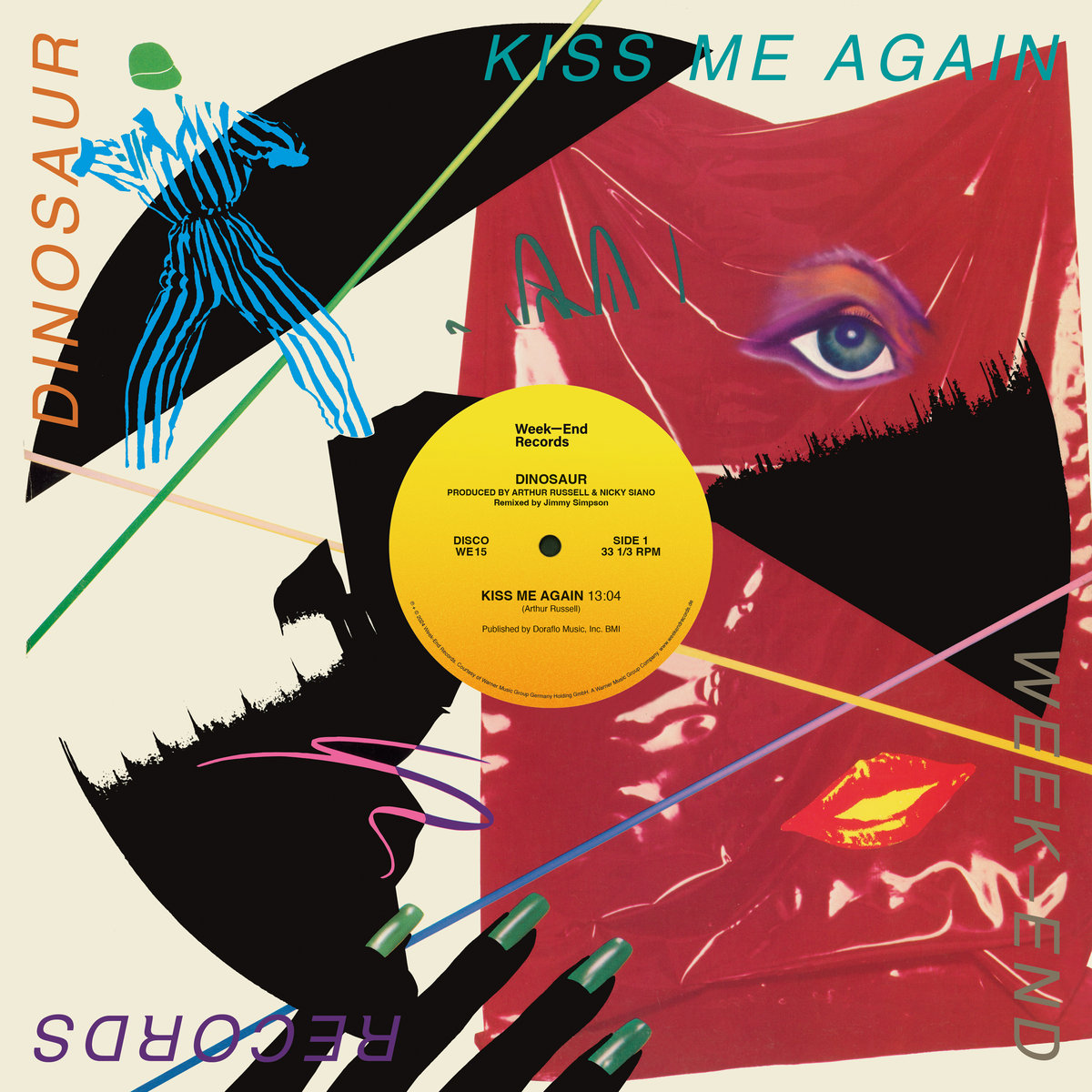
This reissue came out in 2024, but I still haven’t seen enough coverage of it so it’s worth a review anyway. Arthur Russell is best known for his avant/art pop records like World Of Echo (the only song-based album under his own name that he completed and released before his premature death from AIDS in 1992), but he also worked in dance music, with his moniker Dinosaur L (the 1981 mutant disco album 24->24 Music) and before that, Dinosaur with Nicky Siano. Russell and Siano’s original Dinosaur was one of many producer-driven disco projects to pop up in the late 70s, a name that existed solely in the studio, and they only ever released one single, the 1978 12” “Kiss Me Again” on Sire, which German label Week-End Records finally reissued a couple years ago. Nicky Siano was a DJ at The Gallery and a resident DJ at Studio 54. He explains in the new liner notes: “[Arthur Russell] suggested to make a record like this together. That was a great step for me, the first production by a DJ. DJs had been mixing before that, but no DJ had produced a record from scratch. Arthur had written the song, and he did the arrangement... We started in 1977, recording all year.”
That song, “Kiss Me Again,” is 13 minutes of pure disco bliss, endless groove with a dense stream of ideas popping up as the song goes on. Bob Babbitt and Wilbur Bascomb provide tight basslines, David Byrne handles the funky C minor vamp on guitar, Myriam Valle and Jennifer Jacobsen’s vocal performances capture late night dancefloor sexual desire with such dynamic emotion, and there are also contributions from avant-garde/experimental musicians—Peter Zummo on trombone, Peter Gordon on alto sax, Henry Flynt on violin—as well as Arthur Russell’s own cello (one of his primary instruments). “Kiss Me Again” was a record for the clubs, yet in addition to some of the chosen musicians, Russell’s experimental sensibilities are also evident in how much movement there is over these 13 minutes, despite the core composition being a very simple vamp repeating the whole time. So many parts moving in and out, providing different rhythmic and textural contrasts throughout the piece. As far as I’m concerned, it’s one of the greatest things ever recorded. The B-side, the alternate “Kiss Me Again (Version),” provides another perspective with some different instrumental parts than the main mix, though it’s comparatively barren and not as satisfying, with a weaker vocal take and less prominent bass. It’s still great, however; whenever I pull out this 12”, I end up listening to both sides at least a couple times each. Long story short: you need this record.
This was the last of Arthur Russell’s major works to finally get a modern reissue, when Week-End Records licensed it from Warner for a reissue in 2024: remastered by Stephan Mathieu, cut by Daniel Krieger at SST (33rpm like the US originals), pressed at Optimal, and packaged in Week-End’s specially designed 12” disco sleeve with a printed inner sleeve featuring credits, lyrics, tape box scans, and new liner notes from those involved in the song (David Byrne, Nicky Siano, Peter Gordon, and Peter Zummo). At $28, it’s an expensive release in the US, and the sound isn’t amazing—a little congealed and compressed on side A, though side B fares better—but it’s an essential recording and original copies go for twice as much. I can live with the merely okay mastering, because it’s so important to have this single on the market again, and more people should know this record.
Coldplay - A Rush Of Blood To The Head
Parlophone 602478946547 140g clear EcoRecord
Produced by: Ken Nelson and Coldplay
Engineered by: Ken Nelson
Mixed by: Ken Nelson, Coldplay, Danton Supple, Mark Phythian
Mastered by: remaster unknown
Music
Sound
A few years ago, Sonopress re-entered the record “pressing” business with injection-molded EcoRecords made from recycled PET. This method eliminates the need for steam and natural gas, and cuts carbon emissions by 85%. While it hasn’t fully caught on yet, a few other facilities worldwide are making records this way and a few major label releases have tested it out. (EcoRecords are different from “eco-mix” or “eco-vinyl,” which is recycled/re-grind oil-based PVC.)
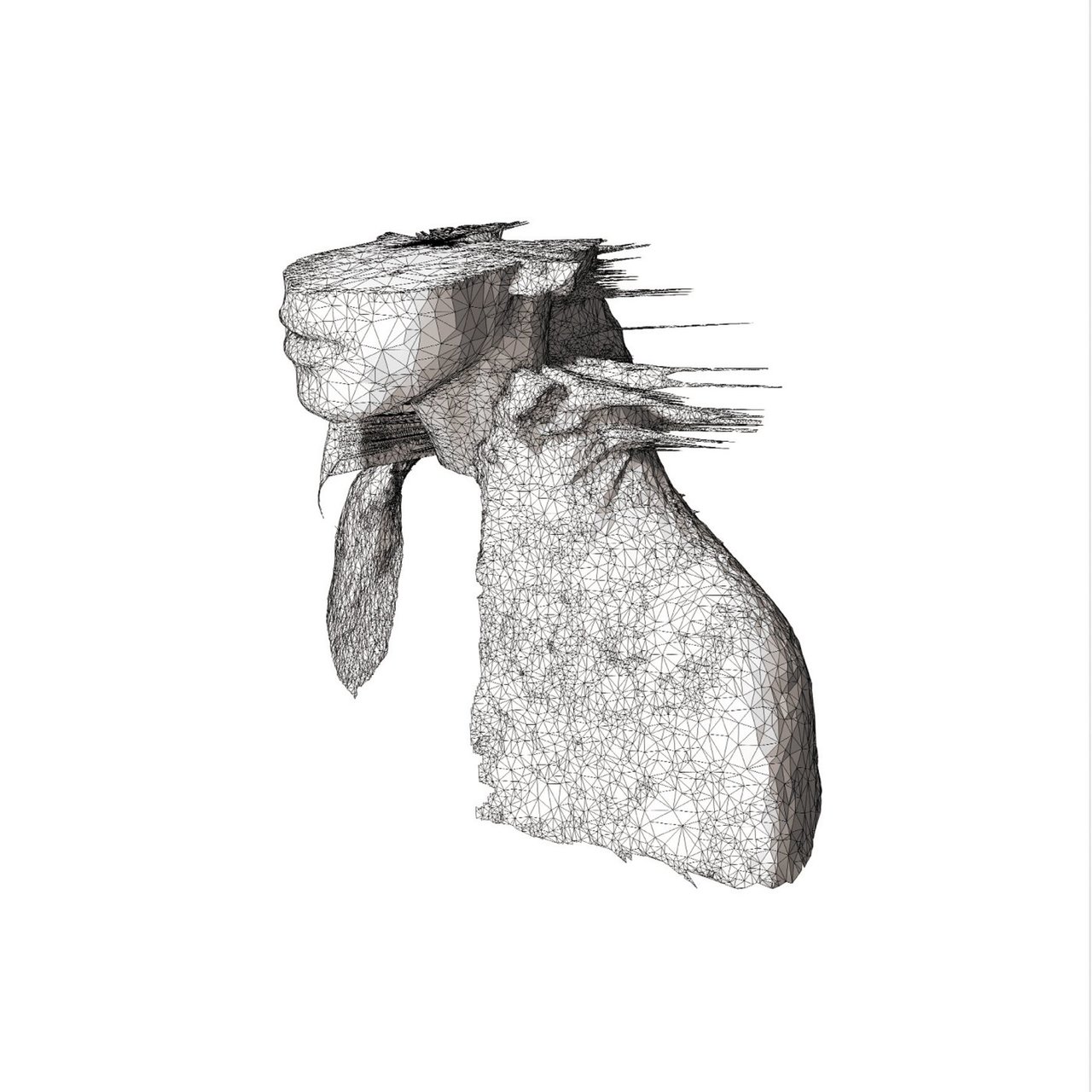
Probably the biggest injection-molded release so far is the entire run of Coldplay’s 2024 Moon Music and the latest batch of the band’s back catalogue, manufactured at Sonopress as 140g clear EcoRecords each made from the equivalent of nine recycled plastic bottles. I recently found the clear EcoRecord reissue of A Rush Of Blood To The Head new for $25; given that it’s by far my favorite Coldplay album, I had to check it out.
I compared the PET EcoRecord A Rush Of Blood To The Head with the original CD mastered by George Marino and the later 192kHz/24bit remaster, and also brought it over to Michael Fremer’s basement to compare it against the original LP cut by Ray Janos at Sterling and pressed at Record Industry. The EcoRecord reissue has no cutting credit—based on this article, it could be Geoff Pesche at Abbey Road, though Sonopress also does their own cutting. Sonopress touts that their use of PET “enables clearer highs, defined transients, and stable dynamics,” and these EcoRecords certainly sound brighter and cleaner than traditional vinyl. This helps some recordings, but not all. In this case, the clean clarity of the EcoRecord beats the cloudy and congealed CD, but lacks the original LP’s lower midrange weight and body. The different cutting source (EcoRecord likely from later hi-res remaster, original probably from CD-ready files of the initial mastering) factors into the difference, but the EcoRecord is also brighter with less bass and textural richness than the 192/24 files, so clearly the injection mold process and PET material affect the sound.
The EcoRecord still sounds good because A Rush Of Blood To The Head has always sounded good, but what you hear from these EcoRecords will be even more system-dependent than usual. Warmer systems could benefit from the tidy clarity of the PET EcoRecord, while those with brighter or more neutral systems might prefer an older vinyl pressing or digital master with fuller midrange. For $25-30, it’s worth trying out, and I can see the EcoRecord sound working on other Coldplay albums that didn’t sound as good to begin with (for instance, Mylo Xyloto, a stuffy mess that has to be one of the worst sounding albums ever released by a major act).