
Tiny Vinyl 4” Singles: Listenable? Relevant?
A new format not quite sure of its purpose
Back in 2019, Crosley and Record Store Day revived the 3” 8ban records originally developed in Japan by Bandai and Toyokasei. These 33rpm single-sided 3” singles did okay as a collectors’ novelty, with one main problem: some of the spindle holes aren’t the standard size, so one must spend $70 on the special Crosley player (fitted with an Audio-Technica AT3600L cartridge) to play them.
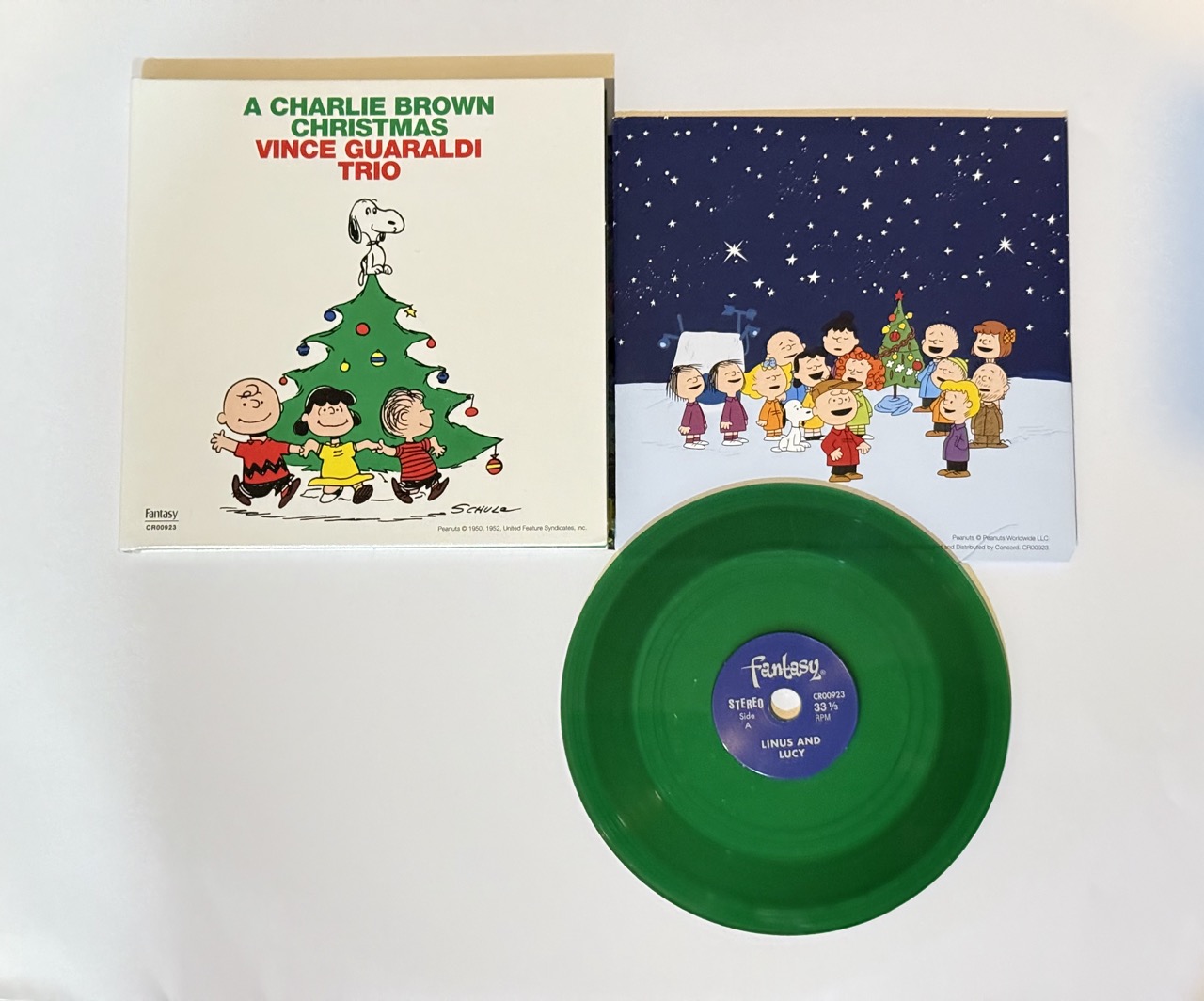
Now, Tiny Vinyl aims to replicate that novelty value with wider compatibility. Launched by Funko veteran Neil Kohler and music industry professional Jesse Mann in partnership with GZ Media subsidiary Nashville Record Pressing, Tiny Vinyl is a new 4” singles format now getting a big push from Target, with exclusives from all three major labels (however, it seems that most physical Target stores don’t carry them). Each Tiny Vinyl cut in-house at GZ can hold four minutes per side, has a standard spindle hole, and is pressed on biovinyl. Retail price is $15 for a two-sided single housed in a miniature gatefold jacket with a printed inner sleeve.
It’s an interesting idea, though I’m not sure why this needs to exist when 7” singles are also fairly compact (albeit too big to fit in your pocket) and usually the same price, if not cheaper. 4” records at 33rpm? Sounds like a nightmare for inner groove distortion and high frequency limitations! Yet for all the other media coverage promoting this format, it seems like no one has actually listened to it, so curiosity forced me to buy the Vince Guaraldi Trio and Third Eye Blind releases. (Though as I prepared to publish this, an Ars Technica article also just put it to the test.)
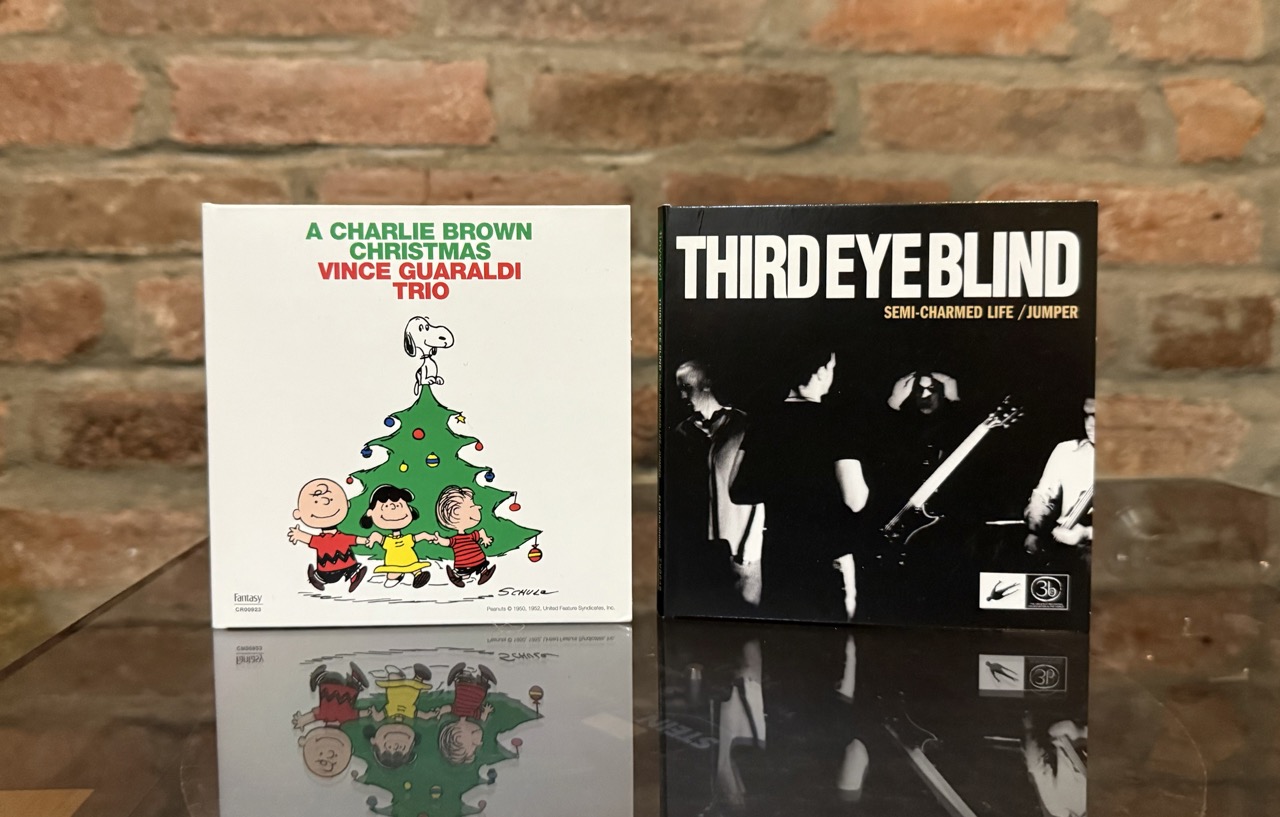
Tiny Vinyl certainly looks nice in a “cute” novelty way, even if it’s jarring to hold a playable record that’s smaller than even a CD (albeit close to the size of a cassette). The translucent green 4” of the Vince Guaraldi Trio’s “Linus & Lucy”/“Christmas Time Is Here (Vocal)” has the A Charlie Brown Christmas album cover shrunken down for the single artwork, with Ralph J. Gleason’s original LP liner notes on the inner gatefold. For Third Eye Blind’s “Semi-Charmed Life”/“Jumper,” the Tiny Vinyl uses imagery from the original single and album releases. But what do these things sound like?
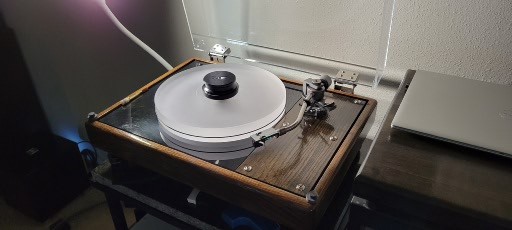
At first, “Linus & Lucy” on the Guaraldi 4” sounded surprisingly fine; despite a compacted soundstage and an obvious elliptical filter on the cut, it wasn’t bad. Further into the song, though, Guaraldi hits the keys harder and prompts severe distortion. It mostly originated from the right channel (this recording is drums left, piano center, bass right), which an antiskate adjustment somewhat alleviated, but I still hear distortion in the center of the image. The vocal version of “Christmas Time Is Here” has similar distortion, though not as egregious since it’s a less dynamic piece. Tiny Vinyl also has basic playback issues: the tiniest spec of dust leaves it prone to skipping, and for some reason, the Ortofon Cadenza Bronze fitted on my Rega P6 wouldn’t lock in the center runout groove (though it wasn’t a problem on a Pro-Ject Debut Carbon EVO with the Sumiko Rainier MM cartridge). The needle sliding across the 4” disc at the end of each side isn’t a huge problem here as it doesn’t touch the tiny label or any grooves, but it’s really annoying.
I still wanted to give the format a chance with a more “modern” pop recording, so I got the Third Eye Blind single. “Semi-Charmed Life” is a special 2025 edit that chops off 30 seconds due to the 4” format limitations (how dumb is that?), while “Jumper” is the original 1998 radio edit. While A Charlie Brown Christmas is an old three-track analog recording without that much high frequency content, Third Eye Blind’s debut album is a bright, attention-grabbing late ‘90s production (albeit very well recorded and mixed on analog tape); you’d think that it’d be less sonically sensitive, but here it’s actually the opposite!
To put it diplomatically, the Third Eye Blind Tiny Vinyl single is one of the worst sounding records I’ve heard in a long time. It’s not “bad compared to the CD”—no, it’s simply terrible and an utterly stupid way to show off a new format. There’s a drastic high frequency rolloff somewhere around 10kHz, which renders the remaining spectrum as spatially constricted, opaque sludge. I’d speculate that Tiny Vinyl might defend this as the “warmth of vinyl,” or at least “the price of convenience,” but there’s a difference between “warm” and “muffled” and this is the latter. If the other 4”’s of modern recordings sound like this, the novelty isn’t enough to keep sensible buyers coming back for more, and you don’t need a system costing thousands of dollars to hear that it sucks. And if the goal is to attract vinyl newcomers… well, that’d be pretty catastrophic if someone buys the Third Eye Blind 4” as one of their first records and gives up under the impression that all vinyl must sound like this!

As stated many times, a primary factor behind the vinyl revival is that fans of all generations want to own their favorite music physically; streaming availability is precarious, and handling the physical object feels more personal. For some listeners, vinyl prices have become prohibitive, so CD sales have also increased. One of Tiny Vinyl’s selling points is as convenient merch for small touring artists. Instead of lugging around heavy boxes of LPs, artists can sell the Tiny Vinyl 4”’s at the merch table so fans can still buy the music in a more compact format. It’s a nice idea, though as a music fan with good hearing well beyond 10kHz, I’d rather buy a 7”, CD, or even a flexidisc at the merch table.
If Tiny Vinyl came as a bonus with Funko Pop figures, which was the original idea, I might consider it a fun little novelty without caring about sound quality. But as a standalone product, Tiny Vinyl takes itself way too seriously for what it is and still doesn’t really seem to know its purpose (the contrast between “this is great for small artists on tour!” and “the major labels are all on board and selling these through Target!”). At $15 each, I’m not sure what consumer it’s even for—it’s not a quality product for serious collectors, nor does it provide value for money. So far, people have bought it as a new “thing” to try out, but beyond the initial hype, I’m not sure it can sustain a market presence.