
Wynton Marsalis's Jazz at Lincoln Center Big Band Opens Sensational New NYC Jazz Club
Jacob Heilbrunn was there opening night
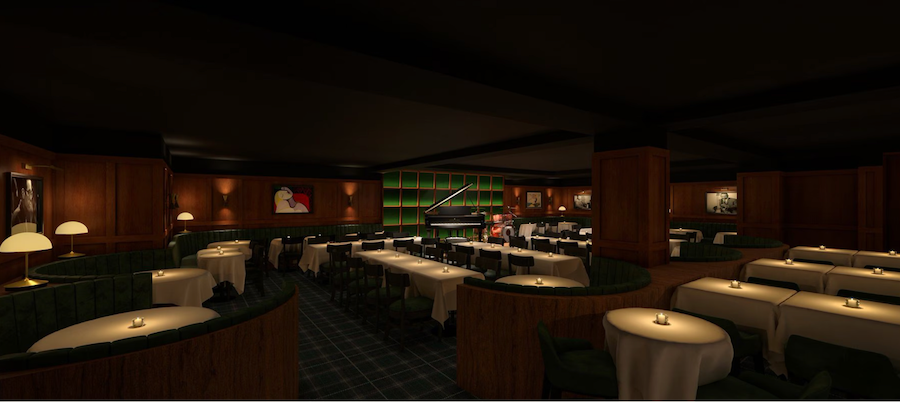
There was much to muse about on Monday evening at the grand opening of The Pocket, a new jazz club in located in midtown Manhattan inside the boutique Muse Hotel. The 4,500 square foot underground venue can hold up to 170 patrons. Designed to resemble the jazz clubs of yore on 52nd street, this intimate listening space features elegant booths lined with green velvet as well as white-cloth tables. The cheap seats, or as cheap as it gets, are the so-called “rail seats” in the rear, which are standing room only. The club was co-founded by Martin Porter and Grant Gardner. The club’s website indicates that it was designed by Michelin-starred veterans of the Blue Note and Standard and that numerous concerts are already scheduled. The focus is on the music: no chattering, no smoking, no photographic flashes permitted.
Who better to inaugurate the joint than Wynton Marsalis and the Jazz at Lincoln Center orchestra? Marsalis, who is stepping down as the Jazz at Lincoln Center’s Artistic Director in 2027, founded it in 1987. His ensemble has incurred periodic sniping as a retrograde outfit from more avant-garde souls. But this peerless trumpeter and dedicated educator, who grew up in New Orleans, has not created a more sophisticated version of Preservation Hall Jazz Band. Instead, the orchestra extends jazz’s mightiest traditions. “If it was good then,” as Marsalis put it on Monday, “it’s good now.” Yeah, baby!
I’ve heard numerous concerts at Dizzy’s Club at Lincoln Center, which is located on Columbus Circle and boasts curved bamboo walls as well as floor-to-ceiling windows overlooking the Manhattan skyline and Central Park. But in all honesty, I would have to say that The Pocket is a cut above, at least in terms of sonics. Dizzy’s is a fairly reverberant space. The Pocket is a more intimate one with a “you are there” vibe that I’ve rarely experienced. Heck, let me fess up. If I’m being honest, I’m not sure I’ve ever heard a jazz band sound as compelling as what I experienced at The Pocket.
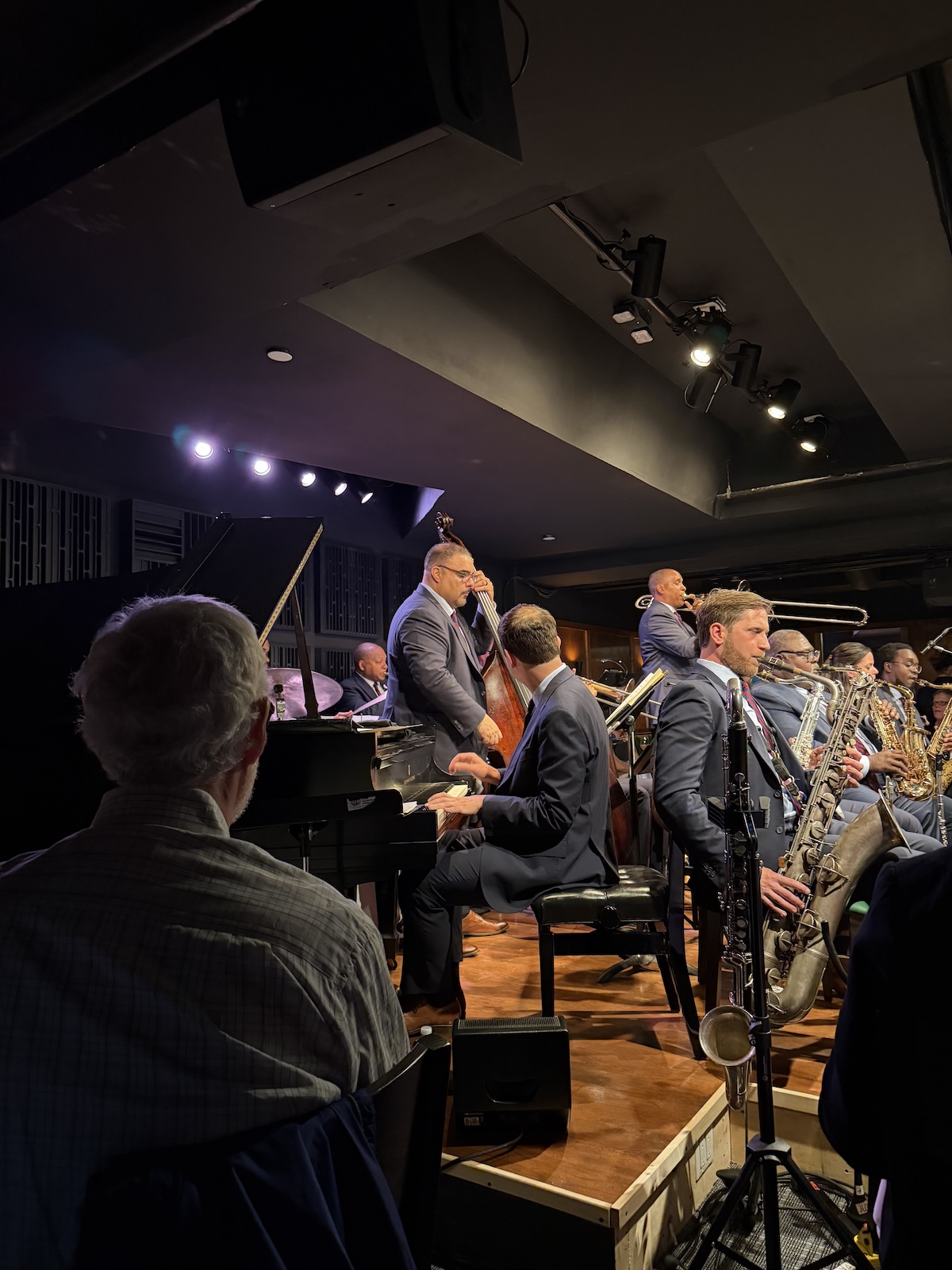
As the band launched into Thelonius Monk’s classic song “Four In One,” it was immediately and palpably apparent to everyone in the room that this was going to be an extraordinary concert. What stood out immediately was the band’s ability to play the tricky introduction-- triplets that are followed by a series of five 16th notes contained in a single beat—in perfect unison. On this bebop number, Marsalis himself launched into a lengthy solo that showcased not only his warm and burnished tone, but also his superlative technical prowess.
In fact, as a trumpeter, I was blown away, as it were, by the accuracy and dynamic power of the entire trumpet section, which also includes Ryan Kisor and Marcus Printup. Then there was pianist Dan Nimmer, whose torrid playing helped propel the band. Alexa Tarantino, a young saxophonist and the band’s first female member, also deserves a special shoutout for the purity of her playing.
A jaunty number that the band played was Duke Ellington’s “Jack the Bear,” an instrumental song from 1940 that originally featured bassist Jimmy Blanton. (Decades later Ellington would record in Las Vegas a remarkable duet album on the Pablo label with bassist Ray Brown called This One’s For Blanton.) Now it offered Carlos Henriquez the chance to demonstrate his melodic chops on the bass. The shade of Ellington hovers over the band. Marsalis himself recalled that when first forming the orchestra, he reached out to the surviving members of the Ellington band for their tutelage. “They were the hippest grandfathers you ever saw,” he said. The acclaimed saxophonist Norris Turney, Marsalis said, was the sternest of the bunch. “Just play it on time!” he yelled at the band.
As it happens, the seamless precision of the band is what most impressed me. Marsalis concluded the set with John Coltrane’s “A Love Supreme,” which is rooted in the theme of redemption. “The blues,” Marsalis observed, “are the true anthem of America.” This highly imaginative arrangement had it all—an ominous opening drum solo, a frenzied saxophone duel, blazing trumpets, and a fadeout into silence. As we sat in stunned silence, a woman in the audience suddenly shouted, “Beautiful!” How right she was!

























.png)