


Charles and Stanley's Big Brass Blast Launched Storied Label
second set of Strata-East reissues arrives with the label's 1971 debut release
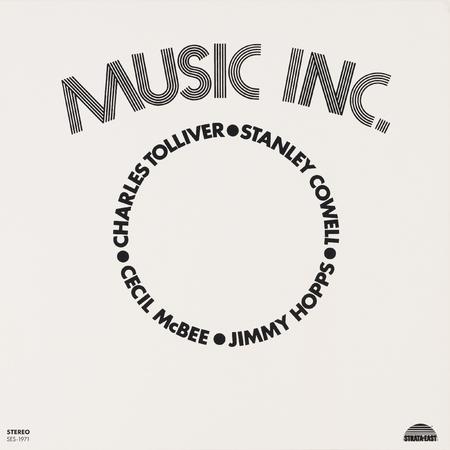
Powerful blasts of syncopated big band brass driven by the core quartet's sinewy rhythmic thrusts deliver an album's worth of adrenaline inducing musical aggression that resonates as appropriately today as it did in 1971 when this Strata-East label's debut album was originally released. As annotator Syd Schwartz points out, the album was a "musical project, self-powered, self-funded and done 100% on their own terms", but others saw it as "a political act". Ironic then, in 2026 upon first listen it has the vibe of a "Blaxploitation" movie of that era, like Bobby Womack's 1972 soundtrack to "Across 110th Street"—at least that's where it took me.
I had to put that record on to see if I was hearing things but if you can listen to "Harlem Clavinette" and then to "Abscretions" here it's easy to imagine J.J. Johnson grabbing Cowell's groove for that song and dropping it a year later onto 110th street.
Power, anger, liberation, the Afro-Centric vibe that both jazz and soul artists at the time grabbed onto are at the core of both the high energy compositions and the dazzling charts orchestrated for quartets of trumpets, trombones, reeds and flutes plus Howard Johnnson's solo tuba and baritone sax. The other quartet of Tolliver, Cowell, McBee and Hopps anchors the session at Mediasound— a deconsecrated church like Columbia's 30th street studio—put onto tape in a single 10 hour blowing session that could have produced room reverberations that echoed for hours afterwards.
This is not your great grandfather's big band record. It's a turbulent, exhilarating ride that's of that time 50 years ago, and of this time too. The music defies both time and genre. It's jazz and funk that had to be as much of a blast for the musicians to play then as it is for listeners to enjoy today. If you're not dancing to some of this, you're not playing it loud enough.
The recording is vibrant, straight forward and panoramic. You could say "in your face" pleasing because there's not much in the way of reverb at least on side one. It sounds closely multi-mic'd with compression applied to give it punch and drive. Among the most effectively recorded track is "Household of Saud" side two's opener—a McCoy Tyner tribute. It puts the group in a spatial context more so than on some of the other tracks and it has the most robust bottom end on a recording that on side one at least lacks a strong foundation. Interesting to see the mixer was George Klabin, a name familiar to buyers of Zev Feldman's reissue productions.
It sounds as if the engineer, Joe Jorgensen perfected the mic placement on side two, which overall has greater transparency and spatial clarity as well as sharper high frequency transients and less compression. Toliver's "On the Nile" is as Schwartz writes, the album's "spiritual apex" but it's also by far the best recorded track on the album followed by the closer, "Departure". I don't know the actual track recording order but the sound improves as the record plays. You'll hear it! Highly recommended. Turn it up please.