

Kaiser Chiefs Redefined The 'Album' on "The Future is Medieval"
A vinyl reissue of the music industry’s first ‘create-your-own-album'
Kaiser Chiefs took the stage at Leeds Festival on August 30th, 2009, before embarking on a two-year hiatus. The indie rock quintet had remained together since 1997 under the name Runston Parva, later shortened to Parva, and spent a year recording an album for Mantra Recordings that went unreleased before the label folded. Not satisfied with their repertoire and direction, Parva was no more, and they forged a new beginning as Kaiser Chiefs in 2003. The stigmatization of being viewed as ‘damaged goods’ because of their past didn’t derail the Chiefs from overcoming adversity. Chart-topping albums (Employment, Yours Truly Angry Mob, Off With Their Heads) and singles (“Oh My God,” “I Predict a Riot,” “Ruby,” and “Never Miss a Beat”) meant the rebirth paid off. Appearing at Leeds Festival 2009 wasn’t just a half to a frenzied period of nonstop recording and touring, but a full-circle moment on home turf.
All was quiet until June 3rd, 2011, when Kaiser Chiefs unleashed their fourth album, The Future is Medieval, in a way the music industry hadn’t witnessed before or since. Out of 20 tracks uploaded to the group’s website, fans were able to curate and sequence their own 10-track album, edit their own artwork, and download it for £7.50. Each uniquely-crafted album was uploaded to a digital marketplace, and when a consumer purchased a specific fan’s album, that curator was reimbursed £1. This was right at the point when digital downloads eclipsed physical album sales, and the soulless experience of heading over to iTunes to download a new album had become almost standardized. Releasing an album in this innovative fashion redefined what an album was in the digital age, giving fans a deeper emotional attachment by being hands-on in the way it was crafted and accessed.
For those who pandered towards physical media, an official 13-track CD was released on June 27th. One of its selling points was featuring “Kinda Girl You Are,” a track supposedly not ready for the June 3rd online launch. It also featured two exclusive bonus tracks, the hidden instrumental “Howlaround” and the iTunes exclusive “City.” The American edition, rechristened Start The Revolution Without Me on March 12th the following year, swapped out some tracks that weren’t featured on the international version. The vinyl pressing is the most comprehensive edition, bringing together all 23 tracks as a double 10-inch release.
.jpg) L-R: The Future is Medieval CD/streaming cover, The Future is Medieval OG vinyl cover, US Start The Revolution Without Me cover
L-R: The Future is Medieval CD/streaming cover, The Future is Medieval OG vinyl cover, US Start The Revolution Without Me cover
The indulgence of crafting 23 songs for one album arguably makes The Future is Medieval the Kaiser Chiefs’ most musically eclectic studio offering. Their standardized post-punk revival foundation hardly takes a back seat, as evident on tracks like “Little Shocks,” “Long Way from Celebrating,” and “Problem Solved.” Sprinkled in are moments of electropop (“Things Change” and “Heard it Break”), abrasive high-octane rock (“Dead or in Serious Trouble”), Beatle-esque harmonies (“When All Is Quiet”), and acoustic/orchestral pairings (“If You Will Have Me”).
For the Kaiser Chiefs themselves, The Future is Medieval has become a divisive album. They haven’t performed any songs from it in recent years, and vocalist Ricky Wilson later described it as “a load of demos.” What’s more significant is that it was drummer Nick Hodgson’s last album before leaving the group to pursue studio production. Losing a member who also doubled as a primary songwriter makes the album somewhat of a chapter closer, a snapshot in time before the Kaiser Chiefs started relying on outside writers and explored a poppier sound that pandered to Wilson’s television celebrity status.
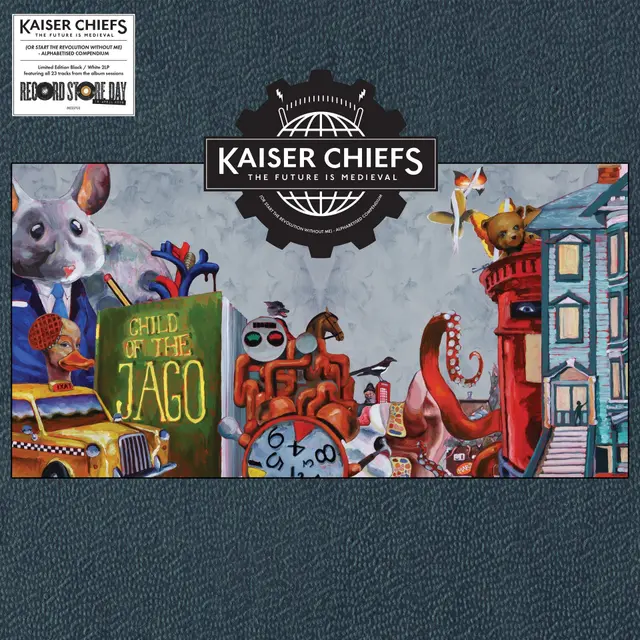
The scarcity of The Future is Medieval’s original vinyl pressing, limited to 500 numbered copies and sold only on tour and at Leeds’ Crash Records, has made the album an elusive missing piece for most Kaiser Chiefs vinyl collectors. 15 years later, the group opted to reissue it for Record Store Day 2026, dubbing it The Future is Medieval (or Start The Revolution Without Me) - Alphabetized Compendium, and donated £1 from each copy sold towards humanitarian causes via the Warchild Corporation. This edition features revitalized artwork, integrating the CD’s inner illustration to the front cover, and using the back cover photo as the gatefold spread. The alternating black/white machine cog center label corresponds with each of the black/white colored LPs.
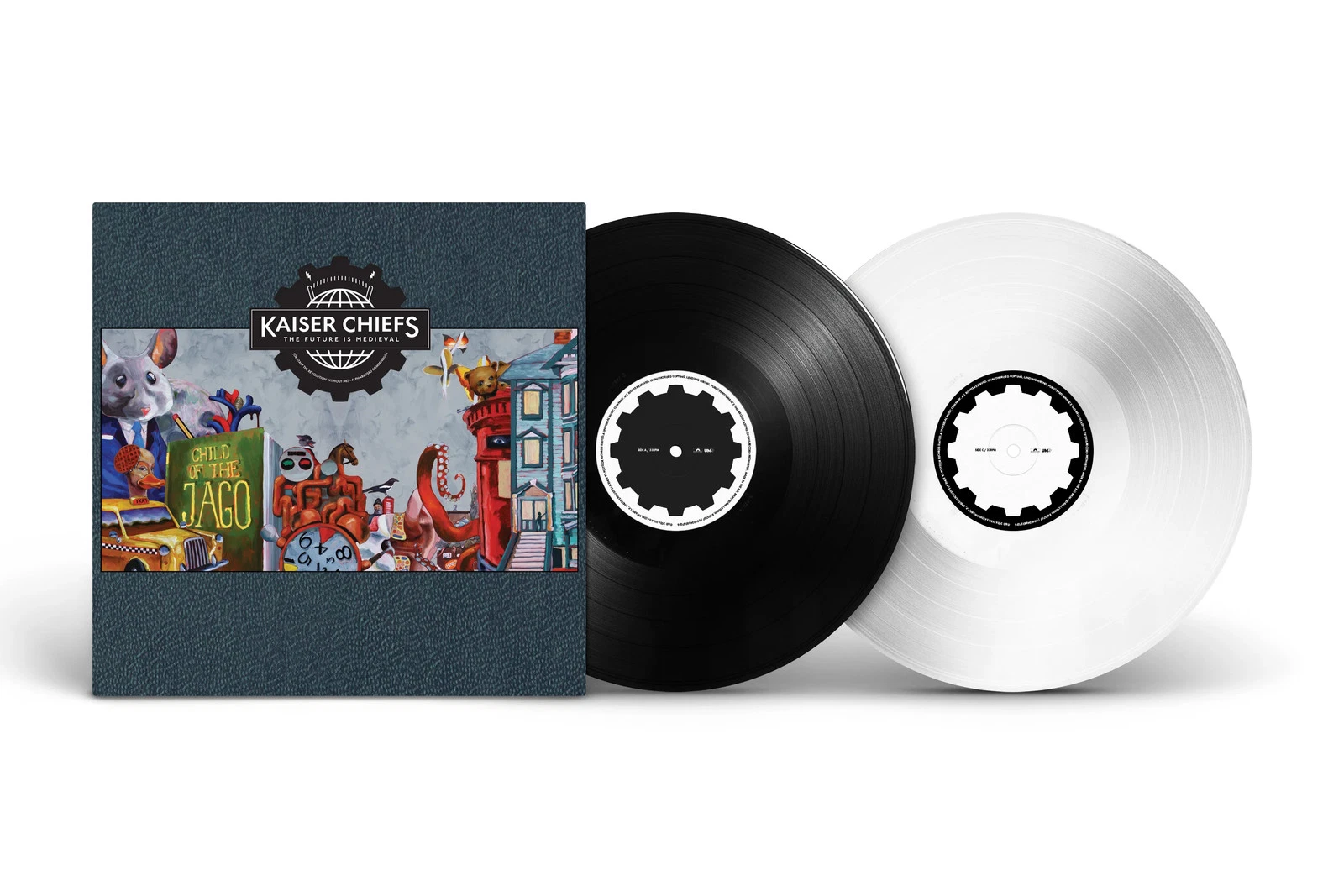
Gauging the sound quality of an album having various producers and engineers, one of them being the legendary Tony Visconti, was challenging. After being well acquainted with the overall brightness of the original CD and streaming versions, this vinyl cut sounds more relaxed. Tracks like “Child of the Jago” and “Saying Something” establish airy soundstages that mirror the Kaiser Chiefs’ stage placements (guitars from the left, keys to the right, everything else centered). “Fly on the Wall” maintains its laidback aesthetic while appropriately giving impact to the bombastic instrumental sections; the finale is where keyboardist Nick Baines shines the most. Some of guitarist Andrew White’s most notable contributions are singled out, particularly the fuzzy leads on “Can’t Mind My Own Business” and the dualing sliding madness of “Cousin in the Bronx.” One track that excels in establishing a firm atmosphere is “City.” Its reverse-echo-treated vocals and wavy instrumental textures exquisitely depict urban psychedelia. Some of the album’s more electronic-leaning tracks also excel in their own way. “Heard It Break” rids itself of rigidity for more looseness, and the skittering percussion on “Things Change” retains listener attention. Meanwhile, “Howlaround” and “Problem Solved” are rockers which sound righteously lively!
Though this pressing has its perks, it also has its share of demerits. Simon Rix’s bass should’ve been at the forefront on “Back in December,” instead sounding subdued. Some of White’s textural guitar approaches distract the piano foundation in “Coming Up For Air.” An explosive track like “Dead or in Serious Trouble” fails to translate that impact on vinyl. Ricky Wilson’s vocals sometimes suffer from sounding buried on “I Dare You” and making the choruses of “Long Way from Celebrating” a bit messy. The soundstage feels full on “Kinda Girl You Are,” but sacrifices some bottom end. Other tracks like “Little Shocks,” “Man on Mars,” and “When All Is Quiet” lack any dynamics, coming across as flat and dull.
My biggest criticism of this reissue is the lazy decision to present all the material in alphabetical form. The original double-10-inch pressing had a conscious flow that worked effectively. Perhaps it proves that The Future is Medieval was never meant to exist in traditional album form and only as an encyclopedic dump of varied material. Regardless, it makes for an adventurous listening experience full of twists yet with a hint of familiarity.