


The Classic Arrangements of Gil Evans Outside the Studio
Miles Davis – His last Big Gig finally back on vinyl
When is the right time to celebrate in a big way and pop the corks? Definitely a 100th birthday! This anniversary currently belongs to Miles Davis (May 26, 1926). But what do you do when the archives have almost nothing left to offer? A reissue or a new release? Warner Music Group is taking the easy route and releasing the previously neglected live album Miles & Quincy – Live At Montreux on vinyl as part of the Rhino Reserve series.
When it was first released in 1993, the album was pressed on vinyl only in Germany by WEA in Alsdorf and is now a rarity (Discogs have/want 238/379). In that respect, a fresh new pressing comes at just the right time. We could leave it at that, or take a closer look at this album….
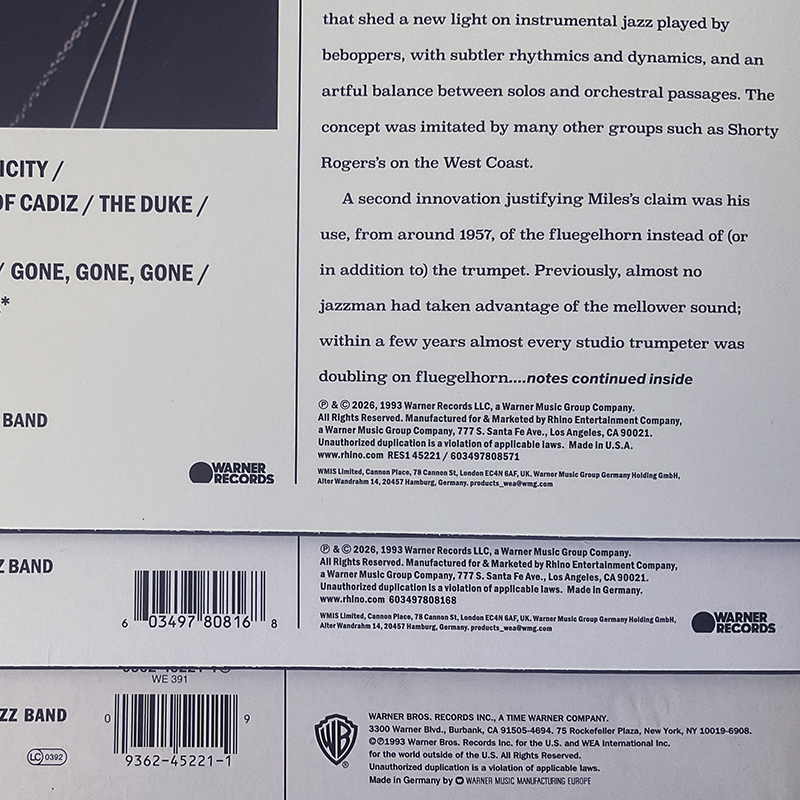
Detail of the back cover. From top to bottom: USA 2026, Europe 2026, Germany 1993.
Miles before Warner Bros.
Columbia Records, the label on which Miles released the bulk of his major works from 1957 to 1985, has fortunately been documenting its archive since 1996 in extensive, superbly documented, and technically excellent CD box sets. In contrast, for Miles’ recordings before and after Columbia—that is, on Capitol, Prestige, Warner, and others—digital reissues or compilations predominate.
It’s no secret that only the market for vinyl enthusiasts and audiophiles currently guarantees acceptable profit margins. Although Columbia Records continues to stock key Miles albums on vinyl itself, the label has also licensed albums to third parties. Consequently, various audiophile specialists have been remastering bestsellers like Kind of Blue, Sketches of Spain, and Bitches Brew on this basis for years.
Miles on Warner Bros.
Warner Bros., the label on which Miles released albums starting in 1985, has been less ambitious so far. Only a handful of albums have been released here, but three of them have won a Grammy (Tutu, Doo-Bop, Montreux). In contrast, during his three decades at Columbia, there were only three Grammys for several dozen albums (Sketches of Spain, Bitches Brew, We Want Miles).
When Miles returned to the studio in 1981 after a long illness, he sought out young collaborators and discovered many new talents who could bring his ideas to life or successfully contribute their own. Foremost among them was Marcus Miller (*1959), who wrote and produced large portions of the successful Warner albums Tutu, Amandla, and Music From Siesta. Shortly after Miles’ death, Warner released Dingo in November 1991, marking yet another collaboration with Michel Legrand (1932–2019). Then, in the summer of 1992, came Doo-Bop, a production for which Miles collaborated with hip-hop artists. To everyone’s surprise, a live recording from the 25th Montreux Jazz Festival in 1991 was released in the summer of 1993.
The Montreux Jazz Festival
The three-day Montreux Jazz Festival began in 1967 with a concert by Charles Lloyd and his quartet (Jarrett, McClue, DeJohnette). Claude Nobs (1936–2013), who at the time was also responsible for the Rose d’Or TV Festival at the tourism office, had developed and implemented the idea with two partners. The very first festival was curated and promoted in the media in collaboration with Swiss Radio. Within a few years, the festival had become world-renowned and Montreux an important venue. One recalls the tragic concert featuring Frank Zappa and the Mothers of Invention, during which the Casino fell victim to flames. Deep Purple, who were also in Montreux at the time to record a new album, immortalized the event in “Smoke on the Water.” Nobs was the festival’s master organizer and its driving force. His love of jazz, his dedication to the artists, and a golden touch in program selection made Nobs internationally renowned. He had been the Swiss representative for Atlantic Records since the late 1960s.
In the early 1970s, the festival opened up to rock and pop. Starting in 1973, Norman Granz (1918–2001), organizer of the Jazz at The Philharmonic concert series and founder of Verve Records, was an important partner for many years with his then-current label, Pablo. From 1975 to 1993, the festival took place at the newly built Casino, which had its own sound equipment from the start thanks to Mountain Studios. Outside the festival season, the studio was available for rent. Queen liked it there so much that Freddie Mercury (1946–1991) bought the studio in 1979 and handed over management to his producer David Richards (1956–2013). In the late 1970s, concerts began to be recorded on video as well. For the 25th festival in 1991, Nobs secured Quincy Jones as co-producer — a world-renowned producer, bandleader, and musician. Additionally, with support from Sony’s broadcast division, the technical equipment was brought up to the current global standard.
Miles in Montreux
Miles first performed in Montreux in 1973, and then almost every year starting in 1984 (84, 85, 86, 88, 89, 90, 91), sometimes with multiple sets. Miles was loved and revered by the audience, even when he played with his back to them. For the anniversary festival, Nobs planned something very special: he approached Miles to perform with historical material. But Miles had a fundamental stance — he did not look back but only wanted to move forward. Quincy Jones (1933–2024), the festival’s new co-producer, was enthusiastic about the idea of bringing the arrangements from the collaboration with Gil Evans (1912–88) back to life. Moreover, it would mark their first collaboration and a long-overdue accolade for Quincy. Even as a young trumpeter, Miles had been his great idol. Later, as a successful arranger and producer, he sought to get closer to Miles — but without success. What prompted the change of heart in Miles remains unclear. The only thing that matters is that he agreed to the project in late 1990.
The Repertoire
When Miles moved to industry giant Columbia in the summer of 1955, he still had to fulfill an outstanding contract for four albums (Workin’, Cookin’, Steamin’, Relaxin’) with Prestige Records.
The new producer, George Avakian (1919–2017), was thinking long-term. First, Miles recorded new material as usual with his quintet in three sessions (1955/56), which was released in March 1957 on the LP Round about Midnight. At the same time, however, Avakian had explained to Miles that a conceptual album with a larger ensemble would be far more in line with Columbia Records’ efforts to define the LP as a sophisticated medium.
From the very beginning, Avakian relied on arranger Gil Evans, with whom Miles had already collaborated in 1949–50 on recordings for Capitol Records. During those sessions, the transition from bebop to cool jazz was completed. In his arrangements, Evans shaped the ensemble, creating a sound in which the individual parts blend into a unified whole. The nonet at the time consisted of first-rate instrumentalists, with the typical bebop quintet augmented by a second saxophone and three additional wind instruments (French horn, tuba, trombone).
Even during his time (1941-48) as an arranger for the Claude Thornhill Big Band, Evans had experimented with expanded lineups, developing a concertante style that blended jazz and modern classical music.
It was precisely with this vision that Avakian brought Miles and Evans together again in 1956. Ultimately, a large, expanded ensemble of 19 instrumentalists was approved, including additional flutes, clarinets, and bass trombone. Polyphonic brass sections, four trumpets, four trombones, three French horns, and four clarinets. This allowed for both large, powerful soundscapes and intricate ensemble passages. The selection of the 10 pieces was meticulously discussed. Consisting mainly of compositions by other artists, but also including two of their own works (Miles Ahead, Blues for Pablo), Evans arranged the first seven tracks to form a suite. Unfortunately, the playing time of a single side is limited, and after five tracks the record must be flipped. Three additional songs round out the program. With this commercially successful concept album, Miles and Evans set new standards.
In March 1959, their second collaboration, Porgy and Bess, was released. The Gershwin opera had been a success since 1935, and the film followed in the summer of 1959. Miles and Evans enjoyed tremendous success with the new album.
Shortly thereafter, a new producer at Columbia, Teo Macero (1925–2008), took over the collaboration with Miles. Evans was now given the freedom to design an album entirely in his own style. For this, Evans drew on two classical compositions by Joaquín Rodrigo (1901–99) and Manuel de Falla (1876–1946), complementing them with a folk song and two original compositions in the Spanish style. The album is a true work of art, each track a self-contained entity and exquisitely crafted. Evans’s unique lyricism shines through in the instrumentation, the arrangements, and the production by sound engineer Fred Plaut (1907–1985).
Although very successful together, Miles gradually distanced himself from the partnership and focused on his new quintet. Evans was present for some of the recordings of Quiet Nights (1962/63), but the bossa nova album was neither an artistic nor a commercial success.
Ultimately, the Miles and Evans duo immortalized themselves not only with the early Capitol recordings but above all with the three Columbia albums. In 1991, a selection of this material was to be brought to life in the most important concert of the 25th Montreux Jazz Festival.
The Original Arrangements
It is a well-established fact that Evans always came to the sessions for all three albums perfectly prepared, with complete arrangements including the individual parts, which were labeled by name. Any necessary adjustments or corrections were made on the spot during rehearsals. In actual ensemble performance, not every chord progression always corresponds to the arranger’s original intention (inner ear). In the liner notes of the comprehensive box set Miles Davis Gil Evans – The Complete Columbia Studio Recordings (1996), Avakian states that the original arrangements for all of Miles’ recordings at Columbia were not archived and are considered lost.
The Montreux Arrangements
The liner notes for the 1991 Montreux album credit Gil Goldstein (*1950) and Maria Schneider (*1960) for Transcription and Additional Orchestration. Keyboardist Goldstein had already been a member of the Gil Evans Orchestra for ten years; following Evans’ death, the orchestra was led by his son, trumpeter Miles Evans (*1965). Goldstein worked with original scores in the orchestra and handled all kinds of additions. The composer and arranger Maria Schneider (B.A., M.A., Eastman School of Music) came to New York in 1985 to continue her studies with Rayburn Wright and Bob Brookmeyer. At that time, she also became Gil Evans’ assistant and supported him on current projects (e.g., the film score for The Color of Money) until his death.
Transcription refers to the process of writing down what is heard (notation), i.e., listening to a sound recording and notating it anew as an arrangement. This also reveals all individual parts. Additional orchestration involves deriving and notating individual parts for additional instruments in accordance with the arrangement. This may also involve doubling parts or transposing them for a different instrument.
The Lineup
During the preliminary discussions, Quincy Jones had already determined that the original lineup would have to be at least doubled. This not only expands the ensemble acoustically but also minimizes inaccuracies in individual parts. To achieve this, two renowned jazz ensembles — the Gil Evans Orchestra (8 musicians) and The George Gruntz Concert Jazz Band (17 musicians) — were brought together. Gruntz expanded his band with an additional 19 instrumentalists from the region, while Quincy Jones brought three more musicians from the U.S. The new arrangements had to accommodate all these musicians. Some of the instrumentalists, such as the harpist, are on stage the entire time but have only a brief part. To reinforce the rhythm section, Charles Benavent (b, bg) and Grady Tate (dr) were flown in from the U.S. The two guarantee significantly more groove — because what would a Quincy Jones production be without groove?
The Soloists
For many years, Miles had been plagued by serious illnesses. As early as 1990, it was clear to everyone involved that time was running out. Simply to safeguard the new project, reinforcements and replacements were secured. The young trumpeter Wallace Roney (1960–2020) studied Miles’s famous solos. Saxophonist Kenny Garrett (*1960), who had been playing with Miles in his current lineups for some time, was brought in to add a second dimension. This allowed the long solo passages to be better distributed, adding color and giving them a slightly more modern feel. Just in case, Quincy had booked Benny Bailey (1925–2005), a veteran and consummate professional on trumpet and flugelhorn.
The Rehearsals
It is a matter of record that Quincy personally led at least two rehearsals of the entire program. It is not known who led the preliminary rehearsals, whether with the bands alone or with the full ensemble. Miles didn’t join until the second rehearsal. His frail appearance and performance dampened hopes for a great concert. During the rehearsal, Rooney was particularly called upon.
The Concert
Contrary to what the rehearsals suggested, Miles takes the stage for the concert with great energy and plays large portions of the solo himself. At the marked points, he hands off to Roney and Garrett; it is only during the final number that a delicate dialogue develops between the two trumpeters. The concert gets off to a sluggish start. “Boplicity” drags a bit and is by no means relaxed. With “Springville,” the large orchestra picks up some momentum, which builds steadily up to “Blues for Pablo.” The “Porgy and Bess” medley is solid but not a standout. It’s very interesting, however, to hear how a quiet “Pan Piper” sounds live. By the time they reach “Solea,” everyone has reached a high level of performance. Now the tension eases, and Miles hands the solo over to Roney several times in a cautious interplay.
If you just listen to the concert, you might assume that everything is written down and played from sheet music. Only when watching the concert film—provided you keep an eye on the relevant instruments—do you realize that there is also room for improvisation. Much of this gets lost acoustically, but Delmar Brown, in particular, doesn’t come across well. Likewise, the uninvolved musicians in the background initially seem disinterested. Later, their stage presence improves.
By the end of the concert, everyone is thrilled—the audience, the musicians, as well as Quincy and Miles. Miles, in particular, is beaming. The tension must have been enormous, but he carried the entire concert through at a high level. If people later like to nitpick the performance, one should keep in mind that we have a document here where everything is still being played live, in real time, and together. There were no live corrections with MIDI or pre-recordings yet. There was no post-production that could fix every little mistake.
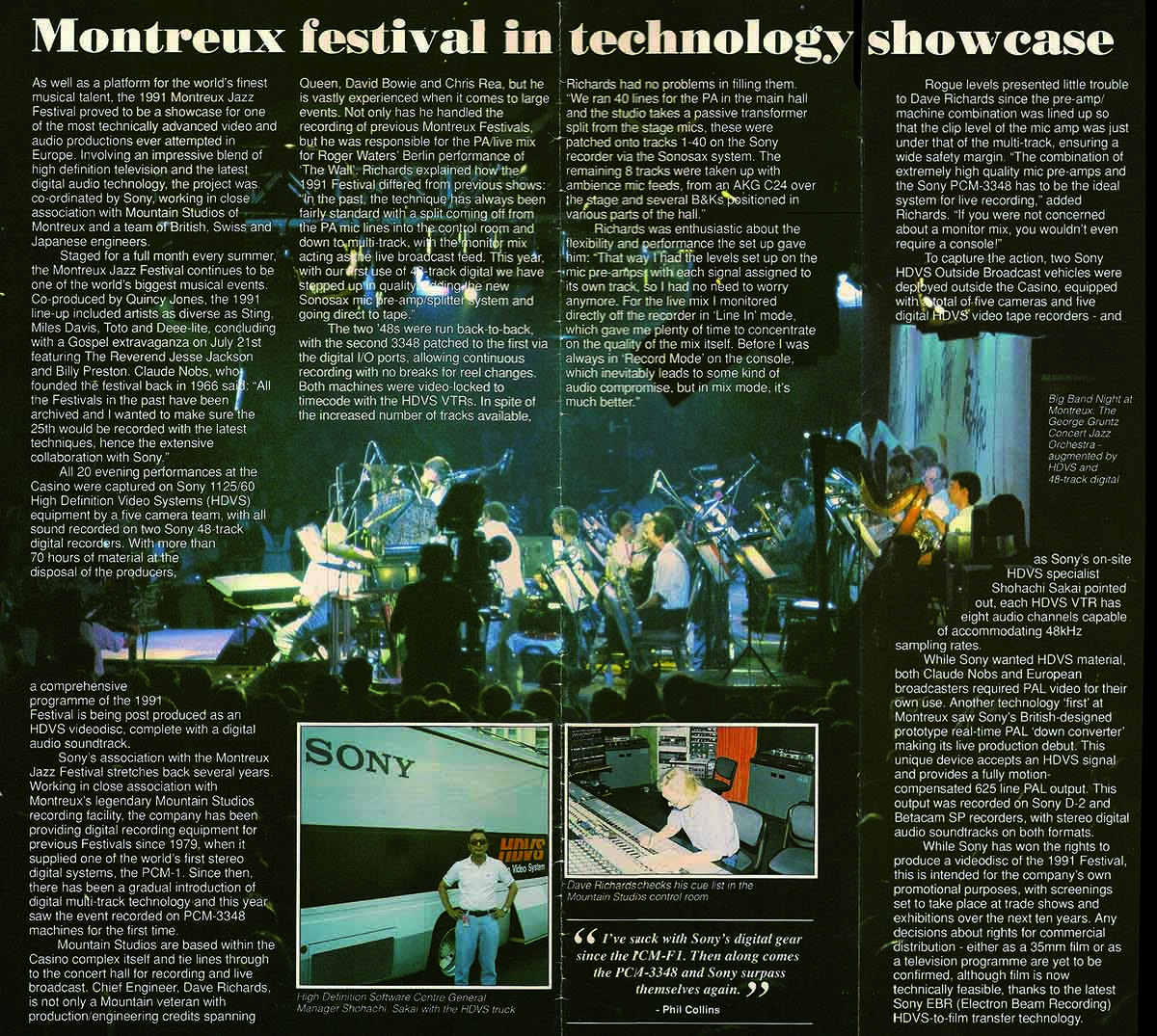
A contemporary article on the audio and video equipment used at the 25th Jazz Festival. In the center is the large big band conducted by Quincy Jones. Some of the microphones for the instrumental sections are clearly visible. The small photo on the right shows Dave Richards at the mixing console, with the two Sony 48-channel digital recorders in the background. On the left is Sony’s chief technician, Shchachi Sakai.
The Audio-Video Production
For the 25th festival, Nobs had organized the best possible technology. Sony is on site with the best equipment currently available for video and audio. The video is recorded analog in HD format (Sony 1125/60 HDVS). Numerous cameras in the hall, an OB van with video control and editing suite. The audio is recorded without interruption onto two Sony PCM-3348 48-track digital tape machines. The signals from the individual microphones were fed into a special microphone preamp with a splitter system (Sonosax) and routed separately to the live mixer as well as to the tape machines at Mountain Studios. The multitrack tapes are used for later post-production.
The Album
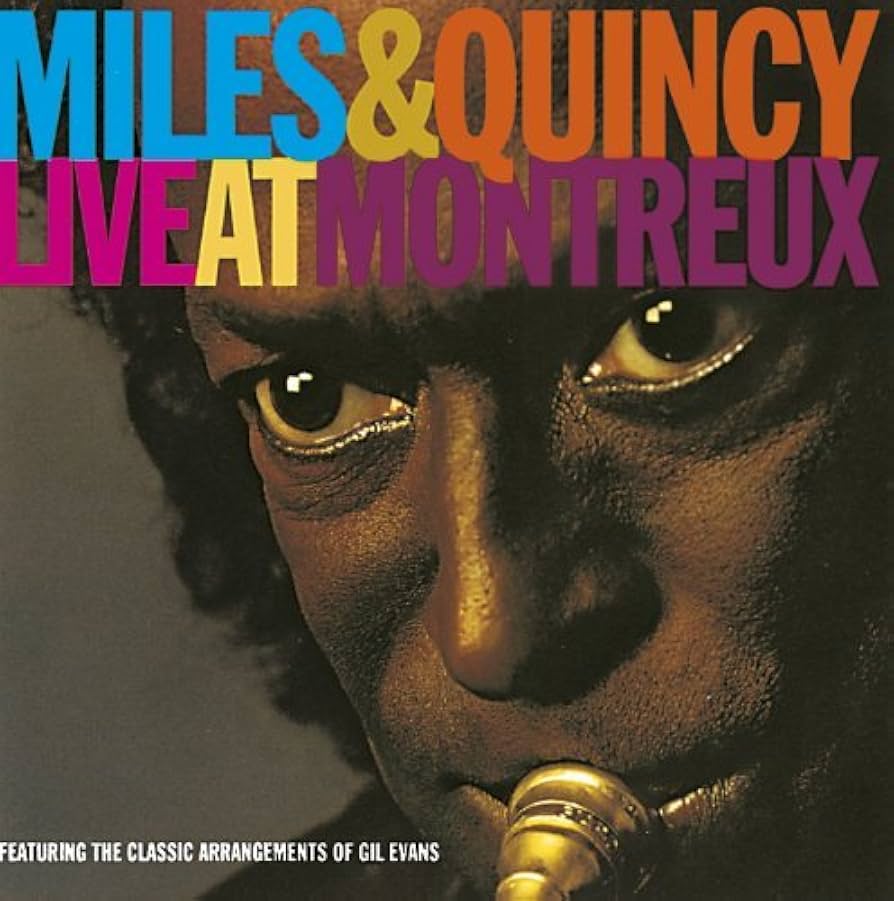
When the concert recording was released in 1993, Warner offered a handful of different formats. Visible to everyone were the CD and the MC, at that time the two most important formats. An LP was released only in Germany by WEA Alsdorf. Much more important at the time, the concert was available on Laserdisc and VHS (NTSC, PAL). Viewed objectively, the film containing the complete concert is the true original. You can’t get any closer to the live performance than that. There is also extensive bonus material featuring interviews. Although the recording and editing were done in 1991 using the very best technology available, they are worlds apart. The audio recording was digital, whereas the video technology was analog. The cover design is identical for all editions: brightly colored text over an expressive portrait photo by Annie Leibovitz.
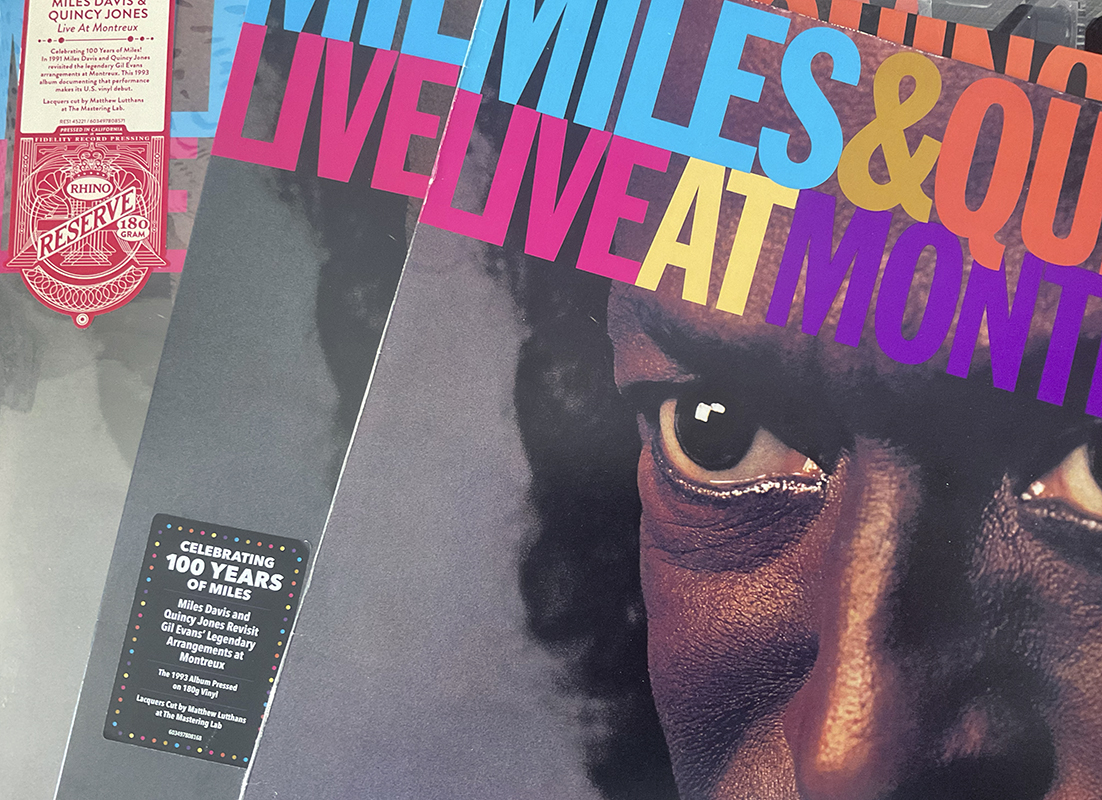
The reissues are only genuine with the Hype sticker. From left: USA 2026, Europe 2026, Germany 1993
The Mix
Warner, or more precisely, producer Quincy Jones, commissioned Mick Guzauski to mix the concert. Guzauski had made a name for himself in 1979 with the mix of the album Chuck Mangione – Live at The Hollywood Bowl (An Evening of Magic). In 1992–93, he worked as a sound engineer at Capitol. The mix of the Montreux recordings was created in one of the studios there.
The initial pressings
All sales formats were based on a digital master tape (audio) created by Bernie Grundman in 1993. The mastering process, whether digital or analog, establishes an idealized balance within and between the individual tracks. In the process, timbres, pitches, balance, volume, and dynamics are checked and corrected as necessary. The basis is and remains the authorized two-track master of the final mix; the mastering engineer only makes corrections.
The state of the art at the time required a digital cassette (PCM, U-matic) as the transfer medium for the master. Starting around 1984, the digital workflow in the pressing plants was switched to Sony PCM 1610 or 1630. These digital masters were used for all transfers (CD, MC, LP). International program exchange — that is, the transfer to a licensee, such as WEA Germany — was carried out using clone copies (bit-for-bit). As was previously the case with analog production master tapes, the motto was that the master is authoritative and is transferred linearly. In this respect, all original releases worldwide are (almost) identical in sound, if one disregards material or production variations.
The Rating
Whether it’s a 1993 release or a later reissue, the album can only be rated in three parts. The repertoire unquestionably deserves a perfect score of 11. The performance, at most, a 9. For the sound engineering, a narrow 8. The concert film, on the other hand, deserves a solid 9.
The CD Reissues
Although this is a historic concert — Miles’s last major performance, and one featuring older material — the album was neglected by Warner. The album didn’t reappear in the back catalog as a CD until 2005. A remastered reissue was released for the European market as part of the Master Series. The new sound balance significantly improved the foundation; the bass and drums, in particular, gained definition, while the horn sections and individual voices, as well as the stereo image, lost some of their clarity. In Japan, another remaster was released in 2007 (marked “24-bit” on the OBI). Here, too, there is slightly more bass, but the ensemble plays much more cohesively. Japanese CDs produced in Europe (Optimal Media, Röbel) in 2013 and 2017 are also based on the same master. Warner released another remaster in Japan in 2017 as an SHM-CD (24-bit). None of the Japanese CDs documented the basis on which the remaster was produced. Although none of these new editions match the sound of the original release, Bernie Grundman is still cited as a reference in the booklet.
The DVD and BD reissue
For the Montreux Jazz Festival’s vast image and sound archive, Claude Nobs had already signed long-term contracts in the early 2000s with Eagle Vision, a global distributor of DVDs and Blu-rays. In 2013, the company released a new edition of the old recordings, this time featuring the sound mix from Mountain Studios. The video has been digitized in HD, color-corrected, and carefully restored. The typical interference patterns of analog video recording have been preserved. The Blu-ray includes extensive interviews and runs for 2 hours and 13 minutes.
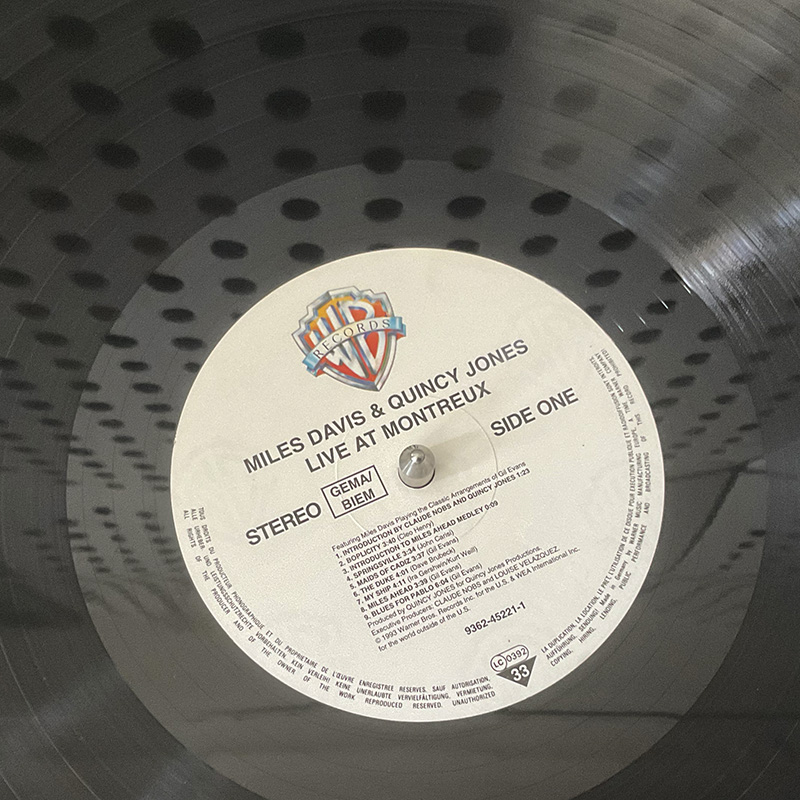
The German Vinyl from 1993. WEA Alsdorf, inhouse cut, DMM. Source: Clone Copy of Grundman U-Matic.
The Vinyl
When the Montreux album was released in 1993, the major record companies had long since abandoned the venerable LP. Production had shifted to CD and cassette, and the large hydraulic steam presses had been sold or scrapped. It was a time of transition, during which the majors closed their own production facilities — recording studios, pressing plants, and printing shops — or sold them off via management buyouts, subsequently outsourcing manufacturing to third parties.
At that time, the Warner Group (WEA) had only one fully operational factory left for all formats, located in Alsdorf (GER). This included cutting technology from Neumann (lacquer and DMM). Whoever decided back then to produce an LP based on the Bernie Grundman mastering deserves our deepest gratitude to this day. The WEA LP sounds almost exactly like the CD from back then. Over the past three decades, I’ve surprised dedicated collectors and Miles Davis fans on multiple occasions by telling them I have an LP of it — that’s how obscure the pressing is. Although I bought a Japanese CD with the remaster about ten years ago, I still put on the LP.
In February, I discovered that the album will indeed be reissued on vinyl in April. A miracle! Shortly thereafter, I learned that there would be two pressings. Initially, details were scarce, but it will be cut on lacquer in the U.S., pressed there, and the album will be released in the Rhino Reserve series. That’s promising. Then I learned that there would also be a European edition. Pressed in Europe, but cut in the U.S. By the end of April, I had both pressings in hand.
In a reasonable price range (€31 for European LP, €37 for American LP), these are first-class pressings. Smooth playback, flawless surface, solid covers, PE inner sleeves. Both editions are based on master tapes cut by Matthew Lutthans at The Mastering Lab (Acoustic Sounds, Salina, KA). There are two different transfers. The masters for the US (Fidelity Record Pressing) are labeled A/B, while those for Europe (Optimal Media) are labeled A1/B1. The tracking and surface utilization are nearly identical. However, the groove depth appears to differ. In a listening comparison, the American version exhibits slightly more low-end presence, fuller bass tones, and drums. The European edition is also powerful, but it illuminates the stereo image better. The instrumental groups — whether woodwinds or brass — are better balanced here.
Decades ago, I would have written that a more transparent sound was ordered for the European market, whereas American listeners expect a solid foundation. But does that still correspond to actual sales policy today?
The real question, however, is: On what basis did Lutthans cut the masters? What kind of master did he receive? I simply cannot imagine that Warner still owns — let alone uses — Bernie Grundman’s old U-matic, if only because of the obsolete tape format. With analog master tapes, we are accustomed to them being well-documented and clearly identifiable. For new digital masters created through media transfer, changes are rarely documented. A realistic scenario for this album would be a digital master created in the mid-2000s (24-bit, 96 kHz) sitting on a server as a HiRes file, waiting to be used for production. That would also explain the later CDs mentioned. In fact, only the first two releases (CD, LP) are sonically identical. All reissues, regardless of medium, are similar in terms of bass, drums, and stereo image.
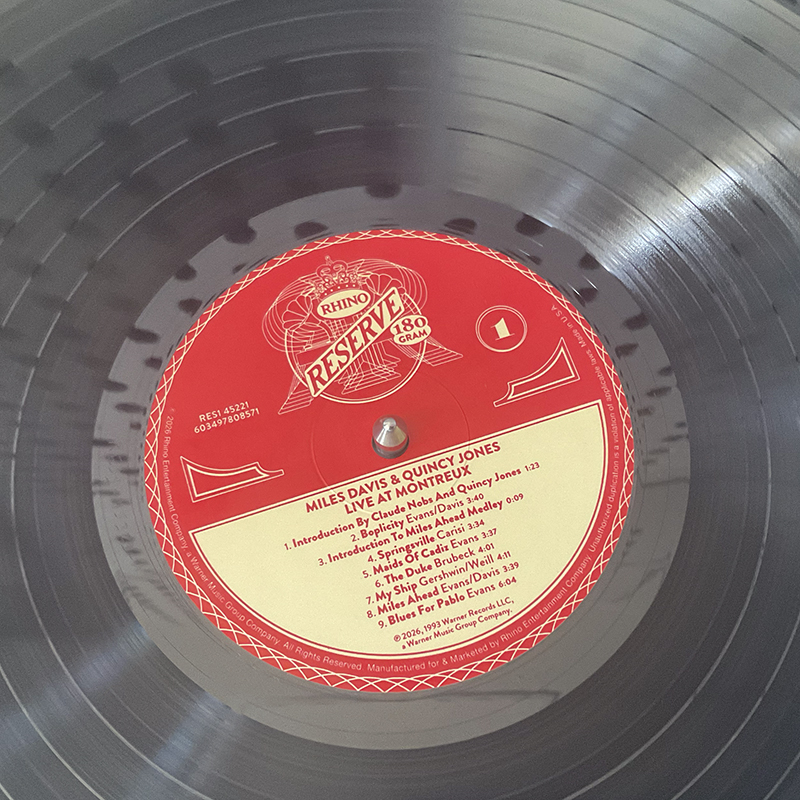
The 2026 American Vinyl. Laquer cut by Matthew Lutthans, The Mastering Lab. A Fidelity Record Pressing. The actual weight is 189 grams.
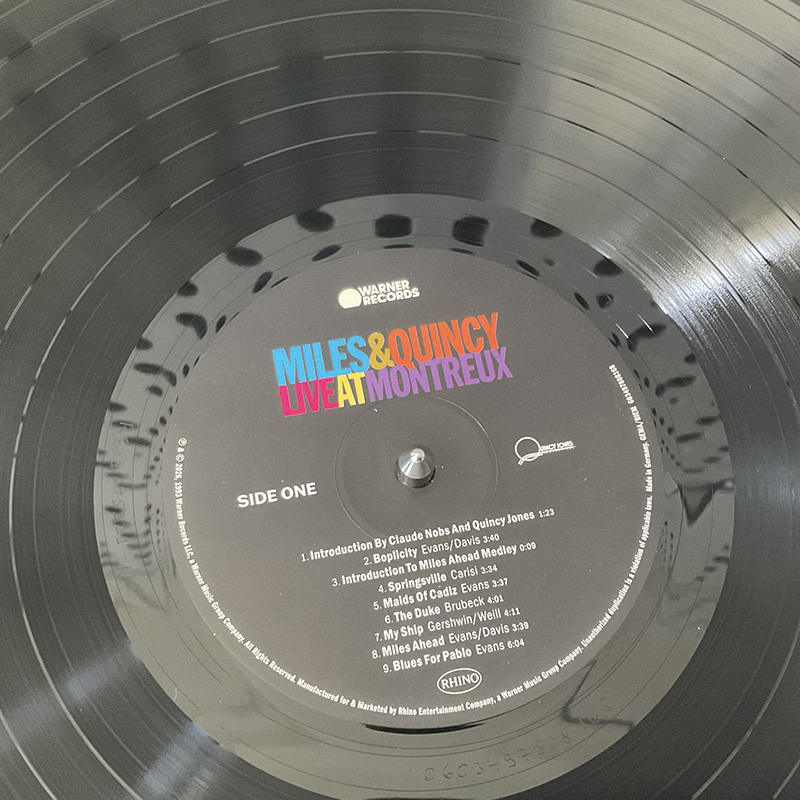
The 2026 European Vinyl. Laquer cut by Matthew Lutthans, The Mastering Lab. A Optimal Media Pressing. The actual weight is 190 grams.
The Unicorns
While researching this article, I encountered two additional pressings. First, there is a Japanese edition with an OBI band and Japanese cover, though the LP (matrix number BI38731-1 A/B) was pressed by Optimal Media in Röbel, Germany, in 2018. The catalog number 0603497257630 is also engraved on the record’s surface. The original matrix numbers (WPJR-10035A-2, WPJR-10035B-2) was located on the outer edge of the 14-inch laquer and were not part of the pressing mold. Although pressed in Germany and send to Japan, the lacquer disc was actually cut in Japan by sound engineer Katsutoshi Kitamura at Mixer’s Lab on a Neumann VMS80 with SX-74 (SP-79C, SAL-74B, Genelec 1234A). Mixer’s Lab operates as a mastering studio (all formats) for Warner Japan. Unfortunately, there is no information on the source here either, but it stands to reason that it was the digital remaster. Internationally, this pressing is rarely available and only at astronomical prices.
Less difficult to find is another vinyl edition in which the running time of over an hour was even spread across four sides. The mail-order service Vinyl Me, Please released a limited-edition collector’s box set (1,000 copies) titled The Story of Quincy Jones in 2022. It contains eight classic albums that Quincy arranged or produced. In addition to the Montreux album, it includes The Dude, Back on the Block, Walking in Space, Body Heat, Sinatra at The Sands, This Is How I Feel About Jazz, and The Wiz. The two extended-length albums, Montreux and Back on the Block, were each split across four sides. For BOTB, the decision seems straightforward; however, on Montreux, the continuous arrangement of Miles Ahead is interrupted after the first two tracks. Here, too, there is no information regarding the available sources. The box set was pressed on colored vinyl by GZ Media in Lodenice (Czech Republic). The mastering was split: the majority was handled by Ryan Smith (RKS) at Sterling Sound (Nashville, TN), while the Montreux album was mastered by Barry Grint (Bazza) at Alchemy Mastering at AIR (London, UK).
A few notes
When the album and concert film were released two years after the concert, the press had mixed reactions. High praise prevailed, and the release won the 1994 Grammy for Best Large Jazz Ensemble Performance. Critics quibbled over the performance. That would be justified if one were hearing standard repertoire performed by a well-rehearsed ensemble and lively soloists at the peak of their careers. But that wasn’t the case!
Considering that they had adapted highly demanding arrangements for more than double the usual instrumentation with very few rehearsals, it sounds quite good. Quincy, the clever arranger and bandleader that he is, sets new accents simply through the selection and playing style of the rhythm section. Even though the new arrangements, written by Goldstein and Schneider, stay close to Evans’s style, Quincy modernizes the whole thing. Here he is no purist but succumbs to the temptation to sound fresh and modern. Actually no problem, if such lofty standards hadn’t been invoked from all sides, including Quincy himself.
This balancing act is easier to explain if you listen to “Birdland” on Back on the Block (1988). Here, Quincy gathered numerous old heroes with short contributions that he integrated into the Zawinul hit. What at first seems like a journey back to the Golden Age is exactly the opposite. Quincy embeds the old guard in a contemporary collage, confronting modern jazz with hip-hop, R&B, and soul. Add to that a perfect sound on par with a Michael Jackson album. In that sense, a joint concert with Miles is the crowning achievement. As a side effect, Warner now also has an album featuring Gil Evans arrangements.
Miles’ individual solos lack the purity of the 30-year-old recordings. The high notes are also missing; if they appear at all, they come from Roney. The timing and interplay fall into place as the concert progresses. The evening’s concept is strictly regulated: as long as Miles manages his parts, no one steps in to fill in for him, but instead waits for his cue.
Here, Miles Davis masters one final challenge, as the material and arrangements had never actually been performed live by him before. His work with Evans was always studio-based. They would work on the details until everything was perfect. This included touch-ups with overdubs (already present on Miles Ahead) and tape editing. The album Miles Davis at Carnegie Hall (rec. 1961, published 1962) documents the problems Miles and Evans were already having with the large ensemble live back then. The true extent of these issues only became apparent in 1987, when a 2CD set featuring the entire concert in chronological order was released. The individual parts are more or less discernible, but the overall sound is far from satisfactory. For the tracks Miles plays with his quintet, the album is acceptable, aside from issues with the sound engineering. In that respect, the Montreux concert is a successful historical document. It should be accepted as such.
Another source of unease stems from subsequent reinterpretations of the division of labor for the concert. This includes, on the one hand, the acknowledgments on the album. Almost everyone receives a thank-you, whether they are a friend, family member, business partner, or key contributor. Quincy is very generous here. Maria Schneider is left out, even though she rewrote what is perhaps the most important part of the concert. The extensive cycle of six pieces from Miles Ahead was and remains the blueprint for Miles and Evans, but also for generations of arrangers and bandleaders to this day. There are also extremely tricky and subtle details to master here. In that respect, Ms. Schneider should have received more recognition back then. Since 1994, Maria Schneider has proven to us with her own orchestra that she ranks among the very best as a composer, arranger, and bandleader, and with her consistent, upright demeanor, she is rightly regarded as the legacy of Gil Evans.
A serious examination of the concert becomes even more complicated when one reads later reports about the arrangements. Suddenly, there is talk that Anita Evans, the widow, had happened to find the arrangements, allowing them to work from the originals. Anyone who has the Blu-ray of the concert should watch the short interview with a visibly frightened Goldstein.
This concert will remain a stylistic benchmark for the long term. By performing previous studio recordings live, Miles and Quincy established a new genre: tribute albums. Over the past three decades, dozens of albums have been released featuring well-rehearsed big bands — primarily from European radio stations — collaborating with renowned soloists. Many of these recreate entire classic albums (example: David Liebman and the Manhattan School of Music Jazz Orchestra – Sketches of Spain).
What I’d like to see
I’d love to have a double LP with the first two tracks on Side 1, then on Side 2 the complete set from Miles Ahead (25 minutes), Side 3 Porgy and Bess, and Side 4 the two pieces from Sketches of Spain. The whole thing mastered by Bernie Grundman at his current level and finally, truly cut by him onto lacquer.
P.S.
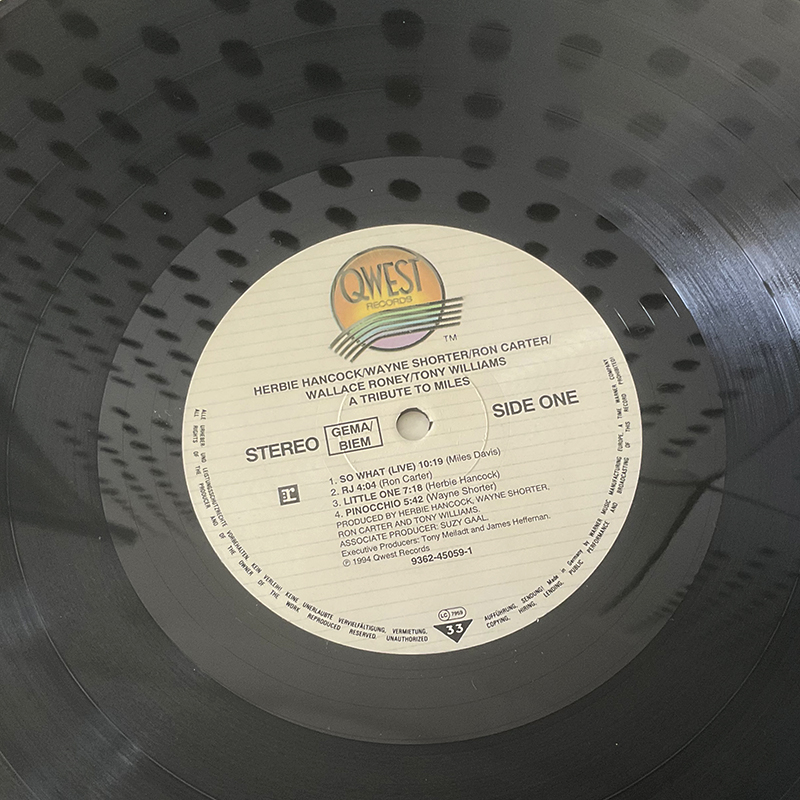
A little hint to Warner. Why not finally release a new LP of A Tribute To Miles after more than 30 years? In 1992, Hancock, Shorter, Carter, and Williams — all four members of the legendary Miles Davis Quintet of the 1960s — performed together with Roney. The album, originally released by Quest Records via Warner, features two Miles classics (“So What,” “All Blues”) as live tracks and five original compositions in studio quality. A wonderful tribute to the master and the last time the four played together like this. The audio is superbly miked and perfectly recorded. Unfortunately, the LP was released only in Germany at the time and is therefore extremely rare today (Discogs have/want 107/201). Incidentally, it was also mastered from a digital master created by Bernie Grundman. It would be wonderful to hold a genuine Grundman vinyl in your hands by Christmas 2026.
Copyright and all rights reserved 2026 by Frank Wonneberg, Berlin.
This text was written in German and translated using DeepL.