
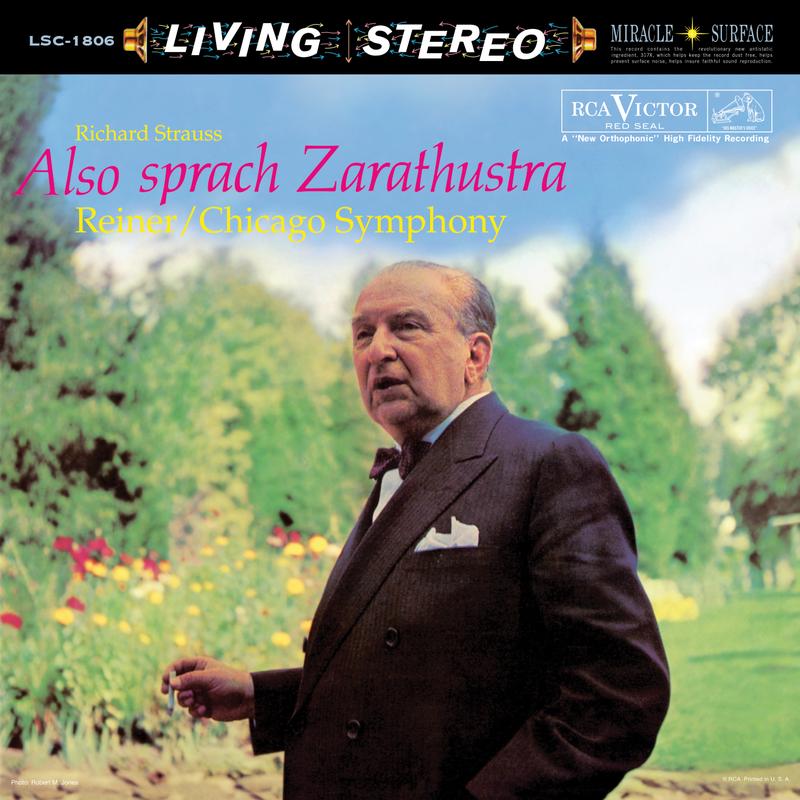
The 'Dawn' of Living Stereo... Again!
Analogue Productions gives new life to the first and most famous of RCA's classical catalog
Throughout the past few years here at the Tracking Angle, Mark, Paul, and myself have covered a wide breadth of the audiophile classical reissues coming to the market. Inevitably, a few of them have drawn comparisons to what we often claim are the gold standards of orchestral recording: RCA "Living Stereo". When you think about “Audiophile Classical”, these records are what spring to mind thanks to the legacy of writers such as Harry Pearson and Sid Marks. My own introduction to the vinyl legacy of this label came from Michael Fremer’s original reviews of the first batch of RCA Living Stereo reissues Chad Kassem put out in 2013 (when I was a Junior in college and had a Pro-Ject Debut Carbon to play them on, time flies...)!
That of course wasn’t the first time RCA Living Stereo titles were reissued by audiophile labels, the renaissance of these recordings started in the 1980s and inspired reissues from labels like Chesky and Classic Records. But those reissues had the unfortunate timing of emerging before the vinyl resurgence hit full swing in the 2010s. The Analogue Productions reissues did hit that mark, and with new remasterings from Ryan K Smith at Sterling sound they were sounding better than ever (despite what you may hear from one particularly bitter used LP salesman).
Lots has happened in the world of classical vinyl reissues since the AP Living Stereo series first launched, including some stiff competition from Deutsche Grammophon’s in-house efforts, but Chad and his team had the benefit of recordings that didn’t need much help to begin with, just care in mastering and cutting, something they never struggled with.
It's no secret that Acoustic Sounds purchased Classic Records back in 2010. With it, came all the metal parts from Michael Hobson’s reissues over the years, including his extensive Living Stereo cuts by Bernie Grundman, cuts he did at both 33 and 45rpm. Now the 33rpm Classic titles have mostly been surpassed by Ryan Smith’s newer cuts, but for those that have heard them, few things have come close to the 45rpm pressings Bernie Grundman cut back in the 90s. These were originally released as rather cumbersome single-sided 4 disc sets and have been impossibly expensive on the secondary market in complete form. To this day I only own around 3 or 4 of these 45rpm sets and each cost me a pretty penny. Still, they were the best I have ever heard any of these recordings and became favorites for demonstrating the magic that the RCA team captured some 70 years ago.
Now, AP has reissued these Bernie cuts alongside some previously unissued cuts from Ryan K. Smith at Sterling Sound, as well as brand new cuts by Matthew Lutthans at the Mastering Lab in Salina, KS. The pace will be roughly two a month with four titles already released, but I wanted to devote some space to the first release in the series as it bears some historical significance in the annals of audiophile classical history.
 Most releases in this series feature cuts by Bernie Grundman done in the 1990s
The first title Chad chose is important for so many reasons, it is LSC-1806: Richard Strauss’s Also Sprach Zarathustra performed by Fritz Reiner and the Chicago Symphony Orchestra. The first commercially released stereo recording by RCA. In the early 1950s, RCA embarked on the prestige project of producing cutting edge stereophonic recordings of the best classical artists they could procure on this side of the Atlantic. To read more about the early days of RCA, I highly suggest you read Michael Fremer’s interview with RCA producer Jack Pfeiffer where he goes into detail about the mission and process they undertook with this legendary series.
RCA experimented with early stereophony in a few sessions throughout the early 50s, but the first session to secure release as a catalog ‘Living Stereo’ title was a session from Chicago’s Orchestra Hall on March 8, 1954. Throughout this early period RCA would have two separate recording teams, one each for mono and stereo, recording the sessions simultaneously. While the mono records from this period sound very good, they do have a fundamentally different sound to the stereo titles owing to their separate production. This stereo session was produced by Jack Pfeiffer and engineered by Leslie Chase.
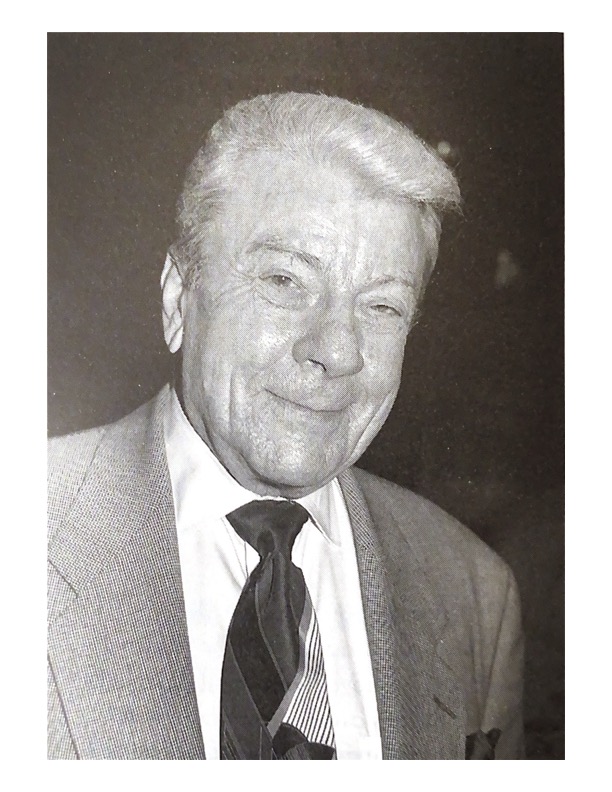 RCA producer Jack Pfeiffer
Reports vary as to the exact recording method Chase used in this session. Jonathan Valin writes in The RCA Bible that it was “Made with just two widely spaced M-50's according to RCA- although Michael Gray reports that session photographs indicate two U-47's plus a 77-DX wind helper on stage.” Nevertheless this was a very simple mic’ing setup with classic tube electronics recorded directly to two-track tape, which would be the case for all Living Stereo recordings until the switch to three-track in 1956.
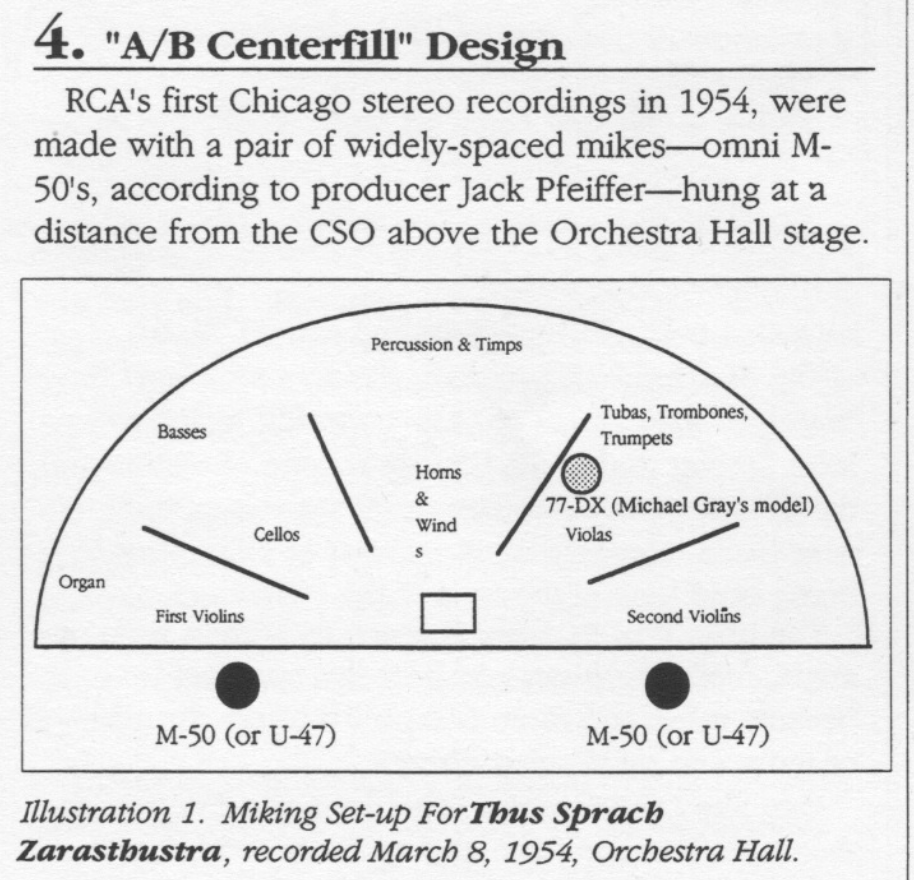 A diagram of the recording session from Valin's RCA Bible
We have to remember when contextualizing this 1954 recording, that it was just one year into Hungarian conductor Fritz Reiner’s tenure as music director of the Chicago Symphony. For as long as I’ve been following the history of American orchestras, I’ve heard a narrative that Reiner built the CSO into the world-class orchestra we know today through a brutal reign resulting in many firings. This a bit of mythology mixed with truth, as Chicago was held in high regard for many years prior to the conductor’s arrival, but he certainly did leave his mark on the orchestra.
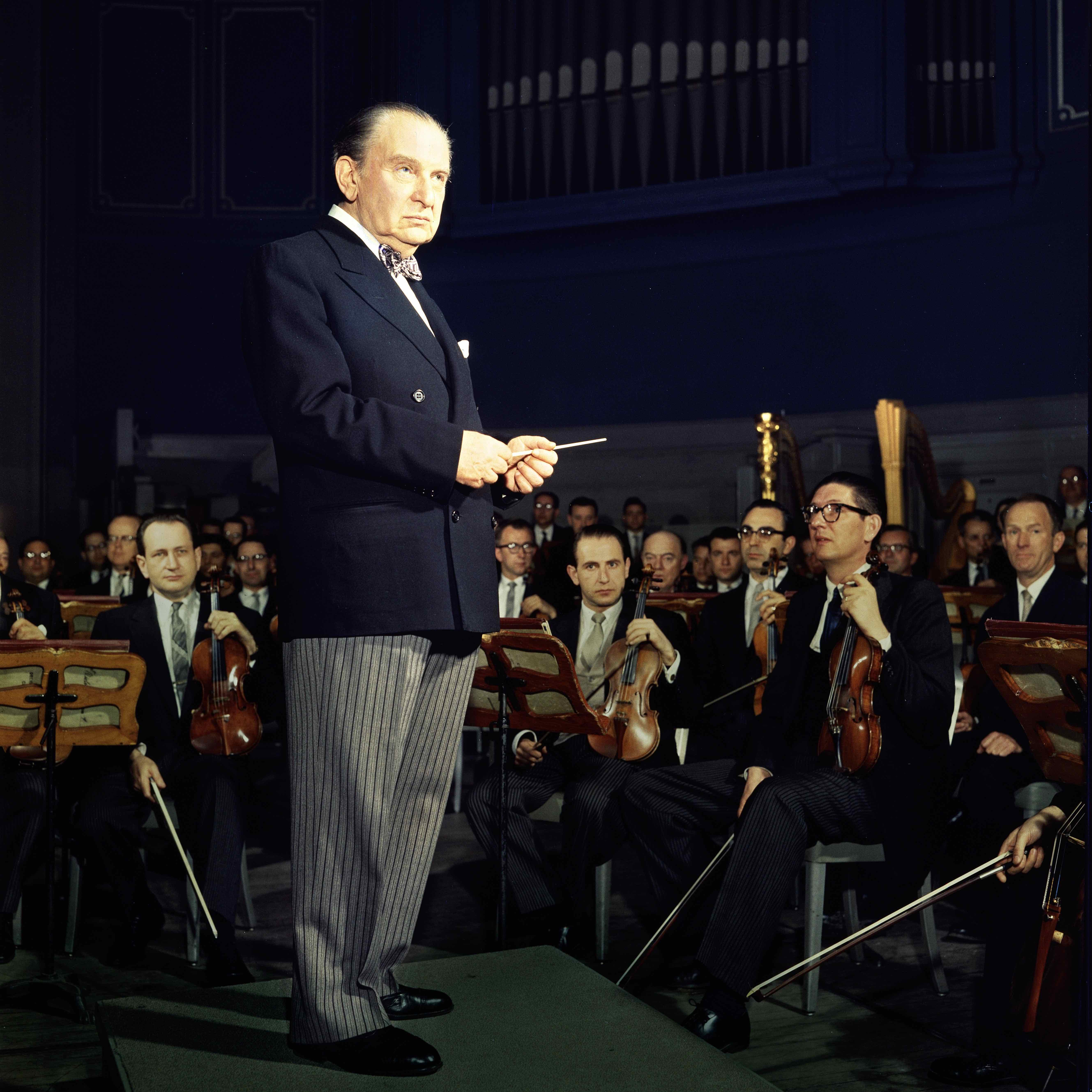 Dr. Fritz Reiner with the Chicago Symphony Orchestra
In today’s orchestral world, the music director is not an absolute dictator. They do wield power, but that power is checked by both the administrative board, and the musicians committee, and many of these divisions of checks and balances are formally stated in a collective union contract. Auditions are blind, a practice that became widespread in the 1970s, and hired players often receive ‘tenure’ after a two or three year probationary period, making their firing a difficult (but not impossible) process.
None of that existed in 1953, and back then, the music director was responsible for hiring and firing. Reiner made liberal use of his authority to reshape the orchestra to his whim during his roughly 10-year tenure, leading to a strained relationship with the orchestra members who often felt under attack by the maestro. Below is a quote from longtime CSO Tuba player Arnold Jacobs
Reiner did not want any nervous players in his orchestra, fearing that they would jeopardize his concerts. Finding out who these players were was difficult. He felt that all players would become nervous during rehearsal if they were subjected to a certain amount of pressure, and they would begin to react. If they were not able to hold up and produce sounds properly during a rehearsal under pressure, then they would have the same potential to fall apart during a concert. He didn’t want people like that in his orchestra. It was his philosophy to test people occasionally. If he could get them a little unglued and they would fall apart, they belonged in some other orchestra, not his. This was planned on his part. We called him ‘the great leveler’ because you all took turns no matter who you were or how well he liked you, you took your turn regardless.
As a musician, I can’t help but think we live in a better work environment now, but at the same time, listen to the recordings made by the CSO during Kubelik’s tenure (the previous music director) and Reiner’s, and you do hear a drastic reshaping of the orchestra in terms of technical proficiency, it’s simply undeniable. With that in mind, we turn to LSC-1893 and Strauss’s Also Sprach Zarathustra to catch a glimpse into the emerging CSO.
German composer Richard Strauss (1864-1949) wrote the tone poem Also Sprach Zarathustra in 1896 as a musical envisioning of Friedrich Nietzsche’s work of the same name. Strauss had at this point written numerous tone poems, a symphonic compositional genre pioneered by himself and composer Franz Liszt. Strauss was often quoted when referring to this through-composed style that “New music must seek new forms” and the tone poem was an abandonment of the multi-movement sonata form compositions that had dominated the early romantic era.
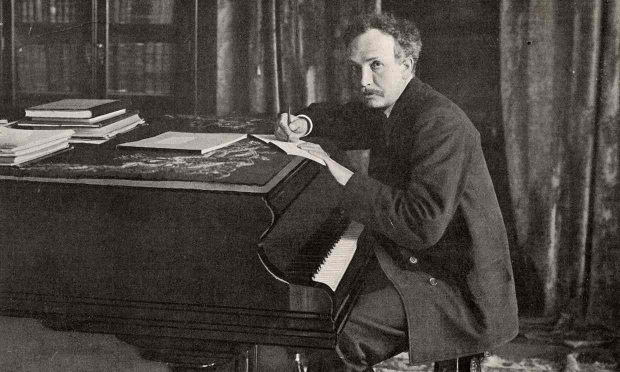 Composer Richard Strauss at the piano
Nietzsche’s work is intellectually dense, but focuses greatly on nature and man’s relation to nature, tied together by fate. The musical work is thus a dense rumination by the composer on Nietzsche’s philosophy, where each of these three philosophical themes have a musical motif. That famous opening trumpet motif, the one made famous by its use in Stanley Kubrick’s 2001 a Space Odyssey, is the nature theme presented with the subtitle ‘Dawn’. What follows are 8 more sections which all flow continuously into one another: Backworldsmen, Great Longing, Joys and Passions, Song of the Grave, Science and Learning, The Convalescent, Dance Song, and Song of the Nightwanderer.
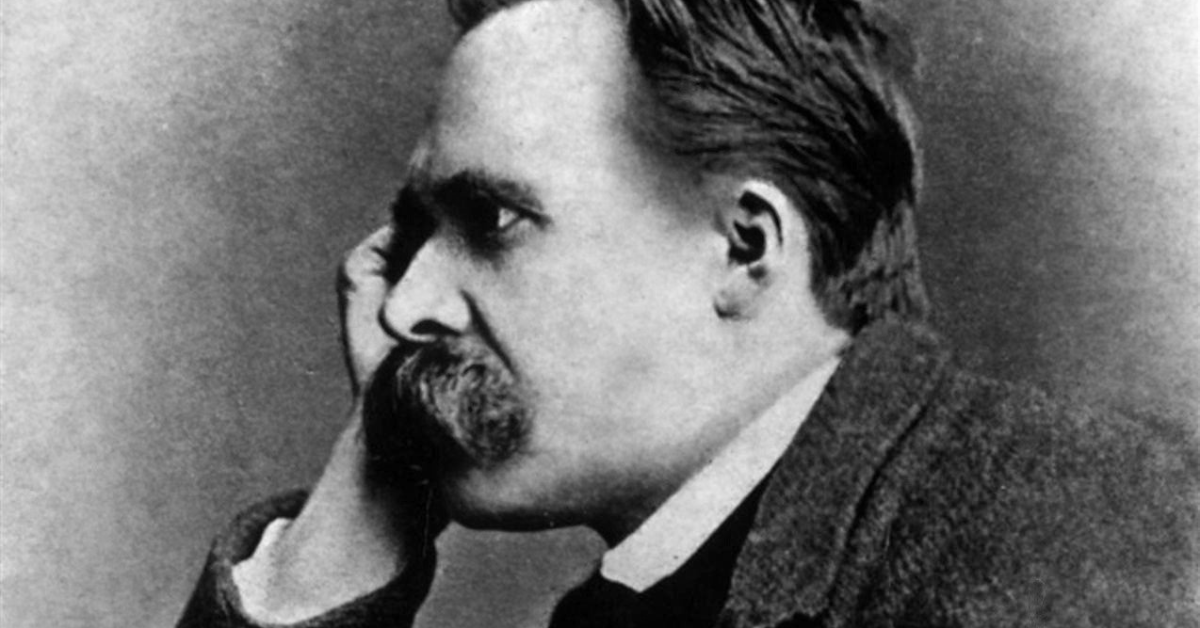 Friedrich Nietzsche's work inspired Strauss to compose a programmatic tone poem
Reiner was never considered much of an expressive romantic conductor in a way perhaps Bernstein was, but this work really does require an extroverted emotional engagement and the Hungarian maestro delivers the goods on this outing. In fact for me there’s no other recording that really matches this performance although there are some that come close musically such as Zubin Mehta’s 1968 outing on Decca, or Karl Böhm’s 1959 recording on DG (here’s hoping this one gets the Emil Berliner treatment at some point). Reiner was a bit of a Strauss aficionado and had a great deal of experience working with the composer on his many operas during his tenure as principal conductor of the Dresden Opera from 1914-1921.
The CSO’s performance is taut and full of that live energy that few recordings have, made outside of this golden era. The 'Dawn' trumpet solo by CSO principal trumpet Bud Herseth is expansive and ominous, while concertmaster John Weicher navigates the numerous solos with both power and sensitivity, his luminous string tone captured brilliantly in this recording, especially in the final moments of the poem where the space of the Orchestra Hall stage is illuminated with pristine clarity.
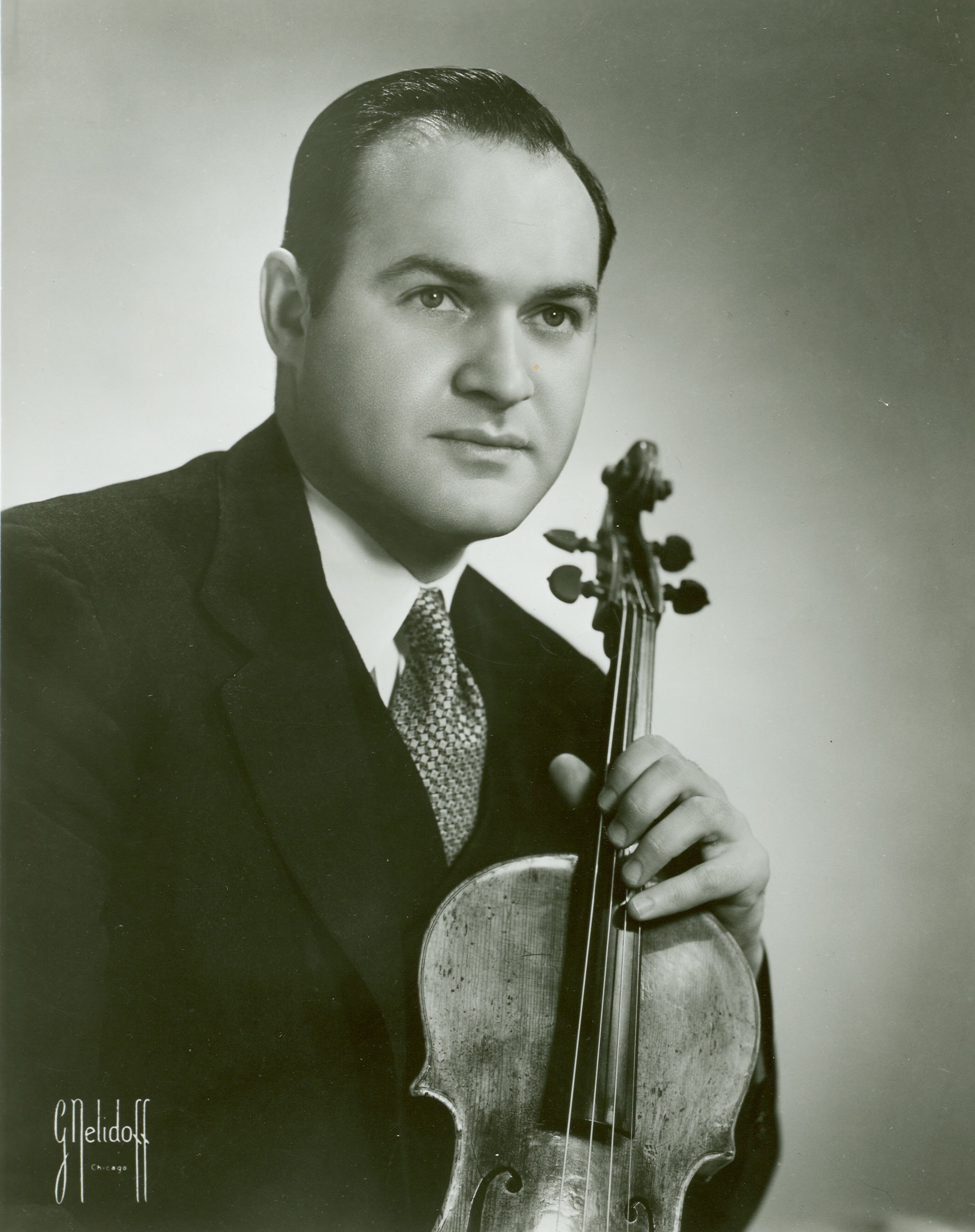 John Weicher, concertmaster of the CSO during Reiner's tenure
The only knock on this performance is the out-of-tune organ, most apparent during the ‘Dawn’ sequence where the organ is a good deal flatter than the orchestra. This has been attributed primarily to the cold March Chicago morning, as the organ was situated against an exterior wall. This flaw, which annoys some more than others, was perhaps the reason this title, originally issued in 1960 (RCA had a backlog of stereo recordings to issue once stereo LPs became available in 1958) was replaced in the catalog by the 3-track LSC-2609 in 1962, a recording that while excellent, never quite achieved the musical or sonic magic of LSC-1806.
I’ve been enamored with this recording ever since hearing Ryan Smith’s 2014 cut over a decade ago. I’ve never heard an original shaded dog as the TAS list collectors market of the 80s and 90s snapped most of them up. Bernie cut this for Classic Records at both 33 and 45rpm, and while I usually prefer Ryan K. Smith’s later 33rpm cuts, Bernie’s 45 here is just at another level of transparency and power. The organ on the opening, for those with full-range systems, will really come across with power and physical vibrancy in a way that the 33rpm format just struggles with. But it's the intimate moments of string lushness and transparency, particularly during the swells and hairpin dynamics, that will sell you on the benefits of this 45. Listening to Smith's excellent cut, there is some of the tonal balance that I always liked about his Living Stereo work over Bernie's 33's (although I haven't heard the Classic 33 of this particular title), but the string tone and transparency on this 45 is just at another level.
There are some downsides to listening to a continuously-flowing piece like this at 45rpm. There aren’t really any natural breaks in the music so fade-ins and outs are done, with some of the music repeating when you flip sides. Also, at around 32 minutes total, that means each side is fairly short, about 8 minutes per side on average.
If you can deal with those unique parameters, you will be rewarded with a window into one of the most legendary recording sessions ever conducted, with a level of fidelity that certainly unseats any 33rpm version. Add to this the fact that the original issue of this cut by Classic records is expensive, cumbersome, and of varying pressing quality due to the issues inherent with pressing single-sided LPs, and you have a good case for this new 2LP package.
Audiophile vinyl pressings have come a ways in the last 30 years, and QRP has done an excellent job getting these three-decade old cuts onto flat, centered, quiet vinyl. The many RTI-pressed Classic Records Living Stereos I have were never particularly noisy, but many have dishing and even more have centering issues that cause some pitch problems with classical music. I haven’t had that problem with any QRP-pressed classical LP and this pressing of Also Sprach is no exception. Given the quiet moments demanded within this score, that’s a real sonic blessing.
I’m still unsure if every great Living Stereo title needs to be heard at 45, a hypothesis I plan to test over the course of this new series. However, for this one, you simply have to hear the magic that went into these tapes 72 years ago and nothing else I’ve heard gets you as close as this new Analogue Productions reissue (and I highly doubt any future release ever will). If you want to hear what the Living Stereo sound is all about, this is your time machine and the tickets are reasonable.