

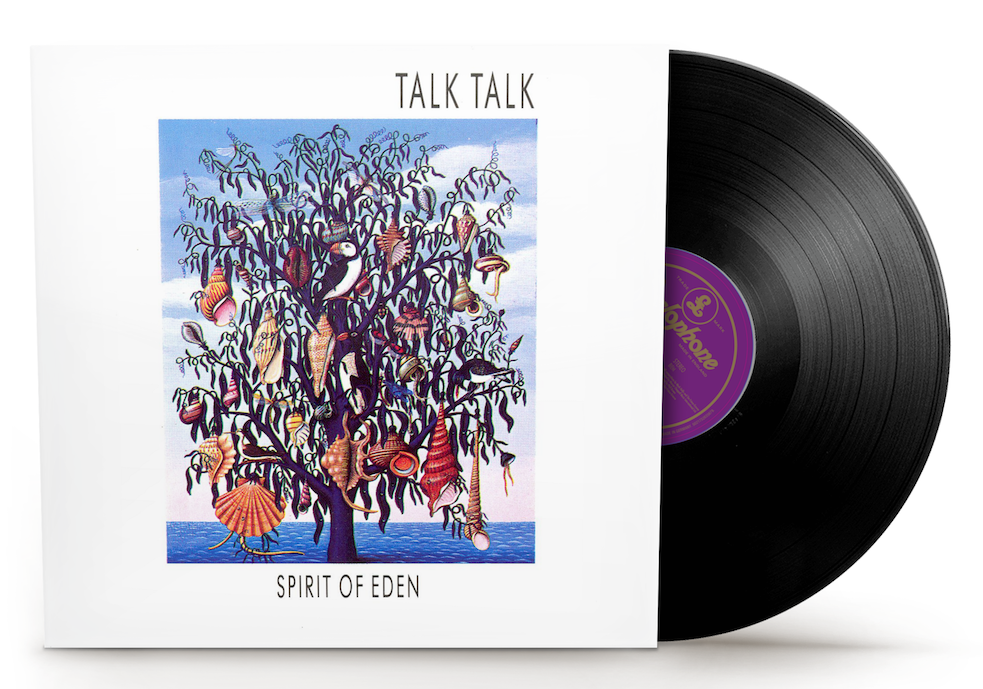
The Latest "Spirit of Eden" Reissue Splits the Sonic Difference Between the 1988 DMM Edition and the 2012+DVD Reissue
ethereal, ambient, abstract masterpiece is a deep sonic treat
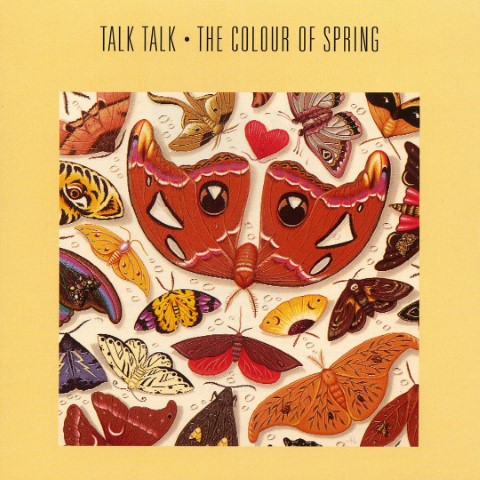
It's been almost forty years since the late summer of 1988 release of this ethereal, ambient/experimental studio creation—the follow up to Talk Talk's two million seller The Colour of Spring—that flopped commercially but resulted in an almost cult-like following of fans who for decades have spread the word about its intense, almost hypnotically musical powers.
The Colour of Spring's commercial success gave the group's leader Mark Hollis the necessary financial resources to fulfill his musical vision steeped in impressionist classical music and avant-garde jazz. Hollis, a fan of Gil Evans and Miles Davis, and producer Tim Friese-Greene holed up in London's Wessex Studio with engineer Phill Brown as their willing accomplice, working twelve hour days in darkness for more than a year overdubbing and experimenting with musical sound collages until their creation had been completed.
The process involved inviting musicians into the darkness to play along with the tracks fed into their headphones, no advance prep provided. More than a dozen took part, among them familiar names like bassist Danny Thompson, guitarist Robbie McIntosh, trumpeter Henry Lowther, Andrew Marriner (London Symphony Orchestra principal clarinetist and son of Sir Neville Marinner, founder of the Academy of Saint Martin in the Fields) and violinist Nigel Kennedy.
Once the recordings had been completed, Hollis and Friese-Greene worked over the six pieces they'd written, and created this "deep listening" creation, that's proven its worth through the decades and seems to now be reaching a new peak acceptance, in great part thanks to the vinyl resurgence that's recharged interest in concentrated listening. It's listed as a best seller this week on Discogs. Hollis, who quit performing to devote time to his family, didn't live long enough to see this. He died of cancer in 2019 at age 64.
I've never heard an original E.M.I. Parlophone U.K. 1988 original pressing, and once hipped to this album had trouble finding the contiguous European Record Industry DMM edition (7-466977-1), which at the time was "pricey", but I finally located a clean copy for around $10.00 at a Stockholm record store that wasn't aware of its collectibility (score!).
In 2012 Parlophone issued an anonymously mastered 180g edition that included an audio DVD containing a bonus track ("John Cope") transferred from the 96/24 master, itself transferred from the original analogue stereo masters at 96khz/24bit. According to a Discogs note: "the audio used to create the final mix was bounced down from 2" reel-to-reel 24-track tapes, to a Mitsubishi ProDigi 32-track digital recorder which only recorded at a sampling rate of 44.1khz. This means there is no content above 22khz on the original digital recordings and therefore all mixes / copies that followed would also be lacking in content above 22khz."
The original DMM edition has a laid back, properly ethereal sonic signature appropriate for the music along with a vivid sense of depth. The 2012 cut to lacquer, is a loser: dynamically compressed and lacking in character appropriate to the music. Kind of ironic that the DMM and lacquer cuts sound opposite of the DMM/lacquer clichés. However, it does score points for its immediacy. It's too "in your face" but makes clear that the original DMM is too laid back.
Matt Colton's Metropolis lacquer cut, with input from Mark Hollis's son Charlie and drummer Lee Harris is the best yet and isn't likely to be bettered. It has the depth and delicacy of the DMM cut but wider dynamic range and greater transparency. You can see further into the mix and the acoustic instruments have rich timbral colors. So combine greater dynamic contrasts, richer instrumental timbres and improved spatiality and they add up to the best edition yet. You'd have to remix from the 2 inch analog tapes to improve it but that's never going to happen!
Colton cut it 1/2 speed mastered. The Obi strip says "This record was cut on an extensively modified Neumann VMS-80 consisting of an improved SX74 cutterhead with ceramic feedback coils and new magnetics, and an upgraded pitch control system. Making use of custom made current amplifiers with transistors built to our specifications, paired with voltage amplifiers from Crispin Murray. Fed by new filtering and correction circuitry created by James Keywords."
Not since the early days of stereo records in the 1950s (and perhaps on a Steely Dan record or two) has this kind of mastering detail appeared on a vinyl record. Pinch me.
Phill Brown Interview:






















.png)