
The Sound from The Heart of Gothenburg, One Last Time
In Memory of Tomas Lindberg
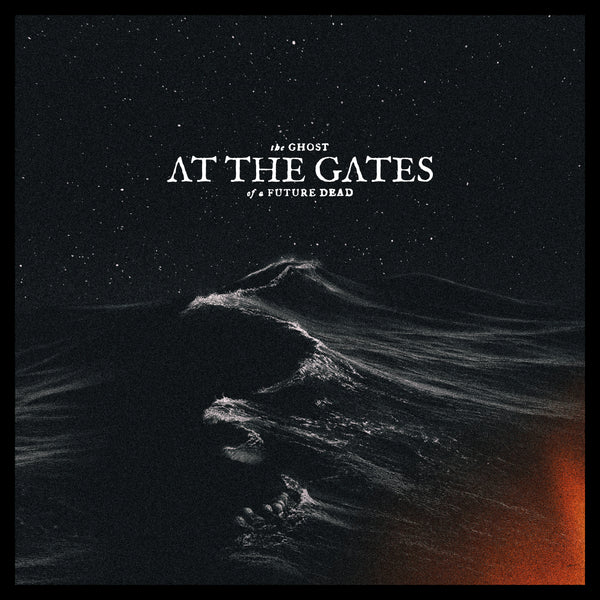
While I originally hadn’t planned to return to the Gothenburg Sound so soon, I cannot ignore the release of The Ghost of a Future Dead, which (probably) will be the last At the Gates album. Furthermore, it is important to me to introduce people to the legacy of frontman Tomas Lindberg, who passed away due to cancer in September 2025 and whose vocal contribution on this album was his last work.
At The Gates was originally founded in 1990. Together with In Flames and Dark Tranquillity, the band forms the triumvirate of Melodic Death Metal and the Gothenburg Sound. Their album Slaughter of the Soul (1995) was the record that popularized the genre, extending it beyond the Gothenburg Underground of the 90s and being one of the first commercial successes coming out. One would’ve thought this would make them one of the frontrunners in Swedish Metal music for the years to come, but in 1996, the band disbanded.
In 2008, At the Gates got back together for some farewell shows that weren’t played after their original breakup, but the band kept going after that and in 2014 a new album was released. Three records later, we arrive in 2026, at what will be the last album in the legacy of At the Gates. The remaining members have expressed uncertainty that the band will continue without vocalist Tomas Lindberg. So, let’s have a look at the last flare of one of the most influential metal bands out of the Nordic countries.
This album is clearly going back to the roots of At the Gates and pays homage to the Slaughter of the Soul days of the band. While listening to the record, I was often reminded of this past record. In contrast to Slaughter of the Soul, these tracks seem more cleanly produced. The beginning of the record sets the heavy tone that the Gothenburg Sound is known for. On top of that, At the Gates was always struck as the harshest of Melodic Death Metal pioneers, a trend they continue on this record. Contrary to In Flames and Dark Tranquillity, At the Gates has always had some minor influence from probably the most dissonant (melodically speaking) subgenre in Metal music, Black Metal.
The lineup on this album Is Tomas Lindberg (vocals), Anders Björler (Guitar), Jonas Björler (Bass), Martin Larsson (Guitar), Adrian Erlandsson (Drums). All Lyrics were written by Tomas Lindberg. The music was composed by Anders Björler, Jonas Björler and Tomas Lindberg.
It was planned to name the album The Dissonant Void but on Tomas Lindberg’s request, the title was changed to what we know today: The Ghost of a Future Dead. In hindsight due to Lindberg’s passing, this sets the tone for a listening session with this album: heavy sadness and the last fire burning in an artist that delivers one of the strongest vocal performances of his career, even though only his demo recordings were used for the album.
The lyrics are mainly written in English while the song "Det Oerhörda" (roughly translating to The Unthinkable or The Unheard-Of) is completely in Swedish. In addition the instrumental track "Förgängligheten" (translating to Transience) is named in Swedish. "Det Oerhörda" was originally intended to be translated into English, but the band decided to keep it in Swedish, which I believe was an excellent decision, since it gives the song a different feel compared to the rest of the album. The topics explored revolve mainly around the abysses of humanity and one’s own mind, which is a common trope within the Gothenburg Sound. Lyrics and music go well together in a melodical sense. "Förgangligheten" is probably the biggest outlier on the entire record as it is an instrumental and completely deviates from the other tracks due to its slower and very melodical nature. Probably the song non-metal people will like the most.
Overall, the sound is hardly distinguishable from streaming the album at a higher bitrate. For this album, the analog “warmth” I sometimes find in vinyl records where the source is still purely digital, is unfortunately completely lacking. But this is rather the norm than the exception in my view and something that comes from being interested in music that is rarely produced in an analog way these days. Nonetheless, the album sounds okay for a digital recording but falls short in going beyond its source in comparison with other records I’ve listened to from the Melodic Death Metal world.
The record comes in a 180g pressing and with a normal cover. Furthermore, a small two-page booklet is included that contains all the lyrics. At first, I was slightly confused by the 180 grams label since the record felt quite light in my hand compared to other 180 grams pressings I own. At first, I thought this was purely personal perception, but in the I put the record on a scale. And indeed, the vinyl itself weighs only 170 grams. In order to make sure my scale wasn’t broken, I put another 180g vinyl on it, which measured exactly 180 grams, thus confirming the previous measurement. Personally, I do not care whether a record is 140 grams or 180 grams, as, in my view, it doesn’t matter sonically. Nevertheless, in line with selling what the cover is advertising, this is not okay. Ignoring the weight issue for a moment, the overall production quality of the vinyl is good. There is no noticeable warping of the record or other imperfections.
In conclusion, At the Gates has delivered a very enjoyable listening experience from the musical side of things. The album is almost always energetic and has a high tempo. The only exception here is the aforementioned track "Förgängligheten", which, on the scale of the entire album, feels a bit out of place. Unfortunately, sound-wise the record is lackluster at best, being mediocre and just another digital recording pressed on vinyl. Furthermore, while not impacting the sound quality, the weight issue bears repeating and is not acceptable. If you enjoy putting something on your turntable for the haptic experience or want the last At the Gates album with Tomas Lindberg as a physical copy, this record is for you. Otherwise, the streaming service of your choice will deliver the same sound quality if you put the resolution high enough, which I think is a shame considering the music on this album is very good and it celebrates the legacy of one of the most important European metal vocalists.