
Antal Doráti’s Monumental Haydn Recordings Return! A Gramophone Classic Revisited - Part 1
How Recording History was Made... Includes a selective discography of Haydn symphony recordings
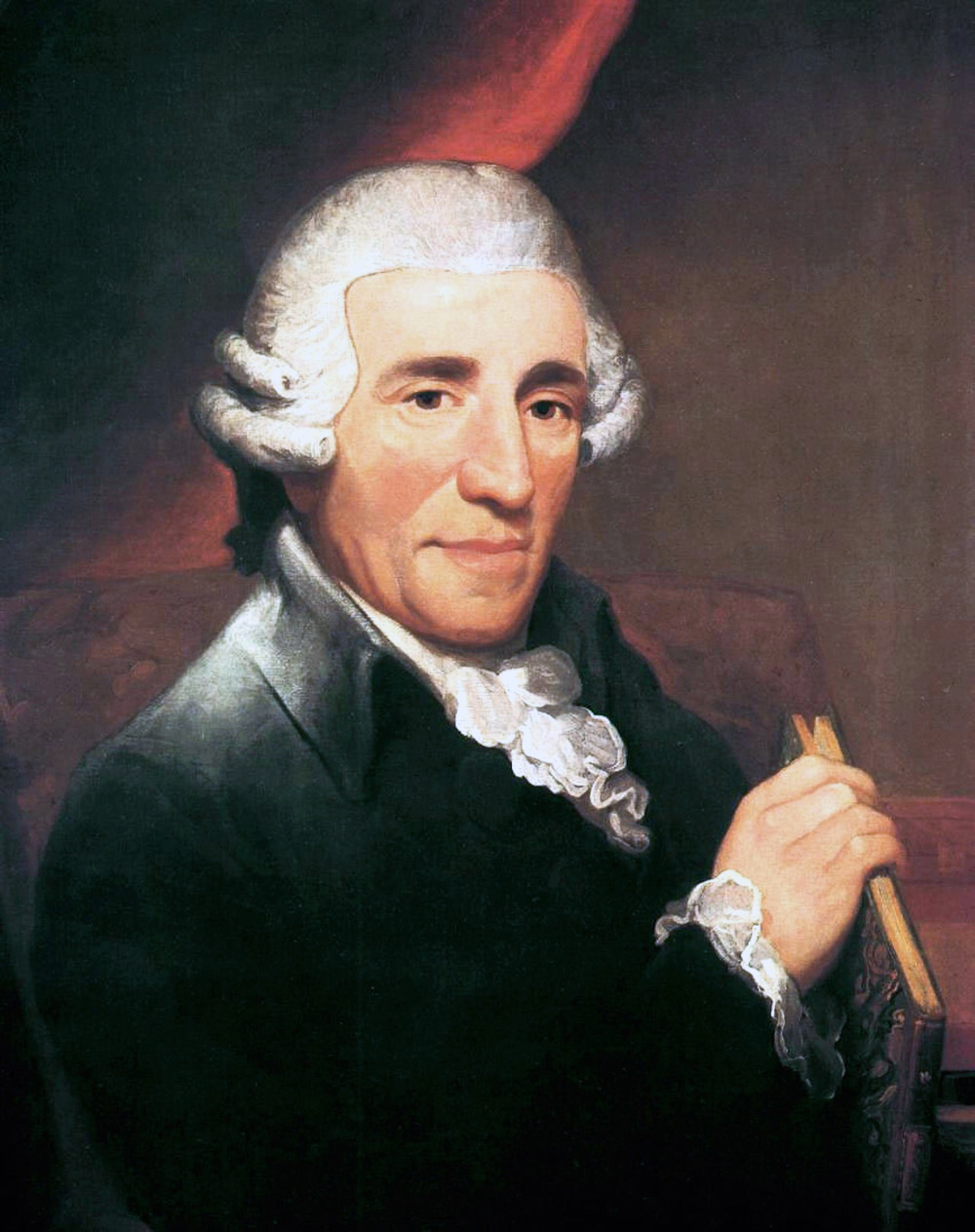
“Since God has given me a cheerful heart, He will forgive me for serving Him cheerfully.”
Franz Joseph Haydn (1732 - 1809)
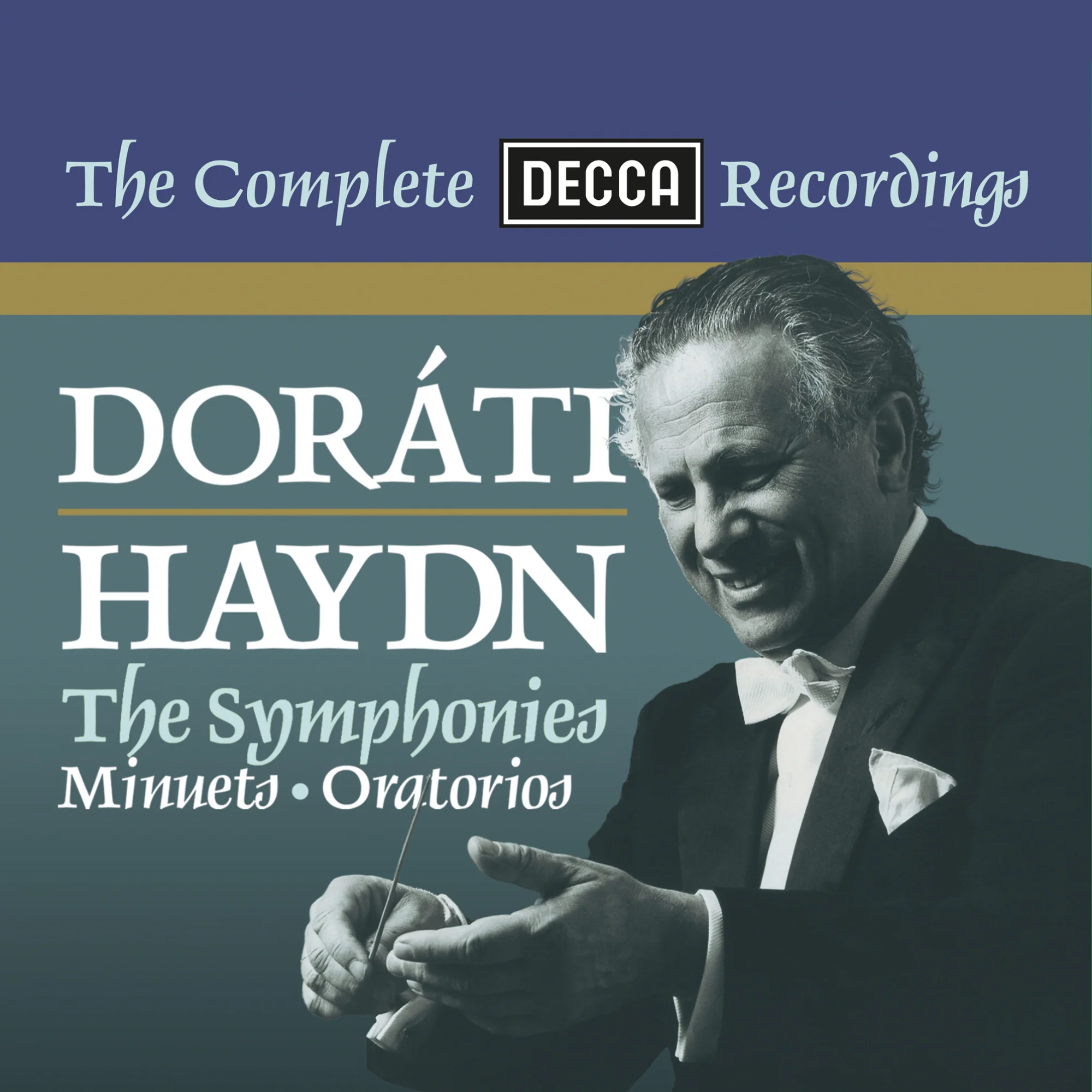
In the annals of giant recording projects, Decca’s cycle of the complete Haydn symphonies (sessions for which were initiated in 1969 and completed in 1972), was and remains one of the most significant. With the success of the massive Solti Wagner Ring cycle - a commercial and critical smash in the 1960s - Decca turned to the massive oeuvre of the so-called Father of the Symphony for its next groundbreaking, mega-project.
And mega it was! Released in a series of ten box sets from 1970 to 1974, comprising a total of 46 records, it was supplemented by a 2LP set titled “Appendices”, including various odds and ends, alternate versions of symphonies etc., and then a 2LP set of 24 Minuets.
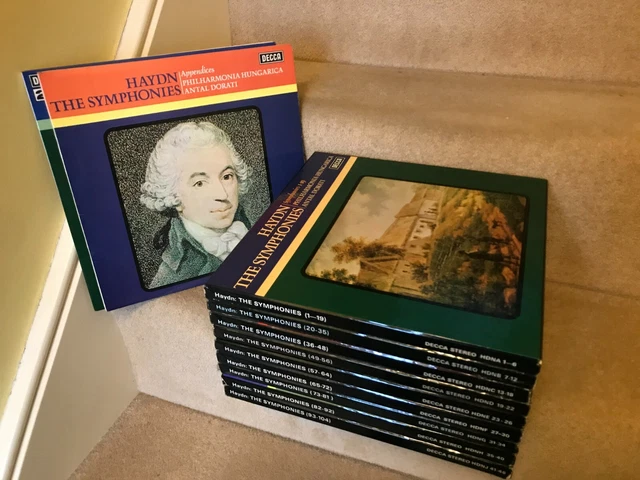
These beautiful box sets, with striking cover artwork from Haydn’s day, included extensive, detailed essays penned by the pioneering Haydn scholar, H.C. Robbins Landon.
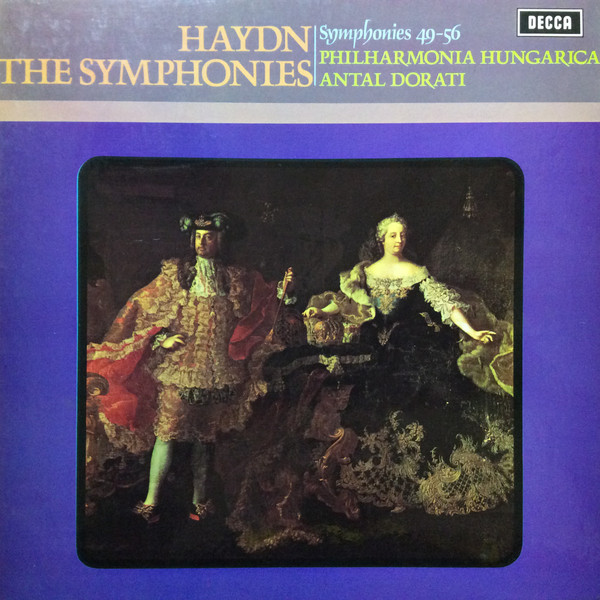 The first box set of the cycle to be released
They still show up regularly in the used bins (their London Records’ equivalents for the US market have less appealing artwork), and no doubt many of you reading this will have owned some or all of these at one time or another.
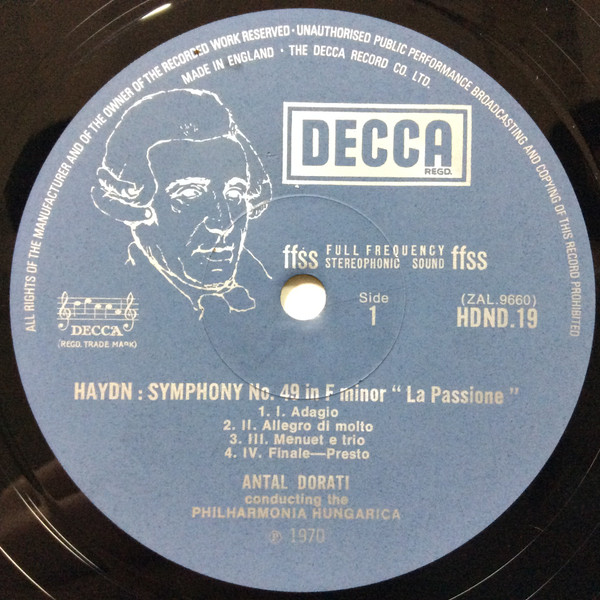 Decca specially redesigned its center record labels for the project to incorporate a drawing of the composer
Musically, the project boasted impeccable credentials, with the Hungarian conductor, Antal Doráti, already a veteran of some of the most desired Mercury Living Presence titles, leading an orchestra of refugees of the Communist take-over of Hungary, the Philharmonia Hungarica. The Hungarian connection was apt: Haydn spent a large portion of his professional life as Kapellmeister to the Esterházy family, one of the most prominent of Austro-Hungarian aristocratic families for many centuries. He supervised the sizable musical establishment the Princes (first Paul Anton, then Nikolaus I) maintained at their various palaces, most notably the newly built Esterháza, deep in the Hungarian countryside (where Haydn frequently complained there was nothing to do besides his musical duties), and the Esterházy Palace in Eisenstadt.
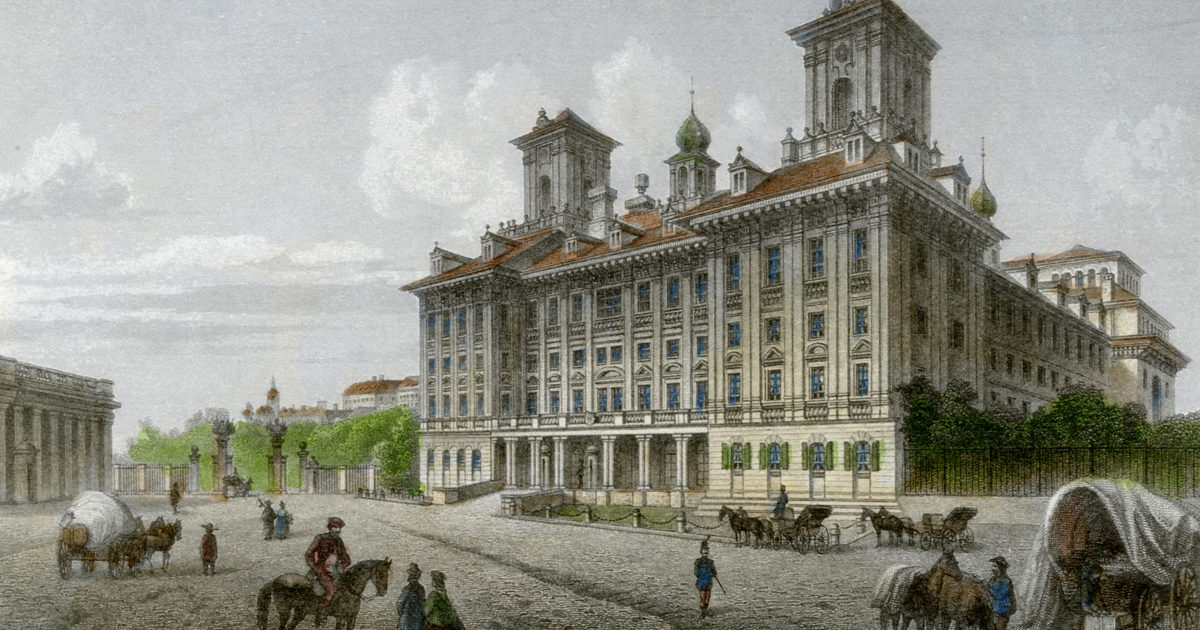 The Esterházy Palace
It was only in later life that Haydn - owing to his considerable international fame - escaped the shackles of aristocratic patronage to travel, and thus was able to compose his famous later sequence of the so-called “London” Symphonies for a brand new adoring public in England.
As Doráti noted, the use of the Philharmonia Hungarica was more than apt: it was “a group not dissimilar in race and temperament to that which played these symphonies under Haydn’s own direction - and I was certain that after the accumulated musical experience of two centuries, it would play them very much better”. Given the amount of dedicated studio hours needed to accomplish the recordings, using any of Doráti’s other busy orchestras - stretching from Minneapolis and Washington to London and Stockholm - would have been impossible. “A special orchestra was needed”, Doráti stated, “special in every way. There was one.”
As Dominic Fyfe notes in his illuminating booklet essay: “The Philharmonia Hungarica was the right orchestra at the right time.”
Incredible to think now - in these straitened times for the classical recording industry - that the Haydn Symphony project was very successful commercially. So Decca embarked on a similar effort to record all the Haydn string quartets (68 of them) with the Aolian String Quartet, the complete piano sonatas (62 of them) with composer/pianist John McCabe, and with Dorati again at the helm added a 2LP volume of Minuets to the Symphony edition.
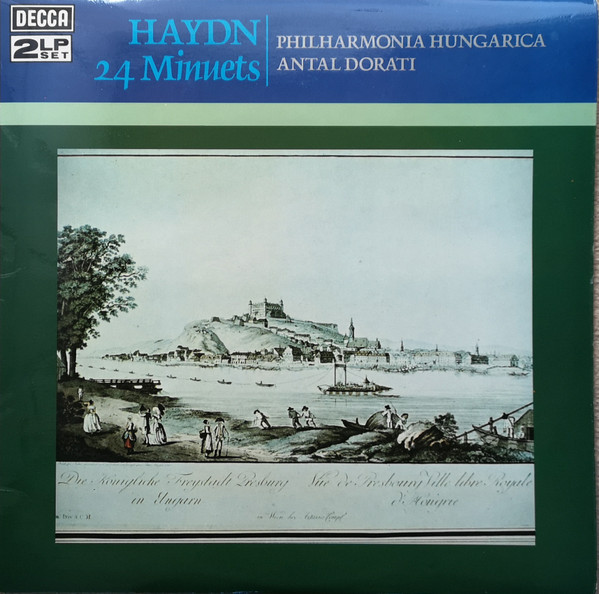
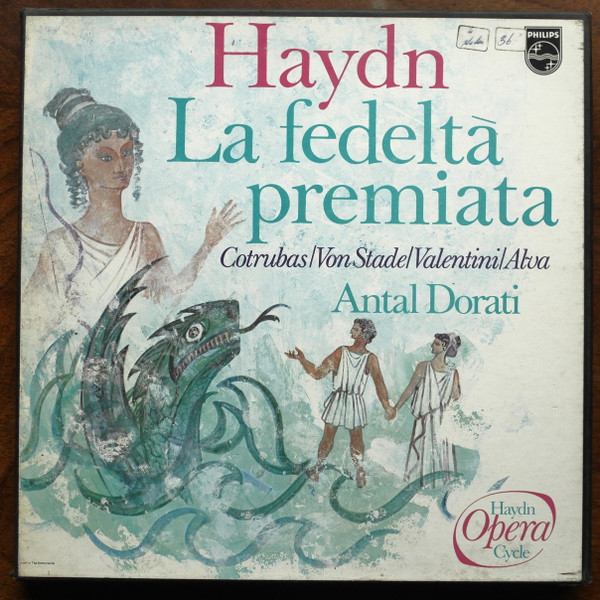
Two years later, in 1976, Decca’s future label-mate at Polygram (Polygram bought Decca in 1980), Philips Classics, initiated a complete Haydn opera cycle with Doráti again at the helm. At the time, no-one was performing these works, and it led to their re-appraisal in the opera house (an important production of La Fedelta Premiata took place at Glyndebourne Festival Opera in 1979, its first fully staged performance since 1787).
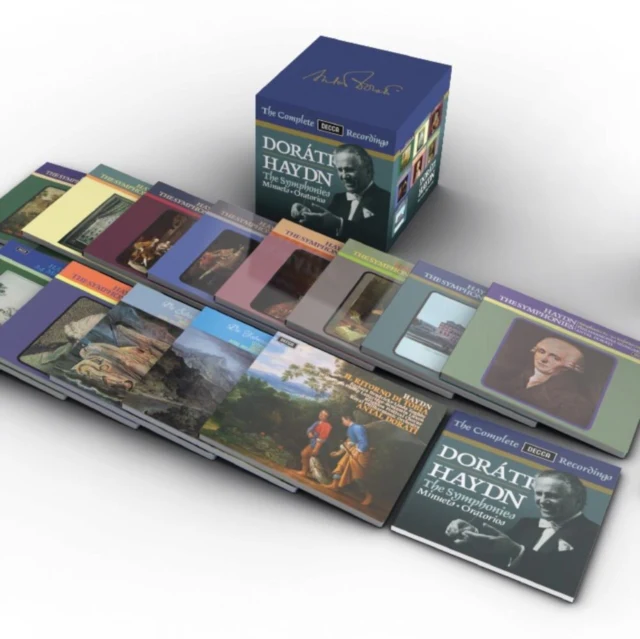
This box set under review gathers together all of Doráti’s symphony cycle with the Philharmonia Hungarica, including the Appendices and Minuets, and adds his later recordings for Decca of the two famous oratorios, The Seasons and The Creation, plus the more obscure Il Ritorno Di Tobia. Everything has been beautifully remastered by Ian Watson at Abbey Road Studios. The accompanying booklet, filled with wonderful photos, comprises that aforementioned excellent essay by Decca Label Head Dominic Fyfe covering the fascinating history of the Philharmonia Hungarica, Doráti, and how these recordings were made.
An important footnote here: Doráti’s was not actually the first complete recorded Haydn symphony cycle, although it was the one most people to this day are aware of. Simultaneous to Decca, the Musical Heritage Society embarked on a cycle with Ernst Märzendorfer conducting the Vienna Chamber Orchestra. Distribution was spotty at best, and the records were not easily available (although I’ve picked up a couple in the used bins over the years). The master tapes are long lost, and a hard-to-find CD box (plus the streaming version) is derived from transfers from vinyl copies. There are those who swear by these performances, as you can read in these excellent articles here and here. I like what I’ve heard, but the sound (especially on the two records I have) is definitely spotty. One for the true Haydn enthusiast methinks.
An even earlier cycle that was abandoned featured Max Goberman conducting the Vienna State Orchestra on Odyssey. Original pressings on CBS vinyl are typically spotty, and were mastered without information from the middle channel of the original 3-track masters; if you must have vinyl, go for the Library of Recorded Masterpieces releases (also notable for liner notes by Robbins Landon). Overall you are probably better off streaming or tracking down the extremely hard-to-find (of course!) CD box set released by Sony in 2015.
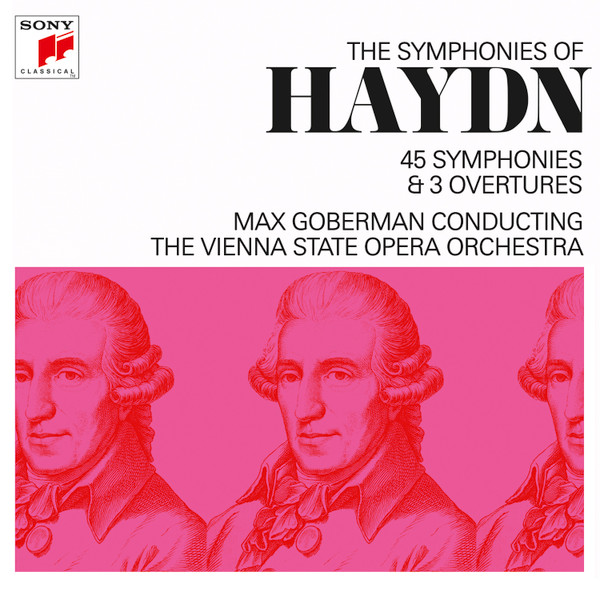
I regret not picking this up when it was more readily available since the performances (and recording) are very engaging. For more on these important recordings read this detailed review which is rightly enthusiastic, although it also rightly laments the fact that the repeats (which were recorded but deleted to fit onto LP sides) were not reinstated for the digital reissue.
Any kind of CD edition of the complete Doráti Symphony cycle has long been out of print, so this is a set that collectors have been awaiting avidly for years. They will not be disappointed. Voluminous pre-orders - plus some technical problems - resulted in the box being delayed and sold out everywhere, but now it is newly available once more. One hopes, and reasonably expects, that Decca will keep the set in print. It is a benchmark achievement, as fresh sounding today as when it was first released. It remains ground zero for any consideration of Haydn’s foundational body of 104 symphonies, works which, for this listener at least, and I imagine for many of you reading this, remain as beguiling and engaging as any in the symphonic literature.
But - for me - ’twas not always thus…
WHY HAYDN?
I think I was not alone growing up in not “getting” Haydn. My musical loves tended towards a mix of Beethoven, the Romantics, 20th century, and an increasingly serious exploration of Baroque and earlier music. I remained cool to Mozart (apart from the operas), and disengaged with Haydn. I played a few of the string quartets, and found them nice enough; in harmony and counterpoint class, completing a Haydn quartet was a regular chore. Hardly a way to ingratiate a composer to young ears. We toiled our way through one of the “London” symphonies in my school orchestra, completely unable to find the magic. I heard The Creation in concert and it remained a bit of a slog to get through.
Now as it turned out, my tutor at university - Edward Olleson - was, next to Robbins Landon, one of the foremost experts on Haydn in his day, but his dry-as-dust academic perspective was hardly likely to bring the composer to life for me. Forty plus years on from those long tutorials in his smoke filled attic at the top of the somewhat Dickensian old Music Schools, I wish I could have a chat with him about Haydn over a (hopefully) smoke-free repast.
But ignoring Haydn is simply not possible for any student of classical music. This is neither the time nor the place to get into the musicological weeds, but the reason why Haydn occupies the foundational place that he does in the history of classical music is because he was the person who most completely formalized a new way of structuring compositions with what came to be called sonata form, providing the definitive break with the preceding “Baroque” period (even though elements of Baroque procedures and styles continue to the present day). Sonata form defined the “Classical” period and beyond via its ability to create more intricate and interrelated musical structures in sonatas, symphonies, string quartets, chamber works etc. It offered composers a seemingly infinite way of organizing their musical material so that it could sustain longer and longer works, culminating in the one hour-plus symphonies of Bruckner and Mahler. Haydn directly taught both Mozart and Beethoven, ensuring the adoption and further development of his ideas and methods by later generations; indeed Mozart acknowledged his teacher’s status by referring to him as “Papa Haydn”, and also dedicated his Op. 10 set of six String Quartets to him.
For a long time Haydn remained a composer I admired for qualities I read about in the estimation of others, rather than recognizing in my own. I rarely chose to listen to him. For me, his music “just sat there”.
I do not think I was alone. You only have to peruse some of the things other musicians have said over the years to see that he was often a composer more admired than adored.
Here’s the great Russian pianist Sviatoslav Richter:
“Dear Haydn, how I love you! But other pianists? They're rather lukewarm towards you. Which is a great shame.”
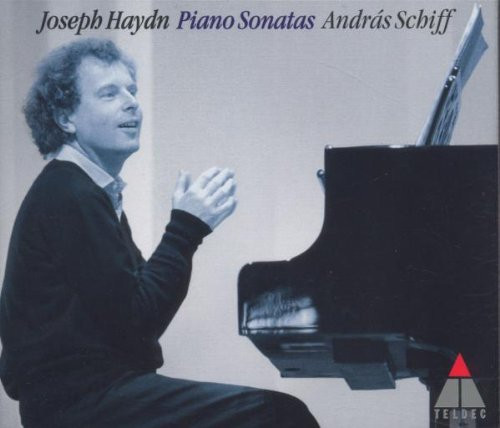 Another piano great, Andras Schiff, has this to say in the liner notes for his first class collection of Haydn sonatas on Teldec:
“Haydn is, together with Schumann, probably the most neglected and misunderstood of the greatest composers. Some might argue with this statement by saying that Haydn's works are frequently performed and that he has long been recognised as the father figure of Viennese Classicism. Papa Haydn has become one of the worst clichés in classical music. It degrades one of history's most innovative composers into a lovable but minor figure.”
Why has the music of Haydn proved to be so elusive to me and others? (It isn’t any more - he’s now one of my absolute favorite composers). I think some of it has to do with his sense of humility, his less obviously assertive personality (at least compared to Mozart and Beethoven). This informs his music in such a way that, while being as self-assured as any, means it wears its genius lightly. It doesn't "hit you in the face". It sidles up to you then lays you out with its witty repartee. And in many of the performances I would hear in my youth, the music’s wit and more anarchic tendencies were buried beneath respectful professionalism that completely missed the ebullience that is the essence of Haydn. Performances and recordings leaned towards stodgy in texture and tempo, under-characterized and merely “respectful”.
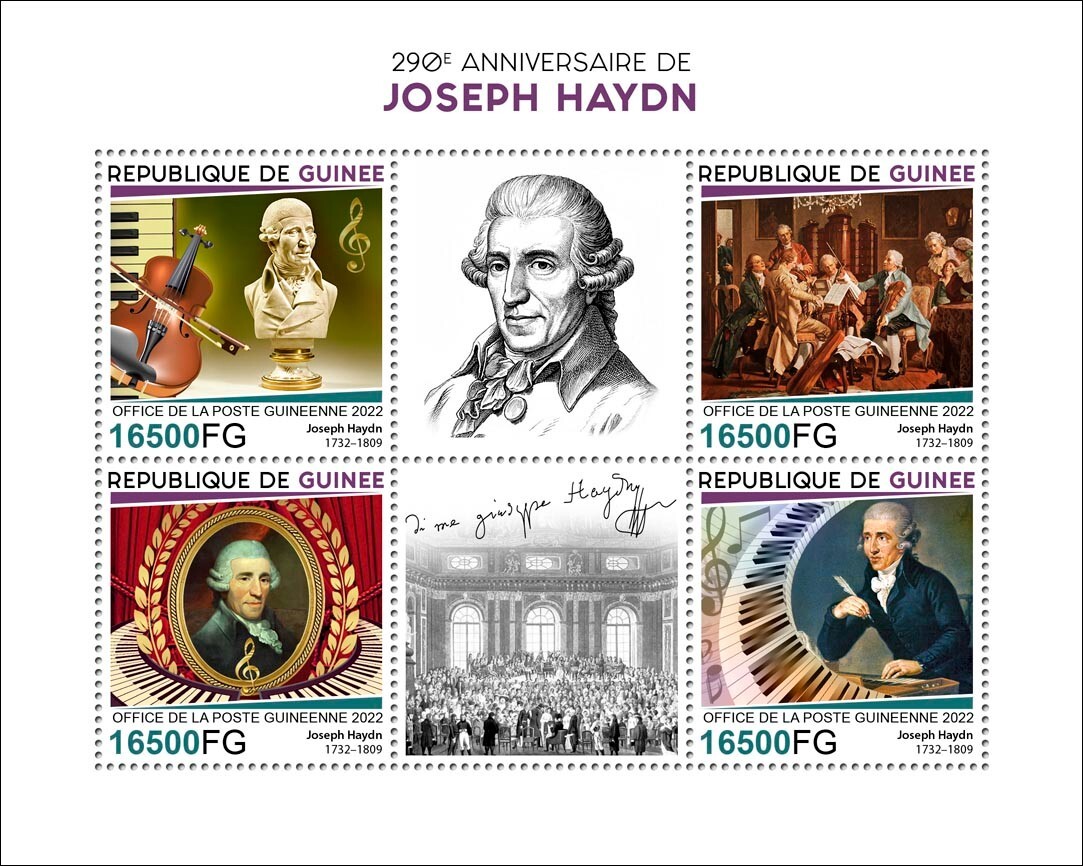 A Series of stamps issued by Guinea to celebrate the composer
Haydn considered himself a working musician above all, not a star in his own right (very different to the prodigal Mozart and the Promethean Beethoven). Definitely someone who spent his long creative life backing into the limelight.
You can get a strong sense of that personality and how the composer felt about his craft in this quote from one of his letters:
“Often, when struggling against obstacles of every sort which oppose my labors: often, when the powers of mind and body weakened, and it was difficult to continue the course I had entered on; – a secret voice whispered to me: "there are so few happy and contented peoples here below; grief and sorrow are always their lot; perhaps your labors will once be a source from which the care-worn, or the man burdened with affairs, can derive a few moments rest and refreshment." This was indeed a powerful motive to press onwards, and this is why I now look back with cheerful satisfaction on the labors expended on this art, to which I have devoted so many long years of uninterrupted effort and exertion.”
Make no mistake. Haydn is the one composer - along with Bach - who most rewards prolonged and intimate exposure and study - in the right kinds of performances. Which is why this box set is so significant and welcome: it is the perfect place to begin or continue your Haydn journey. Likewise it is the perfect set to return to after venturing down other avenues and byways of Haydn recordings. You will instantly recognize the qualities of performance and sound that continue to make this the cycle by which all others are judged. It is a classic of the gramophone for good reason - a remarkable achievement on the part of everyone involved, still sounding as fresh today as it did when it was first released 55 years ago.
To paraphrase Paul Simon: still essential after all these years.
GETTING TO KNOW AND LOVE HAYDN - A JOURNEY AND PARTIAL DISCOGRAPHY
My relationship with Haydn’s music began to change when, in my later teens, I sang with our Chapel Choir one of Haydn’s minor sacred works, the Missa Sancti Nicolai. It’s only about twenty minutes long, but I was surprised by how completely the work’s charm and grace thoroughly ingratiated themselves into my musical memory bank. This was not something that usually happened with me and Haydn.
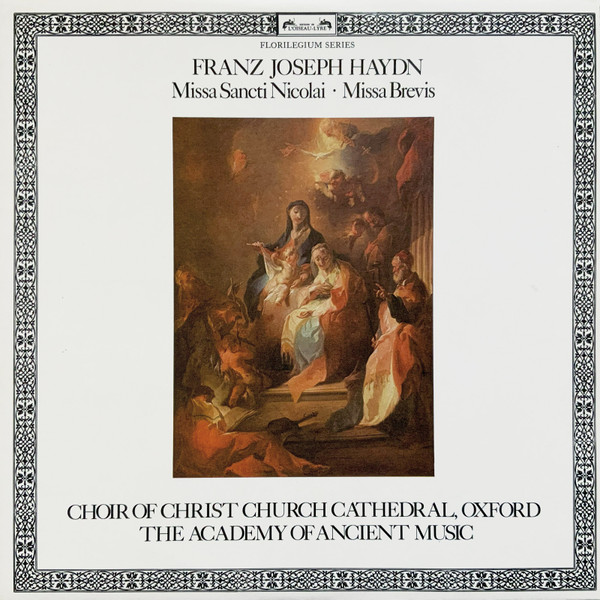
A 1978 recording on period instruments by the Academy of Ancient Music under Christopher Hogwood, with my soon-to-be “local” Christ Church Cathedral Choir, further enamored me to the work, so much so that I then conducted it for a Sung Eucharist service in my College Chapel with a small orchestra and imported boy trebles from my old Prep school where I had begun my own chorister journey. Listen to how Haydn so deftly contrasts the hushed reverence of the choir’s “Sanctus” with the interweaving violin line - like angels extemporizing in the heavens. (Alas the Hogwood version is not available on YouTube, but here is a decent substitute):
In fact it was with the advent of the period instrument movement, and its associated “infection” of mainstream performances of Classical period and earlier music with “Historically Informed Performance (HIP)” practice, that Haydn’s music took on a new lease on life in the 1970s. Gone were the heavy, turgid (and slow) choral society and large orchestral performances; now his music gained light and air. Smaller choirs and orchestras, faster tempi, buoyant rhythms, transparent textures transformed the experience of Haydn’s music.
(But let me add here that I have subsequently rediscovered the considerable virtues of some of those more “old-fashioned” approaches to Haydn - epitomized by Otto Klemperer’s grandiose Haydn symphony recordings for EMI from the 1960s. Unbelievably I have yet to fully investigate the revered Haydn recordings of Thomas Beecham).
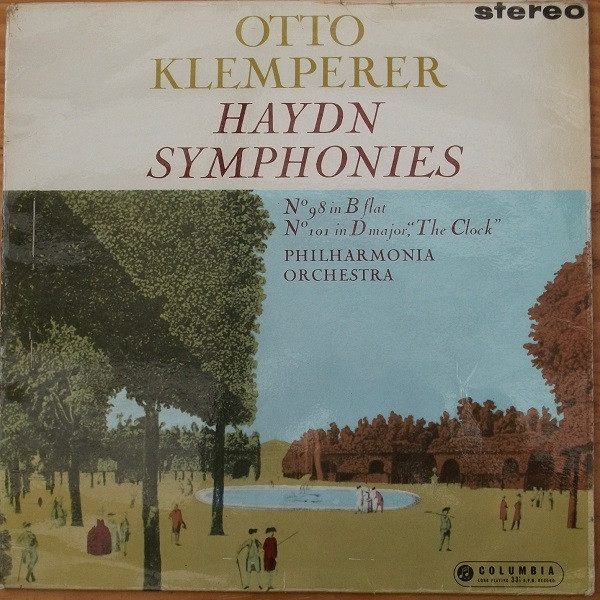 A recent acquisition is an original German pressing of this, pictured here in the 1961 UK original; the German pressing is cut from the same parts, but is not listed on Discogs.
Key to this shift in the performance and perception of Haydn’s music in the 1970s and beyond was the emergence of this Doráti symphony cycle. Performed with a smaller orchestra than, for example, the almost contemporaneous and well admired set of the “London” Symphonies by Eugen Jochum and the London Philharmonic Orchestra for Deutsche Grammophon, which came out in 1973 as part of its massive Symphony Edition, Doráti and his musicians seemed to remove centuries’ worth of heavy varnish from the composer’s canvases. Everything was more transparent, more sprung - enhanced by Decca’s characteristically warm and detailed sound, which managed to keep the listener close to the proceedings without the slight dryness that sometimes afflicted Dorati’s earlier Mercury Living Presence outings. (His Mercury recordings included some earlier Haydn symphony offerings with the London Symphony Orchestra, plus one record with the Philharmonia Hungarica in 1960 - more on these later).
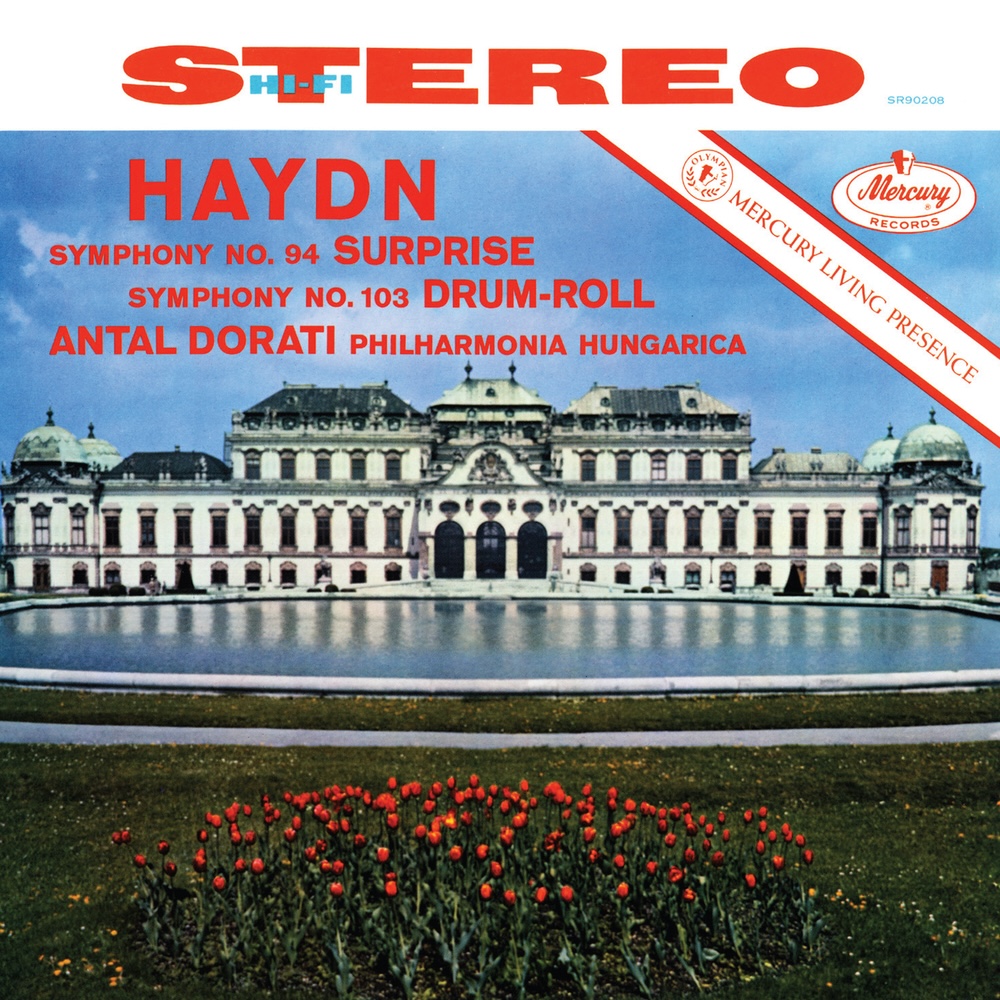
However, I myself was not well-acquainted with the Decca Dorati/Haydn recordings when they first came out, nor even in the immediate decades that followed. Yes, I had borrowed some of the records from the library for auditioning during my music history studies (since they were then the only readily accessible recordings in town for the majority of the lesser-known symphonies), but my later and all-consuming love affair with Haydn’s music was still far in my future.
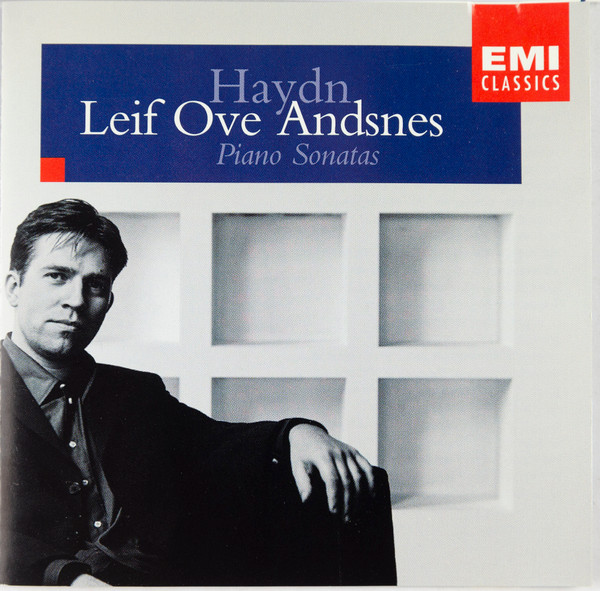
That love affair began in earnest with the release in 1999 and 2000 of Leif Ove Andsnes’s two Haydn discs - one of a selection of piano sonatas…
… and one of the Piano Concertos…
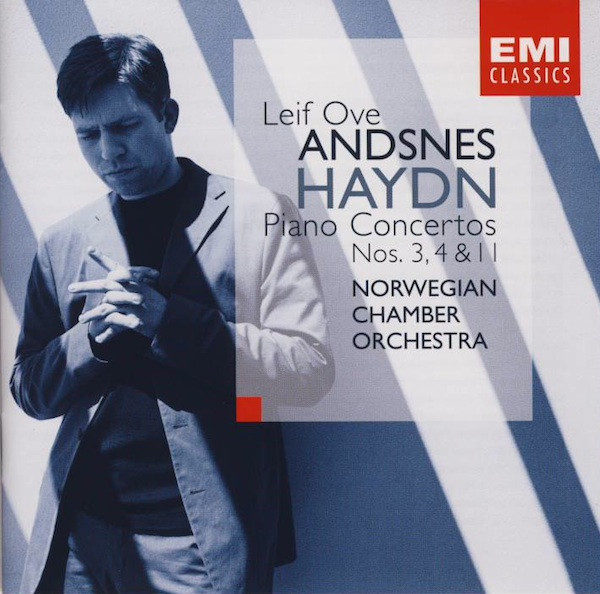
Both transformed my appreciation of Haydn. In the piano concertos in particular Andsnes found a sense of gaiety and bonhomie, of freshness and sentiment, but also of rhythmic drive and buoyancy that I found intoxicating. I couldn’t stop playing these CDs (and after my daughter discovered them she was always requesting them too - they became a weekend staple of the stereo).
Suddenly I could not get enough Haydn. Trips to the Los Angeles used record stores of the time (especially the much-missed Arons, and the famous Record Surplus sales) yielded several sets of the Dorati cycle for no more than $10 apiece, plus single discs from Leonard Bernstein’s “Paris” and “London” symphonies on CBS/Sony. (No Haydn lover should be without Bernstein’s recordings on CBS and DG - an example of one composer seriously digging another and inviting the listener to join the party; more on these in Part 2).
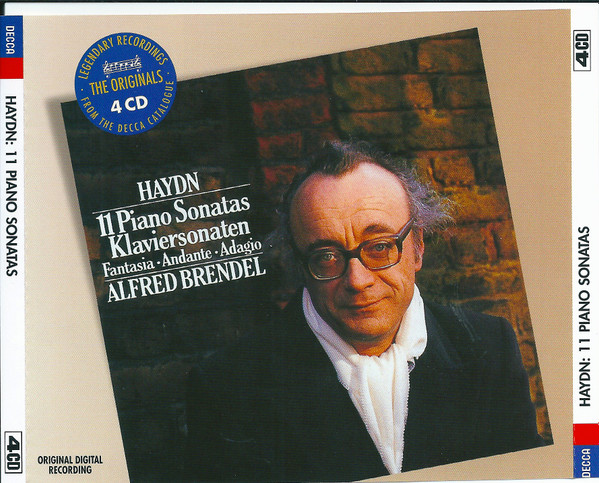
A big “in the wild” score was a complete set of Alfred Brendel’s delicious forays into the piano sonatas on Philips - accounts I adore and would take to a desert island over any Mozart or Beethoven piano sonatas (heresy, I know). (The CD box of these is beautifully done, btw).
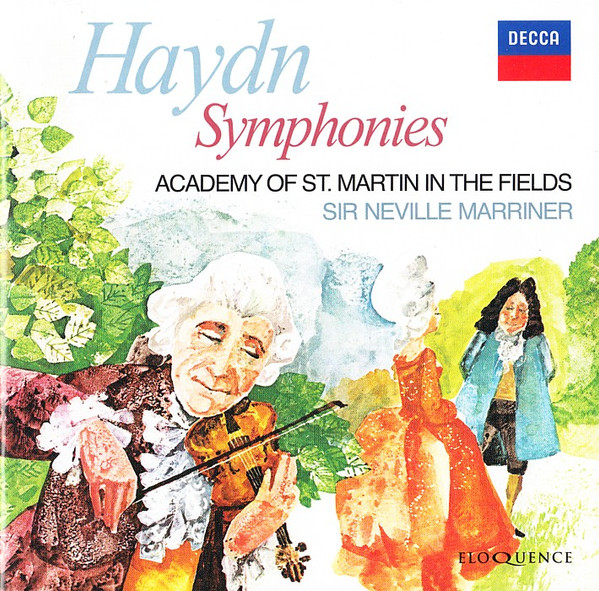
I found some of the Neville Marriner/Academy of St. Martin-in-the-Fields survey of certain of the named and other mainly middle-period symphonies on Philips - delightful supplements to Dorati’s accounts, in very similar sound to Decca’s, though lighter in the bass. (These have recently and most conveniently been boxed up on CD by the as-ever indispensable Eloquence Classics - again with great mastering).
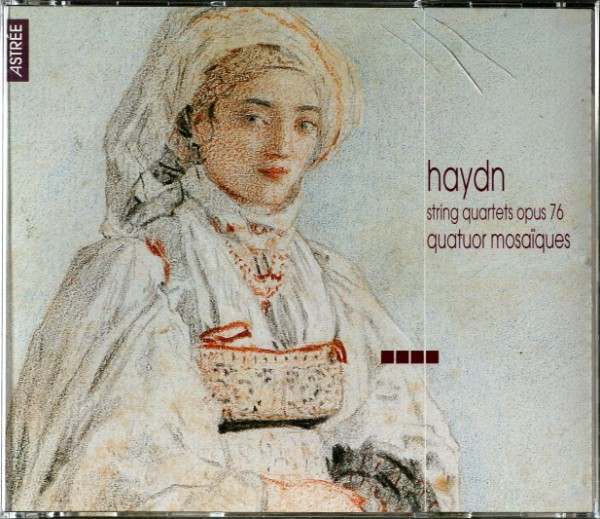
Around the same time I also rediscovered and dived deep into Haydn’s no less important string quartets, and again the way into this music was via period instrument rethinks, in this case provided by the still benchmark accounts by the Quatuor Mosaïques, beautifully recorded (on CD) by Astrée/Naïve - a true audiophile label. (I recommend everything in the Quatuor Mosaïques catalogue if you are not averse to period instruments in the Classical period repertoire).
In the used bins I spied a number of the Aolian Quartet box sets from their complete string quartet survey for Argo (an imprint of Decca) which followed in the wake of the success of the Symphony boxes. They were to be had for relative pennies, so into the collection they went.
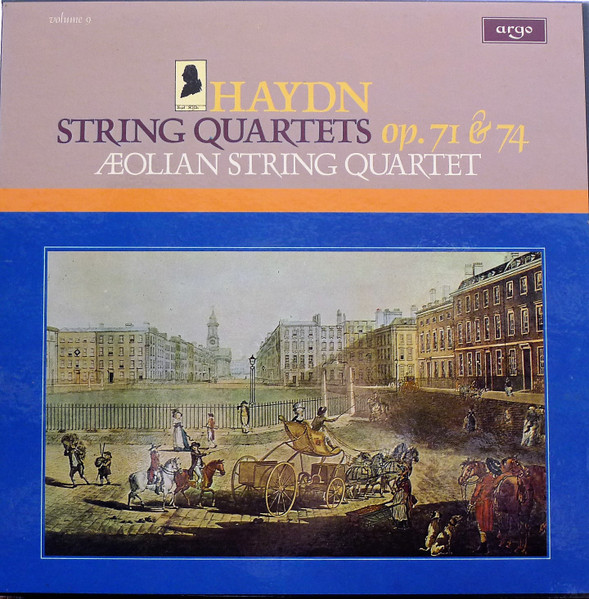
They remain my go-to in this repertoire along with the Quatuor Mosaïques, pace all the recent Haydn surveys by period instrument and non-period instrument ensembles alike, and one or two outstanding single discs on Decca by other ensembles. (Courtesy of my friend Greg at Flowering Spikes Records, I am about to explore some of the early Westminster label Haydn chamber music records, many of which are Monos, but beautifully recorded).
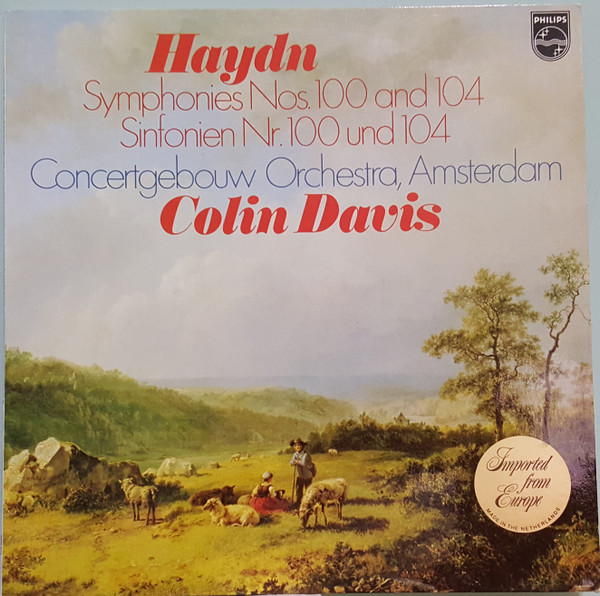
For larger orchestra versions of the “London” Symphonies I already had that DG Jochum/LPO set, but then sought out the equally fine Colin Davis records with the Concertgebouw Amsterdam, again in lovely vintage Philips sound that surpasses DG’s for Jochum (at least until DG decides to do some of these in its Original Source series).
But my biggest discovery was a vinyl set (all original wide-band Decca pressings) of the “Paris” Symphonies - one of Haydn’s first commercial forays outside of his Esterhazy duties - recorded by the legendary team of Ernest Ansermet and his L’Orchestre de la Suisse Romande in Geneva. Collectors highly prize their recordings of French and Russian repertoire, but their Haydn is all but forgotten. Released between 1962 and 1966, these versions offer an interesting comparison to Dorati, both performance and sound-wise. More on this later - I adore them, and consider them profoundly underrated gems of the Ansermet and Haydn discographies.
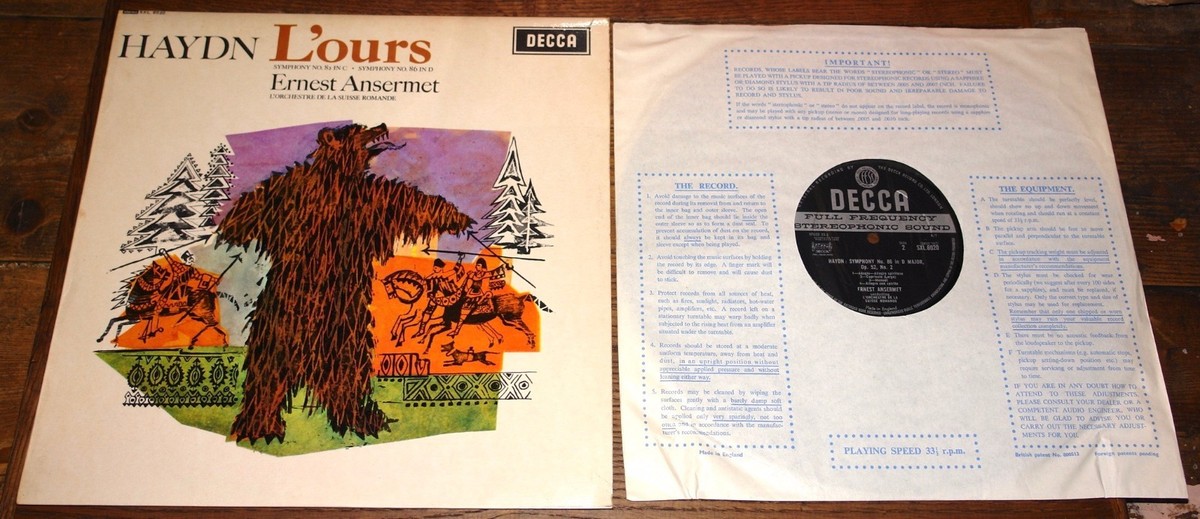 One of Ansermet's series of selected Haydn symphony recordings
In the 1990s period instrument ensembles began to turn to Haydn in a big way. Trevor Pinnock’s CD box of Haydn works, including the early “Sturm und Drang” (“Storm and Stress”) symphonies, so named for their volatile nature, is an essential library addition.
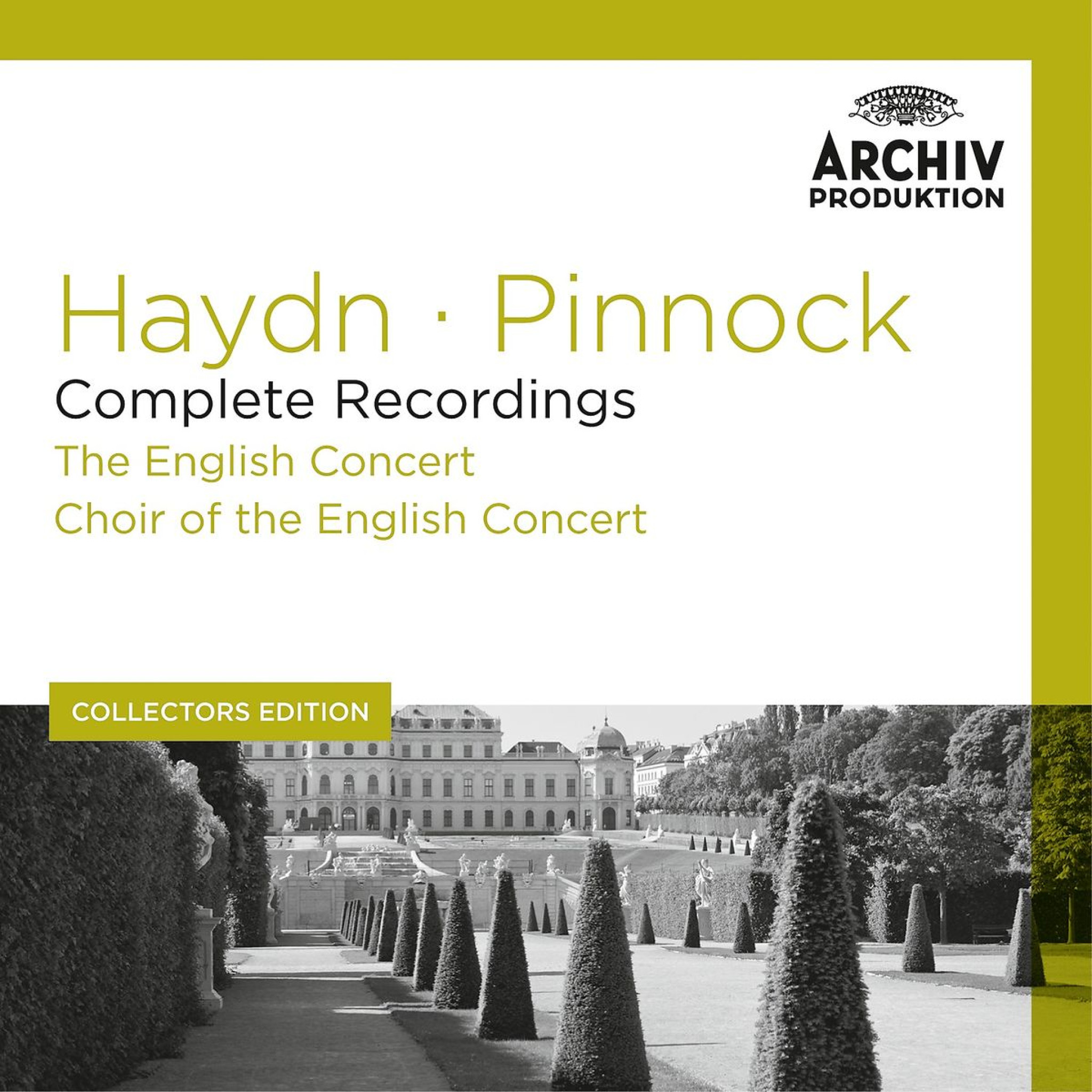
Pinnock's Haydn is generally superior I think to Chris Hogwood’s almost complete symphony cycle on L’Oiseau-Lyre, originally released in a series of box sets clearly emulating the Dorati cycle for a new millennium, complete with extensive historical notes by noted Haydn scholar, James Webster. (Nevertheless I’ve got them all and still listen to them).
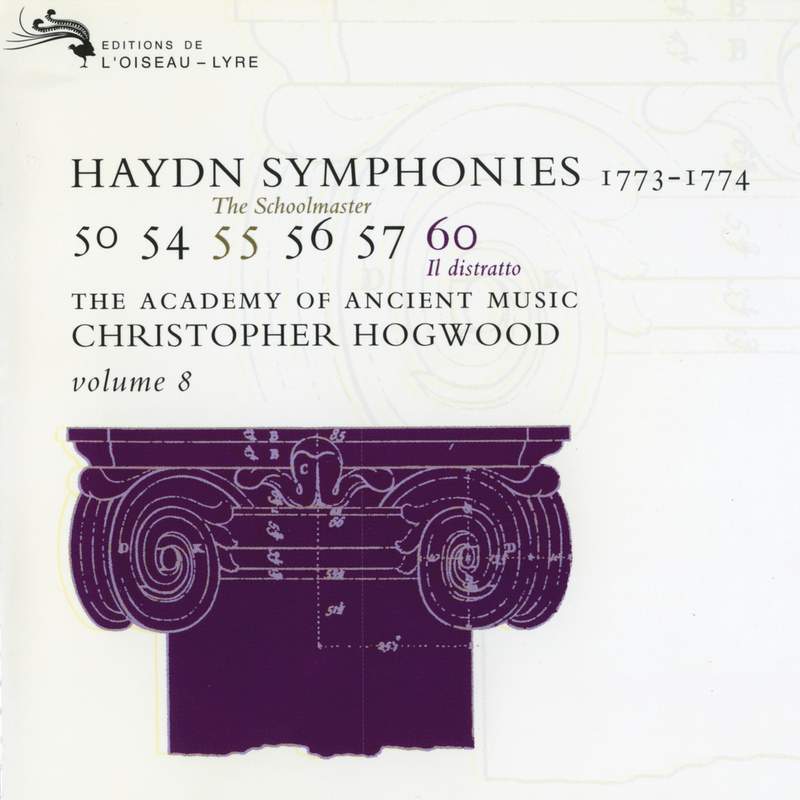 Part of Christopher Hogwood's almost completed Haydn symphony cycle
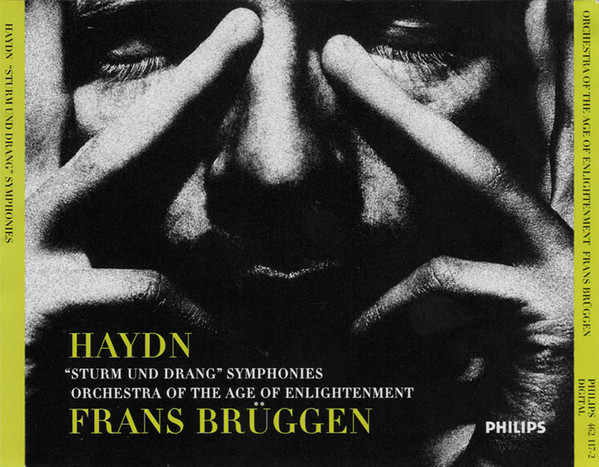
Frans Brüggen also tackled the “Sturm und Drang” cycle with the Orchestra of the 18th Century with vim and vigour - one of the best things he did as a conductor.
For me, one of the most outstanding sets of the later, larger-scaled “London” Symphonies - period instrument or otherwise - came from Marc Minkowski with Les Musiciens de Louvre on Naïve in 2009 - a must-have for the Haydn enthusiast.
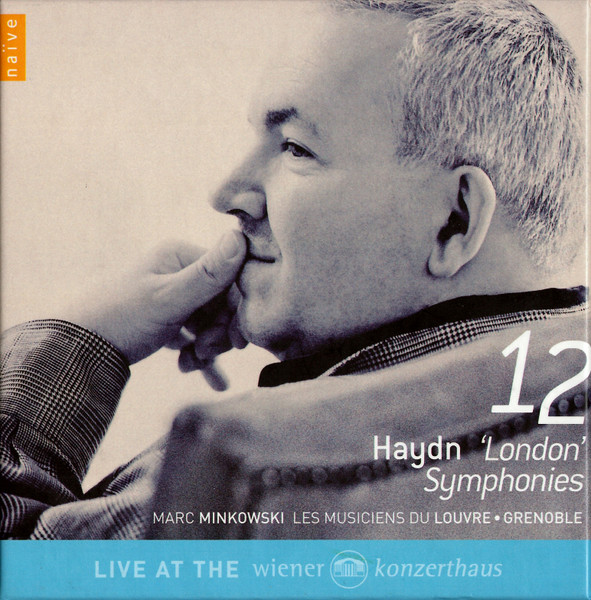
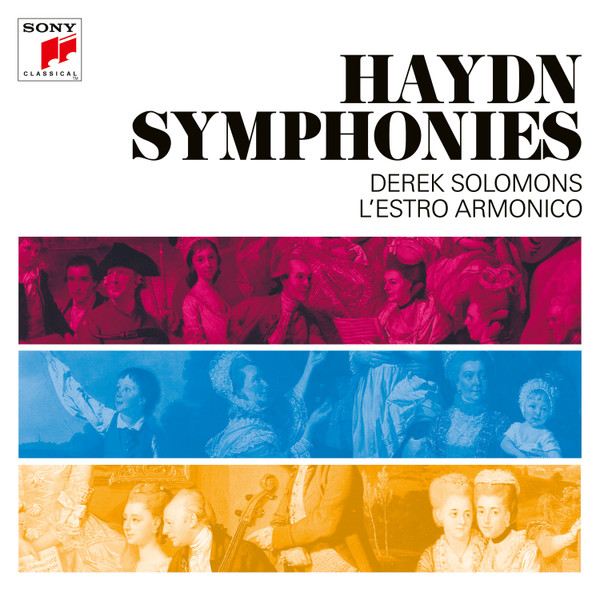
Other intended complete cycles came and floundered, like Roy Goodman on Hyperion, controversially foregrounding harpsichord continuo. (A more discreetly recorded harpsichord is heard with Doráti in the earlier symphonies). The Canadian ensemble Tafelmusik with Bruno Weil turned in some typically tasteful and enjoyable individual discs on Sony. Also worth investigating is the recent Sony box gathering together Derek Solomons and L’Estro Armonico’s various fine accounts of the “Sturm und Drang” and middle-period symphonies on period instruments.
On conventional modern instruments, the one big Haydn symphony cycle to reach the finish line was another of Hungarian provenance: from Ádám Fischer and his Austro-Hungarian Haydn Orchestra on Nimbus (now released complete on Brilliant Classics). Performances are fine enough, often spirited, but I find the sound a little recessed for my liking - too much hall - and then again it is earlier digital with little sonic character. Several of the better installments were produced by now current Decca label-Head, Dominic Fyfe. The "London" Symphonies disappoint.
Recently another major completion of the cycle is on Hännsler. I bought a few of these individual discs in the early days of the project and they have real character, especially those earlier recordings with Thomas Fey in charge.
The big news these days in complete Haydn Symphony cycles is the ongoing survey by two period ensembles - Il Giardino Armonico and Kammerorchester Basel - led by Giovanni Antonini, launched by the enterprising Alpha Classics label, titled Haydn 2032 for its intended completion date. For me the results that I’ve heard are mixed. This is period instrument performance at its most performative, favoring extremes in every regard. Sometimes it works, sometimes it’s just annoying. The virtuosity of the ensembles and players is unquestionable, the results good for single auditions, but not necessarily library choices for repeated listening.
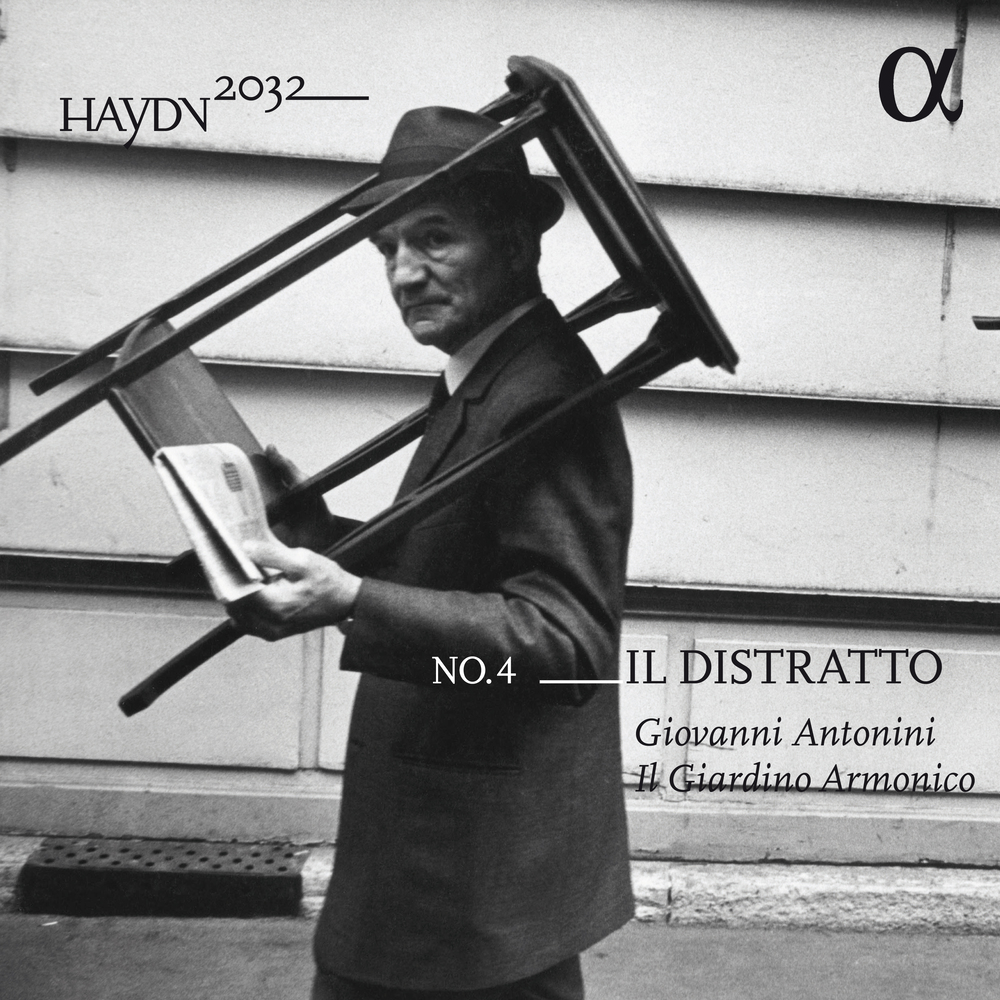 Typically iconoclastic artwork from one of the Haydn 2032 releases
Which brings us back to Decca, Doráti and the Philharmonia Hungarica all those decades ago. Classics are classics for good reason. Sometimes good taste and peerless musicianship provide the best nourishment over the long haul.
Which is why this reissue quietly reasserts its pole position in the recorded Haydn symphony repertoire - past, present and foreseeable future. In all honesty, if these were the only recordings you had of the symphonies and big oratorios, they would be sufficient to scratch your Haydn itch.
How this set achieved all this back in the day makes for a fascinating story…
Continued in Part 2