
Antal Doráti’s Monumental Haydn Recordings Return! A Gramophone Classic Revisited - Part 2
How Recording History was Made... Includes a selective discography of Haydn symphony recordings
THE ROAD TO MAKING RECORDING HISTORY
For this section I am much indebted to Dominic Fyfe’s detailed account of the history of the making of these recordings contained within the box’s booklet, from which I will occasionally be quoting directly (indicated as such in text). I have also made reference to Antony Hodgson’s booklet note accompanying the Eloquence box of Doráti’s earlier Haydn and Mozart recordings on Mercury Living Presence - an essential supplement to the Decca box for anyone who loves Mozart and Haydn.
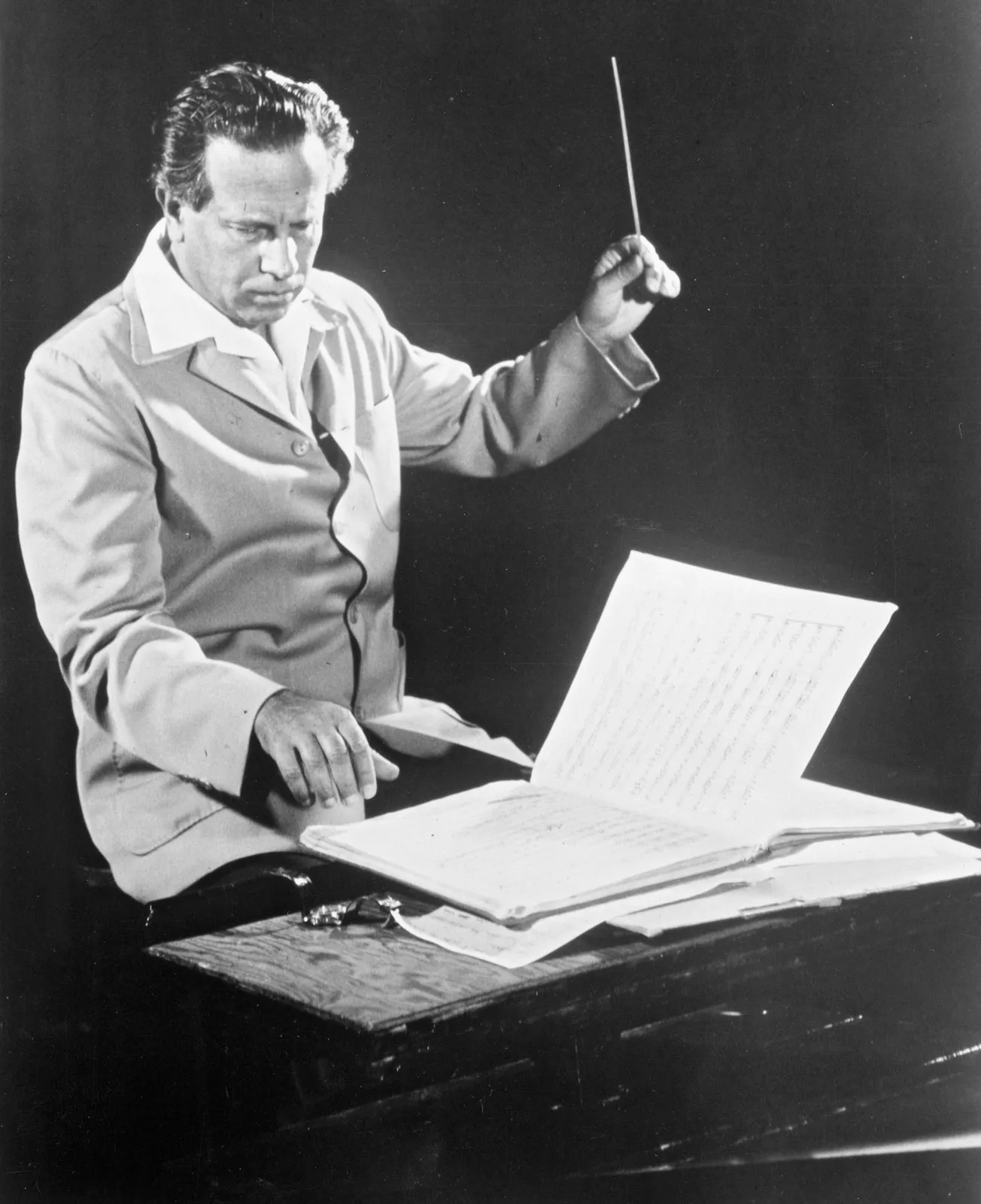 Antal Doráti
Antal Doráti is a name that is very familiar to seasoned classical collectors, and maybe even to those who are just beginning their classical journey in the used record stacks of their local vinyl emporiums. His records turn up regularly. He was a seasoned recording artist, and consistently made the finest records, spread primarily across the Mercury, Decca and Philips labels, in both the analog and digital eras. However, his name is rarely mentioned in the same breath as those of Klemperer, Furtwängler, Karajan, Solti, Giulini, Bernstein, Szell, Ormandy, Walter et al. I think he is every bit their equal on record, and his discography is remarkable for its wide range and depth. You can always rely on a Doráti recording.
Like so many conductors of his generation his early training and experience resided in the opera house, starting out at 18 as répétiteur (the pianist who would accompany all vocal rehearsals) at the Budapest Opera House, where he first conducted in 1924. Four years later in 1928 he became assistant to the Music Director at Dresden State Opera, Fritz Busch, who after fleeing the Nazis established the high standards of the Glyndebourne Festival Opera company in England. Doráti said of Busch: “From Busch I learned as much about conducting as one man can learn from another”.
A pivotal period of his career began in 1933 when Doráti became Music Director of the Ballet Russes de Monte Carlo, the company that continued the legacy of Serge Diaghilev after his death and the disbandment of the original Ballets Russes, which had seen the premieres of so many seminal 20th century works by Stravinsky (The Rite of Spring), Ravel (Daphnis et Chloë), Debussy (L’après-midi d’un Faune), and Prokofiev (The Prodigal Son). Doráti’s comment was that he “learned to face the best and worst orchestras”.
Doráti himself was a trained composer who had studied with Zoltán Kodály and Leó Weiner. Although Doráti downplayed it, Béla Bartók was for a short time his piano tutor. (His recordings of Bartók’s music are amongst the very best). Doráti’s skills were put to use in making arrangements of other composers’ music for the ballet. He created Graduation Ball in 1940 from the music of Johann Strauss. When, in 1942, he began working for what would eventually become the American Ballet Theatre, more ballets followed: Bluebeard from the music of Offenbach; The Fair at Sorochinsky from that of Mussorgsky.
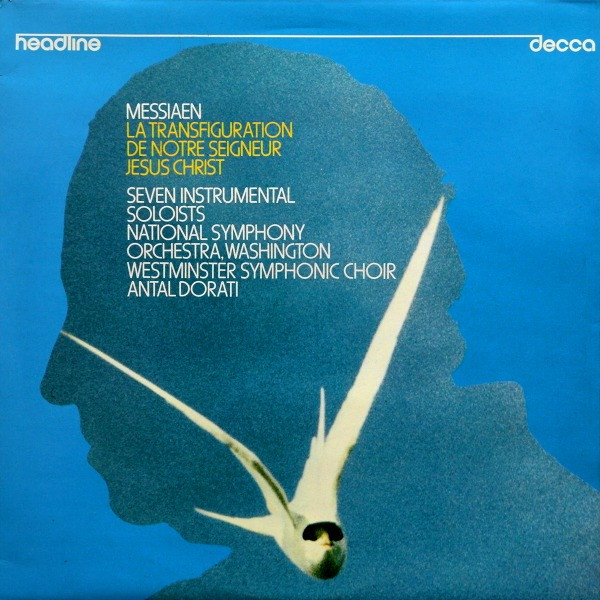
Thus began the American phase of Doráti’s career, first at the Dallas Symphony after the War, then becoming conductor of the Minneapolis Symphony. He had already guest conducted at the National Symphony in Washington D.C.; he would return to make some key records of contemporary music with the orchestra for Decca in the 1970s, including this audiophile classic:
Critic Richard Freed, welcoming the conductor to Minneapolis, was quick to note Doráti’s qualities:
“He knew how to take advantage of recording. He was experienced at recording by the time he arrived in Minneapolis. [Doráti had made records with the London Philharmonic for HMV/Columbia in the 1930s]. He understood that recording is the natural and best PR instrument an orchestra can have.”
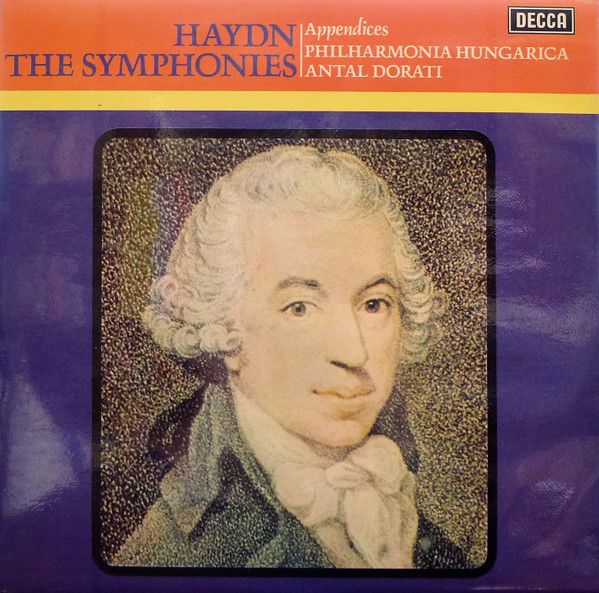
In partnership with legendary recording engineer Robert Fine at Mercury, Doráti embarked on a stellar series of records still highly prized amongst collectors today. These included the clutch of Mozart and Haydn symphonies I alluded to earlier, which are absolutely marvelous. The Haydn recordings are fascinating to compare with the later Decca ones, both in terms of performances and differences in editions used. They include one album made with the Philharmonia Hungarica.
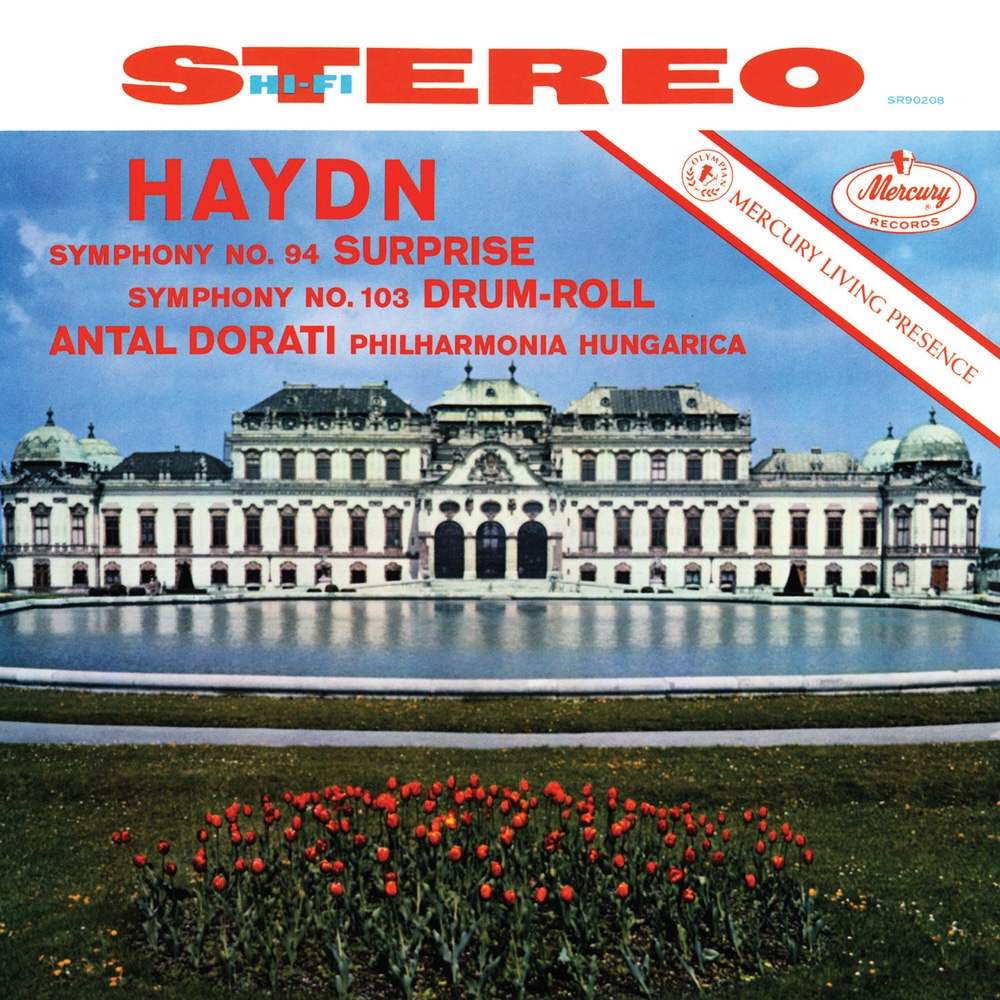
This Haydn record, and a series of other records made by Doráti with the Hungarians for Mercury starting in 1958 - all of them sonically and interpretatively superb - put the orchestra on the international map.
At a time when the orchestra was struggling somewhat to find its footing in the crowded marketplace of international orchestras, Doráti’s support and involvement were critical. A major international tour in 1959 with Doráti cemented the orchestra’s standing.
As Dominic Fyfe relates:
Everywhere the critics noted the distinctive accent of the orchestra. In Ottawa, a review appeared under the heading ‘Pure Fidelity’ to describe the concert of works by Bartok and Kodaly: “…the Dances from Galanta cry out for an approach of one more interested in fidelity to origin than in pure virtuosity of orchestra”, wrote the critic Lauretta Thistle, although she added that virtuosity was also heard in abundance: “Stunning is too mild a word for the powerful performance of Rakoczy March [not to be confused with Johann Strauss’s Radetzky March - MW] which came as the first encore”.
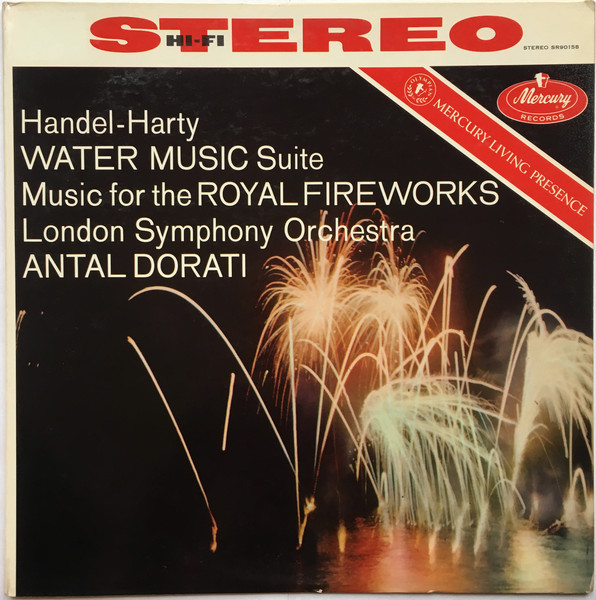
Up to this point, Doráti’s renown on record lay primarily with the larger orchestral works of the 19th and early 20th centuries, although those Mozart and Haydn outings, together with a classic version of Handel’s ever popular Water Music and Music for the Royal Fireworks, demonstrated his aptitude for earlier fare.
But with his relocation to Europe to conduct the BBC Symphony Orchestra (1962-1966), Doráti’s thoughts were turning back to the composer who had been one of his first loves, playing Haydn string quartets en famille as a youngster: himself on ‘cello, father on first violin, his mother on viola, his uncle on second violin. He began to feel - like so many others - that this was a composer “much misunderstood and neglected in our own day”.
He continued:
“It was to Haydn’s music that I now returned. And it opened up before me a new, hitherto unknown world, filled with the delights of harmony, form sentiment, wit, passion, serenity.”
Dominic Fyfe:
Coincidentally the Viennese publisher Universal Edition had just published the complete symphonies in the editions by H.C. Robbins Landon, the indefatigable Haydn scholar, who was to play a key role in Doráti's project. "This was my cue", Doráti wrote, “I did not have to wait any longer”.
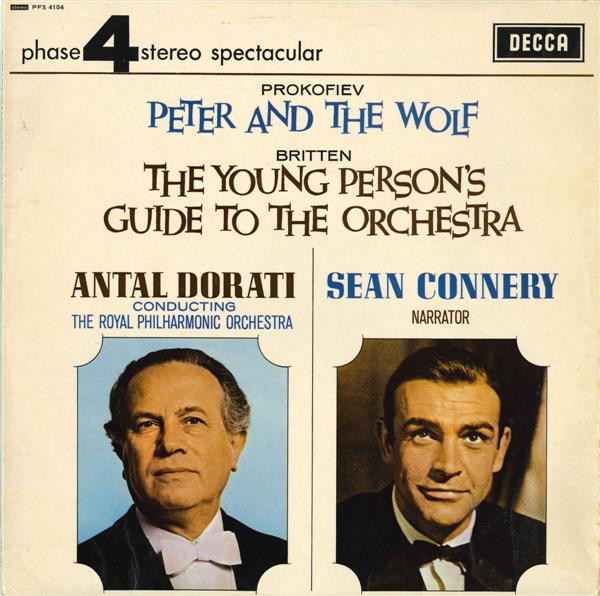
Doráti began his association with Decca via a series of well-received recordings for its new “Hi-Fi” imprint, Phase 4 Stereo, in particular a successful pairing of Prokofiev’s Peter and the Wolf and Britten’s Young Person’s Guide to the Orchestra narrated by Sean Connery.
A change in the senior guard at Decca, after John Culshaw left to join the BBC, meant that Doráti’s idea to record a complete Haydn Symphony cycle fell on the friendly ears of the new Head of A&R, Ray Minshull - a seasoned producer with the label.
Doráti recalled of his pitch meeting:
“The new young Director of Decca Records, Ray Minshull, took to the idea with enthusiasm. His elders and superiors were not easily convinced, but he succeeded in winning them over. So, after about a year of negotiations, the recordings of the complete edition of Haydn’s symphonies began.”
THE HAYDN SESSIONS: 1969 - 1972
The sheer amount of music, much of it unfamiliar, that had to be recorded dictated a different approach. Sessions were “rehearse and record”. A group of symphonies would be allocated to an intensive block of sessions, spread over a number of weeks. Within that block, movements with the same orchestration would be recorded together. For example, all the Minuet and Trio movements that shared the same instruments would be recorded at the same time, so that unneeded musicians would not be sitting around. Then movements which shared the same members of the woodwind and brass sections, for example, would be recorded together. It was just like shooting a film, where everything is filmed out of sequence, according to the dictates of location and cast availability.
Keeping all the relative tempi etc. for each symphony straight in his head was the job of Doráti: listening to the final versions you’d never know everything was recorded out of sequence.
Recording locations were also streamlined. The initial sessions for the first block of Symphonies 49 - 72 took place over a fortnight in June 1969, in the striking Rudolf-Oetker-Halle in Bielefeld, a regular concert venue in the region where the Philharmonia Hungarica was based.
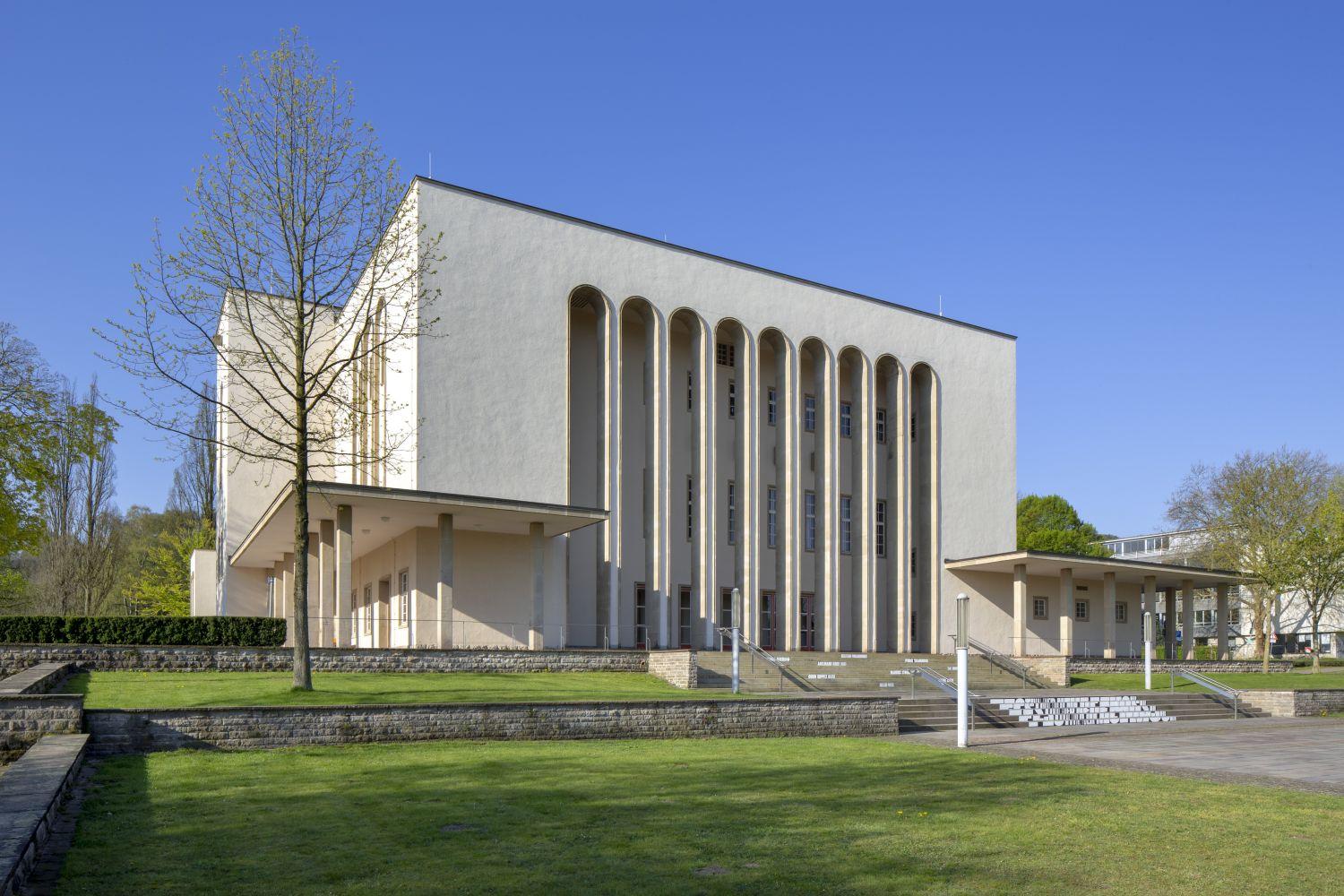
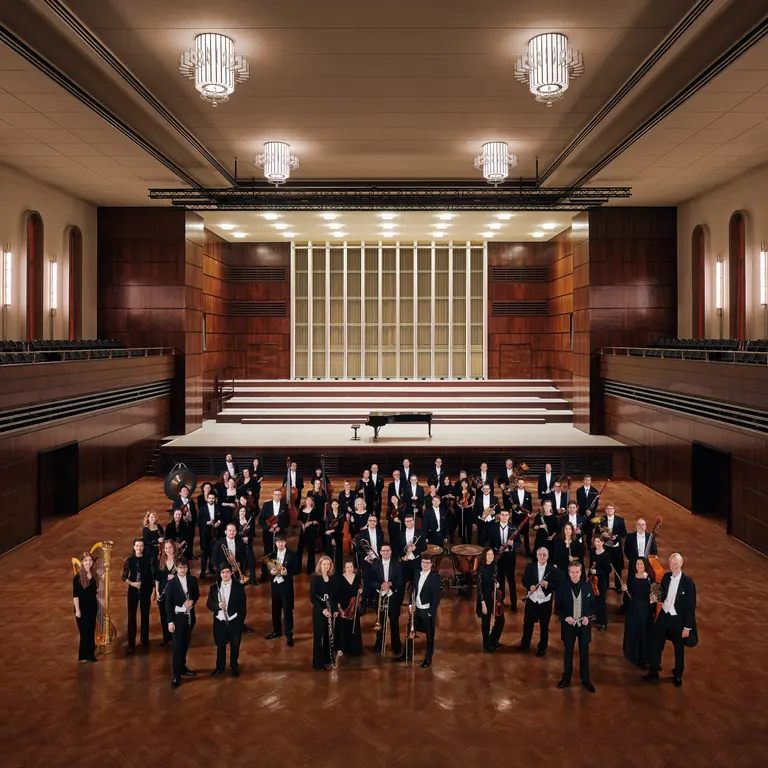
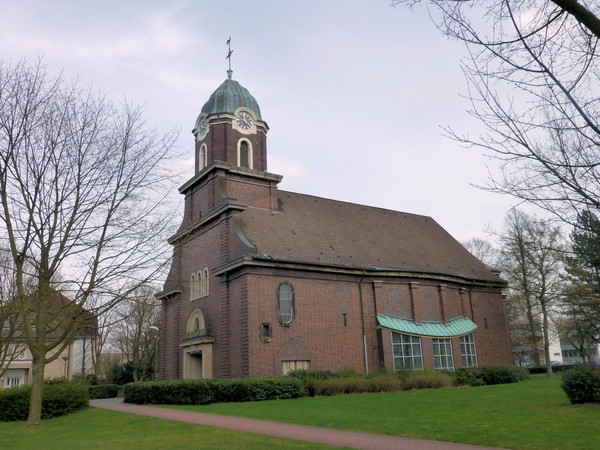
Some minor doubts about the acoustics of the hall were raised after those initial sessions (I will discuss the sonics later on), plus the hall’s busy concert schedule meant scheduling the many sessions needed for the ongoing series was a challenge. Therefore it was decided to relocate to a new venue even closer to the orchestra’s home base. Kenneth Wilkinson, the legendary engineer as responsible as any for the “Decca sound”, conducted acoustical tests in the St. Bonifatious Church in Marl, and the whole operation moved there in July 1970 for the duration of the project.
The original producer of the series was John Mordler, assisted by the then 26-year-old James Mallinson. It was with the younger man that Doráti immediately bonded, and Mallinson took over producing duties for the remainder of the series after the first set of sessions.
Dominic Fyfe writes:
“My young brother in arms", Doráti called him. Like all lasting producer relationships, it was founded on mutual respect, and an almost sixth sense of understanding. It was affectionate too. In a letter home dated 13th July 1970, Mallinson described Doráti as "very entertaining on a wide range of subjects, most of which are unconnected with music – he knows a bit about that too!” His letter continued:
“Doráti is sixtyish with a mop of grey hair and impish blue eyes and a beautifully dry sense of humor. He is very stimulating to work with because over the last 18 months we have developed the sort of intuitive working relationship which makes verbal communication almost unnecessary while we are working. It's very exciting and the odd thing is that if something is proving difficult – and one of us has to explain something verbally – the end result never seems to be quite as good.”
Fyfe’s booklet note then goes on to recount some of the ups-and-downs of the session - very entertaining reading.
As to how the sessions were recorded, Dominic Fyfe continues:
Completing this mammoth series in such a short space of time was both a marathon and a sprint. Stamina came in the shape of what one of the original engineers, John Dunkerley, described as “very much a young and eager team”: producer James Mallinson and balance engineer Colin Moorfoot were paired for all but one of the sessions in Marl, ensuring consistency in sound across the entire series. Moorfoot had joined Decca in 1964 and was already well-versed in the Decca Sound from sessions in Geneva and Vienna before taking responsibility for the Haydn cycle. For this he deployed the two-microphone variant of the Decca ‘tree’ utilizing the favored Neumann M50 omnidirectional microphones spaced two meters apart. This was supplemented by the usual left- and right-hand outriggers (also M50s), but with ancillary ‘in’ riggers on the second violins and violas. These were cardioid Norman KM64 microphones, which were also used in pairs on the woodwind, horns and timpani, supplemented by a KM53 omni on the double basses. [The double-basses have marvelous presence, slightly enhanced in the remastering. -MW] As with all Decca recordings of the period, the multi-channel input was mixed straight to stereo on session using Decca’s proprietary STORM [short for Stereo Remote Mixer - MW] mixing desk. Much of it was edited on session too. John Dunkerley recalls how Deccca’s chief tape editor Tony Steinman would be closeted in an upstairs editing room where spools of tape and a marked-up score would be delivered to keep pace with the recording sessions downstairs. It was very much a production line.
The cycle went on to be a commercial and critical success, with Doráti being awarded a Gold Record.
Fyfe rightly quotes the renowned critic Edward Greenfield summing up the accomplishment of the whole enterprise in his Gramophone review of the final volume of the “London” Symphonies, in September 1974:
“Fine laus Deo” - Praise to God for this conclusion – wrote Haydn at the end of each of his last and greatest symphonies. As I played through this last and culminating volume of Doráti's integral cycle of the symphonies, as massive a single enterprise as the gramophone has undertaken, that message kept ringing in the ear, not just from Haydn himself, but from the performers too. The wonder of the Doráti cycle, whether viewed individually or as a whole, is that the exuberance of Haydn's invention is so consistently matched in the performances, which rarely if ever convey any suspicion of routine. Throughout – and this final volume carries the pattern to a triumphant conclusion – the sheer joy behind the playing is very clear indeed, a sense of fresh wonder at the music.
JOY AND WONDER
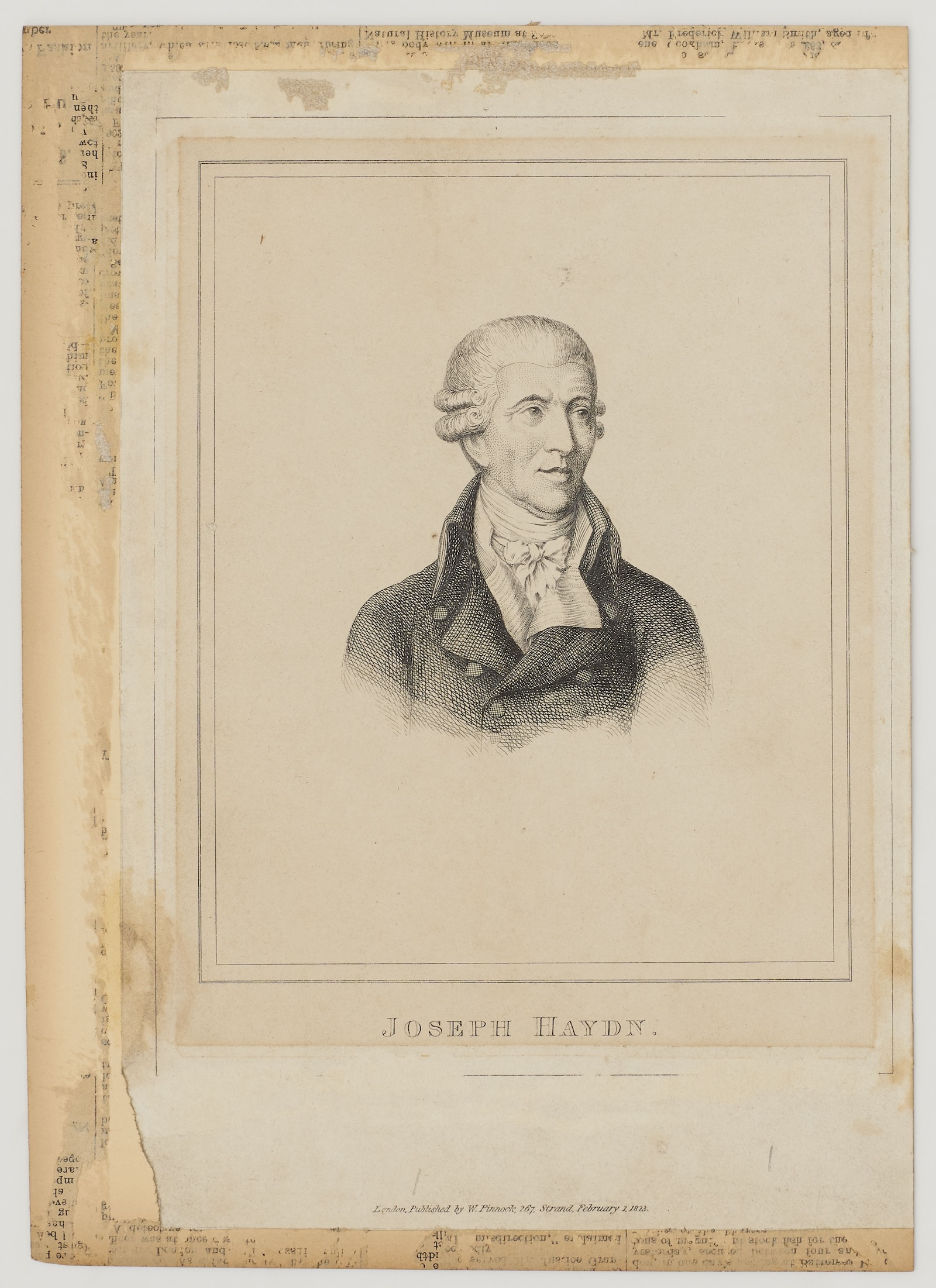
When I consider my earliest encounters with Haydn growing up, the words “joy” and “wonder” would hardly have been the ones I would have used to characterize my reaction to his music. But I defy anyone who has come - like me - to appreciate Haydn’s qualities, when diving into this set and selecting any disc, not to feel those emotions. The music - to borrow the old cliché - simply leaps from the page into the listening room. The sound is vintage Decca: warm, detailed, natural, vibrant, with no hint of edge or glare in the strings in particular.
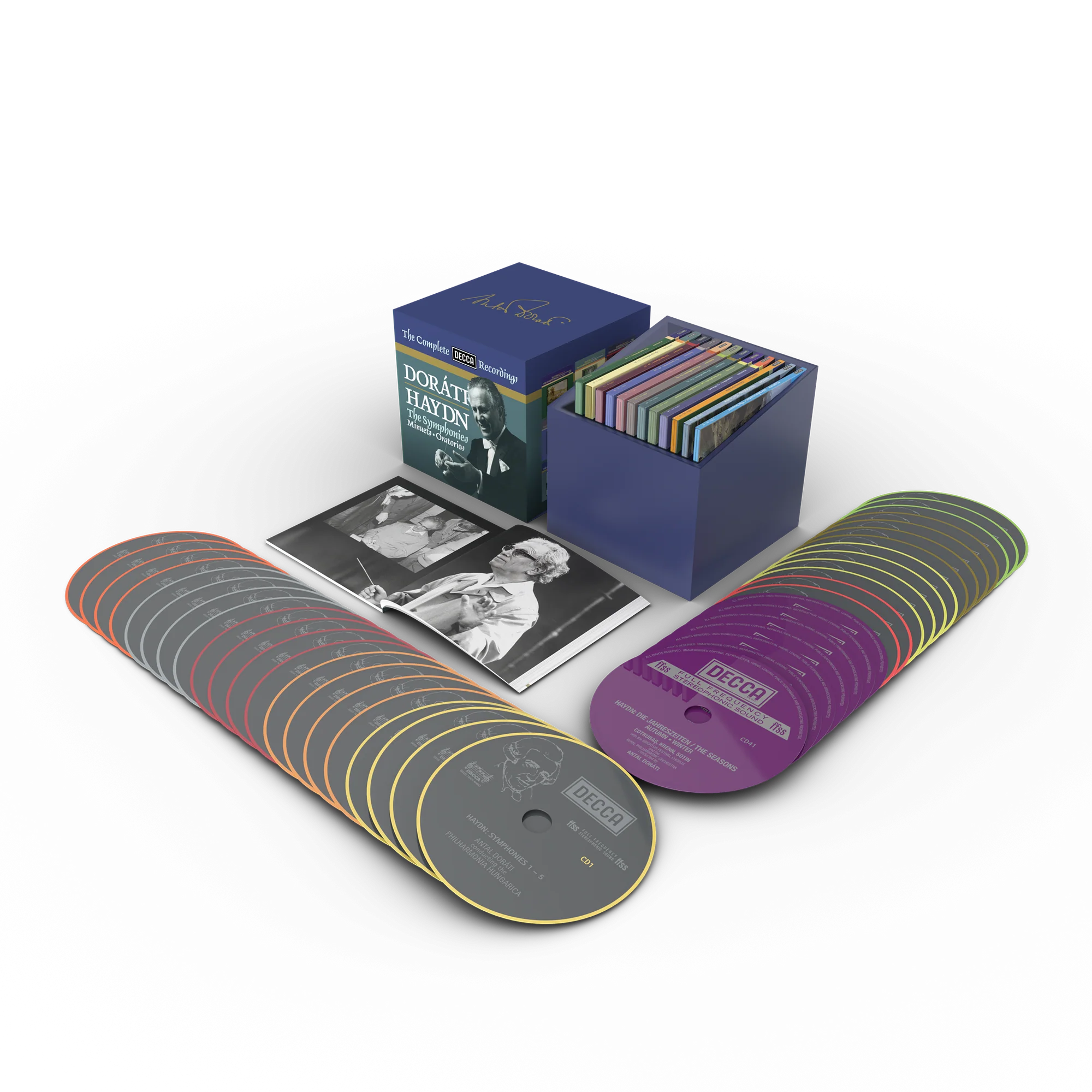
Early on in my listening I did the direct comparison between my original Decca LPs and the new CDs. The CDs are transferred from the original 2-track master tapes at 24bit 192kHz at Abbey Road, with Ian Watson credited as remastering engineer. As I always caution, one has to take into account the inherent differences between the sonic signature of my digital and analogue chains, but with that said there was very little to choose between them. The records inevitably had that extra organic “wholeness” one hears in the best analogue sources (which Decca records of this period definitely are), and one or two degrees more of sweetness in the violins, woodiness in the winds. However, set against that was maybe a little more orchestral detail revealed in the digital remastering, an ability to “hear” into the orchestra a tad more. The double basses in particular seemed to have a little more definition, which only added to the thrilling anchoring effect of the bass in general. All the warmth of the original had been retained. And certainly when I had the volume set a tad higher than I normally do, the dynamics came alive in a manner that was exhilarating, with no sense of the usual digital glare that can impede when I “turn up the heat” with CDs. I was blasting Haydn - and It Was Good!
In short, the digital remastering is exemplary, maybe in some ways yielding a slight improvement on the already excellent LPs, and only the most die-hard of analogue absolutists would forego the riches and convenience of this box set merely because it was “digital”.
As I randomly sampled across the cycle I was struck over and over again by several things.
One, the distinctive timbral palette of the Philharmonia Hungarica - rich, woody, vibrant, alert, thrumming in sync with Haydn’s idiom - and such a welcome change from the more stringent strains of the assorted period instrument ensembles we have become used to. It’s a wonderful sound to keep coming back to.
Two, that Decca sound. Ah - I could live in it all day. The perfect balance between being up close and personal with the orchestra, and also clearly sitting in a hall. All the texture of the instruments came through, and it was definitely a different sound to what one might hear from the London Symphony Orchestra, the Concertgebouw, or Chicago, or Boston. Does it make sense for me to say that it felt like the musicians were connecting with and conveying the music in a more “personal” manner, and somehow that was being caught by the microphones? I will say that as the orchestra gets bigger in the later symphonies, especially the “London” set, I felt we had moved a few rows back from the orchestra to accommodate the bigger canvas, and some of the definition was giving way to the hall’s reverberation, and there was a slight loss of initimacy compared to the earlier works. But then these are more “public” utterances - and that small shift in no way precluded thorough enjoyment.
I will say that a quick comparison between recordings made in the Rudolf-Oetker-Halle (Symphonies 49-72) confirmed the correctness of Decca’s decision to change recording location. There is absolutely nothing wrong with the sound, but it lacks that extra degree of bloom (especially on the violins) and sense of air and headroom around the instruments in general that you get with the later recordings done in St. Bonifatius Church.
Third, Doráti’s unerringly idiomatic way with the music, imbuing it with grace and elegance, but also with energy, rhythmic pulse and forward momentum, and embracing the composer’s particular sense of anarchy that bubbles to the surface constantly. Unlike so many of the period instrument folk, though, Doráti never lets the anarchy become the main point: it is always part of the overall design. There is always that sense of “these are symphonies, models of good formal construction” - and that is always the main point. In other words, Doráti finds the correct balance in these works. And even if sometimes the tempi can feel a little measured - in, for example, the Minuet and Trio movements - there is still the sense of keeping everything moving along. I actually came to really enjoy the contrasts in tempi between movements, especially when the Finales would kick off at a very healthy speed, with superb articulation. Again the sense of everyone having fun - composer and performers alike - is deliciously infectious.
To get a better sense of what different Haydn cycles or partial cycles bring to the table, I did a deep dive into my collection of recordings of one of the “Paris” Symphonies, No. 85 “La Reine”. As with all the Haydn symphonies, this has its own set of distinctive qualities that different performers capture - or fail to - in different degrees. It’s a real gem, full of contrasts.
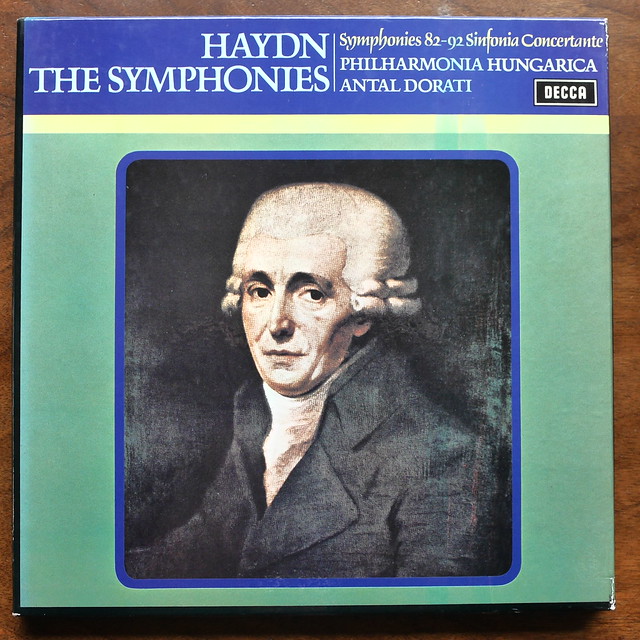 The original Decca vinyl box containing Symphony No. 85, "La Reine"
I was immediately engaged by everything about Doráti’s version, and especially the second movement where the most exquisite solo flute goes from hiding in unison with the violins to taking a lovely solo line - almost like a set of ornamental variations you’d encounter in a Baroque concerto. The sound of the instrument was exquisite, caught by the Decca engineers in all its silvery woodiness (sitting somewhere between a modern and period instrument), and given a relatively forward balance. It simply made my heart sing, and no other recording came near to that perfect balance between flute and orchestra, or the characterful playing of that section leader: Bravo!
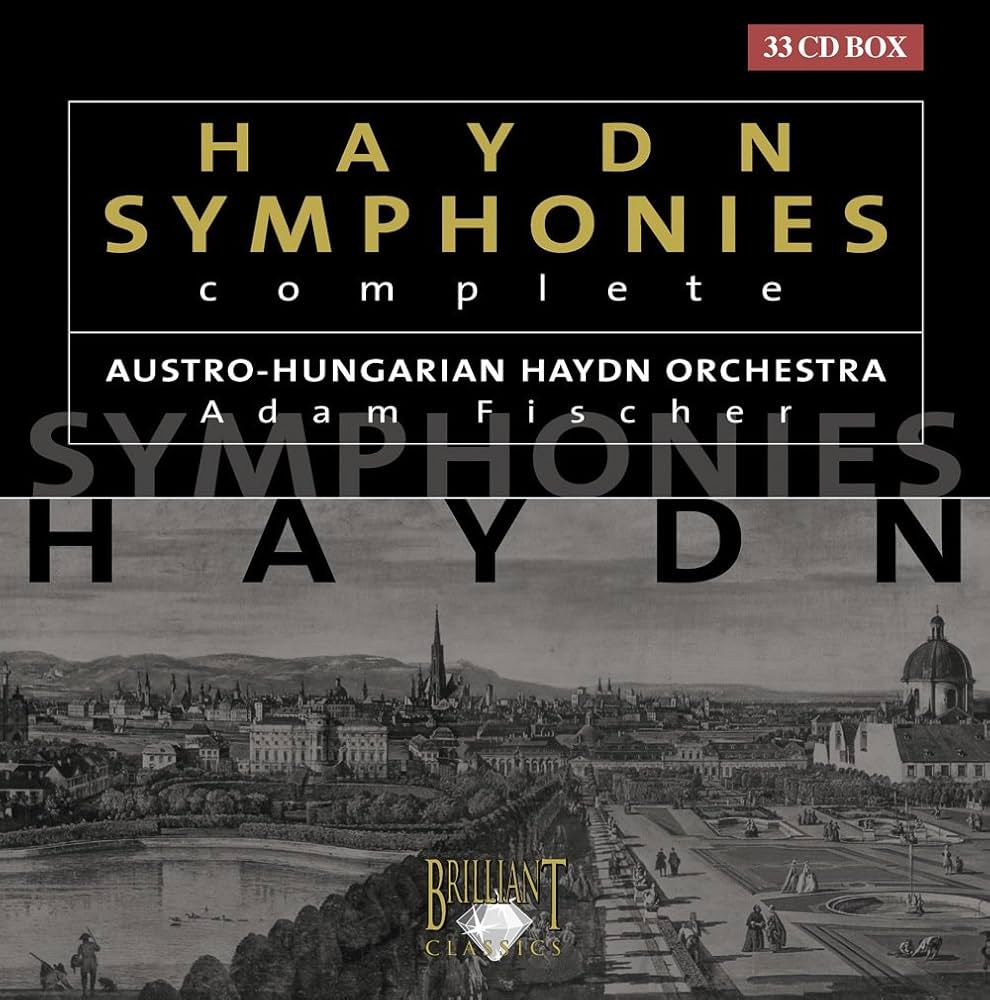
Turning to the complete cycle by Ádám Fischer with the Austro-Hungarian Haydn Orchestra the sound was more generalized in that manner so typical of digital of the period (1994). The orchestra was more recessed into the hall acoustic, everything seeping into everything else. No real character at all - and the flute all at sea somewhere in that wash of sound.
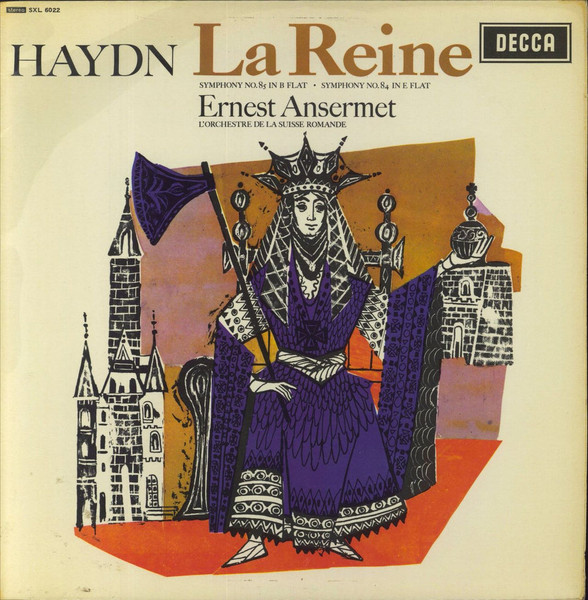
I then turned to my much-loved set of the “Paris” Symphonies by Ernest Ansermet and L’Orchestre de la Suisse Romande, recorded by Decca almost a decade earlier. Ah joy! We were back to the Decca sound, very similar to that given to Doráti. Here the wind, especially the oboes, have a somewhat thinner timbre than Doráti’s Hungarians, but like Doráti Ansermet really has Haydn’s measure - and the flute, while not as rich as its Hungarian counterpart, came in a very close second. After playing the record (an early wide-band Decca) I listened to the remastered CD from the complete Ansermet Stereo Box. Decca really needs to repress this treasure-trove. The remastering in this set is excellent, but I immediately could hear how the technology has improved even from the time that set was released in 2023. The vinyl still had it over the CD - but if you’d never heard the vinyl you wouldn’t know what you were missing.
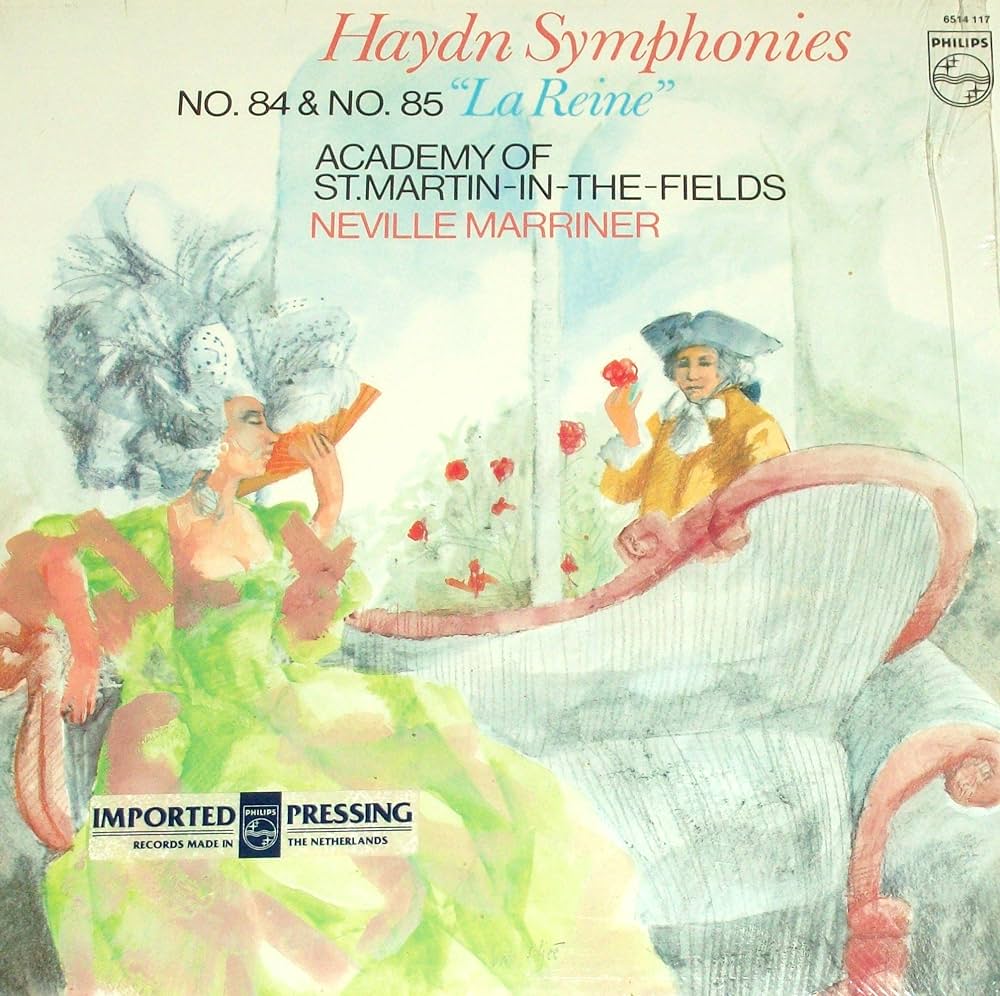
Then it was on to another marvelous set of selected Haydn symphonies, from Neville Marriner and the Academy of St. Martin-in-the-Fields. These were recorded sporadically by Philips over the course of a couple of decades, starting in 1970: the majority are analogue recordings, but a few of the later ones are digital. Symphony No. 85 “La Reine” was recorded in 1978 in Brent Town Hall, produced and engineered by Volker Straus. While I have many of these on vinyl, I sampled “La Reine” in its digital incarnation in the Decca Eloquence set from 2021. This is the performance that came closest to the scale and approach of Doráti, but while the performance is everything you would expect from this team, the recording lacked heft in the bass - a typical trait of Philips in this period. I kept coming back to that rich, well articulated bass as a quality I was loving in the Doráti set.
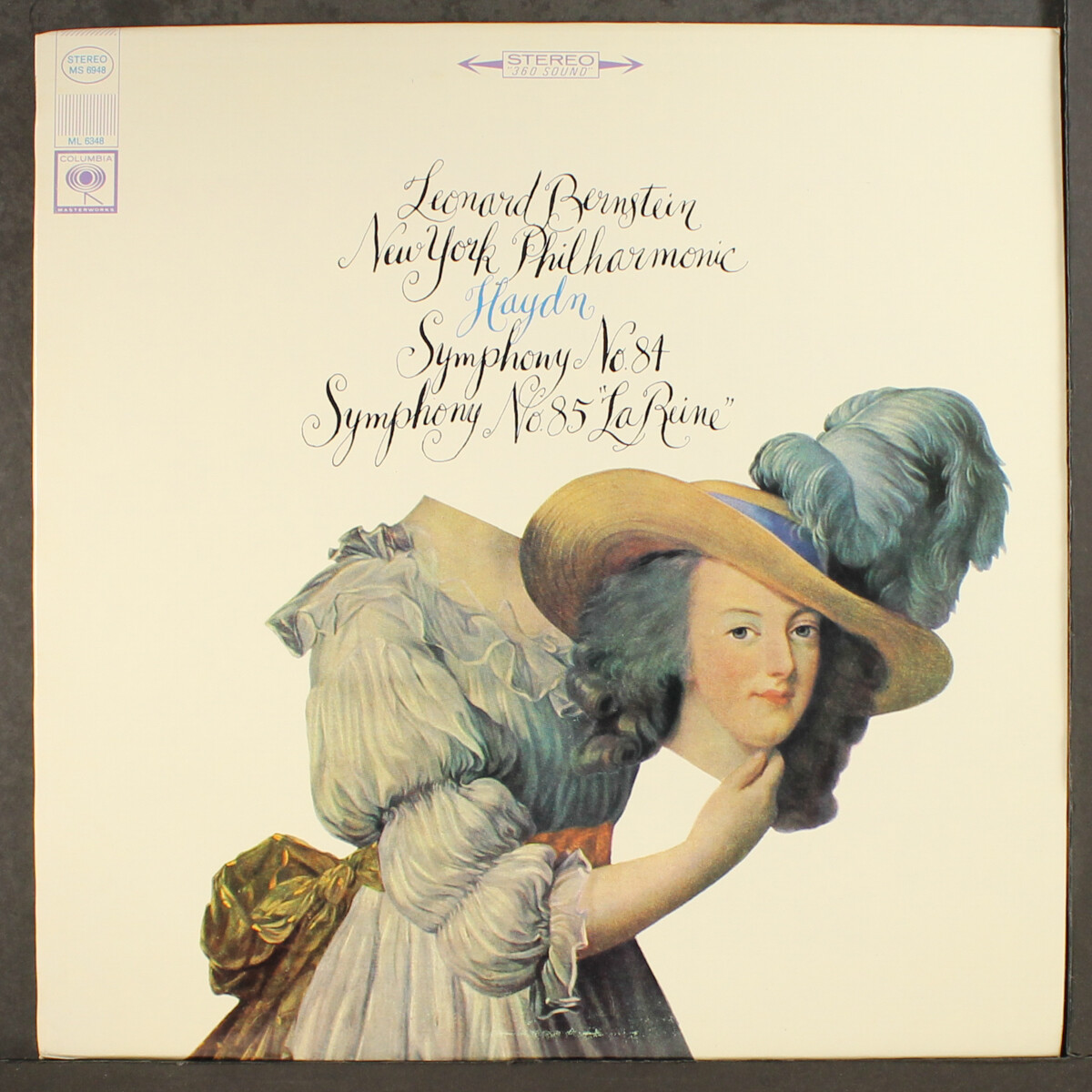
I had to finish with an outlier - and that outlier was Leonard Bernstein with the New York Philharmonic recorded by CBS/Sony in 1967, originally a 2-eye pressing. I don’t have that, but I do have the essential CD box of all of Bernstein’s Haydn recordings from that era, which offers the best remastering to date.
Buying Columbia vinyl - even early 6- and 2-eye pressings - is a crapshoot in terms of pressing and audio quality. As we can tell from audiophile label vinyl reissues and recent Sony CD remasterings of this amazing back-catalogue, what’s on the master tapes is usually far superior to what is represented on the original vinyl (but not always - there is buried treasure to be found).
Anyway, if I had to pick one big band guy in Haydn you should not miss, it would be Bernstein. There is such a strong sense of one brilliant iconoclastic musical mind meeting another, and the results are compelling. In “La Reine” Bernstein is bigger, faster, slower, more unpredictable - and it’s unmissable. Doráti by comparison has everything in perfect proportion. Is one “better” than the other? Absolutely not, but I wouldn’t miss Bernstein for the world. And yet - in that second movement with the flute - Doráti just captures something ineffable that takes me back to those times, as if sitting in the Salle des Gardes du Corps of the Tuileries Palace in 1786 listening to this music for the first time.
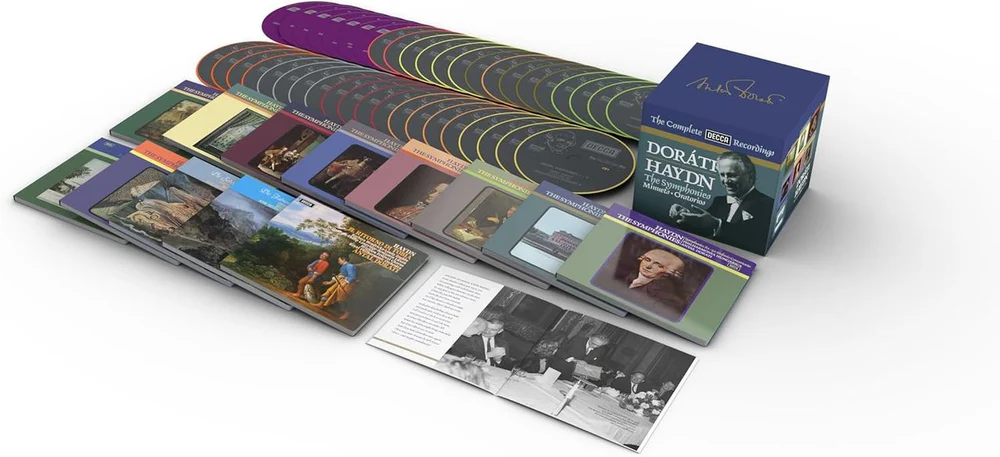
Ranging across this box for my selective listening, over and over again this was the sense I had - an authentic sense of hearing exactly what Haydn himself would have liked (and expected) to hear. Not that he wouldn’t have been thrilled by Bernstein - he would have. No, it’s just that Doráti and his players - and those Decca engineers - caught the essence of Haydn as one imagine he heard it in his mind’s ear.
Isn’t that exactly what you need in a benchmark library choice by which you become acquainted with so much of this rarely heard but wonderful music? From there you have the perfect jumping-off point to then explore the whole galaxy of Haydn recordings.
In the earlier works where harpsichord was used it was perfectly balanced: it sounded like it belonged - not too loud, not buried. In the tempestuous “Sturm und Drang” Symphonies you will get the point without being sideswiped in every other bar as is the custom in some of the more recent period instrument performances. In one listening session I was spellbound by Doráti and his players’ way with the 49th Symphony, “La Passione”. That first movement - was I sure I was not listening to Beethoven? The “Military” Symphony, No. 100, with its injections of percussive artillery, moved right along, retaining its integrity as a proper symphony without degenerating into a bawdy show, as it so easily can do.
I could go on and on, citing examples of pure listening enjoyment I had throughout this set.
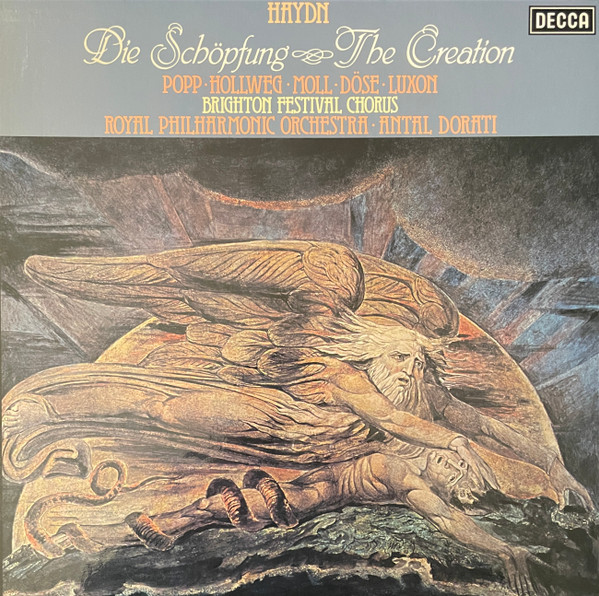
But then there’s more. Excellent mainstream performances of the two great oratorios, The Creation and The Seasons.
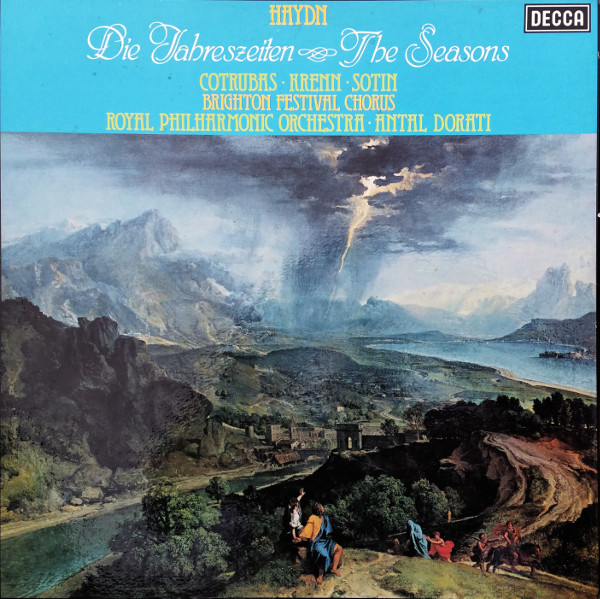
The first vocal entrance of bass Kurt Moll in The Creation will instantly remind you of just how great that generation of singers were who were recording regularly in the 1960s and 1970s, and they’re all over these recordings. Let me also note the superb chorus work of the Brighton Festival Chorus that rose to prominence during this time under the leadership of László Heltay, another Hungarian who raised choral standards in England enormously at this time. No, I would not want to be without Karajan’s early set of The Creation on DG, armed with an even greater soloist line-up, and a hair-raising opening Chaos. Nor would I want to forego Paul McCreesh’s startling period instrument Creation on DG, nor his similar version of The Seasons on Signum, an absolute corker of a performance which will have you beaming with delight - a complete reinvention of what we expect from a Haydn oratorio.
But in addition to these, from Doráti we get a real rarity, Il Ritorno di Tobia, an attractive early foray of the composer into the Italianate oratorio form, given as good a performance as you could expect.
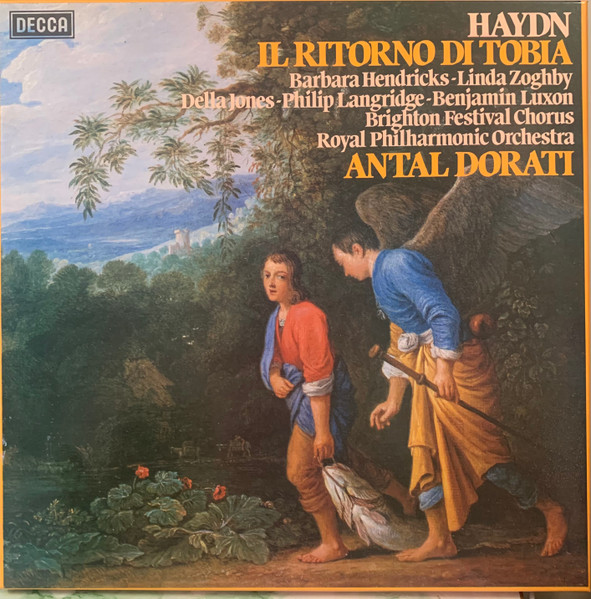
All the oratorios were recorded in London at Kingsway Hall, with Kenneth Wilkinson joining the recording team. They sound as good as you would expect. Here the Royal Philharmonic stands in for the Philhamonia Hungarica.
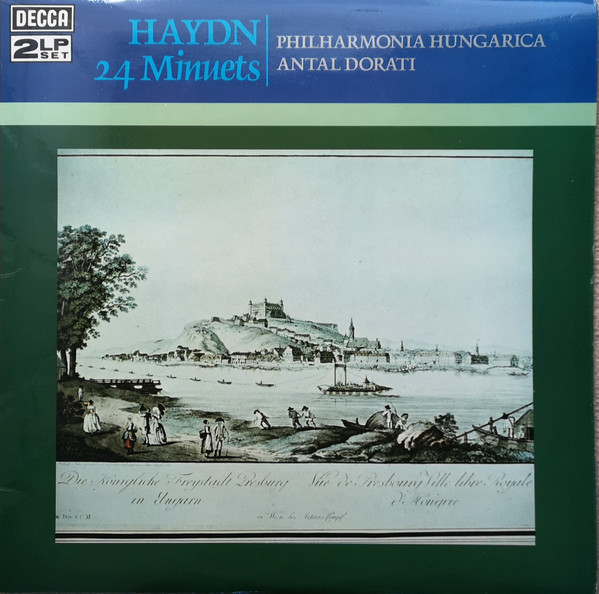
In addition you’ve got the delightful cluster of Minuets - surprisingly enjoyable to listen to in a sitting or two - with Haydn showing off his ability to create infinite variety within the form. You will notice an extra Minuet tagged to the end: a Minuet upon D-E-C-C-A, in Haydn's Manner. This delightful bonne bouche was actually composed by Antal Doráti himself to mark the completion of the project. The Master Tape turned up as they were preparing this set - and so it was included
And for the musicologists amongst you, you can also dive into the Symphony Appendices of additional works and alternate versions.
Speaking of musicologists, I have to bring up the one regrettable shortcoming of this set - the understandable absence of H.C. Robbins Landon’s original detailed notes on every symphony. Understandable because it would be impossible to reprint and accommodate these within this CD box format. However, as this article went to press, I heard from Dominic Fyfe that Decca have scanned all the original Robbins Landon booklet essays with a view to publishing them as a facsimile in book form later this year. Hurrah! In the meantime, a great way to learn more about this grand progression of symphonies is to stream David Hurwitz's Haydn Symphony Crusade on YouTube.
Beyond that, there is so little to choose sonically between the original vinyl and this latest CD incarnation that, for convenience sake, many will be quite happy to mothball their original vinyl. New collectors with an eye to Haydn should not think twice - this is the Haydn symphony box to own. (Please, Decca, keep it in print!)
One more minor quibble. The packaging, whilst very attractive and sturdy, retaining original artwork, does mean that CDs are packed VERY tightly into their sleeves. Extra time and care must be taken when extracting and re-inserting discs if potentially damaging scratches are to be avoided. One might even want to consider purchasing separate Japanese-style inner sleeves to keep the CDs safe, sound and more easily accessible - the box is probably roomy enough to accommodate the extra volume of packaging adding such sleeves would entail.
IN CONCLUSION…
For many years now I often start my listening sessions with a “warm-up” work, which is often a Mozart Piano Concerto, a Haydn Symphony piano sonata or string quartet. These works just “clear the cobwebs”, warm up my ears in the most civilized manner - I highly recommend the practice. With this set I now have the perfect vehicle for adding less well-known Haydn symphonies to this ritual. I can continue exploring the entire range of Haydn’s unequalled symphonic output in performances that just feel “right” in sound that never draws attention to itself but simply captures everything that’s going on organically and engagingly. I long ago gave up on my big box of the Ádám Fischer cycle on Nimbus/Brilliant Classics for reasons that should be clear by now; the Hogwood cycle has many merits, but the period instrument “twang” can wear thin. I’ve been loving the Marriner outings collected together by Eloquence, closest to Doráti in style and approach (and now have quite a few of them on vinyl too); likewise the Derek Solomons/L’Estro Armonico box on Sony is a breath of fresh air in the period instrument field. I recommend you approach the currently underway Haydn 2032 recordings on Alpha with caution, but also an open mind. Thanks to streaming these can readily be sampled before purchase.
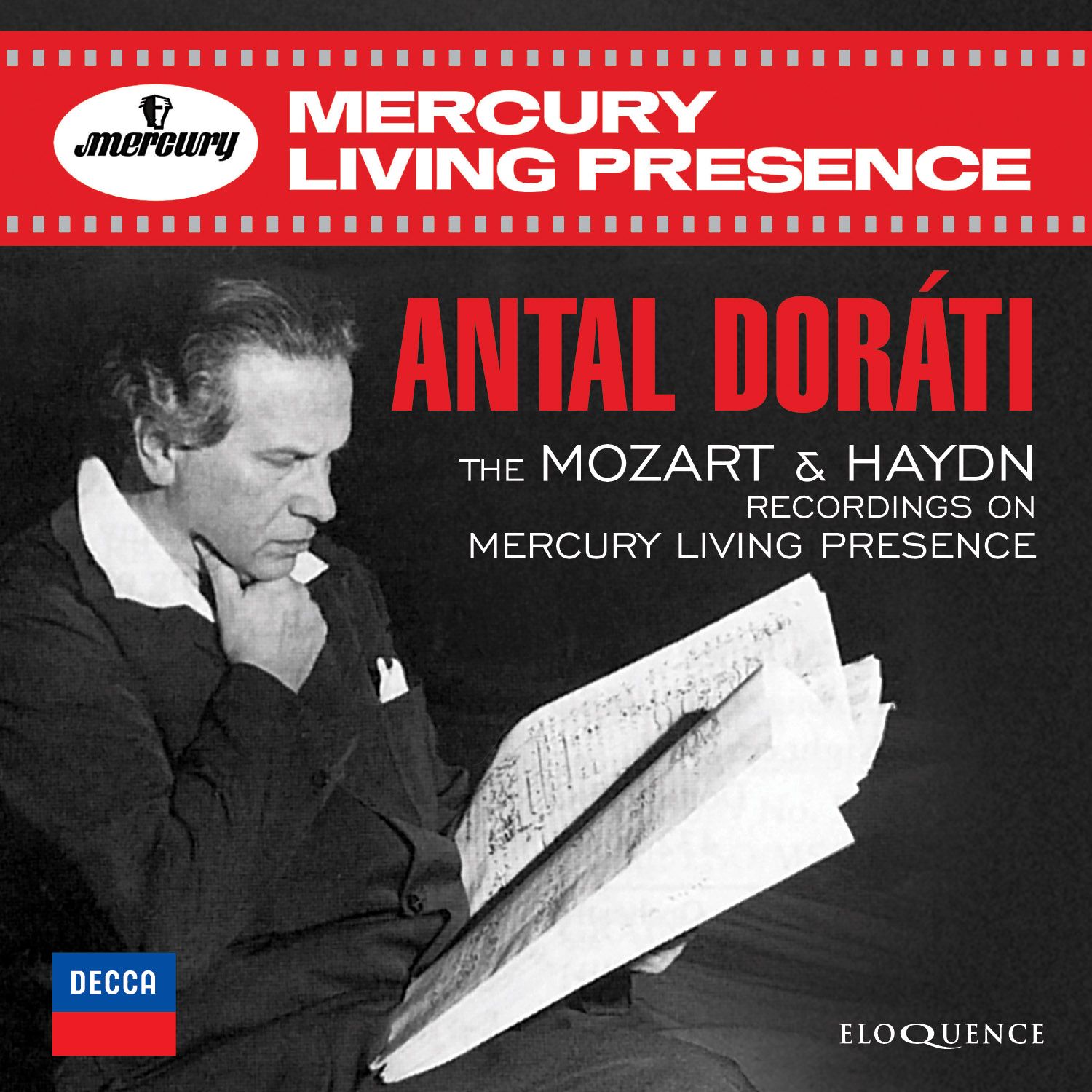
The Eloquence CD box of Doráti’s earlier Mercury recordings of Mozart and Haydn is an essential addendum to the Decca box. I have found it very hard to find clean vinyl copies of these records, so better to have this than nothing. The transfers are more than decent.
You will definitely want to further explore the “London” and “Paris” symphonies in other recordings: for starters there’s Klemperer, Ansermet, Colin Davis - and the essential Bernstein on both CBS/Sony and DG. It's been a long time since I listened seriously to the Jochum "London" symphonies, but the original vinyl was my introduction to these works: failing a few of these getting the Original Source refurbishment, it would be great to see a newly remastered CD set. I have tied a knot in my handkerchief to seriously dive into Beecham’s accounts in the Big Beecham Warner box.
But when I want Haydn plain and simple, but never plain nor simple, I will be turning to this Doráti box - as good a reason as any for arguing the value and importance of the existence of the gramophone. It was and remains an unassailable and still benchmark achievement. Listening to these recordings is like stepping into the Age of Haydn in Eisenstadt, Vienna, Paris or London: vibrant and irresistible, sounding out right there in front of you in your listening room.
Shut your eyes - and you might indeed be sitting in the grand music room at Esterháza...
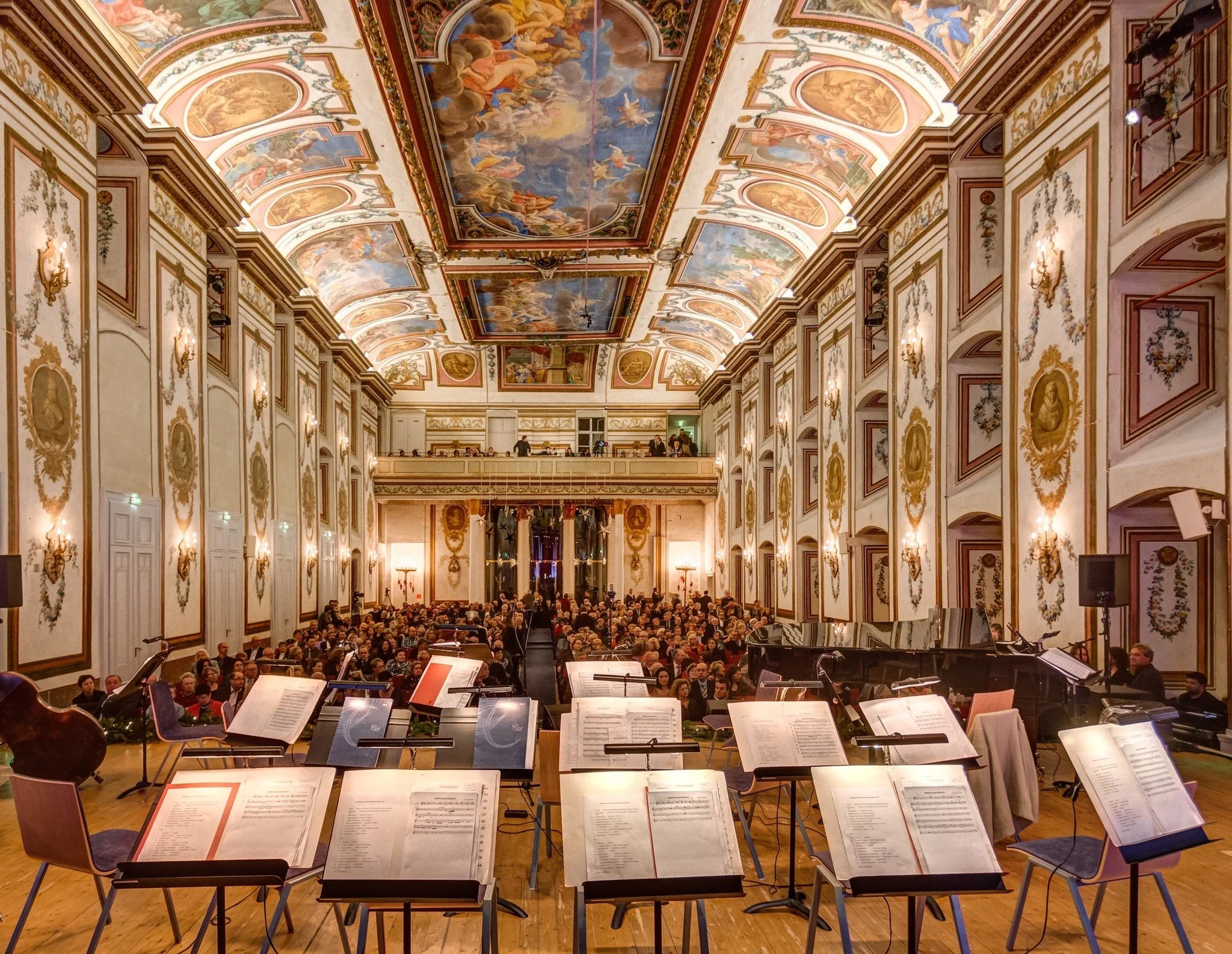 The Music Room at Esterháza
I will leave the final words on Haydn to Antal Doráti himself - a wonderful quote with which Dominic Fyfe also ends his booklet essay:
“To observe his progress at every turn, to follow, re-live, his gathering of strength and experience, the unfolding of his mind, his sentiment, (his soul I would say, if I dared), to watch his talent flowering into genius, and to be allowed to employ one's own small capacity in attempting to show all this to others, is an exhilarating, unbelievably, unimaginably, beautiful experience.”
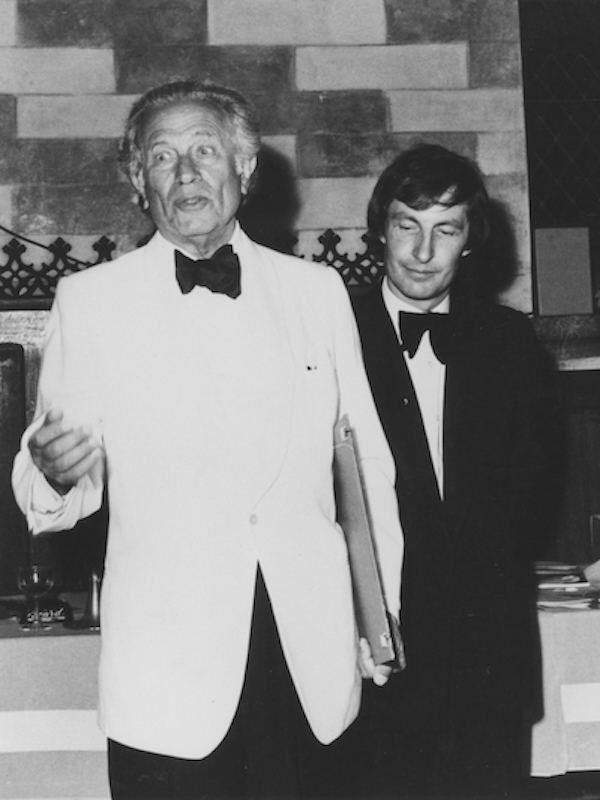 Antal Doráti with producer James Mallinson (photo: Decca Archives)
Music
Sound
Original Symphony Sessions produced by John Mordler (Symphonies 57 - 72), James Mallinson
Original Symphony Sessions engineered by Kenneth Wilkinson, Martin Fouqué, Tryggvi Tryggvason (Symphonies 49 - 72); Colin Moorfoot, Stanley Goodall, John Dunkerley.
Oratorios produced by James Mallinson; Balance Engineers - Colin Moorfoot, Kenneth Wilkinson, Martin Atkinson, John Pellowe.
Reissue Producer: Dominic Fyfe
Remastering Engineer: Ian Watson
Tape Research: Jason Repantis (Universal Music Archives)
Tapes Transferred at Abbey Road Studios, Iron Mountain
Art Director: Matt Read (Combustion Ltd.)
Editorial Assistant: Edward Taylor
You can read Part 1 of this survey here.