
Playing Classical Catch-Up
A deep dive on Original Source titles released in 2026 so far.
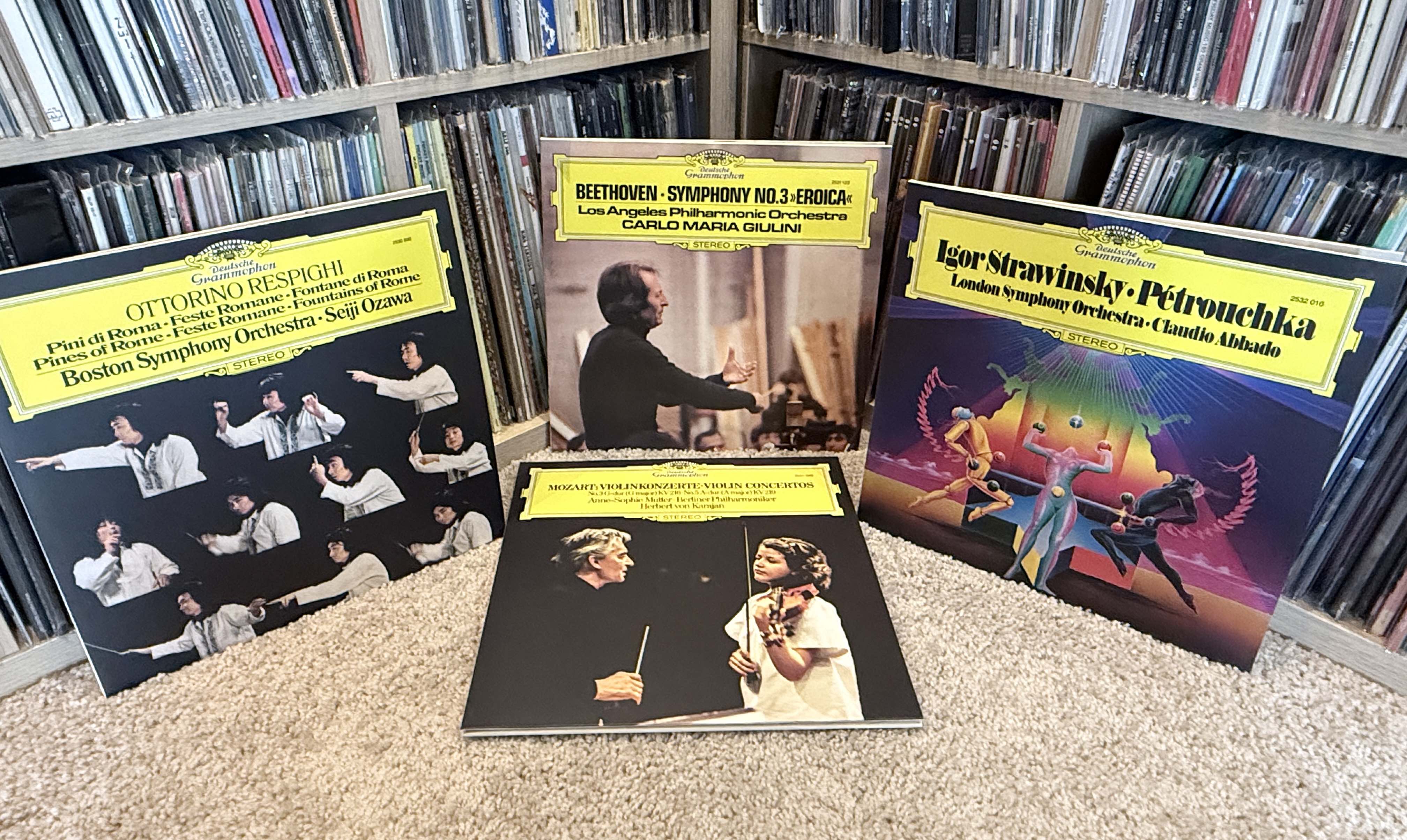
It’s been a while since I reviewed a large batch of titles from Deutsche Grammophon’s Original Source series. The success of the label which once took us all by surprise has now become a juggernaut with over 40 releases under its belt, including its first foray into DG’s massive opera catalog with the brand new release of Das Rheingold reviewed by our own Mark Ward just recently.
With the launch of Decca Pure Analogue and Analogue Productions new 45rpm Living Stereo series, you’d be forgiven for thinking TOS was old news. But the reality is that the releases they are putting out now are consistently some of the best sounding vinyl records out there, and they just keep getting better. In fact, I pushed out this review many times thinking what more can I say about these records that Mark or I haven’t already elucidated on. But then I heard them, and the more I listened, the more the words started appearing. And while many out there may already be enjoying these albums from when they released earlier this year, I think it’s important to give some feedback to the readership about the work that Emil Berliner continues to do for this series, and hopefully get listeners ready for the next batch coming in June!
Anne-Sophie Mutter, Herbert von Karajan and the Berlin Philharmonic- Mozart: Violinkonzerte Nr. 3 & Nr. 5
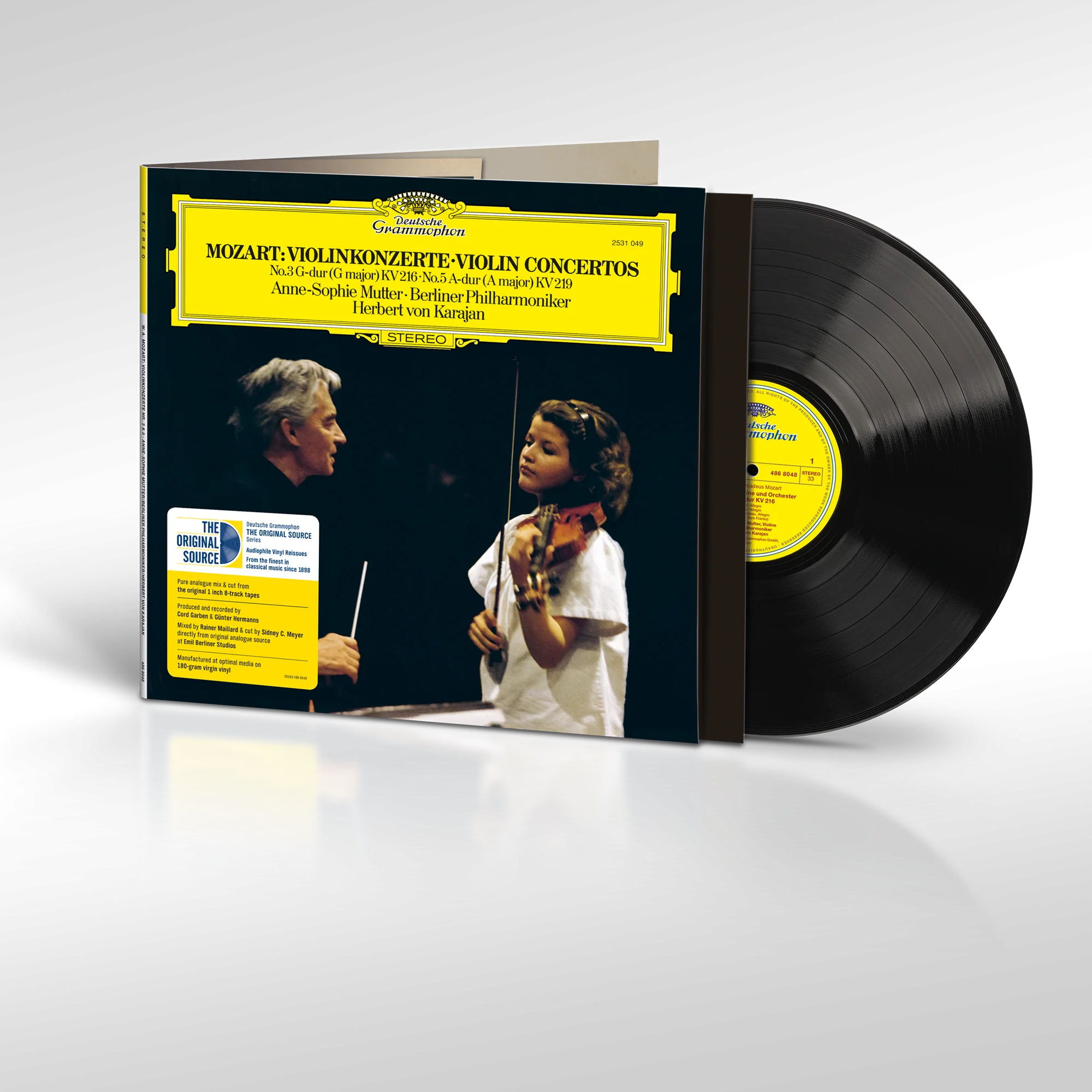
Well for starters why not begin with the smallest-scale music on offer?
I first heard German violinist Anne-Sophie Mutter on a school trip to New York in 9th grade, she was playing Shostakovich Violin Concerto No. 1 in an open dress rehearsal with the New York Philharmonic. It was my first time hearing a violinist and orchestra of that caliber together on a stage. The violinists in our school orchestra were of course enamored and I had no idea who she was, I was more interested in listening to the dueling bass clarinet and English horn licks in the turbulent second movement. Funny enough, five years later I would move to New York to study with Philharmonic’s second oboist Robert Botti.
I’m in my early thirties now, although I’m not sure I’m old enough to justify being nostalgic yet. However this rambling has a point, and that point is that Mutter was the same age I was when I first saw her, when she made her major-label recording debut with Herbert von Karajan and the Berlin Philharmonic. The young violinist made quite a splash at the Lucerne Festival in 1976 at the age of 13, which is where Karajan first heard her play. The Austrian conductor took Mutter under his wing and after her concert debut with Berlin, they set about recording Mozart’s 3rd and 5th Violin Concertos when she was just 14 years old.
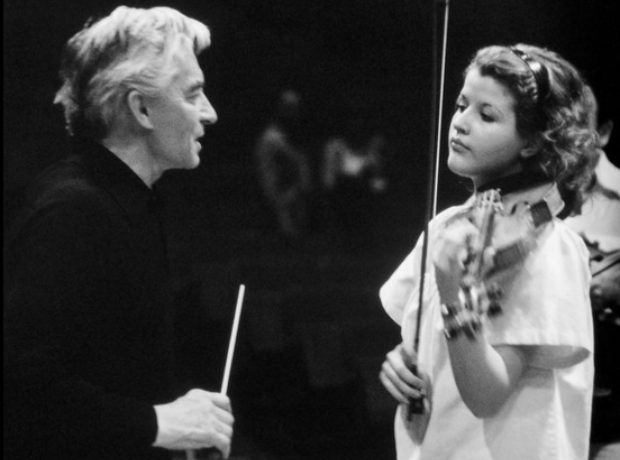 The young Anne-Sophie Mutter rehearsing with Karajan
A prodigy in his own right, Mozart wrote all five of his violin concertos in Salzburg when he was around 19 years old, they are breathtakingly mature by any standard, not just for a 19 year old! I’ve played a few of them, and what always struck me was how the melodic writing, whether in the solo voice, or even in the winds (which often get relegated to a supporting role in his symphonies) have the most sublime melodic writing, like a soprano aria in one of his operas.
Nowadays, an album of Mozart concerti is hardly the recording to announce your solo career. Most would chose a string-shredding opus like Sibelius, Prokofiev, Korngold, or Tchaikovsky. Mozart’s concerti do not wear their technical virtuosity on their sleeve, instead the craft is in melodic shape and the effortless lightness that makes his music “float” like a dancer on the balls of their feet. But the 70s were a different time, I’m not sure if record buyers were more “highbrow” then, but labels were certainly more willing to go out on a limb for their artists, and Karajan was definitely running the show at DG in the late 70s.
The stereotype for child prodigies is that the technique is amazing but the musical maturity is often lackluster. I often wonder if this statement is one of those “truisms” that people repeat endlessly, but isn’t backed up by any data or substance. The few times I have heard exceptional young players rise to the professional level, I rarely had those thoughts in mind. Certainly Mutter’s career has held strong all these years, and she has avoided the career slump that followed many young debut artists after they aged.
The good news is that listening to these two concerti on this recording will be nothing but a joy. Mutter’s playing has an incredible dolce quality that lends itself extremely well to the classical style of Mozart. The Berlin Philharmonic, which had in the past produced recordings of 18th century works that were far too large and heavy for the style, is lean and matched well to the soloist here. I’m no expert on violinists, and I’m quite sure there are other recordings out there that might best the young Mutter here. There is of course Grumiaux with the LSO on Philips (835 112 AY) of the same concerti that is critically lauded, and yes streaming this title I could hear a bit more complexity in the violin sound of Grumiaux that I’m sure violin purists will love. There’s also a well-regarded digital recording of Perlman with Levine and Vienna also on DG that I didn’t have on hand.
But honestly, I could find little faults with the wonderful, singing interpretation by Mutter and Berlin here. The sound is also very insightful, with a wonderful detail given to the wind section that is normally lacking on DG recordings. Sometimes the soloist is a little too spotlit, and that makes the upper frequencies of her sound a little strident, something that is definitely a symptom of the way in which this session was recorded, but that only rears its head on a few occasions, and mostly I was left admiring the connected interplay between orchestra and soloist. Some of the DG Original Source records are exercises in huge dynamic swings, instrumental variety, and challenging music. This record however is one of refinement, and heartfelt simplicity that might not impress you as much as it fills you with sublime joy and beauty. The ability of this release to serve that musical purpose is one of the best things a true music lover can ask for.
Music
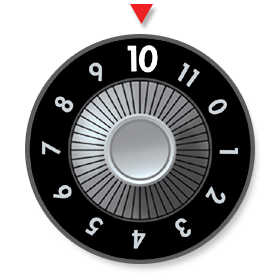
Sound

Carlo Maria Giulini and the Los Angeles Philharmonic- Beethoven: Sinfonie Nr. 3 "Eroica"
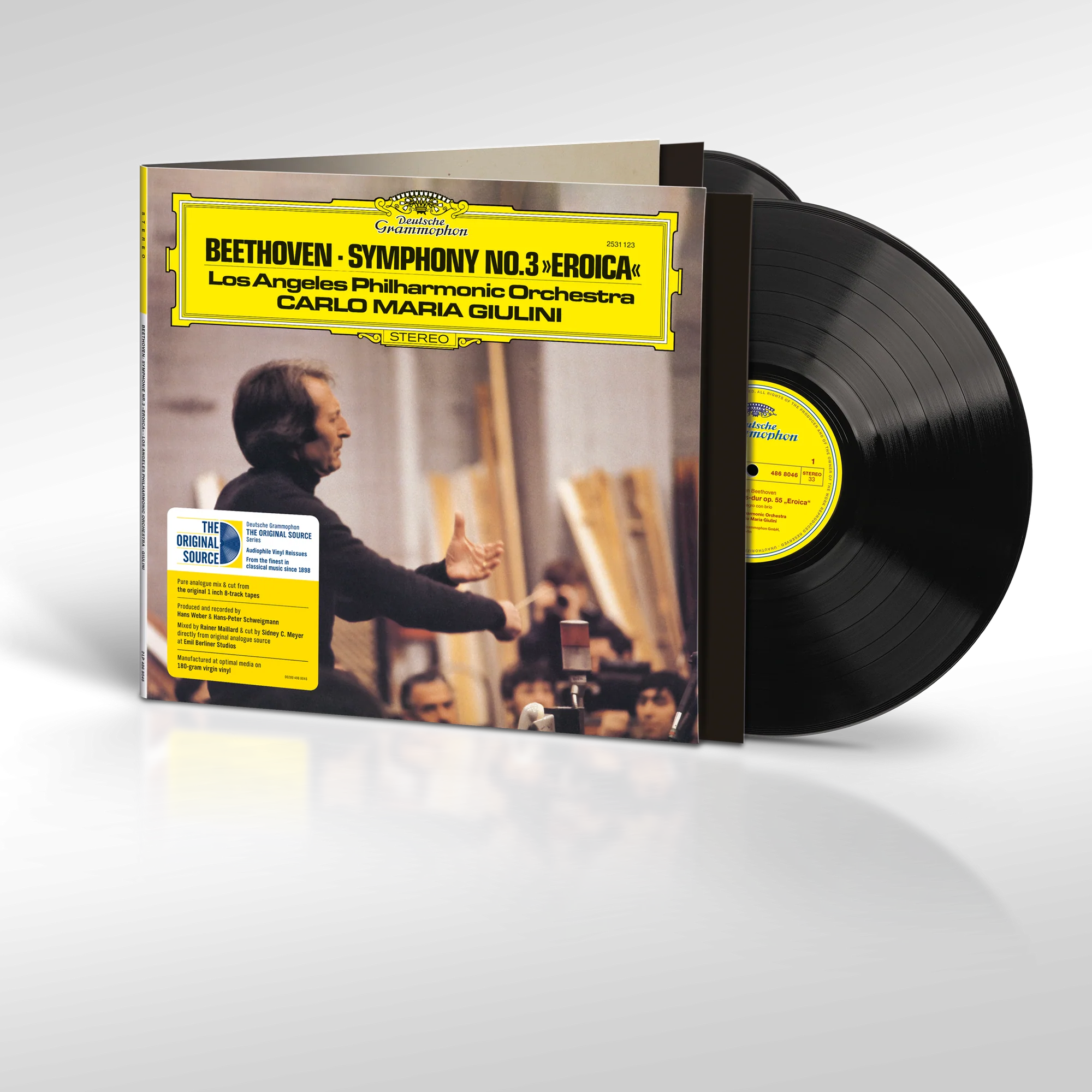
Not much needs to be said about Ludwig van Beethoven’s 3rd Symphony in Eb (1804) to those who buy classical recordings. When I was a high school student in my music appreciation class, this was the symphony my teacher claimed marked the line between the classical and romantic periods of music. That might be a gross oversimplification, but this is the singular orchestral work where Beethoven cemented the style and themes he would build on for the rest of his career.
Beethoven’s music was changing along with the times it inhabited. The French revolution had turned Europe on its head, and music was slowly becoming more accessible to the middle classes. At the same time, the German composer was dealing with increasingly worsening hearing loss, as well as severe bouts of depression. Many listeners focus on the backstory of Beethoven’s erased dedication to Napoleon Bonaparte, something he removed after the French leader crowned himself emperor, betraying republicans across the continent who had put their democratic hopes in him. But the subtitle “Eroica” (heroic) also has to do with the composer’s own philosophy, one that he documented in the Heiligenstadt Testament of 1802. This writing was a document where Beethoven confronted his physical and mental ailments and sought a new path where he could confront and overcome them. The work features moments of sorrow and anguish, such as in the second movement’s funeral march, but ultimately ends triumphantly, Beethoven was attempting to write his own victory over his fate, and that powerful imagery would define the rest of his highly productive “middle-period.”
Today the Los Angeles Philharmonic is one of the world’s great orchestras, and ranks among one of the most highly-paid orchestras in the world, attracting virtuoso players from around the globe, but in the 1970s it was viewed as being far-removed from even the top American orchestras in terms of prestige. Carlo Maria Giulini recording with the ensemble, let alone on Deutsche Grammophon, was a huge achievement at the time, and a sign of the Philharmonic’s ascendancy to the world stage. This particular session was recorded at the Shrine Auditorium in Los Angeles, as opposed to the orchestra’s primary concert venue the Dorothy Chandler Pavilion which was the group’s home from 1964-2003, but one with acoustics that were always a concern.
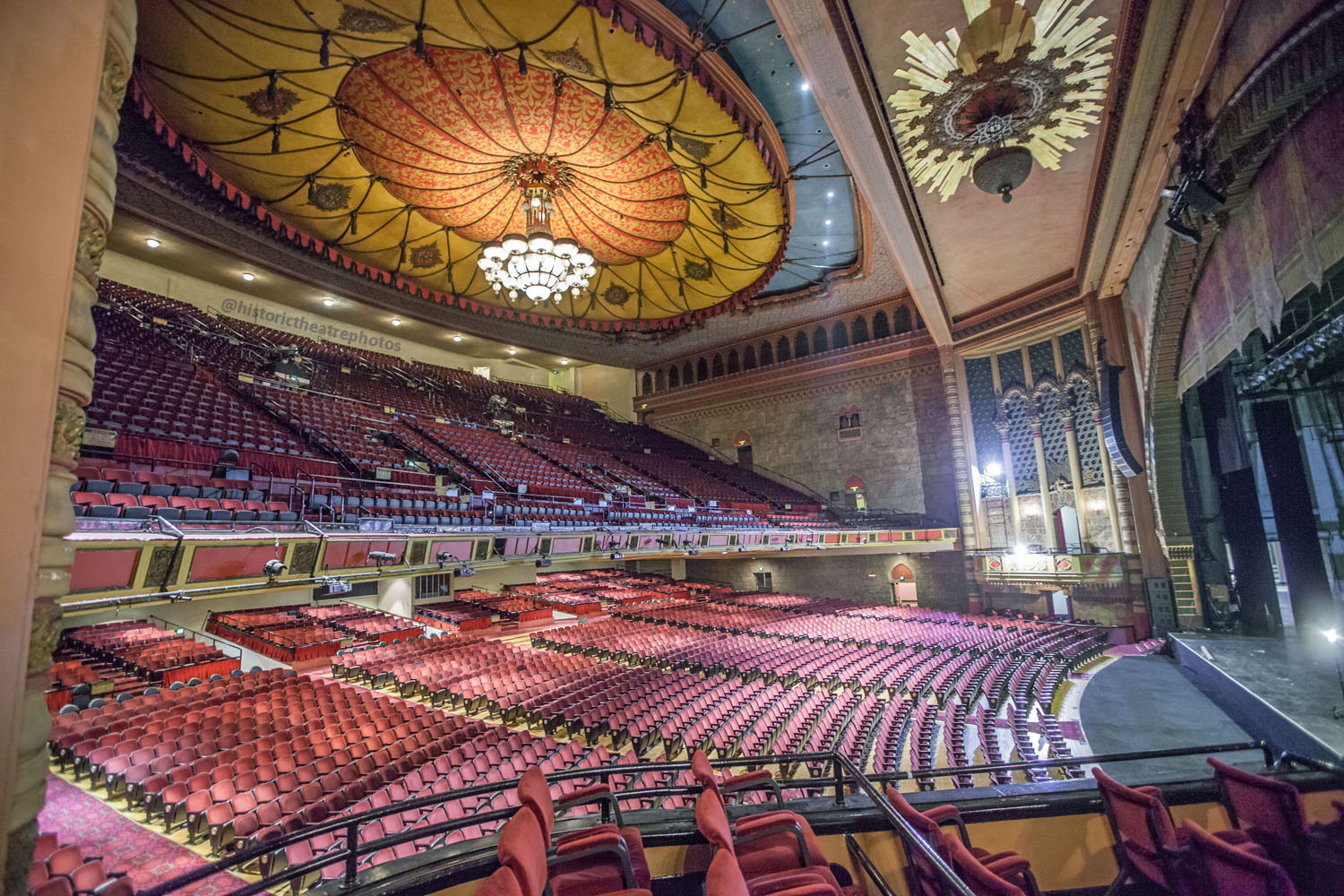 Shrine Civic Auditorium in Los Angeles
First let’s tackle the performance here by Giulini and Los Angeles, which will be stylistically polarizing for some. First of all, it’s one of the slower Beethoven 3’s on record, with the first movement clocking in at just shy of 21 minutes with all the repeats (not always taken). Even compared to classic measured performances from Otto Klemperer, it’s just slow. This was also noticeable in the third movement scherzo and in sections of the finale that sound just a bit dragged out.
Fortunately, Giulini actually does something with this time, and the orchestra responds to the challenge and makes some beautiful music. A great example of this is during the chamber winds sections of the Finale ‘Allegro molto’, which could potentially sound dead on arrival if the principal wind players didn’t step up to the plate with mature creativity. Look, this is never going to be the Beethoven 3 I point listeners to first. For that experience, go with Bruno Walter on Columbia (Classic or Speakers Corner) or Solti on Decca. BUT, if you are familiar with this work and want to explore a different interpretation, this is unique enough it’s worth owning, because the playing is fantastic.
Oh and the sound… it’s remarkable! This is one of the smoothest sounding Original Source releases I’ve heard yet. There is no sense of harshness in the treble, the LA Phil sounds open and spacious, and the bass is textured and layered. My only small gripe is that sometimes the very back of the orchestra, notably the horn and the timpani, can sound a bit veiled/washed, and my guess is that is a symptom of the hall acoustic, but I haven’t heard enough recordings from Shrine to really judge accurately. Either way, this is as good sounding a Beethoven 3 as any audiophile version I’ve heard from the last 20 years.
Music
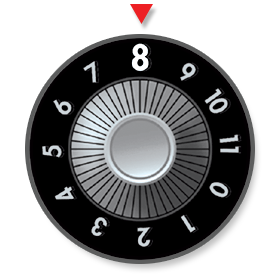
Sound
Claudio Abbado and the London Symphony Orchestra- Stravinsky: Petrouchka
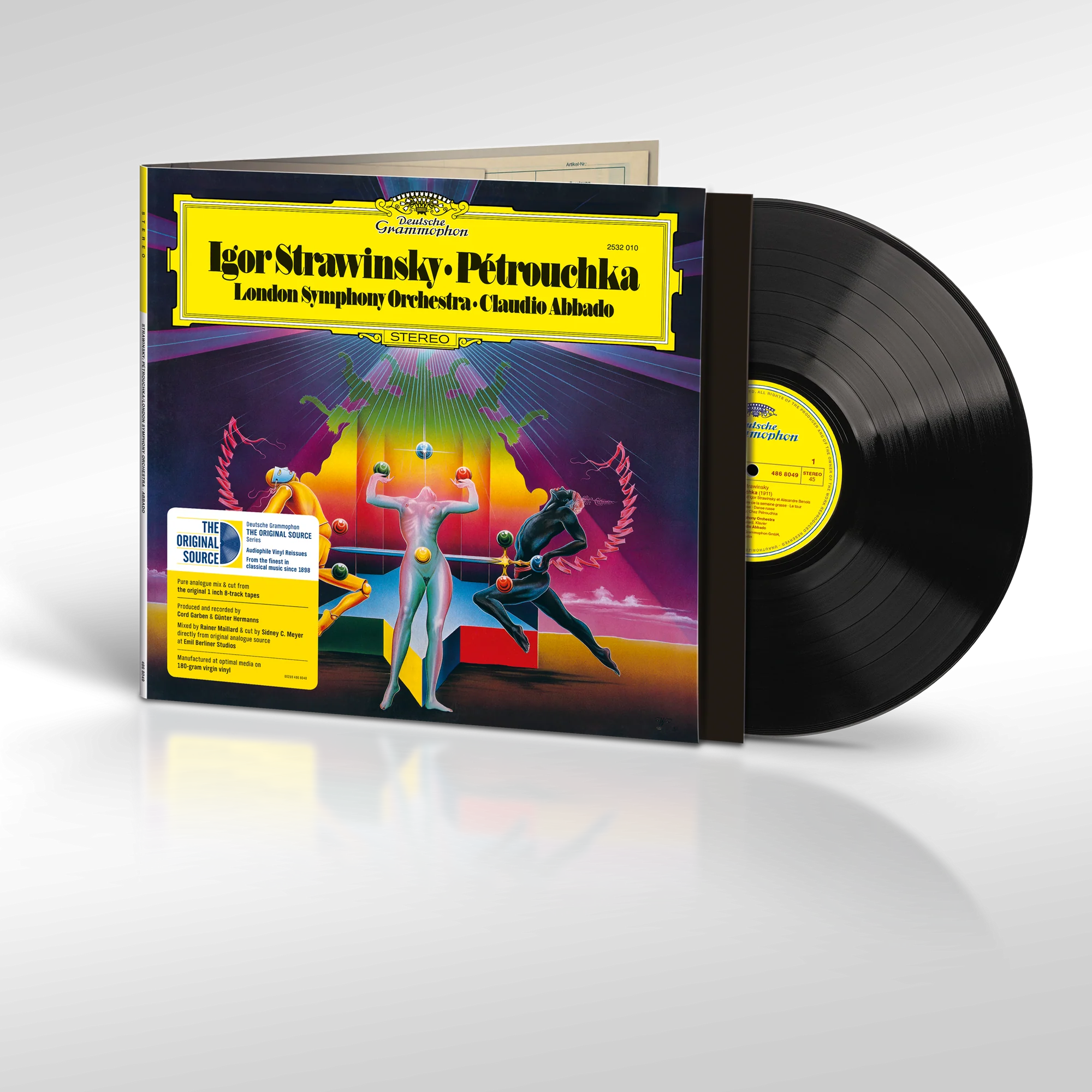
Igor Stravinsky wrote the second of his three Parisian ballets in 1911 for Sergei Diaghilev’s Ballets Russes. After the roaring success of the Firebird, he originally proposed to the ballet producer a primal setting that would eventually become 1913’s infamous Rite of Spring. But the composer, after a vacation with his family, became enamored with a work of music he originally envision for piano and orchestra that portrayed a puppet coming to life. And thus, in Petrushka Stravinsky presents a rustic scene of a street puppeteer in St. Petersburg weaving a story of a jealous love triangle involving the titular character, a ballerina and a Moor. This is normally the part where I would encourage you to go watch trumpeter Mark Gould’s Latin jazz-inspired take on the ballet, complete with stop-motion barbie doll sex, but the classical music community has decided we aren’t supposed to have a sense of humor anymore, so instead here’s a short clip of the magician turning his puppets “to life” during the ‘Russian Dance’ at the end of the first tableau.
Petrushka is my favorite Stravinsky ballet, and the one I’ve played the most. It is also one I find more difficult than its more notorious younger brother The Rite of Spring. Yes, the Rite has more jarring tonalities, and an occasional devilish solo section for some of the principal players, but in my experience, the Rite rewards players who can count and subdivide with a “plug and play” simplicity that is a bit less demanding than the constant twists and turns of the composer’s middle child ballet. Take for instance the constant stops and starts, and “scene changes” in the second half of the ballet covering the third tableau into the fourth, it requires the numerous soloists to have to lock a complicated rhythmic section into a competing, often opposing motif, all while having to worry about rubato and phrasing directions from the music director. Yes, there are similar hair raising complication in the Rite, however with Petrushka it is much more exposed, and much more melodic, meaning any misstep will be obvious to the audience. This ballet is truly a test of the ensemble, but more importantly a test of the orchestra’s principal players.
This 1981 recording of the LSO under Claudio Abbado (using Stravinsky’s 1947 version) was of course originally digital. In fact, if you go look up the original LP jacket from 1981 it touts that fact right in the corner. I don’t know if I’ve ever heard that version but I did own the CD at some point years ago. Sonics were never its strong suit, but there was a technical ferocity that grabbed my attention. However this was early digital, and those that worked in the industry back then knew that many sessions from these years were recorded with an analog backup, something Rainer Maillard knew, and so he scoured the DG archives and located the original, unused analog 8-track master which he and Sidney Meyer used to cut this release. They then decided to cut this version at 45rpm which was possible given the brief runtime of the ballet.
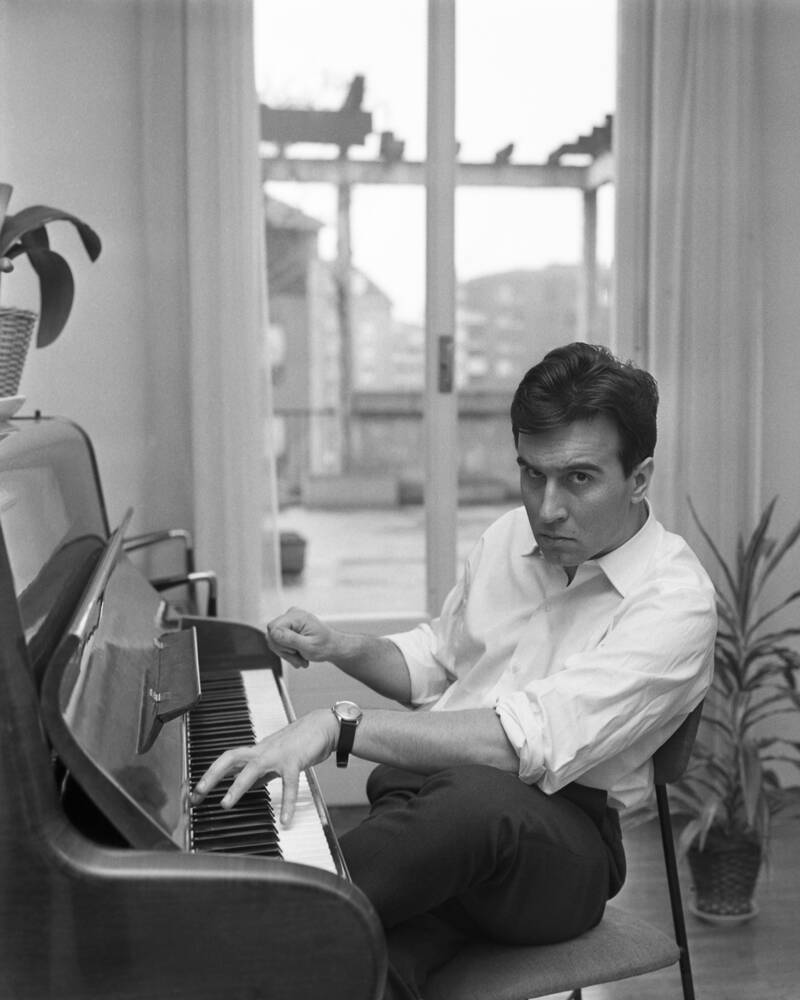 Claudio Abbado at the piano
1981 was an interesting time for classical recording. On the one hand, the classical recording industry was beginning to see its decline in the horizon. The analog era was ending, but more importantly, all the important repertoire had been recorded by every major label at least twiceover. Despite that, there was another important development across orchestras all over the globe; they were getting very, very good.
You will never hear a complaint from me about the musicianship of many of the golden age orchestral recordings of the 50s and 60s, but they were a different animal from the state of the industry in 1981. European ensembles and the conservatory system that fed them had finally fully recovered from the second world war, and the new competitive audition system that gradually was adopted throughout the 70s was creating a more merit-based (and more cutthroat) placement system for musicians. Go listen to any British orchestra from the 50s or 60s and one from the 80s. Yes, you’ll find gems, beautiful playing, and beautiful sound. But in the 80s recordings, you’ll find that every single player all the way back to the furthest desk, is in total command of the music in front of them, and that was quickly becoming the standard across both continents.
That fact is certainly apparent here with the LSO, an orchestra that often-produced mixed results in decades prior. The London players here are at the top of their game, and many would argue so was Abbado, this was the maestro at the peak of his career. Listening to this album the highlight that stuck out to me was finely-shaded colors from the players, I’ve heard many orchestras pull this off, but few with the kind of energetic tempos taken by Abbado! To fit that much nuance and musicality in a performance balanced by ferocity and rhythmic energy is an accomplishment, and one that sets the bar high for all other performances of this work. I admit a soft spot for the Ansermet recording of this piece (SXL-2011), but for character primarily. If you want to hear that character executed with much more technical proficiency, this LSO recording is hard to beat.
Abbado’s Rite of Spring released very early on in this series was a favorite of mine, although I found the showstopping sonics were just a tad dry in their presentation. This outing of Petrushka possesses a bit more air and space in the ensemble this time around, and combined with the huge dynamics and strong bass impact makes this a recording that checks all the boxes. Perhaps my new reference disk for this essential work.
Music
Sound
Seiji Ozawa and the Boston Symphony Orchestra- Respighi: Pini Di Roma - Feste Romane - Fontane Di Roma
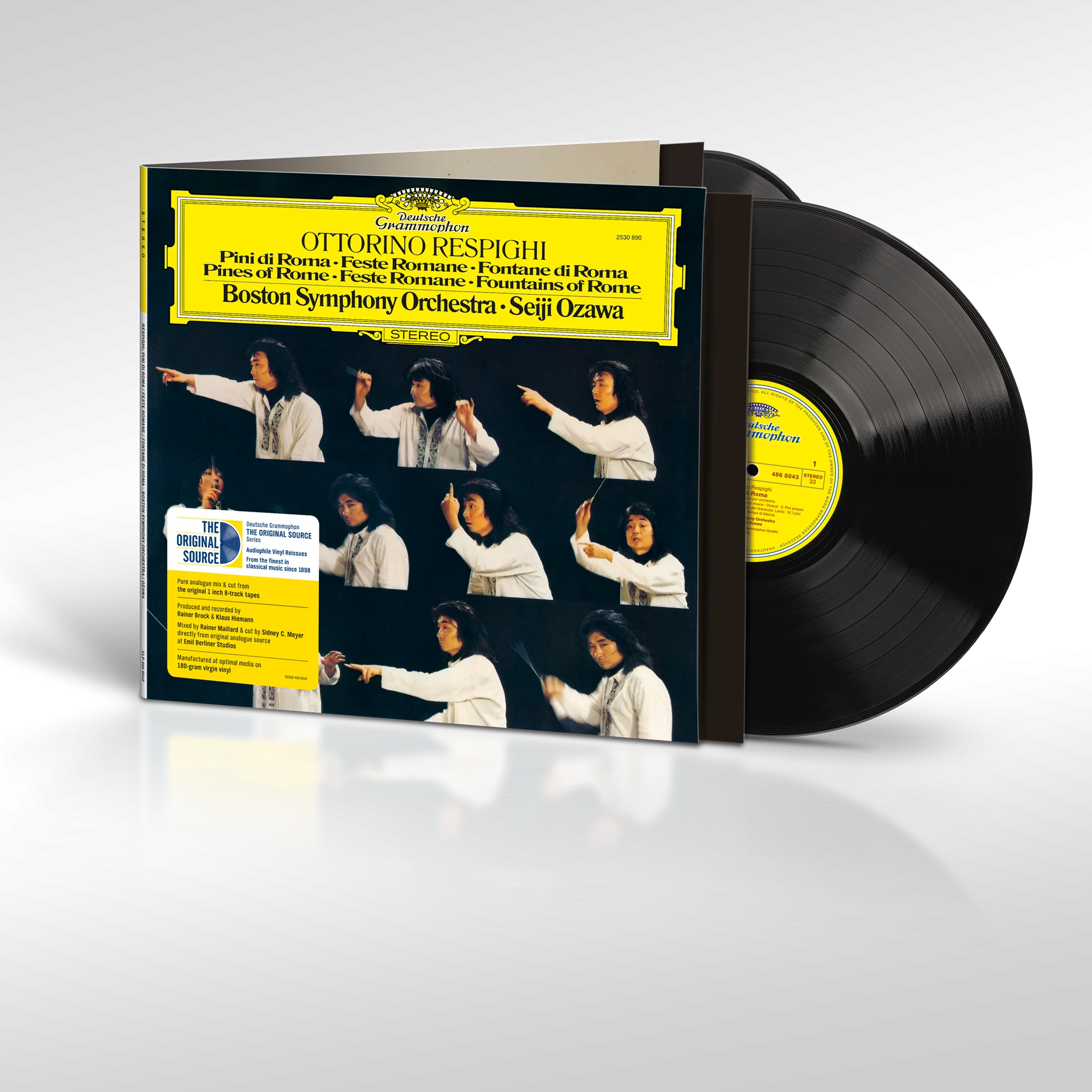
At last, we come to the most anticipated record I had from this batch of TOS releases, and that is of course Ottorino Respighi’s “Roman Trilogy” of Pines of Rome, Roman Festivals, and Fountains of Rome. These are some of the most epic showpieces of orchestral repertoire and by far the most performed works of the Italian composer. Born to an artistic family in Bologna, Respighi broke the mold of Italian composers by traveling first to St. Petersburg, then Berlin, to study composition, working with teachers such as Nikolai Rimsky-Korsakov and Max Bruch. This is in part why Respighi’s music sounds so unique to that of his contemporaries in Italy. In 1913 he relocated to Rome to teach composition, and that’s where he began his series of works inspired by the ancient city starting with Fontane di Roma in 1916.
Fontane or Fountains, is a four movement suite, each movement depicting one of the city’s fountains at specific times of day. The idea was to immerse the listener not just in the character of the artistic sculpture, but also the mood and setting tied to their environment at a specific moment. The four fountains are depicted in order at dawn, morning, midday, and sunset, and the music is intended to be an impressionist portrait in time. This includes what birds or other animals wild and domestic, would be in the scene at that time of the day.
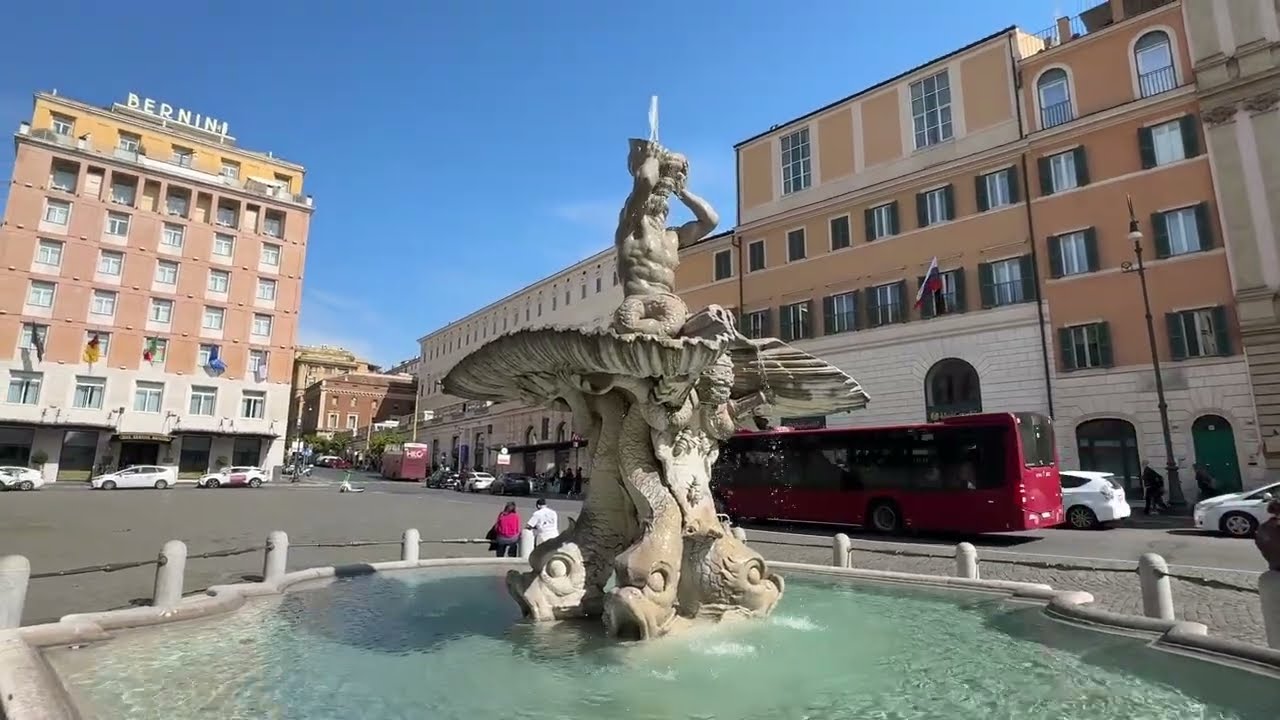 The Fontana del Tritone in Rome which inspires the second movement of Fountains
Pines of Rome is another impressionist work, showcasing four scenes of Roman pines, again set at different times of day. This work is perhaps most notable for the large march/fanfare the builds continuously in the end of the forth movement ‘Appian Way’. However this work is also notable for its use of recorded bird calls in the third movement nocturne, which Respighi specified to be played live from a recording he selected; a shellac disc of bird calls recorded by Max Hampe. This is a recording that will be played during live performances of Pines, usually digitally over a speaker, but sometimes with the original shellac disc on an acoustic gramophone. Deutsche Grammophon have publicized a rather remarkable fact about the bird call present on this particular record. When this session was recorded to 8-track in 1977, they did not include the bird call recording in the session. Instead the session engineer Klaus Hiemann recorded from the shellac disc to a separate tape which was then mixed into a two track master later. Well, Rainer Maillard and Sidney Meyer could not locate that separate tape for this TOS release, so they recorded the original shellac record on an acoustic gramophone inside Emil Berliner’s echo chamber, so what you’re actually listening to for this release is a fresh recording of Max Hampe’s original 78rpm disc!
Emil Berliner Studios explaining how they added a new recording of the bird calls to Pines
The final work in the ‘Roman Trilogy’ is Feste Romane (1928), which is perhaps the most exuberant work here. This is because this is a piece about celebrations throughout Roman history, from the ancient gladiator circus, to the modern Epiphany Eve carnival. Many have described this work as acting like a soundtrack and given that Respighi composed this during the golden age of silent cinema, there may be some merit to that.
During my tenure down in Tucson we had the benefit of a music director who was a bit of a Respighi aficionado, so I have performed all three of these works (Pines was actually my last performance with the TSO before shipping to boot camp 2 days later). They are large-scale and dynamic compositions that are hard to control and hard to properly record because the dynamic range they require is huge. To this day, the opening of ‘La Befana’ from Feste Romane might be the loudest thing I have ever heard on a stage.
This performance is Ozawa and Boston at the top of their form. He had been music director already for 4 years at the time of this recording and his comfort with the ensemble shows. The playing is tight but with a shading and refinement that comes from having world-class artists sitting in the principal chairs. Ozawa’s tempi are also energetic and bold. Some conductors tend to treat this music like Bruckner, and there are for sure some of those moments here, but the orchestra really picks up the pace when needed!
Emil Berliner wisely chose to reissue this 62 minute album as a three-sided set (with the fourth side blank) rather than trying to cram and hour of music on one LP as DG foolishly did in 1979. It is also somewhat interesting to me that DG and/or Ozawa chose to order this cycle beginning with Pines and ending with Fountains, sandwiching the epic Festivals in the middle when it feels more like an ending, but that’s just my personal taste. Otherwise the artistic rendering of these works is of reference quality. And the sound? To die for, but I’ll explain a bit more in depth…
The big orchestral elephant in the room is the Reiner recording from 1959 on RCA (LSC-2436), long a favorite of audio writers who exploded the cost of 1s/1s copies back in the audiophile heyday. This has also been reissued wonderfully by Analogue Productions at both 33 and 45 and honestly it’s hard not to recommend. Reiner also captures a lot of the energy of Respighi with the wonderfully technical players of Chicago, and the CSO brass section puts many to shame with their brilliant tone color. BUT, in my opinion while the Reiner is fantastic, Ozawa and Boston produce a more dynamically colored rendition by really exploring the quiet and mysterious sections of these works. But another big issue is that Reiner’s disc is lacking Feste Romane entirely!
Another disc you may be thinking of is Maazel’s Cleveland recording of Pines and Feste on Decca (SXL 6822) which was lauded by Harry Pearson and by many audiophile labels over the years including twice by Mobile Fidelity (one being a UHQR), King Super Analogue, and finally Speakers Corner. A few years ago when I was learning Feste Romane I hunted down a few different pressings of this recording and was consistently underwhelmed, especially in the finales of both works towards the center of the record, where the power of the orchestra seemed to fade and sound quite anemic. None of it sounded like the epic full sound of a live performance. This perhaps highlights how hard it is to capture works like this on the LP format, but it also helps us to appreciate when it’s handled correctly.
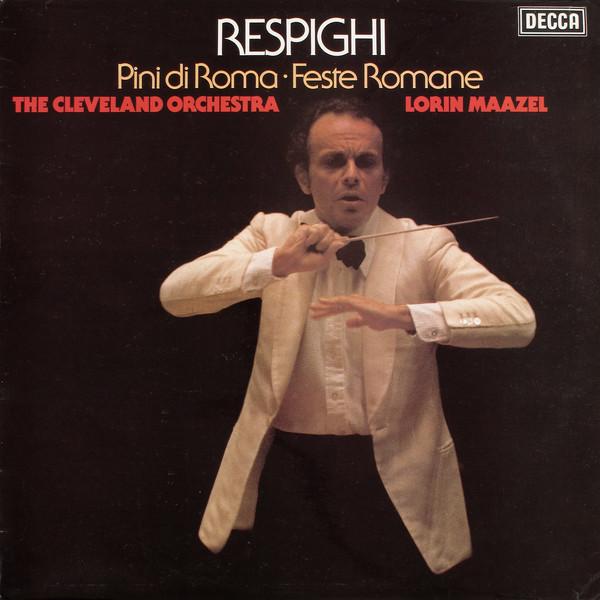 Critics have long touted this 1977 Cleveland recording as the best sounding Pines and Feste combo on record, but I think it is bettered by this latest release
Maillard and Meyer have done just that on this reissue, because for the first time on vinyl I have finally heard the finale of Feste Romane in its true to life glory, and that’s a huge accomplishment. In fact it’s true across every work in this set. In ‘Circenses’ for example, the organ will rip apart your listening room. It’s a huge sound that is so tightly held together with poise, no smearing of things like the low brass or strings even during the most violent passages. This is one of the most thrilling orchestral sounds I’ve ever heard on my system, and perhaps my favorite release in this series so far, which is no small honor.
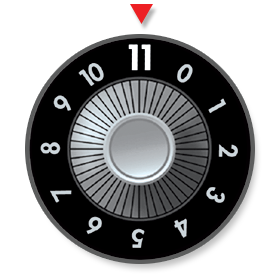
There are some people that are buying every release in the Original Source series and those folks likely already have this release and can echo what I’ve written here. But if you’ve been more picky about your title selection, which I don’t blame you for because the number of titles in this excellent series has now grown to an impressive catalog, just know that this one should not be missing from your record shelves. With this set you get Respighi’s three most important orchestral works packaged together with reference-quality performance and sound that is quite frankly the best overall I have ever heard on vinyl. Some may point out that I am occasionally stingy on my numerical scores with classical releases, so I hope you will take heed of the top scores I award this album.
Music
Sound