
The Florida International Audio Expo 2026—Ken's Koverage
Rooms that caught my attention
The Florida Audio Expo 2026 traditionally marks the unofficial beginning of the new audio show season. Held each winter in Tampa, it has become something of a welcome refuge for attendees traveling from colder parts of the country to trade snow boots for sunshine while spending a few days immersed in music. After the holiday rush, the show also offers audio enthusiasts a chance to refocus and reconnect with the passion that first drew them to this hobby: the pursuit of truly engaging sound.
What makes this show special isn’t just the gear—though there’s plenty of extraordinary equipment to see and hear—it’s the shared enthusiasm. Conversations spill out of demo rooms and into the hallways, strangers become quick friends, and everywhere you turn, people are swapping listening impressions or music recommendations. With 48 rooms, 12 marketplace vendors, and 34 cars, the show’s regional scale encourages camaraderie, giving the entire event an upbeat, welcoming vibe.
This year, I had the chance to team up with our editor, Michael Fremer, as he moved from room to room filming systems and interviewing exhibitors. Tagging along with Michael turned out to be an experience in itself. Time and again, people stopped him in the hallways to say “thank you” for his decades of work covering analog and for helping them discover ways to improve their own systems. More than a few mentioned that following his advice had deepened their enjoyment of their music collections.
One moment that really stood out involved three young attendees from South America who were visiting Florida and made a point of attending the show. Michael interviewed them on camera, and their excitement was infectious. Be sure to watch it. One of them even runs his own website devoted to vinyl playback. Seeing that kind of passion—especially from a younger, international crowd—was a reminder of just how global the love of music and high-quality audio has become, and how far the reach of a good audio publication can extend.
You can find complete coverage of the show, including all of Michael’s videos, on our website. But here, I wanted to highlight a few rooms that particularly caught my attention.
Let’s get started. (in no particular order)
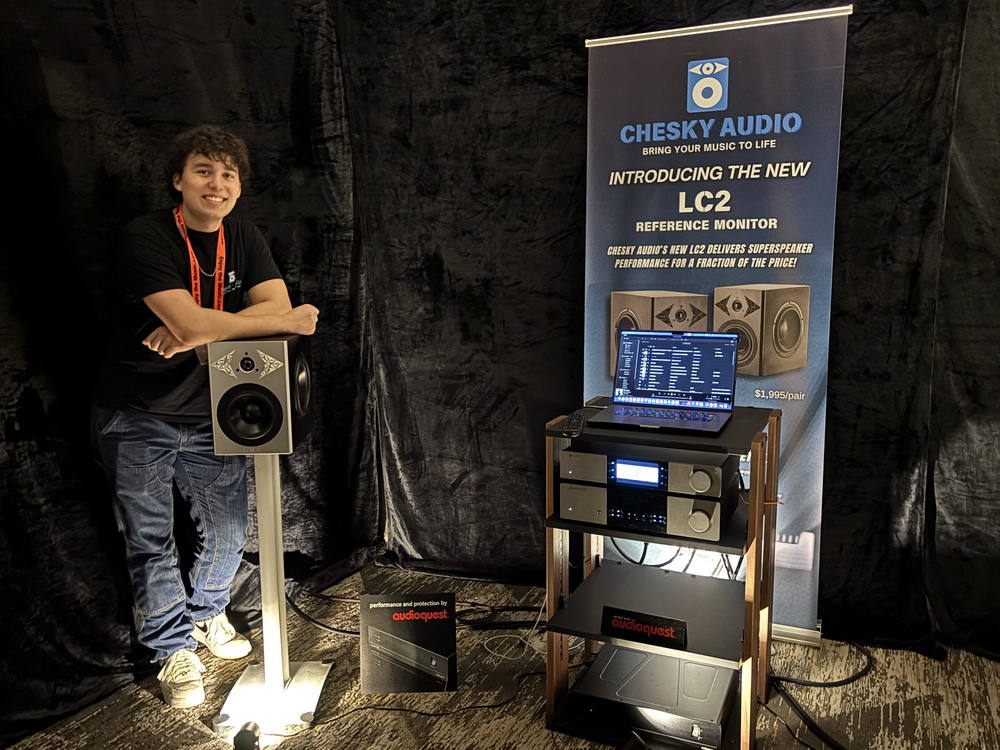 Chesky Audio LC2 Speakers with Cambridge Electronics
Only the second room I stepped into, and I could already tell something special was happening. Part of it was the contagious enthusiasm of Lucca Chesky, but just as striking was that the entire system came in under five thousand dollars. In a hobby where people often complain about “overpriced” gear—and where there’s constant hand-wringing about younger listeners losing interest in hi-fi—this room felt like a refreshing counterargument to both.
Lucca was demonstrating his new LC‑2 Loudspeaker, priced at $1,995 per pair, driven by the EXA100 Integrated Amplifier at $2,399.99, and connected with AudioQuest cables. The LC-2 itself is a clever design, featuring a 3D-printed double-walled cabinet, a 5/8-inch aircraft-grade aluminum front baffle, and dual side-mounted passive radiators handling the bass.
But the real story was the sound. The system delivered a level of musical engagement that easily punched well above its modest price point—dynamic, lively, and completely enjoyable.
Two rooms into the show, and it already felt like the weekend was off to a very good start.
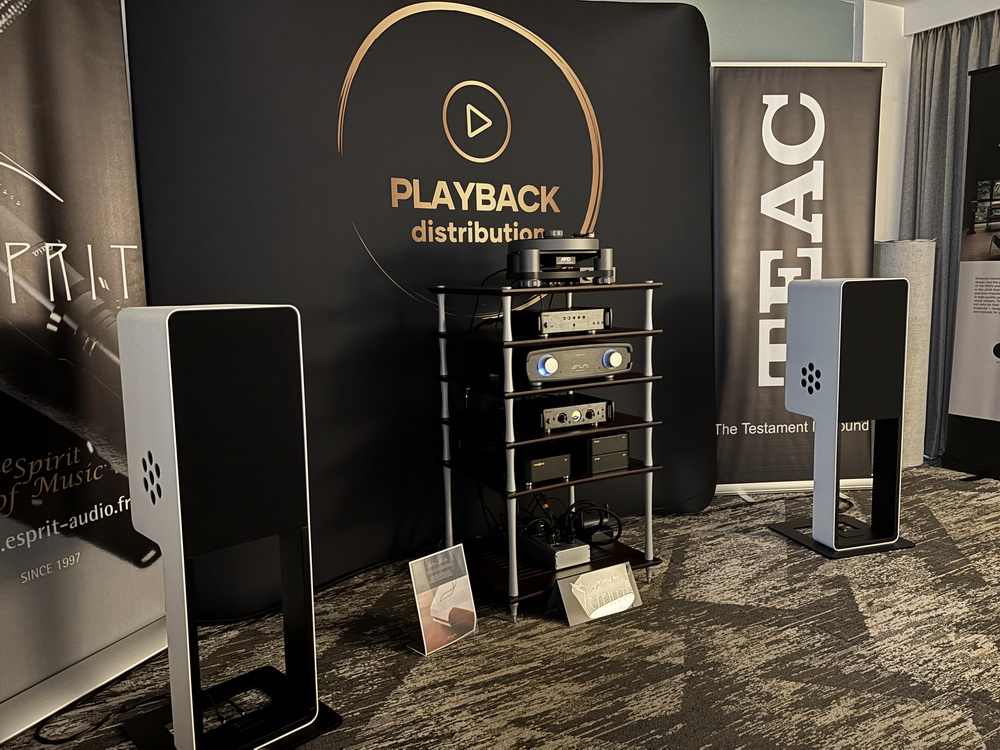 Silent Pound, Java, Teac, Avid
Playback Distribution put together one of the more musically satisfying rooms I encountered at the show. The system centered on the three-way Silent Pound Bloom Loudspeaker, driven by the Java Hi-Fi Integrated Amplifier, which incorporates GaN FET outputs and an LDR-based volume control. Components from TEAC handled digital duties. Vinyl playback came courtesy of the AVID Relveo Turntable fitted with the Altus Tonearm and an Audio Technica AT33MLB Cartridge.
What initially pulled me into the room was the bass. In the typically challenging environment of hotel-room setups, achieving smooth, well-controlled low frequencies can be difficult, but this system managed it with surprising ease. Later, I learned that the Bloom speakers incorporate an isobaric woofer configuration, a design that allows for deeper extension and better control from a relatively compact cabinet.
The Java integrated amplifier had impressed me previously at AXPONA, and it once again proved to be a capable musical partner in this system.
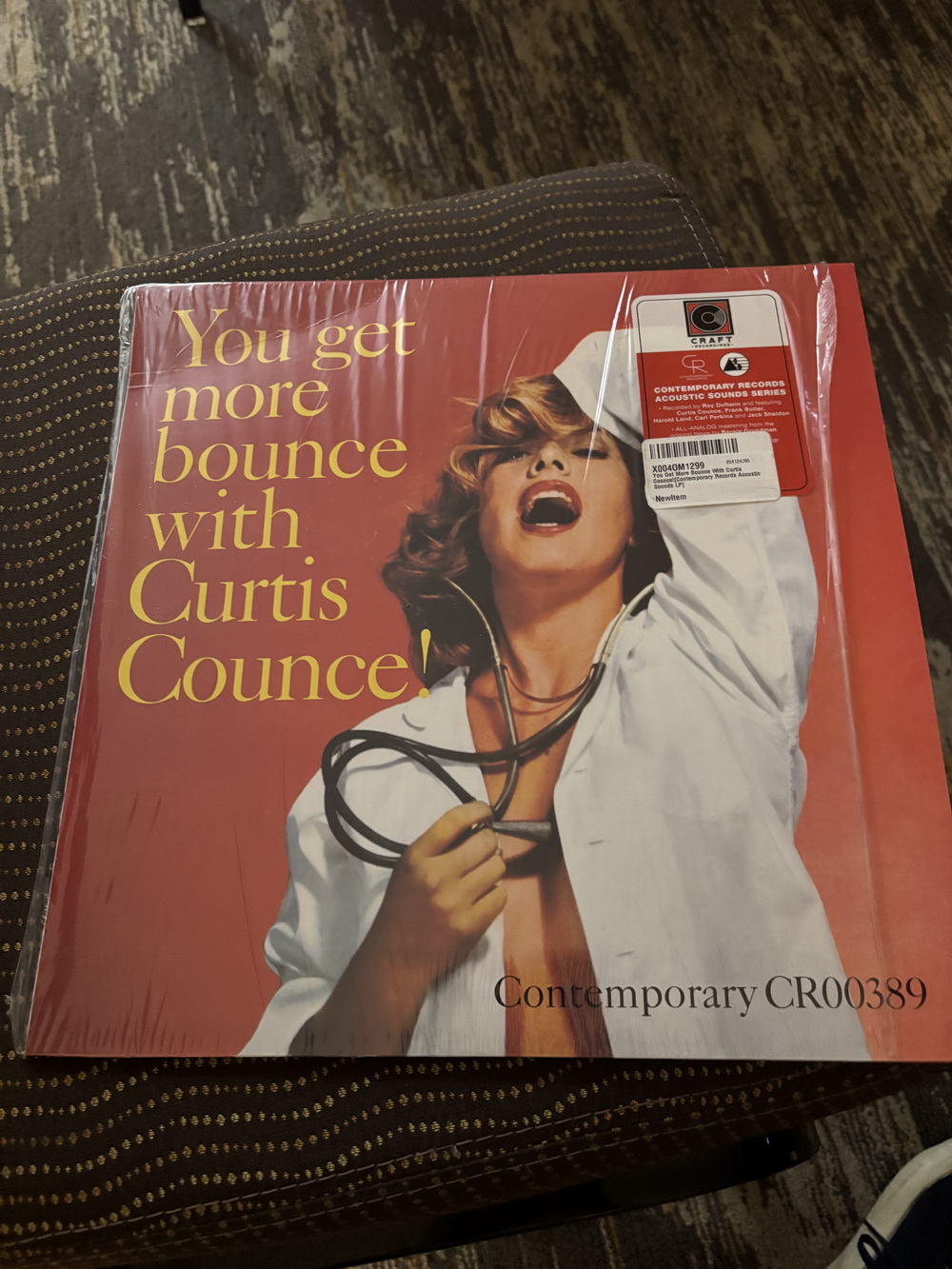
For listening, we spun the Craft recordings reissue of a Curtis Counce release, and the presentation was lively, detailed, and rhythmically engaging—exactly what this album should sound like when a system gets it right. All told, it was a very good-sounding room and one that stayed with me long after I stepped back into the hallway.
 Border Patrol , Triode Wire Labs and Living Voice
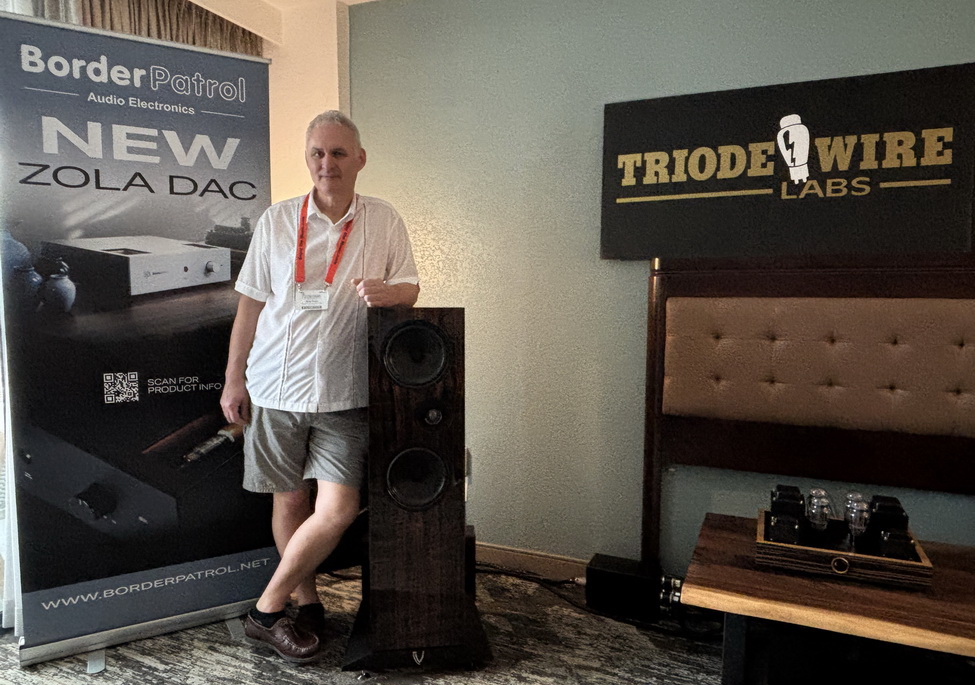
Another room that drew me in at the Florida Audio Expo 2026 was hosted by Border Patrol Audio and its designer, Gary Dews. There was nothing flashy about the presentation—just a carefully assembled system and a clear focus on natural, unforced musicality. In a hobby that can sometimes lean toward complexity, this room felt like a gentle reminder that great sound often comes from thoughtful, elegant design choices.
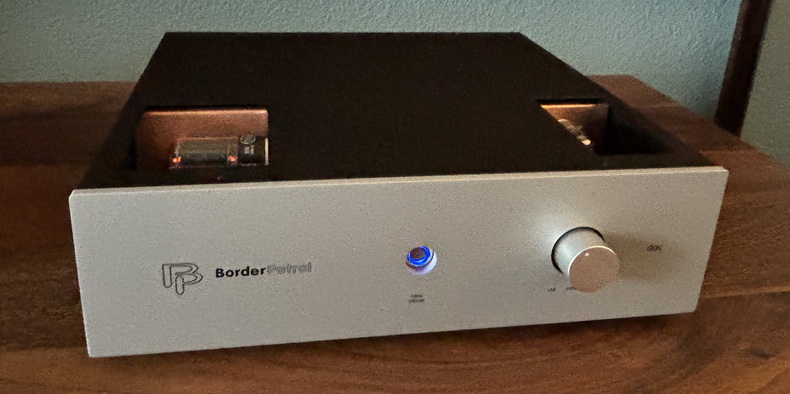
The setup itself was quite straightforward, a reflection of Gary Dews' no-nonsense approach to audio. A BorderPatrol S20EXD Amplifier—delivering 16 watts of classic 300B magic—powered the visually striking and wonderfully musical R80 OBX Loudspeakers. Cabling was an affordable yet high-performing Triode Wire Labs loom. On the digital front end was Border Patrol’s new ZOLA DAC. I mentioned in one of Michael Fremer’s show videos that I purchased this DAC on the spot after hearing just three songs through it at Capital Audiofest last year, where it made its debut. Yes.. I’m a fan of it.
A full review of the ZOLA is coming soon on Tracking Angle.
Border Patrol’s equipment has long been known for its minimalist philosophy and distinctive tube-based amplifiers and power supplies, and that character was immediately evident in the room. The sound leaned toward an organic, relaxed balance, encouraging me to settle in and listen for a while. The instruments had a convincing body and tone, and the vocals carried a sense of presence that made it easy to connect emotionally with the music.
What stood out most was the flow. Rather than dazzling listeners with hi-fi fireworks, the system focused on coherence and musical timing. Acoustic recordings, in particular, had an inviting warmth while still preserving enough detail to keep things engaging.
In the often-challenging environment of hotel-room acoustics, the Border Patrol/Living Voice system delivered a presentation that felt calm, balanced, and deeply musical. It may not have been the loudest room at the show, but it was certainly one of the most satisfying places to sit down, take a breath, and enjoy music.
 Wally Tools
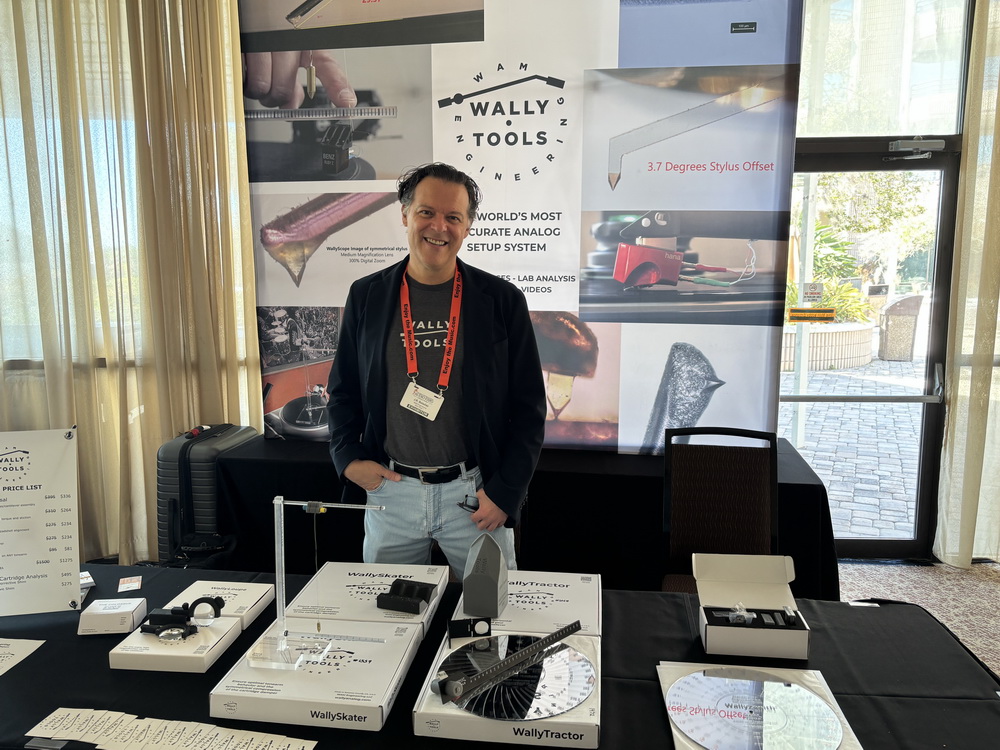
I make it a point to stop by and chat with J.R. Boisclair of Wally Tools at Audio Shows. He is always willing to share information and enthusiastically discuss his latest videos, newly developed tests, or new approaches to cartridge setup issues. If you have not done so, be sure to hop on his website and spend a bit of time watching his informative videos. They are a wealth of information for vinyl lovers. As we talked, I happened to see a device sitting on his table that was literally a sight for my old eyes.
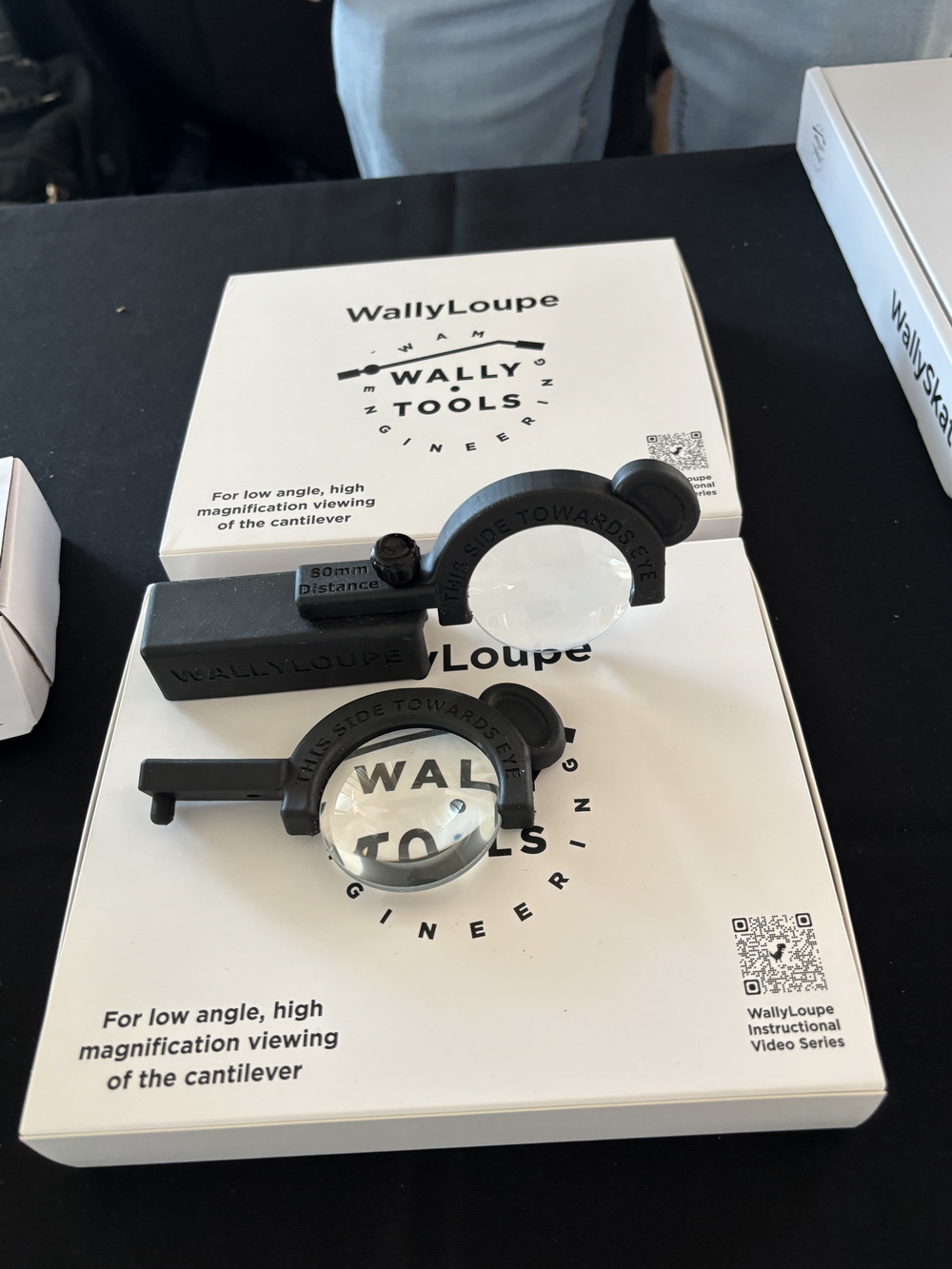 An adjustable glass-lens magnification loupe designed with a cartridge setup in mind. Shown on his website at $160.00 and available for shipping. My eyes will thank you, J.R.
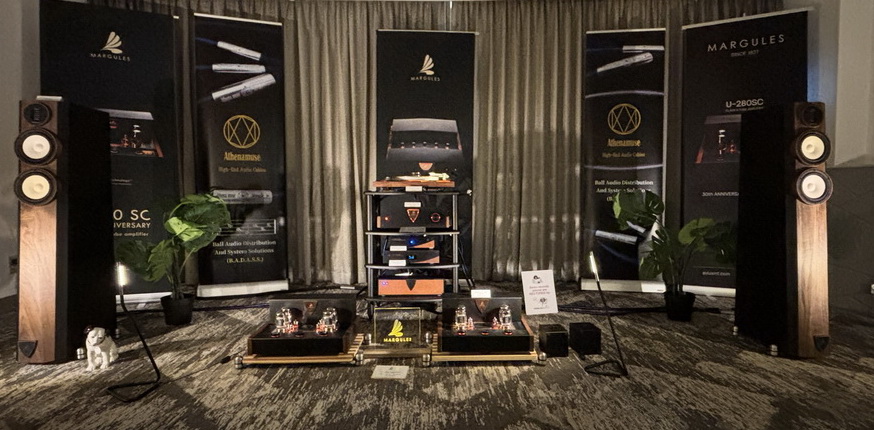 Margules Audio
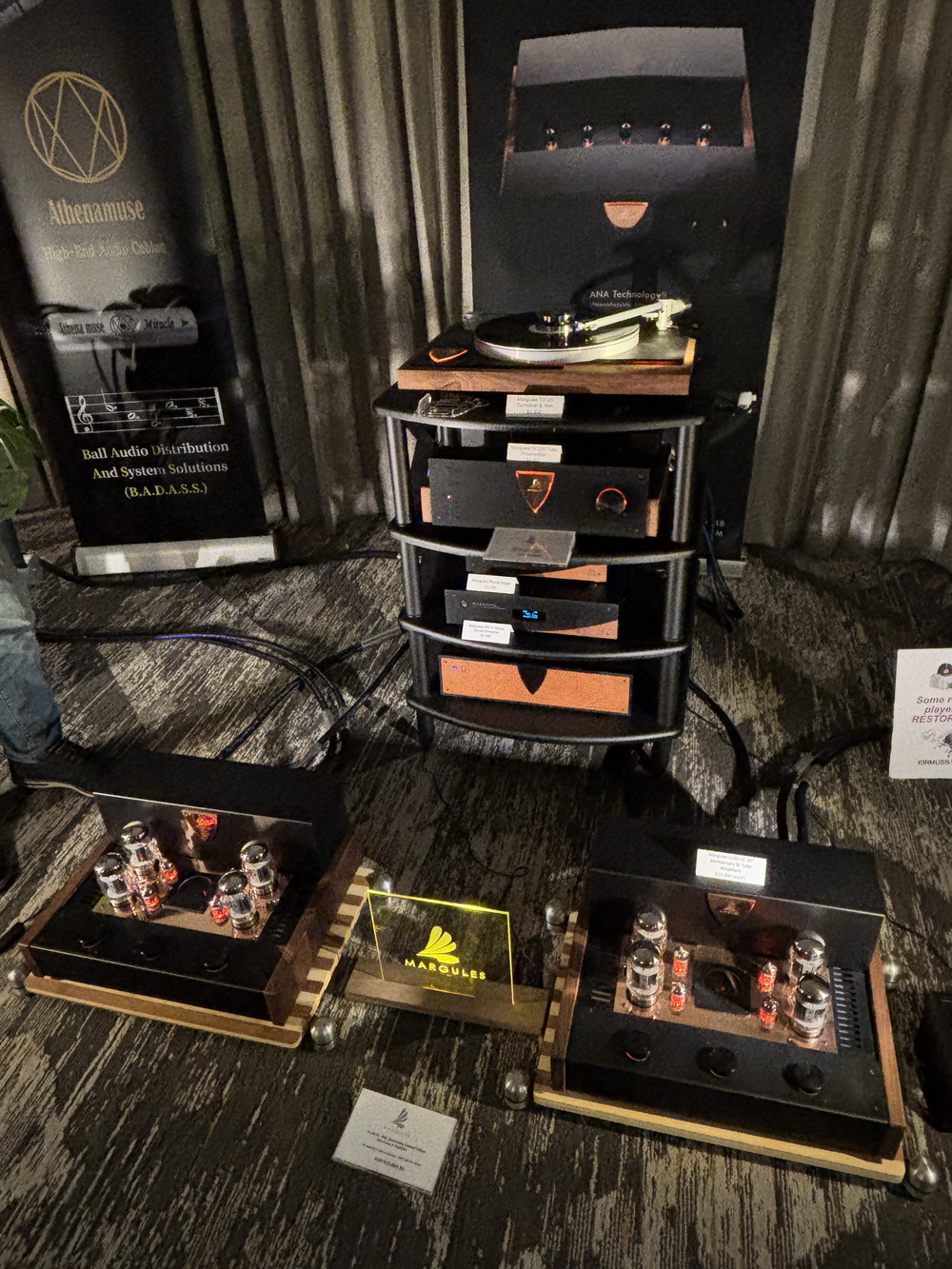
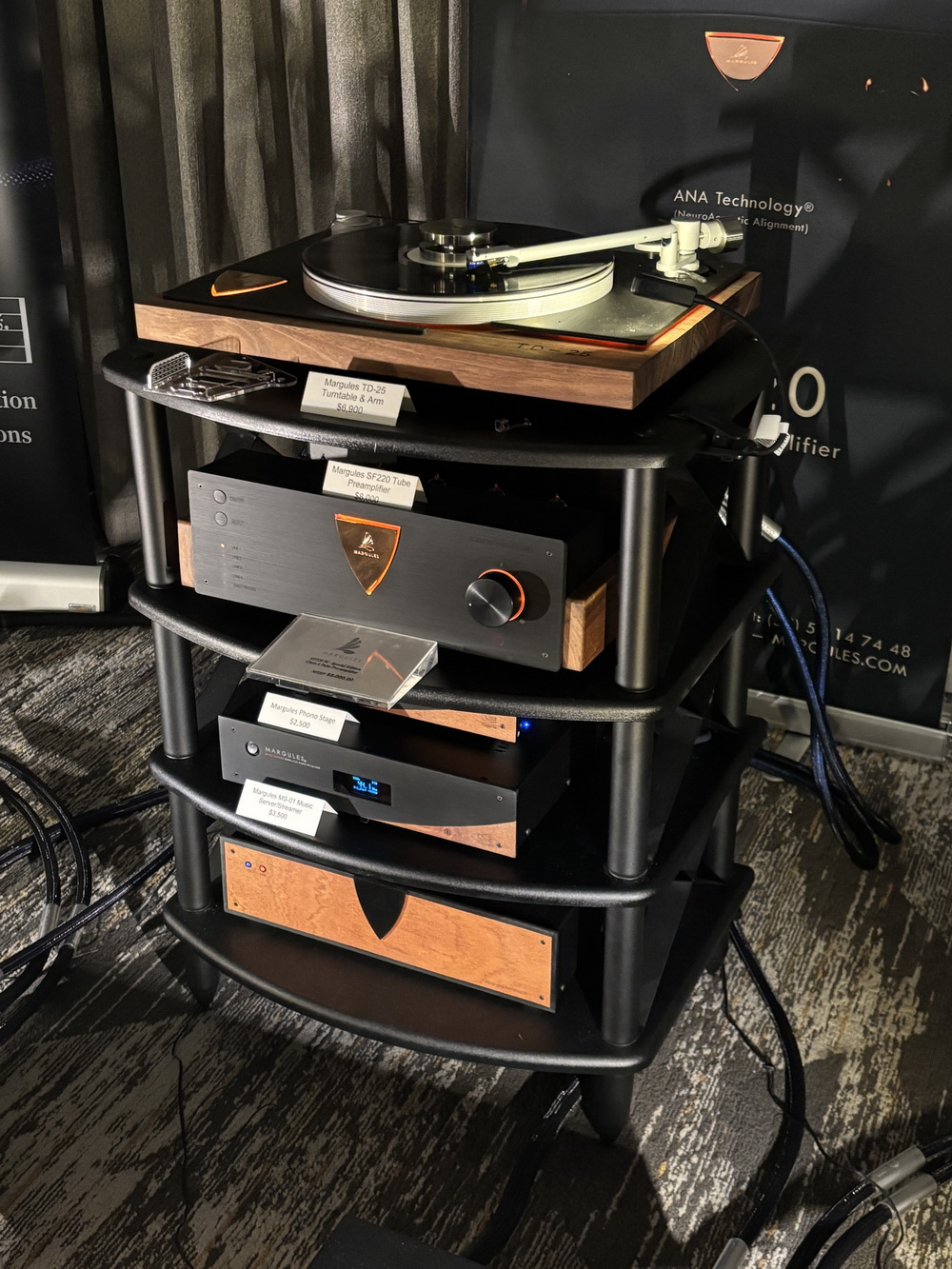
The Margules Audio room provided a presentation that made me pause and immerse myself in the listening experience. Centered around the company’s tube electronics and matching loudspeakers, the system produced sound that was both powerful and effortlessly musical.
Margules has a long-standing reputation for designs that emphasize tonal richness and harmonic completeness, a characteristic that was clearly evident during the demonstration. The midrange showcased a beautiful sense of body and texture, allowing vocals and acoustic instruments to emerge with a natural presence that drew me into the performance. Piano notes had weight and decay, while horns and strings exhibited tonal colors that made live recordings feel particularly convincing.
At one point, designer and owner Julian Margules sat with me and played three selections from operas. I was captivated by both the music and the system’s presentation. It takes considerable courage to showcase opera at an audio show during the day — a choice often referred to as a “room emptier” by exhibitors. Nevertheless, as a true music lover, Julian pressed on for over ten minutes, and I found myself wanting more.
What impressed me most was the system’s sense of ease. Even when the music grew dynamic, the presentation remained composed and fluid, never tipping into glare or harshness. Instead of chasing hi-fi spectacle, the Margules setup focused on coherence and musical flow.
This system managed to maintain a balanced and engaging presentation. It was another room where you could sit for a while, forget about the equipment, and enjoy the music—always a good sign at any audio show.
 Popori / Prodigio
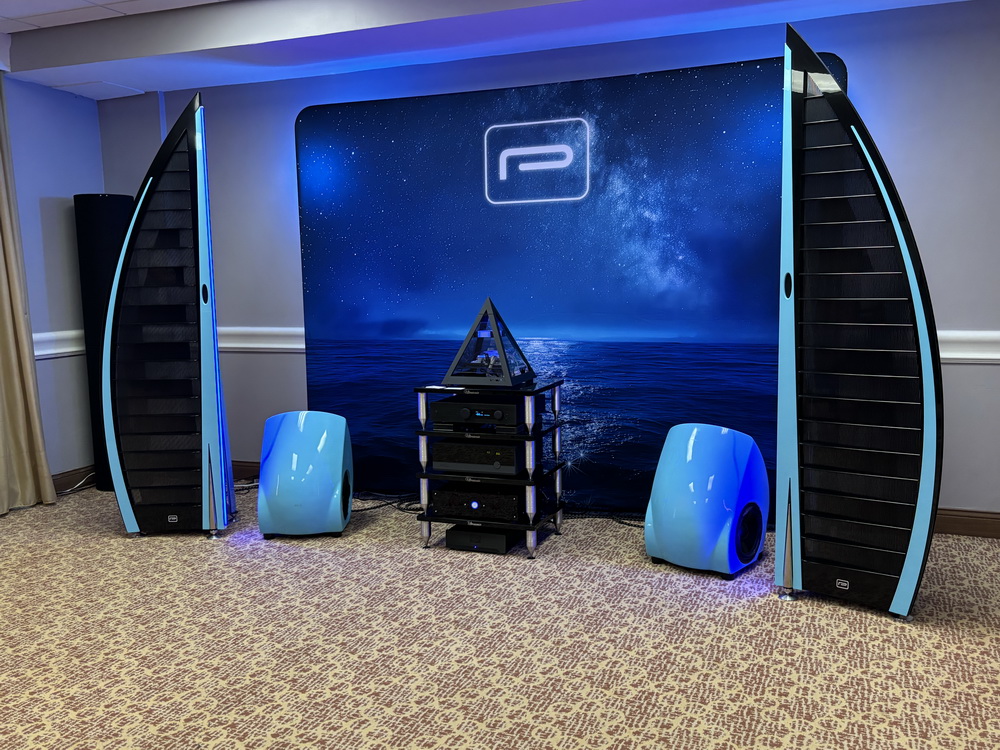
Popori, which is changing its name to Prodigio, showed its flagship loudspeaker at the Florida International Audio Expo 2026. The sound was unmistakably electrostatic in character—fast, open, and incredibly transparent—yet with more weight and authority than many panel speakers I have heard before.
Transients came and went effortlessly. Cymbals had a delicate shimmer, and vocals appeared in the room with a startling sense of presence. Electrostatics are famous for disappearing as sound sources, and these did exactly that—the speakers themselves seemed to vanish, leaving a wide, airy soundstage floating between them. Quite holographic.
The midrange was the real magic. Voices and acoustic instruments carried a natural tone and expressive texture that felt almost tactile. Strings had that silky, flowing quality electrostats are known for, while piano notes carried both body and harmonic richness. What surprised me was the bass performance. Panel speakers often struggle with low-frequency authority, but Prodigio’s design produced convincing bass with real extension and control. The low end wasn’t overblown—it was tight, quick, and integrated naturally with the rest of the spectrum.
Overall, the presentation leaned toward refinement rather than spectacle. Clean, transparent, and surprisingly full-bodied, the Prodigio system created an excellent listening experience.
NOTE: The subwoofers shown in the picture could be demo’d on or off. My comments are based on them being turned off, my preferred mode. Michael has a very interesting video interview with the sub's designer during his show coverage.
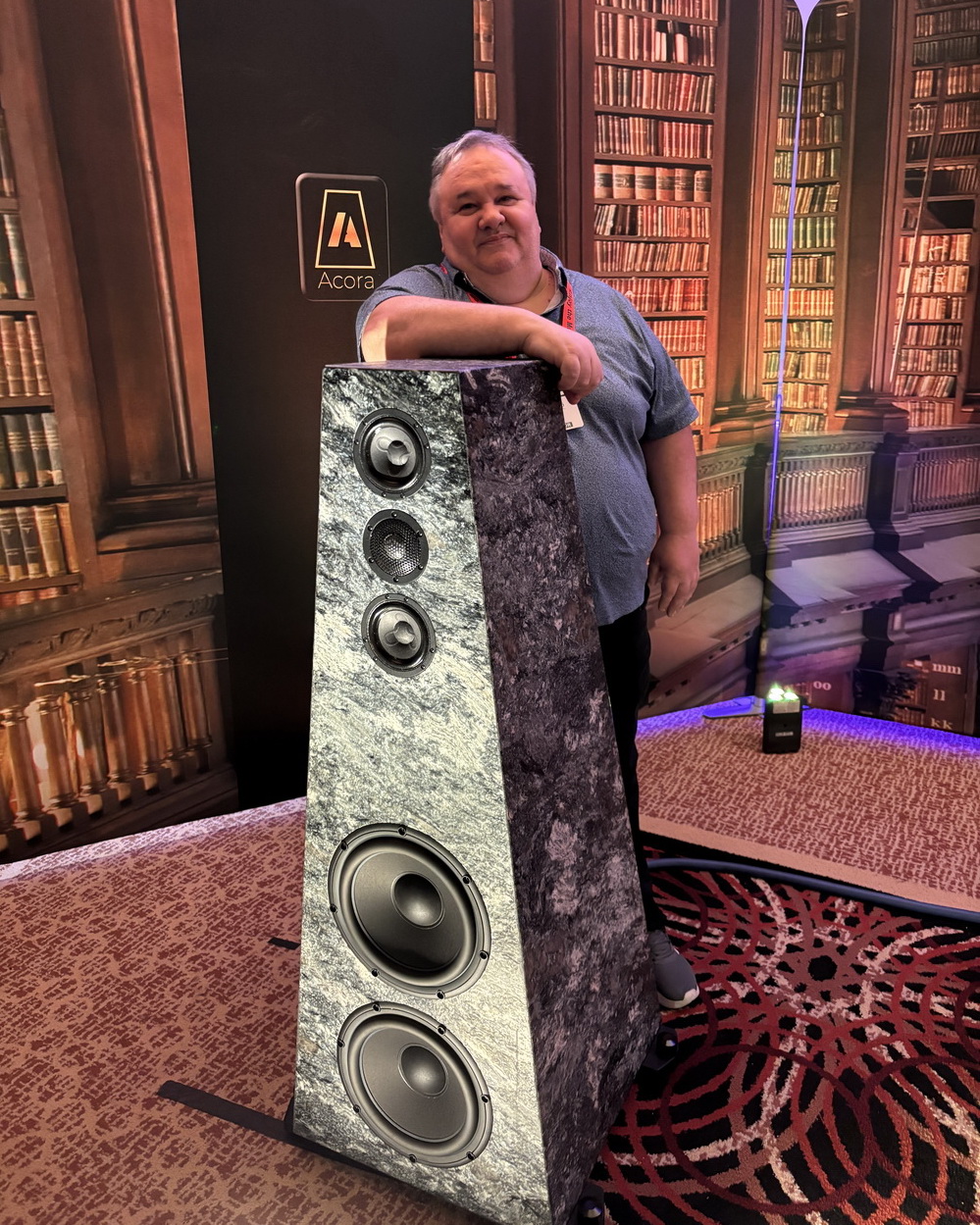 Acora Acoustics and VAC
Why is this man smiling?
Valerio Cora, the man behind Acora Acoustics and Audio Research, and in this case, literally the man behind the speaker, knows something about making great sound at Audio Shows.
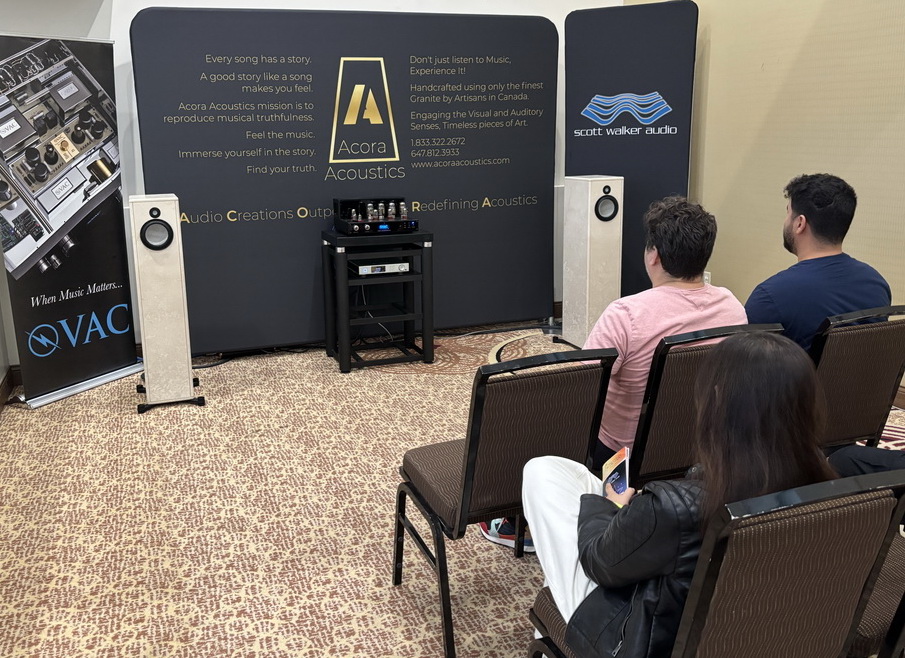
Acora's main room was one of those inviting spaces that attracted people from the hallway, and throughout the day, a steady stream of listeners stepped inside, many of them staying longer than they had originally intended. I swear I saw one guy there all three days of the show.
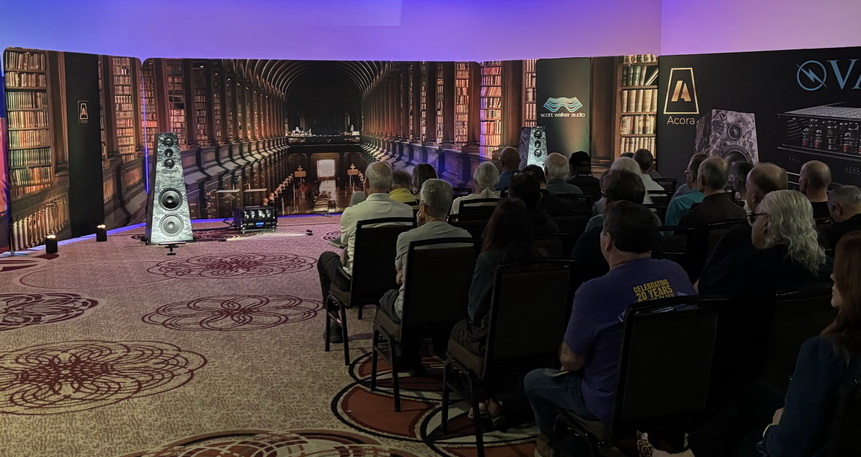
Once the music began, it became evident why the room was drawing so much attention. The system displayed was centered on Acora’s distinctive VRC granite loudspeakers and VAC’s Statement Series tube electronics, a combination that has consistently ranked among the best-sounding systems at Audio Shows over the past number of years.
The beautifully polished stone cabinets are visually striking, but their purpose goes far beyond aesthetics. Granite is exceptionally dense and rigid, which helps suppress cabinet resonance and allows the drivers to operate with very little coloration from the enclosure. The result was a presentation that felt remarkably stable and transparent, with a quiet background that allowed subtle musical details to emerge naturally.
What impressed me most early on was the presentation's scale. The system projected a wide and well-layered soundstage that extended comfortably beyond the speakers. Instruments occupied clearly defined spaces, yet the music never felt dissected or overly analytical. Instead, the room maintained a strong sense of musical coherence, with notes flowing together naturally and effortlessly.
Bass performance was another highlight. Achieving controlled, articulate bass is always a challenge at audio shows, but this system handled it with confidence. Low frequencies had weight and depth, yet remained tight and tuneful, providing a solid foundation without overwhelming the midrange.
The midband carried a satisfying tonal richness that worked beautifully with vocals and acoustic instruments. Voices sounded present and human, while piano and strings had convincing body and harmonic texture.
The big Acora/VAC system struck a balance between technical precision and emotional engagement. It delivered the kind of clarity audiophiles appreciate while still making it easy to relax, settle into the chair, and enjoy the music. In a busy show environment, that combination always stands out. Hell …. I’d be smiling too….
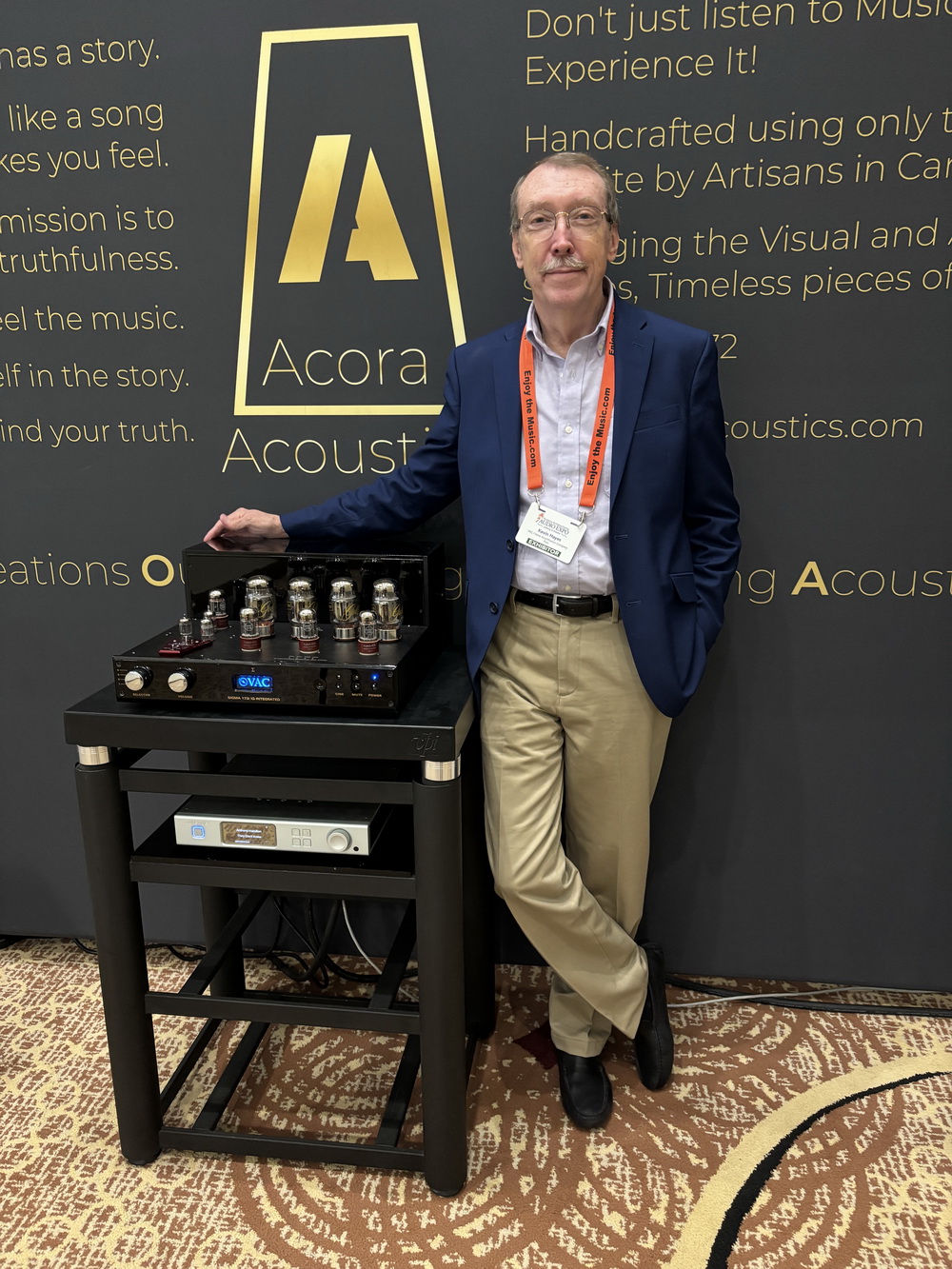 Outside the main room was a system that included VAC's newly released Sigma 172i IQ Integrated amplifier, priced starting at $15,000. Kevin Hayes, VAC’s owner and designer, walked me through the new unit.
Key Details of the VAC Sigma 172i iQ:
Technology: Uses the iQ Intelligent Continuous Automatic Bias System for real-time monitoring and tube protection, reducing distortion and ensuring ideal operating points.
Power: Typically delivers 85 watts per channel.
Options: Includes an optional Moving Magnet (MM) / Moving Coil (MC) phono stage and balanced inputs.
It powered a pair of Acora MRC 1 speakers with music from an Aurender A1000 Streaming DAC, and it was consistently enjoyed by showgoers.
 Special Listening Events
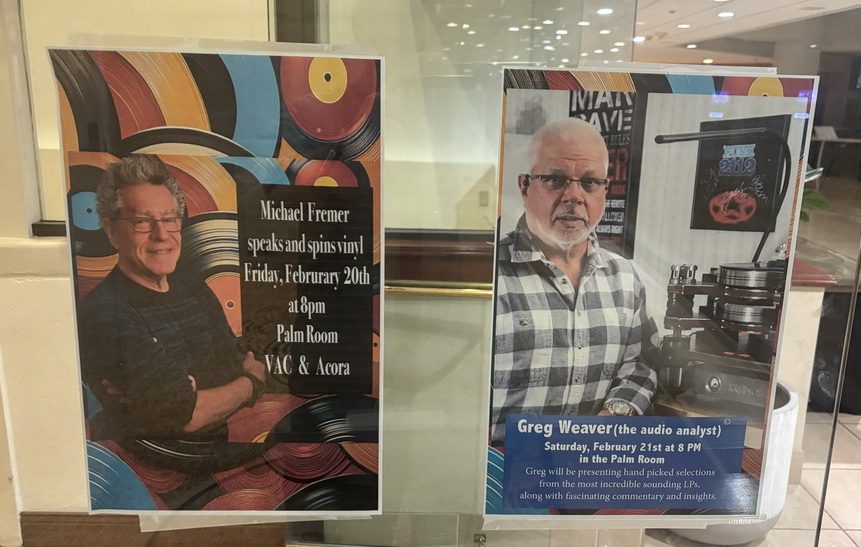
The Acora Acoustics/VAC room also hosted two listening events on separate nights, during which Michael Fremer and Greg Weaver played some of their most interesting vinyl records and shared fascinating background information on each selection. This is always an educational and enjoyable event to attend.
 After Hours Listening
Speaking of after-hours… that is when a different kind of listening begins in several of the rooms. The bustle of the day fades, the hallways grow quieter, and many of the exhibitors finally get a chance to sit down, relax, and play the music they really want to hear. Those after-hours sessions often become some of the most memorable moments of the entire show.
Without the constant flow of visitors moving in and out, systems can finally stretch their legs a bit. Volume levels come up slightly, longer tracks get played, and the music choices tend to become more personal. Instead of quick demo cuts designed to impress in the first thirty seconds, you might hear an entire side of a record spin uninterrupted.
Conversations take on a different tone as well. Designers, reviewers, and attendees gather in small groups, sharing listening impressions and stories about gear, recordings, and the long journey most of us have taken chasing great sound. It becomes less about showing equipment and more about enjoying music together.
One of the things I’ve come to appreciate about these late sessions is how relaxed everyone becomes. The pressure of the show schedule disappears, and the rooms often sound their best. With fewer people talking and moving around, the systems seem to settle in, and you can really hear what the designers were aiming for.
In many ways, those quiet hours are where the heart of an audio show reveals itself. Beneath all the technology and equipment, it’s simply a group of music lovers gathered in a room, sharing great recordings and appreciating the magic that a well-put-together system can bring to life.
This year's event combined great sound, passionate exhibitors, and an easygoing atmosphere that encouraged long listening sessions and plenty of conversation in the hallways. From ambitious statement systems to thoughtfully assembled, budget-friendly setups, the show highlighted the incredible diversity within today’s audio world. Just as important, it showcased the shared enthusiasm that keeps this hobby thriving. For a few days, the focus was simple—great music, good people, and the endless pursuit of better sound.