


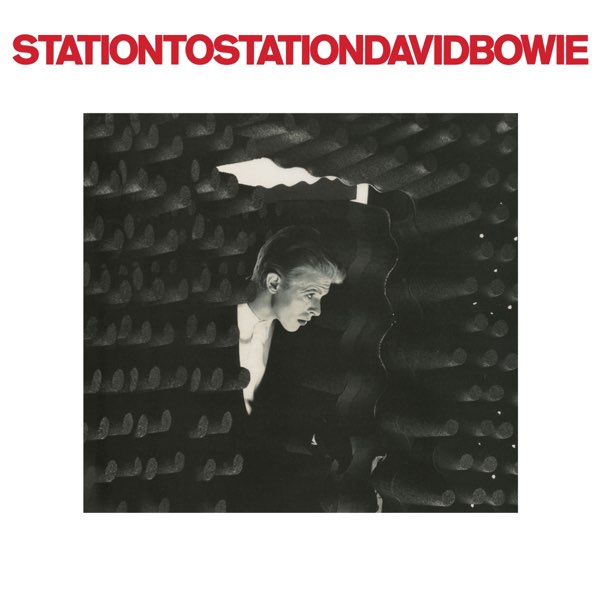
David Bowie’s Descent From “Station to Station”
The thin white duke returns at half speed
David Bowie’s artistry and career are pinpointed by not just what genre he was exploring at a given point in time, but by the cities of the world in which he found himself. Glamorous London was the hub for Ziggy Stardust, Philadelphia’s soulful streets influenced Young Americans, debaucherous Los Angeles in 1976 gave birth to Station to Station and the Thin White Duke.
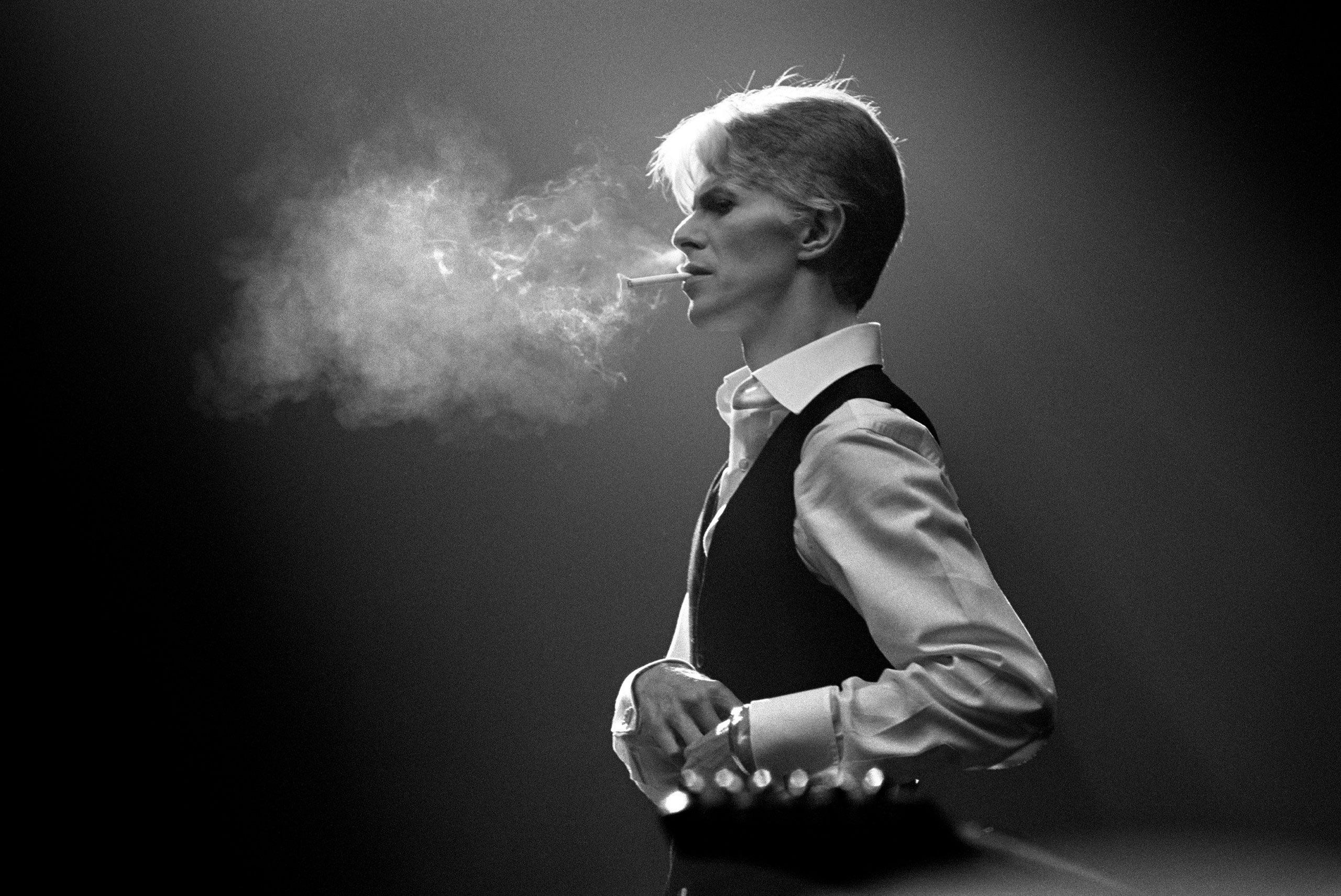
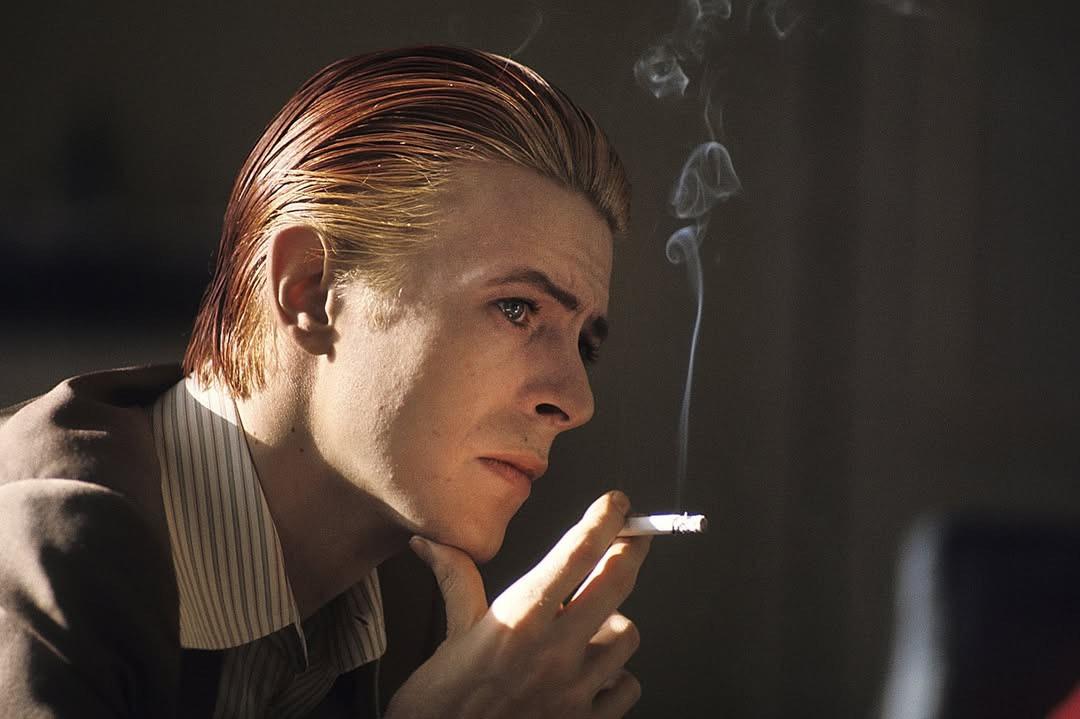
The Thin White Duke was an extension of Thomas Newton, an extraterrestrial character that David Bowie portrayed in Nicolas Roeg’s sci-fi classic, The Man Who Fell to Earth. His slicked blonde hair and cabaret attire were far removed from the Kansai Yamamoto outfits and tailored three-piece suits. Beneath the surface, the character radiated a darker aura. Cocaine addiction delivered Bowie to new paranoid heights, with the former glam star at one point remarking that ‘Adolf Hitler was one of the first rock stars,’ and another time supposedly giving a Nazi salute while greeting fans at London’s Victoria Station—though he denied it saying a photographer caught him "mid-wave". His interest in the occult intensified. Between these events and his later having no recollection of recording Station to Station, this was certainly Bowie's lowest point. He later declared that the city of Los Angeles ‘should be wiped off the face of the Earth.’
Bowie's low life at the time stands in sharp contrast to Station to Station's undeniable brilliance. The 10-minute title track, one of the album's most adventurous pieces, exhibits elements of his newfound admiration for krautrock. The Thin White Duke emerges amidst washes of industrial noise and the chugging of a synthesized steam locomotive, spewing cryptic lyrics referencing Shakespeare’s The Tempest, Kether to Malkuth—the highest and lowest spheres on the Kabbalistic Tree of Life, and English occultist Aleister Crowley; he swears, ‘it’s not the side effects of the cocaine.’
Perhaps because his marriage was breaking up, or inspired by meeting Nina Simone who'd covered it a decade earlier, Bowie chose to record Dimitri Tiomkin and Ned Washington's dramatically romantic "Wild is the Wind" from the film of the same name first recorded for the soundtrack by Johnny Mathis.
Amidst the insanity of his drug-induced haze, a track like “Word on a Wing” almost feels like a cry for help (‘Lord, I kneel and offer you my word on a wing, and I'm trying hard to fit among your scheme of things’). “Golden Years” and “Stay” are edgier renderings of the funk and soul sound Bowie explored on Young Americans; the former became a Top 10 hit on both sides of the Atlantic. Regarded as the album’s weaker spot, “TVC 15” is a quirky piece of comedic relief, that tells the tale of a girlfriend being eaten by a television set against an upbeat fusion of doo-wop and new wave.
The Thin White Duke marks musical time for simply being a get-up— one of David Bowie’s rock and roll masks, with no great significance. The character had little chance to impact pop culture and become immortalized on celluloid, ala the Ziggy Stardust and the Spiders from Mars concert film. Rather, the Thin White Duke vanished into space, like Major Tom in “Space Oddity.” After supporting Station to Station on the Isolar tour, Bowie decamped to Berlin to both kick his drug habit and explore another realm of experimental music, that become incorrectly referred to as ‘the Berlin trilogy.’ Station to Station garnered worldwide sales of over 3 million and is regarded as one of Bowie’s most important and greatest albums.

Station to Station is the latest Bowie album to receive the half-speed treatment for its 2026 50th anniversary. It follows the same template as every album since Ziggy Stardust launched this series: faithfully replicated artwork, sourced from Ray Staff's 192kHz digital file remasters (the same source as the decade earlier regular reissue). An OBI mentions the Neumann VMS80 lathe and recapped electronics.
.jpg)
I referenced an original US pressing of Station to Station mastered by Allen Zentz before approaching this reissue. What the original lacked in bass output was more than compensated for by its airy and open but not bright top end that produced great detail and three-dimensional instrumental imaging.
This half-speed cut by John Webber noticeably boosts the lower mid to bottom end, overcompensating for the original's lack of weight, while compressing, hiding and all but eliminating finer details and the original's transient clarity. More weight on bottom sounds great in theory, but the excess leaves George Murray’s bass runs on “TVC 15” and Dennis Davis’ intricate kick drum patterns on “Stay” sounding muddy and sluggish, which seriously diminishes the original's snappy rhythmic authority.
After a few songs, the heavy handed application of lower end EQ becomes obvious and somewhat monotonous and you hear "bass", more than the instruments that are supposed to be producing it. The spectral balance is "off". The result is a less engaging and less enjoyable listening experience. There's less Bowie and more EQ.
Bowie’s varying dynamic inflections and vocal textures easy to hear (and enjoy) on the original pressing here are obscured. The natural and artificial vibrato on “Wild is the Wind” become borderline fatiguing after a while. Some of the guitar tones and textures sound tampered with and limited. Immediately noticeable on first 1/2 speed mastered play, for instance, was how the electric lick on the introduction to “Stay” sounds shrilly instead of liquid, and the rhythmic acoustics on “Golden Years” are not only grating but also almost inaudible. Roy Bittan’s piano runs on “TVC 15” sound muffled and lack the desired percussive impact. The EQ preference also manipulates the tonality of some of the instrumentation, such as the handclaps on “Golden Years”, which end up sounding more like finger snaps.
These individual examples may sound picayune but the overall effect of what's been done almost produces an unrecognizable version of an iconic album.
Could the original tapes be in such poor condition that the only feasible option is to use these Ray Staff remasters? Usually top end detail and air diminishes over time. Perhaps that's the problem here and nothing can be done to bring it back but then why compound the problem by pushing up the bass, which only obscures the top?
If the tapes are in such poor condition they can't be used to directly cut lacquers perhaps a new digital master can be produced using the latest analog to digital converters. Celebrating the 50th anniversary of one of Bowie's most loved records with a ten year old digital master does it a disservice, unless the problem is the equalization, in which case that revision does the disservice. Either way, Bowie's catalog is not getting the sonic respect it deserves.
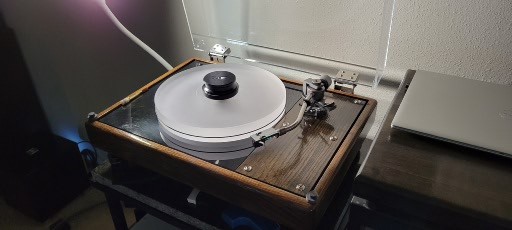
A special thanks to Michael Fremer for allowing me to conduct the pressing comparison on his stellar setup! (I did not put 'sonic words' in DP's aural mouth_ed.)