
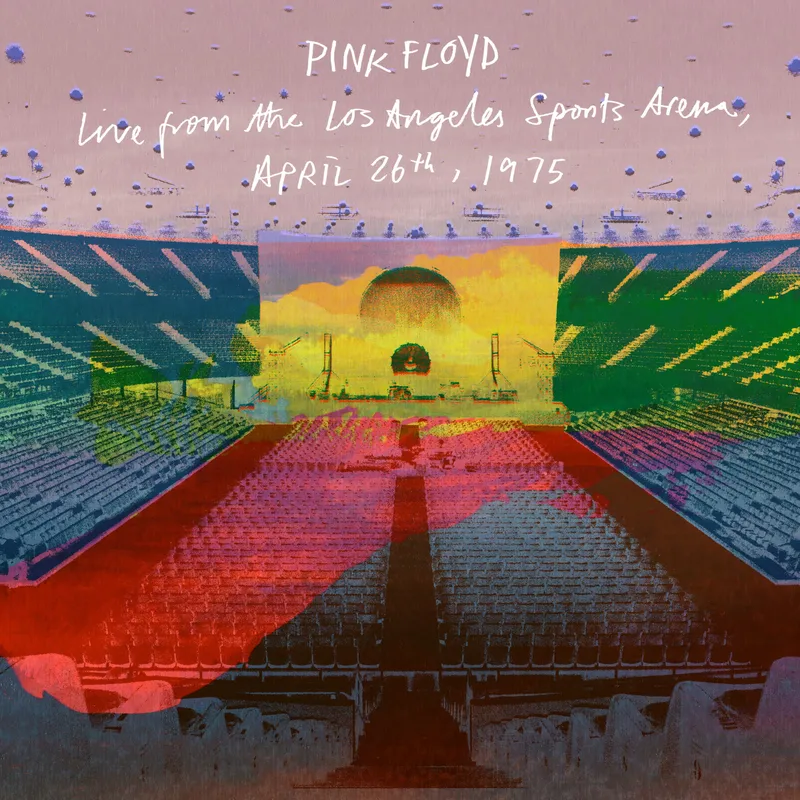
Pink Floyd Takes Listeners Back to Los Angeles ‘75
Sony bootlegs the bootleggers by releasing a highly reputable audience tape for RSD
Mike Millard–disguised as a handicap–wheeled himself through the corridors of the mega arenas in Southern California during the 1970s, concealing his Nakamichi 550 cassette recorder and AKG 451E microphones. His intent in recording shows was only to trade for others, frowning upon the practice of his tapes being distributed and sold by bootleggers. Millard’s recordings set a new standard for generally good-sounding bootlegs during a time when they often sounded poor because of the way they were often captured: a portable cassette recorder smuggled in someone's pocket. Releases like Led Zeppelin’s Listen to This Eddie and the Rolling Stones’ LA Friday, sourced from his tapes, became the stuff of legends in the underground market.
.jpg) Mike Millard's recording gear
Mike Millard's recording gear
.jpg) Led Zeppelin and Rolling Stones bootlegs sourced from Millard's tapes
Led Zeppelin and Rolling Stones bootlegs sourced from Millard's tapes
Millard was in attendance for the next-to-last show of Pink Floyd’s consecutive five-night sold-out run at the Los Angeles Sports Arena on April 26th, 1975. To say these shows went without incident is a massive understatement. Local police chief Edward M. Davis held an ultra-conservative position against any recreational drug consumption, so much so that flyers were handed out at the arena entrance stating “THIS IS NOT A SANCTUARY FOR POT SMOKING.” Over 500 arrests were made across the five nights, where Davis–unappreciative of rock and roll and all its trappings–claimed he had never seen a better audience in his career. Roger Waters stirred up the audience on the final night, where he dedicated the show-opening “Raving and Drooling” to “your Mr. Davis, chief of police of this great city” to a round of hollers and boos.
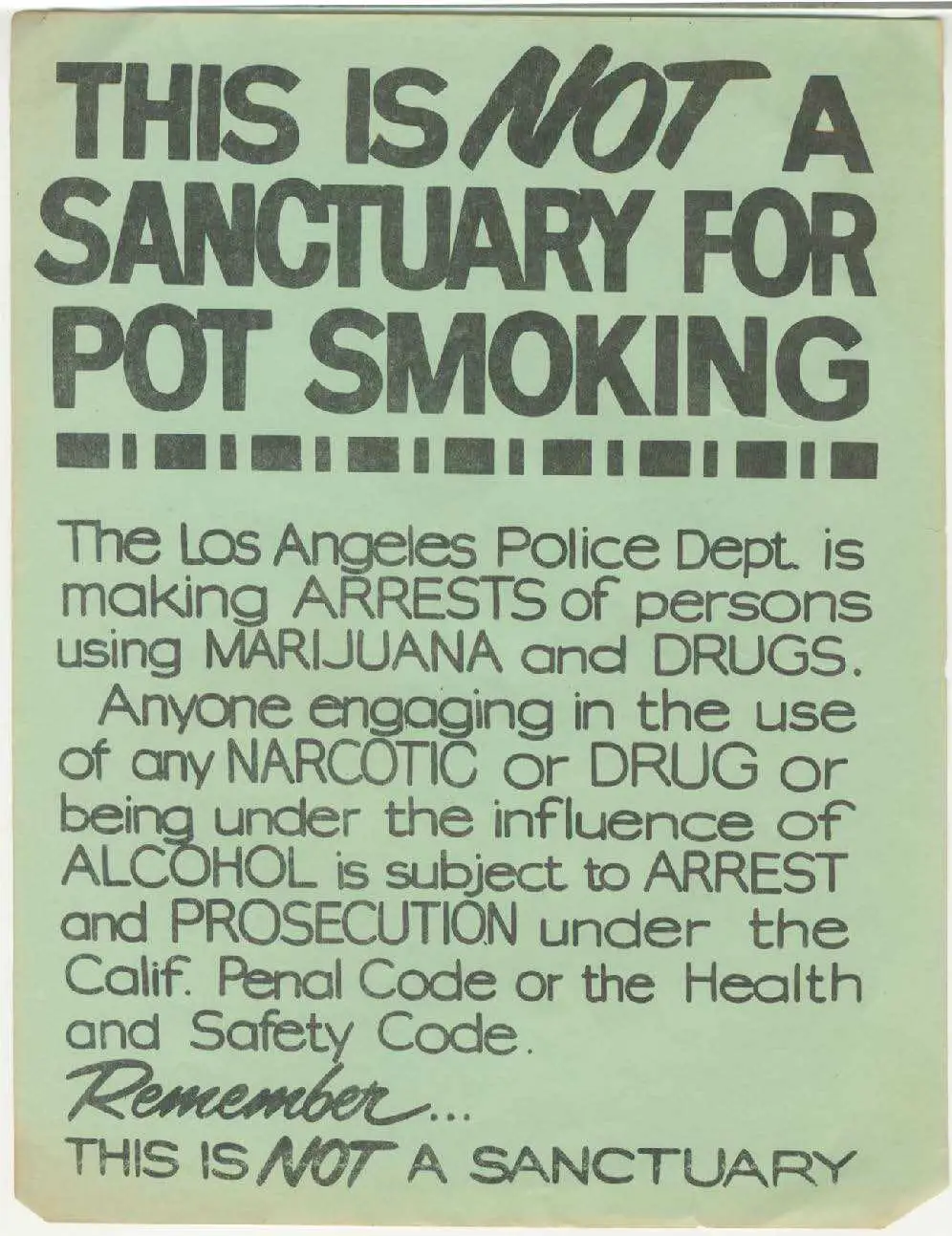 The flyer distributed at the entrance of the Los Angeles Sports Arena
There was no liberating time like the 1970s, when artists could get away with performing an hour’s worth of then-unreleased music to an audience that already had some level of expectation. Pink Floyd kicked the evening off by previewing “Raving and Drooling” and “You’ve Got to Be Crazy,” two tracks performed as early as 1974 that later transformed into “Sheep” and “Dogs” on Animals in early 1977. Wish You Were Here was five months shy of its release, and the group gave a taste of what was to come by featuring “Have a Cigar” bookended by “Shine On You Crazy Diamond.” The audience was warm and receptive to the first set of new material, savoring their rupturous applause when the band—augmented by backup vocalists Venetta Fields & Carlene Williams and saxophonist Dick Parry—returned for the second set of The Dark Side of the Moon in its entirety, followed by an encore of “Echoes.” In retrospect, this setlist can be deemed near-perfect, highlighting some crucial points of the Floyd’s canon during a period where they established a firmer musical identity.
-(1).jpg) Various CDs and LPs of Floyd in Los Angeles 4/26/75
Various CDs and LPs of Floyd in Los Angeles 4/26/75
Millard’s recording began being distributed on cassette throughout the 1970s and 1980s, dubiously from copies multiple generations removed. CDs started popping up shortly before his passing in 1994, under titles such as Dogs & Sheeps and Movin’ Time. Vinyl copies started emerging in the late 2000s, where releases like In Search of Space and Doremi Fasol Latido were posed to look like they came from the infamous Trade Mark of Quality bootleg label. A Rolling Stone article from 2021 stated that the recording would be a prime candidate if Pink Floyd were to pursue an official bootleg series. Four years later, Steven Wilson used a few transfers of Millard’s original TDK cassette to create a rendering of the show suitable for commercial release, appearing on the Blu-ray and streaming versions of the 50th-anniversary edition of Wish You Were Here. Leave it to Record Store Day for presenting a physical release of a long-revered Pink Floyd bootleg recording.
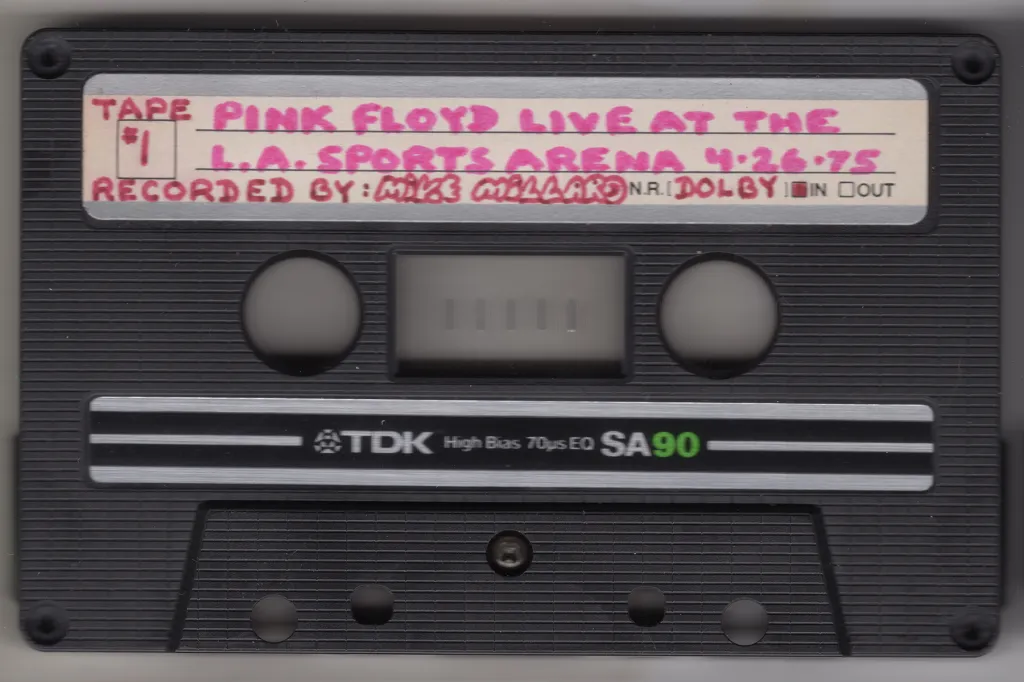 One of Millard's TDK cassette masters from April 26th, 1975
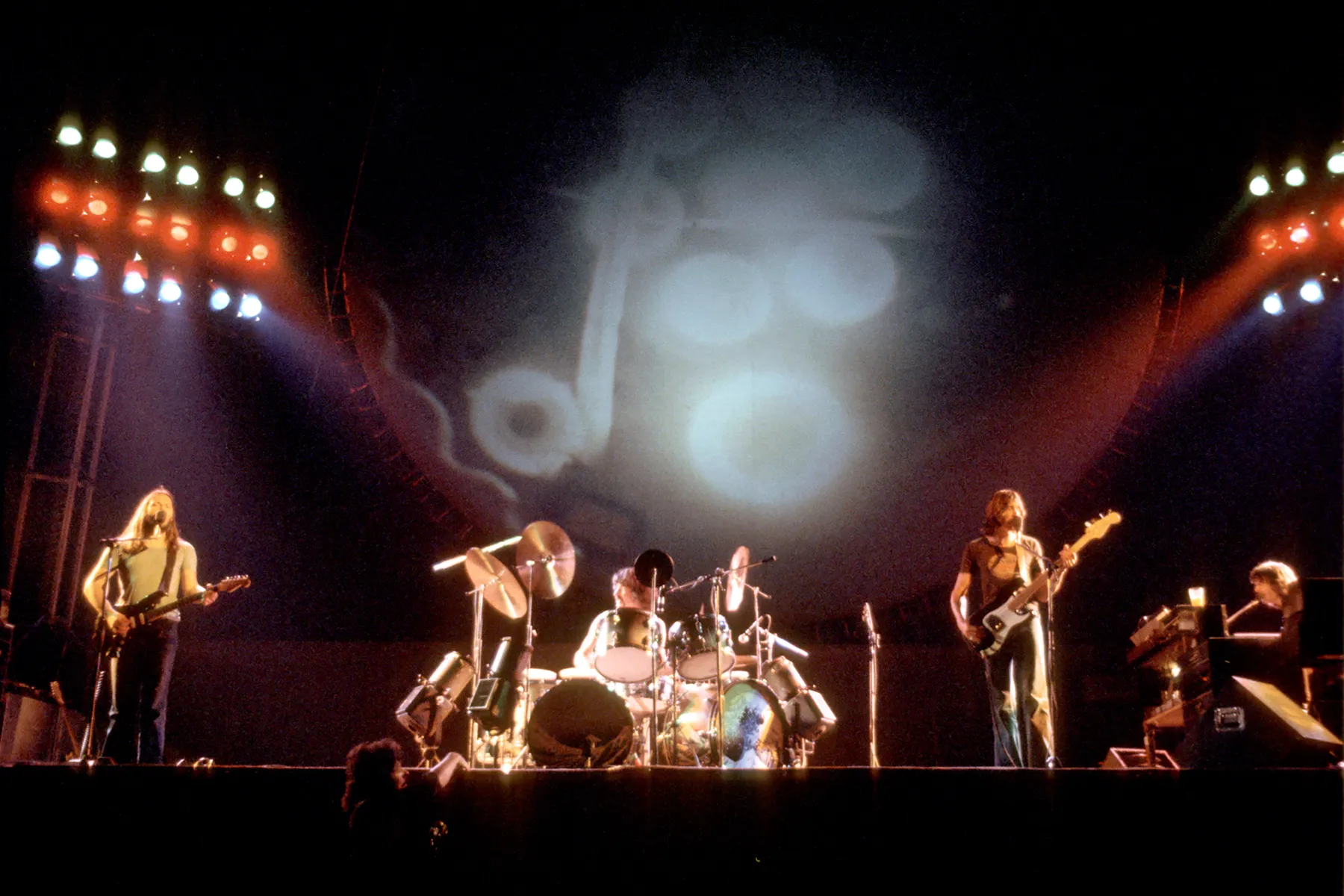
Any surreal imagery from the Hipgnosis archives would’ve made for a fitting cover that matched Pink Floyd’s visual identity. Kate Gibb’s silkscreened collages that adorn the slipcase box and each of the individual sleeves, consisting of photos taken by Storm Thorgeson during the Los Angeles shows, are a fresh approach that complements the bootleg aesthetic of the original recording with an artistic, modern twist. Though clear vinyl has proved more problematic i/e noisy playbacks, each of the 4 LPs was flawlessly quiet.
This live recording is as far removed from hearing the lifelike throb of Richard Wright’s VCS3 synthesizer on any reputable pressing of The Dark Side of the Moon. It’s one for the anti-audiophile, where gauging its sonics is out of the question. One of Wilson’s EQ choices was boosting the bottom end, which emphasizes the harder, heavy-handed moments during the show and obscures some of the tape hiss; you’ll be in for a rumbling shock during the pyrotechnic explosion signalling the climax of “On the Run.” It’s unknown where Millard’s position was in the audience, but the band’s mix is exquisitely balanced and avoids typical audience chatter that distracts most audience recordings of the time.
Whereas most professional recordings are gauged for their sonics, amateur recordings like this make it a means of marveling at the group’s performance (I say that as someone who enjoys listening to both the most pristine and poorest-sounding bootlegs), and the Floyd are in pure form. The moment keyboardist Richard Wright harmonizes with David Gilmour during his guitar solo on “You’ve Got to Be Crazy” still evokes the same emotions as its studio counterpart. Another highlight is hearing “Echoes” with backup vocalist and saxophone arrangements, toning down its original cerebral vibe and making it downright funky!
Some fans can argue that Sony is bootlegging the bootleggers by officially releasing an audience tape that’s light-years removed from a mixed-down multitrack recording. Despite the legalities behind bootlegs affecting artists and their respective labels, they are the backbone for documenting an artist’s legacy–especially in the case of Pink Floyd, where no shows from 1975 were professionally captured. Don’t let the lo-fi aura around this release deter you. Put it on, close your eyes, and imagine yourself getting lost in a cannabis/hallucinogen haze and the visual & sonic spectacle that is Pink Floyd.
Thank you, Mike Millard.


















.png)