

Righting "Hejira"'s Long Standing Sonic Wrongs
Hejira finds its Voice with this One-Step release
A defining musical moment for me was sitting down with high school friends after hitting Blockbuster and watching Scorsese's concert epic "The Last Waltz." Of course, my favorite moment was witnessing a visibly gacked out Neil Young amble onto the stage and slide into "Helpless" and watching Danko and Robertson searching the skies for those birds flying across the sky. But when Joni appears, she is truly resplendent cradling a beautiful old Martin D-28, wearing a long, flowing dress and native Thunderbird necklace. On that night, the music and the aesthetic were truly inextricable. That’s what it should be like listening to Hejira. Even the title is evocative: It's an Arabic word meaning Exodus, written on a solo roadtrip across America. It's Joni's mystical and confessional peak. So, if you love this album, there’s really nothing else in her oeuvre that compares. There’s only one Hejira, unless you seek out 1991's Night Ride Home, which has always sounded like Joni was covering herself, a deep callback to a vibe she so effortlessly captured on this recording in 1976.
But, there’s a problem if you are an audiophile. At its best, Hejira is pure sonic magic. At its worst, you wonder what happened. But, you never wonder about the songs. My experience with Hejira always goes like this: Something reminds me of this magic album. It usually happens when I listen to something liquid, spacious, jazzy and filled with mood. I take out a pressing of Hejira and sink in. It’s usually late. And then I find myself pulling out other pressings and, in the worst scenario, checking my turntable setup. If I have energy, I may even clean my copy wondering if there’s something in the grooves that’s obscuring what I wish to find. And, certain songs sound fine, if not great. Sadly I’ve always associated this album as much with frustration as I do with ecstasy. That seems cosmically unfair.
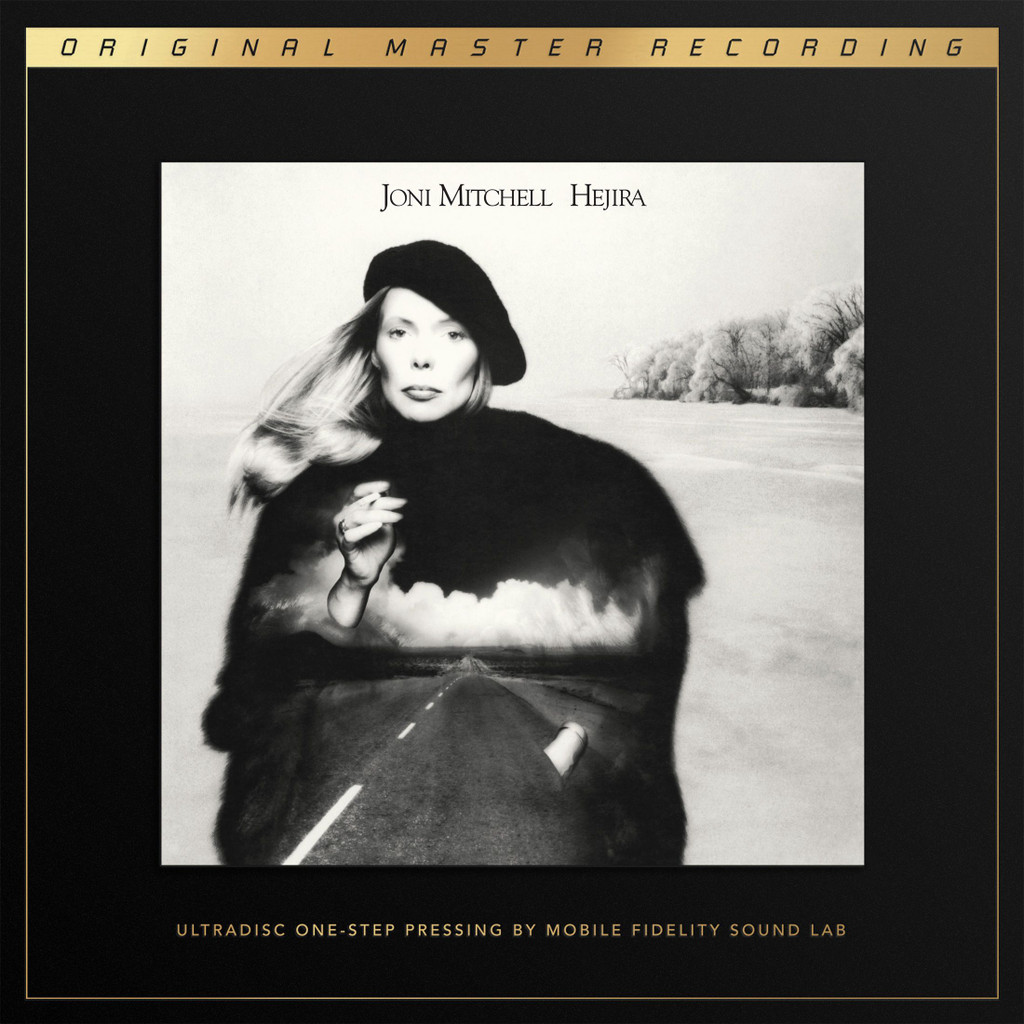
I truly believe that Mofi’s UltraDisc One-Step pressing solves this perennial issue, and I would truly recommend it if you want to hear what Hejira can be. But even though this release is, in my view, as good as you’ll hear it, the album itself is still inconsistent, if not problematic, in the way it was captured.
This is a 51 minute long album- oh, the nerve! That’s pushing it for a single LP. it’s about 5 minutes longer per side than a typical album of this era. And, one of its calling cards is Mr. Pastorius on bass. So, how was this supposed to work sonically with the quieter cut and attenuated deep bass required to make this masterpiece fit on one record? The short answer is that it doesn’t. When I’ve sat down to an original pressing or my non-boxset Rhino version, I’m always left in a distinctly untrancelike state. And that’s a bummer. Also, Henry Lewy engineered this album mostly at A&M studios in LA. Yes, this was the fabled location of Charlie Chaplin’s studio complex. But, Joni apparently recorded Hejira in pieces with an ever-changing studio setup. She started with guide vocals, and instrumentation was added later, often piece-by-piece. Sadly it can sound that way at times. So, you can’t help but wonder what this album would sound like if it were tracked live and spread across two albums. Yet, this One-Step is as close as you will get to something that never happened.
The first thing you notice is how big, open and well-sculpted the bass sounds. You can now feel what Jaco is doing on these tracks. And, yes, there is treble in the bass and air around his glistening lines. It's truly a revelation and what should have been presented in the first place. Joni’s vocals are flawlessly centered and full of life and clarity without a trace of the sibilance my Rhino pressing contains. Her vocals and Jaco’s bass are truly the stars, and that’s how I believe it was supposed to be. The cymbals are also so present sounding that they add a balance to the deep bass listeners can now enjoy with this pressing. Do all the songs present uniformly? No, and these differences are not welcomed in my view. I’m reminded of Crosby’s If I Could Only Remember my Name. Some songs cause you to close your eyes, others cause you to check your stylus. Although Hejira’s songs never sounded distorted or truly problematic like some of the tracks on original pressings of Crosby’s first solo album, my spell was often broken by listening to the song-by-song presentations.
Mobile Fidelity truly has given this recording the exact treatment it deserves. What they can do and what this album needs meet in a glorious way. It’s the definitive cut of an album that so desperately needed one. Mofi also does box sets beautifully. And, a little birdie told me that more of Joni’s albums are on the way. So, it’s certainly a good time to be a fan. Any worries about “digital” cuts should firmly be tossed out the window. Hejira sounds so warm and dynamic that you’d be a fool to contemplate your pixelated navel over this cut. In fact, I have found that problematic sounding albums are the true fodder for Mofi’s One Step process. With Hejira, they truly turned a sonic headscratcher into a late night wonder.