


UNNA - And the Art of Deep Listening
New Intersections of Acoustic and Manipulated Sound in the first release from OJAS Music - A New Record Label from Michael A. Muller and Devon Turnbull
Whenever I pay a visit to Amoeba Music in Hollywood, my first stop is not the classical section (straight on, down the steps, turn left), nor to the vinyl rock section with its tempting treasures on the wall (go past the security desk, on the right).
No - I take an immediate left, trundle past the check-out counter and racks of T-shirts (some of which are very cool, btw) - and disappear into the nook that houses the Experimental Music on vinyl department (nestled somewhat incongruously next to the Country, Easy Listening, Jazz, and Blues vinyl sections).
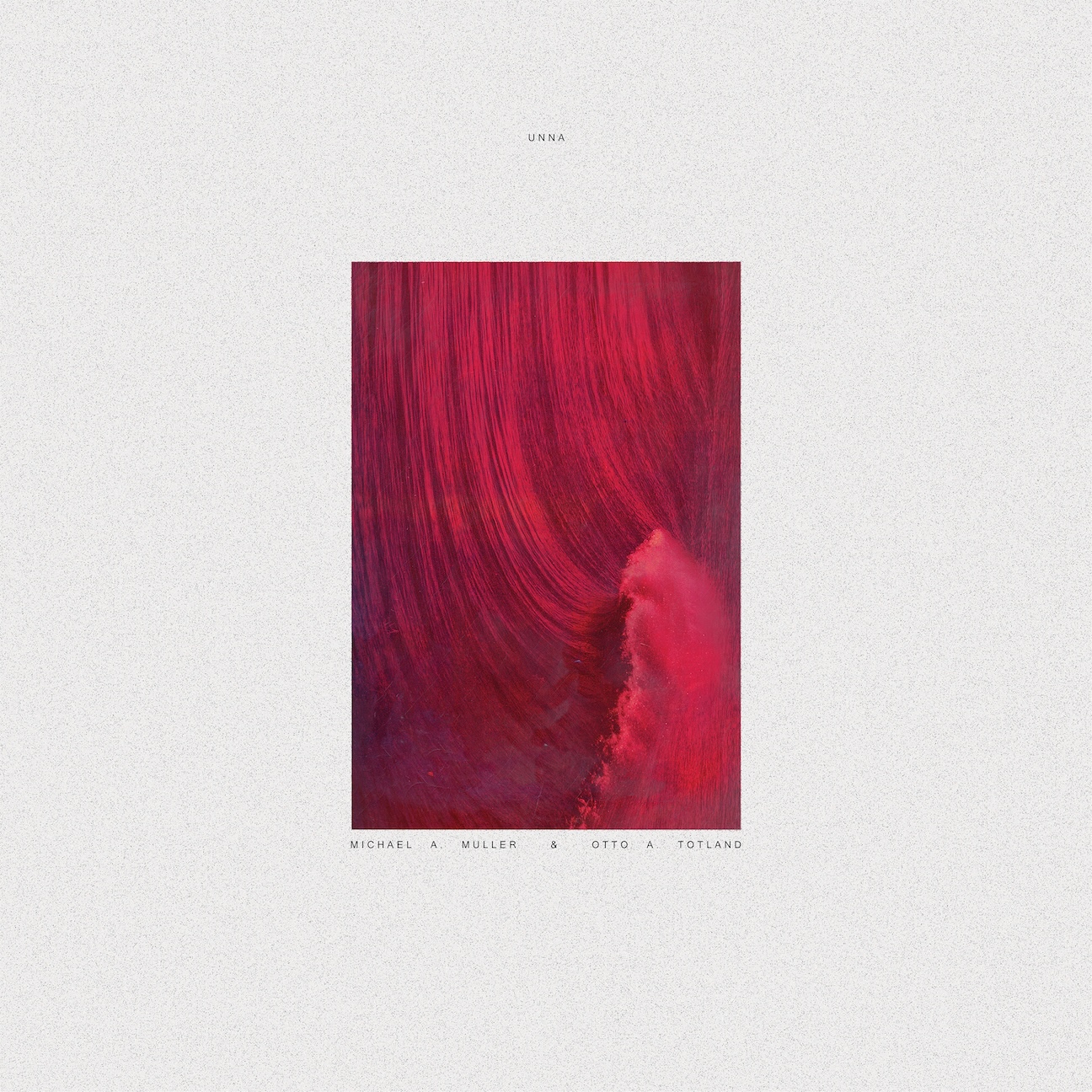
And that’s where you’ll find this record, the latest release from Michael A. Muller, collaborating this time with Otto A. Totland. But take heart, dear reader! This is far from some of the more forbidding (and foreboding) music you will encounter in the Experimental Music stacks. Anyone familiar with Muller’s previous work with his band Balmorhea, and his solo release Mirror Music (much of which is to be found on Deutsche Grammophon), will know that his music is both melodic and abstract. It falls somewhere between Ambient and Classical, but essentially defies categorization. It is, however, very easy and agreeable to listen to on a superficial level, which I think is important to note in an age of much music that is not easy to listen to, nor particularly rewarding to do so. But that surface attractiveness masks deeper layers that will only reveal themselves through repeated - and what Muller describes on his own website as “deep” - listening. His bio continues:
Michael A. Muller is a composer who translates the language of experience into sound. His wide-ranging work - spanning film scores, installations, and original recordings - emerges from a practice of deep listening, transforming both delicate human moments and the grandeur of natural phenomena into rich sonic environments.
His compositions weave contemporary electronic elements with traditional orchestration, creating musical landscapes that obscure the boundaries between past and present. This versatility has resulted in projects including narrative films, scores for brands and site-specific curations for institutions.
With two decades as co-founder and multi-instrumentalist for Balmorhea, Muller's solo work focuses on the liminal plane where sound shapes consciousness—investigating the intrinsic ways music transforms space, time and human connection.
 Michael A. Muller (photo by Kovi Konowiecki)
As good a description as any - and I admire anyone who uses the word “liminal” and gets away with it! I reviewed Mirror Music last year and was blown away. I urge anyone who has not done so to read that review (and check out the album) to get a sense of what Muller’s work is all about - and why I like it so much. (Full disclosure, I have become friends with Michael in real life - you know, that thing that happens out there beyond the interwebs and the virtual VC).
 Otto A. Totland
In Otto A. Totland, Muller seems to have found the perfect musical partner. From his website:
(Totland) started composing music using computers, but soon found the tools’ limiting effects on creativity. The simple complexity of the piano drew him further and further away from the digital – finding more joy in a single sustaining string than the limitless impossibilities of the virtual.
Being a self taught pianist; Otto developed a unique and personal compositional style. Drawing inspiration from a deep history of Norwegian folk music, romantic-era composers and early Scandinavian jazz – he weaves a minimalistic, melancholic and meditative soundscape.
His music transports you from the cacophony of life, to a cabin deep in the Norwegian wilderness. As you lay your head on the piano everything else fades away – it's just you, Otto and the piano – a fragile, beautiful and intimate space making way for quiet introspection.
Okay, that last bit is a little rum (as we would say back in Blighty), but it’s as good a way of describing what he’s up to as any. While many might consider Unna's strictly musical content (ie. the notes sounded on instruments) to be minimal, the deeper sound and experiential content is substantial. The only problem with this record is one is left wanting more - much more.
Much more, fortunately, is what we are going to get, since Unna is merely the first release of a new label, described thus on Muller’s website:
In late February 2026, Muller announced Ojas Music, a new label he co-operates with hi-fi designer Devon Turnbull. Partnered with The Vinyl Factory in London, the label is dedicated to a pure analog process with a focus on deep listening.
“Pure analog process with a focus on deep listening”… Sound familiar to all you vinyl-obsessed audiophiles reading this?
Beyond the record Unna itself (a 12-inch EP), this is the reason why I thought our readers would be interested in this release. Muller is a dedicated audiophile, who collects and listens to records on a level of concentration that many of us rarely do. He is fascinated by the recording process itself, and what it can impart as an experience - not just as a conduit of sonic information. And a maximized, pure analogue chain is part of what he considers ideal. So this release, beyond being available in limited edition vinyl, is also being released on reel-to-reel tape. (The US vinyl edition is sold out, but it is still available direct from The Vinyl Factory in the UK - more on them later). And yes, it’s also available as a download, on CD and - of course - on cassette (which might seem like a contradiction in sonic terms for such a resolutely audiophile project, but cassettes are “in” again and musicians have to eat). All available from the Ojas Music Bandcamp page.
BACKGROUND TO THE INTERSECTION OF ACOUSTIC AND ELECTRONIC/TAPED/SAMPLED MUSIC
From the moment in the mid-20th century that tape became a viable way to reliably record sound and music, composers and “sound artists” began exploring the intrinsic qualities of analogue recording itself, and some of them began creating works and experiences where taped sound and live musicians performed together. Or, as in the case of Varese’s Poème Eléctronique, the tape itself became the performance - at the Philips Pavilion at the 1958 World’s Fair in Brussels: projected into a physical environment where it was interacting with the architectural space and the people standing in it.
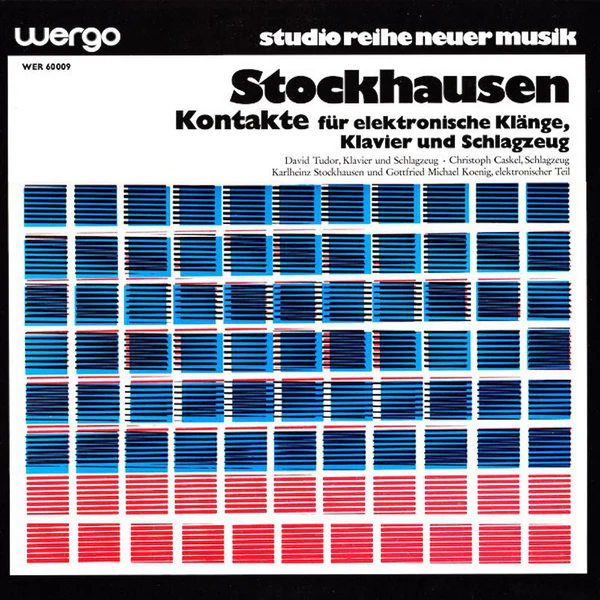
An early, key example of a work that existed in both the purely electronic space and at the intersection of the ambient and electronic space was Stockhausen’s Kontakte (1958-60) which exists both in its pure tape form…
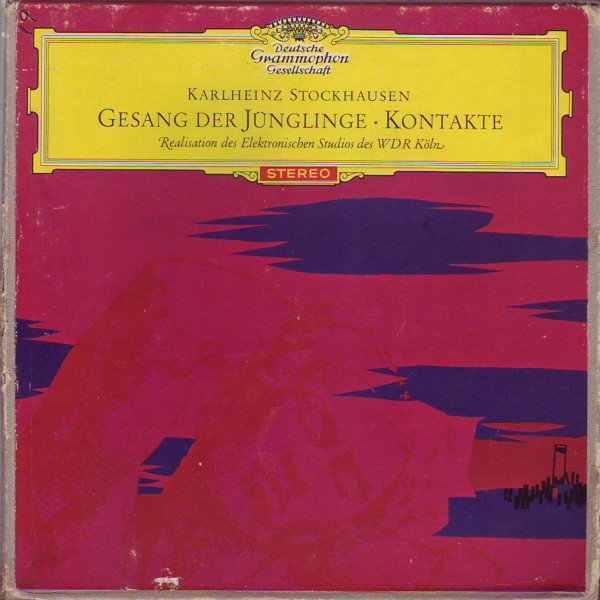
… and as a piece for tape and live musicians (piano and percussion)…
The classical avant-garde quickly became obsessed with blending pre-recorded tape with live musicians. One of my favorite examples would be Hans Werner Henze’s Tristan.
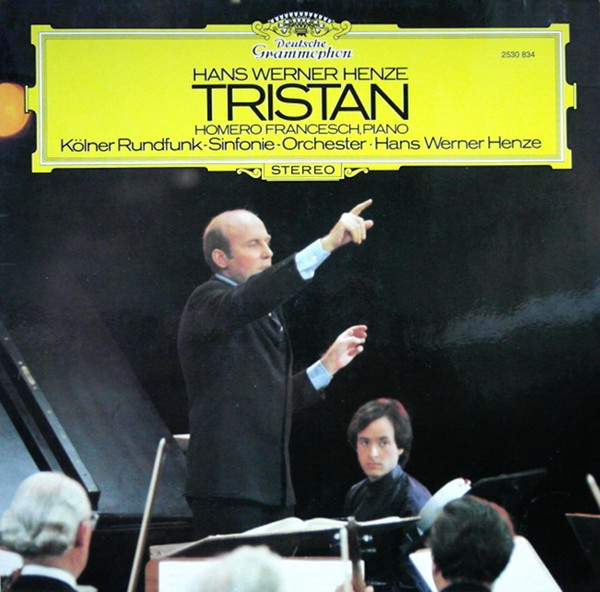
In the following section of the work fast forward to 6:25 to hear how Henze combines pre-recorded elements of speech, quotations from Wagner's opera (Act 3 Prelude) with solo piano, orchestral and taped elements.
Two records capture the distinctive use of tape and orchestra by Arne Nordheim, a sadly little known mid-20th century Norwegian composer: The Tempest…
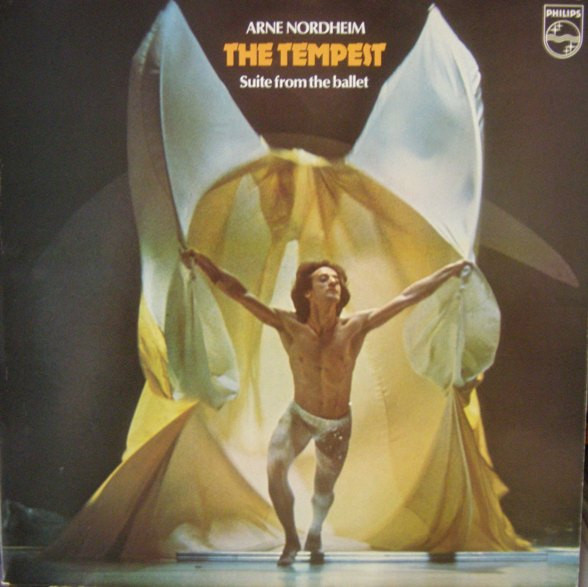
… and this outing on Decca’s Headline label for contemporary music…
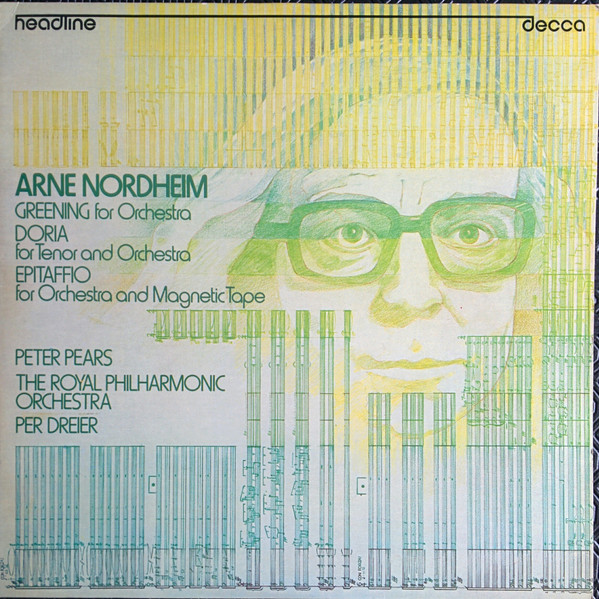
… featuring Epitaffio…
John Cage was an early experimenter in the intersection between live performance and electronics, using his chance procedures applied to live electronic manipulations in works like the Imaginary Landscape series of works. (I actually got to meet John Cage and hear him create a work integrating tape and voice at a Sound Design conference at George Lucas’s Skywalker Ranch back in my radio days - a tale to tell on another occasion).
Note the use of turntables as instruments in Imaginary Landscape #1:
Pierre Boulez’s …explosante-fixe… in its final version for solo MIDI-flute with live electronics, two "shadow" flutes and a chamber orchestra, takes things to the next level…
Sometimes a composer might simply introduce naturally recorded, un-manipulated taped sounds into a work, as in Einojuhani Rautavaara’s popular Cantus Arcticus (1972), a “concerto” for orchestra and arctic birds. At what point do the taped birds cease to be just that and transform into abstract musical elements, analogous to any other kind of sound manipulation in the digital, electronic or taped realm?
Of course, the pop and rock worlds were quick to integrate taped and “sound design” elements into their music, a prime example being Pink Floyd. But an earlier, fascinating example of taped elements being integrated into a proto-crossover piece is John Tavener’s The Whale, released on The Beatles’ Apple Records in 1970. This record found its way into many a dorm room of the time (including mine). It’s a long way from Tavener’s later minimalistic style in the vein of Arvo Pärt.
Now all of this is worlds away from what we have on Unna, but it is in these work and others where the roots lie for so-called “ambient” as well as “experimental” music, where sound manipulation via tape or non-Western, “prepared” and unconventionally played instruments is as much part of the landscape as more conventional instruments playing identifiable melodic and harmonic material; and Unna is very much part of that lineage.
LISTENING TO "Unna"
But, like Mirror Music before it, this is in no way “difficult” music - and certainly not avant-garde. It is immediately ingratiating, built upon traditional tonal and chordal elements articulated and foregrounded by the piano. But remember - in this world we are talking about the piano in its most complete sense, not just as a producer of the usual musical notes, but also as a mechanism which itself produces “music”. Therefore the microphones are embedded deep in the bowels of the instrument (or at least they sound like they are), so that all the movements of the hammers and the pedals, the humming of un-struck but vibrating strings sounding in sympathy, are all part of the soundscape. (In my review of Vikingur Olafsson’s From Afar I talked about how miking an upright piano from within the instrument created an entirely different experience of, in that case, regular classical pieces).
It is Totland’s aphoristic piano phrases that are the most obvious “way in” to the music. They are deceptive in their simplicity. One starts to sense patterns emerging, only to have them evaporate. Sometimes a melodic fragment or chord or harmonic progression is recalled only to blow away in the wind of Muller’s shifting atmospheres. There is a certain quality to these piano utterances that I was having a hard time characterizing until I read Totland’s bio, and learned of his interest in folk music. Folk music, with its long deep roots in the musical vernacular reaching back over many generations, can have a quality of strange familiarity - like something you sense you may have heard many times before but know you haven’t. Some little turn of phrase, some click in the harmonic progression that reaches deep into ancestral memory. That’s what I was hearing in Unna. When dealing in the miniature forms that these musicians are doing, having that hook is like musical gold. It anchors everything without being obvious about it, and then provides a space for Muller’s sonic abstractions to grow and wind around the piano's utterances like a spreading vine.
It is at the intersection of Totland’s piano and Muller’s soundscapes, tones and other manipulations, that Unna finds its core musical engine, the thing that moves us from stasis to progression. This is where we depart from Eno’s original ambient model as exemplified by Music for Airports. Repetition here is never pure repetition. The ground is always subtly shifting. And these pieces are short. There's a lot going on, the music compressed but never seeming so until the piece is over.
As the ground shifts the music immediately invites - nay demands - “deep listening” to really appreciate how the landscape is shifting. Which is really the whole point: change that doesn't immediately seem like change but definitely is. Sure, you can put this on while you are doing other things, but that would be to miss the point entirely. By boiling down everything to an apparent minimalism (and I use the word “apparent” with purpose) the ear and mind are necessarily drawn in to a contemplation of what is happening in the aural space, from moment to moment on the micro level, then on the macro level looking back to see the landscape we have travelled through since we started.
Simple on the surface, there’s a lot happening once you lift the hood. That’s why I used the word “apparent” in relation to the music’s “minimalism”. There is really nothing minimalistic about this at all. With each listen you peel back more and more layers of a seemingly infinite onion. Quite apart from the pleasure of the listen itself, it is a very cleansing, brain- and mind-washing experience. One emerges refreshed but altered, as if all one’s molecules had taken a step to the left (or right) while your body stayed in the same place; then returned unobserved but subtly altered.
Of course, none of this would be happening if the sound of the album wasn’t up to the task and, as with Mirror Music, it definitely is, if not even more so. My immaculate 45rpm vinyl pressing achieved everything you would want in this kind of music - and maybe a little more. All the detail and ambient richness of the soundscape emerge organically, as if it were all happening live in front of you - or should I say around you. Two channel this may be but this is a completely immersive listen.
There are so many disparate elements woven into the mix here, from a recording of chattering voices that begins the record (“Eterisk”)...
.. to deep tones that seem to ooze out of the speakers to enfold and embrace you as if you were re-entering some kind of vast sonic womb (“Lys To”).
Subtle percussion (“Ekstra”) makes you feel like you have been transported to some high Himalayan temple where the air is thin and the view infinite. Just when you think the soundscape has stayed the same you realize it has metamorphosed into something quite different (the plaintive tones that gain ascendancy at the end of “Ekstra”).
It is remarkable how here, as with Mirror Music, Muller has started off by working in the digital domain (ie. ProTools, I assume) but has then moved his material into the analogue realm in such a way that the advantages of both are maximized. That conversion is undertaken with enormous care. Mastering and cutting were done by Frederic Stader at Music Matters Mastering in Köln, Germany.
Which brings me to the other noteworthy aspect of this release - its role as a standard-bearer for a new label, Ojas Music, which is all about using technology to further an idea of experiencing music and sound not so much as a Hi-Fi thing, but as an organic, holistic experience - something the ever-tweaking audiophile can lose sight of in their upgrade journey.
From the Press Release:
Announcing Ojas Music—a new record label founded by Ojas founder and audio designer Devon Turnbull alongside composer and recording artist Michael A. Muller.
Ojas Music marks the first venture into recorded music for Ojas, the New York–based audio, hi-fi, and design studio renowned for its reverence for analogue sound and devotion to deep listening. Guided by the same philosophy that underpins the Ojas approach to sound systems and listening environments, the label is committed to an uncompromising pursuit of sonic purity. Ojas Music will explore the intersection of sound, space, and presence through a wide-ranging catalog, with new releases alongside considered reissues of rare recordings, presented in deluxe analogue formats.
Emerging from a background that bridges fashion, art, and audio design, Turnbull’s work spans large-scale and hand-built sound systems for exhibitions and institutions including San Francisco Museum of Modern Art, Lisson Gallery, and 180 Studios, as well as custom installations for USM, Nine Orchard, and Supreme.
Are we venturing into something here that smacks of the oh-so-easily mocked retreats into nature and assorted communes where confused and lost souls go to “find themselves”? Is there something a little studied and self-conscious about these intersections of "audiophile" and "cool design"? Maybe, just a little bit. But listen to the music in and of itself - I think it stands on its own merits. I also think there is something intriguing about all this, and I can’t wait to see (and hear) where the label goes. I’m all for a spot of Deep Listening in this Vale of Infinite Distraction where we all currently abide - most reluctantly in my case.
The collaboration with Vinyl Factory is apt. The label has firmly established itself as one of the more intriguing purveyors of dedicated vinyl experiences, offering everything from very expensive designer editions of Duran Duran...
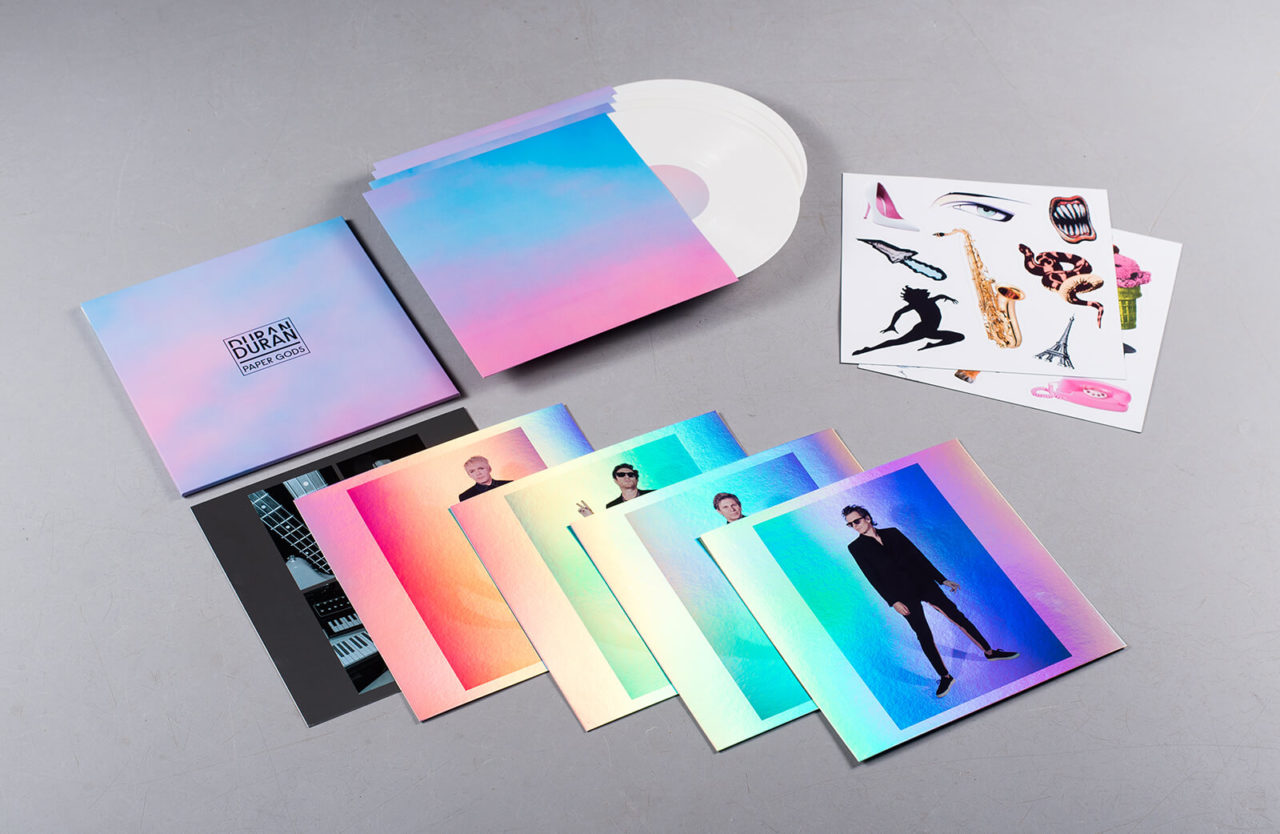
... to designer editions of selected tracks from the soundtracks of Wes Anderson movies.

(There’s a ton of other stuff I’ve never heard of, but I’m allowed: I’m an old fogey!) It’s a very cool label - occupying the buildings that used to house HMV/EMI Records in Hayes, Middlesex.
Michael A. Muller himself is known around Los Angeles for his evenings spinning vinyl at Common Wave Hi-Fi, sessions which always guarantee eclecticism and thought-provoking juxtapositions. Context is all. If you happen to be in LA and interested, he is doing something a little different this Thursday April 2nd - playing guitar as well. Michael regularly tours - he has some upcoming dates in Europe, including at the Berlin Philharmonie on May 6th. If you are in London there will be a listening event at 180 Studios in London on May 9th.
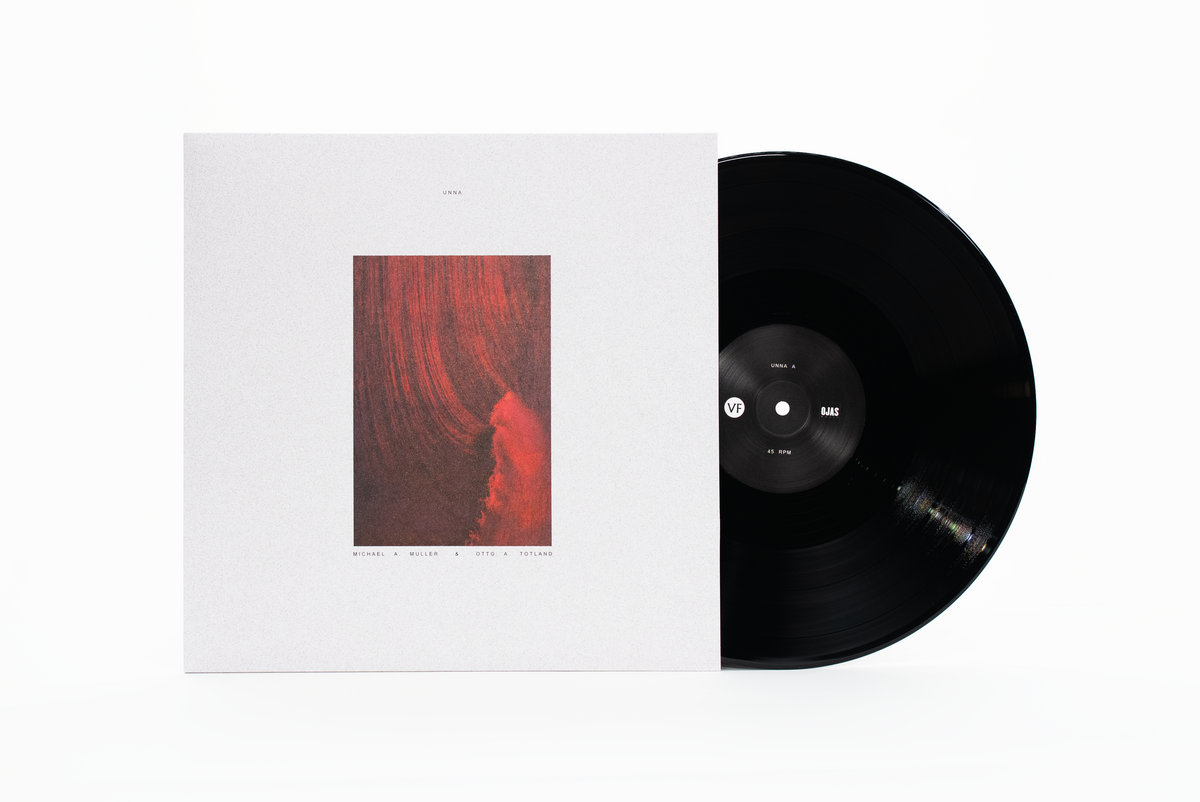
Look, this record isn’t for everybody, and I imagine some of you will wonder why I’m going on about music which for some might seem to be mere noodling. But I think Mssrs. Muller and Totland - and the Ojas Music label - are onto something here, and for those who are inclined towards this kind of thing, they are doing it as well as it can be done.
And for the boffins amongst you, here are some technical specs:
Formats: 12” EP, CD, Cassette Tape, Reel-To-Reel
Instrumentation: Michael A. Muller — Double Bass, Field Recordings, Glockenspiel, Mellotron, Rhodes. Otto A. Totland — Piano
Recording: Elyria Sound, Los Angeles & Brevik, Norway
Mixing: Studer 807 mk2
Mastering: Studer 807 mk1
Signal Path: Sontec MEP-250-C EQ > Rupert Neve Designs Portico II Master Buss Processor > Fairchild 670 Tube Limiter > SPL Venos Tube Bus Compressor > AEG-Telefunken NFLÜ 325 Line Transformer
Tape Formulation: RTM SM900 1/4”, 15ips
Cutting: 45rpm cut on Neumann VMS80 Disk lathe with a modified SX68 cutting head and diamond stylus
Plating/Pressing: Plated and Pressed at The Vinyl Factory (formerly EMI in Hayes, UK). Pressed on 180g virgin black vinyl on the EMI1400.
Reel-To-Reel Info: 1/4” 2-Track 15ips 1:1 Master Tape Copy produced by Neal Birnie of RTM Tapes & Night Dreamer — made-to-order and housed in a custom box.
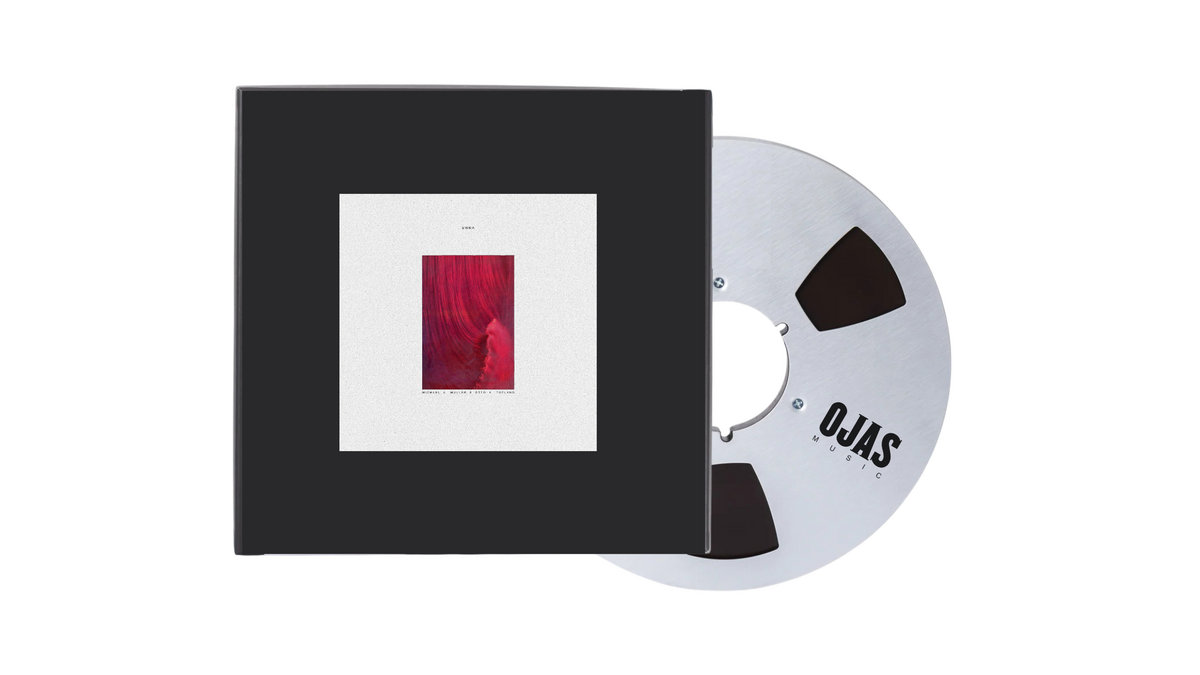 The Reel-to-Reel incarnation of Unna
You can buy the (very) limited vinyl edition of Unna direct from The Vinyl Factory.
Digital downloads, CDs, cassettes and the reel-to-reel are available for purchase from the OJAS Music Bandcamp site.