
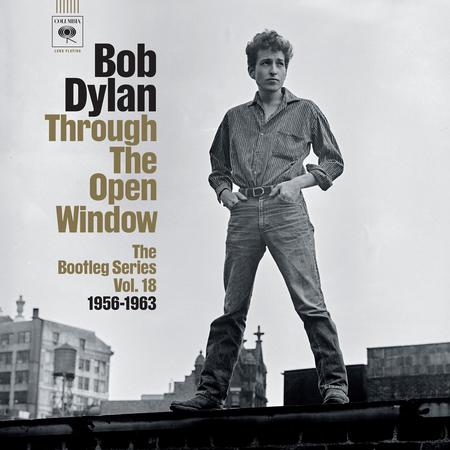
Where It All Began Doesn't Explain How it All Began, But What Could?
a fascinating look at early Dylan through his 1963 Carnegie Hall Concert
In his somewhat sparse annotation accompanying this four record set, annotator Professor Sean Wilentz wisely doesn't attempt to explain how Robert Zimmerman became Bob Dylan, which was a good call since the more you dig, the more inexplicable it becomes. Even Dylan, when Ed Bradley interviewed him about his autobiographical book "Chronicles, Volume One" for the television news feature show formerly known as "60 Minutes", admitted he doesn't fully understand how he came to write much of that early, career defining output, nor, he added, did he think he was capable in 2004 when the book was released, of writing anything remotely approaching the power and glory of that early material.
Instead of a written explanation, the visually annotated set generously filled with photographs of Dylan and other Greenwich Village performers of that era—portraits and candid shots— as well as club advertisements and Columbia Records studio sheets, tells the story "entirely through recordings made during those formative years".
Among them are unreleased concert performances, uncirculated studio outtakes and even Dylan performing in friends' apartments, among other never before heard recordings, along with eavesdropping conversations with friends and fellow musicians, climaxing with songs, some previously unreleased, from his 1963 sold-out Carnegie Hall performance on October 26th, 1963 when he was 22 years old—two and a half years following his arrival in New York City.
While the Carnegie crowd could be considered among the still small number of Dylan insiders, not long afterwards, one of the songs on The Freewheelin' Bob Dylan" released six months earlier would become a civil rights anthem following Peter, Paul & Mary's release of its version of "Blowin' in the Wind". Nationwide, the "ragamuffin"'s star (as The New York Times called him) was rapidly rising.
The set begins with the 15 year old singing "Let the Good Times Roll" at a music shop in St. Paul MN. A bit over 4 years later in February 1961 he's singing "Remember Me" (a Scotty Wiseman song Willie Nelson had a hit with in 1976) at a home in East Orange, NJ near the hospital where Woody Guthrie was being treated for Huntington's Disease, and where Dylan also performed in a small club that doubled as a chess parlor in which he had a bad experience. His speed rap about it heard here is hilarious (it's been on YouTube for a while too).
By first side's end, November 1961 he's recording at Columbia Records Studio A, having been signed by John Hammond in a deal otherwise known around the label as "Hammond's Folly". Considering the sources of much of this early material the sound quality is very good. It improves over time.
On the November 20th studio session Dylan performs a previously unreleased outtake of the traditional folk song "He Was A Friend of Mine" (many great songs were left off of The Times They Are A Changin'" appearing later on albums by Fairport Convention, Rod Stewart Arlo Guthrie and others).
The side ends with a November 22nd outtake of Woody Guthrie's "Ramblin' Round". Two years later on that day Kennedy was assassinated and two years after that The Byrds re-worded the song to make it about the assassination. How creepy would it have been had Dylan recorded his version on the 22nd instead of the 20th?
All of this vibrant musical and cultural activity took place in Greenwich Village and the set, in music and visuals, puts the listener into that long ago dissipated scene— "...likely the only place where these things could have happened", according to the Producers' Note that opens the full sized 23 page ephemera filled booklet—something co-producer Steve Berkowitz is well-known for providing Bootleg Series buyers. This box's booklet, printed on thick stock, is filled with great period visuals including concert advertising, early Dylan photos including striking full page black and white portraits, and in-performance shots. For the booklet's visuals alone, the vinyl box set is worth owning.
Criticism? Well, the hype sticker claims "42 rare and previously unreleased performances", when in fact the entire box consists of 42 tracks, and 13 have previously been released (though a few were only on the super-limited "Copyright Extension" set The 50th Anniversary Collection)—and my tally may be off because I found it difficult to understand the single and double asterisks.
In fairness to the endeavor, they are released here as part of an essential narrative. The Carnegie Hall performance of "Lay Down Your Weary Tune" makes its debut here—among the many songs the audience would hear for the first time and not again performed by Dylan according to the notes, but The Byrds' later version on the Turn! Turn! Turn! album was definitive. Dylan introduced "The Times They Are A Changin'" at the concert, as the annotation notes, but it was omitted from the concert tracks here, which is an unfortunate omission (though it and the rest of the concert is included in its entirety in the 8 CD box set edition of this release).
Obviously this set is for Dylan obsessives/completists and for those who want to attempt to understand how Zimmerman became Dylan. As Wilentz writes in the annotation, the set "...vivifies the by-now clichéd image of young Dylan as a sponge or piece of blotting paper, soaking up influences....". Usually, when you squeeze a saturated sponge all the comes out is what went in. Not with Dylan!
There are almost always surprises to be found within these "The Bootleg Series" boxes. On this one is a performance of "Dusty Old Fairgrounds" recorded live on April 12th, 1963 at Town Hall. The only other recorded performance of that song I know of was on an album by a Youngstown, Ohio based group Blue Ash on its debut album No More, No Less—now considered a "power pop" classic, which it was!
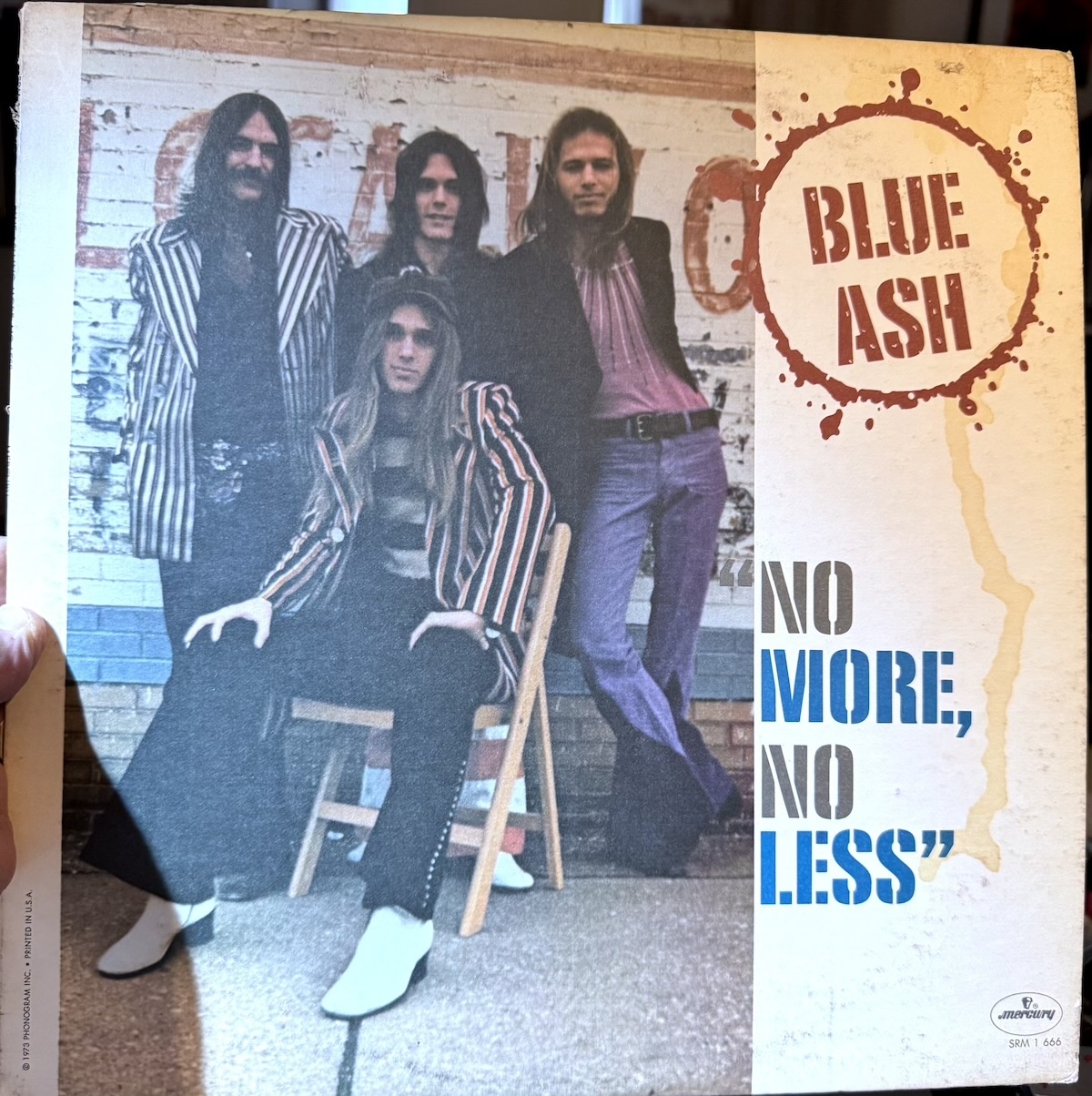 The executive producer was Paul Nelson, then an A&R exec at Mercury Records also involved with The New York Dolls, which he'd signed to the label. The Minnesota native and co-founder with Dylan of the folk revival magazine The Little Sandy Review was supposedly Dylan's roommate for a short time in a Dinkytown apartment. I met Nelson at Mercury's New York offices, where he handed me this record and a live cassette of The New York Dolls. Has that even been released? I don't know!
Whatever the case, Nelson knew the song "Dusty Old Fairgrounds" and suggested Blue Ash record it, which they did, producing a rousing, meaningful version of the song, which you can listen to here: