
Analogue Productions Touches "Astral Weeks" 3rd Rail With Digitally Sourced Double 45rpm Reissue
given the options, what would you have done?
By 1968 Warner Brothers/Reprise Records was like Elektra Records. You could pretty much buy whatever the label was releasing and you'd get high quality production, sound and music—accent on "pretty much". You were always taking a chance buying the unknown and you might not end up liking the music, but the odds were with you.
Fans of Them's "Gloria" and "Here Comes the Night" and of Van Morrison's Bang Records hit single "Brown Eyed Girl" heard within a remarkably short time frame a powerful, easily identified vocal presence grow from a sing along at a fraternity beer blast tune ("Gloria") to an odd tempo'd high drama lost love torture song ("Here Comes the Night") to what any precocious Belafonte fan could almost recognize as "calypso/rock" ("Brown Eyed Girl").
A college sophisticate could easily know to stay away from the Blowin' Your Mind album containing "Brown Eyed Girl" because the album title and gross cover was a dead giveaway that it was a cash grab (even if the term had yet to be coined) created to sell an album off the single.
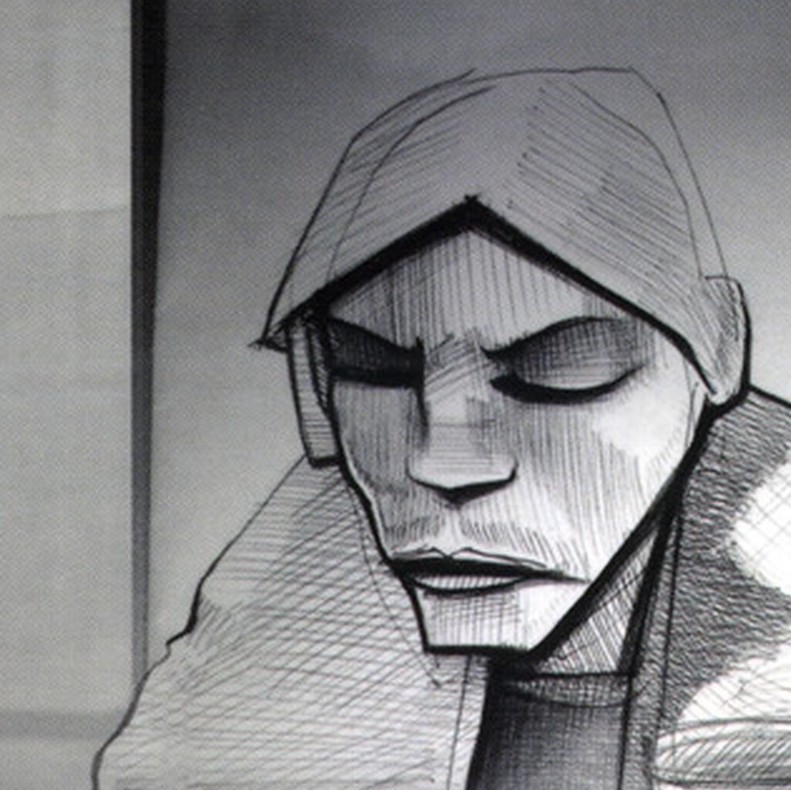
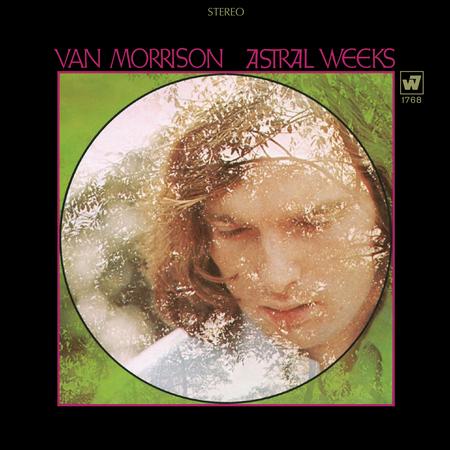
But then came Astral Weeks, arriving in record stores during Thanksgiving vacation November 29th 1968. The striking cover was an immediate attention grabber and still is. This is the "Gloria" and "Brown Eyed Girl" Van Morrison? What was the Irishman doing on Cape Cod? From Kennedy Compound Hyannis Port? Musicians include the MJQ's drummer Connie Kay? Cover photo Joel Brodsky? The Strange Days photographer? This I gotta hear!
Almost 60 years later all has been revealed. Most reading this know the story, or at least most of it: that Bang Records' Bert Berns (Beresovsky) having heard his songs recorded by the Beatles ("Twist and Shout" (co-written with Phil Medley), The Rolling Stones ("Cry to Me") among others, traveled to the U.K. where he produced "Baby Please Don't Go" (flip side "Gloria") and "Here Comes The Night" for Decca Records and Them and of course met Van Morrison. Berns also wrote "Under the Boardwalk" for the Drifters, "Piece of My Heart" for Erma Franklin later covered by Janis Joplin and many other early '60s greats.
He was an incredible songwriting and producing talent but having contracted rheumatic fever as a child he had a bad heart (ironic as the writer of "Piece of My Heart") and he died at age 38 about a year before the release of Astral Weeks. He'd also put out that Van album on Bang without Van's knowledge or permission and that led to a personal and contractual blow up with his contract up for renewal days after Bern's funeral.
It was a mess for Morrison, who almost got deported because his immigration paperwork hadn't been correctly handled by Berns and only by marrying Janet Rigsbee (Planet) could he remain stateside. He ended up in Cambridge, MA and if you didn't know that until now, you now know the poem on the back of the Astral Weeks jacket was no doubt about Rigsbee.
Why is that important here? Because while it might seem that Astral Weeks was a Van grand plan and that the original album was the statement as it was meant to be heard, and many fans consider the Warner 7-Arts pressing to be the Astral Weeks "Holy Grail", the facts surrounding the recording and production tell a different story.
Van was pretty much broke, he was signed to Warner Brothers by Joe Smith, Boston area native, Yale graduate, later WBZ jock and then promo man, finally Warner Brothers President and later Chairman of Elektra/Asylum. Whew! Album producer Lewis Merenstein was one of many producers who went to Boston to hear and hopefully sign the "Brown Eyed Girl" guy only to find him singing a very different and not particularly commercial tune. But Merenstein liked what he heard and with Smith's help solving Van's contractual problems, which included him using some tunes for his new album left over from his Bang contract, got Van signed up. Those tunes were "Madame George" and "Beside You" that can be heard in very different versions on the Italian Get Back label 3 LP set referenced in the recent Moondance review.
Merenstein was a jazz guy and knew a lot of players. That's how Connie Kay, guitarist Jay Berliner and bassist Richard Davis found themselves in the studio with the very distant, unusually difficult to deal with Van Morrison. How great it would have been to able to sit at a dinner table with the late Brooks Arthur (Brodsky) who engineered this album! And I did just that but we talked about a lot of other stuff related to whatever it was that brought me to that table so many years ago!
Anyway, the record also features John Payne on flute and soprano sax. Payne was part of Van's original group playing clubs in Cambridge and Payne still lives there where he teaches. He was also part of Bonnie Raitt's band but now we're getting off course. Merenstein hired arranger, conductor Larry Fallon to add orchestrations—strings and especially on "Young Lovers Do", a horn section, none of which was what Van envisioned for Astral Weeks. Fallon's arranging credits also include "Gimme Shelter" and Nico's "Chelsea Girl". He also plays that harpsichord on "Cyprus Avenue". He died in 2005 age 68.
The point of all of this is that the Warner 7-Arts sacrosanct pressing was as much a glorious accident as was the way the record was produced. Who knows why the original was so dark, dense and "atmospheric"? But it's not likely it was purposeful. More likely it was the result of an inept tape transfer.
When Chad Kassem was offered a 45rpm release as he was on Moondance he again was given a choice of the heavily equalized original tape copy or a 192K/24 bit flat master transfer done when the tape was still playable but could not be used for mastering and jockeying back and forth in preparation for cutting.
Chad and team were shocked to hear how much detail and dynamic contrasts were on that flat master high resolution transfer that had been stripped from the tape used to produce the "Holy Grail" W-7 Arts original LP. It was not even close. The articulation of Richard Davis's bass that anchors all of the arrangements has a tactile grip that you'll immediately experience on this double 45.
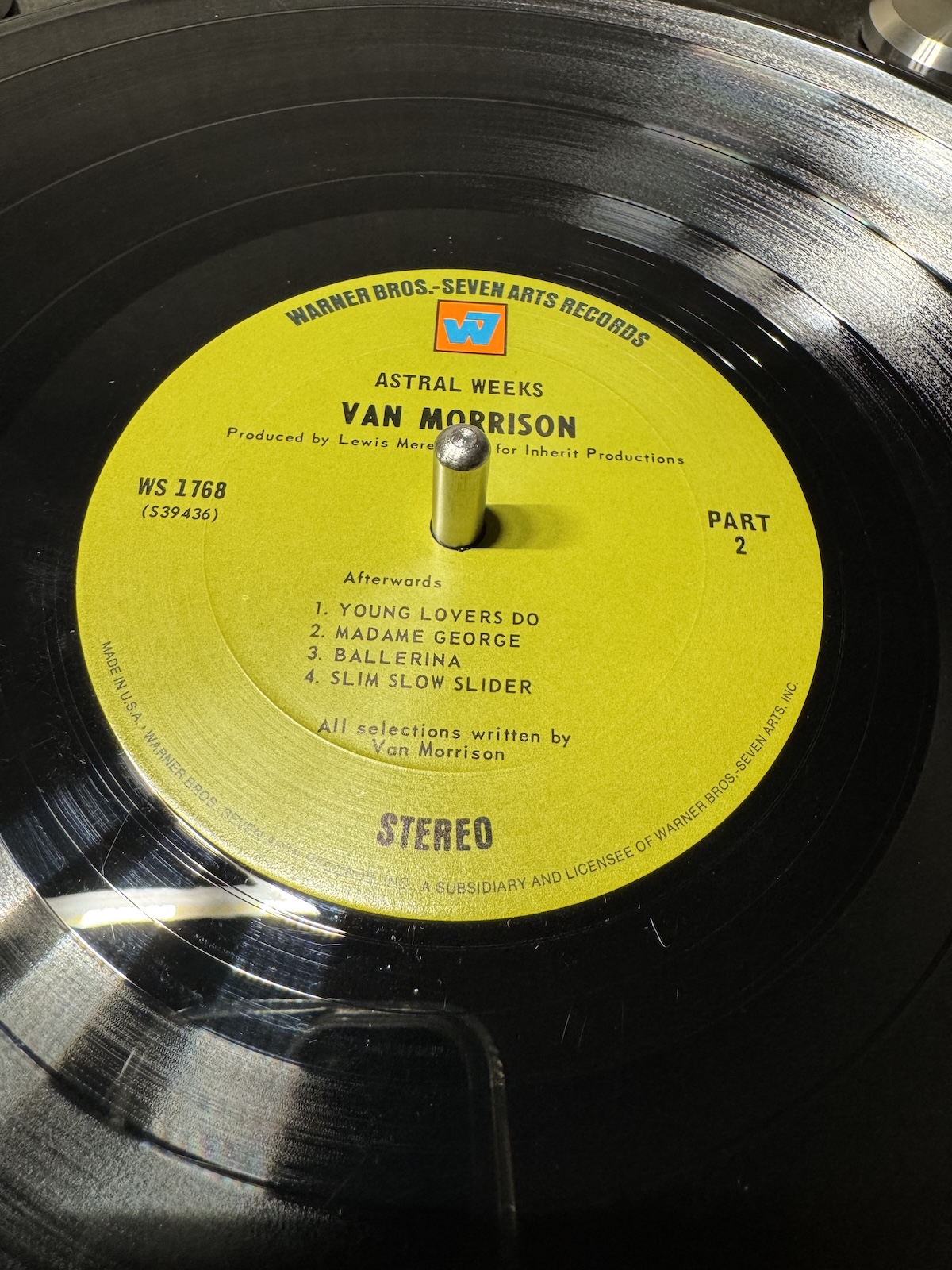 original W-7 Arts pressing (phone reflection on bottom)
If you buy and need instant gratification and assurance that you've made the right call, start with side 4 where you'll hear the horns leap forward in the mix and exhibit the brassy metallic quality missing on the dynamically compressed, drab (by comparison) original. "Madame George"'s opening strummed guitar set against a black background should cinch the deal but if not the violin in the right channel and viola and Davis's thick, rich double bass center channel will. It will fully shake your room as the track never before has.
Overall, working with the file, Kassem and team have preserved the "sonic gist" of the familiar original while delivering depth, detail and dynamic contrasts you likely never thought existed on the tape to begin with. Doug Sax's tube driven cutting system was the perfect conveyor of all of this, lubricating and soothing whatever digital artifacts might be lurking on the edges of Morrison's sibilants and delivering what no doubt is the best version of Astral Weeks you're likely ever to hear.