
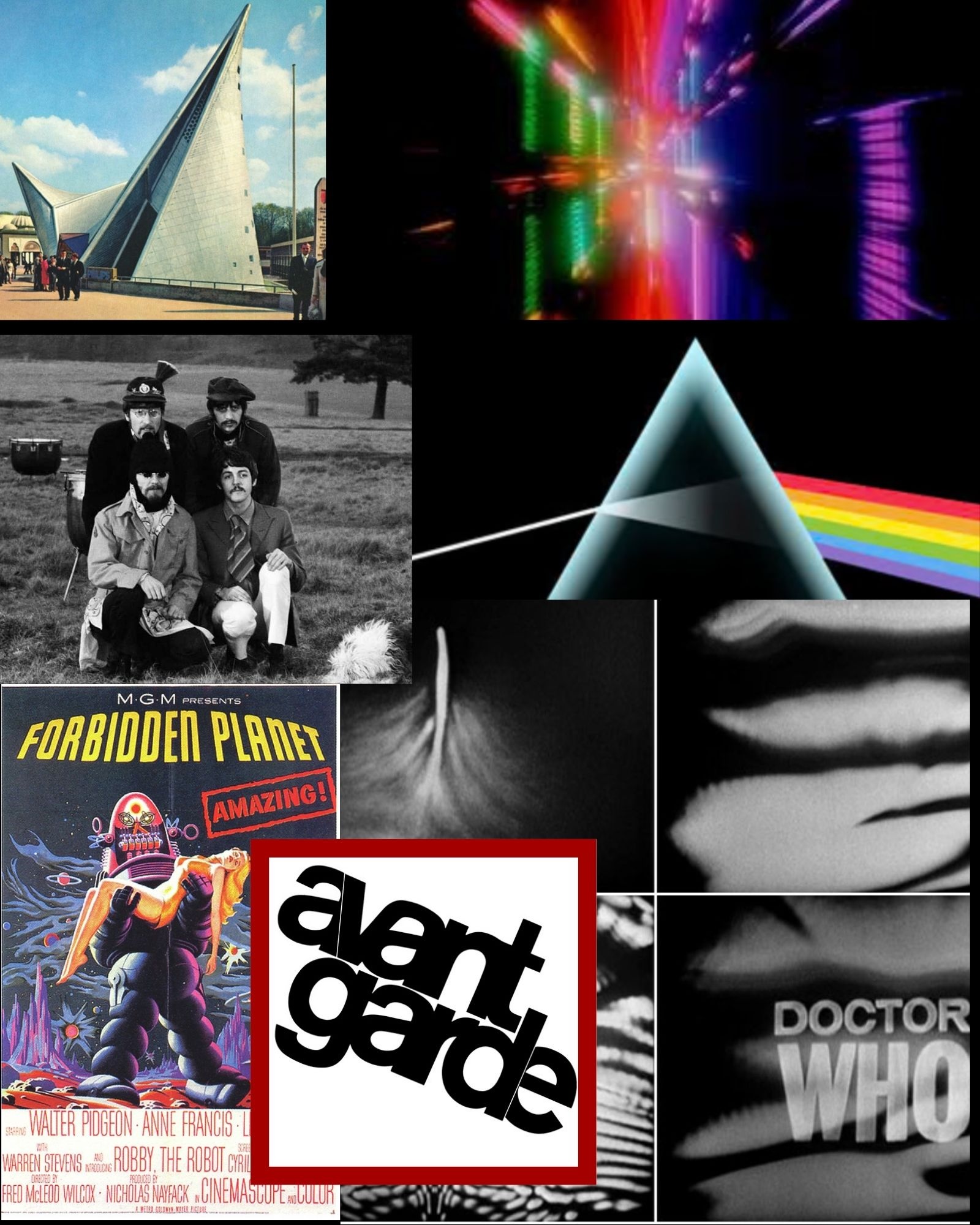
Grappling with the Avant-garde: Revisiting Classical Music’s Most Experimental and Divisive Period - Part 2: "Close Encounters of the Avant-garde Kind"
Beatles, Time Travelers and Monoliths on the Dark Side of the Moon!
It's no longer unusual for real avant-garde composers to have been in a band, and for bands to be interested in a wide range of music. Look at how artists like Aphex Twin are influenced by Nancarrow and Stockhausen.
— Jonny Greenwood (Composer, guitarist, and member of Radiohead)
Guess where most people first heard avant-garde music? Not in some half empty concert hall or over the airwaves or in some university’s electronic music lab.
On a Beatles record.
There were other places where people had their first Close Encounter with the Avant-garde too.
At a Fair - the World’s Fair, no less. On TV. And on a movie screen.
And in every case none of the audience ran for the exit. Their ears were tickled, their musical curiosity was piqued, and in the case of the mop tops, they screamed for more.
Yes, the packaging around the parcel sparkled and had a fancy bow, the delivery system was considerably less austere than its avant-garde progenitors, but inside little was that much different from the most experimental of experimental utterances from the likes of Stockhausen, Boulez & co.
We’ll come back to John, Paul, George and Ringo later.
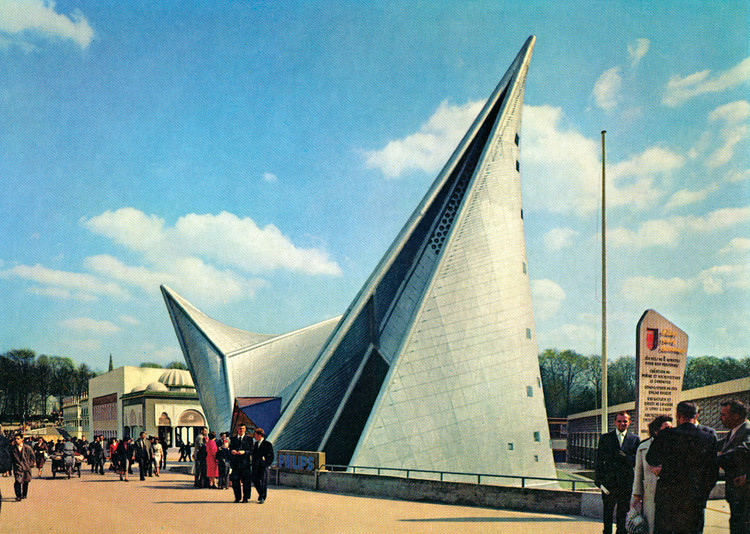
But first, let’s go back to one notable early Close Encounter the general public had with the Avant-garde. Step into our time machine, set the dial to 1958 in Brussels, and emerge at the Philips Pavilion at the World’s Fair...
“Take me to the Avant-garde!”
If you were a hip young thing in 1958 - or at least a forward-looking thinker, or you wanted a fun day out somewhere a little different - chances are that you would pay a visit to the World’s Fair in Brussels. Wandering around, at some point your eyes would have been drawn to a striking-looking building that seemed the epitome of modernism, a visual signifier of “The Future”.
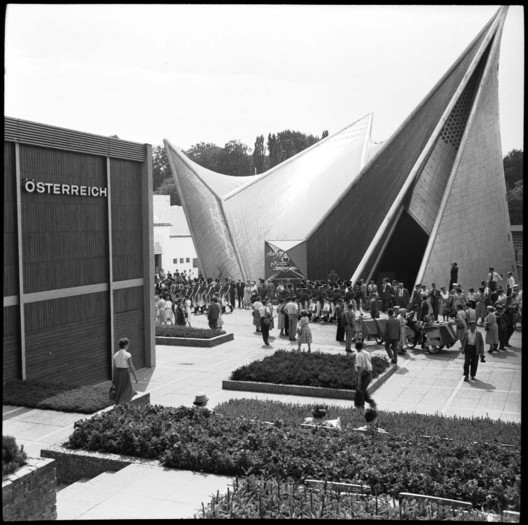
Long before the Jetsons were a twinkle in the eye of Hanna-Barbera, the Philips Pavilion signaled a Brave New World of modernism, in which the literal and metaphorical ruins of WWII were rapidly being overlayed by the clean lines of a whole new way of seeing and imagining, building and living.
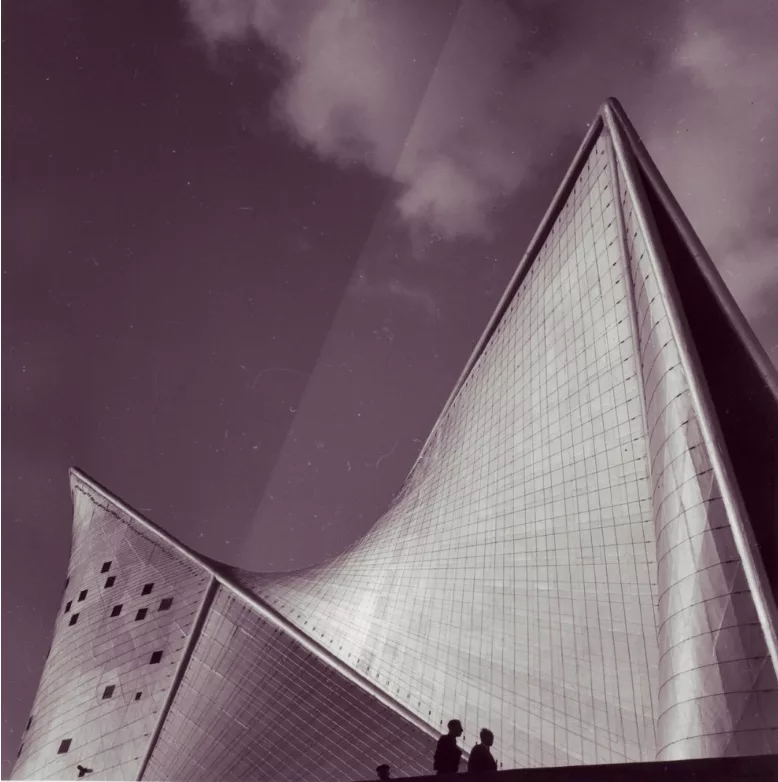
People were really thinking about the future: what that might look like - and what it might sound like.
The Pavilion was designed by the firm of Le Corbusier, a leading architect of the new modernism, and if you thought the exterior was something, just wait until you walked inside.
Designed to show off new technology (Philips was primarily an electronics manufacturer), the interior was given over to a vast multi-media exhibit conceived and designed by Iannis Xenakis, a leading figure of the musical avant-garde, who was working for Le Corbusier at the time. He thought of the space as being a stomach, with narrow entrances at either end.
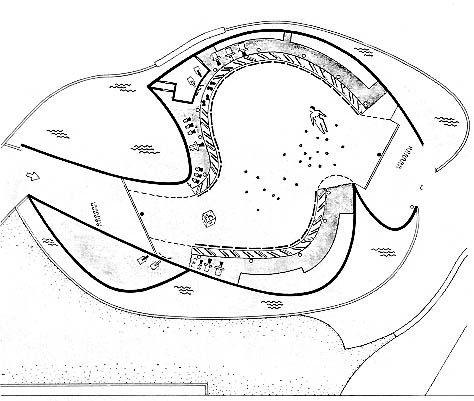
As you entered you heard Xenakis’s own musique concrète composition, Concret PH (a nod to the construction materials of the building). Throughout the rest of the cavernous space played the sounds of Edgar Varèse’s Poème Eléctronique, generally acknowledged to be an early masterpiece of electronic sound blended with musique concrète (in which recordings of real-life sounds serve as the basis for a composition).
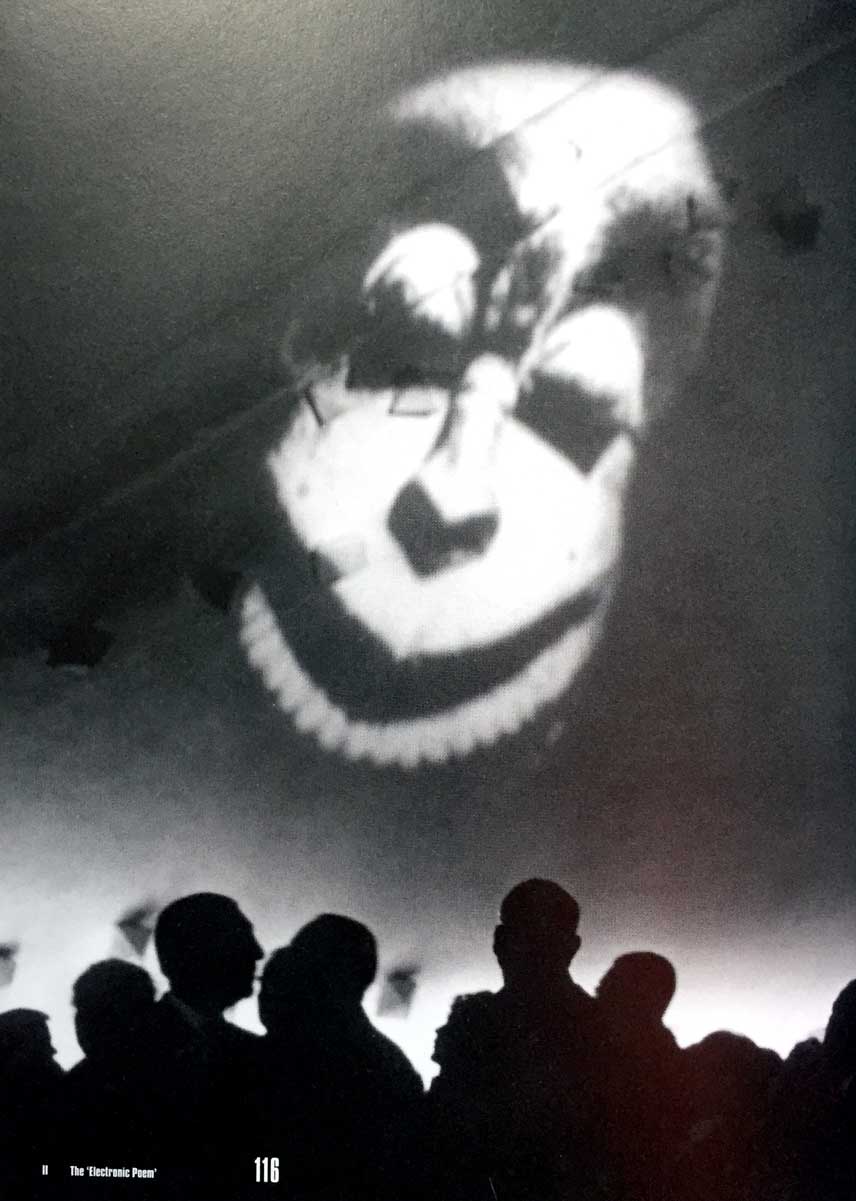 One of the numerous projections within the Philips Pavilion
In his extensive article on Poème Eléctronique from Computer Music Journal, Leo Izzo writes:
Varèse recorded PÉ (Poème Eléctronique) using three monophonic tapes, which were played simultaneously on three tape recorders. An approximate synchronization was achieved via a lead-in tape containing sync and count markers. During the performance of PÉ Philips engineers used a specialized three-channel perforated 35-mm tape, commonly used in the film industry. The perforations ensured synchronization with the projected films and an additional perforated tape that contained control signals for the fully automated performance. A total of 325 loudspeakers were mounted on the walls of the pavilion, supplemented by an additional 25 speakers positioned around the perimeter for low frequencies. This arrangement allowed sound to emanate from all directions, either revolving around the audience or descending from a height of approximately 20 meters at the pavilion's apex.
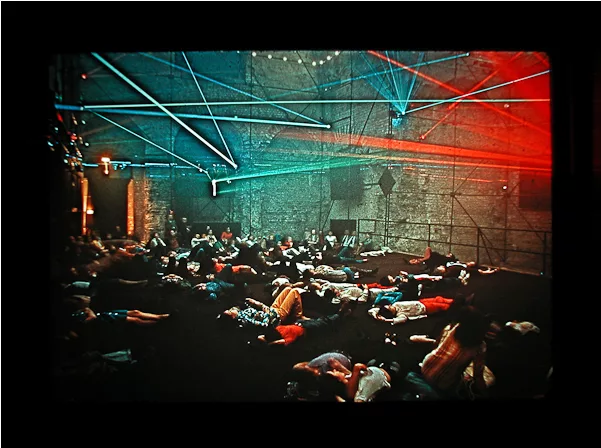 Listening...
… Since the Pavilion's demolition, PÉ has primarily been regarded as a standalone musical composition. This is largely due to a version released on the album Music of Edgar Varèse (Columbia 1960, MS 6146), which reduces the original multidirectional sound spatialization to a stereophonic format.
The sound material made available for public performance followed a different path. In the 1960s, Frits Weiland produced a four-track version based on the original Varèse tapes, redistributing the sound events in quadraphonic space. This tape, preserved at the Studio voor Electronische Muziek Rijksuniversiteit in Utrecht, also served as the basis for the Decca recording edition (Varèse: The Complete Works, Decca 460 208–2, 1998).
It’s interesting that one of the first things avant-garde composers brought back into the performance mix was the element of spatialization - either by creating tapes with sounds designed to be moved around three-dimensional space (as in Poème Eléctronique), or by composing for multiple groups of musicians positioned around the audience (Stockhausen’s Gruppen). This all harkens back to composers like Giovanni Gabrieli, who populated the vast space of St. Mark’s in Venice with antiphonal choirs and instrumentalists in the 16th century.
The Poème Eléctronique remains a mesmerizing work, even if only heard in its stereophonic version. Experiencing it in its original physical setting, moving through space, must have been an ear-popping and mind-bending experience. By all accounts the general public - hardly musical high-brows - loved it.
Were they repelled or affronted because it did not sound like traditional music? I think not.
Poème Eléctronique made the future sound like it was already here.
Its use of sound “samples”, and the manner of their manipulation, is emulated some twenty-five years later in the first album of The Art of Noise - a different musical beast entirely. How many people listening to Who’s afraid of The Art of Noise in 1984 would have known it had its roots in the hardcore avant-garde movement? Yet this is music people readily accepted. It was commercially successful.
As Anne Dudley, a key member of The Art of Noise noted:
“I was part of the sort of avant-garde tradition of John Cage and musique concrète and pushing back the boundaries of avant-garde classic pop rhythms. I think everyone brings something completely different to it.”
Film and the Avant-garde
Not surprisingly, film has long established ties to modernism in music. It was, in many ways, the original avant-garde art form - forcing people to look at the world and experience it in completely new ways. From its earliest days film often bent reality - for example the fantasy films of Georges Méliès and in the comedies of Buster Keaton, Charlie Chaplin and Harold Lloyd.
George Antheil’s Ballet Mécanique from 1924 was originally supposed to be the soundtrack to the silent film by artist Fernand Léger and the filmmaker Dudley Murphy (with Man Ray providing further input). In recent years the two have been married back together again and it’s hard to imagine them apart, so completely does the film’s rhythmic editing and abstract imagery find reflection in the avant-garde score. Dadaism is alive and well in both, and if ever you needed to find an example of a score which was “cubist”, this would be the one.
The avant-garde’s proclivity for elevating percussion (and the percussive qualities of non-percussion instruments) to the foreground is reflected in the work’s original orchestration, calling for 16 player pianos (or pianolas) in four parts, 2 regular pianos, 3 xylophones, at least 7 electric bells, 3 propellers, siren, 4 bass drums, and 1 tam-tam. Why do modernists so love devolving music and instruments to percussive elements (we hear it done over and over again)? Because it removes the thorny issue of harmony and tonality from the equation.
“Bang the rocks together guys!”
— from The Hitchiker’s Guide to the Galaxy by Douglas Adams
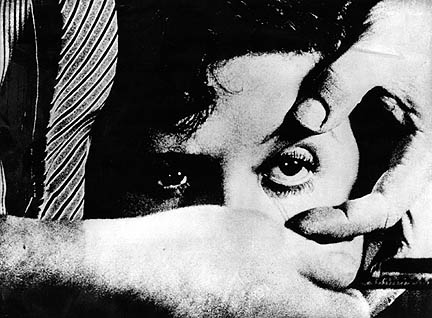 from Un Chien Andalou
An important early work of surrealism, Un Chien Andalou (1929) makes use of extended pieces of tango music and the Liebestod from Wagner’s Tristan und Isolde. No, this is not an avant-garde score as such, but this “cut-up” approach to the score that results in incongruous juxtapositions, and in many ways also results in a “re-writing” of the Wagner music and the manner in which we both receive and perceive it, very much anticipates procedures of the avant-garde movement which are often about re-contextualizing something familiar to make it sound unfamiliar.
Quotation and parody go hand-and-hand with modernism. Shostakovich does it extensively in his 15th Symphony: he even quotes from Tristan und Isolde, as does Hans Werner-Henze in his own remarkable Tristan, combining the Prelude from Act 3, slowed-down, with his own child’s voice and electronic elements to great effect. (Begin at 38:10).
Another important example of early avant-garde film is 1929’s Man with a Movie Camera. Dziga Vertov’s non-linear, documentary-style paean to the new Soviet Union was bursting at the seams with experimental techniques, and not surprisingly has inspired a range of similarly modernist scores to accompany its various incarnations and restorations over the years. Even the father of musique concrète, Pierre Henry, had a go in 1993, as did modernist/minimalist composer Michael Nyman in 2002. For the BFI restoration of 2014, the Alloy Orchestra created a score incorporating Vertov’s own notes for the film’s “soundtrack”. You can watch a trailer for this version below:
In 1960 Bernard Herrmann slipped serialism and atonality into his score for Psycho. These were perfect tools to create a sense of unease in the audience who never for one moment realized they were experiencing another kind of avant-garde music, even in scenes when nothing particularly odd was going on: a woman driving, a man and a woman talking, a woman on the run, having a change of heart, about to take a shower…
Listen to Herrmann's extraordinary score for the final scene that fully reveals Norman Bates's madness, which features a fully serial tone-row, ending with the dissonant Psycho chord as Marion's car is pulled from the swamp (That same leaping interval is used at the very end of Taxi Driver (1976), another study in madness - Herrmann's final score).
It was with the advent of electronic music that film became the perfect delivery system for what had become one of the obsessions of the avant-garde. The huge range of unfamiliar sounds that could be generated by manipulating electric current was god’s gift to composers who, above all else, wanted to move beyond traditional classical sonorities.
Probably one of the first times that the general public even heard electronic sounds was again courtesy of Bernard Herrmann, as restless an explorer of unconventional sonorities as any avant-gardist. His score for The Day the Earth Stood Still (1951) used one of the more colorful of the new breed of electronic instruments - the theremin - alongside electric violin, ‘cello and bass, plus an array of organs, wind, brass and percussion. It was a unique sonic palette, perfectly suited to the “Alien visits Earth” subject matter.
Here is a fun video where you can actually see the theremin being played...
... and here's Herrmann conducting a suite from the score, on a famous audiophile Decca Phase 4 record. (The complete score, re-recorded by Joel McNeely, is well worth seeking out - superbly recorded too.)
But the first fully electronic film score - a work of still shocking modernity which, I would say, is truly avant-garde because of its subversive function within a mainstream work in the popular culture, was the score for Forbidden Planet (1956).
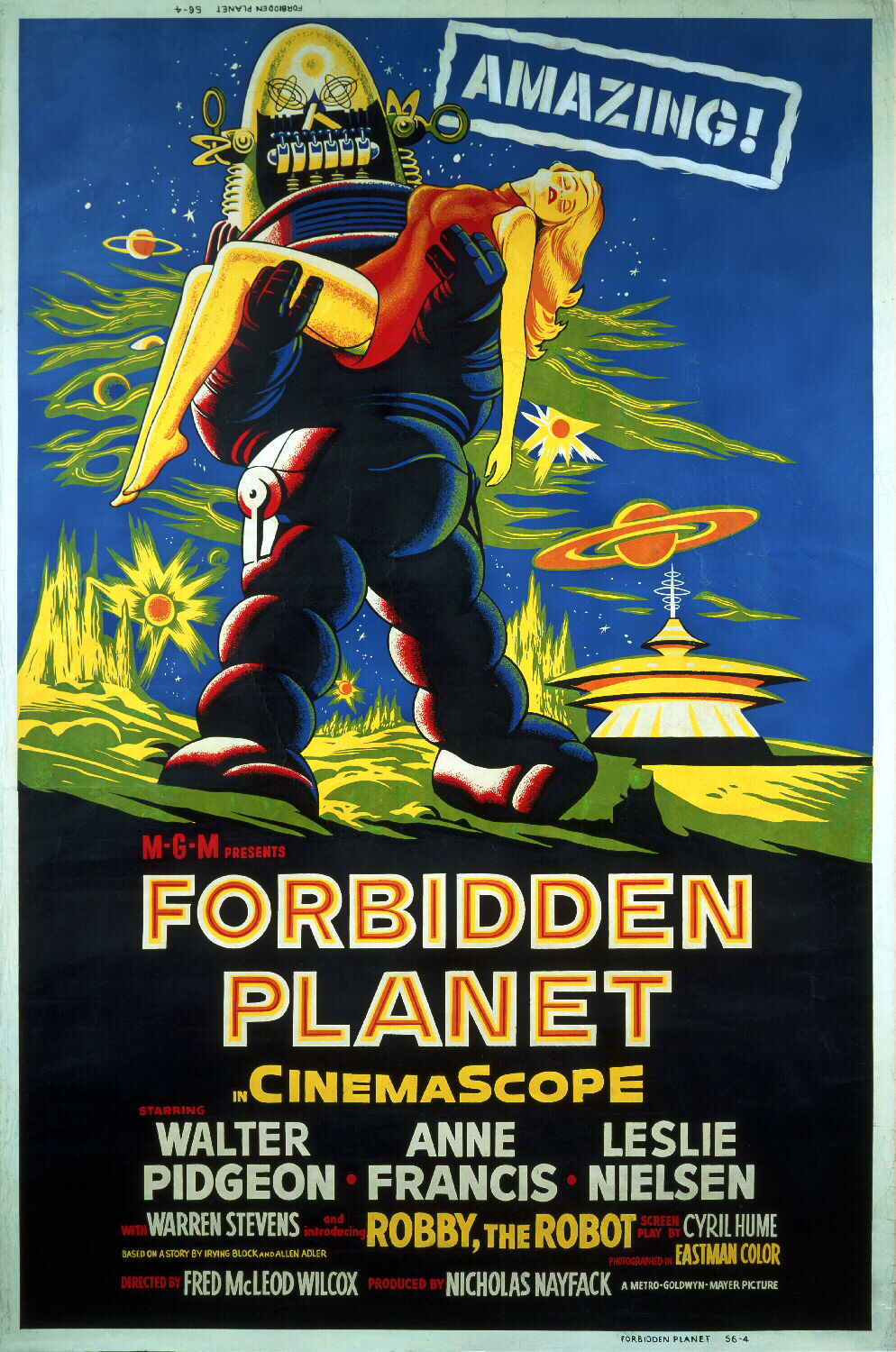
Its creators, Bebe and Louis Barron, were already the creators of what is considered the first American piece of electronic music on tape, titled Heavenly Menagerie (1950).
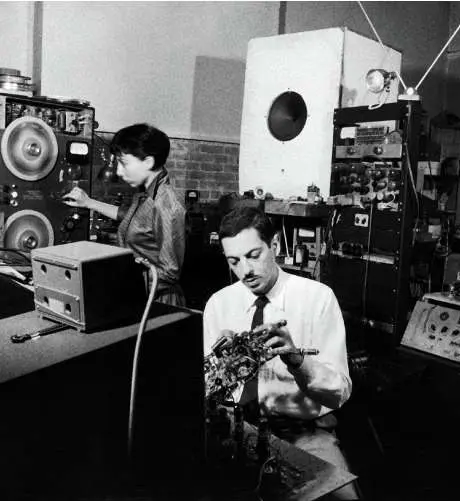 Bebe and Louis Barron
The couple opened a studio in New York, considered the first electronic studio in America, and alongside their ongoing electronic compositions and those of others - assembled in those days the hard way by cutting up and splicing pieces of tape - they also recorded a host of famous authors reading their own work, essentially “inventing” the audiobook. Henry Miller, Tennessee Williams and Aldous Huxley were amongst those who graced their studio for this purpose. Anaïs Nin, whose recordings of her work were pressed on red vinyl and released on the Barrons' Contemporary Classics record label, said this of the Barrons’ own music: “[It sounds like] a molecule that has stubbed its toes.”
Barry Schrader, himself a leading light in the American electronic music scene, and friend of the Barrons, discusses the Barrons’ approach to their creations:
They built their own circuits, which they viewed as cybernetic organisms, having been influenced by Norbert Weiner’s work on cybernetics (Cybernetics: Or, Control and Communication in the Animal and the Machine).
The circuits, built with vacuum tubes, would exhibit characteristic qualities of pitch, timbre, and rhythm, and had a sort of life cycle from their beginnings until they burned out. The Barrons recorded the sounds from the amplification of these circuits and this formed the basis of their working library.
They also employed tape manipulation techniques as part of their compositional procedures. The sound qualities of these various amplified tube circuits and the tape manipulations that they underwent formed the musical language that the Barrons created in their studio. Unlike some of the work being done elsewhere, the Barrons’ music reveals long phrases, often stated in tape-delayed rhythms, with the stark finesse of the tube circuit timbres. They created a style that was uniquely their own yet married to the technology they were using.
John Cage sought out the Barrons for his first tape work, Williams Mix (1951-53), spending over a year in the studio. He encouraged the Barrons to consider their own work as “music”.
The Barrons had turned frequently to film scoring work because it paid well, and were hired to compose the music for MGM’s sci-fi blockbuster, a film that would prove to be enormously influential for future makers of science fiction.
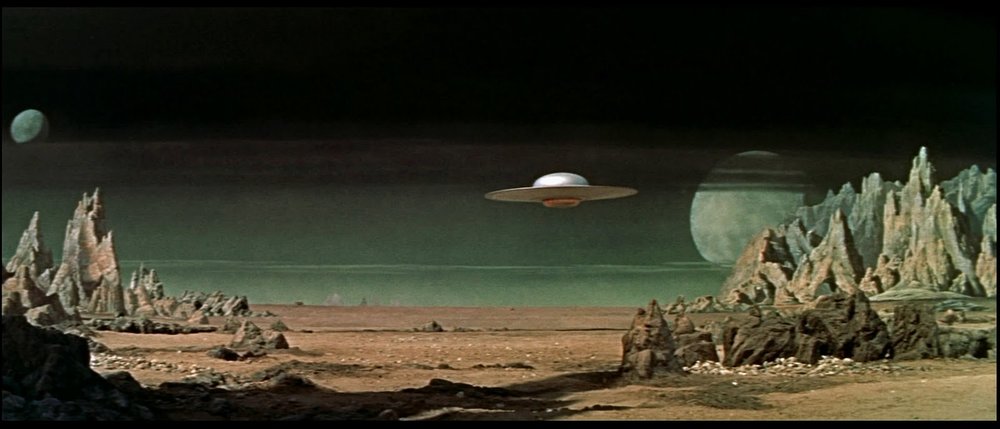
Originally the score was to be the work of another avant-gardist, Harry Partch (he of the huge collection of self-invented and built instruments), but once the studio heard what the Barrons were creating, the full score was handed over to the couple. What they created was every bit as innovative as anything created in the studios of WDR or, later, at IRCAM.
For the soundtrack album’s sleeve notes, Bebe wrote:
We design and construct electronic circuits [that] function electronically in a manner remarkably similar to the way that lower life-forms function psychologically… In scoring Forbidden Planet – as in all of our work – we created individual cybernetics circuits for particular themes and leitmotifs, rather than using standard sound generators. Actually, each circuit has a characteristic activity pattern as well as a “voice"... We were delighted to hear people tell us that the tonalities in Forbidden Planet remind them of what their dreams sound like.
At a preview screening, during the landing sequence of the spaceship, the audience broke out in spontaneous applause.
Forbidden Planet is a retelling of Shakespeare’s The Tempest (a play which has inspired several modern composers to some of their best work - the opera by Thomas Adés, and a stunning electronic and orchestral score by Arne Nordheim). In the film the “id” of the long-isolated scientist played by Walter Pidgeon manifests as a destructive creature. Indeed it is possible to view the entire film as a genre metaphor for the various interacting psychologies of the characters, and the dark night of the human soul ascendant. Within this context the score not only provides the required otherworldly sonic material to evoke and bring to life space, the alien planet, the spaceship, and all the other sci-fi accoutrements; it also provides a constantly morphing, almost subconscious undertow of the emotional and psychological dynamics of the story. Not unlike how Wagner uses the orchestra and leitmotifs in the Ring.
Here you can get an idea of the score’s use in the movie through selected scenes and cues.
Did audiences exit movie theaters as this music played, in the same way that many exited concerts of similar avant-garde works by “serious” composers? Were they affronted by this “non music”? Absolutely not.
Context is all, and the conventional narrative of the film provided a framework in which to perceive the experimental score via a more familiar narrative context. Thus the experimental, the avant-garde, became digestible, relatable - and a more easily accessible way into a whole new kind of sonic, aesthetic, and emotional experience.
I had a similar revelation once when I attended a performance in Paris by the renowned Béjart Ballet of Pierre Boulez’s incredibly thorny serialist, avant-garde work, Pli selon Pli (1960). This was not music I had ever warmed to, understood in any way, even really tolerated. My copy of Boulez’s own recording on CBS sat unplayed on my shelf since I had taken it out for its initial spin.
But now, hearing Pli selon Pli in this new context, with the visual forms and movements of dance imposing their own patterns and structure on music I had hitherto perceived as formless, I found myself marveling at just how much I was loving the music, and appreciating its own unique world and mode of expression.
A big lesson I learned from that experience was never to judge the avant-garde by one’s own prejudices and suppositions. You have to crack through the shell of everything you have ever heard before that keeps you trying to listen to music in the same way that you have always listened to music before. Applying the “try to be open to new things” principle doesn’t quite cut it. It has to be more of an active than passive process. (Does that make sense? I hope so. It is hard to put this stuff into words).
And always be willing to revisit music that you didn’t grasp or relate to first time around.
Except when it really is bulls**t - ‘cos that happens too! (See my comments in a future installment about Stockhausen’s Donnerstag aus Licht).
I am sure there is a lot of sympathy out there for John Lennon’s statement: “Avant-garde is French for bulls**t!”
Pretty funny coming from a guy who was later married to a prominent avant-gardist, and produced some pretty way out avant-garde bulls**t himself!
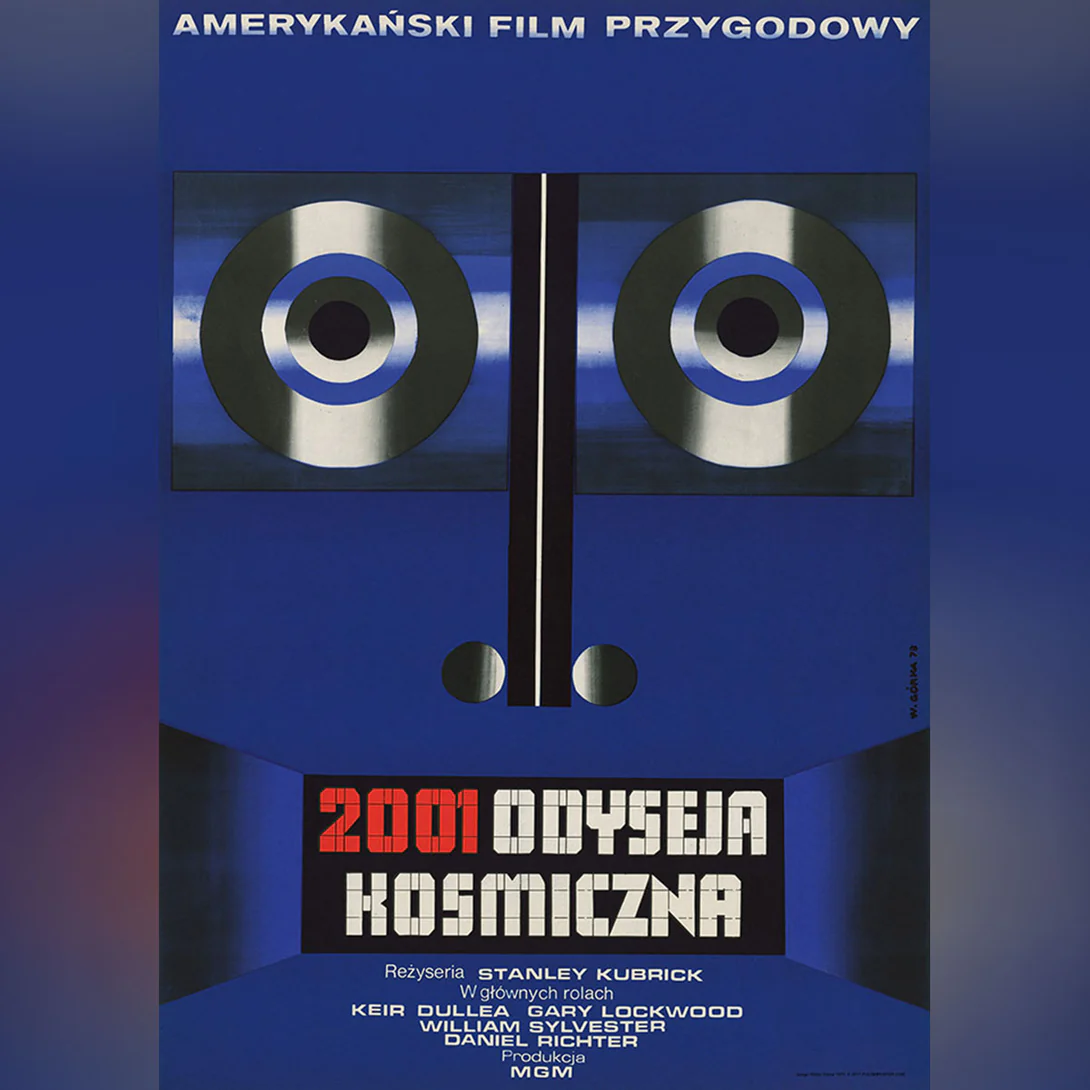 Polish poster for 2001: A Space Odyssey (1968)
Of course - and I know you were waiting for this - the biggest, most widely disseminated and still celebrated integration of avant-garde music into film came in 1968, with the release of Stanley Kubrick’s 2001: A Space Odyssey. From the moment the lights went down, in the pre-film Overture that featured in the road-show screenings, audiences were plunged into the avant-garde in the form of György Ligeti’s Atmosphères (1961). Replete with the composer’s characteristic tone clusters, microtones, and other sonic innovations, this must have really felt to those early audiences like music from another dimension. Ligeti’s music, also including excerpts from his Requiem (1963-1965) and Aventures (1962), is associated throughout the film with humans’ encounters with an alien intelligence that seems to be guiding our evolution, and its otherworldly quality suited that association perfectly.
The fact that this kind of music is being achieved not through electronics but via unconventional techniques applied to normal acoustical instruments and voices, lends it an extra level of organic connection to the listener. (There is some minor electronic manipulation of Aventures). Ligeti's music gets deep into one’s bones, reverberating through muscle, sinew, tissue - and flowing through the bloodstream to every corner of the mind and body. No wonder the film caught on with the stoners of the day, who would go to theaters and get high to the ultimate visual and sonic trip. They had no problem with all this avant-garde stuff!
This kind of music really connects with the listener on some primordial level. Kubrick was so wise to reject the use of electronic music in this film in favour of music created via acoustical means. It means that Ligeti’s experimental work itself still feels organically related to the more conventional scoring choices, like Strauss’s Blue Danube Waltz for the spacecraft orbiting the Earth, and the haunting Adagio from Aram Khachaturian's Gayaneh ballet which accompanies Discovery’s long, lonely trek through space to Jupiter. This is important, because the alien intelligence of Kubrick’s odyssey is profoundly connected on a molecular level with humankind, despite existing in another dimension, and on another level of intelligence.
It’s all there in the music.
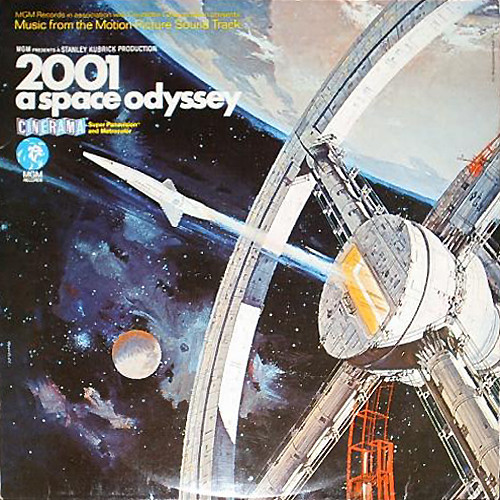 First UK Pressing of the Original Soundtrack album. For many this would have been the first time they owned a record of avant-garde music.
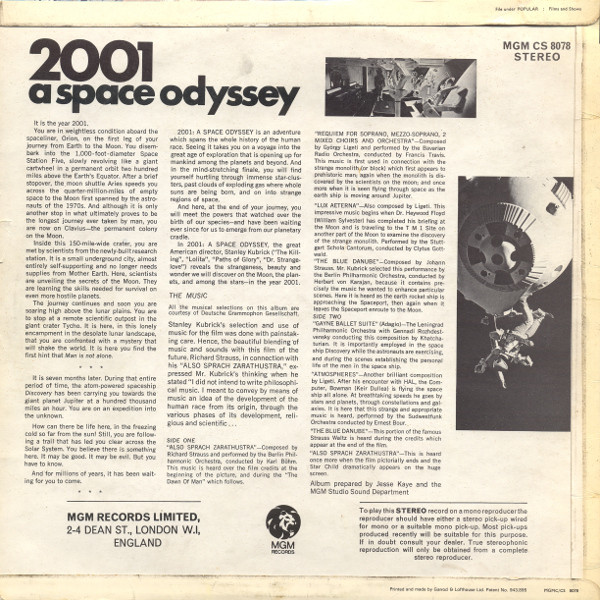
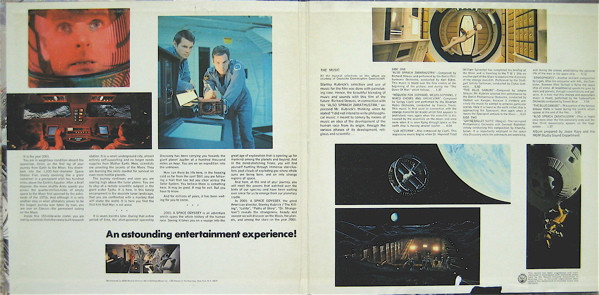 Gatefold from original US Pressing
Kubrick would continue to integrate modern music and the avant-garde into subsequent scores, most notably in The Shining (1980) where the early experimental music of another Polish composer, Krzysztof Penderecki, would provide the perfect musical narrative for Jack Nicholson’s “possession” and descent into homicidal madness.
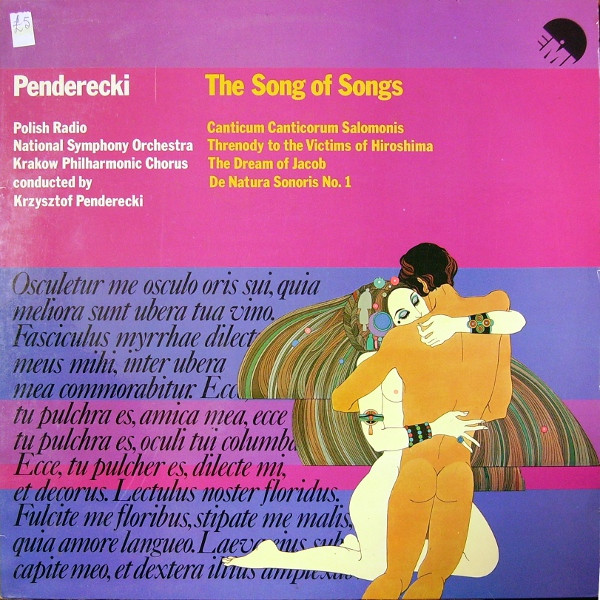 Album whose recordings of Penderecki Kubrick used in The Shining
Ligeti’s music returned to haunting effect in Kubrick’s final film, Eyes Wide Shut (1999), in the form of the piano piece Musica Ricercata II, that was woven into many key scenes. Ligeti’s solo piano works should definitely be a first port of call for anyone wanting to explore this composer’s remarkable body of work.
Even though Ligeti began by identifying with (and being identified with) the avant-garde, he like many others ended up having mixed feelings about the label. He wanted to be perceived primarily as a composer who wrote music that people wanted to listen to, not as a theorist who sacrifices communication with a listener on the altar of dogmatic purity. He recognized that while the avant-garde impulse was of value, there were other worlds to explore at the end of the yellow brick road:
Now there is no taboo; everything is allowed. But one cannot simply go back to tonality, it’s not the way. We must find a way of neither going back nor continuing the avant-garde. I am in a prison: one wall is the avant-garde, the other wall is the past, and I want to escape.
— Gyorgy Ligeti
One “other way” was minimalism, the return to tonality (with a vengeance) that gripped hold of the avant-garde and modernist movements in the 1970s/80s. Philip Glass immediately grasped the importance of film to the propagation of new currents in music, and his score for Koyaanisqatsi (1982) became a major stepping stone into achieving mainstream acceptance. For many audiences, this was probably their first exposure to minimalism - and they loved it! Glass’s music was the perfect match for Godfrey Reggio’s stylized and manipulated documentary footage, depicting a human world out of joint with Nature. It is easy to see this film and its score as a reworking of Vertov’s Man with a Movie Camera for a New Age.
Glass has continued to write scores for numerous new films, but has also gone back to old films and provided new scores, as in his Cocteau Trilogy (Orphée, La Belle et la Bête, Les Enfants Terribles - the latter a dance opera based on the novel, not the film) - and Dracula.
Traveling through Time and Space in Your Living Room
I cannot complete this overview of the avant-garde in film without referencing probably the most familiar piece of electronic music in history.
Now this piece of music is hardly avant-garde in its use of conventional harmony and melody, but its use of electronics was fully avant-garde at a time when no-one had heard these kinds of sounds on TV. At the time it debuted on British TV screens in November 1963 it caught the public imagination to such a degree that it not only made electronic music suddenly “okay”, but it also helped ensure the success of the program it was associated with.
That program was Doctor Who. Envisaged as a partly educational show for children, its central premise of a doddery and often irascible old man who also happened to be a Time Lord traveling with his grand-daughter and assorted other humans through space and time, proved to be remarkably resilient to the vicissitudes of popular culture and TV ratings. The show is still going, and that electronic music is still an integral part of the variously re-imagined versions of the theme tune. The pioneering work of the BBC Radiophonic Workshop in bringing the Doctor Who theme to life was Britain’s answer to WDR Cologne and the Barrons in the US. Their work is also immortalized in the sound made when the Doctor’s “spaceship” - the Tardis, which somewhat incongruously looks like a blue police box on the outside, but which is much “bigger on the inside” - materializes and dematerializes. This sound was achieved by Brian Hodgson running his mother’s house key up and down the strings of an old decrepit piano, then manipulating the tape.
When it came to creating the theme song for the show, Ron Grainer wrote a basic tune and harmony. Then Verity Lambert - the enterprising producer of the show - turned to a brilliant young composer in the BBC Radiophonic Workshop, Delia Derbyshire, to create - electronically - a theme that would feel both otherworldly, yet also “connect” on a visceral level with viewers.
Derbyshire herself continued through a long career of making experimental music in a variety of settings. An essential part of her discography is a collaboration with that same Brian Hodgson and bassist David Vorhaus under the moniker White Noise to create the album Electric Storm in 1969. The album combines electronic and sampled sound with pop rhythms and tunes to create something not entirely unlike The Art of Noise, only fifteen years earlier.
Derbyshire, inspired by the striking “electronic” visuals of the Doctor Who Main Titles, achieved by pointing the camera at its own monitor feed to create a feedback or “howlaround” effect, sought to create a sonic equivalent. She recorded various sounds and instruments, manipulated the tapes, then combined them with purer electronic sources, also manipulated.
Yes, I know that this is really just an “orchestration” of a conventional piece of music, but everything about the methodology behind it, and the effect of watching it in your home in 1963, reeked of the avant-garde. The Doctor Who Theme would never have found its own unique and distinctive “sound character” without that avant-garde sensibility that suffused the BBC Radiophonic Workshop. Many have speculated that it was the music more than anything that gave Doctor Who the show its special identity. Without that theme, generations of children and their parents would never have had this very Close Encounter with the Avant-garde in their own living rooms.
If you were listening to this music every week during your most impressionable years, might not you have been more open to experiencing other electronic music, or avant-garde music, as you grew older?
Was this one of the reasons I was so receptive to Stockhausen’s electronic music when I was 13, because I had been watching Doctor Who avidly throughout my childhood? Could well have been.
The “alien” had become familiar.
The Avant-garde invades Rock and Pop (and Jazz)
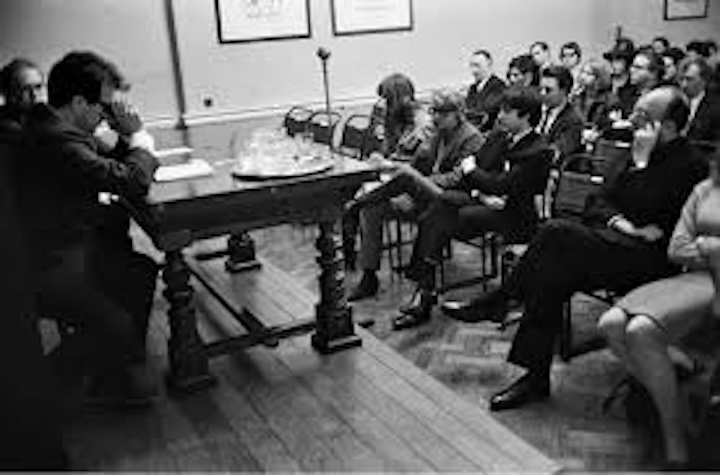 Yes, that’s Paul sitting in the front row of a lecture given by one of the arch avant-gardists, Luciano Berio. Sir Paul felt he could learn something. And he did.
Meanwhile, over in pop and rock land, the experiments and innovations of the avant-garde were going far from unnoticed by musicians who were themselves breaking new sonic ground and pushing technology to the max.
Likewise, the free jazz movement was clearly influenced by what was going on in classical music; although free jazz never crossed over into the mainstream culture in the way that the classical avant-garde did into rock and pop.
In the 1960s few were pushing those boundaries in pop music like the Beatles. The Beatles’ (and their producer George Martin) were constantly straining at the leash of what was technologically possible in the recording studio, and Paul McCartney was particularly tuned in to what the classical avant-gardists were up to.
“John Cage had a piece [Radio Music, 1956] that started at one end of the radio’s range, and he just turned the knob and went through to the end, scrolling randomly through all the stations. I brought that idea to ‘I Am the Walrus’. I said, ‘It’s got to be random.’ We ended up landing on some Shakespeare – King Lear. It was lovely having that spoken word at that moment. And that came from Cage.”
Music writer and historian Elizabeth Alker has written a fascinating book about all this, Everything We Do is Music. She recounts:
McCartney watched the communist and free improviser Cornelius Cardew play the prepared piano at the Royal College of Art in London. He saw Karlheinz Stockhausen deliver an address about the development of synthesized sound. And he went to meet Delia Derbyshire (“She was in a shed at the bottom of her garden full of machines”) to ask if she wanted to write an electronic score for “Yesterday”. He attended a lecture by the Italian composer and electronic experimentalist Luciano Berio, who later arranged a series of songs by the Beatles for his first wife, the mezzo-soprano Cathy Berberian.
McCartney:
“Not everything we see is clear and figurative… Sometimes when you’re asleep or you rub your eye, you see an abstract: your mind knows about it. We know about this stuff. It was the same with music. We were messing around, but our minds could still accept it because it was something that we already kind of knew anyway. Even though we were in another lane to more classical composers, we were kind of equal in that we also wanted freedom.”
For “Tomorrow Never Knows”, which McCartney said “was shaping up to be kind of a far-out Beatles song”, he recorded a bunch of sounds around the house on his newly acquired Brenell tape machines, then created tape loops which he took into Abbey Road.
“I set up the tape machines to create popping, whirring and dissolving sounds all mixed together. There could have been a guitar solo in it – straightforward or wacky – but when you put the tape loops in, they take it to another place because when they play, you get all these kind of happy accidents. They’re unpredictable and that suited that track. We used those tricks to get the effect we wanted.”
John Lennon got interested in these kinds of experimental processes too, which would result in the downright avant-gardism of “Revolution 9”. As McCartney said, John loved “the craziness of it all”.
Alker rightly refers to the influence of avant-garde procedures, this “alchemical” element in the work of the Beatles, which manifested across many songs and albums, as being the thing “that helped put them in a different league, in terms of their legacy and influence”.
McCartney:
“You think, ‘Oh well our audience wants a pop song’, and then you might read about William Burroughs using the cut-up technique and you think, ‘Well, he had an audience, and his audience liked what he did.’ And eventually we decided that our audiences would come along with us, rather than it being down to us to feed them a conventional diet.”
The Beatles were also as good as their word on their new record label, Apple. One of their big sellers was a work by a young British modernist called John Tavener (who would later develop into a pared-down minimalist in the style of Arvo Pärt). The Whale (1970) was full to the brim with avant-garde gestures to delight the progressive crowd.
And btw, in 1989 John Cage returned the favor:
The band which most obviously picked up where The Beatles left off in terms of using experimental avant-garde techniques within mainstream rock was Pink Floyd. Not surprising, given founding member Syd Barrett’s Dadaist inclinations. After Barrett’s departure, the experimentation with avant-garde techniques and sonorities comes even more to the fore, especially in Atom Heart Mother. But it was with Meddle that one begins to feel that the band is moving more forthrightly, and fully, into actually assimilating avant-garde techniques, in a manner that more completely integrates them with the straight-ahead rock element of their sound. In Meddle these avant-garde areas of full bore concrète sampling (that football crowd in “Fearless”, the barking and howling dog in “Seamus”) blend seamlessly with sonic manipulation and noise (take “One of these Days” and “Echoes” out for a spin). The experimental is no longer the side show - it is front and center.
This is further confirmed by all the concrète elements and tape loops of Dark Side of the Moon that are as much the music as the guitars, synths and drums, The music itself remains fundamentally harmonic and tonal, but the manner in which the experimental elements are interwoven is - I think - its own kind of “avant-garde”. It is the very fact that the experimental is perfectly married with the conventional that is itself a quintessentially avant-garde gesture. Today we are so over-familiar with this music that it fails to register how wildly experimental and anarchic this stuff is. Cash registers and electronic tones as a rhythmic tape loop, heart beats, madmen mutterings and screams… in a pop song!!!
The stuff of true modernism - and a commercial smash!
Another band that seemed to live on the edge of where rock ends and the avant-garde begins was King Crimson. Robert Fripp is an artist who has always had one foot in rock, the other floating between classical, free jazz, and the avant-garde. The avant-garde undercurrents in King Crimson are evident from the debut album, especially in “21st Century Schizoid Man”, but really come to the fore in the opening track of 1973’s Larks’ Tongues in Aspic. The presence of percussionist Jamie Muir, who had a free jazz background, was significant. This is essentially a collage of what feel like disparate “urges”, each one pulling in different directions, with unsettled tonality throughout. (Fascinating live version from 1972 here).
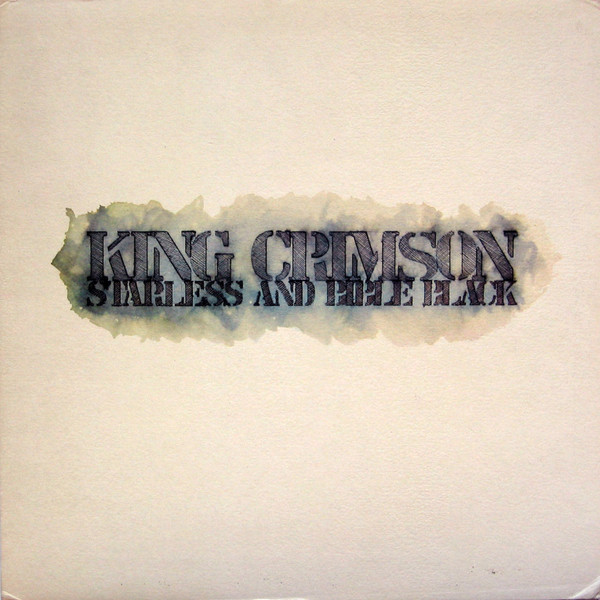
That sense of restless displacement became even more prominent in the improvisations that make up a large part of the next album, Starless and Bible Black. The anarchy, which as always sounds like it could equally well have been totally “composed” using serial or aleatoric procedures, becomes harnessed in the next album, Red (1974) to what would become Fripp’s dominant compositional mode right up to the present : a rock blend of Stravinsky’s neo-classicism and fragmented time signatures with Minimalism. No blues in sight. In 1974 Minimalism was a new wing of the avant-garde, so Fripp was right there in the vanguard. Taking a break from his band, Fripp would explore his minimalist tendencies further on his landmark solo album, Exposure (1979).
That paring-down-to-the-basics within complex time signatures would be further refined in the 80s revival of Crim on the albums Discipline (1981), Beat (1982), and Three of a Perfect Pair (1984). These albums, with their alternately gamelan-influenced interlocking guitars (courtesy of Fripp and Adrian Belew) and dissonant “noise” solos, plus Belew’s surrealist lyrics and occasionally screaming vocals, all set against Tony Levin’s newly percussive and melodic stick lines, and driven forward relentlessly on the polyrhythms of returning Crimson drummer Bill Bruford, somehow manage to sound more “avant-garde” with each passing year.
The succeeding years of the double trio, the double duo etc. resulted in more music that trod the musical high wire in Vroom, Thrak (2005) and beyond. With the re-formation of Crim as a seven-piece with three front-line drummers in 2014, for the first time the band finally had the manpower and considerable musicianship necessary to be able to range across their whole history, although the 80s era was given relatively short shrift.
In 2024, after the dissolution of the 7-Headed Crim (!), with Fripp’s blessing half of 80s Crim (Adrian Belew and Tony Levin) brought on Steve Vai and Danny Carey to form BEAT. Especially with Steve Vai using Fripp’s guitar lines as a launching pad for his sometimes even more experimental guitar work, which in turn encouraged Belew to unleash his inner avant-garde beast, BEAT’s shows did something that Crim rarely achieved: they fused together hard rock, metal, minimalism and the avant-garde into a sledge hammer of pure joy!
All of this was in Crimson’s future, but you can hear the kernels of it all in 1973’s Lark’s Tongues in Aspic.
Fripp has a delightful habit of turning up on other artists’ albums to give the music a neo-avant-garde tweak or two. Going back to his iconic solo work on Bowie’s “Heroes” and Scary Monsters (and Super Creeps) (1980), and coming forward to his blistering anarchic solo work on Nick Cave’s Grinderman side project, “Super Heathen Child”, Fripp is always thinking and playing outside the box.
Meanwhile, as rock and jazz and all of it moved forward, more and more musicians integrated the attitude and methods of the classical avant-garde into their work. Radiohead for all the world sounds like an avant-garde group a lot of the time, plain and simple. What is Brian Eno if not an avant-gardist, albeit one who does not want to completely alienate his audience. But he’s definitely in the zone - and has been for decades, introducing Bowie to all manner of avant-garde techniques back in the 70s.
David Sylvian, Ryuichi Sakamoto, Nine Inch Nails, Aphex Twin… I could go on and on.
For rock's experimentalists, the avant-garde ain't goin' nowhere...
And I haven’t even mentioned Kraftwerk, who in many ways are now considered even more influential than The Beatles, so pervasive has electronic music become in popular music. It was hardly surprising that the new wave of German Krautrock bands embraced electronics just as their classical forbears had done. Anything to separate them from Anglo-American stylistic hegemony. Kraftwerk started out as a kind of crossover free-everything, avant-garde acoustical outfit tinged with electronics and early drum machines, but with the success of their forays into full-bore electronica with Autobahn (1974), the more experimental Radioactivity (1976), and the mold-setting Trans-Europe Express (1977), they brought the new minimalism into the pop mainstream with a vengeance.
Kraftwerk’s whole aesthetic, from their album covers featuring striking graphic design, to the a-human objectification of the band members, to their “secret” studios in Dusseldorf (most alliteratively named Kling Klang) couldn’t have been more indicative of where their sympathies lay. Kraftwerk were avant-garde incarnate - and still are (kinda): bringing their retro 3-D live shows (a tip of the hat to the connections between avant-garde film and music in the early 20th century) to modernist public spaces, like The Museum of Modern Art in New York, Disney Hall in Los Angeles, and Evoluon in the Netherlands. Evoluon is the former technology museum of Philips Electronics, so the call-back to the Philips Pavilion at the 1958 World’s Fair where it all started is quite specific.
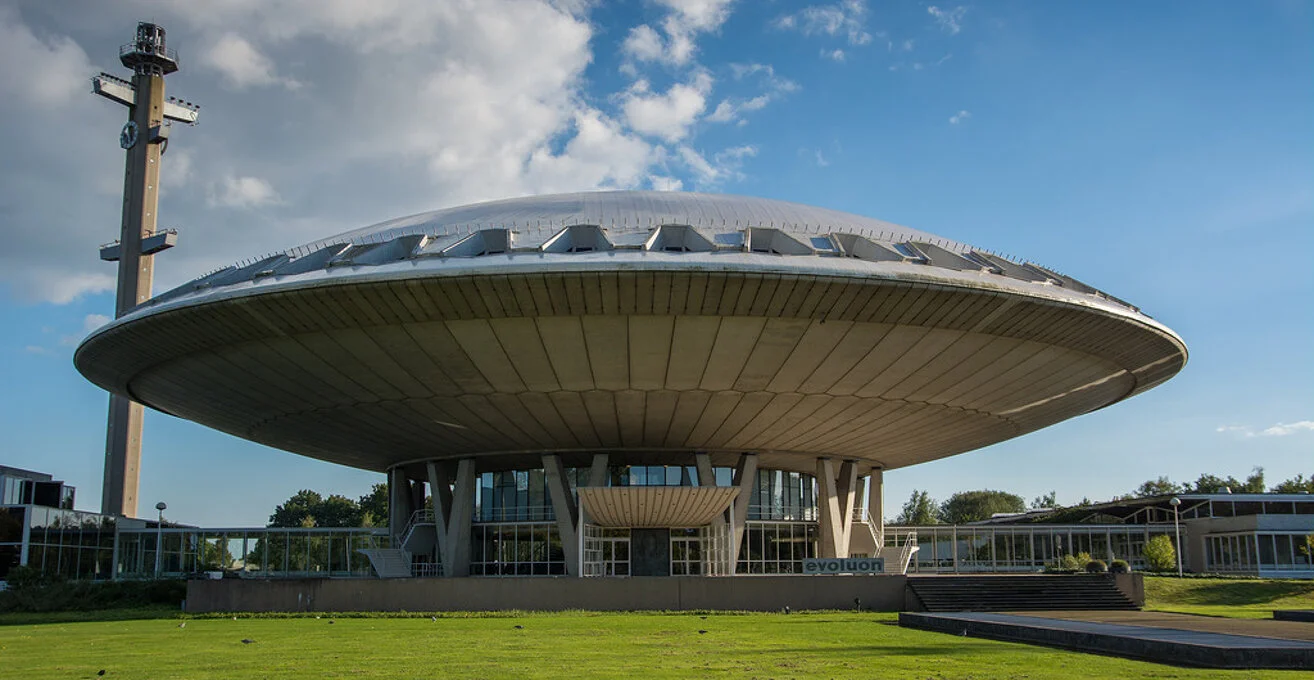 Evoluon
Look, if you were listening to any rock or classical in the early 1970s, you were hearing some aspect of the avant-garde reverberating across genres. Even if it was filtered down, or conspicuous by its absence, as in the resolutely old-school tonal works of Benjamin Britten and Shostakovich, its presence lurked over the shoulder of everyone creating music at this time.
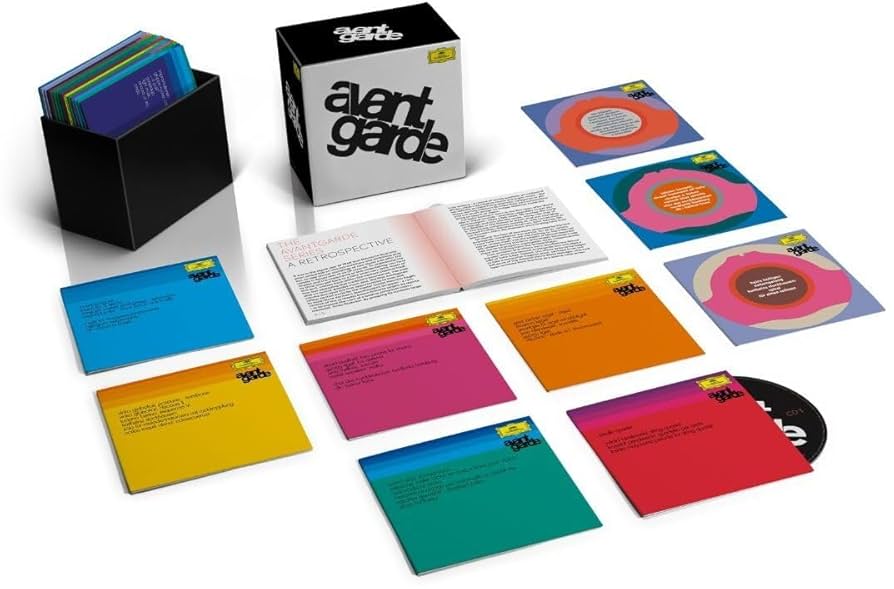 DG's limited edition CD box set of its Avant-garde series - ripe for re-pressing?
Going In Search of the Avant-garde…
So here you are - just as I was - at the dawn of the 70s. If you’d been exposed to even a few of the musical or sonic experiences detailed above then you’d already had some seriously Close Encounters with the Avant-garde - and it hadn’t killed you. It hadn’t “turned you off” music. In fact, if you were me, it had awakened your musical curiosity. Even as you were playing and listening to your Bach and your Beethoven, as you were also dabbling in the more conventional modernists like Stravinsky and Bartok, you knew there was something else out there, something really different. You’d glimpsed the tip of the iceberg, the distant lights of the mothership. What lurked below the waterline, and inside that huge flying saucer?
Were you ready for what you’d find beneath - and within?
And exactly how would you find it - and listen to it?
Unless you were living in a major city like London, Paris, New York, Berlin the answer was, with difficulty.
The answer for this 13-year-old going away to boarding school was waiting for me in the school record library. Little did I know it, but records were the place where I was going to find my stash of the avant-garde.
And I’m guessing that for most other musical adventurers, that’s where they found their avant-garde: on the records at the library, on the records at their friends’ houses, on the records almost hidden away in the “Contemporary” section at the back of the music stores.
After all, this is how Mick and Keith first bonded, over their shared interest in American music, in the blues - which they found in each others’ records.
So that will be where we go for our next Close Encounter with the Avant-garde: in the record racks and catalogues of the companies who felt this music was important enough to send it out into the world.
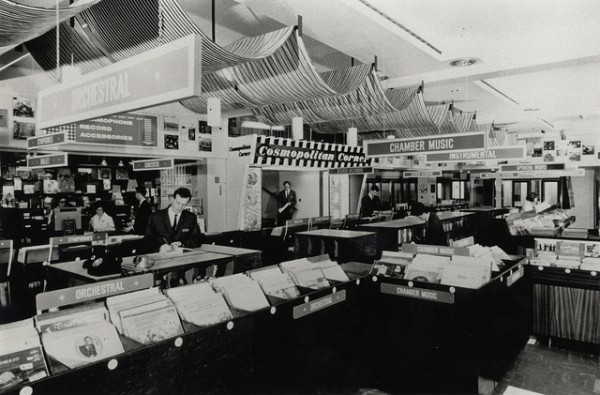 The Classical Department at HMV Records on Oxford Street in the 1960s
Stay tuned for Part 3: Modernism and the Avant-garde on the Yellow Label and Beyond - an overview of the labels that were recording the avant-garde so you could bring it into your own home.
You can read Part 1 of this series here, Part 3 here, Part 4 here, and Part 5 here.