
Grappling with the Avant-garde: Revisiting Classical Music’s Most Experimental and Divisive Period - Part 4: “Brave New Worlds”
“What is Music?” the Avant-garde asks. Luc Ferrari answers…
What is music?
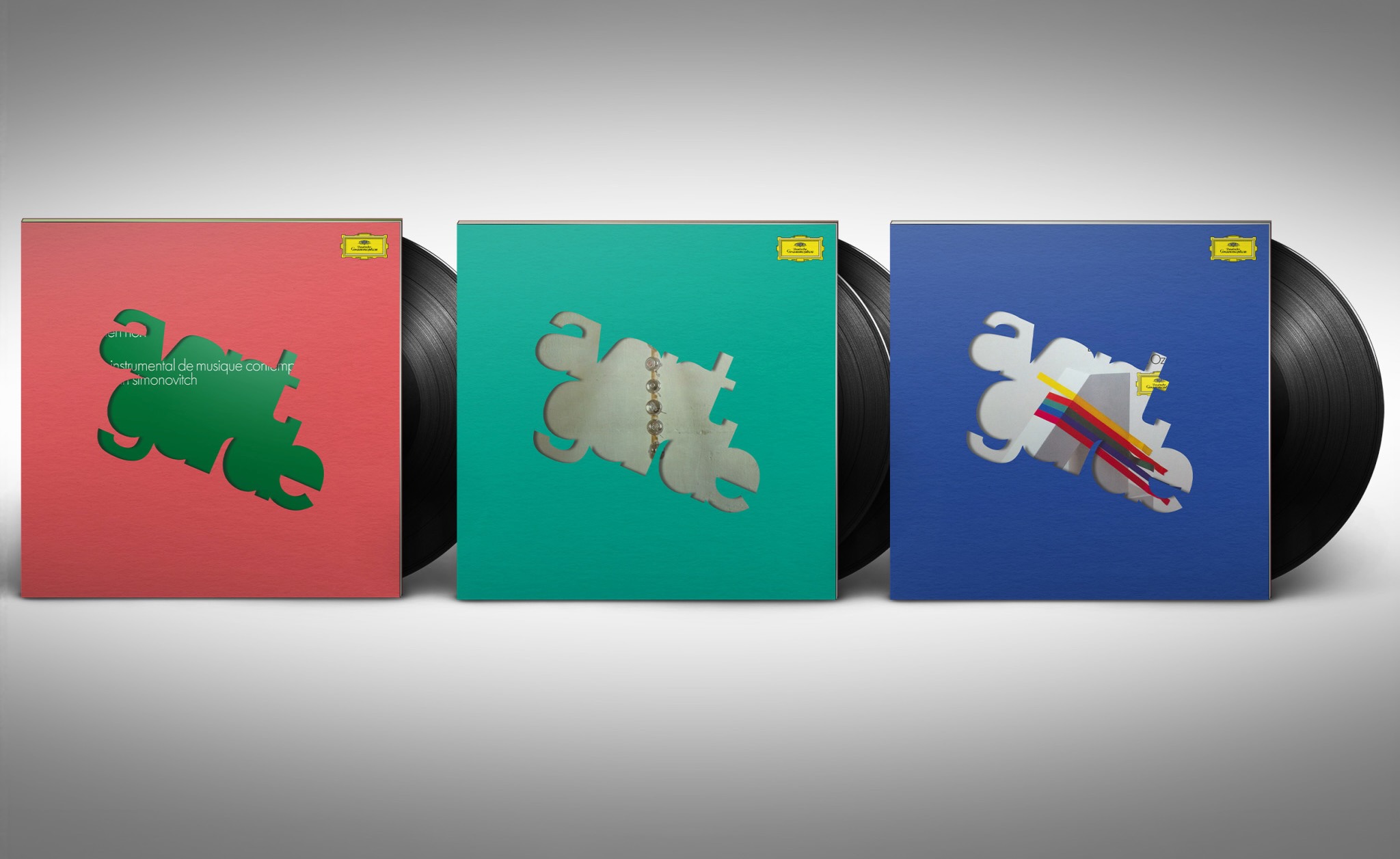
This is a question that anyone listening to the three releases in DG’s “revived for vinyl” Avant-garde series will find themselves asking at some point. In fact it is a question that will be asked by anyone engaging with the many waves of the “avant-garde” movement in classical music that overtook the classical world after World War II.
And it is a question that is definitely worth asking, both in relation to the music under consideration here, but also in general.
I will try, in different ways, to answer it. Not definitively by any means. But hopefully in a manner that will cause you to ask and answer your own questions as you listen to music that often seems to deny it is music at all, at least in the ways by which we normally understand it to be music.
The word “avant-garde” refers to any movement or way of thinking in the arts, including music, that is overtly experimental, overturning precedent, often designed to shock. In classical music’s recent history, it came to be applied to a group of composers who came to dominance in the post-WWII period in Europe and America - people like Pierre Boulez, Karlheinz Stockhausen, John Cage. There were many strands of post-tonal modernism, encompassing all manner of different compositional procedures - like atonality and serialism - or an abnegation of intentionality in the form of aleatoric or “chance” music. (Often the strict serial piece and the aleatoric piece would sound very similar). The term “avant-garde” tends to be applied to the more radical practitioners and their music, but it has also in later decades been applied to cover modernism in general.
When Minimalism established itself in the 1970s and 80s, it was called "avant-garde": ironic, since a core feature of this music was a return to a modified form of tonality, the very thing Schoenberg and all who followed had turned against.
Avant-garde music of the post-WWII period demands a level of intellectual engagement, as well as the more obvious emotional and sensory engagement, that is part of what defines it as being “avant-garde”. This is not music for background listening. Yet it is also music that by its very nature dares you not to listen. And historically, many have chosen not to do so, citing its confrontational, non-melodic, non-tonal - unattractive, even ugly - characteristics.
But if you do not listen then you are missing out on something that both historically and aesthetically informs both the music of the past and the music of the present, and will certainly continue to help shape the music of the future.
Another often overlooked aspect of the avant-garde is this one: is it really all that “new”? “New” in terms of how it sounds in comparison to other music of the past.
Take a listen to the following clips and you will see (or rather hear) what I mean. Unfortunately this cannot be a blind test.
Start this next clip at c. 19:35:
Start this one at c.15:00
What we have here is a sampling of a range of different so-called “avant-garde” and modernist music from the 20th century, some of it composed according to strict serial procedure, some of it derived from processes of chance (ie. aleatoric music), some of it atonal, some of it a mixture of all the above. But what you will notice is that it all sounds pretty similar in many regards, and none of it sounds like traditional “music”.
The wild card in that group of tracks is the Hoquetus David by the medieval composer Guillaume de Machaut, for all the world sounding like it was composed by another one of those avant-gardists. Nope. It was composed in the middle of the 14th century.
Modern composers, and especially avant-gardists, have often felt a great affinity to so-called “Early music”. Something about the way that music is constructed and sounds resonates with the modernist sensibility. From the 1960s on, as the early music movement uncovered more of this literature for general consumption, musical progressives discovered many similarities between both the aesthetics and sound of these musical traditions separated by centuries. They then acknowledged those similarities in new compositions offering call-backs. Heinz Holliger’s The Machaut Transcriptions is literally a series of dialogues between Machaut’s music and Holliger’s re-imagining of it in his own idiom. Within the original set of DG Avant-garde vinyl releases resides Mauricio Kagel’s Music for Renaissance Instruments.
The Concise Oxford Dictionary’s definition of music as being “the art of combining vocal or instrumental sounds (or both) to produce beauty of form, harmony, and expression of emotion” is largely inadequate when it comes to considering what avant-garde music is, and indeed whether it is music at all.
The inadequacies of traditional definitions of music become even more pronounced when one starts to consider the myriad modalities of ethnic musical traditions, let alone the assorted "noise" and experimental genres that proliferated in the wake of the mid-20th century avant-garde.
Casting my eye over what Wikipedia had to say on this topic, I came across this rather pertinent quote from a musicologist named Jean-Jacques Nattiez:
"The border between music and noise is always culturally defined—which implies that, even within a single society, this border does not always pass through the same place; in short, there is rarely a consensus ... By all accounts there is no single and intercultural universal concept defining what music might be”.
Within that context of music itself eluding a decisive definition, Pierre Boulez’s following declarations - notorious in their time - seem to encapsulate quite reasonable points of view and motivating principles for any young music Turk looking to plant their flag in the aesthetic and philosophical debates that drove the avant-garde movement after the War:
“More and more I find that in order to create effectively one has to consider delirium and, yes, organize it.”
and…
“All art of the past must be destroyed.”
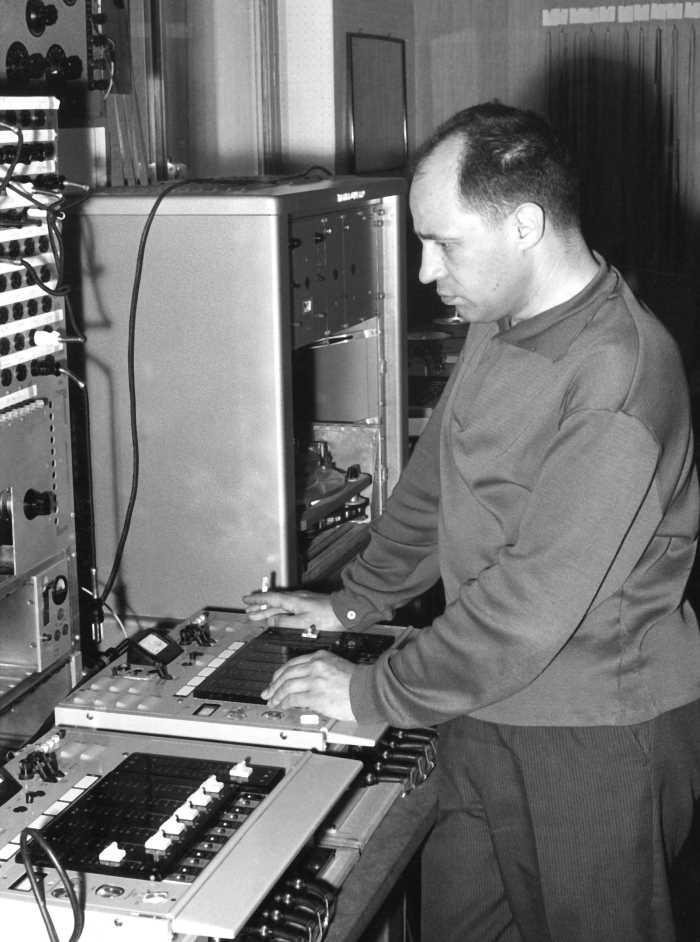 The young Pierre Boulez at SWR Studios
The music encapsulated in the original LP Avant-garde releases, and their successors, three of which are represented in these three reissues, all in different ways conform to both of Boulez’s admonitions above.
It is “music” that is alternatively delirious, gorgeous, grating, intriguing, ugly, beautiful, compelling, repulsive, essential, forgettable, unforgettable… plus all manner of other adjectives. Take your pick.
For those reasons and more this is music that is most definitely not going to be everyone’s cup of tea. But at its best I’d argue that it deserves to be performed and listened to as much as any Beethoven symphony (remember that the Grosse Fugue conclusion to Beethoven’s op.130 String Quartet No. 13 was considered “noise” and “a confusion of Babel” in its day). At its worst - or at least at its most confrontational - this avant-garde stuff must at least be considered for what its intent and outcomes signal about what music is or can be or might become.
That is something that all music lovers who profess to be somewhat open minded in their tastes should have to consider every so often, even if it is only to decide this kind of music is not for them.
So now I invite each beautifully AAA remastered (by the Original Source team at Emil Berliner Studios) and gorgeously packaged and appointed album to please take the stage. Fifty-plus years on from your original release, when you were most definitely the “bad boys on the block”, what are we to make of you now?
Has time mellowed your anarchic tendencies in the ears of the listener?
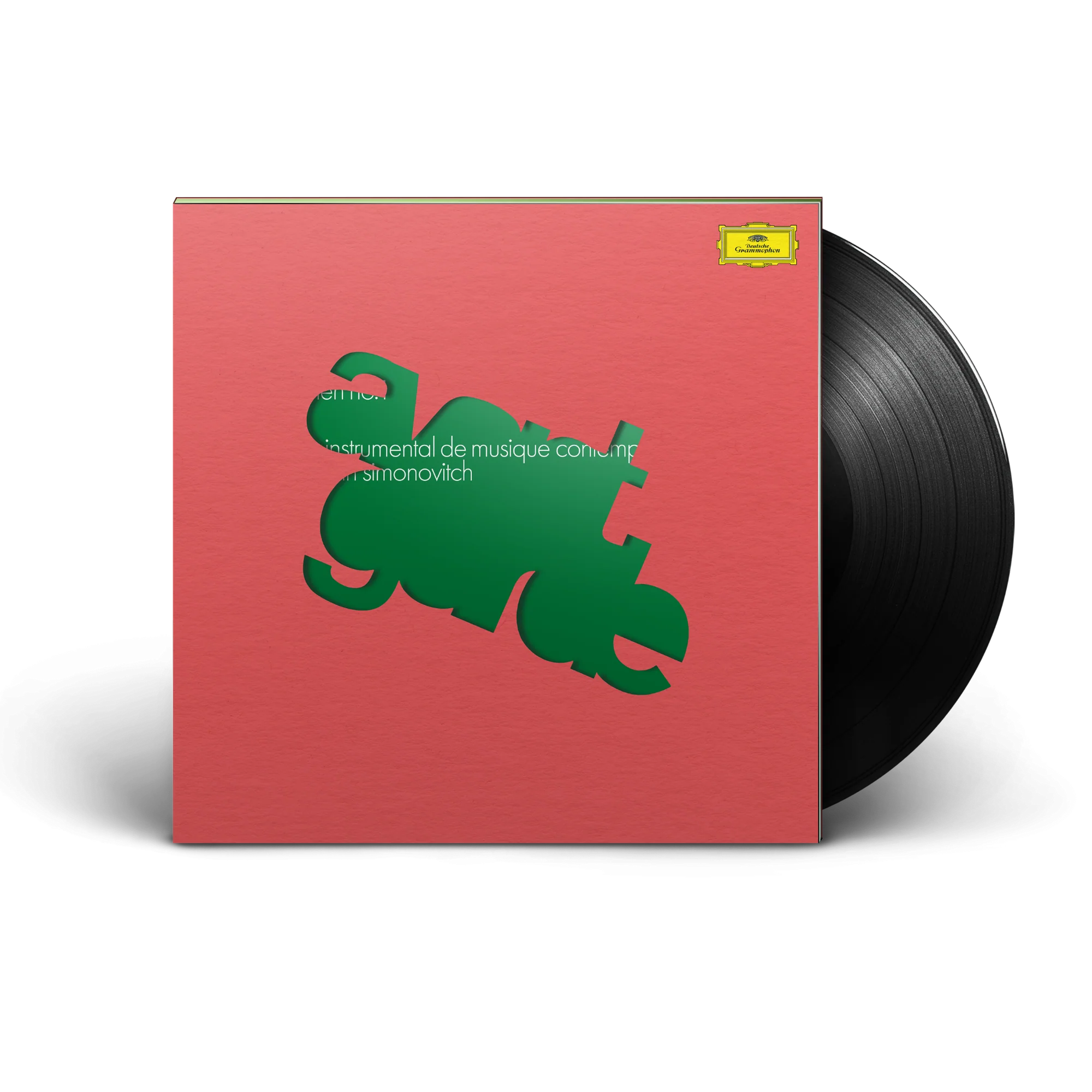
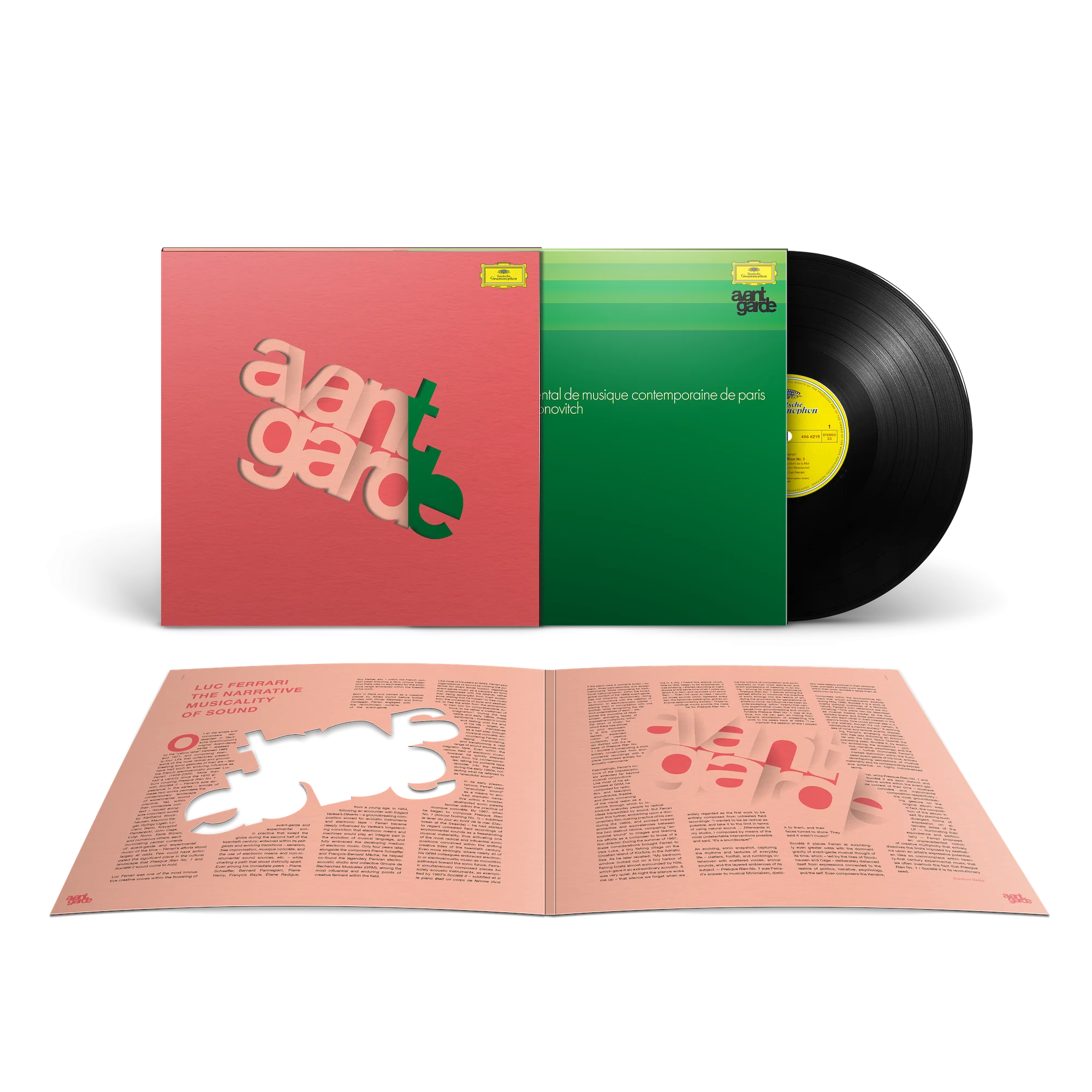
Luc Ferrari: Presque Rien No. 1 (Lever du Jour au Bord de La Mer) (Daybreak at the Beach); Société II (et si le Piano était un Corps de Femme) (and if the piano were a female body)
Of the three reissues under consideration here, the question of “What is Music?” is brought most sharply into focus with this release. Ferrari offers his own iconoclastic answers to the question from two opposing directions, one for each side of the record. Side One presents an entirely taped “concrete” (or “concrète”) work: recordings of real-life sounds taking place over the course of a day at the beach. The only manipulations are in the editing and cross-fading of the source tapes - there are no electronic interventions. Side Two presents a highly confrontational, occasionally alarming, piece of acoustic instrumental music, conceived and executed using all the devices - formal and sonic - of mid-20th century modernism. It’s not an easy listen, but in the right mood it will blow your socks off.
I will confess to not having heard any of Ferrari’s music prior to dropping the needle on this record. However, I am very familiar with numerous examples of both genres he is exploring here.
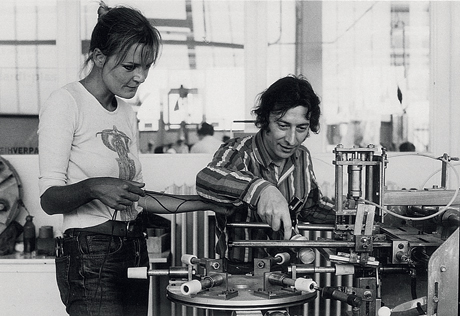 Luc Ferrari
Luc Ferrari was an interesting character. His early training as a pianist with Alfred Cortot, then compositional studies with Messiaen and Honegger, would seem to indicate that he would take a somewhat more conventional path (albeit tinged with modernism) than the one he took, but a serious bout with tuberculosis derailed a concert career, plus he became fascinated by the music of the French-American iconoclast Edgar Varèse. Ferrari went to the States in 1954 to meet Varèse after being profoundly impacted by hearing Déserts on the radio, a composition that integrated pre-recorded electronic tape with live instruments. Ferrari became fully engaged with Varèse’s notion of “sound as living matter”, and you can hear two completely different manifestations of that idea on this ‘Avant-garde” reissue.
Along with Pierre Schaeffer and François-Bernard Mâche, Ferrari was one of the founding members of the legendary and highly influential Parisian electro-acoustic studio and collective, Groupe de Recherches Musicales (GRM).
As Bradford Bailey (whose blog I would recommend for anyone interested in modern music) observes in his excellent additional sleeve notes that are printed in the die-cast wraparound sleeve that encases each of these vinyl reissues:
Like most of his peers at GRM, Ferrari saw organizations of sound as holding the potential for direct social impact, regarding avant-garde music as a people’s art form that collaborates with the listener, rather than being estranged from lived experience, stating that he hoped “to free music from the constraints of style and aesthetics; to free the artist from the abstraction to train him for comprehensible actions; to be rather a craftsman of imagination”. During the late 1950s and early 1960s these sentiments – fostered in youth and lasting until the end of his life – largely expressed themselves as a half step through musique concrète, encountering Ferrari collaging, manipulating, and transforming a vast range of sound sources with magnetic tape. Even within the narrow field of electronic music, however, he quickly stepped apart from his contemporaries, taking his portable tape recorder into the streets during the early 1960s, collecting what he referred to as “anecdotal sound”.
Of course one of the supreme ironies of this notion (shared by similar practitioners in other art forms) that the avant-garde would be a new form of “people’s art” is that it became the exact opposite: art that few regular folks had any patience with, or interest in. They just wanted something with a good tune. (I’ve always thought that the meteoric rise in popularity of jazz, rock and other popular music in the post-War period, supplanting even “light classical” music, had much to do with the intrinsic unattractiveness and “difficulty” of contemporary modernist and avant-garde classical music). Listening to, discussing, proselytizing about the musical avant-garde thus quickly became solely the province of the cultural and intellectual 1%, and the darling of the academic elites.
The idea that the tape recorder could make all things equal, that by presenting sound itself as a new kind of music made both by the regular people contained in the recording, and for the people listening to them, is fully encapsulated in the work that takes up side one of this LP: Presque Rien No. 1: Lever du Jour au Bord de la Mer (Almost Nothing No.1: Daybeark on the Beach), which Ferrari began in 1967 and completed in 1970.
Bradford Bailey:
Fascinatingly, Ferrari’s notions of the interdisciplinary extended far beyond musical conjunctions. Like most of his associates at GRM, he composed for radio, film and television soundtracks, theatre, and dance, conceiving of the visual realm as a vehicle through which to introduce everyday people to radical ideas transmitted by sound. [A notion I explored in Part 2 of this series of articles - MW]. But Ferrari took this further, embarking upon a documentary filmmaking practice of his own during the 1960s, and pointed toward similarities and equivalencies between the two distinct idioms, comparing “anecdotal sound” to images and likening his efforts as a composer to those of a film director. During the summer of 1967, these considerations brought Ferrari to Vela Luka, a tiny fishing village on the Croatian island of Korčula, in the Adriatic Sea. As he later recalled: “My bedroom window looked out on a tiny harbor of fishing boats, almost surrounded by hills, which gave it an extraordinary acoustic. It was very quiet. At night the silence woke me up – that silence we forget when we live in a city. I heard this silence which, little by little, began to be embellished. It was amazing. I started recording at night, always at the same time when I woke up, about three or 4am, and recorded until about 6am … Then I hit upon an idea. I recorded those sounds which repeated every day: the fisherman passing by, and so on. Events determined by society.” These recordings would provide the material for Presque Rien No. 1, widely regarded as the first work to be entirely composed from untreated field recordings. “I wanted to be as radical as possible, and take it to the limit in terms of using natural sound… Afterwards in my studio, I composed by means of the most undetectable interventions possible and said, ’It's a soundscape!’
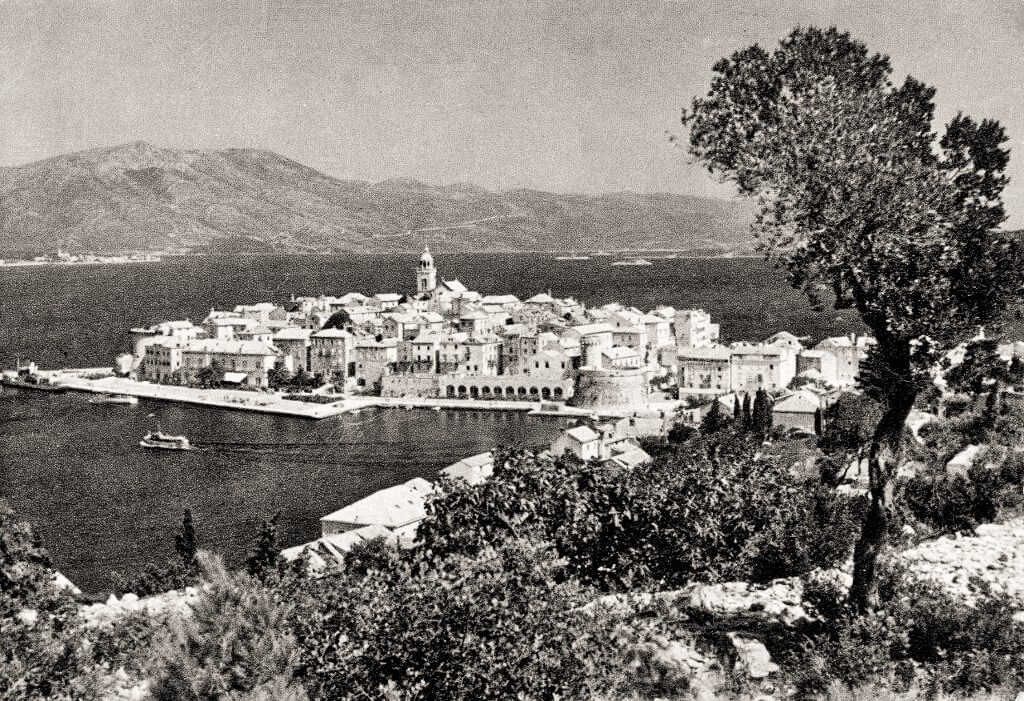 Korçula in the 1950s
Once one has accepted the notion that one is not listening to any kind of traditional music per se, nor any kind of electronic or concrète music familiar from, say, Varèse’s Poeme Electronique, sitting (or lying) down to listen to Presque Rien No. 1 is a fascinating experience, and one I would recommend to everyone.
Especially in this day and age of constant digital distraction, our minds are rarely forced to focus on just one thing. If you truly both focus on - and surrender to - Presque Rien No. 1, then the experience can be a purge of sorts, cleansing both one’s senses and one’s mind.
On the one hand, one is immersed in the “reality” of the tape, an aural representation of what one might hear on location if one closed one’s eyes. Yet it is much more than that. Ferrari, with infinite subtlety, “directs” the ear to what he wants you to hear, and finds patterns and rhythms in the sound environment. Especially as voices begin to emerge or be foregrounded, the ear and mind immediately begin to seek the music within the non-musical quotidian, to find the patterns suggestive of a guiding hand behind the seemingly random aural landscape.
Yet at the same time one is merely listening to the sounds of a beach town coming to life.
This tension between surrendering to formlessness and seeking intention is fascinating, and one can actually perceive one’s own brain attempting to bridge the two impulses.
As Bailey notes:
An evolving, sonic snapshot, capturing the rhythms and textures of everyday life – clatters, footfall, and rumblings interwoven with scattered voices, animal sounds, and the layered ambiences of its subject - Presque Rien No. 1 was Ferrari’s answer to musical minimalism, distilling the notions of composition and sonic materiality to the most elemental and direct expressions of meaning. In so doing – among its many accomplishments – Presque Rien No. 1 stands among the earliest efforts to introduce the practice of sonic ecology into the realms of art, laying the groundwork for generations of artists to come. Its influence has been so wide sweeping within 21st century experimental music that it's hard to gauge how groundbreaking and uncomfortable Presque Rien No. 1 was at the time, but we can gain an inkling from Ferrari's recollection of presenting the work to his peers back at GRM: “I remember the session where I played it to them, and their faces turned to stone. They said it wasn't music!”
I will also add this reflection by Ferrari himself, written many years later in the wake of the various wars and genocide that engulfed the region where he made this recording:
“On this island of Korcula, in the small fishing port of Vela Luka, our friends came from everywhere, we were surrounded by Slavic, Croats, Moslem Bosnians, of Slovenians. There was a beautiful harmony between all and I do not remember the least enmity or aggressiveness between them… This is why I have so much sorrow to understand. From what does this hatred come, who produced it?”
Listening to the aural portrait of humanity and nature interlocking in ambient harmony which is Presque Rien No. 1, one can only echo those sentiments.
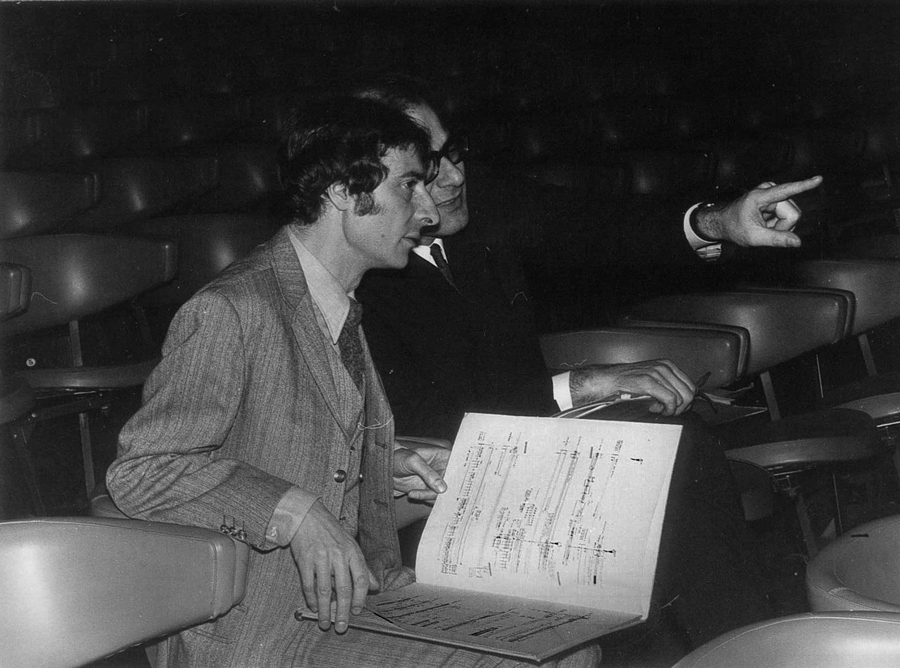 Luc Ferrari with Mauricio Kagel in 1968 (photo by Brunhild Ferrari)
Flipping the record to side 2 it is hard to believe we are listening to music from the same composer. We move from sonic minimalism to sonic maximalism - and the occasional sonic boom! Sidney Claire Meyer will have had her work cut out for her cutting this stuff, and maintaining her sanity as she did so. Even though this is a somewhat sonically foreshortened 2-track source, the cut metes out its punches like a regular Muhammed Ali. The respites between pummellngs and knockouts are most welcome, and rendered with full timbral grace.
Bailey:
Composed within the sociopolitical ferment that would subsequently explode during May 1968, Société II is a work of overtly political overtones of a feminist nature. Ferrari’s own reflections are illuminating: “This piece can be described as musical theatre insofar as the four soloists (piano and three percussionists) vie with each other in their interest in the piano’s body. One could almost see in it, if one wished, though it's not certain, a caricature of a macho society.” A writhing sea of tonal and timbral events, displaying Ferrari’s emerging sympathies with free jazz (following an encounter with the Cecil Taylor Quartet the proceeding year), Société II, by explicitly embracing the subjective – politics, narrative, psychology, and the self – further illuminates Ferrari’s marked distinction within the European avant-garde of his time, reconfiguring perceptions of musical materiality and its corresponding expressive potential, on highly individualized terms.
I’m not going to lie - this is tough stuff. In your face tone clusters, atonality in extremis, percussion - and instruments sounding like percussion - detonating like fireworks a few inches from your ears: this is brutalist music at its rawest, aided and abetted by a close, dry recording that gives no quarter. It’s hard to imagine a more disciplined or virtuoso performance, but maybe one recorded in a slightly more forgiving acoustic would give the listener more breathing space. By the end I was gasping for air and feeling much like some Far Side derelict crawling through the desert sands, parched and ragged, but in this case calling out not for “Water!” but “Mozart!”
Now none of this is going to phase true lovers of the avant-garde and all its offshoots, like noise and the more extreme forms of electronic music, which can even show up on the albums of comparatively mainstream artists like Nine Inch Nails, David Sylvian or Aphex Twin. But for everyone else, forewarned is forearmed.
Having said that, there is a compelling quality to the experience of listening to this. The record as a whole offers a fascinating study in the kind of contrasts that drove the aesthetic and philosophical dichotomies of the avant-garde in particular, and modern music in general. This all remains fertile soil for today’s experimenters - but Ferrari did it first.
If you are in any way motivated to explore the currents of the mid-century classical avant-garde I would say that, even if this record is not a mandatory purchase (and I trust potential buyers will now know what they’re getting into from the above descriptions), it is one that demands serious consideration.
A quick note on the Music and Sound ratings: these are essentially for side 2. Side 1 sounds exactly like what it is: a good tape recording of an ambient event, made in the late 1960s, well remastered and presented. The ratings therefore apply primarily to Side 2.
Music

Sound
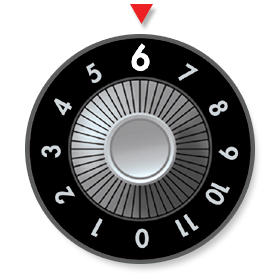
Luc Ferrari: Presque Rien No. 1 (Lever du Jour au Bord de La Mer) (Daybreak at the Beach)
Production: Karl Faust
Realisation and Sound Direction: Luc Ferrari
Luc Ferrari: Société II (et si le Piano était un Corps de Femme) (and if the piano were a female body)
for Piano, 3 Percussions and 16 instruments
Gérard Frémy, Piano
Jean-Pierre Drouet, Sylvio Guelda, Gaston Sylvestre, percussion
Ensemble Instrumental de Musique Contemporain de Paris
Dir.: Konstantin Simonovitch
Production: Karl Faust
Artistic Supervision: Hansjoachim Reiser
Recording Engineer: Heinz Wildhagen
Mastered and cut AAA from the original analogue 1/4 inch 2-track master tapes by Rainer Maillard and Sidney Claire Meyer at Emil Berliner Studios
Limited Numbered Edition of 1999
Pressed at Pallas on 180gram vinyl
Product Managers: Johannes Gleim, Julian Kreutzkam
Creative Concept Manager: Lars Hoffmann
Editor: Annette Nubbemeyer (texthouse)
Design: Florian Karg
Original Sleeve and Avant-garde Logo Design: Holger Matthies
Deutsche Grammophon GmbH
You can read Part 1 of this series here, Part 2 here, Part 3 here, and Part 5 here.