
Grappling with the Avant-garde: Revisiting Classical Music’s Most Experimental and Divisive Period - Part 5: “The Iconoclast and the Poet”
A Visit to Mauricio Kagel’s Workshop of Sonic Wonders - and Hovering in the Air with the Zen Artist of the Avant-garde, Toru Takemitsu
“I want to write music that stimulates thought, and is supplemented by thought.”
“Well, I try to defend myself from an acoustic chaos that is produced without my help. I articulate my own personal version of this chaos every day.”
“I am a soft anarchist. Without the need to organize your anarchy you never get any kind of deep discourse. The root of the word improvisation is the Italian improvviso, which means the unforeseen, the unexpected. I think that we have put artificial limits on the conception and aural experience of improvisation today. And I never forget that for a large number of listeners improvisation, composed improvisation and meticulous music writing sound very similar.”
— Mauricio Kagel
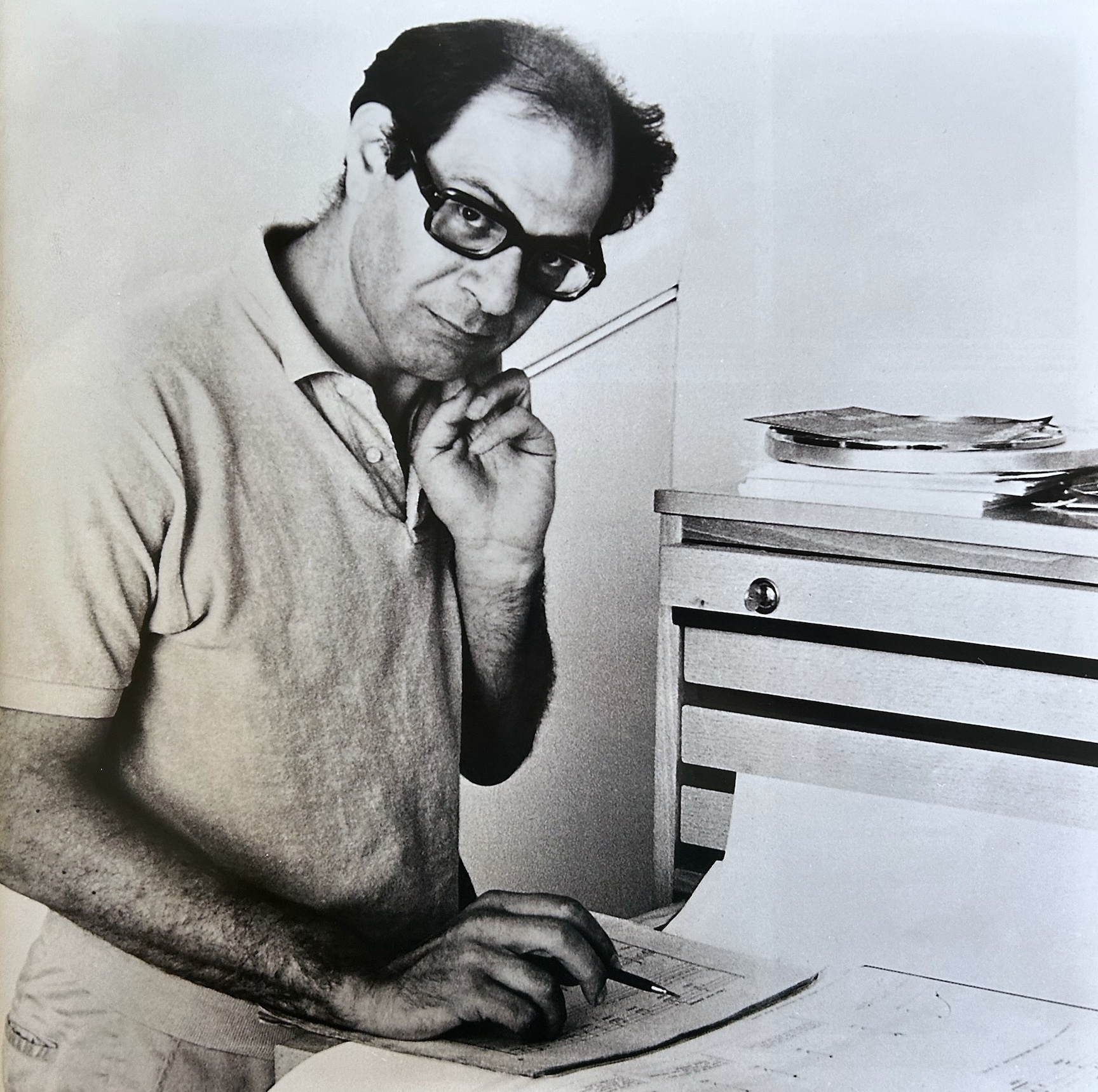 Mauricio Kagel (photo: DG)
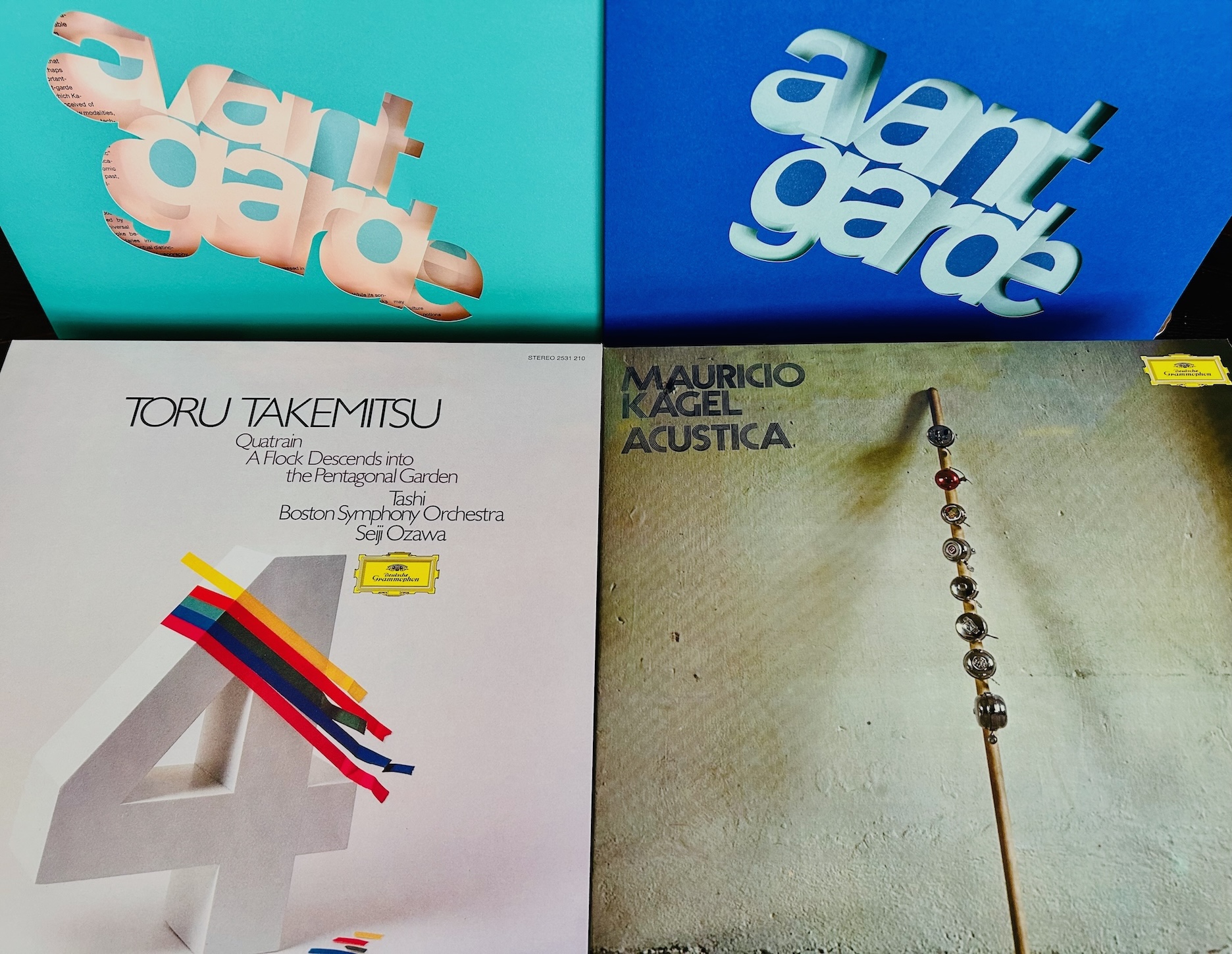
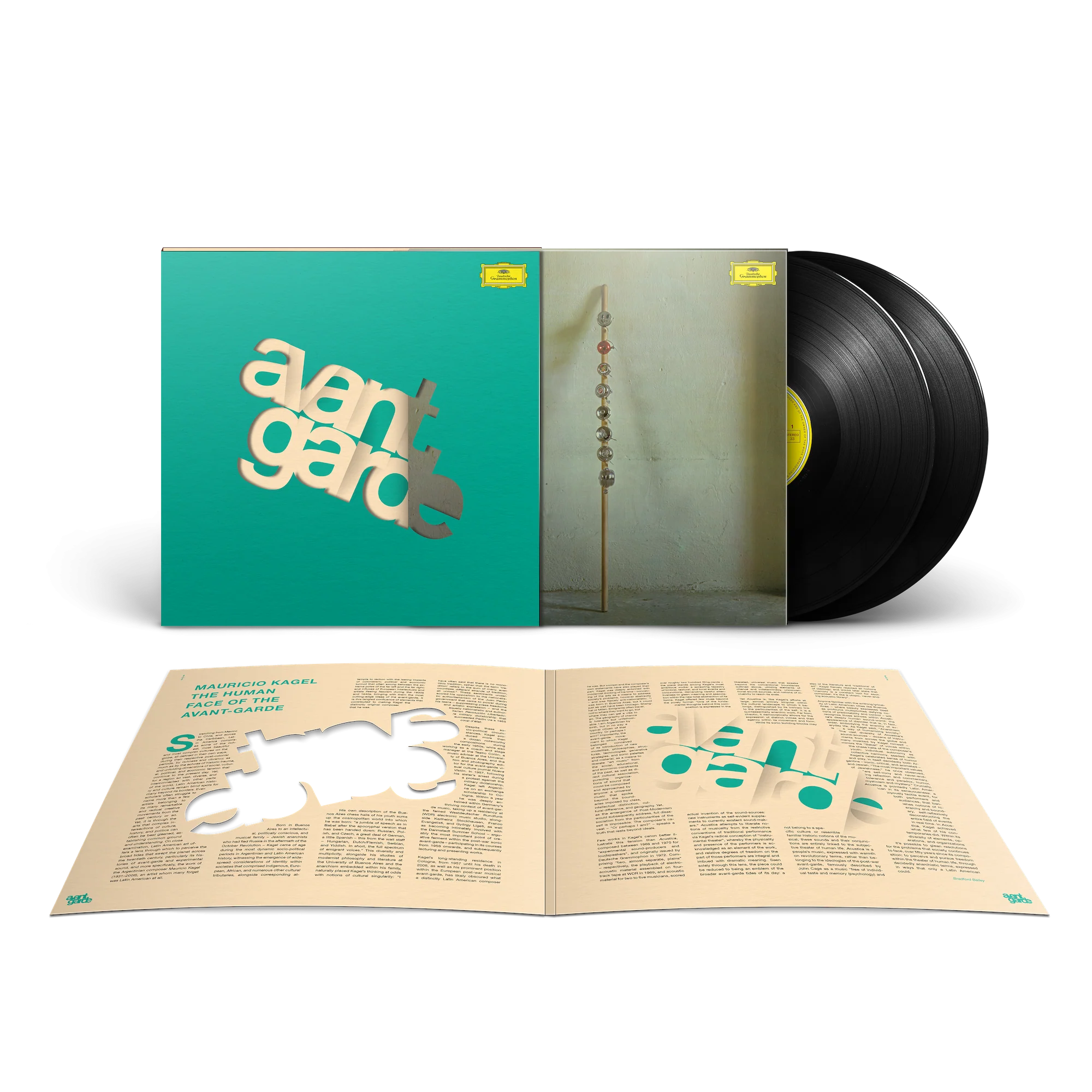
Of the three records in this batch of Avant-garde reissues, this was the dark horse for me. (It, like the Takemitsu, was not originally released as part of the original DG Avant-garde series, although other music of Kagel was; Acustica came out on its own in 1972, bearing - like the Takemitsu from 1980 - its own distinctive artwork different from that of the original Avant-garde releases). Since I already owned an OG pressing of the Takemitsu and loved it, I pretty much knew what to expect - though even I was literally blown away by the sonic upgrade wrought by the wizards at Emil Berliner Studios.
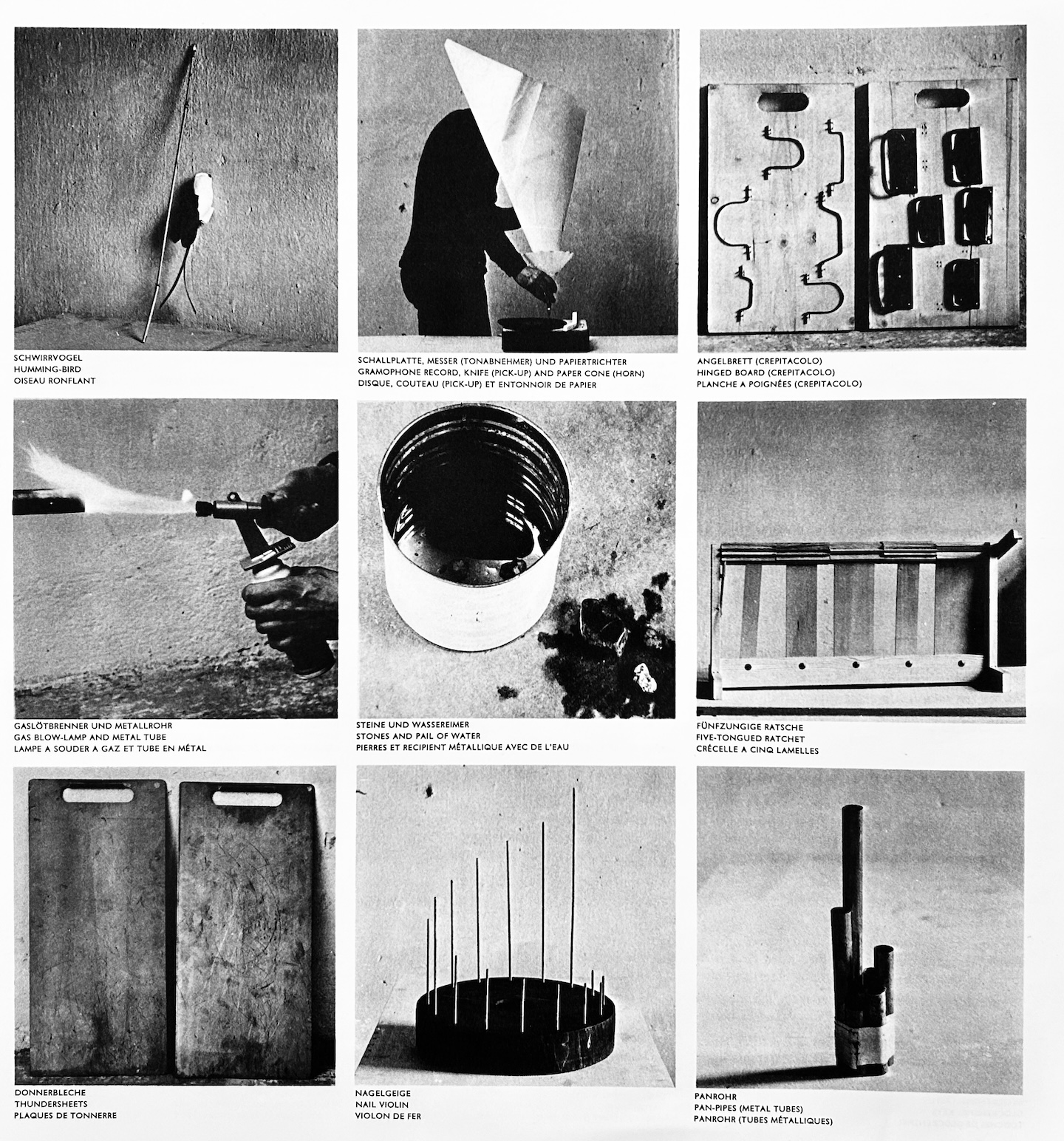
I was not familiar with Kagel’s music, let alone this record. Dropping the needle I was struck right away not just by the precision but also by the expansiveness of the sound - two qualities this work definitely needs in spades to make its full effect. For sonically this is the avant-garde at its most kaleidoscopic, incorporating both electro-acoustic creations on tape (courtesy of the ubiquitous WDR Studios in Cologne) and various physical objects and created instruments of Kagel’s own devising (though often based on extant but extinct designs). Five performers create the live aspect of the work, while a tape operator determines when the prerecorded tape is played - all of which can vary from performance to performance. Thus, no recording is “definitive” (indeed there is a more recent recording, with Kagel himself again manning the tape deck as he does here, which features two entirely different “performances”, and therefore versions of the work).
The two “fields” of sound do not always intersect; unlike so many other works with tape, the composer tends to keep his two “groups” separate. I tried to play the game of figuring out which was which, but quickly realized that was a fool’s errand and sat back to lose myself in the extraordinary sound worlds of Acustica - which are captured brilliantly here by the DG engineering team, and further enhanced by the immaculate remastering (which, somewhat incredibly, is merely from a 2-track stereo source, not 4- or 8-track; yes, it sounds that good, even if it lacks that ultimate three-dimensionality and wrap-around effect of the Original Source reissues).
Each side of the 2LP set makes up its own distinct piece, and indeed on the back cover Kagel states the following:
Each side of the two records is to be taken as an independent section. The author does not expect the listener to follow the complete recording in one session.
I’d agree with this, even though for my first run-through I did listen to the whole thing in one go.
The thing about this kind of “abstract sound” composition is that it either works or it doesn’t. One either has a sense of a mind, an organizing principle, behind it - or one doesn’t. If the latter, then one very quickly loses interest. But Acustica has definitely got "something", and I think it is one of the best examples of this kind of “music”. But you will definitely have to leave your preconceptions and allegiances to Bach, Beethoven and Brahms at the door. If you are open and receptive to this kind of thing, this is one of the better examples.
In a revealing interview with Anthony Coleman from which I am quoting extensively throughout this review, Kagel had this to say about his compositional approach versus the chance procedures of a John Cage:
“…The chance operations in Cage are in some way ideological because he was of the opinion that real chance was the best possible way to achieve a higher philosophical and aesthetic level. I refuse such an ideology—along with most ideologies—because there is no need to burden the use of chance operations with the idea that you can get a priori successful results. I have a very deep need to form my material myself with the conviction given by a conscious act, but if I dislike what the use of chance has cooked for me, I refuse the operation. The unconscious is present anyway in musical invention. Determination or indetermination is not the main question; you have to remain true to principles that are mostly of a stylistic nature.”
The notated score for Acustica is clear and precise. A program note for a BBC performance describes it thus:
The original instrumental part of the work was written on approximately 200 filing-cards, in the top right-hand corner of which the relevant main-instrument is indicated by a symbol. Neither the order of the cards nor the manner of ensemble is specified, every action is, however, exactly predetermined. The performers always decide the point of their entries; this freedom demands, however, a perfect mastery of text and context. Thus the performers achieve more than a mere reproduction of their parts, as they incorporate influences from one another in their playing as if they were their own audience.
That sense of a thoroughly “composed” work is communicated, and this is why one intuits a real structure to Acustica - which keeps one listening - versus the chance-based compositions of a John Cage which often work better as ideas than as sustained listening experiences.
The music is helped enormously by the quality of the recording; a distinct improvement over the recording DG provides for Ferrari’s Système II which I think loses out because of cramped and close miking, and a mix that has little air in at all. The sounds of Acustica, ranging from the tiny to the huge, from barely audible scratchings to massive detonations, will put any sound system through its paces. Just take this record along to the biggest room at any audiophile show, drop the needle - and watch attendees either lean in or run!
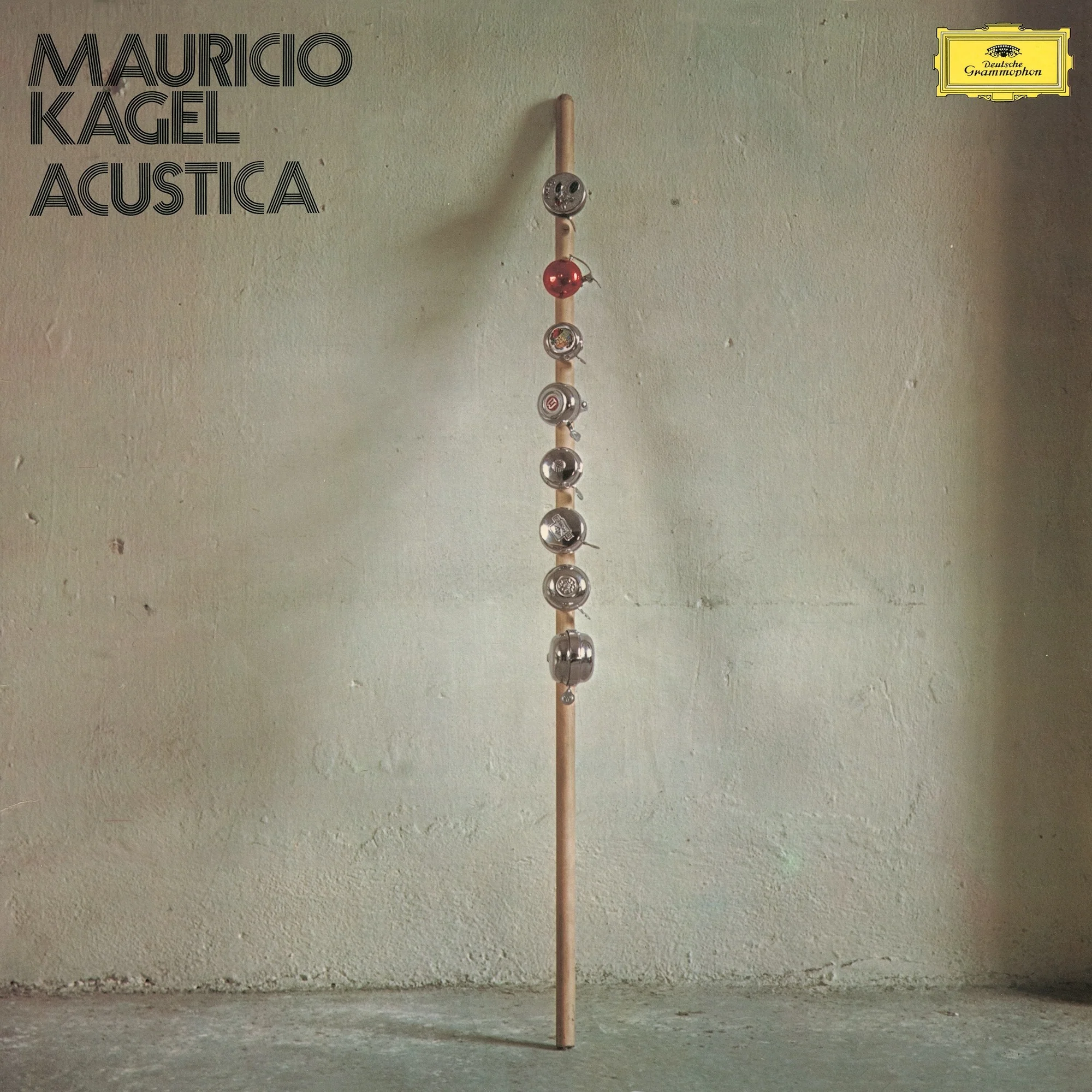
Reading about Kagel online and in the excellent new sleeve-notes provided by Bradford Bailey on the reverse of the special die-cut sleeve that wraps around the 2LP set, I quickly realized that one of the reasons this music “works” while that of Stockhausen, Cage, Boulez and the other avant-garde composers who take themselves very seriously indeed often “misses”, is down to Kagel’s innate sense of humor and irony. Growing up in the cultural melting-pot that was Buenos Aires, with direct experience of oppressive political regimes (his sister was arrested by the military dictatorship that succeeded the Perón government, precipitating his move to Germany), Kagel naturally fell back on his own Jewish heritage and sensibility:
“… The most important values of Jewishness [are] self-irony and never-ending reflection and commentary, tolerance and paradox, humor, mysticism and mystery. The voice of God does not need any human playback.”
Bradford Bailey:
Born in Buenos Aires to an intellectual, politically conscious, and musical family – Jewish anarchists who had fled Russia in the aftermath of the October Revolution – Kagel came of age during the most dynamic sociopolitical periods in Argentinian and Latin American history, witnessing the emergence of widespread considerations of identity within societies that comprised indigenous, European, African, and numerous other cultural tributaries, alongside corresponding attempts to reckon with the lasting impacts of colonialism; political and economic turmoil that often swung between the extreme poles of the far left and the far right; and influxes of European intellectuals and artists fleeing fascism during the 1930s and 1940s, bringing with them the most cutting-edge ideas of the avant-garde. It is this tangled confluence of elements that contributed to making Kagel the distinctly original composer that he was.
His own description of the Buenos Aires chess halls of his youth sums up the cosmopolitan world into which he was born: “a jumble of speech as in Babel after the apocryphal version that has been handed down: Russian, Polish, and Czech, a great deal of German, a little Spanish – this from the wait staff - Hungarian, Dutch/Flemish, Serbian, and Yiddish. In short, the full spectrum of emigrant voices.”
Kagel carried that cultural pluralism and healthy disregard for authority with him when he moved to Cologne in Germany in 1957, epicenter of the avant-garde via the electronic studios at Westdeutscher Rundfunk (WDR). Here he remained for the rest of his life, a dominant figure in the European avant-garde scene, but little known in America. For him there was a direct relationship between the immigrant/emigrant experiences and his approach to composition within the context of the European avant-garde movement..
Bradford Bailey:
Acustica is, like Kagel’s efforts at large, almost entirely singular within the cultural landscape to which it belongs, distinguished by its intrinsic link to the particularities of the self. It is a quintessentially anarchic work. Far from chaotic, it democratically allows for the expression of distinct voices and their agency within its movement and form. While sonic building blocks may not belong to a specific culture or resemble familiar historic notions of the musical, the sounds, and their conjunctions, are entirely linked to the subjective Theatre of human life. Acustica is a people’s music, expressed with warmth on Revolutionary terms, rather than belonging to the ideologies of the postwar famously described by John Cage as a music “free of individual taste and memory (psychology) and also of the literature and’ traditions’ of art”.
Kagel fiercely rejected all notions of ideology and would later state:
“Many of us are doing new things; we don’t want to repeat the same pieces that have been written in the past. You have to review the whole history of music when you are composing really new new music. Your mind is collecting, in a virtual way, all the pieces that you know and like. Memory is a constant tool for each composer: it’s like a utopic, never-ending acoustic library.”
Given Kagel’s own eclectic creative background - working and teaching in both film and theatre - it is hardly surprising that Acustica has a strong theatrical component, as you can see from this live performance in Japan…
The spectacle of actually seeing the creation of a huge range of sounds created by the manipulation of the human voice and assorted everyday objects and both historic and built instruments (some of them Kagel’s inventions), in juxtaposition to the “unseen” creations on the tape, is maybe intrinsic to the fullest appreciation of this work. In the same way, viewing a live performance of Stockhausen’s Kontakte, with live players performing alongside the tape, adds an intriguing, maybe essential, element to the work.
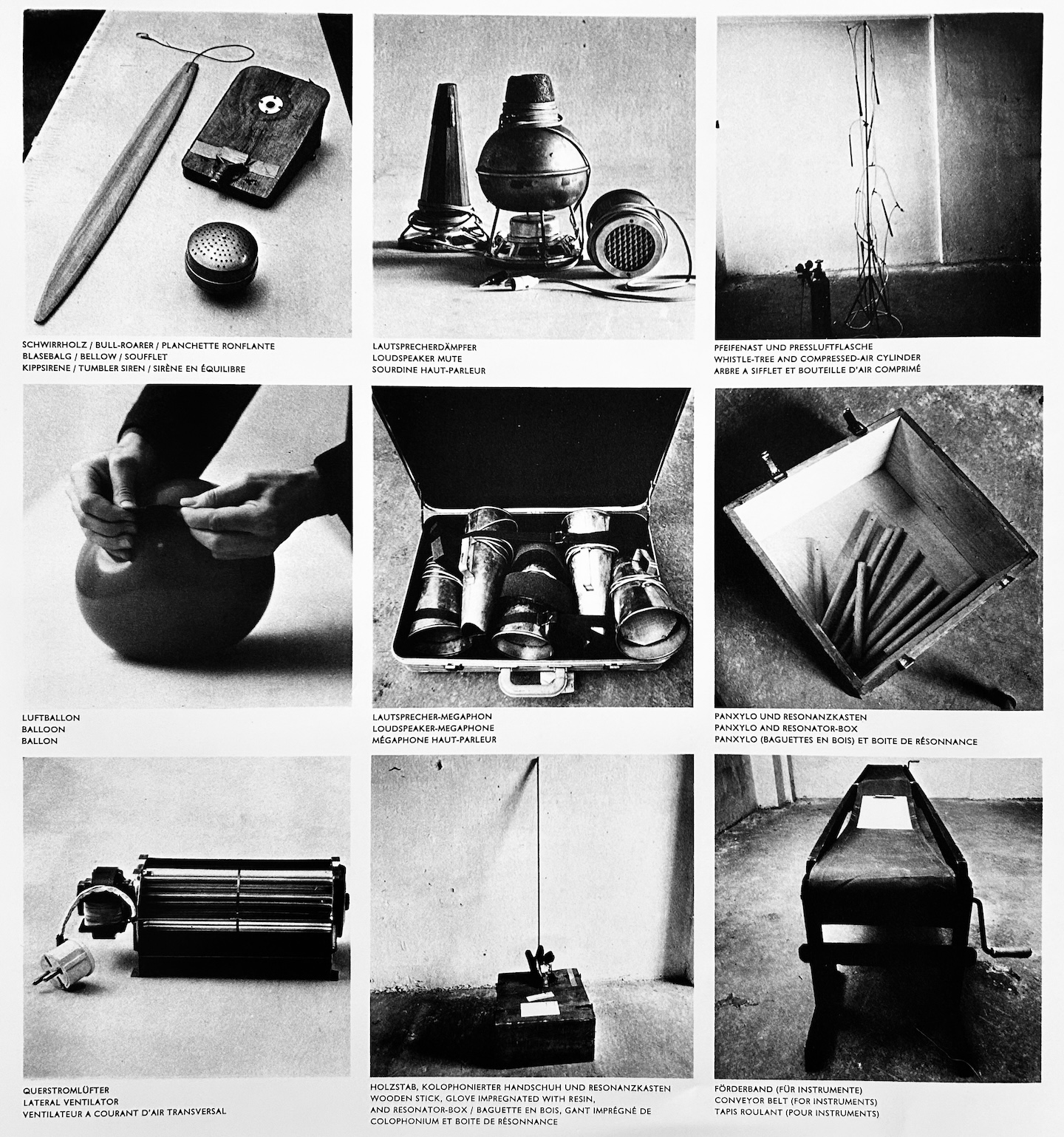 Some of the "instruments" used in Acustica
But I was never less than fully engaged with Acustica as a sound-only creation. During one listening of a side I actually drifted off into that nether world between being fully asleep and awake, and let me tell you that these often primal sounds (which really do feel like they are telling a story) were eliding into my consciousness in a most fascinating (and not a bad) way. I just moved into a most unusual zone…
I will not pretend there aren’t moments that do not grate, in particular those passages where human vocal manipulations dominate - akin to the moment when a child realizes all the weird-ass sounds it can make with his or her voice, and insists on sharing them with you rather than speaking. There’s a section on Side 3 like this that really tested my patience.
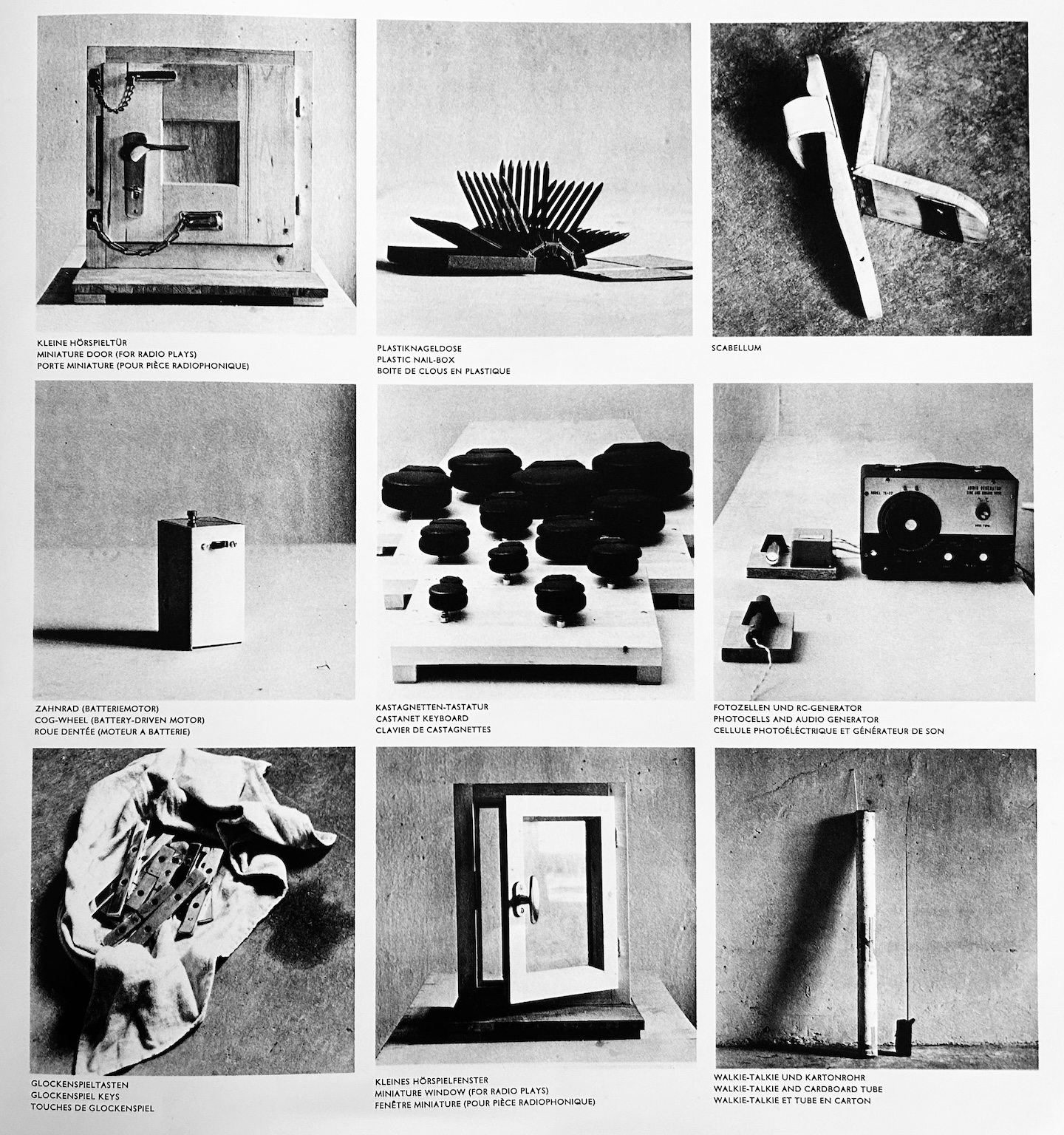
In fact there were quite a few places where I imagined some inner child had been conjured into corporeal existence, and was now running amok around the house finding all kinds of everyday objects to bang and shake and drop and generally throw about. Except this would have to be an extremely precocious child to have such an intricate design in mind. Throughout this piece there remains a playful, child-like wonder that is part of its innate character and - dare I say it - charm. “Ooh, let’s see what kind of sounds we can make with this!!”
I cannot resist quoting another reviewer of Acustica in a different recording: Dominy Clements, himself a composer, simply because he has so perfectly described the effect of listening to this piece:
While the work going on in this piece is deadly serious, Kagel’s sense of humour and parody, even self-parody is never too far away. One of the pre-recorded instrumental sounds over the loudspeakers is from his own Zehn Märsche um den Sieg zu verfehlen, and the entire bizarre conception of such a piece has a kind of inherent intellectual wit which goes beyond the ‘Darmstadt School’ of dissociative atonalism. While one’s mind needs to be free, and able to float beyond Bach, Beethoven and Brahms for both absolute atonal composition and the kind of music on this release, Kagel’s arrows seem deliberately aimed at conjuring intellectual associations at all kinds of levels. As an example, the vocal cries toward the end of the first version of Acustica on this disc will always bring some kind of extra-musical image to the listener’s mind. The associations will be different, depending on whether that listener has had experience chasing vandals through the empty corridors of an empty school at night, or encountered the residents of a mental asylum or prison, or merely seen too many Hollywood horror movies. Kagel himself wrote “I want to write music that stimulates thought, and is supplemented by thought.” As the imagination is poked by the sharp stick of Kagel’s world of Acustica, it has little choice but to ‘escape within’ to a certain extent, and by exploring our own inner mechanisms we can be brought into our own creative places.
I couldn’t have put it better myself.

Music

Sound
Mauricio Kagel: Acustica, for experimental sound-producers and loudspeakers
Performed by Kölner Ensemble für Neue Musik
(Christoph Caskel, Karlheinz Böttner, Edward H. Tarr, Wilhelm Bruck, Vinko Globokar)
Production: Karl Faust
Artistic Supervision and Sound Direction: Mauricio Kagel
Recording Engineer: Justus Liebig
Recorded at Studio Rhenus, Godorf bei Köln (1/28 -31, 1971)
Co-production with the West German Radio, Cologne (WDR)
Mastered and cut AAA from the original analogue 1/4 inch 2-track master tapes by Rainer Maillard and Sidney Claire Meyer at Emil Berliner Studios
Limited Numbered Edition of 1999
Pressed at Pallas on 2LP, 180gram
Product Managers: Johannes Gleim, Julian Kreutzkam
Creative Concept Manager: Lars Hoffmann
Editor: Annette Nubbemeyer (texthouse)
Design: Florian Karg
Original Avant Garde Logo Design: Holger Matthies
Deutsche Grammophon GmbH
“Composition gives proper meaning to the natural streams of sound that penetrate the world.”
“Many contemporary composers have been building walls of sounds following their own clever devices. But then, who lives inside those rooms?”
— Toru Takemitsu
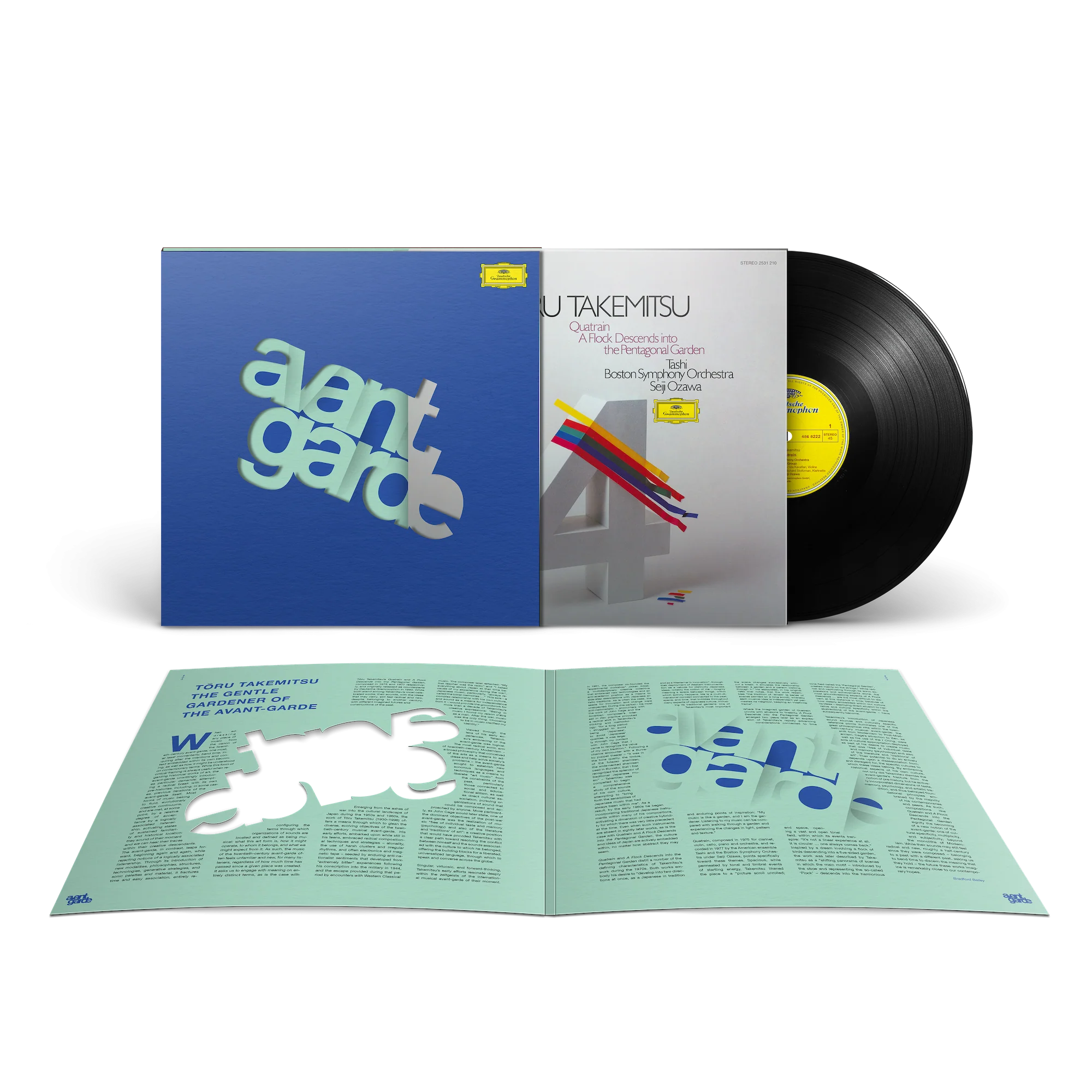
We couldn’t be in a more different world than we are with this phenomenal release of music by the great Japanese composer Toru Takemitsu (1930 - 1996). Phenomenal music, phenomenal sound. Putting my cards on the table: if you are in any way up for a real musical adventure, buy this record. It’s the most accessible of these three reissues.
But don’t forget to spin it at 45rpm. In one of those unfortunate pieces of miscommunication between record plant/printers and label, the fact that this is cut at 45rpm is only visible on the label itself, and in tiny letters at the bottom of the die-cut sleeve; it is not indicated anywhere on the main record sleeve. To be honest, heard at 33rpm this music carries its own rewards; but 45rpm is the correct way to go.
In the years since his relatively early death at 65 in 1996, Takemitsu has quietly emerged as one of the most enduring of those composers who started out fully engaged in the post-WWII avant-garde movement to reshape classical music, but who then moved into their own stylistic and formal realm, forging an identity that has less to do with any of the ideological battles that carved up classical music in the latter half of the 20th century than with their own psyche. I think there is no modernist 20th century composer who will better reward taking a deep dive into his wide range of music: everything from stunningly imagined and executed film scores, for both Japanese and Hollywood films, to his exquisitely conceived avant-garde works for smaller forces, and to the larger-scale orchestral works, the latter of which are represented by the two works on this album. Collectors will want to track down this seriously gorgeous box set, issued in 1966 by RCA Japan:

I think anyone can love Takemitsu’s music just as they love Debussy, Shostakovich or Messiaen. All the labels and pigeon-holing of modernism and the avant-garde be damned - it’s just terrific music!
Interesting, this is a fact that Deutsche Grammophon seems to have acknowledged earlier than any other record label, since it broke its own Eurocentric rule governing which avant-garde and modern composers it recorded very early on (relatively speaking), in order to give Takemitsu his due on the Yellow Label.
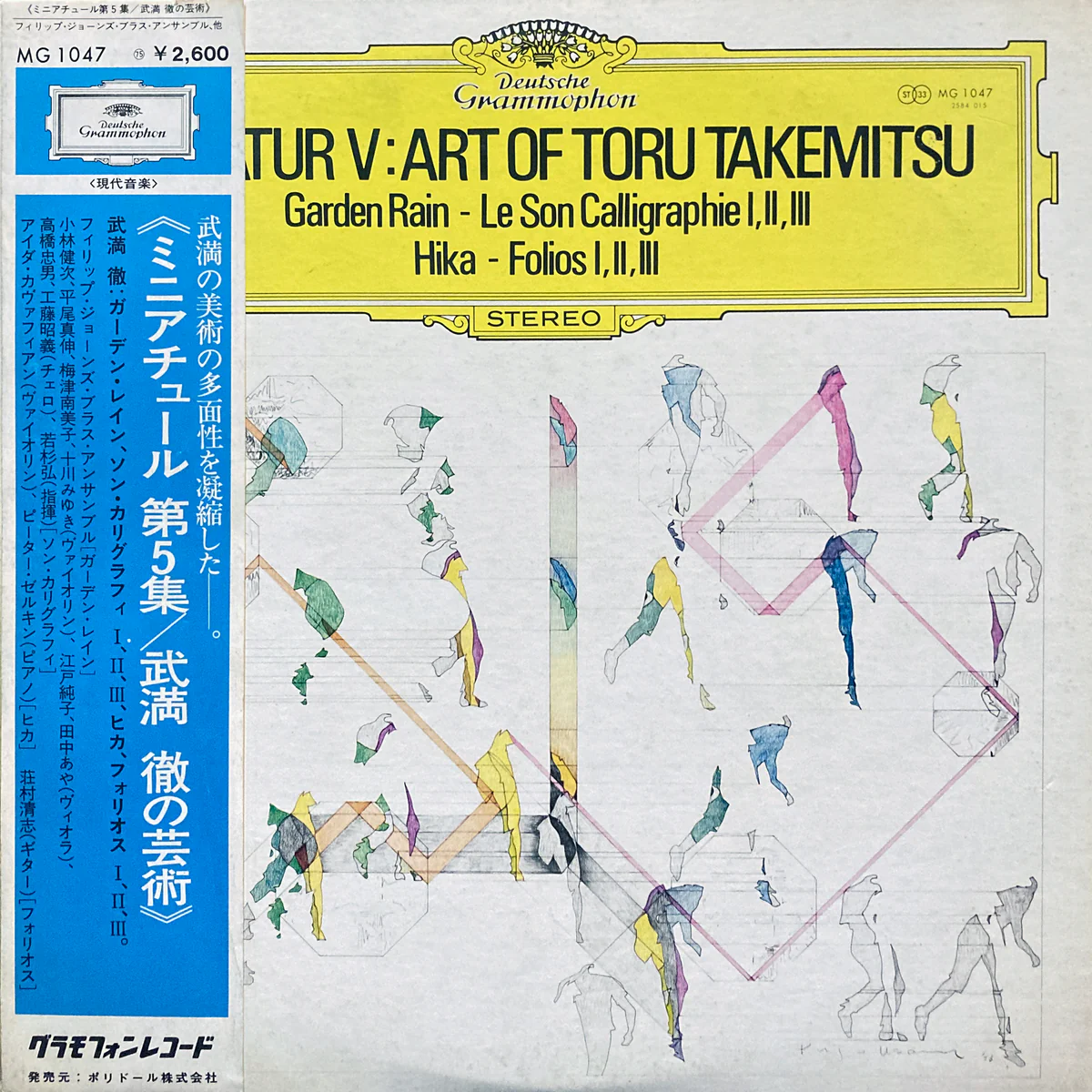
A series of stunning records were released by DG Japan, starting in 1971, all with striking cover art fully in tune with Takemitsu’s musical aesthetic. I have a few of these, and profoundly covet the ones I am missing. In my Original Source dreams, my vision is of an EBS remastered box set of all those 70s records released together. (unlikely, I know, but a boy can dream...)
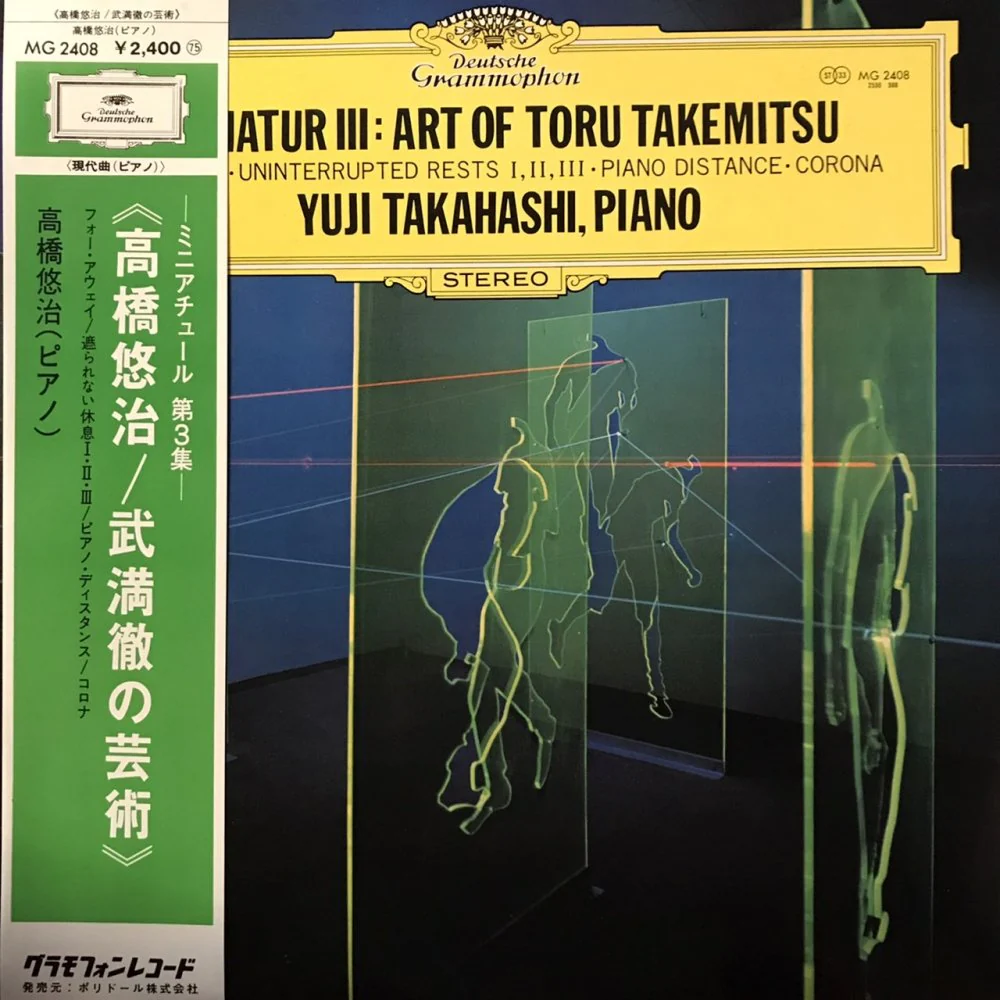
After a break in the early digital era, in the late 90s/early 2000s DG returned to Takemitsu within the context of its new essential modern music series 20/21, releasing superlative CDs which confirmed that Takemitsu had finally arrived in the catalogue mainstream. These will ravish your senses, and are essential for any music lover. (DG - how about a CD box set of the complete 20/21 series?). Here's one of them:
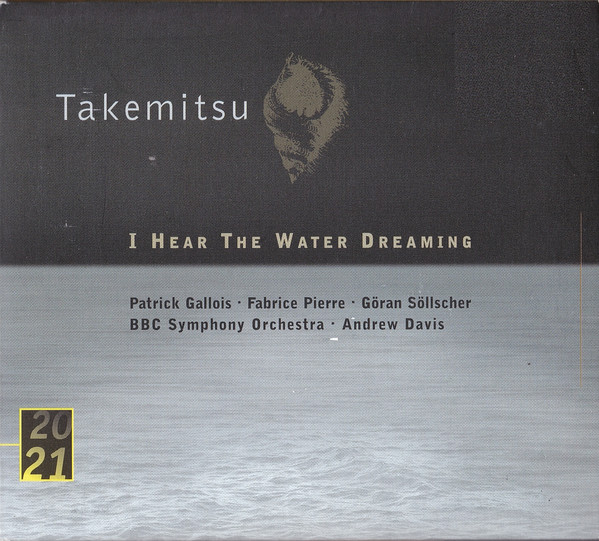
The record under consideration here was released at the tail end of DG’s first run of Takemitsu albums, in 1980. It features long-time champions of his music: Seiji Ozawa and the eclectic chamber group Tashi, consisting of pianist Peter Serkin (son of Rudolf), violinist Iva Kavafian, clarinetist Richard Stolzman. and ‘cellist Fred Sherry.
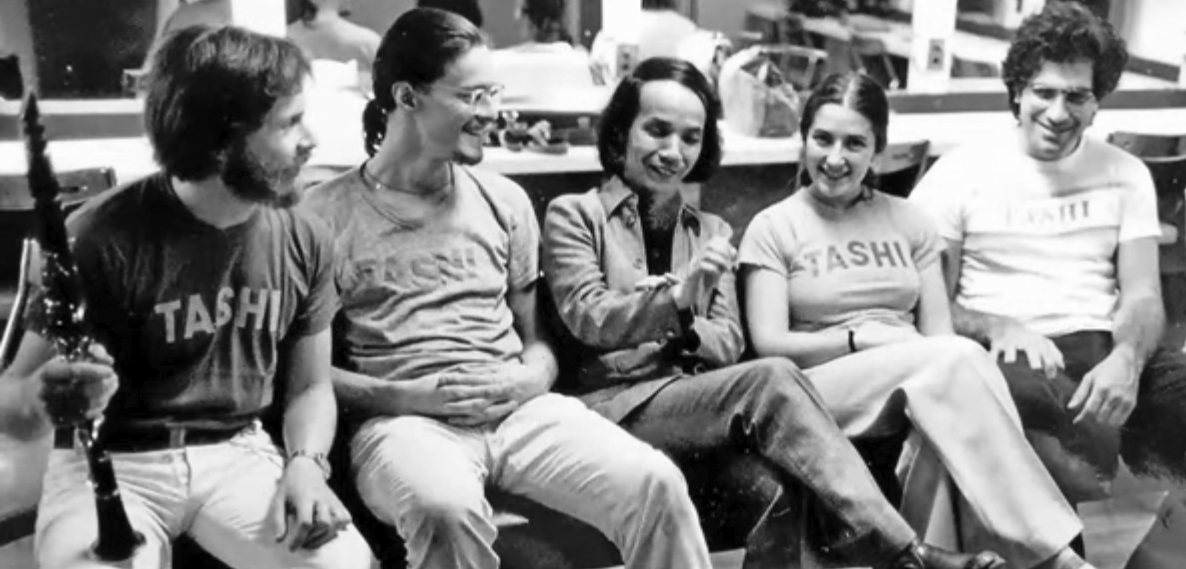 (from l. to r.): Richard Stolzman, Peter Serkin, Takemitsu, Iva Kavafian, Fred Sherry
Tashi recorded for RCA, and the essential nature of every one of their releases - covering both traditional and modern repertoire - is only mitigated by the variable quality of RCA pressings of the time. (If you can find the OOP Peter Serkin CD box, that will bring you all of the Tashi catalogue plus Serkin’s similarly essential solo and concerto recordings in vastly improved sound).
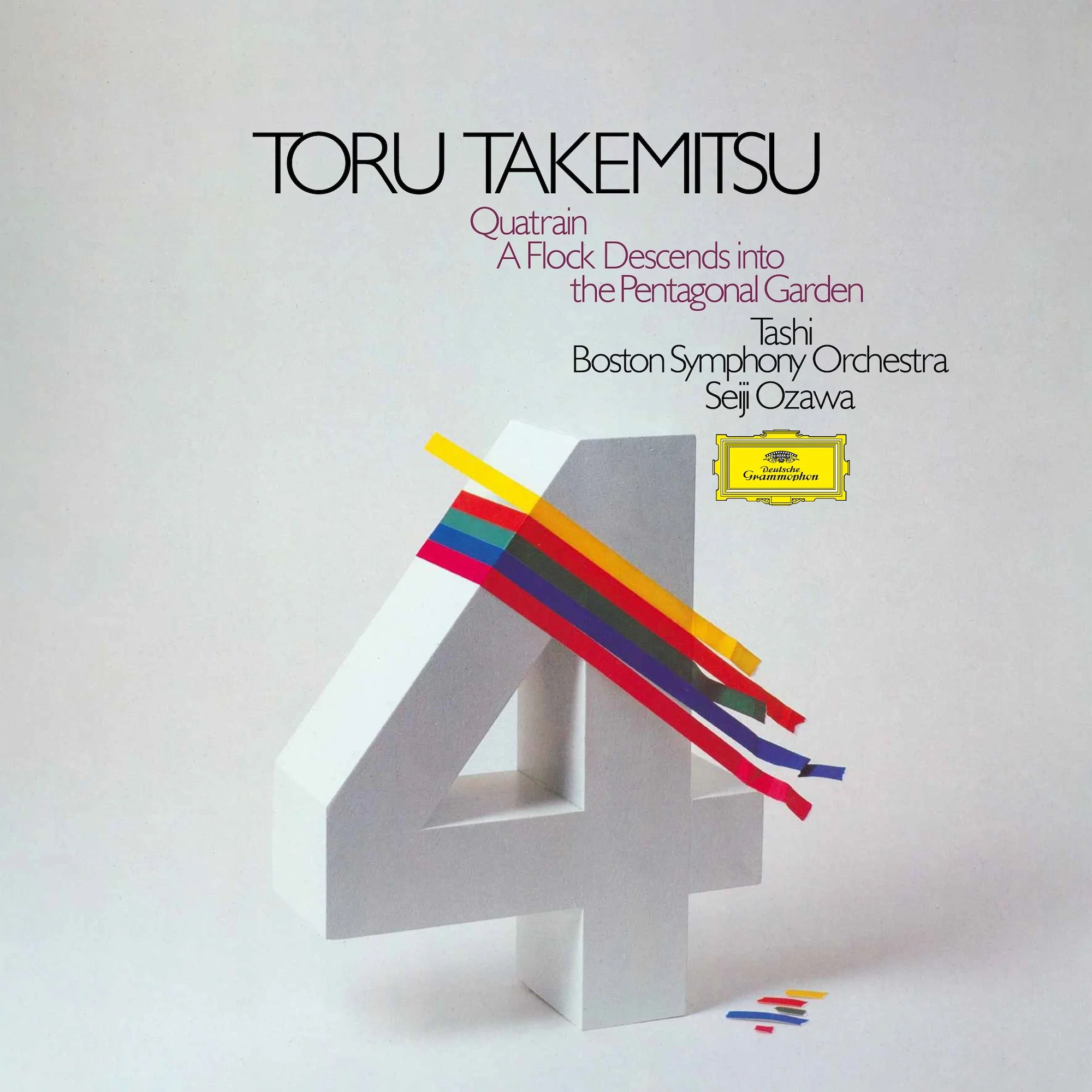
We have here two of Takemitsu’s works that have managed to gain something of a toe-hold in the concert repertoire, and which have therefore received more than just this one recording. But this one remains hard to beat, especially in its new EBS remastering from the original 8-track masters.
Those of us who are collecting the Original Source series already know that the recordings emanating from Boston Symphony Hall are amongst the best the series has to offer, both in terms of sonics and performance. This record joins their ranks.
You really cannot understand the wave of the avant-garde that swept up classical music after WWII without appreciating the full trauma visited upon those composers from combatant nations who lived through it all and were at the vanguard of this new music. This is especially the case with Toru Takemitsu, who was conscripted into the army in 1944 when he was only 14. His “extremely bitter” experiences fostered within him a profound anti-nationalism, and musically it meant he rejected all aspects of his Japanese heritage.
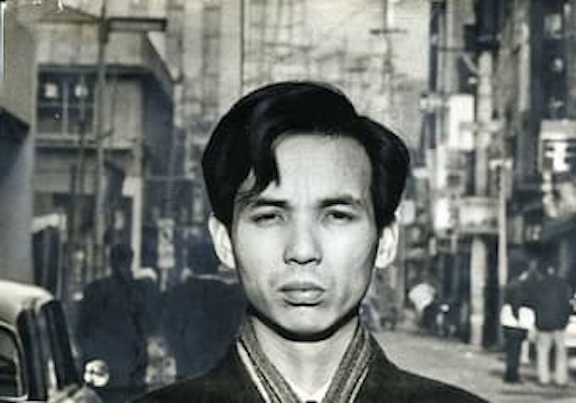 Toru Takemitsu
“My first teacher was the radio… I hated everything about Japan at that time because of my experiences during the war.” Japanese music particularly, “always recalled the bitter memories”.
As Bradford Bailey writes in his as always excellent new liner notes:
This axis - a complex relationship with his own culture, and sound as a means for independence from it - would provide the groundwork for more than a decade of Takemitsu's creative expressions: “Being in Music I found my raison d’être as a man. After the war, music was the only thing. Choosing to be in music clarified my identity.”
Working for the US Armed Forces, Takemitsu inhaled the music of the West: Copland, Sessions, and Piston, then later Berg, Webern, Messiaen and, above all, Debussy of whom he said: “I consider Debussy my teacher - the most important elements are colour, light and shadow.” Listen to I hear the Water Dreaming for solo flute and orchestra from this 20/21 release, and you will hear Debussy’s Prélude à l'Après-midi d'un Faune reimagined.
Takemitsu was essentially self-taught, eschewing all the normal academic routes to musical proficiency and the imprimatur of institutional “legitimacy” that teaching at a University would have bestowed upon him.
Takemitsu was always determinedly his own man, from his early days as a standard-bearer for the avant-garde to his later years as he re-embraced his cultural heritage and Japanese music. He integrated both into his own compositions as he moved away from the avant-grade to create his own very particular kind of musical utterances, which often re-embraced tonality.
Bradford Bailey:
Quatrain (1975) and A Flock Descends into the Pentagonal Garden (1977) distill a number of the defining characteristics of Takemitsu work during the 1970s. Both works embody his desire to “develop into two directions at once, as a Japanese in tradition and as a Westerner in innovation”, through the deployment of western instrumentation as a vehicle for distinctly Japanese ideas, notably, the notion of ma - roughly meaning a space between things, within which activity happens. Ma is a multi-dimensional concept connected to the past, space, and time, that bubbles throughout many aspects of Japanese culture, including its traditional gardens: one of Takemitsu’s most important and enduring points of inspiration: “My music is like a garden, and I am the gardener. Listening to my music can be compared with walking through a garden and experiencing the changes in light, pattern and texture.”
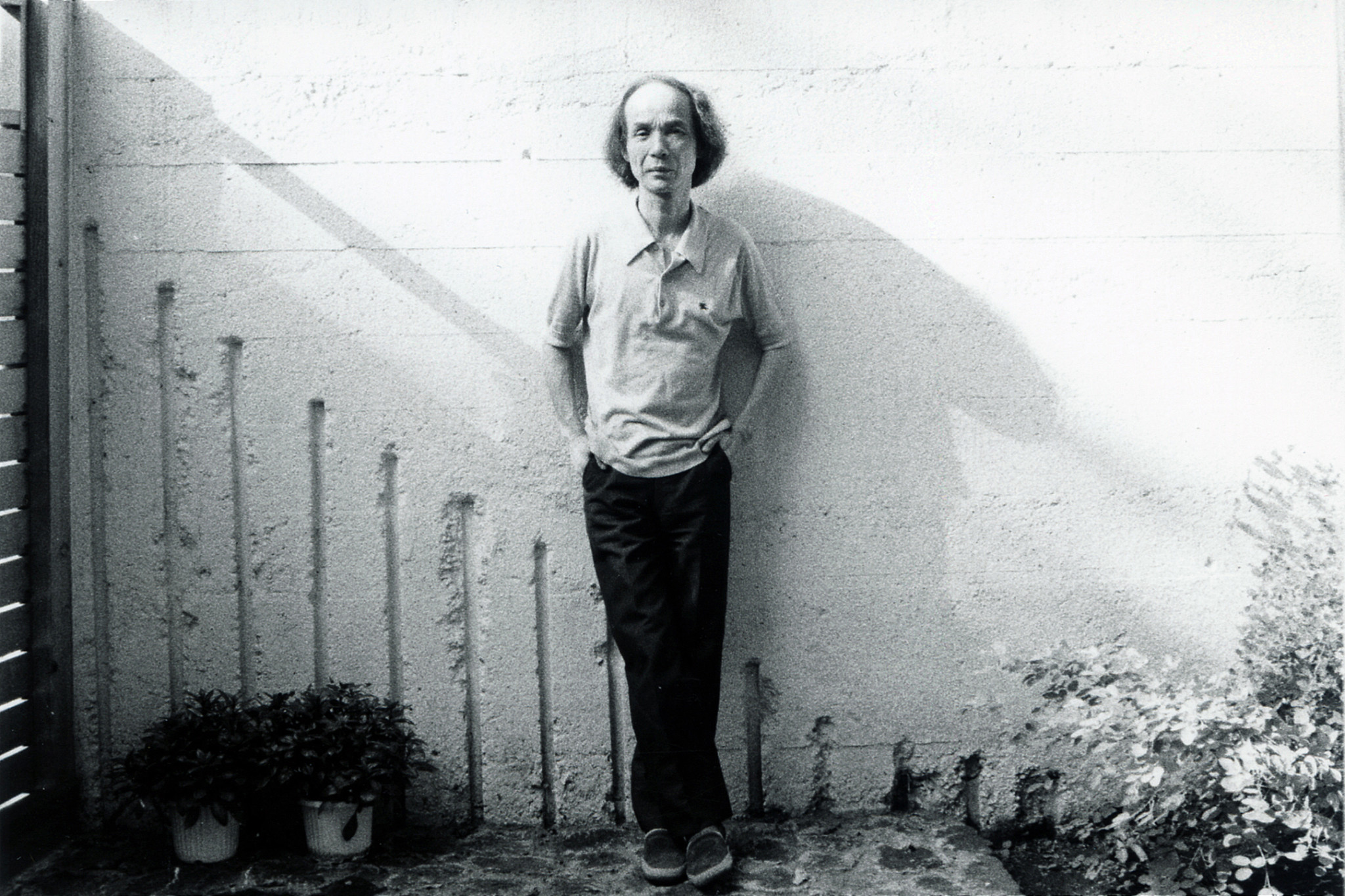 Toru Takemitsu (photo: DG/Kinoshita Archives)
Quatrain seems to exist within two time streams at once: the second-to-second one that pertains to one’s perambulations around this Garden of Sounds, caught up in the colorful sonic minutiae and incidents, and the almost imperceptibly moving, day-to-day contemplation of the Garden as a whole. This central dichotomy that drives the work is amplified by the differences between the solo group and the larger orchestra around it. Takemitsu likened the piece to "a picture scroll unrolled; the scene changes successively without a break. It emulates the relationship between a garden and a person walking though it.”
Maybe more than any other composer, Takemitsu became fascinated by notions of time and space, and his music often achieves a unique level of stasis that is also constantly moving - if that makes any sense.
In his book, Confronting Silence: Selected Writings, Takemitsu wrote:
“...by admitting a new perception of space and giving it an active sense, is it not possible to discover a new unexpected, unexplored world?”
Of the work on side 2 of this record, A Flock Descends into the Pentagonal Garden, Takemitsu wrote: “It's not a linear experience at all. It is circular…. One always comes back.”
Bailey:
Inspired by a dream involving a flock of birds descending into a five sided garden, the work was later described by Takemitsu as a “shifting panorama of scenes in which the main motif – introduced by the oboe and representing the so-called ‘flock’ – descends into the harmonious tone field called the ‘pentagonal’, created mainly on the strings.”
In this Original Source remastering you will be spellbound by the interplay of instrumental timbres and textures in a beautifully rendered three-dimensional acoustic space.
Takemitsu became an absolute master of instrumental color, and this is as much the “content” of both works on this record as the notes themselves. Likewise gradations of attack and resonance, and of dynamics, are rendered on a seemingly infinite scale. Silences, especially the long ones in A Flock Descends…, are the very definition of the phrase “pregnant with possibilities”.
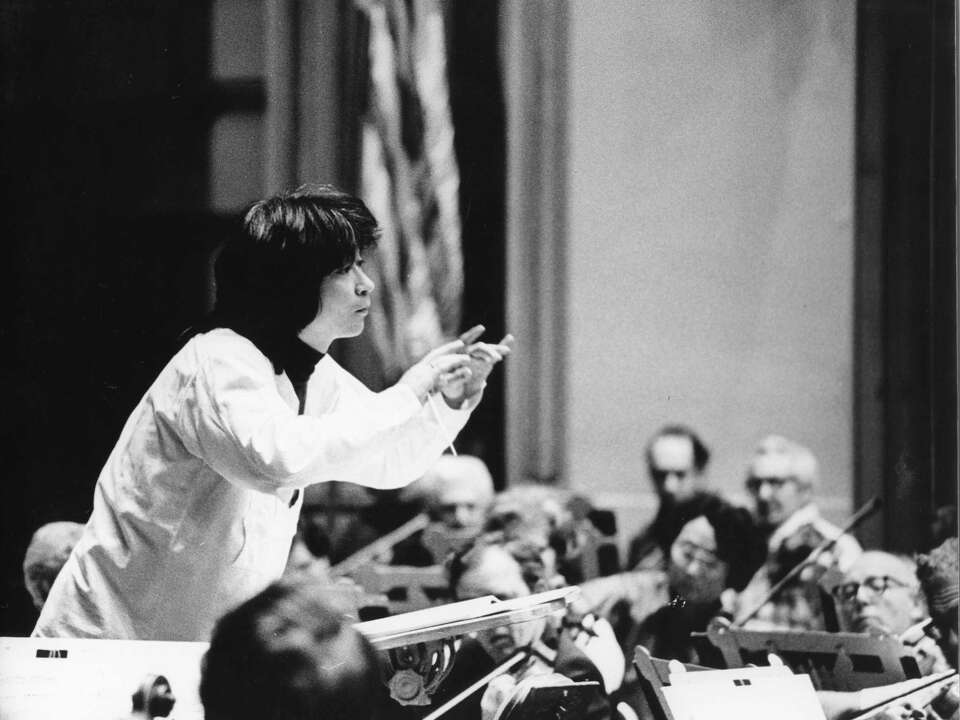 Seiji Ozawa with Boston Symphony Orchestra
I have rarely heard, or indeed felt, an orchestra have such a singular overwhelming “presence” as it does in this music in this remastering. Especially in A Flock Descends… I felt I was in the presence of a gentle giant - sleeping, then slowly awakening - who, despite his innate gentleness, when roused could rend the heavens. As the piece progresses that sense of latent power grows and grows, as a slow-motion sonic boom travels around your listening room. In this context the increasingly long silences between orchestral gestures have as much power as the music itself.
This is music one can literally lose oneself in. Listen deeply and you will find yourself spiritually and emotionally cleansed - and elevated.
Even as the notes themselves drift into their final silence, one feels as one always does with this composer: that the journey continues.
As composer and friend of Takemitsu, Roger Reynolds, has opined:
“The argument is never concluded. The implications continue to resonate. The ripples continue to spread outwards — in time, in memory…”
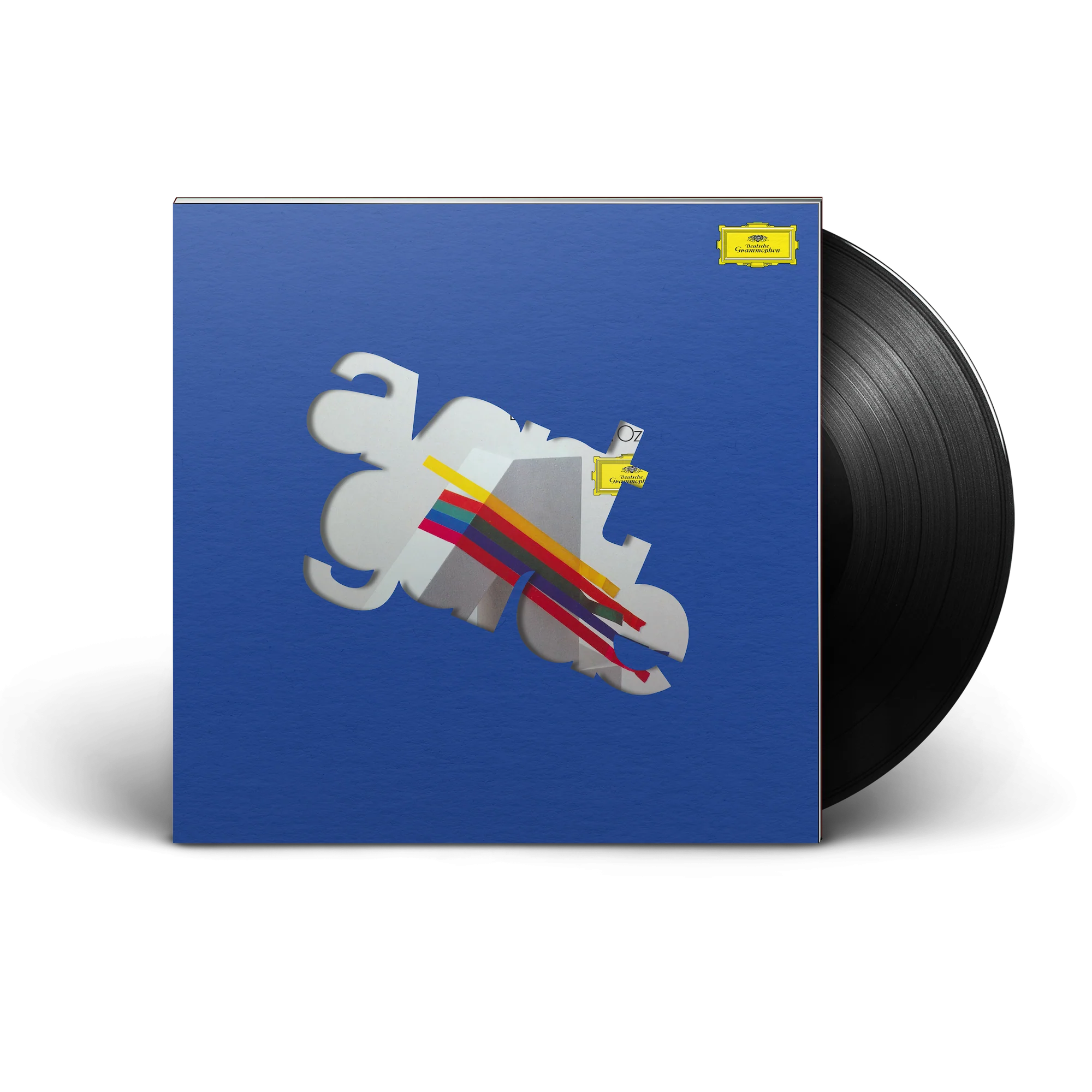
Music

Sound
Toru Takemitsu: Quatrain (for clarinet, violin, ‘cello, piano and orchestra)
A Flock Descends into the Pentagonal Garden
TASHI (Peter Serkin, piano; Ida Kavafian, violin; Fred Sherry, ‘cello; Richard Stoltzman, clarinet)
Boston Symphony Orchestra conducted by Seiji Ozawa
Production and Recording Supervision: Rainer Brock
Recording Engineer: Klaus Hiemann
Recorded at Boston Symphony Hall
Mastered and cut AAA from the original analogue 1 inch 8-track master tapes by Rainer Maillard and Sidney Claire Meyer at Emil Berliner Studios
Limited Numbered Edition of 2099
Pressed at Pallas on 180gram vinyl, 45rpm
Product Managers: Johannes Gleim, Julian Kreutzkam
Creative Concept Manager: Lars Hoffmann
Editor: Annette Nubbemeyer (texthouse)
Design: Florian Karg
Original Sleeve and Avant-garde Logo Design: Holger Matthies
Original Art Direction: Lutz Bode
Deutsche Grammophon GmbH
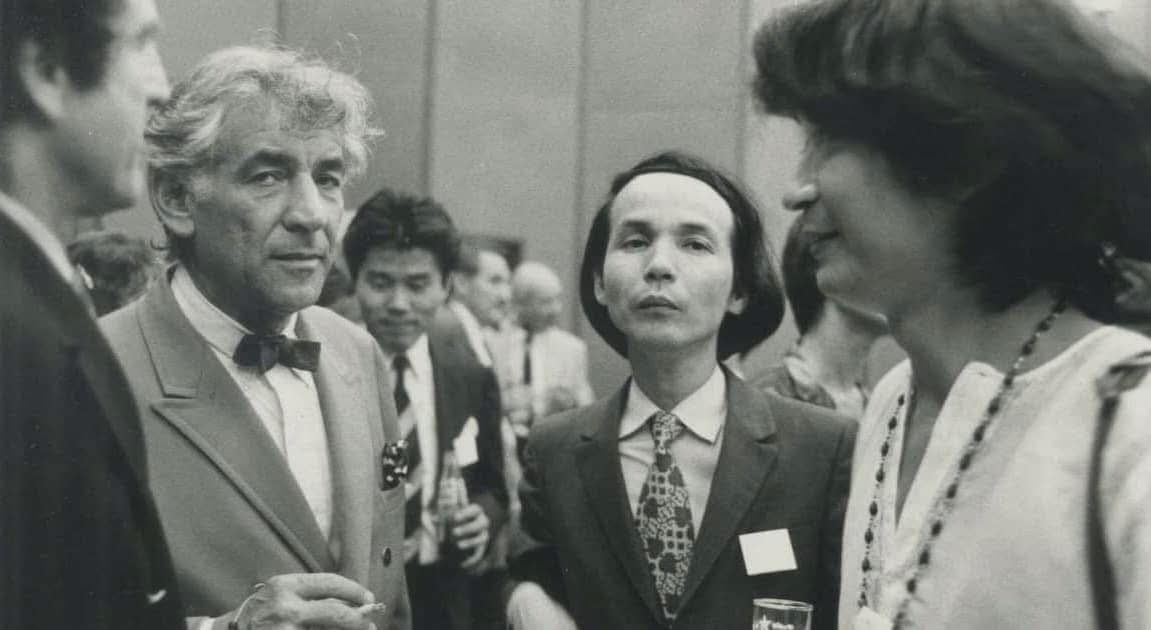 Leonard Bernstein, Toru Takemitsu, Seiji Ozawa
In Conclusion… (or: “Reflections upon the Avant-garde”)
I began this series of articles with references to Lewis Carroll’s Alice in Wonderland - [see Part 1] and now I come full circle.
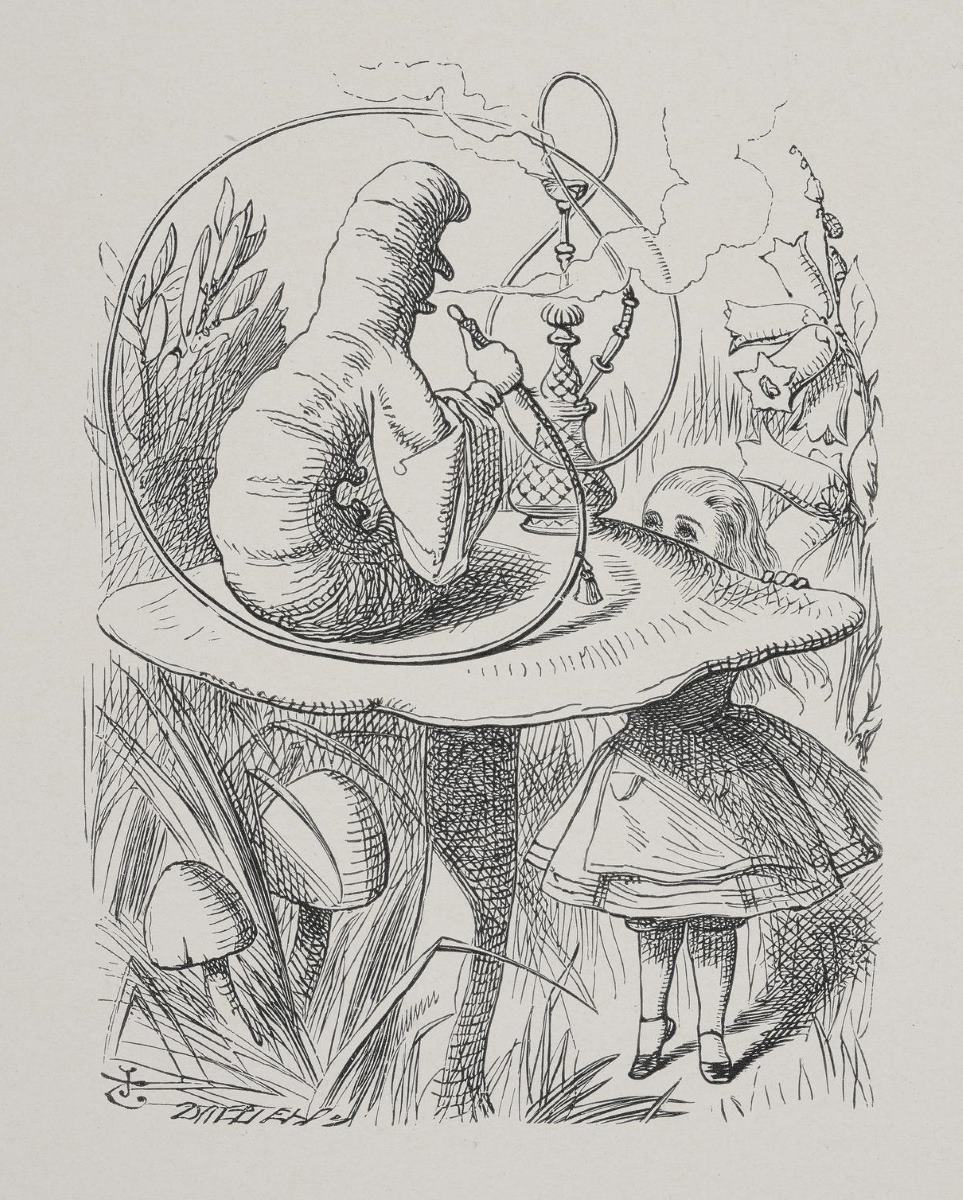
“One side will make you grow taller, and the other side will make you grow shorter…”
For this quotation from the clearly bombed-out-of-his mind Caterpillar perfectly captures the effect of listening to this strange yet also sometimes familiar music, music that can tap into something very primeval in our DNA - maybe the original impulse that led us to “Bang the rocks together, guys!”:
It’s a sentiment you may well share after listening to all these superbly executed refurbishments of DG Avant-garde titles.
As the music ebbed and flowed I found myself expanding and contracting accordingly.
Another quotation from Alice in Wonderland seems pertinent to the world of the avant-garde:
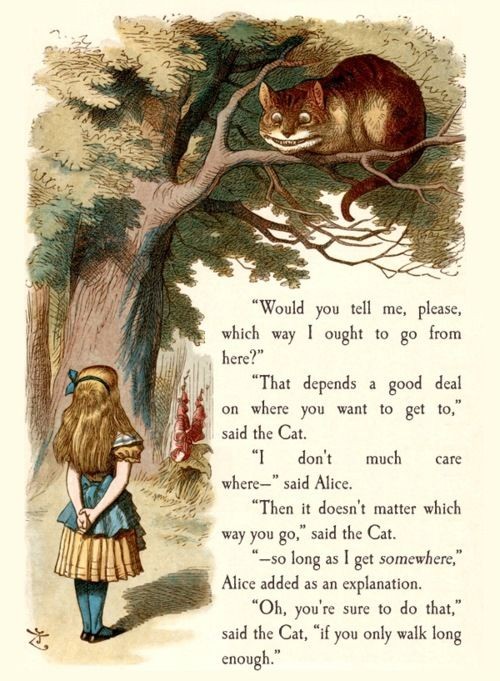
This may be as good a way as any to summarize classical music’s detour into the “new thinking” that drove the avant-garde and modernism in the second half of the 20th century, and which continues to reverberate today - and not just in classical music.
“It doesn’t matter which way you go - as long as you get somewhere… you're sure to do that, if only you walk long enough.”
Where all those composers walked, and where they ended up, was never predictable. Penderecki started out as an arch modernist - all tone clusters and rebarbative dissonance. Yet there was always a core of the old school in him, the quality that made pieces like St. Luke Passion or Threnody for the Victims of Hiroshima communicate emotion just like the old tonal stuff did, made the music relatable. So is it really that surprising that by the end of his life he had made a fully-fledged return to tonality?
Toru Takemitsu, who started out as combative as any, mellowed into some kind of musical Zen gardener, creating almost five dimensional (three physical, one temporal, one spiritual) sonic spaces in which you could both lose your consciousness and rediscover it.
John Cage, in some ways the most questing and anarchic of all the avant-gardists, ended up composing his prepared piano miniatures in a manner that often recalls Satie. I can just imagine them showing up in the repertoire of the lounge pianist at the Restaurant at the End of the Universe.
Many of the avant-gardists remained as ornery as they always were - Herr Stockhausen for one. Interestingly, he increasingly gave in to his Wagner complex - so completely the opposite to the whole avant-garde Gestalt. Licht, his final operatic chef d’oeuvre (his opinion, not mine) outgrew Wagner’s Ring by a factor of almost two: seven operas, one for each day of the week (ye gods!). Pity its ideas were nothing more than warmed up and stir fried third-hand stale leftovers, or that the music resembled less an actual, well, piece of music, and more a cacophony of pre-schoolers high on Twizzlers and Reese’s Peanut Butter Cups let loose in a Guitar Centre where all the instruments were broken. Even that doesn’t come close to describing the torture of attending one of Licht’s “evenings” - Donnerstag if you must know - at Covent Garden (and much to my regret I actually stuck it out to the end!!!). Forced to repeat the experience, I would rather do what the poor sod in The Hitchiker’s Guide to the Galaxy did who had to listen to the second worst poetry in the universe - a recitation by the poet master of the Azgoths of Kria, Grunthos the Flatulent, of his poem "Ode to a Small Lump of Green Putty I Found in My Armpit One Midsummer Morning”: I would gnaw my own leg off.
Don’t even get me started on Stockhausen’s piece for string quartet and helicopter… (yup, that’s a real thing - and there’s a recording of it too!)
And yet, there is a lot of Stockhausen’s music I do like, even love, especially his works with electronics, and I would kill to hear a live performance of Grüppen, which my old College pal Roger did at the Proms in London some years ago. He loved it!
These are all composers who did indeed walk long enough to “get somewhere”. But is it a place where we, the listeners, want to join them?
These reissues answer that question - with conditions.

Diving back into the DG Avant-garde catalogue - whether you do it with just these three vinyl reissues, or via the currently OOP CD box that gathers together all the original releases (apart from Stockhausen’s) - throws into sharp relief the inherent challenges, contradictions and rewards of this music. Is it intellectually fascinating? Yes. Does it make you listen to everything differently? Yes. Does it give you something you do not get from any other music? Absolutely. Is it exciting? Yes. Is it boring? Yes - but often so is Mozart… and Bach, and Brahms, and especially Wagner…
But do you want to listen to it? Especially when there’s a plethora of more conventional music awaiting your ears’ attention.
That’s the billion dollar question.
The avant-garde makes serious intellectual and aesthetic demands, and in a world full of pretty things and endless distractions, do we even still have the capacity for the kind of concentrated attention this stuff demands?
No-one is going to pretend they are going to put on this music after a long hard day at work, or as background music on a date (!!!), or on a long car journey. (Except quite possibly that Takemitsu.)
But are you going to put on late Beethoven, or a Mahler symphony, or Stravinsky, or Bartok in any of these situations either? Maybe occasionally?
But that was never the purpose of the avant-garde, to be like other music, to be in any way comfortable, familiar, friendly. It was all about confrontation - with ideas, with the the past, the present - even with the future. So not surprisingly the music is confrontational. Hell, even the Takemitsu is confrontational in a quintessentially Japanese manner: “You want short and sharp? I will go long - very long - and slow and deeeeeep….”
The avant-garde was a revolution, but a revolution not for the masses but for the intellectuals, for the 1%, even though it’s deepest held belief was that it was absolutely going to be the new music for the masses, the non-elites. (A nice irony, that). At a time when Europeans especially, and Man-in-the-Street Europeans at that, were deeply engaged in political discourse, the avant-garde of the post-War period was just as much a political movement as it was a musical one.
Which is why, in the final analysis, the music became irrelevant and passed over while its ideas did not. Pierre Boulez endlessly revised his works, and often their final form was more palatable, more digestible than their earlier ones. The music remained restless and “difficult”, but it also lost some of its harder edges owing to the erosions of time and a growing familiarity with its subversive elements. I will now happily put on … explosante fixe or Sur Incises for some recreational listening.
So the music of the avant-garde, like Alice, kept on walking and eventually got somewhere which was indisputably different from where it started out. Today all those avant-garde impulses as they are expressed in today’s new music feel more controlled, dare I say contained. The boisterous schoolyard anarchists have learned to play nice at the Principal’s tea-party.
However, listening to any of these original Avant-garde releases is to hear the music at its original Ground Zero, the moment when the Bomb first went off, when the music was at its brashest, most brazen self, at the onset of the nuclear reaction. Staring at the fireball could - and still can - burn your eyes out.
After listening to Ferrari’s Société II I could easily imagine myself become “Death, Destroyer of Worlds”!
Now, some fifty years or more after the avant-garde was in its heyday we just live in the less radioactive after-times.
But that chain reaction is still going, and it still keeps the avant-garde lights on - it’s just that now they’re on a dimmer switch.
So - if you want a bit of real musical fission in your listening life, if you want to explode your preconceptions, always go for the OG (or in this case the OG remastered): the Big Bang of the Avant-garde when it first detonated across the culture of the world.

You can read Part 1 of this series here, Part 2 here, Part 3 here, and Part 4 here.