


The Moss Has It - Compelling but Idiosyncratic Bach and Beguiling Schubert cannot rescue Damp Beethoven
The cloth-eared sound doesn’t help matters either. Even Fans of the Icelandic Superstar may balk at this one…
One of the challenges for any young musician wanting to carve out a niche in the classical music world, but in particular the recorded music market, is finding a way to stand out not just from the current crop of artists competing for punters’ hard earned cash, but from the many legacy musicians whose benchmark recordings are still easily available in one form or another.
It really doesn’t matter how good you are, you’ve got to find an angle. Especially if you want to maintain and grow a recording career amongst the Bright Young Things of Classical Music.
For the Icelandic pianist Víkingur Ólafsson, one of the young crop of star pianists who have broken through to superstardom in the last ten years, that angle has been a mix of off-the-beaten path repertoire and/or combining repertoire standards with lesser known works in the classical version of “concept” albums.
I reviewed his 2022 album From Afar, an earlier example of one of these concept albums, here, and enjoyed it quite a bit - even liking the alternative version of the program recorded on an upright piano with the microphones placed within the body of the instrument. (Ólafsson has been more than happy to engage in sonic experiments via remix collaborations for several of his albums - a crossover strategy DG has adopted for a number of years with several of its major artists).
Ólafsson exploded onto the scene in 2017 with a stunning album of Philip Glass piano music that had me (and others) completely reassessing the composer.

He followed it in short order with a compendium of shorter Bach works that would come with me to a desert island. It represented some of the most original and joyous Bach playing I have ever heard.
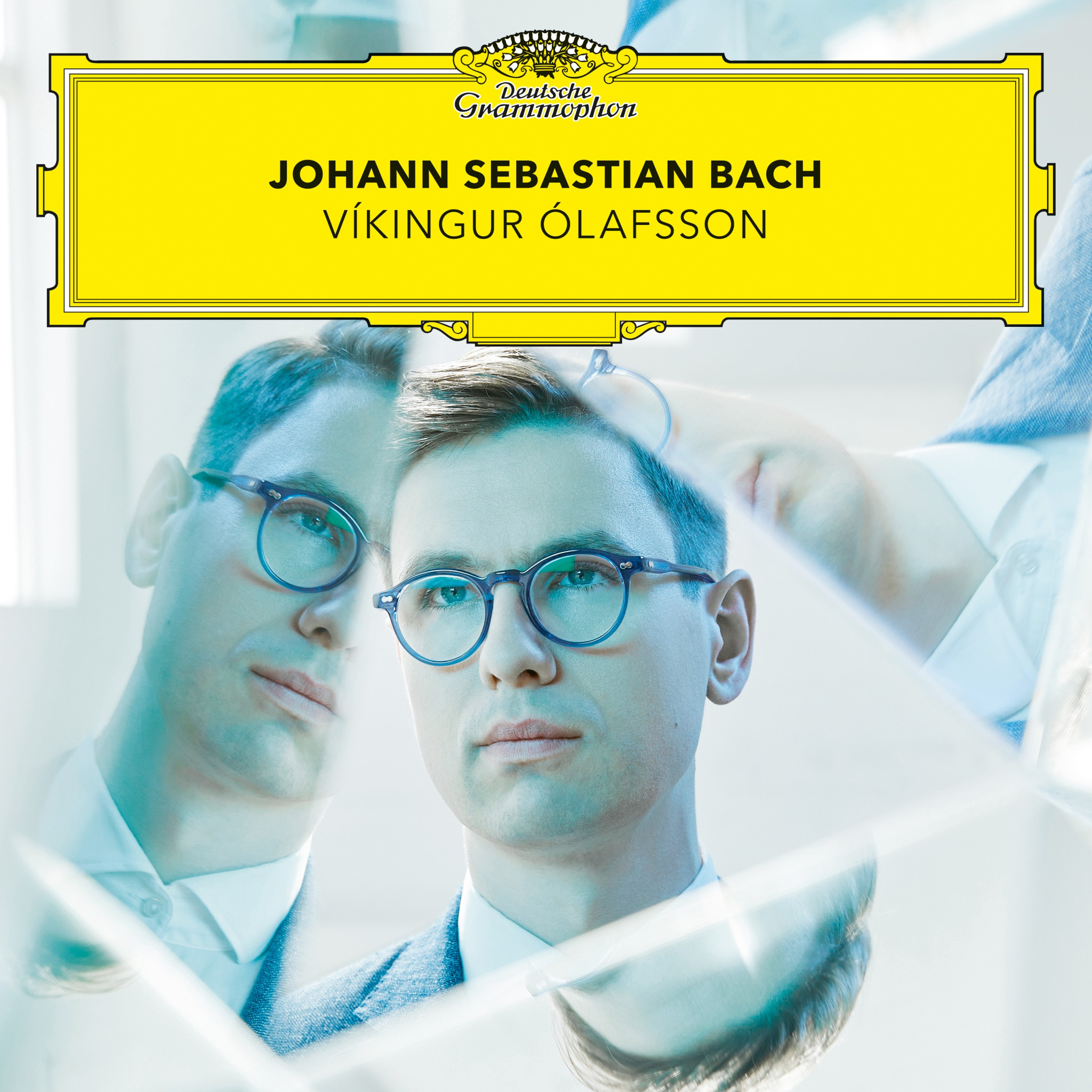
Both of these records are essential.
Following up with a terrific program of Debussy and Rameau, then of Mozart and his contemporaries, it was by now clear that Ólafsson was a pianist whose strengths ran primarily to the Gouldian side of the pianistic spectrum, where filigreed finger work, spare use of pedal, and an almost supernatural control of tone and part writing were prized over the power and large personality of the Russian school.
So what are we to make of the pianist’s first foray into a composer whom the Russians - in the form of Sviatoslav Richter, Emil Gilels, Vladimir Asknenazy (not to mention just about everyone else) - have very much made their own.
I’m talking the Big B here, and not just any old Beethoven, but the cosmic late piano works, considered the gateway to all music that was to follow, and still the summit of the repertoire for any aspiring pianist who wants to prove their cojones. In Ólafsson’s case, we’re talking the allusive and elusive Sonata No. 27, and the even more abstract (especially in its final movement) Sonata No. 30 - which lends this record the “Opus 109” of its title.
As Ólafsson explains in his as always thoughtful sleeve notes, the road to Beethoven arose out of his previous project, Bach’s monumental Goldberg Variations, which he both recorded and took on the road for a year.
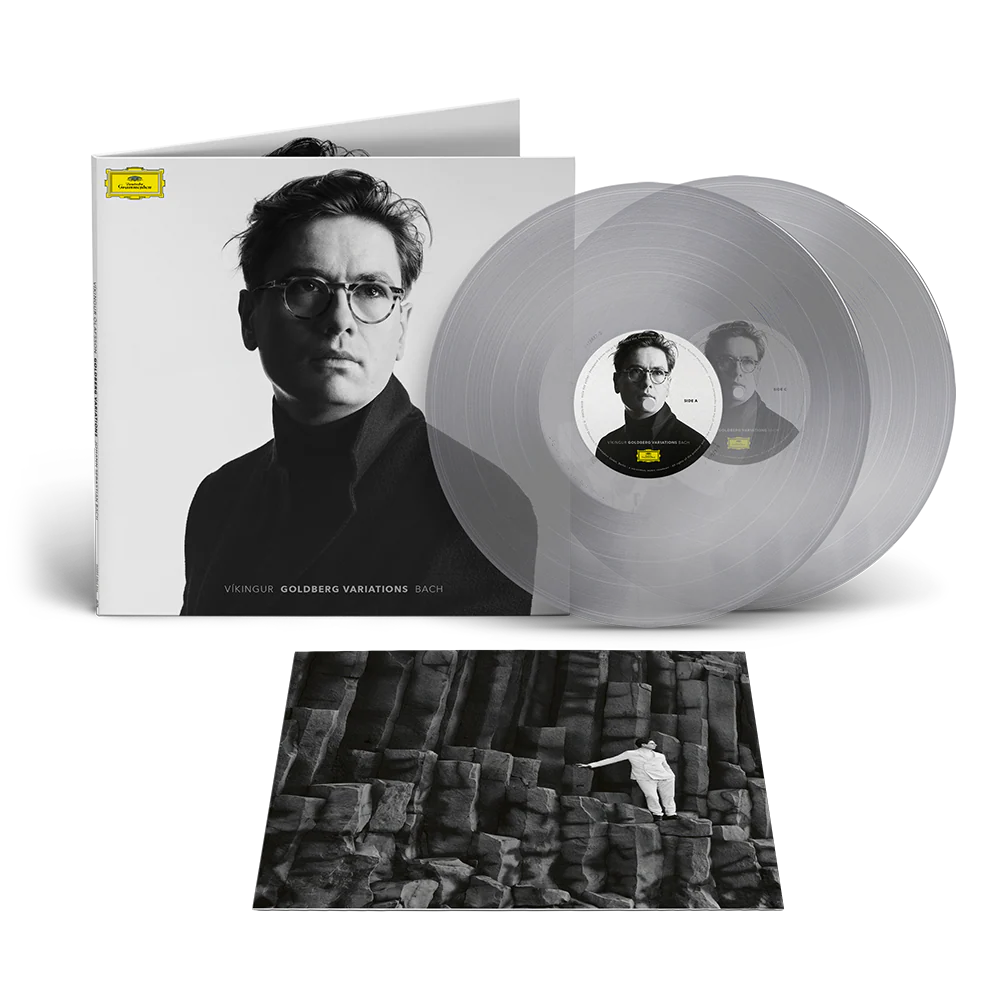
Performing this work almost exclusively for all that time…
“…you become aware of how the Goldberg Variations themselves have influenced the great composers of the western tradition that came after Bach. You start finding the footprints of this great work in other great works – in the form, the counterpoint and musical spirit. As I started searching for my next recording project, I was immediately drawn to a set of works, where I felt the presence of the Goldberg variations in the most inspiring way: the last three sonatas of Ludwig van Beethoven, Op. 109, 110 and 111.
"I should probably add that I do not think that a year-long immersion in the Goldberg Variations is necessary in order to appreciate how the music of Bach informs the astounding internal revolution that we call Beethoven's third creative period. The works of this period seem to achieve the impossible in all sorts of ways: they are both intimate and cosmic in their scope, rigorously, polyphonic, and fleetingly improvisatory. The wild inventiveness and transcendence of traditional form is rooted in a deep engagement with Baroque elements. They are the music of the future, and yet they are fueled by the music of the past – the music of Bach.
"After a few days in my practice studio, I decided against the time-tested approach of recording these three great final sonatas together and releasing them as one album. There are some great recordings of the “three sisters” in the catalog already, but I felt that playing – and listening to – all three in succession would not necessarily be the most illuminating way of approaching them at this point in time. Placing just one of these three sonatas at the gravitational center of a program, conversely, would allow me the joy of traveling freely in its orbit, discovering new perspectives on it, while also encountering other works within its realm. Beginning with an album, focusing on the sonata Op. 109 (No.30), I could indulge in wondering what path led to this work what else was happening around the time it was written (1820), and how these developments might have influenced other composers. Most importantly, I could adhere to the pleasure principal and create the sort of album I myself would like to listen to.”
So here we have that new project, “Opus 109”, (or what I will call “The Road to Opus 109” in reference to the assorted cinematic misadventures of Messrs. Crosby and Hope and Lady Lamour, whose intentions - like those of our pianist - often had little to do with the final results).
Works along that road are all nestled in the keys of E major or minor. We begin with Bach - the Prelude in E major from Book 1 of the Well-Tempered Clavier - eliding into Beethoven’s Sonata No. 27 in E minor, continuing with Partita No. 6. Then we get the really big surprise, the little known Sonata No. 6 in E minor by Schubert, followed by the main event - Op. 109 - and a coda of the Sarabande from Bach’s French Suite No. 6.
Conceptually and musically it’s a lovely program, with some refreshing surprises along the way, not least the Schubert which Ólafsson plays with enormous empathy.
It goes without saying that the Bach throughout is revelatory, as much a reinvention of how we perceive the composer as was Glenn Gould’s in his day. The Partita in particular often has the feel of a jazz improvisation via Ólafsson’s mastery of part writing and ability to create seemingly contradictory time signatures out of Bach’s counterpoint, full of off-beat accents that will scratch your jivey itch. Ancient and Modern blend in unexpected ways.
But even here, for reasons which will soon become apparent, I started to get a little irritated by the fussiness and fastidiousness of it all.
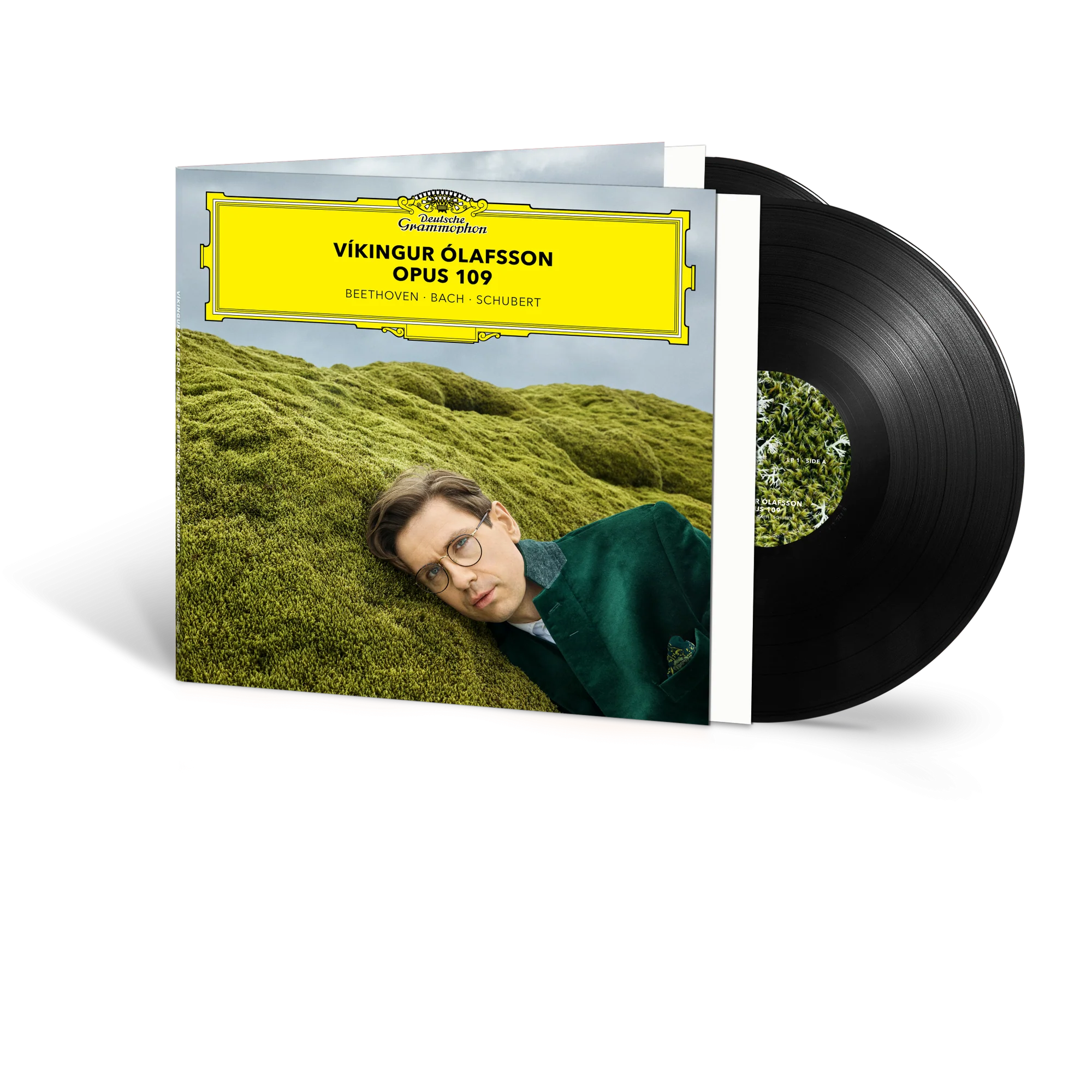
I should have taken warning from the over art-directed cover - depicting our pianist getting cozy with a bank of moss. (I kid you not) Not a good look for Beethoven.
Now, if you weren’t aware of the million-and-one other recordings of the two Beethoven sonatas, no doubt you would enjoy Ólafsson’s way with them, more interior and abstracted than most, with Beethoven’s more explosive outbursts as dynamically and expressively controlled and graded as his Bach.
But then again, I’m not entirely sure that’s what we want in Beethoven…
So this is where we land with a thud, after an already somewhat bumpy ride through even the earlier Ólafsson specialties. This is because there is a HUGE problem with this album, a problem that grows out of Ólafsson’s increasingly obsessive aesthetic, which seeps its way into even the music where you would think it would be an asset.
And that problem is the sound. The sound with which he wants his pianism to be presented.
.jpeg)
What I guess is a Steinway Grand, bright and often unyielding in the modern manner, has been so close-miked that your ears feel as hemmed in as Olaffson’s right ear must feel in that cover photo, as the pianist takes a rather incongruous (and uncomfortable-looking) lie-down on the presumably somewhat damp mossy dales of what I imagine to be some very green corner of Iceland.
Is he communing with Erda? (Call back to my recent Rheingold review).
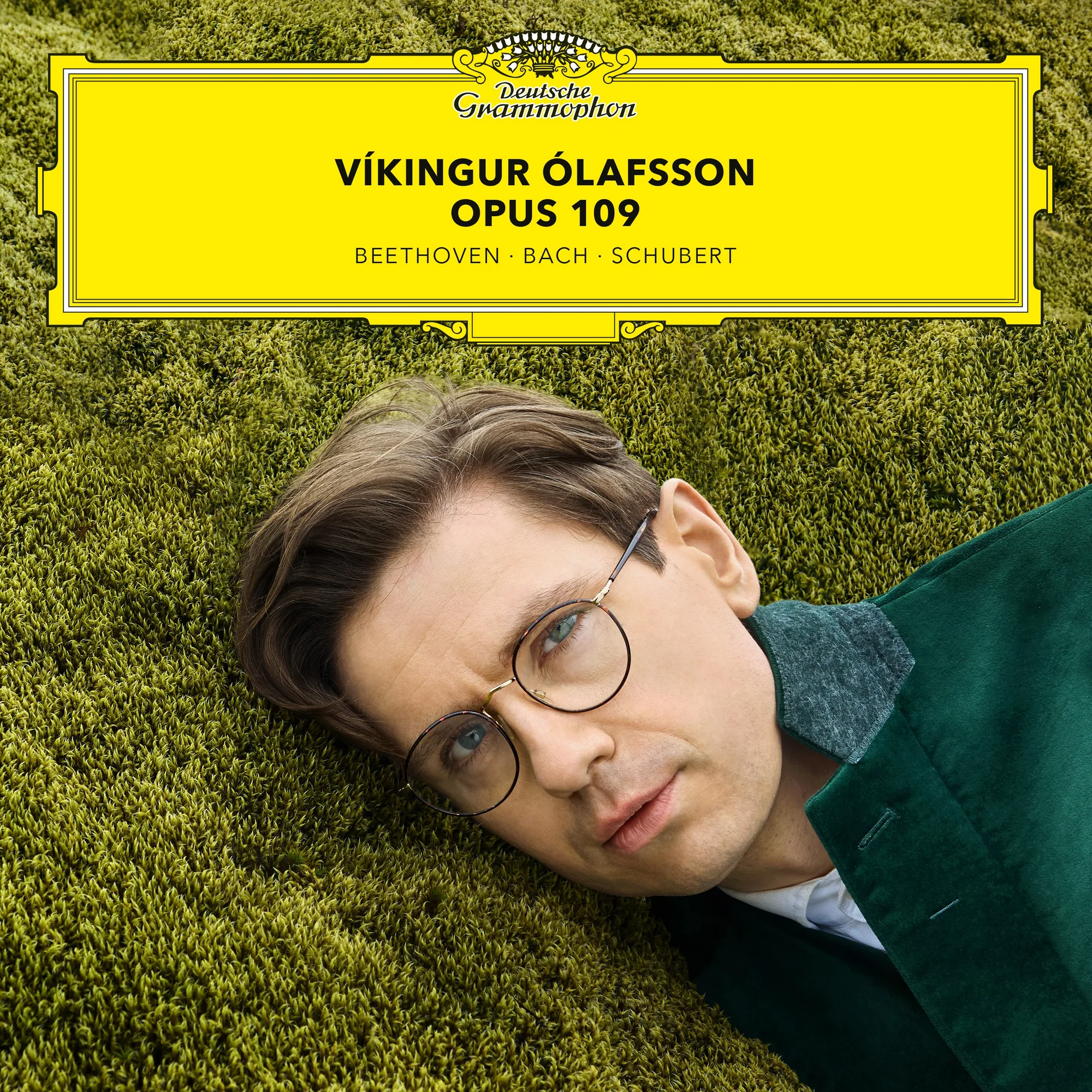
Somehow the engineering by producer Christopher Tarnow - which I imagine was supposed to illuminate infinite subtleties in timbre, tone and touch - does some of that while also limiting the instrument’s dynamism and variety of color. Rolled off bass, closed in mid-range, highs which stab rather than glisten - and all very up close and impersonal. Yes, there are times when the sound hard-wires me into the felicities of Ólafsson’s passage work, voicing and pedalling. But most of the time it’s all just too close for comfort, and somehow, instead of drawing me in, pushes me away.
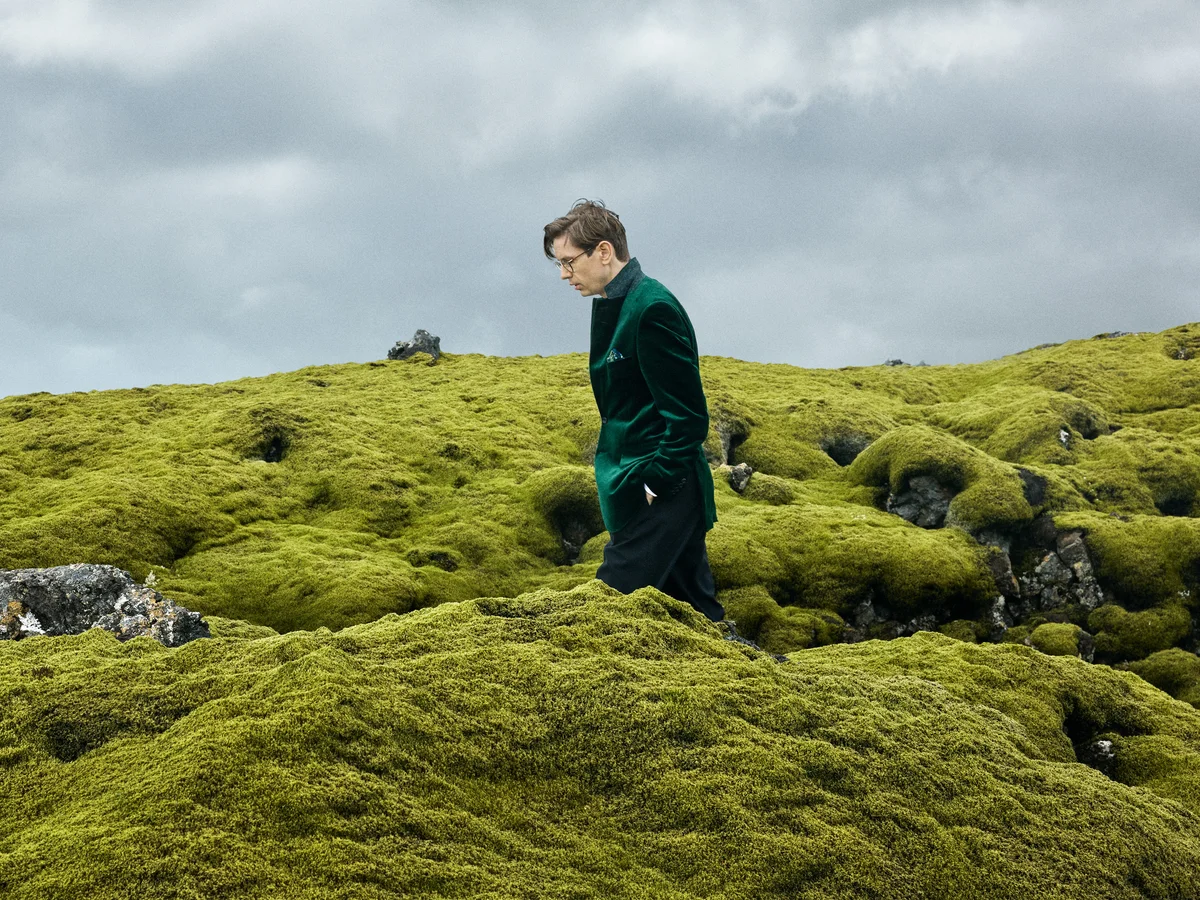 More Moss in the accompanying booklet photo...
“Lost in a field of damp moss”: an unfortunate correlation between the cover art and the music contained within. (These images are more likely to elicit titters than reverence - at least for this English lad).
It’s pretty much the perfect description for this album, which is laid low by the very qualities we have all extolled in the pianist thus far, here pushed into near-absurdity. Ólafsson’s ability to get right under the skin of the music, his exquisite control of line, tone, pedalling, part-writing, touch - you name it: here, even in the Bach, this all feels pushed to a degree which teeters on the edge of robbing the music of the very life it aspires to as it travels from the score out into the world. Sometimes it feels like it loses its balance completely. Instead the sound - which is “cabin’d, cribb’d, confin’d” - seems to be wanting to jam the notes back into the piano, back onto the page, working in an unhealthy alliance with a pianist whose every instinct seems to be to control, control and control again. What I hear is the triumph of the microcosm over the macrocosm, instead of both worlds being held in balance.
Now while this is somewhat okay with the Bach, and to a degree with the Schubert - which Ólafsson imbues with a seriousness but also delicacy we would hardly expect in such a minor work - it is near fatal in the Beethoven sonatas. This is not to say there aren’t moments in the more restrained, abstract passages that aren’t mesmerizing. During the final pages of Op.109 I slipped into a kind of fugue state that was almost hallucinatory, then was brought out of it slowly during the transition into the final Bach Sarabande. Heart stopping.
But I have to say that by that time, after 80 minutes of Stifled Steinway, I was feeling so claustrophobic I needed a sharp jolt of sonic and expressive expansiveness and Acoustic Reality.
Or at least maybe a Bösendorfer recorded in full acknowledgment that this is the modern instrument which for me is the ne plus ultra of rich piano sound.
Not a castrated modern simulacrum of the great Steinway brand, here on this record to be found living on past glories in the back of a closet.
So I reached for Emil Gilels’ account of the same Sonata No. 27 which features early in Ólafsson’s program. Not the studio account on DG, but his live version from the Concertgebouw, Amsterdam in 1976, part of a fabulous box set of the pianist’s recitals released as part of The Lost Recordings label from Devialet. (And also released as a double LP of just the Beethoven sonatas plus Brahms et al).
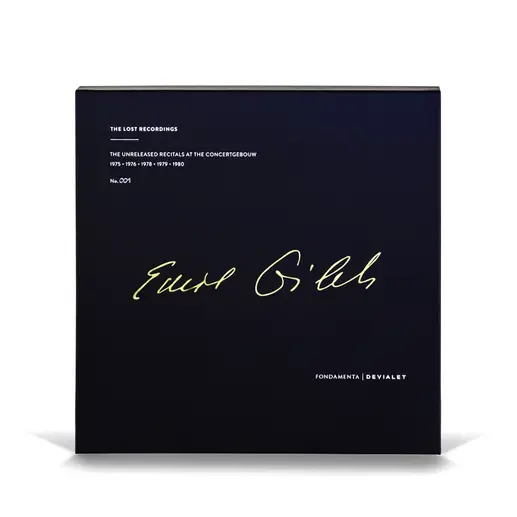
The relief of hearing a real piano (whether it be a Steinway, Bösendorfer or whatever) in a real acoustic space was akin to drinking honeyed nectar after a week of broccoli and kale smoothies. There were actually times when listening to Ólafsson’s record had been painful, with certain notes jabbing at my eardrums like little darts. I had to keep turning the volume down, never a good sign. Listening to Gilels being no less sensitive or delicate of touch than Ólafsson when need be, in an account full of pathos but which was also forthright and unleashed when the music demanded it, all captured in a warm live acoustic, was to finally hear Beethoven as he is, rather than as an "interpreter" might want him to be, doing the whole “round peg into square hole” thang.
The closeness and restriction of the sound on Ólafsson’s record (which has none of the analogue warmth of Rainer Maillard’s similarly close-miked sound for Mikhail Pletnev’s recent AAA record, itself not without its own controversy for some listeners), and the degree to which he seems to want to tightly control the palette of his music-making - seem to me to be part and parcel of the logical conclusion to a series of aesthetic choices which are ultimately backing this supremely gifted pianist into a corner. I was starting to sense this even in his recording of the Goldberg Variations.
I also wondered what this exact same program would sound like recorded live in a concert hall, more conventionally balanced. Would the breath of life return?
After it had finished, by way of a much needed enema to relieve all this musical and sonic constipation, I turned to Igor Levit’s accounts of the two Beethoven sonatas from his complete and much lauded cycle. They were everything you would want them to be, with a full, rich piano sound which precluded none of the filigree detail on offer from Ólafsson.

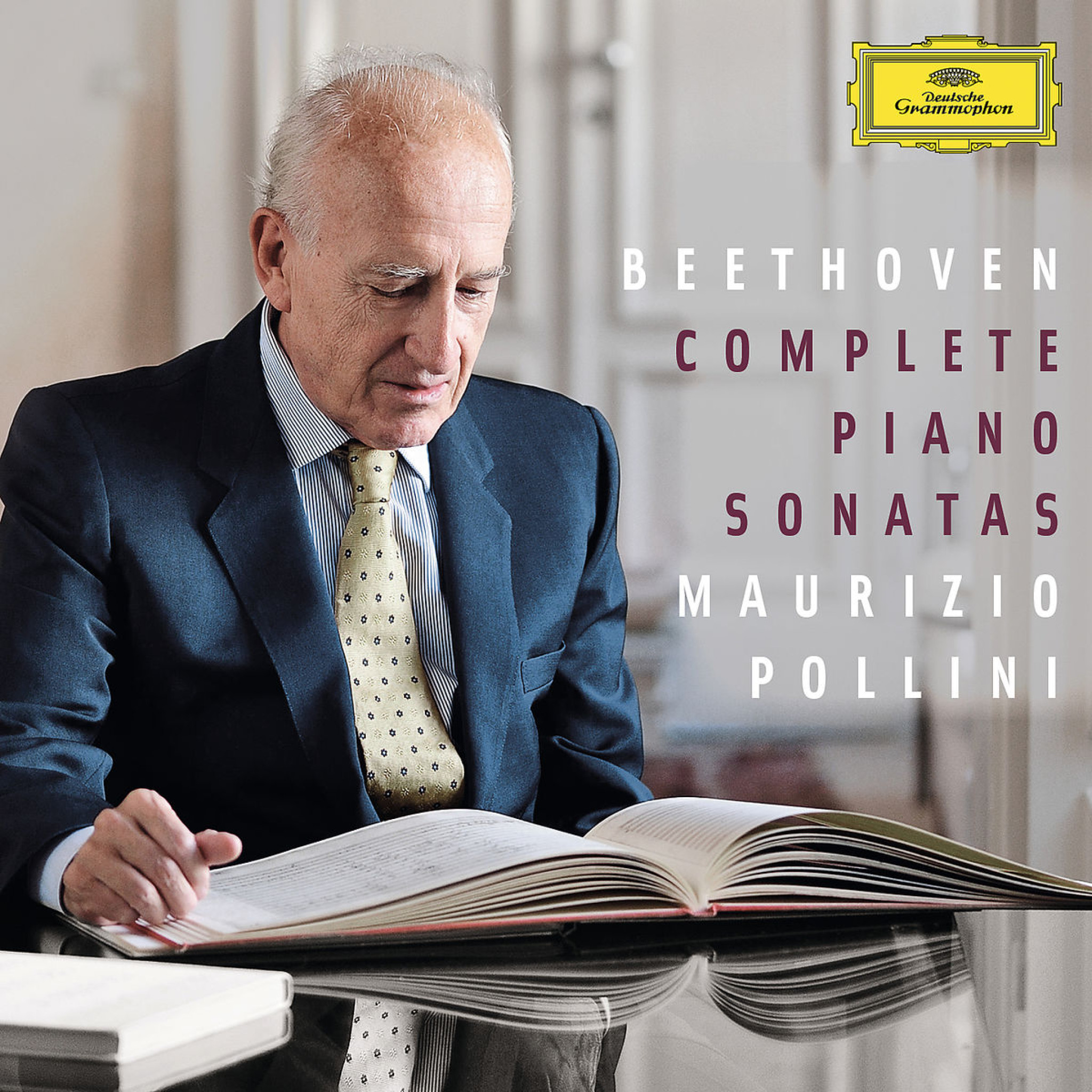
From there to Pollini, whose piano sound also could - like Ólafsson's - border on the obsessive, but again I was happy to hear his freer albeit more modernist approach, long my benchmark for late Beethoven, realized in a more forgiving but still a trifle flinty sonic environment.
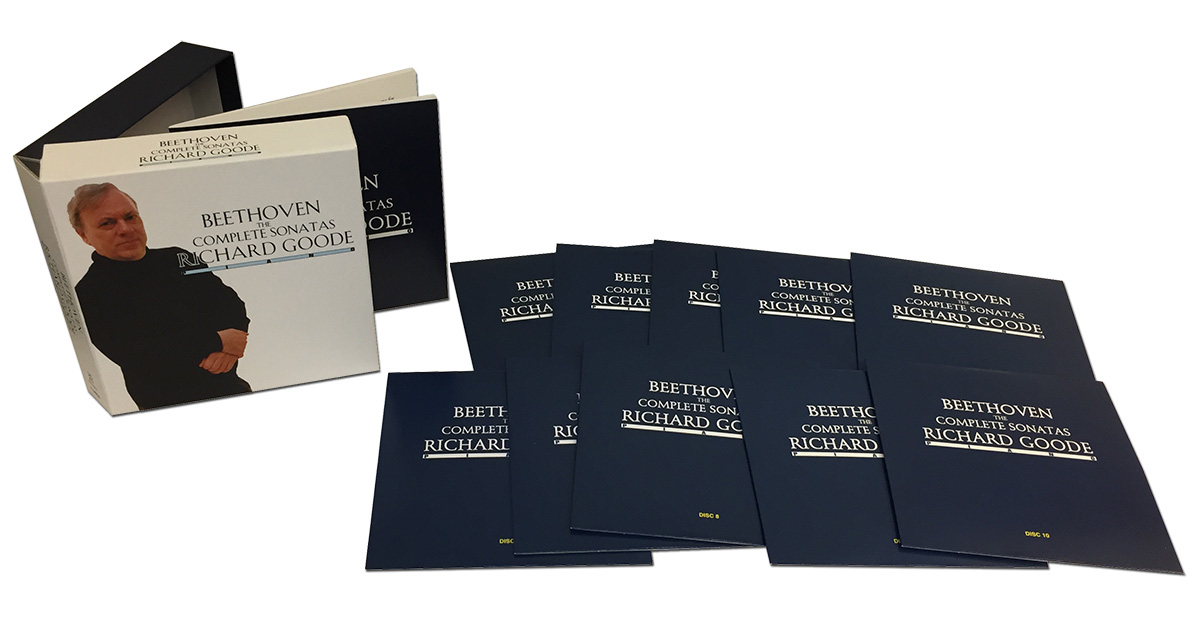
An altogether more romantic, soft hued approach came courtesy of Richard Goode’s superbly humanistic cycle for Nonesuch, a survey it is easy to live with over the long haul.
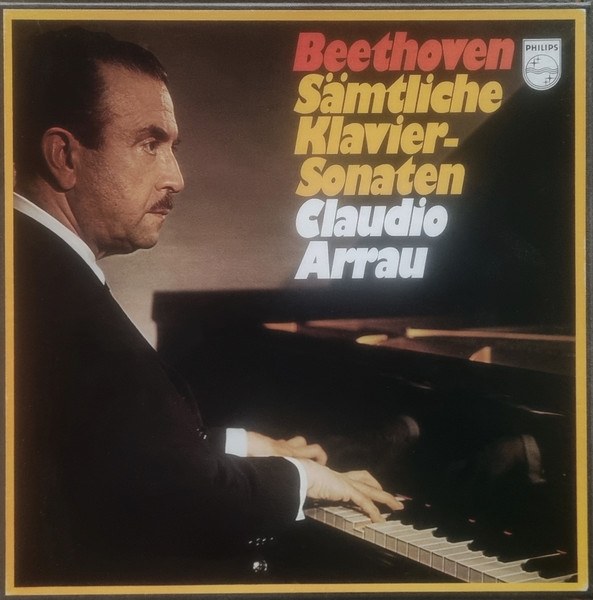
Likewise Claudio Arrau, increasingly the pianist of a bygone age I turn to regularly for his many wisdoms.
Hell, even Sviatoslav Richter in his sonically constrained historic recording that I reviewed here last year had more of an echt Beethovenian feel than Ólafsson! And then, of course, it’s Richter and therefore is a compulsory listen with its own astonishments!
However, I must say that these days I am relishing Igor Levit above all others. Time to pick up the actual physical CD box of his cycle, methinks.
Even with Ólafsson’s pedigree Bach I began to crave the more conventional, less finessed, bigger boned approach of some old favorites, and they did not disappoint: Murray Perahia, Angela Hewitt (her Big Box of Bach just released on Hyperion is self-recommending) and even Igor Levit again gave me something I was missing with Ólafsson. However, none of them caught that special jazzy something that is his and his alone in Bach. There are moments in his Partita here which are jaw-dropping. Listened to in isolation it would be every bit as distinctive and satisfying as his other Bach recordings,
For the more rarely recorded Schubert I turned for comparison's sake to Elisabeth Leonskaja from her complete survey, and again did a deep exhale as the ravishing, fulsome bass of her concert grand expanded to the corners of my listening room.
For fans of Ólafsson (and I am still one of them despite this release), I am sure this record will satisfy to a degree, although I imagine some will be reacting to some of what I hear in a similar manner. A quick survey of critical response to this album thus far would seem to confirm that - few say it is bad outright, but the shortcomings in the Beethoven are thrown into relief when comparisons are made. And the fussiness overall is starting to be commented upon.
Only one review highlighted the problem with the sound, and that for me lies at the root of what has gone wrong here. I can’t help but feel that given a more traditional microphone balance, Ólafsson’s pianism would have had more room to breathe and expand where it needed to. On the other hand, does he want it to? On record does he want to dwell only in this small, tightly controlled realm - sonically and aesthetically? I hope not, but there are definite signs this is his happy place.
For me this record represents a moment of crisis for a truly outstanding artist. Is he going to just stay in his own small corner and keep doing the same thing expertly but with diminishing returns, or is he going to recognize the danger of staying in this narrow lane, and instead cut loose with a different approach to a wider repertoire, and a reassessment of his overly managed recording aesthetic?
Maybe he should take a look at Igor Levit and learn from the example of how this musical adventurer has kept things fresh with a less homogenized, less studied approach to his career on record. Or learn from the older Leif Ove Andses - another Scandinavian with a lean aesthetic - who has nevertheless always used that sense of control and balance in positive, expansive yet disciplined ways, and been able to constantly refresh his career by embracing unusual repertoire or finding new ways to present the warhorses.
There is something more than faintly ridiculous about someone like me - an amateur note-picker on the ivories at best - lecturing an artist of Ólafsson’s stature about how to manage his career. But I am a seeker of revelations in my listening room and in the concert hall, and I hate to see a pianist who has provided me with plenty of these revelations thus far (none "live", alas - you try getting tix for one of his concerts!) disappear into fussy, fastidious irrelevancy.
And while he’s about it, he might want to consider re-directing and re-orienting his "image consultants", or whoever is responsible for his increasingly fey and ridiculous cover art and associated press materials. None of this encourages taking his art seriously. Did no-one mention that most people associate moss with damp squidginess, and lying down on it all dreamily for the cover of your album of serious music by serious composers, let alone Beethoven of all people, is a bit of a mismatch - if not downright ridiculous?
Note to record companies in general: do we really need to see the artists in all these heavily contrived photo-ops? How about some imaginative abstract art or graphic design or just a simple, well-taken photograph? DG used to be really good at this sort of thing. (Check out the covers for the upcoming Avant Garde reissues for starters).
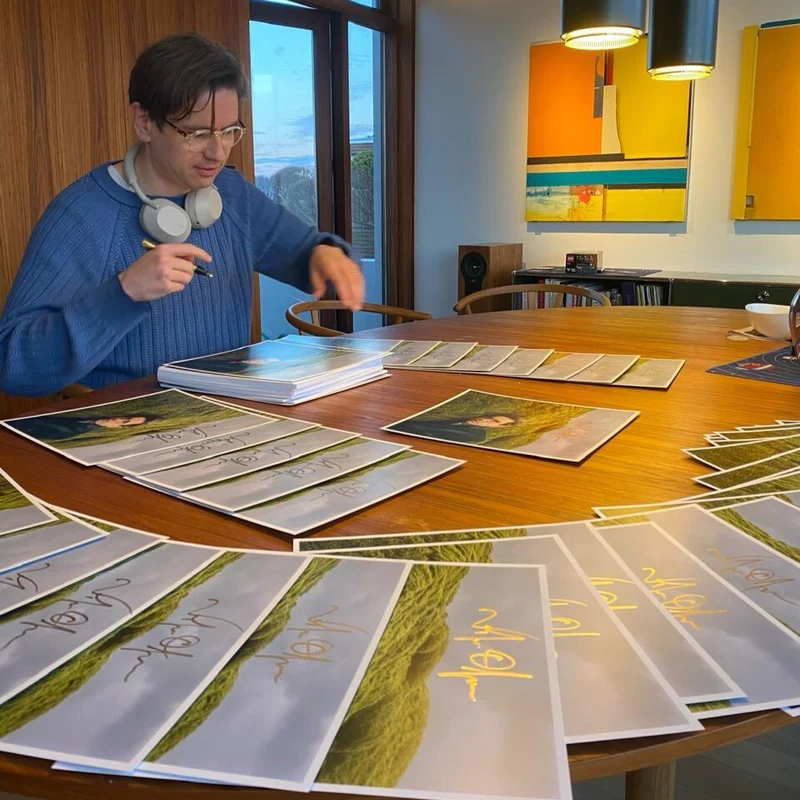 Signing the Moss Art
Classical music does itself no favors with this kind of self-conscious posing - which, unfortunately in this case, is a criticism you could level at the music making contained on this album. Looking at the cover and artwork for this mossy album I was just waiting to catch a glimpse of Python’s Arthurian knights clip-clopping into view, coconuts ’n all. Or a peasant to pop his/her head up from the fields of moss and declare “There’s some lovely filth down here!”
Can you blame me!
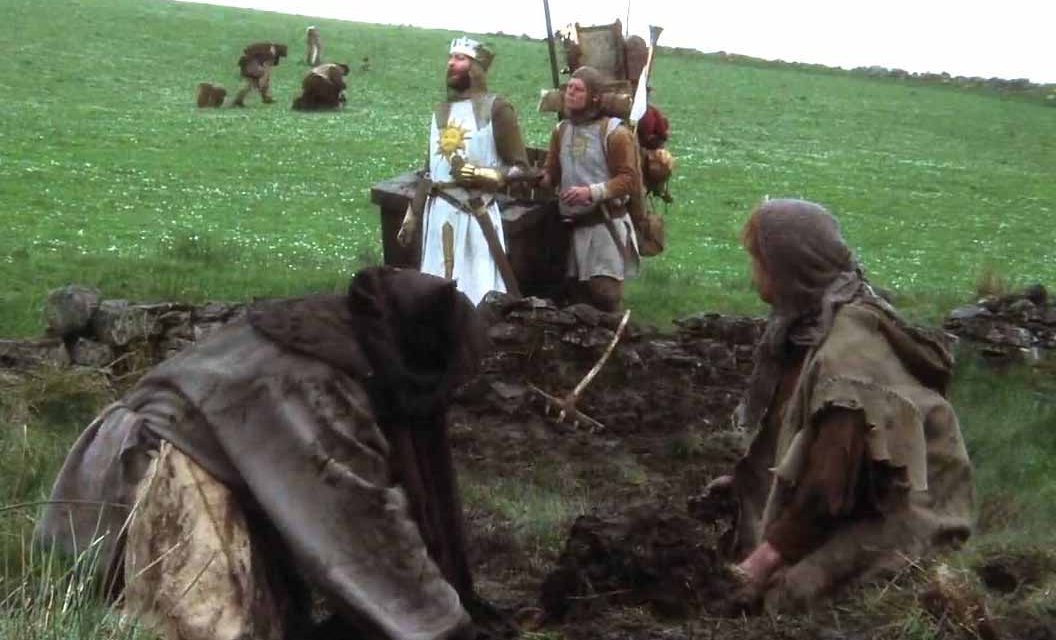 (Couldn't resist - well, "Artist Recumbent on a Field of Moss" is just asking for it...)
Please, Víkingur... Time to leave the ivory tower and remember it’s just music. Serious stuff, yes, but not “Serious” with a capital “S”.
Back to basics please: let your pianism speak for itself without all this weird sonic manipulation. Keep it real. And maybe let go a little bit.
How about a really well-recorded live album? Perhaps direct-to-disc? That's about as real as it gets and definitely demands "letting go" of any notions of achieving the kind of aesthetic perfection I think you are currently chasing - with increasingly diminishing returns.
I know the name of a really good engineer for that sort of thing.
If you must still have it even after reading the above, try Acoustic Sounds, Decca US, or, in Europe, the DG Store. It may be more to your taste than mine...